Home / Medium Strength / Nordic Spirit Spearmint Nicotine Pouches
Nordic Spirit · 6mg–11mg
Read the full guide
Nordic Spirit Spearmint Nicotine Pouches
£4.49
✔ In stock — ready to ship
100% tobacco-free
Free over £20
Same-day dispatch
Secure checkout
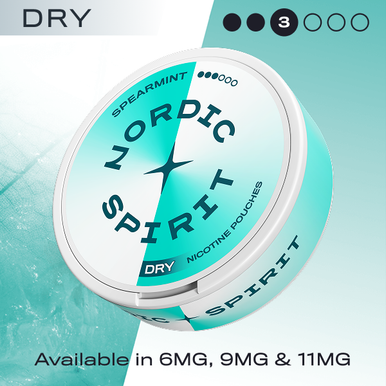
This page covers Nordic Spirit Spearmint Nicotine Pouches at £4.49. Three declared strengths sit behind the listing — 6mg, 9mg and 11mg — and all three variants are £4.49, so the figure you pick does not move the price. Our catalogue holds one flavour tag against the can: mint. It is in stock at the time of writing, and there is one photograph on the listing.
That is everything our record contains. What follows is built from three things and nothing else: a description of the object, comparison with cans that genuinely sit on our shelves, and plain statements of what we do not know. There are several of the last sort on this page and we have left them where they fall.
The full guide to Nordic Spirit Spearmint Nicotine Pouches
4,990 words on how it eats, who it suits, how to serve it and what to put beside it.
Spearmint: the facts on the listing
Before anything else, a word about the brand name, because it invites a reading it does not support. "Nordic" is part of a brand name. It says nothing about where this can, or anything inside it, was made. We hold no country-of-origin information for any product we sell and we publish no origin claims. Treat the word as a name and nothing more.
And the standing note: an adult nicotine product, sold only to people aged 18 or over who already use nicotine. Full wording at the foot of the page.
The tasting note, laid out on four axes
Mint is a word that covers a lot of ground, and "spearmint" narrows it considerably — more than most flavour names in this category do. The most useful way to talk about where a mint lands, without inventing precision, is to take four descriptive axes in turn: how cool it reads, how sweet, how sharp, how bitter. Those four are not a standard, not a scale and not a measurement. They are a vocabulary, and we are using them because the alternative is a paragraph of adjectives that says nothing.
Cool
Spearmint reads moderately cool rather than cold. This is the axis on which the mint family divides most visibly. A mint named for frost or ice or arctic conditions is signalling that the cooling sensation is the leading element — it arrives first, it dominates, and the mint character sits underneath it. Spearmint is not built that way. The coolness is present, because all mint reads as cool to some degree, but it stays in proportion with everything else rather than running ahead of it.
That is the single most useful thing to know if you are choosing between this and a frost-named can from the same brand or another. It is a genuine difference in construction rather than a matter of degree on the same thing.
Sweet
Spearmint reads as the sweeter of the two common mints, and it does so naturally rather than by having sweetness added on top of it. That is the quality people are describing when they call spearmint "softer" or "rounder" — the sweetness is part of the mint's own character rather than a separate layer sitting over it.
This matters for a specific comparison. A can named Sweet Mint is putting a rounding sweetness in the foreground deliberately, as a stated feature. Spearmint arrives at something adjacent by a different route, because the herb itself reads that way. The two are not the same thing even though they can end up in similar territory, and anyone expecting them to be entirely distinct may find them closer than the names suggest.
Sharp
Low to moderate. Sharpness in a mint is largely a peppermint property — the clean, almost cutting edge of a peppermint tea or a strong after-dinner mint. Spearmint has far less of it. The character is green and herbal where peppermint is bright and incisive, and the practical upshot is that spearmint tends to read as gentler across the whole of the mouth rather than concentrated at the front of it.
If you are used to sharp mints, this is the axis where a spearmint will feel like a change. Not a lesser version of the same thing — a different point on the family tree.
Bitter
Generally low. Mints can carry a faint herbal bitterness at the edge, particularly the greener ones, and spearmint's herb character means the possibility is there. In practice, in a flavoured pouch, it usually sits below the level at which most people would name it, and it registers as depth rather than as bitterness.
The honest limits of all four
Everything above describes spearmint as a flavour — what the herb is, and how it sits against the other mint most people know. It is not a measurement of this can. We have not run a tasting panel on it. There is no cooling index, no sweetness rating, no intensity scale anywhere in this category, and any number you see attached to a mint elsewhere is an opinion in numerical dress.
Where our record and the product name diverge, we say so, and here they do: our catalogue tag says only "mint". The word spearmint appears in the product name and nowhere in our data. So the four paragraphs above rest on what the manufacturer named the can, plus general knowledge of what spearmint is as a flavour — not on anything we have measured or been told.
On aroma, briefly: a closed tin gives you nothing, an open one gives you the mint in the air above the pouches for a short while, and it stops when the lid goes back on. That is true of every can of this type.
Three cans, three mint names, one tag between them
This is worth confronting directly rather than leaving for a reader to notice. Within this brand we list Spearmint, Sweet Mint and Frosty Mint, and in our catalogue all three carry exactly the same single flavour tag: mint. Our data does not distinguish them at all. The only thing in our records that separates one from another is the word the manufacturer printed on the lid.
That does not mean the three taste alike. The names are pointing at real and different places within the mint family. Frosty Mint is signalling the cold-forward construction described above, where the cooling sensation leads. Spearmint is signalling the herb itself — greener, softer, less sharp. Sweet Mint is signalling that the rounding sweetness is being put in front rather than left behind. Those are meaningful distinctions and no manufacturer picks those words at random.
But two of them, spearmint and sweet mint, sit closer to each other than either does to a frost, for the reason set out on the sweetness axis: spearmint is already the sweeter mint. So the gap between those two particular names is narrower than the gap between either and a cold mint, and part of what separates them is emphasis and naming rather than a difference you could point at in the abstract. We are not going to invent a tasting distinction to make the two sound further apart than they are. If it matters to you, a can of each is the only reliable test — including against anything written on this page.
The format, in practical terms
A pouch goes in the mouth between the lip and the gum, most commonly under the top lip, though under the bottom lip is equally ordinary. It is not chewed and it is not swallowed. Once placed it stays where it is, held by the lip and the shape of the gum line, and it can be moved across with the tongue if it does not sit well. If it is uncomfortable in every position, taking it out is the sensible answer; nothing about the format requires anyone to persist.
How long people keep one in varies from a few minutes to the better part of an hour. That spread is too wide for an average to help anyone. The usual reason for taking one out is that the flavour has gone, which in a mint happens gradually and then completely. We do not set a time, we do not recommend one, and we hold no manufacturer usage guidance in our data — whatever the can prints is what to follow.
The tin is the standard shallow round one with a friction-fit lid: light pull off, light push back on. The lid carries the brand, the flavour name and the declared figure, readable without opening anything, which matters when you have three figures available and possibly more than one tin in the house. Inside the lid is a catch compartment for used pouches — useful, smaller in capacity than people expect, and best emptied before it is full, since a lid that will not seat flat is usually a full compartment rather than a broken can. Used pouches go into general household waste. The tin is plastic; whether your council takes it at kerbside varies by authority.
Inside the main body the pouches lie flat in a ring around the wall with the middle left open. That layout is near-universal in this category because it keeps every pouch reachable with a finger rather than buried under others, and it is why a half-empty tin rattles slightly where a full one does not. There is no window, so how much is left can only be established by taking the lid off — weight in the hand tells you almost nothing.
The tin travels without fuss and there is little to say about it beyond the obvious. It is roughly the diameter of a small jar lid and about a centimetre deep, so it disappears into a coat pocket or a bag. The one caution is that a friction-fit lid will open if it is squeezed hard in the wrong place, which a tight trouser pocket sat on for an hour will manage. That is not a defect; it is how a press fit behaves. Two tins stack stably enough and three slide. We do not sell or stock a case or holder of any kind, so that is a description of how the object behaves rather than a lead-in to an accessory.
We hold no pouch count, no pouch dimensions and no format designation for this listing. We are not going to state whether it is a slim or a regular pouch, and we are not going to quote a count we have not verified. The printed can carries its own numbers and they are the ones to rely on.
6mg, 9mg and 11mg as printed figures
Three declared strengths sit behind this listing, all at £4.49. The declared figure is the nicotine content the manufacturer states per pouch and prints on the packaging. It is label information. We reproduce it from our record and we do not interpret it.
All three place this can on the Medium Strength shelf, which currently holds 135 listings, sitting alongside the Strong shelf and the Extra Strong shelf. Those three names are our own navigation labels. They exist so a catalogue this size can be browsed by declared figure and they carry no recommendation of any kind.
Something to keep in mind when comparing across brands: each manufacturer sets and prints its own declared figure, and the same number on two different makers' cans is two separate label statements rather than a common measurement. Treating them as interchangeable reads more into a printed number than it will carry.
We cannot advise which of the three figures suits anyone. Not by any criterion, not from anything you could tell us, and not by implication. We will not describe 6mg as a place to begin or 11mg as a place to arrive at, because that framing is a recommendation wearing a description's clothes. Three numbers, one price, and the choice belongs to the person making it.
The brand's range, and what each can is aimed at
We list fourteen Nordic Spirit products and every one we hold a price for is £4.49. A range priced flat from end to end is unusual, and it has a direct effect on how you shop it: there is no budget dimension at all, so the only questions are flavour and declared figure. This section is about the first of those — what kind of flavour preference each can appears to be aimed at. It is emphatically not about which can suits which person in terms of strength, which is a question we have already said we cannot answer and are not going to answer sideways.
The mint side
Three cans, three positions, described above: the spearmint reading of the herb, the sweetness-forward reading, and the frost-forward reading. If you know which of those three axes matters most to you, the names are doing their job and the choice is straightforward. If you do not, the honest answer is that a spearmint and a frost-named mint are the two that differ most, so trying those two tells you more than trying any other pair.
The fruit side
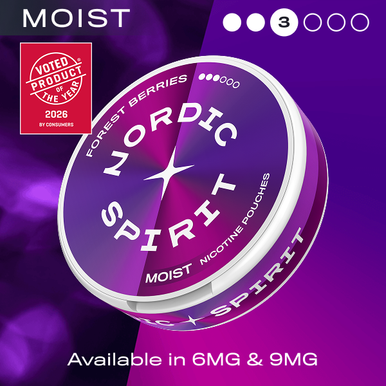
Four cans, arranged more clearly than the mints are. Blueberry is a single fruit at the round, soft end. Forest Berries is a blend rather than a single fruit, which is a real difference in kind rather than degree. Frosty Berry takes a berry and puts a cool element in front of it, the same move the frost-named mint makes. And Max Foresty Berry is a blend under the brand's Max naming — the spelling is the manufacturer's and we reproduce names as given rather than correcting them, because a tidied name stops matching the box.
So somebody coming from a spearmint who wants a complete change has a clear route: a single fruit if they want simplicity, a blend if they want something that keeps shifting, a cooled berry if the cool part is what they actually liked about the mint.
The one that fits nowhere
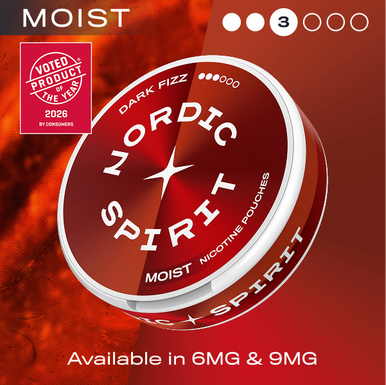
Dark Fizz is neither mint nor fruit and does not carry a flavour tag we can put a family name to. We mention it because in a range this tidy it is the genuine outlier, and if you have worked through the mints and the berries it is the remaining direction. It is £4.49 and in stock like the rest.
What "Max" means in this range
Two cans in the line carry "Max" in the name. It is the manufacturer's naming convention for a can with a higher declared figure than the standard line. It is a label, not a rating: it does not mean better, does not mean more advanced, and does not describe flavour intensity. There is no ladder in this range and we are not describing one. The brand page shows all fourteen together if you want to see the shape of it at once.
Spearmint from other makers, and mints that are not spearmint
Keeping a second can on the go is common, because a single flavour used continuously stops registering clearly and alternating keeps both readable.
For the same herb from other makers, there are two on our shelves. Edge Spearmint is £14.95 and Velo Bright Spearmint is £4.19 — the latter being the closest thing on the site to a like-for-like price comparison with this can, both sitting at the low end of what we list. Both in stock. "Bright" in that second name is signalling something about the treatment, which is a reminder that two cans of the same herb from two makers are still two different products.
For mints deliberately unlike this one, the cold-named cans are the contrast: Klint Arctic Mint at £36.90, SYX Cool Mint at £29.90 and XQS Arctic Freeze at £39.90, all in stock, all pointing at the cool axis rather than the herb. White Fox Double Mint at £34.90 is doing something different again — doubling implies combination rather than intensity on one axis.
77 Apple Mint at £39.90 pairs the mint with a fruit, which is the middle route between staying in mint and leaving it entirely. And for a complete change of direction there are Fumi Dark Spice at £27.90, UBBS Cola Ice at £19.95 and Pablo Silver Edition Blueberry Peach Ice at £39.90, all in stock and all as far from a garden herb as this catalogue goes.
Before you read anything into those prices, see the note below on quantity — the gaps are not what they look like.
The price gaps, and why they do not compare
Look at the figures in the last section: £4.19, £4.49, £14.95, £19.95, £29.90, £36.90, £39.90. That spread invites an obvious conclusion and the conclusion is not safe.
Our product data does not record how many cans a listing covers. The cans-per-pack field is empty for this product and for the others named. A listing at £39.90 may well be a multi-can roll; a listing at £4.49 may well be a single tin. We are not going to assert either, because we do not hold it, and we are not going to imply it by presenting the prices as though they were comparable. A price difference between two listings is not a per-can price difference until you have checked what each listing contains. The individual product page and its photograph are where to confirm that, and asking us is faster than inferring it.
Navigating a shelf of 148 mints
Mint is by a distance the largest flavour category we run, and that creates a practical problem worth addressing, because a shelf of 148 listings is not really browsable in the way a shelf of twenty is. If you arrive at it with no maker in mind, you will scroll for a long time and come away with an impression rather than a decision.
Three approaches work better. The first is to go in by maker instead and use the brand pages, which is why a fourteen-listing range like this one is quick to work through and a large maker's range is not. The second is to use the declared-figure shelves as a filter first and browse the mints within that band, which cuts the field substantially before flavour comes into it at all. The third, and the one most people end up using, is to decide which axis matters — cool, sweet, sharp — and then read the flavour names for the word that signals it, because in this category the names are doing more work than anything else on a listing tile.
That third approach is exactly why the distinction between a spearmint, a sweet mint and a frost-named mint is worth understanding before browsing rather than after. It is the difference between reading 148 names as noise and reading them as three or four recognisable groups. What it will not do is tell you how any individual can tastes, and nothing on a category page can.
Storage, and what shortens a can's life
Short list. Put the lid back on properly each time — the contents meet the air whenever the tin is open, and a can left open is the main reason one tastes different at the end than at the start.
Keep it cool, dry and out of direct sunlight. A drawer, a shelf, a bag. Not a car dashboard in summer, not a windowsill, not the shelf above a radiator.
On fridges: some people keep cans in one, some do not, and we are not going to settle it. We hold no manufacturer storage instructions in our data, so the can's own printed guidance is the guidance. What is not in dispute is that a tin kept shut, cool and dry is in better condition at the end than one that is not.
Keep it away from children and from anyone it is not meant for. With an age-restricted product that is plain sense rather than storage advice, and it applies to a tin on a kitchen worktop as much as to one in a cupboard.
Three figures, one price, and what you are buying
Three declared strengths, one price. There is no cost consequence whichever you choose, so the decision rests entirely on which printed figure you want — and we are not going to help you make it, or hint at an answer by the order in which we list them.
On quantity, our record holds no cans-per-pack value for this listing. We will not say it is a single can and we will not say it is a roll. The product page at checkout and the listing photograph are where to confirm what you are buying, and if that leaves it unclear, ask before ordering rather than afterwards.
If browsing by declared figure suits you better than browsing by flavour, the 135 cans on the medium shelf is where this band sits, with the two shelves above it linked earlier on this page.
At the checkout, and at the door
The mechanics are the same as for anything here. The can goes in the basket at £4.49 with your chosen figure, and the order is subject to age verification, because every product we sell is age-restricted. The check is not waived for small orders or for regular customers.
You must be 18 or over to order. ID may be requested on delivery, and the courier may decline to hand over the parcel if the check cannot be completed. That is the courier doing their job rather than a problem with your order.
Availability changes daily. Everything linked from this page was in stock when it was written, but the live listing is always the accurate source and a description page is a snapshot. Mixed orders are ordinary: different makers, flavours and declared figures go in one basket and ship together, and the age check applies to the order rather than line by line.
Routes back to this page
Three sensible ones. By maker, through the Nordic Spirit brand page, which is the shortest route at fourteen listings. By declared figure, through the medium shelf. By flavour, through the mint category, which at 148 listings is the largest flavour shelf we run and therefore the slowest of the three unless you already know the maker you want.
From the top, everything we stock is the whole catalogue. And if you browse by maker as a habit, the Pablo brand page and the Cuba brand page are two of the deeper single-brand shelves here — a useful contrast with a fourteen-can range that prices everything identically, because most makers do not.
What customers ask about Spearmint
What is the difference between spearmint and peppermint?
They are two different mints, not two strengths of one. Peppermint reads sharp, bright and cold; spearmint reads green, herbal and softer, with more natural sweetness and less of a cutting edge. Neither is a version of the other. If you have only ever had sharp cold mints, a spearmint will read as a change of flavour rather than a lighter version of the same one, which is the most useful thing to know before ordering.
Is Spearmint the same as the brand's Sweet Mint?
No, but they are closer to each other than either is to a frost-named mint, because spearmint is already the sweeter of the common mints. In our catalogue both carry the identical tag "mint" and identical declared figures at the identical price, so our data does not separate them at all — only the names do. Where the difference between two cans is mostly a difference in what they are called, we would rather say so than manufacture a tasting note.
Why does the tag just say "mint"?
Because the tag is a shelving category rather than a description. Its job is to file this listing on the mint shelf with the other 147 cans so it can be found by browsing, and it is deliberately broad for that purpose. The name on the lid is the more specific of the two sources, and where the tag is all our data holds, we say so rather than dressing it up.
How many pouches are in a can?
We do not hold that figure — not for this listing and not for any other in the brand. It is absent from our product data, so we do not publish it. The printed can states its own count and that is the number to rely on. Repeating a count from elsewhere that we cannot verify would be worse than the gap, because unverified numbers copied between sites are almost impossible to correct afterwards.
Do the three strengths cost different amounts?
No. 6mg, 9mg and 11mg are all £4.49, as is every Nordic Spirit listing we hold a price for. The declared figure has no effect on the price within this brand. Across the catalogue as a whole prices range widely, but that reflects different makers and, very probably, different quantities per listing rather than strength.
Which of the three should I buy?
We cannot tell you and we will not imply an answer. Recommending a nicotine strength for an individual is not something a retailer is qualified or permitted to do. All three figures are printed on the listing so you can read them and decide. Any site that offers a personalised strength recommendation on the back of a short form is doing something we will not do.
Does "Nordic" mean it comes from Scandinavia?
It means the brand is called Nordic Spirit. We hold no country-of-origin data for anything on this site and publish none. Reading a manufacturing location out of a brand name is a common inference and still a wrong one.
Is there another spearmint on the site?
Two others. The Velo spearmint at £4.19 and the Edge one at £14.95, both in stock at the time of writing. We can tell you the brands, prices and tags. We cannot tell you how the three compare in the mouth, because we have not run that comparison and would not publish it as fact if we had.
How long should I keep a pouch in?
We do not set a time. In practice it ranges from a few minutes to most of an hour, and most people take one out when the flavour has faded. Any usage guidance printed on the can by the manufacturer is the guidance to follow. We hold none in our data and will not invent a figure that sounds authoritative simply by being specific.
Do you publish ingredients or technical specifications?
No. No ingredient lists, no composition, no weights or dimensions, no technical detail and no explanation of how any of it works. That is the manufacturer's material and it is on their packaging. Our pages carry what is in our catalogue: name, brand, price, declared strengths, flavour tag, stock position and images.
Is it in stock?
It was when this description was written, as was everything linked from it. Availability across a catalogue this size moves daily, and the live product page is the accurate source. If the live page and this one disagree, the live page is right.
What can I tell from the one photograph?
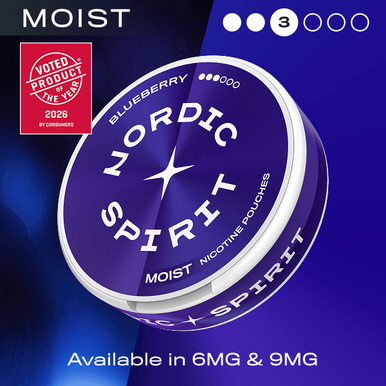
Enough to confirm you have the right brand and the right flavour name, and roughly what the tin looks like. Not much else. A photograph without a reference object beside it carries no scale, so it will not tell you the diameter of the can or the size of the pouches, and it will not tell you how many pouches are inside. It also will not settle whether a listing covers one tin or several, since a single-can image is commonly used for multi-can listings across this industry.
Is the 11mg on this listing the strongest thing the brand makes?
We are not going to answer that by quoting figures from other listings on this page, because each listing's numbers belong on its own page and repeating them second-hand is how errors travel. What we can say is that this listing declares 6mg, 9mg and 11mg, and that two cans in the range carry the "Max" naming that indicates a higher declared figure than the standard line. Open those pages and read what is printed there. And to be clear: a higher figure is not a better can, and it is not something to work towards.
Does a spearmint fade faster or slower than a cold mint?
We do not know and we are not going to guess. How long flavour lasts in a pouch varies between makers, between flavours and between people, and we have no data on it for any listing we sell. What people report generally is that the taste fading is what prompts them to take one out, but the timing behind that is individual. If a specific can is not lasting the way you expected, that is worth knowing about your own preference rather than something we can correct.
Can I order several different cans together?
Yes, and most people do. This can, the SYX cool mint and anything else in the catalogue go into one basket and ship together. Mixing makers, flavours or declared figures adds no step at checkout, and the age verification applies to the order as a whole.
Required warnings and the age limit
This product contains nicotine and is sold only to adults aged 18 or over who already use nicotine.
Nicotine is an addictive substance.
It is not a licensed stop-smoking medicine and is not offered as one. It is not intended for non-smokers, for anyone who does not already use nicotine, for anyone under 18, or for anyone who is pregnant or breastfeeding. Nothing on this page is an encouragement to begin using nicotine, and nothing on it is medical advice.
ID may be requested on delivery, and the courier may decline to complete the handover if proof of age cannot be provided. Any health question relating to nicotine use belongs with a qualified professional rather than with a retailer.
Summing up
Nordic Spirit Spearmint is a £4.49 listing carrying 6mg, 9mg and 11mg at that same price, tagged simply as mint, shelved under Medium Strength, and in stock at the time of writing. Spearmint is the green, softer, naturally sweeter mint rather than the sharp cold one, and that is the difference that matters when choosing between this and the brand's frost-named can. Where our data does not separate the brand's three mints — and it does not — we have said so.
For the herb from other makers, the Velo listing and the Edge listing are the two alternatives we carry. For the rest of this range at the same flat price, all fourteen Nordic Spirit cans are in one place.
More from Nordic Spirit
More medium strength pouches
More mint pouches
Where this sits
Nordic Spirit Spearmint Nicotine Pouches appears in these categories. Browse them, or jump to something close.
You might also like