
Home / Extra Strong / Iceberg Sour Berries Nicotine Pouches
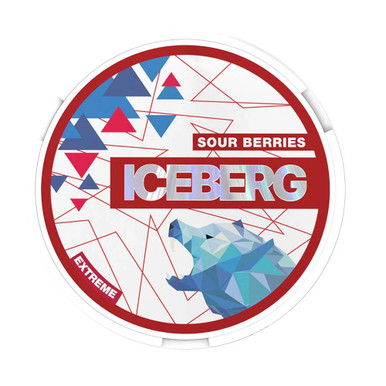
Iceberg · 50mg · 10-can pack
Read the full guide
Iceberg Sour Berries Nicotine Pouches
£39.90
✔ In stock — ready to ship
100% tobacco-free
Free over £20
Same-day dispatch
Secure checkout
Our catalogue entry for Iceberg Sour Berries Nicotine Pouches holds rather more than most, so it is worth setting out carefully. The brand is Iceberg. The manufacturer's product name is Sour Berries. One declared strength is listed, 50mg, at a price of £39.90. Our flavour classification carries two tags: berry and sweet. There is one photograph. And — unusually for this brand on our shelves — the record does hold a pack figure: 10 cans. The availability field, however, reads out of stock.
Deal with the stock position first so it is not a surprise later. This cannot be ordered today. We hold no return date, operate no reservation list, and will not offer an invented estimate. The listing stays published because the record is accurate and worth having on the site, but as things stand it is something to read rather than something to buy.
The full guide to Iceberg Sour Berries Nicotine Pouches
5,355 words on how it eats, who it suits, how to serve it and what to put beside it.
The record for Iceberg Sour Berries
The ten-can figure is the most useful thing on this record and it is the one field that is present here and absent on most of the rest of our Iceberg entries. It means the £39.90 is the price of a pack of ten cans rather than the price of one, which works out at £3.99 a can. That single number changes how this listing compares with everything around it, and a good deal of this page is built on it.
Then the gaps. We hold no portion count per can, so we cannot take the arithmetic any further than price per can. We hold no can weight, no format designation, no moisture description and no shelf-life figure. Those fields stay empty here and are not filled in further down with a plausible-looking number borrowed from the category.
One tension between the name and the tags should be flagged rather than smoothed over. The lid says Sour Berries. Our classification records berry and sweet. There is no sour tag on this listing, and we do not hold a sour tag anywhere in our flavour system. So the word that is arguably the most descriptive part of the product name is the one thing our data does not capture, and our filters will return this can under berry and under sweet and never under anything indicating tartness. That is a limitation of our own tagging and not a suggestion that the name is wrong.
Sour and berry, described as tastes
Berry is a broad family and sour is a modifier applied on top of it, so the two need taking apart before they can be put back together.
The berry family usually resolves into one of a few recognisable readings. The blueberry reading is soft, rounded and jammy, low in acid, deep rather than bright. The raspberry reading is much more perfumed, with a heady top note and a finer, dustier sweetness. The blackcurrant reading is the darkest and most assertive, tart and slightly green underneath. And the generic red-berry reading is a blend that commits to no single fruit and reads as broadly sweet.
A plural name like Sour Berries points at a blend rather than a single fruit, which usually means a composite red-and-dark profile built to be recognisable as berry without being pinned to one variety. That is our reading of a name, though, not a description from our data — our record gives us berry and sweet and stops there.
Sourness is the other half. In a flavouring, tartness is a structural element as much as a taste: it cuts across sweetness, keeps a fruit profile from reading as flat, and produces the puckering sensation at the sides of the tongue that people recognise as sour. Applied lightly it sharpens a berry flavour and makes it read as fresher. Applied heavily it becomes the dominant impression and the fruit sits behind it. Where any particular can falls on that scale is a matter of how the flavouring was built, and our record does not tell us.
The interaction between sour and sweet is the interesting part, and the two tags we do hold — berry and sweet — suggest the sweetness is substantial. A sour-styled flavouring is almost never sour alone. The usual construction is a high sweetness with a tart edge laid over it, because tartness without sweetness underneath reads as thin and unpleasant rather than as sharp. So a can named sour typically tastes sweet first, tart second, and fruity third, in that order, rather than delivering acid on its own.
One point needs making plainly here rather than left to inference. A confectionery-styled name and a sweet flavour profile do not make this a confectionery product. It is an age-restricted nicotine product that happens to carry a fruit flavour, it is sold to adults who already use nicotine, and nothing about the word sweet on our tag list changes what is in the can or who it is for.
Building a recognisable sour berry into a dry portion
This section is about the general problem the format sets a flavourist, because understanding it explains far more about what to expect from any can than a two-word tag ever will.
The constraint is the starting point. A portion in this format is small and essentially dry. There is no juice in it, no pulp, nothing that behaves like fruit. Whatever flavour it has is carried by flavouring compounds that release gradually once moisture reaches them in the mouth. That is a fundamentally different problem from flavouring a drink or a sweet, and it accounts for most of what surprises people about how these taste.
The first thing it produces is a sequence rather than a single impression. A drink delivers its whole profile in the first mouthful. A portion delivers its most volatile elements first, its heavier ones over the following minutes, and then tails away as the supply runs down. The taste at minute two and the taste at minute twenty are genuinely different tastes, and both are the product working normally.
The second is that flavour ideas translate unevenly. Mint translates almost perfectly, which is why it dominates the category, and sharp fruit translates well because its identifying notes carry easily. Anything whose identity depends on richness or body translates badly, since those qualities are textural and a dry portion cannot produce them.
Sourness is a particular case and worth its own paragraph, because it is not really a flavour at all in the way that raspberry is. Tartness is a sensation produced on the tongue rather than an aroma detected in the nose, which means it behaves differently from the fruit notes it accompanies. In practice, the tart element in a sour-styled can often arrives slightly ahead of the fruit and frequently fades before it, leaving a plainer, sweeter, less interesting second half. Anyone who has had a sour-named can and found the sharpness disappeared after a few minutes has met exactly this, and it is the format behaving normally rather than a fault.
The third consequence is that sweetness in this category is structural. Without a sweet base, fruit flavourings read as thin and faintly chemical, because the aromatic and acidic components have nothing to sit against. That is why almost every fruit can in the category tastes sweeter than the fruit it names, and it is why a berry can with a sour name still carries a sweet tag on our system.
The fourth is that the base material has a character of its own that never entirely vanishes. A heavily flavoured can hides it; a lighter one lets it show at the edges, particularly toward the end of a portion. That faint common quality shared by cans from unrelated brands is what you are noticing when you notice it.
Taken together, these four points explain something people find genuinely puzzling: why two cans from different makers carrying the same flavour word can be so unalike. The word on the lid names a target, not a recipe. Each manufacturer reaches that target with its own balance of flavouring, sweetness and base, at its own concentration and its own release rate. A shared tag tells you the neighbourhood. It tells you very little about the house.
None of this describes the Iceberg can specifically. It describes the format, offered because it is honest general information and because our two-word classification for this product does not stretch very far.
The format in practice
The mechanics are quickly stated. A pouch is a small sealed portion placed in the mouth between the lip and the gum, left in place, then removed and thrown away. Nothing is chewed and nothing is swallowed.
Where it goes is preference. The front of the upper lip suits most people, since the lip holds it and it then needs no attention. The lower lip works equally well. Off to one side suits people who find the front position too noticeable. If a spot rubs, move it slightly; if none is comfortable, take it out.
Duration varies too much between people for an average to be worth publishing, and we do not publish one. Reports range from a few minutes to the better part of an hour. The flavour thinning is the usual prompt for removal, and with a sour-styled flavour the sharpness generally goes before the sweetness does, so the last stretch is plainer. We set no times, propose no frequency and give no guidance whatsoever on how many anyone should have. The manufacturer's usage wording on the packaging is the instruction that applies.
The can itself is a shallow plastic disc with a lid that lifts clear and presses back on. Inside, the portions stand in a ring against the wall. Moulded into the lid is a separate, smaller chamber for finished portions, which is where one goes when there is no bin nearby. Otherwise general waste, never a sink or a drain. The can body is plastic and goes into household recycling to whatever extent your council takes that grade.
50mg as a figure on a label
This listing carries a single declared strength of 50mg. There is no second variant, so nothing on this listing asks you to choose between numbers.
The figure is the manufacturer's declaration about content, printed on the packaging. We publish it because it is a fact about the product and you are entitled to see it. It is not a rating, a grade or a mark of quality, and we attach no judgement to it in either direction.
Nor does it predict much about the experience of a can. It says nothing about how heavily the flavouring is applied, how long it lasts, how a portion sits, or how one maker's declaration lines up with another's. Different manufacturers state these figures on different bases. Two cans printed with the same number are not thereby the same product.
On our shelves the figures are sorted into three bands so that filtering works and for no other reason. This one is filed in the top band with 97 others on the Extra Strong shelf. Below sit the Strong band and Medium Strength. A shelf is a shelf. None of those bands constitutes a recommendation about where any person should be looking.
Carrying one about, and whose rules decide where
This is the practical question people ask most often and the one product pages most often answer badly, so it gets a proper section.
The object first. A can is flat, light and silent, and it goes unnoticed in a coat pocket, a bag or a rucksack. Ten of them together is a different proposition — a pack of ten is a box of reasonable bulk rather than something that vanishes into a jacket — so the practical arrangement most people arrive at is that the box lives at home and one can travels.
Using one is quieter still. A portion goes in with a second's hand movement, sits without adjustment, and produces nothing visible: no plume of any kind, nothing in the air, no smell to anyone standing near you. From a few feet away there is nothing at all to see. Close up, a portion behind the front lip can slightly alter the line of the lip, which some people notice about themselves and most people never notice about anyone else. It is the usual reason people move one to the lower lip or off to the side.
Talking is fine after a brief adjustment. Eating generally means taking one out first, since chewing displaces it and food over a flavoured portion is an unpleasant combination. Drinking is usually no trouble.
Now the part that has to be said carefully. That the format is unobtrusive is a fact about the object. It is not permission. Whether you may use a nicotine product in a given place is decided entirely by whoever controls that place, and it is their rule to publish, not ours to summarise.
That principle covers a great deal of ground. Employers write their own policies and they range from silence to explicit prohibition; the staff handbook governs, not a retailer's website. Licensed venues, restaurants, cinemas, gyms and stadiums set house rules and are entitled to. Schools, hospitals and similar institutions hold their own positions. Airlines, rail operators, coach companies and ferries each publish conditions of carriage, and two operators on the same route can differ. Airports differ from the airlines flying out of them. Other countries legislate on these products independently, and several prohibit them outright; their law applies the moment you arrive, whatever was permitted where you departed.
We are not going to condense any of that into a paragraph of guidance, and any retailer that does should be treated with suspicion. We do not know your employer's handbook, your carrier's current terms, or the customs position at your destination. The sources that matter are the policy document itself, the operator's own published conditions, and the official guidance for the country concerned. The only thing we will assert is that discretion has never been a defence against a rule, and not being noticed is not the same as being allowed.
One further point of setting. These are adult goods. A can should be kept where it will not be picked up by somebody it is not intended for, which in practice rules out coffee tables, shared glove compartments and bags that children go into. A pack of ten multiplies that consideration rather than changing it: a box stored at home is a box that needs storing somewhere sensible.
What a pack of ten changes
Because the cans-per-pack figure is present on this listing and absent on most of our others, this page can do something the rest cannot, which is tell you what a can actually costs. Ten cans for £39.90 is £3.99 each.
That is worth holding onto when you look at the rest of the shelf, because a great many of our listings show a headline price with no pack figure behind it, and a headline price is not comparable to a per-can price. A £39.90 listing with no pack figure might be a single can or might be ten; our record does not say, and we are not going to assume. This listing is one of the few places where the comparison can be made honestly.
Buying in tens also changes the practical rhythm of ownership, and the change is mostly about storage rather than about money. A single can gets used and replaced. A box of ten sits somewhere for weeks, which means the storage advice further down matters more here than it would for a single can, because the last can out of the box will have been stored far longer than the first. Keeping the box somewhere cool and stable rather than somewhere convenient is the practical consequence.
It also means committing to one flavour ten times over, which is worth thinking about before ordering rather than after. The variety section below suggests what a second, quite different can might be.
Iceberg across our shelves
Iceberg is one of the larger brand blocks we hold. The Iceberg shelf carries 40 listings, spread widely across flavour families and clustered toward the upper end of our banding on declared figures. That is a description of our catalogue rather than a verdict on the maker.
State the obvious before the links: not one of the Iceberg cans named here is in stock, any more than this one is. They are worth knowing as a map of the range rather than as a list of things to order.
Two of them sit in the same flavour family as this can. Iceberg Berries at £39.90 is the plainest statement of the berry idea in the brand's range on our shelves, and Iceberg Black Currant, at the same price, takes the darkest and most tart of the berry readings rather than the sweet one. If the tart side of this can's name is what interests you, the blackcurrant listing is the nearer of the two in principle — though both are unavailable, and neither carries a sour tag either, because we do not hold one.
Outside the berry family the range runs to Iceberg Apple Lemon Pineapple at £39.90, which stacks three fruits into one name, and Iceberg Black Mint at the same price, the range's mint-named entry and the furthest thing in it from a sweet berry blend. Two others, Iceberg Black and Iceberg Arasaka, are both £39.90 and carry names that give no flavour information at all; we hold no tag against either, so we are not going to describe them. All six are out of stock, and the brand shelf is the only place where live availability can be checked.
If you are looking across makers instead, the Pablo range and the Cuba range are the other substantial blocks we carry, and both appear in the berry comparison below.
The berry end of the catalogue, with prices
If berry is what brought you here, this is what else carries the tag and what each costs. Bear the per-can caveat in mind throughout: this Iceberg listing is £3.99 a can because we hold its pack figure, while for most of the others we hold no pack figure at all and the price shown is simply the price shown.
At the same £39.90 headline, Cuba Black Blueberry takes the soft, jammy end of the berry family. Clew Blueberry is another at the same price in the same territory from a different maker. 77 Strawberry, also £39.90, goes for a single sweet red fruit rather than a berry blend. Maggie Original Jamaican Cherry Tonic Wine sits at the same price with the most unusual flavour description in the group. And Denssi Berry Beast Energy Pouches is listed at £39.90 too, though note that its title describes it as energy pouches rather than nicotine pouches — its own product page carries its details, and you should read that page rather than assume it is the same kind of product as this one.
Below that: Killa Blueberry at £33.50, Elf Bar Blueberry Raspberry at £29.90 for a two-berry blend, and Fumi Blackcurrant at £27.90 for the darkest and most tart of the berry readings. Then the cheaper entries: Nordic Spirit Blueberry at £4.49 and Pablo Exclusive Sour Blueberries at £3.85.
That last one deserves picking out, because it is the only other listing in this group whose name claims sourness. If the tart element is specifically what you are after rather than berry in general, the Pablo sour blueberry can is the only direct parallel we stock by name — with the same caveat that we hold no sour tag in our classification, so we cannot confirm from our own data how tart either of them is.
For the broader picture, the berry shelf runs to 76 listings and the sweet shelf to just 12, and this can appears on both. The sweet shelf is small enough to read end to end in a couple of minutes, which makes it a genuinely useful filter rather than a list to scroll past.
Everything above compares records and nothing else. We hold no tasting notes, run no panels and publish no scores, so none of these comparisons ranks one can above another on quality. They narrow a shortlist. They do not settle it.
What to keep alongside a berry can
Most people buying this format regularly keep two or three flavours in rotation. The reason they give is that a single flavour used continuously stops registering, while the same flavour alternated with something unlike it keeps its shape. That is an observation about buying habits, not a suggestion.
With a pack of ten in one flavour, that argument has more force than usual, because ten cans is a long stretch of the same thing. The contrasts worth considering are the ones furthest from a sweet berry blend. The Maggie cherry tonic listing at £39.90 is the most distinctive alternative in our neighbour group. Fumi's blackcurrant can at £27.90 stays in the family but takes the dark, tart reading rather than the sweet one, which is a real change of character rather than a variation.
If you would rather vary within the berry family without leaving it, the Elf Bar blueberry and raspberry can at £29.90 offers a two-fruit blend, the 77 strawberry listing at £39.90 offers a single red fruit, and the Killa blueberry can at £33.50 and the £4.49 Nordic Spirit blueberry are two takes on the softest reading at very different prices.
Storing a box of ten
Storage matters more for a multipack than for a single can, because the last can out of a box of ten may have been sitting for months. The rules are simple but worth following properly: cool, dry, dark, out of the sun, lids on.
Heat is the thing that does real damage, and the damage is invisible. The compounds that make a flavouring recognisable are volatile, which is exactly why you can smell a can on opening it, and warmth speeds their escape. A box left on top of a boiler, in a conservatory or in a car boot through summer will look completely normal and taste markedly less of anything. Nothing recovers it. With a sour-styled flavour the loss shows early, because the bright top notes go first and the sweetness lasts longest, so what you get is a duller, sweeter, less defined version of what you bought.
The lid is the part entirely within your control on an opened can. Pressed flush all the way round it keeps the contents as packed; perched on at an angle it lets air at them continuously and will eventually come off in a bag. A couple of seconds with a thumb round the rim is the whole technique.
Something should be said about dry and moist portions, since it is the storage question we get most and since our record is silent on it. Products in this category run from genuinely dry to noticeably moist, and the two keep differently: drier ones tolerate time and handling better and fade gradually, while moister ones tend to present their flavour more readily and to be less forgiving of heat and of a badly closed lid. We hold no moisture description for this listing, so we will not tell you which it is. The can in your hand answers that question faster than our database can.
Refrigeration is not the answer to heat. It offers nothing for this format, and a cold can brought into a warm room collects condensation inside the lid. Room temperature in a stable spot — a drawer rather than a windowsill — is what the format wants. Since our record holds no shelf-life figure, we will not tell you how long a can keeps; the manufacturer's printing on the packaging is the only reliable source for that.
Nothing to choose between on this listing
Some listings ask you to weigh up a strength or a pack size. This one does not. There is a single declared figure of 50mg and a single pack configuration of ten cans at £39.90. No second strength, no smaller pack, no alternative format on our record.
What that means in practice is that the only judgement this listing asks for is whether ten cans of one flavour is the commitment you want to make — and, at present, the question is academic anyway, because the availability field says no.
Buying, and the checks that come with it
For when something here is available: everything we carry sits in the full catalogue, with availability shown against each listing rather than sprung at the checkout, so an unavailable can announces itself before you spend time on it.
Age restriction applies at both ends of the transaction. We sell to adults aged 18 or over and to nobody else. An age verification check may be run against an order, and the carrier may ask for photographic ID at the door before releasing a parcel. Where no one able to satisfy that check is present, the parcel is not left, and that is the law rather than the driver being difficult.
Carriers, timings and postage costs appear at checkout rather than on this page, because they change and because a product page quoting them would be out of date quickly. An age-restricted delivery behaves a little differently from an ordinary one at the final step, and it is worth expecting that.
Where this sits on the site
Five routes lead to this listing. By brand, the complete Iceberg range. By flavour, either the berry listings or the sweet listings, since it is tagged on both. By declared figure, the top band. And in everything we stock alongside the rest.
Combining two filters is much faster than scrolling one. Sweet plus a band produces a very short list indeed, given that the sweet shelf holds only 12 entries. Berry plus a brand is the quickest route if you already know whose range you are working through. And if you are simply surveying what exists, the medium band and the Strong shelf hold the remainder of the catalogue between them.
Questions, answered where we can
Is this available to buy?
No. The availability field reads out of stock and there is no way to complete a purchase through this listing today. We hold no restock date and run no waiting list, and we are not going to offer a guess. The berry shelf and the Extra Strong band are both linked from this page if you want to see what is on the shelf in the meantime, with prices attached.
Does £39.90 really buy ten cans?
That is what our record says: the pack figure on this listing is ten cans, which puts it at £3.99 per can. It is one of the few Iceberg entries where we hold that figure at all, and it is the reason this page can talk about per-can cost when most of our others cannot. If the pack contents on arrival ever differed from what the listing says, that would be a matter for our customer service rather than something to resolve from a description.
Why is there no sour tag if the name says sour?
Because our flavour classification does not contain a sour tag at all. We hold berry and sweet against this listing, and there is no field in our system for tartness to go in. That is a gap in our tagging rather than a judgement about the product, and it has a real consequence: our filters cannot find this can, or any other, by sourness. The Pablo sour blueberry listing is the only other product in this group whose name claims it.
Is it sweet or is it sour?
Our two tags say berry and sweet, and the name says sour, so the honest answer is that it is described as both and we cannot tell you the balance. What we can say is general: sour-styled flavourings in this format are almost always built on a sweet base, because tartness alone reads as thin, so a can named sour usually tastes sweet first and tart second. Where this particular one sits on that scale is not in our data.
How many pouches are in each can?
We do not hold that figure. The pack count of ten cans is on our record, but a portion count per can is not, so the arithmetic stops at £3.99 a can and cannot go further. The manufacturer prints a count on the packaging and that is the authority on it. We are not going to substitute the number that is common across the format and let it read as a fact about this product.
Is there a weaker version?
Not on this listing. It carries one declared figure, 50mg, and nothing else. Our catalogue does hold cans with lower declared figures, filed on the Medium and Strong shelves, but we are not going to put any of them forward as suitable for you or for anyone else. Which declared figure a person buys is entirely their own decision and not one a retailer should be steering.
Will anyone notice me using one?
Nothing visible is produced and nothing is detectable to people nearby, and the can is flat and silent in a pocket. Close up, a portion behind the front lip may slightly change the line of the lip. But the more important half of the answer is that going unnoticed and being permitted are two different things. Whether you may use one in a particular place is decided by whoever runs it, and their published rule is the one that counts.
Can I take these abroad?
That depends on the destination, the carrier and the customs rules that apply, none of which we hold. Countries legislate on these products very differently and some prohibit them outright, and the rules change. Your airline's conditions of carriage and the official guidance for the country you are travelling to are the two sources worth trusting. A product page is not a substitute for either.
Is a sweet flavour name aimed at younger buyers?
No, and it should not be read that way. This is an age-restricted product sold only to adults who already use nicotine, and a fruit or confectionery-styled flavour name does not change that in any respect. We sell to over-18s, age verification may be carried out on an order, and ID may be requested at the door. The name on the lid is a flavour description and nothing more.
Where is it made?
We do not know. No country of origin is held on this record and we are not going to infer one from a brand name. Manufacturer and address details are printed on the packaging of products in this category, and that is the reliable place to look. An honest gap is better than a confident sentence with nothing behind it.
Do you publish ratings or reviews?
None exist on this listing and we will not be manufacturing any. There are no scores, no ratings and no written feedback attached. Everything on this page comes from the catalogue record — brand, name, price, declared figure, flavour tags, pack figure, image count and availability — or is clearly offered as general information about how this format behaves.
The notices that must appear
Sold to adults aged 18 or over only. This is an age-restricted product for adults who already use nicotine. Age verification may be carried out when an order is placed, and photographic ID may be requested by the carrier before a parcel is handed over. Nothing is left where no adult is present to receive it.
Nicotine is an addictive substance. Neither the flavour on the lid nor the figure beside it alters that statement in any way.
This product is not a licensed stop-smoking medicine and holds no medicinal authorisation of any kind. It is not intended for non-smokers, for anyone who does not already use nicotine, for under-18s, or for anyone who is pregnant or breastfeeding. We make no health or medical claim about it in any direction. Questions about nicotine and your own circumstances belong with a qualified health professional rather than with a shop.
In summary
What we can verify about Iceberg Sour Berries: a 50mg declaration, £39.90 for a pack of ten cans, which is £3.99 each, tags for berry and sweet, one photograph, and an availability field currently reading no. What we cannot: how tart it is, how many portions a can holds, how moist the portions are, how long an opened can keeps, or where it was made. The pack figure is the one piece of information here that most of our Iceberg listings lack, and it is the reason this page could talk about cost per can honestly where others cannot.
More from Iceberg


More extra strong pouches
More berry pouches
Where this sits
Iceberg Sour Berries Nicotine Pouches appears in these categories. Browse them, or jump to something close.
You might also like