
Home / Extra Strong / Iceberg Raspberry Gum Nicotine Pouches
Iceberg · 20mg–50mg
Read the full guide
Iceberg Raspberry Gum Nicotine Pouches
£39.90
✔ In stock — ready to ship
100% tobacco-free
Free over £20
Same-day dispatch
Secure checkout
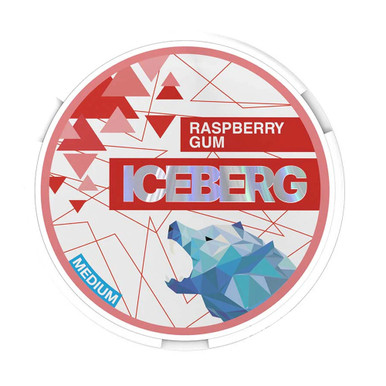
This is our record for Iceberg Raspberry Gum Nicotine Pouches, set out first so that anyone who only wants the numbers can take them and go. The brand is Iceberg. The product name as the manufacturer gives it is Raspberry Gum. The listing carries two declared strengths, 20mg and 50mg, and the price against both of them is £39.90. Our flavour classification holds a single tag for it: berry. There is one product photograph on the listing. It is showing as out of stock at the moment, so the page is here to be read rather than ordered from today.
That last point deserves saying twice rather than being buried. Nothing on this page should be read as an invitation to place an order that cannot currently be filled. If you are here because you already keep this can and want to know when it is back, we do not publish restock dates and we would rather say so than give you a date we would then miss. The listing is live, the record is accurate, and the stock field says no.
The full guide to Iceberg Raspberry Gum Nicotine Pouches
5,927 words on how it eats, who it suits, how to serve it and what to put beside it.
Iceberg Raspberry Gum: the listing as it stands
The empty fields matter as much as the filled ones, because several paragraphs further down are built on them being empty. We hold no cans-per-pack figure for this listing. We hold no pouch count, no can weight, no format designation, no moisture description and no shelf-life figure. None of those gaps will be quietly filled in with a plausible-sounding number anywhere on this page. Where the subject comes up, the page says the field is blank and carries on to something we do know.
The flavour tag is worth a sentence of its own, because it is narrower than the name on the lid. The manufacturer calls this Raspberry Gum. Our classification says berry. It does not say raspberry, and it does not record the confectionery character that the word gum is pointing at. That is a limitation of our tagging rather than a description of the can, and it has one practical consequence: if you go looking for this through our flavour filters, berry is the only shelf that will return it. Nothing narrower will.
The object itself is the familiar round can — a shallow plastic cylinder with a lid that lifts clear and presses back down, small enough to sit flat in a coat pocket without making a shape. The lid printing gives the brand, the flavour name and the declared figure, which is the only reason a stack of similar cans can be told apart without opening any of them. Inside, the portions sit in a ring, packed flat and uniform, so the first one out is a fair sample of the rest.
This is an age-restricted nicotine product sold to adults who already use nicotine. The full required wording sits in its own section near the foot of the page, and it is not optional reading.
A raspberry that has been past the confectioner
The useful thing to understand about this can before anything else is that there are two quite separate flavour ideas both called raspberry, and this one is squarely the second of them.
The first idea aims at the fruit. Tart in front, perfumed underneath, with a fine dusty character sitting below the sweetness that comes from the way a raspberry is built out of many small parts rather than one solid piece. That reading leads with acid and keeps a certain roughness.
The second idea is the confectionery reading, and it is what the word gum in the name is announcing. Here the acid is pulled right back, the sweetness is pushed forward and broadened, and the perfume — that heady, scented top note that raspberry has and almost no other berry does — is turned up past anything the fruit itself manages. The result is rounder, softer at the edges, and considerably sweeter. It does not so much taste of a raspberry as taste of the flavour that the confectionery trade has agreed stands for raspberry, which is a different thing and has been for a long time.
On the tongue that plays out in a particular order. The sweetness arrives first and arrives broad — it fills the space rather than pointing at anything. The perfume comes in behind it a moment later and is the part that makes the flavour identifiable as raspberry rather than as a general pink sweetness. The tartness, when it comes, is a suggestion rather than a statement: enough to keep the whole thing from going flat, not nearly enough to make anything pucker. There is no sour edge here at all, and anyone hoping for one will be disappointed rather than pleased.
Underneath sits the quality that separates a gum-styled flavour from a fruit-styled one, and it is difficult to name precisely because it is a texture impression carried by taste rather than an actual texture. Call it a soft, slightly powdery roundness — the sense of a sweetness that has been smoothed rather than left with its corners on. It is the character you recognise instantly in a pink chewing gum and would never find in fresh fruit. Whether that reads as pleasant or as cloying is entirely a matter of preference, and we are not going to pretend there is a right answer.
The aroma on opening is emphatic. This is not a quiet can. The scent comes up promptly and is sweet and strongly perfumed, closer to a confectionery counter than to a fruit bowl, with the raspberry perfume doing most of the identifying work within a second of the lid coming off. It is worth knowing that the aroma runs sweeter than the taste does, which is common in confectionery-styled flavourings and occasionally surprises people who judged the can by its smell and expected something even sweeter than they got.
The flavour does not hold its opening position for the whole time a portion is in. The perfume fades first, then the broad sweetness narrows down to something simpler and plainer. What is left toward the end is a quiet, unspecific sweetness with very little raspberry left in it. That is the normal course for this style and not a fault in the can.
The pouch, once the lid is off
The format is the same across everything we sell, and nothing about this listing changes it, so this is a short practical account rather than a long one.
A pouch is a small sealed portion that goes in the mouth and sits between the lip and the gum. It is not chewed and it is not swallowed. Most people settle one at the front behind the top lip, where the lip holds it against the gum line and it stays put without being thought about; behind the bottom lip works perfectly well and a fair number prefer it there. If a particular spot turns out to be uncomfortable, moving it along the gum or to the other side usually sorts it. If no spot is comfortable, take it out. Comfort varies enough between people that nothing written on a page can anticipate yours, and persisting with something that is irritating you is not a plan.
How long people keep one in varies so widely that we do not publish an average figure, because any single number would misdescribe most of the people reading it. A few minutes at one end of the range, most of an hour at the other. The flavour running out is the reason most often given for taking one out. With a confectionery-styled sweet flavour like this one, the perfume goes before the sweetness does, so the last stretch is plainer than the first. We set no times, we recommend none, and we give no guidance whatsoever on how many anyone should have. The manufacturer's own usage wording on the can is the instruction that applies.
The lid has a shallow catch chamber moulded into it, kept separate from the unused portions below, and that is where a finished pouch goes when there is no bin within reach. It goes into general waste when there is one — not down a sink, not into a drain, not over a hedge. The can is plastic and can go into household recycling to whatever extent your own council accepts that grade, which differs by area and is not something we can look up for a given address.
On portion size, our record carries no format designation for this listing, so we are not going to tell you whether these are slim, regular or anything else. If the manufacturer uses one of those words, it will be printed on the can and the can is the authority.
Two figures on one page: what 20mg and 50mg are doing there
The listing declares two strengths. 20mg and 50mg both appear, and both are priced at £39.90, so the figure you choose does not move what you pay. That is unusual enough to be worth stating plainly, because on plenty of listings it does.
What the milligram figure is: a declaration by the manufacturer about the contents of the pouch, printed on the can and repeated by us exactly as given. That is the whole of it. It is a label fact. It is not a rating, not a score, not a quality grade and not a recommendation, and a bigger number on a can is not a better can — it is a different declaration on a different can. We publish the figures because they are on the packaging and because customers sort by them. We do not interpret them for anybody, we do not suggest which figure suits which person, and we will not be drawn on it if you ask us, because that is advice we are not in a position to give.
The two figures sit a long way apart, which is the main practical thing to notice. Twenty and fifty are not neighbouring numbers, and a listing that offers both is offering two genuinely different declarations under one flavour name rather than two near-identical options. Anyone moving between the variants is not making a small adjustment.
Our shelves are sorted by these declared figures, and this listing is filed on the Extra Strong shelf — which follows the top of its range rather than the bottom, and is worth knowing if you found the page through a filter and were expecting the lower of the two figures to determine where it sat. The whole sorting scheme is visible across the Medium Strength shelf, the Strong shelf, and the Extra Strong one, and browsing them in order is the quickest way to see how the declared figures across our catalogue are distributed. There are 98 cans filed as Extra Strong at the time of writing, which is a substantial shelf by any measure.
What people keep beside this one
Nobody who buys flavoured cans regularly buys only one flavour, and the reason is simple enough: a single sweet flavour held constantly tends to go quiet on you. The tongue stops noticing what does not change. So most regular customers end up with two or three cans in rotation rather than one, and the interesting question is what goes next to a confectionery-styled raspberry rather than what replaces it.
There are two sensible ways to build that rotation, and they pull in opposite directions.
Pairing by contrast: putting something unlike it alongside
The contrast approach puts a flavour beside this one that shares as little as possible with it, so that returning to either feels like arriving somewhere rather than continuing. Against a sweet, low-acid, heavily perfumed raspberry, the obvious contrasts are the dark, the tart and the savoury-adjacent.
For darkness, Fumi Blackcurrant at £27.90 goes at a berry from completely the other end — blackcurrant is resinous and deep where this is bright and confected, and the two do not blur into each other in the way two red berries would. It is also the cheapest of the berry cans listed alongside this one, which some people factor in when they are building a two-can rotation rather than buying a single.
For something stranger, Maggie Original Jamaican Cherry Tonic Wine, also at £39.90, is the least ordinary flavour idea in this whole neighbourhood of the catalogue. A cherry tonic wine flavour has a bitterness and a depth in it that no confectionery raspberry has anywhere. If your complaint about sweet cans is that they all start tasting the same, that is the listing to read next, and its own page sets out what it declares.
For a tart counterweight, Denssi Berry Beast Energy Pouches at £39.90 is a different proposition entirely — an energy pouch rather than one of the cans in this berry group, and its own listing is the place to see what it holds and what it declares, because we are not going to summarise another product's fields on this page.
Pairing by adjacency: staying in the same family
The other approach keeps everything in the berry family and varies the treatment instead. This suits people who know what they like and are not looking to be surprised, only to avoid monotony.
The nearest relation in spirit is Pablo Exclusive Blue Raspberry at £3.85, which goes at the same confectionery idea from a slightly different direction — blue raspberry is a flavour convention rather than a fruit, and it is the sweetest, most frankly artificial reading of raspberry in general circulation. It is also, at that price, on a completely different pricing basis from this one, and its page explains what that price covers.
Blueberry is the quieter neighbour, rounder and less perfumed than raspberry, and there are several readings of it on our shelves. Clew Blueberry at £39.90 and Cuba Black Blueberry at the same £39.90 are two of them; Killa Blueberry comes in at £33.50 and Nordic Spirit Blueberry at £4.49, which is the widest price spread you will find across four cans nominally doing the same flavour. What each one declares is on its own page, and the price difference reflects how each listing is sold rather than any judgement from us about which blueberry is better.
For a red berry that is not raspberry, 77 Strawberry at £39.90 is the closest thing to a like-for-like swap in the group — strawberry sits next to raspberry in the way people think about berries but is sweeter and less perfumed in practice, which makes it a gentle change rather than a jolt. And if a blend appeals more than a single note, Elf Bar Blueberry Raspberry at £29.90 combines the two ideas in one can, which is a reasonable thing to keep alongside a straight raspberry rather than instead of it.
Every one of those is a separate listing with its own declared figures, its own price and its own stock position, and every one of those pages is the authority on itself. We have given you the flavour reasoning and the price; the rest belongs on the page it belongs on.
Buying rhythm: one can, a spare, and the reorder
This section is about the mechanics of actually keeping a flavour in your rotation rather than about the flavour itself, and it starts with an honest gap.
We do not hold a cans-per-pack figure for this listing. The field is empty in our record. That means we cannot tell you on this page whether £39.90 buys a single can or a sleeve of them, and we are not going to infer it from what similar listings do, because similar listings vary and a guess printed as a fact is worse than an admitted blank. What we can tell you is what the listing says: £39.90, against both the 20mg and the 50mg variant. If the quantity matters to your decision — and for a £39.90 line it reasonably might — the basket is where the quantity is made explicit before you commit to anything, and that is the point at which to check rather than taking a number off a description page.
That gap noted, the general shape of how people buy these is worth setting out, because it is the same whether a listing sells singles or multiples.
Buying one at a time is the flexible approach. You commit to nothing, you can change flavour on a whim, and if a can turns out not to suit you the loss is one can. The cost of that flexibility is friction: you order more often, you pay whatever the delivery arrangement costs more often, and you are more exposed to a stock gap — which, given that this listing is currently showing as out of stock, is not a theoretical concern.
Buying in quantity is the opposite trade. Fewer orders, fewer delivery events, and a buffer against exactly the situation this listing is in today. The cost is commitment: a large quantity of one flavour is a large quantity of one flavour, and a sweet confectionery-styled flavour is one of the harder ones to hold constant for a long stretch, because sweetness is precisely the quality that fatigues fastest. People who buy deep in a mint often do fine. People who buy deep in something like this sometimes find the last part of it a chore.
The spare, and why people keep one
The habit that separates people who never run out from people who frequently do is keeping one unopened can behind the one in use, and reordering when the spare is broken into rather than when the last portion goes. It sounds trivial and it is, but it converts an urgent order into a relaxed one, and it covers the ordinary delays — a slow delivery week, a bank holiday, a listing that has gone out of stock without warning. The whole system costs the price of one extra can and a small amount of forethought.
The reorder itself is less bother if you keep the route short. The Iceberg brand page gathers the brand's listings in one place; the Berry shelf is where this flavour family lives; and everything we stock is the top of the tree if you would rather start wide and narrow down. A bookmark on whichever of those three matches how you actually think about buying will save you more time than anything else on this page.
One more practical note on rhythm. Because this listing is out of stock, anyone who runs a single-flavour rotation on it is currently without a route to it, and the sensible response is to have a second flavour you are content with rather than waiting. That is not us upselling you — it is the same advice we would give about any listing that has gone unavailable, and the pairing section above is written for exactly this situation.
Where this sits in the Iceberg range on our shelves
Iceberg is one of the larger brands in our catalogue. The brand shelf carries forty listings, which puts it among the bigger ranges we hold and means the flavour spread across it is wide rather than narrow.
The sibling cans are worth naming individually, with one thing said plainly before we do. Every Iceberg listing we hold is showing as out of stock at the time of writing, this one included. That is a brand-wide position rather than a run on a single flavour, so the links that follow are for reading and comparing rather than for filling a basket today. Each of those pages carries its own declared figures and its own live stock line, and the live line is the one to trust over this paragraph.
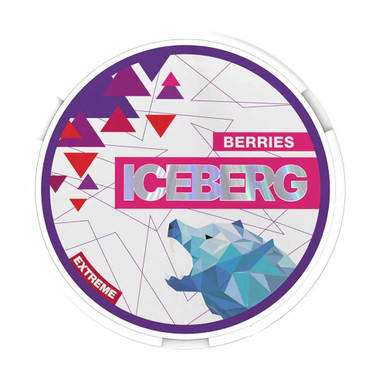
Staying inside the berry family, Iceberg Berries at £39.90 is the plural, blended reading of the same territory — a mixed berry rather than a single perfumed one — so it sits alongside this can as a variation rather than a replacement for it, and it is unavailable at present along with the rest of the range. Iceberg Black Currant, also £39.90 and also out of stock, goes at a berry from the deep, resinous end instead of the confectionery end, which makes it the sharpest contrast the brand itself offers to a sweet raspberry.
Away from berry, Iceberg Apple Lemon Pineapple at the same £39.90 is the brand's three-fruit compound name, and it shows the naming habit described above doing real work — three fruits declared on the front rather than one idea dressed up in a second word. Iceberg Black Mint, £39.90, is the mint-side listing for anyone who rotates a cold can against a sweet one, and Iceberg Black at £39.90 is the plainer-named member of that same darker group. Both are currently unavailable, as is Iceberg Arasaka at £39.90 — a name that tells you nothing at all about the flavour, which is precisely why its own page rather than this one is the place to read what it declares.
Those six are the same-brand cans attached to this record. The brand shelf holds forty listings in total, so they are a sample rather than the whole range, and the shelf remains the place to see all of it at once. Nothing in the paragraphs above is a recommendation to buy any of them; it is a map of what the brand puts on a can and what each of those listings costs, with the stock position stated so that nobody clicks through expecting to order.
What can be said about the range from this listing alone is modest but true. Iceberg's naming runs to compound and confectionery-styled flavour names rather than plain single fruits, and this can is an example of that: not Raspberry, but Raspberry Gum, with the second word doing real descriptive work rather than decoration. It is a brand that tends toward the upper declared figures too, and the presence of a 50mg variant on this listing is consistent with that. Neither observation is a recommendation; both are just what the shelf looks like.
For the sake of orientation across brands, the Pablo brand page and the Cuba brand page are the two other large brand shelves that overlap heavily with this flavour territory, and comparing the three gives you a reasonable map of the sweet-fruit part of our catalogue without having to open thirty product pages.
Keeping a can in the condition it arrived in
Storage is unglamorous and it is the single thing most within your control, so it is worth a few hundred words.
The enemies are heat, direct sun and time. A can left on a car dashboard through a warm afternoon is a can that has been through something, and while we will not describe what that does chemically — that is not our territory and we do not state it — the practical outcome that customers report is a flavour that reads flatter and duller than it did. The fix is entirely preventative: keep it out of direct sun, out of hot cars, off windowsills and away from radiators. Anywhere cool, dark and ordinary — a drawer, a cupboard, a bag pocket that is not against a hot surface — is fine.
The lid is doing more work than it looks like it is doing. Pressing it fully home so it seats all the way round is the whole of good practice; a can carried in a pocket with the lid half on is the most common way people damage their own supply, because the seal is the only thing standing between the contents and the air. A can that lives in a bag with keys and coins in it will also take a physical beating over a few weeks, and a cracked lid rim is not repairable.
Some people refrigerate cans. It is not something we instruct and not something we discourage; we hold no manufacturer storage guidance for this listing and will not invent any. The observation we can pass on without claiming anything is that the can's own printed wording is the only storage instruction with authority behind it, and if it says something different from this paragraph, follow the can.
Once a can has been open for a good while, the character does drift. A sweet, heavily perfumed flavour like this one loses its perfume before it loses its sweetness, so an old open can tends toward plain sweetness with the raspberry character faded out of it. That is one argument against buying very deep in a single sweet flavour, and it is a practical argument rather than a claim about anything.
What there actually is to choose between here
This listing offers one real choice and it is between the two declared figures.
| Variant | Declared strength | Price |
|---|---|---|
| Raspberry Gum | 20mg | £39.90 |
| Raspberry Gum | 50mg | £39.90 |
The flavour is the same across both. The price is the same across both. The only variable on the page is the number printed on the can, and because the price does not move with it, there is no cost argument pulling you in either direction — which means the choice is made on the declared figure alone.
We will not make that choice for you, and we want to be clear that this is a position rather than an evasion. Recommending a strength to a person is advice about how much nicotine that person should have, and that is not something a shop can responsibly do from a description page with no knowledge of who is reading it. What we will do is publish both figures accurately, price them accurately, and file the listing on the shelf that matches. The rest belongs to you and to the manufacturer's wording on the can.
If the two figures on this page are not what you were after, the strength shelves are the efficient way to see what else exists at a given declaration. The Strong listings and the Medium shelf between them cover most of the catalogue below the Extra Strong band, and each listing on them declares its own figure on its own page.
Ordering, delivery and the age check
This is a UK shop selling age-restricted products, and the process reflects that rather than apologising for it.
You must be 18 or over to buy. Age verification applies at checkout and again, if required, at the door. ID may be requested on delivery, and the courier is entitled to refuse the handover if it is not produced or if the person receiving is not plainly of age. That is not a formality that gets waived because an order is small or because you have ordered before. Practically, it means somebody of age needs to be there to take the parcel, and leaving delivery instructions asking for it to be left in a porch is asking for a failed delivery rather than a convenient one.
Delivery timings, carriers and costs are shown at checkout and at the point where they can be stated accurately for your address, which is not here. We would rather quote you nothing on a description page than quote you something that turns out to be wrong for where you live.
On this listing specifically: it is out of stock, so there is nothing to check out with today. When a listing is unavailable the honest thing is to say so at the top of the page, which we have, and not to run an ordering section that implies otherwise. Everything in this section applies to any order you place with us; none of it can be applied to this can right now.
Finding your way back here
Three routes lead to this page and each suits a different way of thinking about what you are looking for.
If you think by brand, start at the Iceberg shelf. If you think by flavour, the seventy-six cans on the berry shelf is where this one lives, and the tag limitation described earlier means that is the only flavour route that reaches it. If you think by declared figure, the Extra Strong shelf is where this listing is filed.
If you would rather see the lot and filter from there, the full catalogue is the top of the tree and every shelf mentioned on this page hangs off it. For people who habitually cross between brands, the Cuba listings and the Pablo range are the two other large brand shelves worth having bookmarked alongside this one.
Questions we get asked about this can
Is this the same as a plain raspberry flavour?
No, and the difference is the point of the name. A plain raspberry flavouring aims at the fruit — tart in front, perfumed underneath, with a fine dry character below that. This one aims at the confectionery version of raspberry: much sweeter, much rounder, with the acid pulled back and the perfume pushed forward. If you have tried both styles you will know within a second which one you have in your mouth. If you have only had fruit-styled raspberry cans, expect this to be noticeably sweeter than that.
How many cans do I get for £39.90?
We do not hold that figure. The cans-per-pack field on this listing is empty in our record, and we are not prepared to guess at it from what other listings do, because they vary. The £39.90 is accurate; what it buys in quantity is shown in the basket, where the quantity is set out explicitly before anything is confirmed. If the answer matters to your decision, that is the place to establish it rather than this page.
Why is it filed under Extra Strong when it also comes in 20mg?
Because the shelf placement follows the top of the listing's declared range rather than the bottom of it. The listing declares 20mg and 50mg; the 50mg figure puts it on the Extra Strong shelf. It is a cataloguing decision on our side, not a statement about the 20mg variant, which declares exactly what it declares regardless of which shelf the listing sits on.
Which of the two strengths should I get?
We will not answer that, and not because we are being difficult. Recommending a milligram figure to a person is advice about how much nicotine they should be having, and a shop cannot responsibly give that from a page with no idea who is reading it. Both figures are published accurately above, both carry the same £39.90 price, and the manufacturer's wording on the can is the guidance that has any standing. The choice is yours to make.
Does the 50mg cost more than the 20mg?
No. Both variants are listed at £39.90. That is unusual enough that people check, so it is worth stating clearly: on this listing the declared figure does not change what you pay. Whatever is driving your choice between them, price is not part of it here.
Is it sweet enough to be sickly?
Honestly, it depends entirely on your tolerance for sweet flavours, and we would be inventing a consensus if we claimed otherwise. What can be said factually is that this is at the sweet end of the flavour spectrum rather than the middle of it, that the acid content is low, and that the sweetness is broad rather than sharp. People who find confectionery-styled flavours cloying will probably find this one cloying. People who seek them out will not.
When will it be back in stock?
We do not know and we do not publish restock dates. The stock field on the listing is live, so the page itself is the most reliable indicator we can offer — when it changes, it changes. We would rather tell you we do not have that information than give you a date we have invented and then miss. In the meantime the berry shelf holds the nearest alternatives, several of which are described further up this page.
What are the pouches made of?
We do not publish ingredient information on our description pages. The can carries the manufacturer's own information, and that is the source with any authority behind it. If you need to know what is in a product before buying it — which is an entirely reasonable position — the packaging and the manufacturer are where to establish it, and we would not want you relying on a shop's summary for something that matters to you.
How long does one last?
There is no single answer worth publishing. The range across customers runs from a few minutes to the better part of an hour, and any average we quoted would misdescribe most people reading it. What is predictable is the shape rather than the length: the perfume goes first, then the sweetness narrows and fades, and most people take one out when the flavour has gone rather than by a clock. We set no times and recommend none.
Can I keep the used ones in the lid?
Yes — the lid has a shallow chamber moulded into it for exactly that, separated from the unused portions below. It is intended as a holding place until you reach a bin rather than as a permanent arrangement, and general waste is where a used pouch belongs. Not a sink, not a drain, not outdoors. The can itself is plastic and goes in with household recycling as far as your council accepts that grade.
Do you have customer reviews for this one?
No. We do not carry reviews, ratings or testimonials on our product pages, and we are not going to characterise what customers think of a can in order to fill the gap. Everything descriptive on this page is our own account of the flavour and the format; everything factual is from our product record. If that means the page tells you less than a page with fifty invented reviews would, we will take that trade.
Is there a smaller or cheaper way to try this flavour first?
Not on this listing — the two variants are the whole of what is offered, and both are £39.90. Cheaper entry points exist elsewhere in the same flavour territory rather than here: the Nordic Spirit blueberry listing at £4.49 and the £3.85 Pablo Exclusive line are at a completely different price point, though they are different flavours from different brands and each page states its own terms. Nothing on this listing gets you a smaller commitment.
Legal and compliance information
This product is for adults aged 18 or over who already use nicotine. We do not sell it to anyone under 18, and we do not offer it to anyone who does not already use nicotine. Nothing on this page is intended to encourage anyone to begin using nicotine, and nobody who does not already use it should be considering this product at all.
Nicotine is an addictive substance.
This product is not a licensed medicine. It is not authorised or intended for any therapeutic purpose, and no claim of any medical or health effect is made for it anywhere on this page. It is not suitable for people under 18, for anyone who does not already use nicotine, or for anyone who is pregnant or breastfeeding. If you have any health concern relating to nicotine use, a qualified healthcare professional is the person to raise it with — not a retailer.
Proof of age may be requested when your order is delivered. Our couriers can and do ask, and they can refuse to hand over an order where age cannot be established. Please make sure someone aged 18 or over is available to receive the parcel.
Keep this product away from children and from anyone it is not intended for. The manufacturer's own warnings and usage information are printed on the can and take precedence over anything written here.
To finish
Iceberg Raspberry Gum is a confectionery-styled raspberry — sweet, broadly flavoured, heavily perfumed and low on acid — offered at two declared figures, 20mg and 50mg, both at £39.90, and currently showing as out of stock. Our record tags it as berry and nothing narrower and holds no cans-per-pack figure, both of which this page has said plainly rather than worked around, and the rest of the Iceberg cans are named above with their stock position given alongside them.
If the flavour description matches what you were after, the listing is the place to watch. If it does not, the berry shelf and the brand page above will take you to the alternatives faster than another paragraph here would.
More from Iceberg


More extra strong pouches
More berry pouches
Where this sits
Iceberg Raspberry Gum Nicotine Pouches appears in these categories. Browse them, or jump to something close.
You might also like