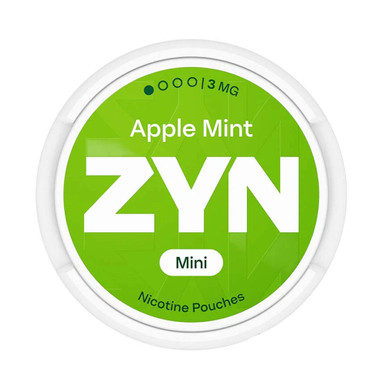
Home / Low Strength / ZYN Citrus Mini Nicotine Pouches
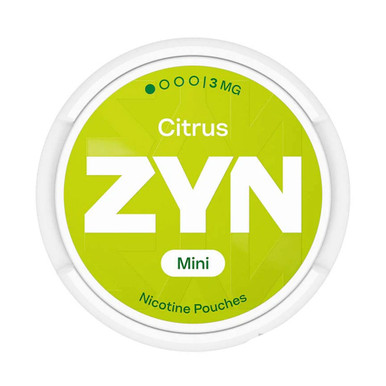
ZYN · 6mg
Read the full guide
ZYN Citrus Mini Nicotine Pouches
£19.99
✔ In stock — ready to ship
100% tobacco-free
Free over £20
Same-day dispatch
Secure checkout
This page describes ZYN Citrus Mini Nicotine Pouches. The listed price is £19.99. Our record holds a single declared strength for this listing — 6mg — and a single flavour tag, citrus. The product name the manufacturer uses is Citrus Mini. This listing is currently out of stock, and we would rather you read that in the first paragraph than discover it at the basket. Everything below is written from the facts in that record, from comparisons with other cans sitting on our shelves, or from a plain statement that something is not a thing we know.
One piece of housekeeping before the description proper. This is an adult nicotine product, sold only to people aged 18 or over who already use nicotine. The full wording on that sits in its own section at the foot of the page, and nothing written here is an encouragement to anyone to consume anything.
The full guide to ZYN Citrus Mini Nicotine Pouches
5,187 words on how it eats, who it suits, how to serve it and what to put beside it.
ZYN Citrus Mini, and what our record actually says
There is a gap in our record worth naming straight away. The field that would tell you how many cans £19.99 buys is empty for this listing. We do not hold a can count for ZYN Citrus Mini. That is not us being coy — the data simply is not there, and we are not going to fill it by guessing from other listings, because a guess dressed as a fact is worse than an admission. If the can count matters to your order, the printed carton and the manufacturer's own labelling are where that number lives, and we would suggest checking it there rather than taking a number off us that we cannot stand behind.
What we can describe is the object. A pouch tin of this kind is a shallow plastic cylinder, small enough to sit under a palm, with a lid that lifts clear of the body and presses back down onto it. The brand name and the flavour word are printed on the lid, and the strength figure appears on the can in whatever form the manufacturer has chosen to print it, which is not always the form our record uses. Inside, the pouches sit in a ring or a loose stack depending on the fill. The lid on a tin of this type usually doubles as a catch compartment — a shallow upper chamber with its own floor, meant to hold used pouches until you are somewhere you can put them in a bin. We come back to that further down, because it is the part of the format people ask about most and the part the packaging explains least.
The word Mini in the product name is a format word. It refers to the physical size of the portion, not to a rank, not to a grade, and not to a position on any sort of scale. The manufacturer names its cans; we list them under the names it uses. Reading a size word as a statement about anything other than size is a mistake we would rather you did not make on our page.
Citrus as a taste, and the limits of a one-word tag
The flavour recorded against this listing is a single word: citrus. That is a family name rather than a fruit. Citrus, as a category, takes in orange, lemon, lime, grapefruit, mandarin and every blend of those, and our record does not break out which of them the recipe is built around. We are not going to invent the detail. What we can do is describe what the word means as a taste category on a shelf of dry pouches, so you know roughly what you are committing to if you order a can labelled with it.
Citrus as a flavour family is defined by sharpness. It sits at the acid, zesty end of the fruit range rather than the soft, jammy end — nearer to peel and juice than to preserve. There is almost always a sweetness underneath, because flavourings in this family generally carry one, but the sweetness sits behind the sharpness rather than in front of it. That is the structural difference between a citrus can and a berry can: berry leads with roundness, citrus leads with an edge. Neither is better than the other. They are built differently and they suit different palates.
The aroma is the first thing that happens. Citrus is a loud smell, and a can of it opened in a quiet room announces itself. It reads as bright and faintly oily, in the way the skin of a squeezed peel is oily — a sharp top note with a thin bitterness sitting underneath it. That bitter undertone is characteristic of the family, and it is the part people either take to immediately or never get on with. If you have tried citrus pouches before and found them slightly astringent at the back end, that undertone is what you were noticing, and it is a property of the flavour family rather than a fault in any particular can.
On the tongue there is no cooling element to speak of. This is worth stating clearly, because people shopping by flavour sometimes assume every pouch carries a cold edge. It does not. A can tagged citrus is tagged citrus and nothing else. If you want cold alongside the fruit, that is a different purchase — XQS Citrus Cooling at £39.90 puts the cooling right in the product name and is in stock as this is written, which makes it the clearer choice if the cold is the part you are after. A can like this one, with a bare citrus tag and nothing else recorded, gives you the fruit character on its own.
Flavour in a dry pouch behaves differently from flavour in something you drink. It arrives fairly quickly, sits at a level for a stretch, and then tails off gradually rather than stopping. The sharp top of a citrus flavour is generally the part that fades first, and what is left towards the end is the sweeter, rounder base. That is normal and it is not the can failing. It is simply the shape a flavour has when it is released slowly over a period of minutes rather than all at once. People who like citrus pouches tend to like the early part best; people who prefer a flat, even flavour across the whole time often find the mint family more consistent.
The mini format, portion size, and how a pouch sits
This is the section the product name points at, so it gets the detail. A mini-format pouch is physically smaller than a standard one — shorter, narrower and generally slimmer through the body. That is the whole of what the word means. It does not describe the contents, it does not describe a rank, and it should not be read as a step in any sequence.
The practical consequence of a smaller portion is that it sits differently. A pouch is placed between the lip and the gum line, usually towards the top and off to one side, and it stays where it is put. A larger portion has more physical presence there — more of it to feel against the inside of the lip, more of it visible if you pull the lip out, more of it that has to be accommodated. A mini portion has less of all three. People who find the standard size intrusive to sit with often report that the mini size is the one they stop noticing. People who find the standard size fine generally have no reason to care about the difference at all.
Visibility is the other practical difference, and it is the one people ask about most. A standard pouch under the upper lip can be visible as a slight fullness in the line of the lip when the face is relaxed. A mini pouch is less likely to show, though whether it shows at all depends on where you put it and on the shape of your own mouth, which is not something a product page can predict for you. We are describing a tendency, not making you a promise about your own face.
How long people keep one in varies widely, and the honest answer is that there is no correct figure. Across the format generally, people report anything from a few minutes to around an hour, with the middle of that range being where most of it sits. What ends a session is usually the flavour tailing off rather than anything else, and since flavour fade is gradual there is no moment that tells you the pouch is finished. You decide. Some people take one out the moment the taste drops; others leave it in long after, because the physical presence is what they are used to. Neither is a rule and we are not going to write one.
The dry format matters to how it behaves in place. A dry pouch generates less moisture than a moist one, which in practice means less to swallow and less reason to keep adjusting it. That makes it a more settled thing to have in position, and it is the main reason people who have used both tend to sort their preference along that line rather than along flavour. It also means a dry pouch tends to sit where you put it without migrating, which matters more than it sounds if you are doing anything that involves talking.
Then there is the end of the session, which product pages almost never cover. A used pouch has to go somewhere. It is not flushable, it does not belong on the ground, and it should not be left where a child or an animal could find it. The catch compartment in the lid exists for exactly this: you lift the top section, drop the used pouch into the upper chamber, and press the lid back on. That holds it until you reach a bin. The compartment has a working capacity smaller than the can's, and the useful discipline is emptying it whenever you open a fresh can rather than letting it build up, because a full catch chamber makes the lid sit badly and a lid that sits badly is how a can dries out. If you are carrying a can with no catch compartment, or the compartment is full, a tissue in a pocket is the unglamorous answer and it works.
Carrying it is straightforward. A tin of this type goes in a jacket pocket, a bag pocket or a car door bin without complaint. It survives being sat on in a back pocket better than you would expect, though the lid can be knocked partly off by a sharp impact, and a lid knocked partly off in a warm pocket is the single most common way people lose a can's quality without noticing. Check it is properly seated when you put it away. That is the whole of the maintenance.
6mg as a printed number, and what it does not tell you
The second thing this page is meant to cover is the milligram figure, which for this listing is 6mg and nothing else — one strength, no variants, one price of £19.99 against it.
Start with what the number is. It is a figure the manufacturer declares and prints, expressed per pouch, and it is the figure we file the product under. That is the entire job it does on our site: it lets us sort a catalogue of several hundred cans into shelves so you can find things. It is a filing number.
Now the part that matters. People talk about these figures as a ladder with rungs to climb, with a beginner's rung at the bottom and an expert's rung at the top. We do not, and we would ask you not to read the page that way. A higher figure is not more advanced, is not a graduation, is not an achievement and is not better. A lower figure is not a training wheel. There is no progression built into this catalogue and we have not arranged one. The numbers are numbers.
The other thing the figure will not do is tell you what a given can will be like for you. Declared milligrams are not directly comparable between brands in the way the shared unit implies, because manufacturers measure and declare on their own terms, and because the portion size, the format and the flavour build all change how a can reads in use. Two cans both printed 6mg, from two different brands, are not interchangeable, and anyone who tells you otherwise is over-reading a label. The number is a manufacturer's declaration, not a measurement of your experience.
We cannot advise you which strength suits you. Not on this page, not by email, not over the phone. That is not modesty and it is not a legal dodge we are hiding behind — it is that the question is about a person and we only hold facts about products. We will tell you accurately what is printed on a can and which shelf we have filed it on. Choosing is yours, and if you want a view on it, it should come from someone qualified to give you one rather than from a shop.
What we can do is show you where the figure sits in our own filing. This listing sits on our Low Strength shelf, which holds fifteen listings. Above it in our filing sit the Medium Strength shelf, which is where the bulk of the catalogue lives, then the Strong shelf, then the Extra Strong shelf. Those are our bands, drawn by us for navigation. They are not endorsements, they are not a recommended route, and they carry no suggestion that any shelf is a destination.
Why the URL says one thing and our shelf says another
There is a disagreement between the name and our filing on this listing, and we would rather point at it than hope you do not notice.
The web address of this page contains the word strong. The catalogue title we hold does not — it is simply ZYN Citrus Mini Nicotine Pouches. And the one declared strength we hold, 6mg, puts the listing on our Low Strength shelf. So the URL carries a word that the title does not carry and that our own band does not support.
The honest explanation is the dull one. Web addresses on a catalogue this size get built from names that have moved around over time, and once an address is published it is better left alone than broken. The address is a filing string, not a description. Where the address and the milligram figure disagree, the milligram figure is the thing we would trust, because it is the figure the manufacturer declares and the figure we sort by. And in any case, neither word — strong in the address nor low on our shelf — is a judgement about the product or a recommendation to anybody.
The same applies to the word Mini, which is a size, and to any other word a manufacturer puts on a can. Manufacturers name products. We list the names. A name is marketing, not measurement, and the only figures on this page we would ask you to rely on are the ones we have printed as facts.
Two citrus cans from the same brand, honestly compared
We list this alongside ZYN Citrus in the standard can, which is in stock and also £19.99, and the natural question is what separates them. Here is what the records actually support.
The format differs: one is named as a mini portion, the other is not. The declared strengths differ — this listing holds 6mg alone, while the standard Citrus listing holds 3mg, 6mg and 11mg, all at the same price. The can count differs in that we hold one for the standard listing, at five cans, and hold none at all for this one. And availability differs right now: the standard can is on the shelf and this one is not.
Here is where we stop. The flavour tag on both listings is the identical single word, citrus. That means our record gives us no basis whatever for telling you the two taste different, and no basis for telling you they taste the same. We do not know. If the recipes differ, our data does not show it; if they are identical, our data does not show that either. Anyone writing a confident paragraph about the flavour difference between these two cans would be making it up, and we would rather leave you with an honest blank than an invented distinction.
So the defensible summary is: same brand, same flavour tag, same price, different portion size, different strength options, different can-count data, different stock position. That is the comparison. It is less satisfying than a taste verdict, and it has the advantage of being true.
Where this sits among the ZYN cans we list
The ZYN brand page collects twenty-two listings, and this is one of them. The brand's cans on our shelves share a price point at £19.99 and a common can style, and they spread across several flavour families and a range of declared strengths.
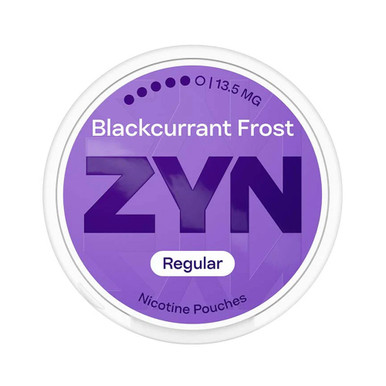
On the fruit side there is ZYN Black Cherry, which is the darker, rounder end of the fruit range and about as far from a citrus profile as the brand's fruit cans get, and ZYN Blackcurrant Forest, which is the sharper berry option and the nearest thing in the range to citrus's acidity without being citrus. Both are in stock at £19.99. If you want fruit with a cold element rather than fruit alone, ZYN Blueberry Mint is the blend in the range and sits at the same price.
Away from fruit entirely, the Coffee Mini listing is the brand's roasted, bitter-leaning option and shares the mini portion size with this can, which makes it the closest match in the range if the format is what you are buying rather than the flavour. On the mint side, ZYN Cool Mint X carries the widest spread of declared strengths of any ZYN listing we hold, from 1.5mg up to 11mg, all at the one price. One more citrus-adjacent option in the range, ZYN Lemon Spritz, is the lemon-forward listing — but it is out of stock at the moment, so treat that link as a look rather than a purchase.
Cans people keep beside a citrus tin
Most people who buy pouches regularly keep more than one flavour going, because a single flavour used continuously starts to flatten out. Here is what sits near this one on our shelves, with a reason for each.
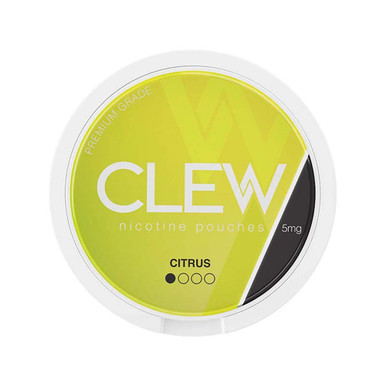
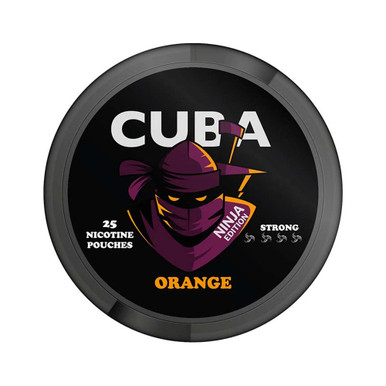
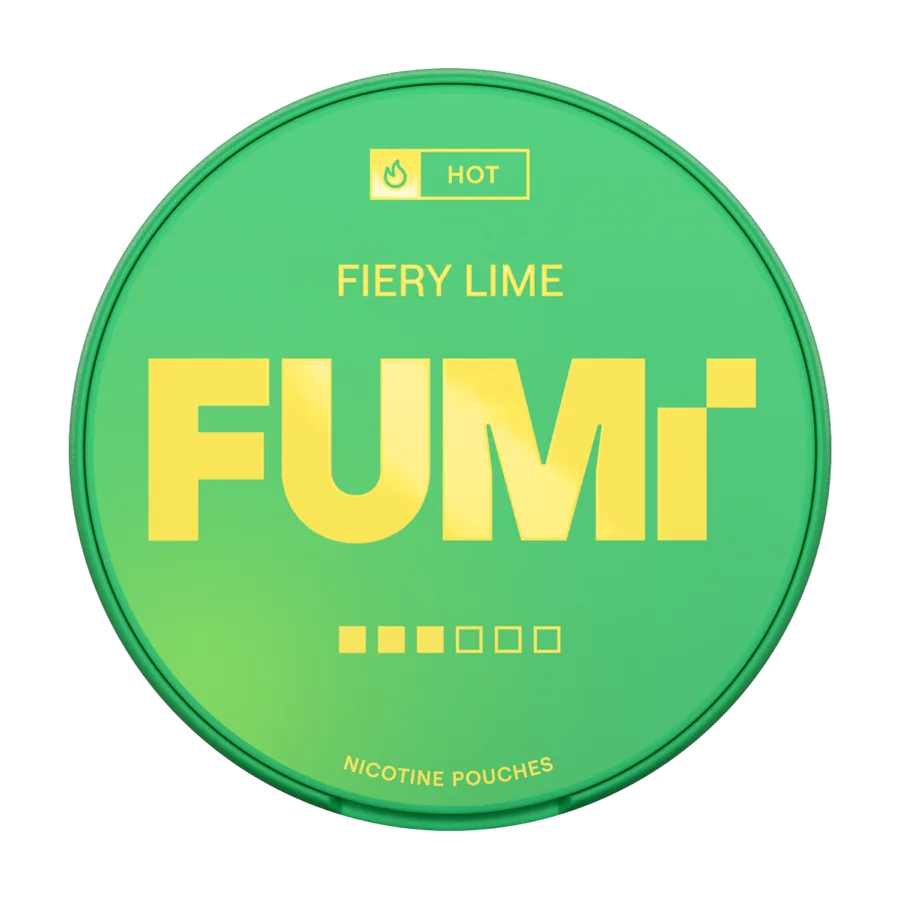
Staying inside the citrus family, Clew Citrus at £39.90 is a ten-can pack rather than a single-can purchase, which changes the maths entirely and suits people who have settled on a flavour and want a box in the cupboard. Cuba Ninja Orange, also £39.90, names its fruit specifically where this can does not, so it is the option if you want the orange end of citrus rather than an unspecified blend. Fumi Fiery Lime at £27.90 goes to the lime end with a spiced note in the name, and Velo Tangy Lime at £4.19 is the cheapest way on the site to find out whether lime is a direction you want to go in at all, being a single can rather than a multipack.
The lemonade listings are their own thing — sweeter and softer than a straight citrus tag suggests. Killa Exclusive Lemonade at £33.50 and Pablo Exclusive Lemonade at £3.85 both sit there, and the enormous gap between those two prices is a pack-size difference rather than a quality difference, so read the listings before you assume one is a bargain.
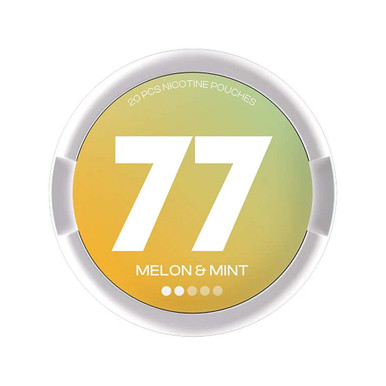
Outside citrus, people who keep a sharp fruit can going often keep something flatter alongside it for contrast. 77 Melon Mint at £39.90 is soft fruit with a cold edge, which is about as different from an acid citrus as the fruit shelf gets. And UBBS Coffee at £19.95 is the roasted option at a single-can price, for the times when nothing sweet appeals.
Keeping a can in decent condition
These are dry pouches, and dryness is the thing that goes wrong. The enemies are heat, direct sun and a lid that is not properly seated, in roughly that order.
Store the can somewhere cool and out of the light — a drawer, a cupboard, the inside of a bag. A car dashboard in summer is the worst place in a normal person's life to keep one, and a windowsill is the second worst. Sustained warmth pulls moisture out of the pouches and takes the top end off the flavour with it, and a citrus flavour, which lives at the top end, shows that loss earlier than a heavier flavour would.
Seat the lid properly every time. A lid resting on the can rather than pressed onto it will let a tin go noticeably flat within days. If you have used the catch compartment, empty it before you close the can away for any length of time, because a used pouch sitting in the lid is both unpleasant to reopen and a reason the lid will not seat cleanly.
Some people refrigerate unopened cans. It does no harm if the can is sealed and it slows the drying, but it is not necessary for a tin you will finish in a normal span, and moving a cold can straight into a warm pocket repeatedly is not doing it any favours. If you have bought a multipack, the sensible arrangement is one can in circulation and the rest somewhere cool and dark until their turn.
Keep every can, open or sealed, where children and animals cannot reach it. That is not a storage tip about quality. It is the one piece of handling advice on this page that is not about the product at all.
Choosing between the options this listing offers
On this particular listing the choice is narrow, which makes it easy to describe. There is one declared strength, 6mg, and one price, £19.99. There is no second strength to weigh up and no pack-size choice recorded against it, because we do not hold a can count.
If you want a choice of strengths under the same flavour and brand, that exists elsewhere in the range rather than here, and we have linked it above. If you want a choice of pack sizes, the multipack listings on our shelves are where that lives, and the per-can arithmetic on those is worth doing yourself before you order — divide the listed price by the stated can count and compare that against the single-can listings, rather than comparing headline prices, which will mislead you every time.
What we will not do is tell you which of those to pick. The strength question in particular is one we do not answer, for anyone, ever. We publish what is printed and where we have filed it, and the decision stops with you.
Buying, delivery, and the stock position
The honest headline first: this listing is not currently available to buy. It is out of stock. The page stays up because the product exists and people look for it, and because a page that vanishes when stock does is worse for everyone than a page that says so. If you came here to order, the options are to wait, or to take one of the in-stock links above.
When a listing here is available, ordering is ordinary online shopping. Sales are restricted to people aged 18 or over, and that restriction is real rather than a box to tick past. Age verification runs on orders, and where it cannot be satisfied electronically we will ask for something further before an order goes out. Our courier may also ask to see photographic ID at the door, and the driver can refuse to hand over the parcel if satisfactory ID is not produced. If nobody of age is available to receive it, the parcel does not get left.
Delivery timings, carriers and costs are shown at checkout, and those are the figures that apply to your order rather than anything summarised in body copy, which goes stale. Prices quoted on this page — £19.99 for this listing, and the figures quoted against the linked cans — are what our record holds as this page is written, and the basket is the authority if the two ever disagree.
Finding your way back to this page
This listing sits at three points in the site's navigation, and any of them will bring you back. It is on our Low Strength shelf by its declared 6mg, on the ZYN brand page by its brand, and on the citrus flavour shelf by its flavour tag, alongside the other twenty-four listings we have tagged that way.
If none of those is the right entry point, everything we stock is the flat list of the whole catalogue, and the brand pages are usually the faster route when you know what you are after. The Pablo range and the Cuba range are two of the larger brand shelves we keep, and both are worth a look if you are browsing rather than repeating an order.
Questions we are actually asked
How many cans do I get for £19.99?
We do not hold that figure for this listing. The field is empty in our record and we are not going to fill it with a guess taken from other products. The printed carton carries the count, and the basket will show you exactly what is being charged for before you commit. We would rather tell you plainly that we do not have the number than publish one we cannot stand behind.
Is the mini size weaker than the standard size?
Mini describes the physical portion, not the declared figure on the can. The strength printed on a can is the strength printed on it, and a smaller portion does not automatically carry a lower declared figure — that depends entirely on the individual listing. For this one, the declared strength we hold is 6mg. Read the figure rather than inferring anything from the size word.
Does this taste the same as the standard ZYN Citrus can?
We do not know, and we will not pretend otherwise. Both listings carry the same single flavour tag in our record — citrus — and an identical tag is not evidence that the recipes match, nor evidence that they differ. Our data gives no basis for a distinction either way. If the difference matters to you, the only way to settle it is to try both, and one of them is currently unavailable.
Which citrus fruit is it?
Our record says citrus and stops there. It does not specify orange, lemon, lime or a blend, and we are not going to assign one. If a specific fruit is what you want, other listings on our shelves name theirs in the product title, and we have linked several of those above. The can's own labelling is the place to look for any further detail on this one.
How long should I keep a pouch in?
There is no should. People report anything from a few minutes to around an hour, and what usually ends it is the flavour tailing off rather than a timer. Because the fade is gradual, no moment announces itself as the end. That is a decision for you, and it is not one a product page is in a position to make on your behalf.
Can you tell me which strength to buy?
No. We do not advise on strength for anyone, under any circumstances. We publish the declared milligram figures exactly as the manufacturer states them and we file each listing on a shelf accordingly, and that is the whole of what we will do. If you want a view on the question, it needs to come from someone qualified to give you one, not from a shop that only knows about cans.
Is a higher number better?
No, and the question contains an assumption we would push back on. The figures are not ranks and the shelves are not levels. A higher declared figure is not more advanced, not a graduation and not an improvement on a lower one, and the catalogue is not arranged as a route from one to another. They are filing numbers that let us sort several hundred listings into groups you can navigate.
What do I do with a used pouch?
Put it in the catch compartment in the lid, if the can has one, and empty that into a bin when you get to one. It does not go down a toilet, it does not go on the ground, and it should not be left anywhere a child or a pet could get at it. If the compartment is full or absent, a tissue in a pocket does the job until you find a bin.
Why does the web address say strong when the shelf says low?
Because addresses on a catalogue this size are built from names that have shifted over time, and changing a published address breaks links for everyone. The address is a filing string rather than a description. The declared strength, 6mg, is the figure we sort by, and that is what puts this listing on the Low Strength shelf. Where the two disagree, trust the milligram figure.
When will it be back in stock?
We do not have a date. Stock on individual listings moves for reasons that sit with suppliers rather than with us, and publishing a date we cannot keep would be worse than saying this. The page will show as available when it is available. In the meantime the in-stock links on this page are live listings you can actually order from today.
Can I keep cans in the fridge?
You can, and a sealed can takes no harm from it. It is not necessary for a can you are going to work through in a normal span, and repeatedly moving a cold tin into a warm pocket is not doing the contents any good. Cool, dark and out of direct sun is the whole requirement — a drawer does the job as well as a fridge does.
The legal notice that goes with this can
This is an 18+ product. We sell it only to adults aged 18 or over who already use nicotine, and we will not sell it to anyone else. Nicotine is an addictive substance. This product is not a licensed stop-smoking medicine and is not offered, described or intended as one. It is not intended for non-smokers, for anyone who does not already use nicotine, for under-18s, or for anyone who is pregnant or breastfeeding. Photographic ID may be requested on delivery, and the driver can refuse to hand over the parcel if satisfactory ID is not produced. Keep this product out of the reach of children and animals.
Last word on this listing
ZYN Citrus Mini is a £19.99 listing with one declared strength of 6mg, a single citrus flavour tag, a mini portion size, no can count in our record and no stock on the shelf at the moment. That is a short list of facts, and it is the whole of what we know. The rest of this page has been format, comparison, storage and navigation, because those are the things a shop can talk about honestly. Where we could not answer something — the fruit, the can count, the taste difference against the standard can, the return date — we have said so rather than filled the space. If the gaps are the deciding factor for you, the printed can and the basket are where the remaining detail lives.
More from ZYN
More low strength pouches

More citrus pouches
Where this sits
ZYN Citrus Mini Nicotine Pouches appears in these categories. Browse them, or jump to something close.
You might also like