Home / Medium Strength / ZYN Red Fruits Nicotine Pouches
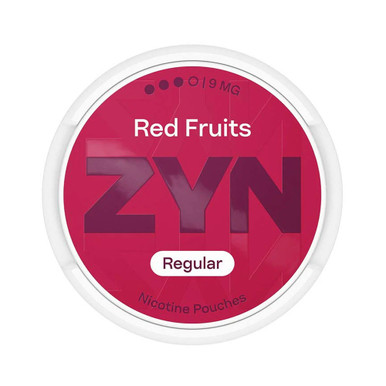
ZYN · 9mg · 5-can pack
Read the full guide
ZYN Red Fruits Nicotine Pouches
£19.99
✔ In stock — ready to ship
100% tobacco-free
Free over £20
Same-day dispatch
Secure checkout
ZYN Red Fruits Nicotine Pouches are listed at £19.99 for five cans, in a single declared strength of 9mg, and the listing is in stock at the time of writing. One variant, one price, one image. That much is ordinary.
What is not ordinary is the flavour field. It is empty. Not vague, not broad — empty. Most listings on this site carry at least one flavour tag, and that tag is what puts a can on a flavour shelf and lets somebody filter their way to it. This one carries none, which means it appears on exactly two shelves rather than the usual three: our Medium Strength shelf, on the strength of the declared 9mg, and the ZYN brand page, on the strength of the name. It is on no flavour shelf at all.
The full guide to ZYN Red Fruits Nicotine Pouches
5,062 words on how it eats, who it suits, how to serve it and what to put beside it.
Red Fruits: one declared figure, and an empty field where the flavour tag should be
That is an unusual thing to lead a product page with, and we are leading with it deliberately, because everything else on this page depends on it. When a record holds a flavour tag, a page can at least say which family a can has been filed into. When the field is empty, the name is the entire flavour record. Anything this page says about how a red-fruit blend tastes is therefore an account of what the name points at and how flavours of that description behave in this format — not a reading from data we hold, because on flavour we hold nothing.
We could have filled the gap. It would have been easy to write "berry" into the field on the reasonable assumption that red fruits are berries, and nobody would have queried it. We have not done that, and we will not, because a tag invented by a shop to tidy up a listing is worth less than an honest blank. If you filter our Berry shelf, this can will not be in the results. That is a real limitation of the filing and you should know about it rather than discover it.
What the name supports, and what it does not
"Red Fruits" is a plural, and that is the most useful word in it. A blend name rather than a single-fruit name tells you to expect several things in combination, with no one of them carrying the flavour alone. In practice that is the difference between a can that tastes recognisably of one fruit and a can that tastes of a family — the way a jam made from mixed fruit reads as jam first and as its components second.
The name also says what it does not say, which is worth reading carefully. There is no sharpness word in it. There is no confectionery word, no ice or frost word, no mint word, and nothing pointing at a sour or a cooling edge. On other listings such a word is the only signal you get that a flavour has been built with an extra dimension to it, and a name without any of them points at a plain, unornamented fruit blend. That is not nothing — a bare name is itself a signal, and it is close to the only flavour signal this listing carries.
Which red fruits? We do not know and we will not guess. The term ordinarily covers strawberry, raspberry, redcurrant and cherry, and sometimes reaches to plum or to red apple, but ordinarily is not a specification and the composition is entirely the manufacturer's to state. The can is the only place that information can be found, and we would rather send you to the can than furnish you with a list we have assembled ourselves.
The same limitation affects any comparison you might want to make with other red-fruit cans on our shelves. With no tag on this record at all, there is no tag-level basis for distinguishing this can from any other red-fruit flavour in the catalogue, and no tag-level basis for saying they are the same either. Two cans with related names might be built to entirely different profiles or might be near-identical; our data cannot tell you which, and inventing a distinction to fill the silence would be worse than the silence. Where our filing gives no basis for a comparison, the honest thing is to say so and stop.
The taste and aroma a red-fruit blend gives
Within those limits, here is what a blend of this description generally does. The dominant register is sweet rather than sour. Red fruits are the sweet end of the fruit spectrum — strawberry in particular has very little acid behind it — and a blend built from them reads as jammy and rounded rather than bright.
Underneath the sweetness there is usually a slight seediness, which is the raspberry-and-redcurrant character showing through. It is a thin, faintly dusty note that stops a red-fruit blend from being purely sugary, and it is the thing that separates a fruit blend from a sweet-shop flavour. Where a blend leans on cherry, there is also a trace of bitterness at the back, which is cherry's contribution to almost anything it appears in.
The aroma on opening leads with the sweet layer. Red fruit smells like jam rather than like fresh fruit in this format, and it carries further across a room than a mint aroma does. That is a practical consideration rather than a criticism, and it matters mainly if you open cans in shared spaces.
Across the life of a portion, a blend of this kind holds flatter than a sharp flavour does. There is no sour top note to burn off in the first two minutes, so the opening is less dramatic and the plateau begins sooner and runs longer. People who like a loud first minute sometimes find blends like this understated; people who dislike the drop-off after a bright opening tend to prefer them. Neither reaction is the correct one.
There is no cooling character implied anywhere on this record. No mint tag, no ice word, nothing. On the evidence we hold, this is a warm fruit flavour without a cold edge, and anybody moving here from a mint-blended fruit can should expect the difference to be substantial rather than subtle.
Nine milligrams, and the company it keeps on our shelves
The declared figure on this listing is 9mg. That is a number printed on a can by the manufacturer and carried into our record unchanged. It is not a rating, not a score, not a rank, and not a measurement of anything a person will experience. We publish it because it is printed there and because people filter by it, and that is the whole reason it appears.
What a shared shelf actually means
At 9mg this can lands on the medium shelf, which is by far the busiest strength band we operate — a hundred and thirty-five listings, well over a third of the catalogue. Our strength shelves are our own filing rather than an industry standard, so the boundaries between them are ours and nobody else's. What a shared shelf means, precisely, is that two cans carry declared figures that fall within the same range we have drawn. It does not mean the two are equivalent.
That distinction matters more than it sounds, because cans from different manufacturers arrive at their declarations by their own methods, and a figure is only strictly comparable with other figures from the same range. Comparing a 9mg from one brand against a 9mg from another is a looser exercise than the matching numbers suggest, and a page that implied otherwise would be doing you a disservice.
The company this can keeps at similar figures
Here is what else sits in the medium band and nearby on our shelves, with the prices our record holds. All of these are available at the time of writing.
| Listing | Price on our record | Flavour direction |
|---|---|---|
| ZYN Red Fruits | £19.99 | Red-fruit blend, no tag on record |
| UBBS Cherry | £19.95 | Single red fruit |
| Velo Bright Spearmint | £4.19 | Mint |
| Nordic Spirit Blueberry | £4.49 | Dark berry |
| Edge Spearmint | £14.95 | Mint |
| Fumi Blackcurrant | £27.90 | Tart dark berry |
| SYX Apple Kiwi | £29.90 | Orchard and green fruit |
| White Fox Double Mint | £34.90 | Mint |
| Klint Arctic Mint | £36.90 | Cold mint |
| 77 Apple Mint | £39.90 | Fruit with a mint edge |
| Pablo Silver Edition Blue Raspberry | £39.90 | Confectionery berry |
The first thing that table shows is a price spread of nearly ten to one across listings sitting in similar territory, and the second is that price tells you almost nothing about a can until you know what it buys. Velo Bright Spearmint at £4.19 and Nordic Spirit Blueberry at £4.49 are single-can listings. This one at £19.99 is five cans, which is a shade under £4.00 each. Read that way, the three are in the same territory, and the apparent gulf between £4.19 and £19.99 disappears entirely. Meanwhile 77 Apple Mint and Pablo Silver Edition Blue Raspberry, both £39.90, buy quantities stated on their own listings and not on this one, so no comparison is possible from here. The dull rule is the only safe one: check what a price covers before you compare it with anything.
Nearest in flavour, rather than in number
If what you want is something close to a red-fruit blend rather than something close to 9mg, the shelf offers a few. UBBS Cherry at £19.95 takes one of the fruits a red blend usually contains and gives it the whole can, which is the clearest way to find out whether cherry is the part of a blend you like. Fumi Blackcurrant at £27.90 goes darker and considerably more tart — blackcurrant is the sharp end of the berry family and behaves nothing like a red blend. SYX Apple Kiwi at £29.90 leaves the red family entirely for green fruit and acidity, which makes it a contrast rather than a substitute.
What we will not do with the number
We will not tell you which declared figure suits you, and this is not a formality. We do not know you, we hold no information that could support such a judgement, and a retail page is not a place where that judgement can responsibly be made. A higher figure is not a better can and a lower figure is not a lesser one — they are different declarations on different products. Anyone with questions about their own nicotine use should put them to a healthcare professional rather than to a shop.
Storage, condition, and why a can goes off long before it runs out
Most disappointing cans are not badly made cans. They are well-made cans that have been stored carelessly for three weeks, and the difference between the first portion and the last is almost entirely down to what happened to the can in between.
Dry portions and damp ones
Portions in this style are dry to the touch. Pick one out and your fingers stay clean; the can's interior stays clean too, and the lid compartment does not become sticky. Other formats on the market are noticeably damp in the hand and behave differently in storage — a damp portion has something to lose to the air and loses it faster, while a dry one is more stable but drier still by the end of a long-open can.
The practical consequence for a dry can is that its enemy is time-with-air rather than time alone. A can opened twice a day for a fortnight is in better condition at the end than one left standing ajar for an afternoon. This is a handling observation about the format, not a statement about what a portion is made from, which is not something we publish.
The lid, which causes more problems than everything else combined
The join between lid and body is an interference fit rather than a sealed gasket. It is either properly seated or it is not, with very little in between, and — this is the important part — an unseated lid does not look unseated. It looks closed.
The reliable tell is resistance. A can that opens more easily than you expected has been standing ajar since the last time you used it, and everything inside has been meeting open air for however long that was. The fix costs nothing: press until it clicks, and confirm by feel rather than by eye. If you take one habit away from this page, take that one, because it is worth more to the condition of a can than anything else you can do.
Heat
Heat is the other major factor. A drawer, a cupboard, a bedside table, an inside pocket — all perfectly fine. A car in summer, a windowsill in the afternoon, a shelf above a radiator, a bag left out in the sun — all avoidable and all worth avoiding.
Warmth does two things to a dry can. It dries the contents further, and it flattens the top of the flavour first. On a sweet red-fruit blend the casualty is the aromatic part — the jam-and-fresh-fruit character that makes the flavour interesting — leaving something duller and flatter behind. A can that has cooked is not dangerous and is not spoiled in any meaningful sense. It is simply less good than it was, permanently, and no amount of cooling afterwards restores it.
Cold
Cold is far less of a problem than people fear. A fridge does no harm at all, though nothing about the format requires it. If you do keep cans cold, take one out a few minutes before using a portion: cold mutes flavour considerably, and more than one person has concluded that a can had gone off when in fact it had simply not warmed up. Freezing achieves nothing and is not worth the drawer space.
Knocks, bags and stacking
Physical handling is the quiet killer. A can loose in a bag alongside keys is having its lid worked at from every angle, and once the rim fit has been loosened it never tightens again — after which every point made about the lid above applies permanently. An inner pocket or a separate pouch solves it at no cost.
Cans stack neatly, flat top to flat bottom, which is the tidiest way to keep several in a drawer instead of having them roll about. A stack also makes it obvious at a glance how many you have left, which is a small thing that prevents the more annoying problem of discovering you have none.
Dates
Check what is printed on the can. We do not hold or publish batch numbers or date information on our listings, and we are not going to estimate them, because an estimate on that would be worthless. Store the can sensibly, keep the lid properly shut, and keep it well out of reach of children and animals — which is the one point in this whole section that is not negotiable.
The format, briefly, for anyone who has not used one
A slim portion is a narrow rectangle with rounded ends. It goes under the upper lip, beds into the channel between lip and gum along its length, and is left alone. It is less visible than the older round shape and puts less pressure on any single patch of gum. Placement is a matter of a second or two, and most people settle on one side and never revisit the decision.
How long a portion stays in varies enormously between people, and any single figure quoted as typical would be misleading. What is consistent is the arc: flavour is most present early, settles onto a plateau, and fades over a long tail. Most people change a portion somewhere in that tail rather than waiting for it to disappear entirely, because a portion with no flavour left is doing nothing.
Removal is the reverse of placement, and the used portion goes into the compartment moulded into the lid. That compartment takes three used portions comfortably and four at a push; at five the lid stops seating flush, which leaves the whole can standing open — so overfilling it costs more than a short walk to a bin. Used portions go in general waste, never down a sink, and never anywhere a child or an animal could reach.
Five cans, and how a pack that size actually gets used
A five-can pack changes the shape of buying more than people expect, and it is worth thinking about before rather than after.
The obvious effect is that you reorder roughly a fifth as often. That is genuinely useful, because nobody reorders on a schedule — what happens in practice is that a can gets light, the thought registers, and nothing is done for several days until the can runs out at an inconvenient moment. A pack that lasts five times as long produces that moment five times less often.
The less obvious effect runs the other way. Ordering five times less often means five times more chance that something has changed between one order and the next: a listing can go unavailable, a price can move, a flavour can leave the range entirely. Somebody reordering fortnightly notices those changes immediately. Somebody on a ten-week cycle finds out at the worst possible moment, with an empty can in hand.
The habit that covers this costs almost nothing. Keep one unopened can of something else, from a different brand, somewhere you will not eat into it casually — a drawer at home rather than a coat pocket. The point of a spare is not that it is your favourite; it is that it exists on the day your usual listing is not there. A spare from a different brand is more useful than a second can of the same one, because availability problems often run along brand lines rather than flavour lines.
The other thing five cans of one flavour represents is a commitment to that flavour. A blend is easier to commit to than a single-fruit can, because blends tend to wear better over repeated use — there is more going on to notice — but five is still five. Anyone unsure whether a sweet red-fruit direction suits them can find out far more cheaply from one of the single-can listings on the shelf than from a five-can pack of anything.
Opening a new can, and the first portion from it
A new can is sealed, and the seal comes away in one piece. The first opening is stiffer than every subsequent one, which is normal and is not a sign that anything is wrong; the fit loosens slightly with use and then stays where it is.
The first portion out of a fresh can is the one people judge a flavour by, and it is worth knowing that it is not quite representative. A newly opened can has had the longest undisturbed time for its aroma to concentrate, so the smell on first opening is the strongest it will ever be, and the first portion tends to read as slightly louder than the ones that follow. That is not the can deteriorating afterwards — it is the first one being unusually favourable. Judging a flavour on portion three or four gives a truer picture than judging it on portion one.
The other first-can habit worth forming is checking the lid seats properly from the start. A lid that has never been fully closed since the seal came off will have the whole can in poor condition within a week, and that is the most common reason somebody concludes a particular flavour is weak when the flavour had nothing to do with it.
Where this sits in the brand's range
Twenty-two ZYN listings sit on our shelves, grouped loosely into a large mint block, a berry block, a handful of single-fruit cans and two or three deliberate outliers. A red-fruit blend belongs with the berry group by description, even though the missing tag means it does not file with them.
Two things are true of the range as we hold it. The pricing is flat — every ZYN listing on our record is £19.99, whatever the flavour or the declared figure — so price carries no information about which can to choose. And the strength ladders are uneven: some flavours in the range carry three or four declared figures, while this one carries a single 9mg. If you use another can from this brand at a different figure, there is no equivalent rung under this name, and we are not going to imply there is.
What people keep alongside it
Rotation is the normal pattern rather than the exception — two or three cans on the go, changed when one gets dull. The useful question is which companion gives you an actual change rather than a near-repeat, and for a sweet fruit blend the answer is almost always something with an edge.
Within the brand, ZYN Blackcurrant Forest at £19.99 is the tart counterpart — the same fruit family, a completely different balance. ZYN Black Cherry at the same price takes one fruit that a red blend usually contains and builds the whole can around it, bitterness and all, which makes it the most instructive comparison in the range. ZYN Citrus swaps sweetness for acidity altogether.
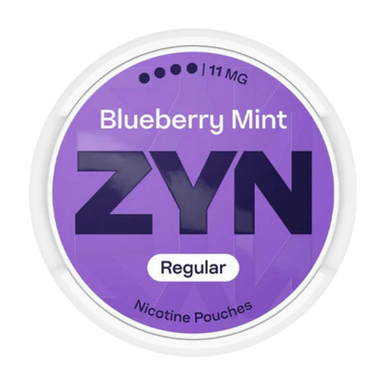
For a complete change of direction, the brand's non-fruit cans do the job better. ZYN Cool Mint X is the plain mint option, ZYN Blueberry Mint splits the difference by keeping fruit and adding a cold edge, and ZYN Coffee Mini is the outlier — roasted, bitter and in a smaller portion — which some people keep specifically to reset the palate between fruit cans. All are £19.99 and all are available.
Outside the brand, the mint cans are the sharpest available contrast to a sweet blend. Klint Arctic Mint at £36.90 and White Fox Double Mint at £34.90 are the cold end of that, while Edge Spearmint at £14.95 is a softer, sweeter mint that sits closer to a fruit can in character than the arctic-styled ones do.
Strengths and pack sizes on this listing
There is very little to decide here, and it is better to say that than to manufacture a decision. One declared figure, 9mg. One price, £19.99. One pack size, five cans. No ladder, no alternative quantity, no variant pricing.
If a choice of declared figure is what you want, other listings carry one and this does not. The strength shelves are the quickest way to see what exists at each level: the Strong shelf and the Extra Strong band sit above the medium one, and everything we stock can be filtered by brand, flavour and declared strength together. Bear in mind, if you use that filter, that this particular listing will not appear under any flavour because of the empty field described at the top of this page.
Buying, delivery and age verification
This listing is in stock at the time of writing, which makes it one of the more straightforward purchases in the brand's range — several of the alternatives elsewhere in the catalogue are not currently available, and each listing states its own position on its own page.
Everything we sell is 18+ and age-restricted. You confirm your age at checkout, and it is not a step we are able to waive. ID may be requested on delivery, and a driver who is not satisfied is entitled to decline to hand the parcel over. We do not sell to anyone under 18, by any arrangement.
Delivery windows, charges, returns and the status of an individual order are covered by our delivery and returns information rather than by a description page, which is the right place for it because it is kept current. What this page can tell you is what the record holds: £19.99, five cans, 9mg, available.
Navigating on from here
This can sits on two shelves and only two. The brand's twenty-two listings are the place to go if the format and the can matter to you more than the flavour, and they are also where the flavours related to this one are filed. The medium band's hundred and thirty-five listings are where to go if the declared figure is what you are working from.
For a wider view, the Pablo range and the Cuba brand page are two of the largest we carry and both hold red-fruit flavours of their own. There is no flavour shelf to send you to from this page, for the reason given at the top, and rather than send you somewhere approximate we would rather be clear about the gap.
Questions we get about this can
Why is there no flavour listed for it?
Because the flavour field on our record is empty, and we have chosen not to fill it with a guess. A tag written in by a shop to tidy up a listing is worth less than an honest blank, and it would be misleading to have this can appear in filtered results on the strength of our assumption rather than on information. The consequence is real: this listing will not show up when you filter by flavour.
Which fruits are in it?
We do not know and will not say. "Red fruits" commonly refers to strawberry, raspberry, redcurrant and cherry, but that is general usage, not a specification for this can. The manufacturer states what it chooses to state on the packaging, and that is the only reliable source.
How is it different from other red-fruit cans you sell?
On the data we hold, we cannot tell you. This listing carries no flavour tag at all, so there is no tag-level basis on which to distinguish it from, or equate it with, any other red-fruit flavour in the catalogue. We could write a confident-sounding paragraph about how they differ, but it would be invention, and an invented distinction is worse than an admitted gap.
Is 9mg the only option?
Yes, on our record. One variant, one declared figure, one price. Other flavours in the range carry ladders of three or four figures; this one does not, and we are not going to suggest otherwise. The strength shelves will show you what exists at other levels across the catalogue.
Is a 9mg from this brand the same as a 9mg from another?
Not necessarily, and the prudent assumption is that it is not. Manufacturers arrive at their declared figures by their own methods, and a number is only strictly comparable with other numbers from the same range. A shared shelf on our site means two declared figures fall within the same band we have drawn, which is a filing fact rather than a statement of equivalence.
Why is it £19.99 when other listings are £4?
Because this is five cans and several of those are single cans. At a shade under £4.00 a can, the per-can figure is in much the same territory. Our catalogue mixes both kinds of listing without flagging the difference prominently, which is exactly why it is worth checking what a price covers before comparing it.
How many pouches are in a can?
Our record holds cans per pack — five — but not portions per can. That figure is printed on the can and we do not hold it, so we are not going to quote one. It is a fair question with an unsatisfying answer.
Does it have a cooling or minty edge?
Nothing on our record suggests one. There is no mint tag, no ice word in the name, and no flavour data at all. On that evidence it is a warm fruit flavour with no cold element. If a cold edge is what you want, the mint cans linked above are explicit about it in their own names.
Which strength should I choose?
We cannot advise on that, and we would not even if this listing had a ladder to choose from. We do not know you, we hold nothing that would let us judge, and a shop is not the right source for it. The figure is published because it is printed on the can and because people filter by it.
How long will an opened can stay good?
Longer than most people expect, provided the lid is properly seated every time and the can is kept out of heat. The variable that matters is cumulative exposure to air, not calendar days. A can used regularly and closed properly outlasts one that spent a single warm afternoon standing ajar on a windowsill.
Why did the first can seem better than the second?
Usually because the first portion from a freshly opened can is the most favourable one you will get — the aroma has had the longest undisturbed time to concentrate, and the first portion reads slightly louder than the ones after it. Judging a flavour on the third or fourth portion gives a truer impression. The other common cause is a lid that has not been fully seated since the seal came off.
Is a blend more or less interesting than a single-fruit can?
Different rather than better, and the trade is fairly consistent. A single-fruit can is more distinct and easier to recognise, but there is less to notice in it after the first week. A blend is harder to describe and tends to wear better over repeated use because there is more going on. Which of those you want is personal, and cherry and blackcurrant cans are linked above if you want to compare the two approaches directly.
Can I combine it with other products in one order?
Yes — an order can include any in-stock listings across brands, flavours and strengths. Buying two or three flavours at once is the usual pattern, and the section above on what to keep alongside this can covers which combinations give a genuine change rather than a near-repeat.
The compliance section
This product is sold to adults aged 18+ who already use nicotine, and on that basis only.
Nicotine is an addictive substance.
It is not a licensed stop-smoking medicine and is not intended for non-smokers, for anybody who does not already use nicotine, for under-18s, or for anyone pregnant or breastfeeding. Nothing on this page is a health claim, a medical claim, or any encouragement for a person to begin using nicotine.
Your age is verified at checkout and ID may be requested on delivery. Keep the can out of reach of children and animals. Questions about your own nicotine use belong with a healthcare professional and not with a retailer.
Closing note
ZYN Red Fruits is a five-can pack at £19.99, declared at 9mg, currently available, and filed on two shelves rather than three because its flavour field is empty. The name points at a sweet, jammy, unornamented blend with no sharp or cooling edge signalled anywhere on the record. What we cannot tell you — which fruits, how it compares with other red-fruit cans, how many portions are in a can — we have said we cannot tell you, rather than filling the gaps with something that reads well.
More from ZYN

More medium strength pouches
More zyn pouches

Where this sits
ZYN Red Fruits Nicotine Pouches appears in these categories. Browse them, or jump to something close.
You might also like