Home / Medium Strength / ZYN Cactus Spice Nicotine Pouches
ZYN · 9mg–11mg · 5-can pack
Read the full guide
ZYN Cactus Spice Nicotine Pouches
£19.99
✔ In stock — ready to ship
100% tobacco-free
Free over £20
Same-day dispatch
Secure checkout
ZYN Cactus Spice Nicotine Pouches is marked in our catalogue as not currently in stock. That goes at the top rather than in small print near the bottom, because it changes what you are reading this page for. Everything below is still accurate and still worth having — it will tell you whether the can is worth waiting for, and it will point you at things we actually hold — but the order button is not available on this one.
The record in full. Brand: ZYN. Product name: Cactus Spice. Price when held: £19.99. Pack: 5 cans. Two declared strengths, 9mg and 11mg, both priced at £19.99. Flavour tag: mint.
The full guide to ZYN Cactus Spice Nicotine Pouches
5,078 words on how it eats, who it suits, how to serve it and what to put beside it.
Stock position first: this listing cannot be ordered today
That last line does not match the product name, and rather than smooth it over we are going to deal with it directly in the next section. Everything else stated as fact on this page comes from the record above, from describing the physical object, or from comparing this listing against others on our own shelves. Where our record is empty we say so. This is a product sold only to adults aged 18 or over who already use nicotine, and filling gaps with confident-sounding invention is not something we are willing to do on it.
Two words in the name, one word in the tag, and none of them agreeing
"Spice" is a taste, and nothing else
This needs saying before anything else, because it is the part most easily misread. "Spice" in this name describes a flavour family. It is not a description of anything the product does to you, and we are not making any such claim.
In food naming, "spice" points at the warm, aromatic group: cinnamon, clove, cardamom, allspice, pepper and their relatives. The word "warm" there is the culinary sense — the character those flavours share with each other — not a statement about temperature and not a statement about sensation. A spiced biscuit is called spiced because of what it tastes of. That is the whole extent of what the word is doing in this product name, and if you were expecting it to promise something beyond taste, it is not and we would not let it.
"Cactus" refers to a fruit
Cactus, as a flavour term, means the fruit of the plant rather than the plant itself — the prickly pear and its relatives. That fruit is mild, faintly melon-like, low in acidity, with a slightly floral edge and a soft rather than sharp sweetness. It is a gentler flavour idea than any of the berries or citrus on our shelves, and it is uncommon enough in this category that most people arriving at this listing have not tasted it in this format before.
So the name as a whole reads as a soft, mild fruit paired with a warm aromatic direction. That is an unusual construction — the fruit-and-spice pairing is far rarer on our shelves than fruit-and-cooling — and it is the most interesting thing about the listing on paper.
And the tag says mint
Our flavour tag on this record is mint. Singular. No cactus, no spice, no fruit of any kind.
Mint is not cactus and it is not spice. Those are three separate flavour families, and there is no reading under which one word covers all three. Our tagging vocabulary is deliberately small — a handful of broad words chosen so that browsing shelves stay usable — and it is entirely possible that a tagger faced with an unusual flavour reached for the nearest available word and that the nearest available word was a poor fit. It is also possible that the can genuinely carries a cooling element alongside the fruit and the spice, and that the tag captured that part and dropped the rest.
We cannot tell which of those is true from the record in front of us, and we are not going to pick whichever version reads better in a description. The practical guidance is the same either way: treat the product name as the better guide to what the can tastes of, and treat the mint tag as the reason the listing appears on our mint shelf with 147 others when you browse. If you came from that shelf expecting a straightforward mint can, the name is telling you something the shelf did not.
The can, taken apart as an object
Most product copy treats packaging as a formality to get past. It deserves more than that, because the container is the part of a purchase you handle several times a day, and it is the part that decides whether owning something is convenient or mildly irritating. This section is the most concrete thing we can offer on a page for a listing we cannot currently sell you.
Size and what it displaces
The can is a shallow cylinder — roughly the diameter of a small jar lid, about as deep as two coins stacked. It weighs very little, and it has the useful property of being flat enough not to print through a trouser pocket the way a taller container would. It goes into a coat pocket, a bag pocket, a jacket inside pocket or a glovebox and stops being noticeable. If you carry two cans they stack, which is the ordinary arrangement for anyone keeping more than one flavour on the go.
The cap and how firmly it seats
The lid is a press fit rather than a screw thread. It comes off with a thumb and goes back with a push, and it can be done one-handed, which matters more than it sounds if you are holding anything in the other hand.
How firmly a given cap seats is the single most consequential unpublished property of any can in this category. A cap that seats properly stays shut in a bag, in a pocket and on a car seat through a roundabout. One that seats loosely does not, and finding that a can has quietly opened among your other belongings is both annoying and wasteful. There is no specification anyone publishes on this and there is certainly none in our record, which holds price, declared strengths, flavour tag, pack size and stock position and nothing else. What we can tell you is that the variation between makers is genuinely noticeable and that you find out which sort you have within a day.
The face of the lid
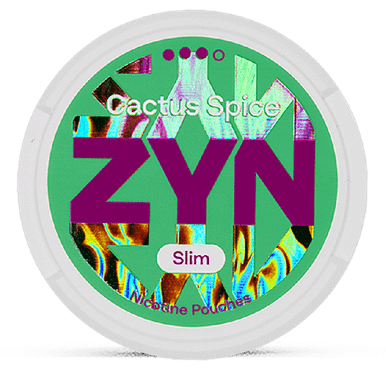
The top of the cap carries the brand, the flavour name and the declared figure. The order and relative size of those three matters more than it seems. If you keep two or three cans, the lid face is the only part of the packaging you ever actually look at — the cans sit stacked in a drawer or a bag pocket and you identify one by reading the top. A lid that puts branding large and the flavour name small costs you a second on every retrieval. With two declared figures available on this listing, the figure on the lid is also how you would tell a 9mg can from an 11mg one at a glance, which is worth knowing if you ever hold both.
The catch compartment
Under the cap there is a second, shallow chamber, sealed off from the portions below. It exists so a used pouch has somewhere to go when there is no bin within reach, and it holds several before it needs dealing with.
It is a staging post, not a destination. Emptying it is the most neglected piece of can maintenance there is, and a can left with a full compartment for a week is genuinely unpleasant to open — there is no undoing that after the fact, because emptying it late does not remove the smell. Doing it whenever you pass a bin costs nothing. From there, used pouches go in general waste: not down a drain, not into a food-waste caddy, not on the ground. The empty can itself is plastic and goes wherever your local authority directs plastic of that kind, which varies by council and is not a question we can answer for a specific postcode.
How many portions are in a can
We do not hold that figure. Our record tells us this is a five-can pack; it does not tell us how many portions sit inside each can. That is a common count across the category and we could guess at it, but a guess printed in a product description gets read as a specification, and we would rather leave the gap visible. The can's own labelling carries the count and is the authoritative source for it.
Moving between cans, and what actually changes
The other thing worth real space here is what happens when you move from one listing on our shelves to another — because people do this constantly, and most of what they expect to change does not, while the things that do change go unnoticed.
What does not change
The format. A pouch from any brand on our shelves is a small soft sealed rectangle with rounded ends, roughly the footprint of a short stick of chewing gum and thinner than one. It goes between the upper lip and the gum line with finger and thumb. There is no preparation, nothing to unwrap, nothing to activate, no waiting stage. It stays where it is put, needs no chewing and no holding, and does not affect speech once seated. That is true of a £14.95 listing and of a £36.90 one, both in stock, in exactly the same terms.
The can design, broadly. Shallow cylinder, press-fit cap, catch compartment under the lid. The proportions and the lid tension vary; the architecture does not.
What does change, and is not obvious
The pack arrangement. This is the big one and it is the source of nearly every mistaken price comparison in this catalogue. This listing is five cans at £19.99. Velo Bright Spearmint at £4.19 and Nordic Spirit Frosty Berry at £4.49, both in stock, are priced on a different basis entirely. Neither is a cheaper version of what is on this page; they are different quantities. Looking at £4.19 beside £19.99 and drawing any conclusion at all without checking what sits behind each number is the commonest self-inflicted error anyone makes on a shop this size, and our own listings make it easy to fall into.
The physical feel of the portion. Formats differ in how dry or how soft they are to the touch. A drier portion holds its shape more firmly between the fingers; a softer one seats more readily. This is a real, noticeable difference between products. We cannot tell you where any particular can sits on that spectrum because nobody publishes it in a form we could reproduce and it is not in our record.
The size of the portion. Mini formats exist and are physically smaller. ZYN Coffee Mini at £19.99, in stock, is the example on the brand's own shelf. Moving to a mini changes the object in your mouth as well as the flavour, which is two variables at once and worth knowing before treating it as a like-for-like comparison.
The flavour vocabulary. Tags are coarse and names are specific, as this very listing demonstrates. Moving between two cans that share a tag can move you a very long way in taste. SYX Cool Mint at £29.90, White Fox Double Mint at £34.90 and 77 Apple Mint at £39.90 — all in stock — share a shelf with this listing and describe three different things.
What changes on paper but tells you less than you think
The declared figure. It changes between listings, it is precise, and it is the number people anchor on hardest. We will set out below exactly what it does and does not tell you, and the short version is that it tells you less about your own experience than its precision suggests.
The brand. Brands price very differently for broadly similar things — every ZYN listing we carry is £19.99, while other makers on the shelves above run from £4.19 to £39.90 — and none of that spread maps onto anything you can taste. It reflects pack arrangements and each brand's own pricing, not a quality ladder.
Two numbers, one price
This listing declares 9mg and 11mg, and both variants are £19.99. Same name, same flavour tag, same five-can pack, same price. The only thing that differs between them is the number printed on the lid.
That figure is a declaration made by the manufacturer on the can, and reproducing it accurately is the whole of our responsibility toward it. It is not a dose. It is not a recommendation. It is not a grade, a tier or a rank, and the 11mg variant is not an improved version of the 9mg one. Because the price is identical, there is not even a cost signal to misread — the two sit flat beside each other.
We cannot advise you on which of the two would suit you. That is a flat statement rather than a hedge. The question turns entirely on an individual's own existing use, a shop has no way to assess that from a listing page, and any retailer offering you an answer is guessing. We would rather say so than produce a paragraph that sounds helpful and is not.
What we can describe is the filing. Both figures sit under one listing, and that listing is filed in the Medium Strength band with 134 others. Our bands — low, medium, strong and extra strong — are shelves we built so browsing works, with boundaries we drew ourselves. They are not an industry scale, and another retailer sorting identical figures would place the lines differently. Filing is per listing rather than per variant, so a two-figure listing lands in one band rather than being split. The band is a navigation aid; the number on the lid is the fact.
Where this can sits among the brand's listings
We hold twenty-two listings on the ZYN shelf, and all of them are £19.99. Flat pricing across a brand shelf has one genuinely useful consequence: within this brand, money is not part of the decision. Flavour, declared figure and format are the only variables.
Within that range, this listing is the odd one out on flavour construction. The brand's range as we carry it is built mostly from mints, fruits and fruit-and-mint pairings. A fruit-and-spice pairing has no sibling on the shelf, which means that while this listing is unavailable there is no same-brand substitute for what it is doing.
The nearest neighbours are all doing something simpler. ZYN Cool Mint X, in stock, is the pure cooling direction and is the listing our mint tag would actually fit. ZYN Blueberry Mint, in stock at 11mg, is a fruit-and-cooling pairing and carries two tags — mint and berry — which is our tagging system working the way it should. ZYN Blackcurrant Forest, in stock at 13.5mg, is a sharp dark fruit with no cooling element declared. ZYN Black Cherry, in stock, is a sweet stone fruit and spans four declared figures from 1.5mg to 11mg, so it overlaps this listing at the top of its range.
Two more complete the picture. ZYN Citrus, in stock, is bright acidity and the sharpest flavour idea on the shelf. The brand's coffee mini, in stock, is the only roasted flavour we hold from them and also the only mini format, which makes it the furthest departure from the object described earlier on this page.
What to reach for while this one is unavailable
If the spice direction is what brought you here, Fumi Dark Spice at £27.90 is in stock and is the closest thing on our shelves to what this listing is trying to do — a warm aromatic flavour idea rather than a fruit or a herb. It is not the same product, it comes from a different maker, and it does not have a fruit component in its name. We are pointing at it because it is the nearest we hold, not because it is a replacement.
If the mint tag is what brought you here — and given where this listing is filed, for plenty of people it will have been — the shelf has better answers than this can would have given you. Edge Spearmint at £14.95, in stock, is the cheapest straightforward route to it. SYX Cool Mint at £29.90 and White Fox Double Mint at £34.90, both in stock, sit higher up. Klint Arctic Mint at £36.90, in stock, names the cold quality rather than the herb.
If what you wanted was an unusual pairing rather than this specific one, the catalogue has several. 77 Apple Mint at £39.90, in stock, puts an orchard fruit against the herb. UBBS Cola Ice at £19.95, in stock, is the nearest price match to this listing and takes an entirely different flavour direction. Pablo Silver Edition Blueberry Peach Ice at £39.90, in stock, layers three ideas together. Nordic Spirit Frosty Berry at £4.49 and Velo Bright Spearmint at £4.19, both in stock, are the two lowest-priced listings named anywhere on this page — with the pack caveat above attached to both.
Everything named in this section is in stock as our record stands, which is the point of naming them on a page for something that is not.
Two cans on the go, and why most people end up there
Nearly everyone who buys these regularly holds two or three cans rather than one, and the reason is plain enough: a single flavour in constant rotation stops registering. The palate adapts to whatever it always gets, and a flavour that seemed distinct in week one reads as background by week four. A second can in a different direction is the ordinary fix for that, and it is worth knowing about because it is cheaper than any other adjustment and it is the only one we are willing to describe.
An unusual flavour like the one on this page is a particularly poor candidate for being anyone's only can, precisely because it is unusual. Distinctive things wear out their welcome faster than neutral ones. Anyone who had settled on this listing would almost certainly have been running something plainer alongside it — which, given the stock position, is the situation everybody reading this page is now in by default.
The pairing logic is not complicated. If your main can is a fruit, the second should not be. If your main can is a compound flavour with several ideas in it, the second should be a simple one. The Edge spearmint listing at £14.95, in stock, is about as plain as our shelves get and is the cheapest route to that role. At the other end, the White Fox double mint can at £34.90, also in stock, does the same job at more than twice the price, which tells you something about how little price maps onto flavour in this catalogue.
Keeping cans in condition
Short, and worth doing, because the failure mode cannot be reversed.
Keep the cap properly seated. The press fit seals and resting the lid on top is not the same as pushing it home. An opened can left overnight with the lid off has lost condition by morning, and the flavour goes flat with it.
Keep cans out of heat and direct sunlight. A car in summer is the worst place available to anybody and a sunny windowsill is second. Heat works on unopened cans as well as opened ones. A drawer, a cupboard or a bag pocket at ordinary room temperature is entirely fine.
With five cans in a purchase, four will sit unopened while you work through the first, which makes storage a real question rather than an afterthought. Keep the unopened ones sealed and together somewhere cool and dark, and open them one at a time rather than breaking all five seals at once to compare the smell. An unopened can keeps considerably better than an opened one.
Some people keep opened cans in a fridge. Our record does not say whether the manufacturer suggests that, so we will describe the practice rather than endorse it. The reliable points are that cold storage preserves a can in the state it is already in rather than restoring one that has dried, and that a lid left off costs far more condition than ambient temperature ever will.
Ordering, waiting, and the check at the door
You cannot order this listing at present. The live status on the page is the authority and takes precedence over anything written in a description — if it comes back, the listing will say so before this paragraph does.
We do not know when that will be. Our record carries a stock flag and nothing about expected restocking, and we are not going to invent a date to keep you on the page. The alternatives set out above are real listings we actually hold, which is more use than a made-up timescale.
This is an 18+ product. It is sold only to adults aged 18 or over who already use nicotine. Age verification forms part of the ordering process and ID may be requested on delivery; a courier can decline to release a parcel if it is not produced. One practical consequence worth planning for: a failed doorstep check sends a parcel back to the depot and turns a short wait into a long one. If nobody who can produce ID will reliably be at the delivery address, arrange that before ordering rather than after a first attempt has already failed.
Delivery timings, carriers and charges are handled at checkout and in our delivery information rather than quoted in a description that could be out of date by the time anyone reads it.
How this listing is filed
Three shelves hold it. The mint-tagged listings, for the tagging reasons set out at the top of this page, which is the largest flavour shelf we keep at 148 items. The brand's own shelf, alongside twenty-one others. And the medium band, which is where a two-figure listing lands under our per-listing filing.
If none of those is the route you want, the full catalogue is the top of the tree, and the other bands — strong and extra strong — are the quickest narrowing when you already know the figure you are after. For anyone who browses by maker rather than by number, the Pablo range and the Cuba range are the two largest brand shelves we hold after this one.
Questions, with honest answers
Does "Spice" mean it will feel hot?
No, and we would not say so if it did. "Spice" in this name describes a flavour family — the warm aromatic group, cinnamon and clove and their relatives — in exactly the way a spiced biscuit is called spiced. The word "warm" there is the culinary description of how those flavours relate to each other, not a temperature and not a sensation. It is a statement about taste, and we are not making any claim about what the product does to anyone.
What is a cactus flavour supposed to taste like?
The term refers to the fruit of the plant — prickly pear and its relatives — rather than the plant itself. As a flavour it is mild, faintly melon-like, low in acidity and slightly floral, softer and rounder than a berry or a citrus. It is uncommon in this format, which is part of what made this listing distinctive. That is a description of the flavour convention; our record holds nothing finer than the tag.
Why is it tagged mint when the name says cactus and spice?
Because our tag says mint, and the tags drive the shelves. Mint, cactus and spice are three different flavour families, and we cannot tell from our record whether the can genuinely carries a cooling element that the tag caught, or whether the tag is simply a poor fit applied to an unusual flavour. We are showing you both rather than resolving it. Trust the product name for what it tastes of.
When will it be back?
We do not know and we will not guess. Our record holds a stock flag and nothing about restocking schedules. The listing page itself is the live source and will change if the position does. In the meantime the in-stock alternatives named above are real and orderable, which is worth more than an invented date.
Is 9mg or 11mg the better option?
Neither, in the sense your question implies. The two figures are manufacturer declarations printed on the can, both at £19.99, on the same flavour in the same five-can pack. A larger figure does not mean a better or more advanced product. We cannot tell you which declared strength is appropriate for you — that depends on your own existing use and is not a judgement a shop can make from a listing page. The number is data, not a ranking.
How many pouches are in each can?
We do not hold that figure. Our record gives the pack as five cans and stops there — it carries no per-can portion count. We could put a common number in and it would probably be right, and it would also be a guess presented as a specification, which is how misinformation gets into catalogues. The can's own labelling is the authoritative source.
Do you stock anything else with a spice flavour?
Yes, one that is close in spirit. The Fumi dark spice listing at £27.90 is in stock and is the nearest thing we hold to a warm aromatic flavour idea. It is a different maker, a different product and it has no fruit component in its name, so it is not a substitute for this one — it is simply the closest neighbour on our shelves. We are not going to describe it as a replacement, because it is not.
How long does a pouch last?
We do not hold that information and will not estimate it. Duration varies substantially between individuals and between occasions, and the informal range people report is wide enough that any single figure would mislead more than it helped. Our record covers price, declared strengths, flavour tag, pack size and stock. The flavour fading is the usual prompt to take one out, and where that falls is something learned with a can in hand.
Is there a cheaper way to buy this?
Not on this listing — five cans at £19.99 is the only arrangement our record holds for it, and both declared figures carry the same price. Elsewhere in the catalogue, listings are priced on different bases: the Velo spearmint can at £4.19 and the UBBS cola ice listing at £19.95, both in stock, are not comparable to each other or to this page without checking the quantity behind each figure.
Will the lid stay shut in a bag?
Usually, and we cannot promise it for a specific can. Press-fit caps vary in how firmly they seat and nobody publishes a figure on it, so there is nothing in our record to quote. What we can say is that the variation between makers is real, that a loose cap is the main cause of a can opening where you did not want it to, and that you learn which sort you have within a day of owning one. Pushing the lid properly home rather than resting it on top solves most of it.
Is a fridge a good place for an opened can?
People do it. Our record does not tell us whether the manufacturer suggests it, so we are describing the practice rather than recommending it. The drying process is one-way, cold storage preserves rather than restores, and a lid left off costs a can far more than ambient temperature ever will. Keep the cap seated and the can out of heat and sunlight and the fridge becomes a marginal question.
Where is it made?
We cannot tell you. Our record holds no manufacturing or origin detail for this listing, and repeating something read elsewhere that we cannot verify would be worse than admitting the gap. The can's own labelling is the authoritative source. The same applies to the words in the product name, which as set out above describe a flavour construction and say nothing about where anything comes from.
What is the closest in-stock listing to this price?
The UBBS cola ice can at £19.95, in stock, is four pence under — though it takes a completely different flavour direction and sits on a different pack arrangement. Within the brand, every one of the twenty-two listings we hold matches this price exactly at £19.99, so the citrus listing and the blueberry and mint one, both in stock, are exact price matches that you can actually order today.
Nicotine, age and medical status: the required wording
Nicotine is an addictive substance. This product contains nicotine.
It is sold only to adults aged 18 or over who already use nicotine. We do not sell to anyone under 18, and age verification forms part of the ordering process. ID may be requested on delivery, and a courier may decline to release the parcel if it cannot be produced.
This product is not a licensed stop-smoking medicine and is not offered, described or intended as one. It is not intended for non-smokers, for anyone who does not already use nicotine, for anyone under 18, or for anyone who is pregnant or breastfeeding.
We make no health or medical claim about this product in any direction, and nothing on this page should be read as advice on whether to use nicotine or in what quantity. We cannot advise you on which declared strength is appropriate for any individual, and a retailer is not a sound source for that judgement.
Keep out of reach of children and pets. Every factual statement above — the £19.99 price, the 9mg and 11mg declared figures, the five-can pack, the mint flavour tag and the out-of-stock position — comes from our own catalogue record, and where we hold nothing the page says so rather than guessing.
Where that leaves it
An unusual flavour construction on paper — a soft fruit against a warm aromatic direction — filed under a tag that matches neither, declaring 9mg and 11mg at one price in a five-can pack, and currently unavailable. We have said what the two words in the name mean as flavour conventions, said plainly that "spice" is a taste and not a sensation claim, and flagged the disagreement between name and tag rather than tidying it away. If the spice direction brought you here, the Fumi listing is the nearest thing we hold; if the tag brought you here, the mint shelf has plenty in stock that will do what the tag suggests.
More from ZYN
More medium strength pouches
More mint pouches
Where this sits
ZYN Cactus Spice Nicotine Pouches appears in these categories. Browse them, or jump to something close.
You might also like