Home / Medium Strength / ZYN Red Berry Fizz Nicotine Pouches
ZYN · 6mg–11mg · 5-can pack
Read the full guide
ZYN Red Berry Fizz Nicotine Pouches
£19.99
✔ In stock — ready to ship
100% tobacco-free
Free over £20
Same-day dispatch
Secure checkout
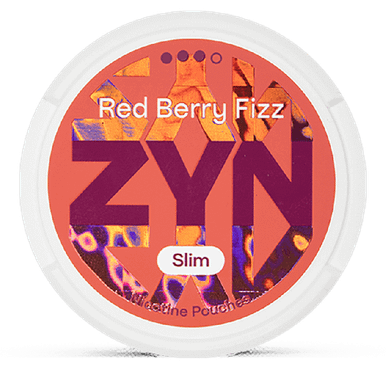
ZYN Red Berry Fizz Nicotine Pouches are listed at £19.99 for five cans, with three declared strengths on the record — 6mg, 9mg and 11mg — all three at the same price. The listing is out of stock at present, so nothing on this page can be ordered today, and the page is written as a description of what the listing holds rather than as an invitation to buy something that is not there.
Before anything else, the third word in the name. Fizz here is a flavour name and nothing more. Nothing in the can fizzes. It does not foam, bubble, carbonate, crackle or react with anything, and no part of using one involves any of that. The word is doing the same job it does on a packet of sweets — pointing at a taste impression, the sharp, tingling-sounding sourness people associate with sherbet and with fizzy-berry confectionery — and it is a description of a taste direction, not a description of a physical behaviour. Anyone expecting something to happen in the mouth beyond flavour has misread the name, and we would rather say that at the top of the page than let the expectation stand.
The full guide to ZYN Red Berry Fizz Nicotine Pouches
5,108 words on how it eats, who it suits, how to serve it and what to put beside it.
Red Berry Fizz: the record, and one word that needs handling straight away
With that out of the way, the rest of the record is straightforward. A single flavour tag, berry, files the can on our Berry shelf among seventy-six listings. The declared figures put it on our Medium Strength shelf, which at a hundred and thirty-five listings is the largest strength band on the site by a wide margin. And as a ZYN can it sits with twenty-one others on the ZYN brand page. Three shelves, one tag, three figures, five cans, one price, one image. That is everything we hold.
What we do not hold is worth stating with the same clarity. There is no manufacturer description on our record, no component breakdown, no portion weight, and nothing that would let us tell you which berries the name is gesturing at or in what proportion. "Red berry" could be strawberry, raspberry, redcurrant, cherry or any combination, and we are not going to pick one to make this page read better. The can carries whatever the manufacturer chooses to print, and that is the authority.
The format itself: what a portion is, where it goes and how long it stays
Flavour decides which can somebody buys. The format decides whether they get on with it. This brand uses a slim portion, and the practical business of putting one in, leaving it there and taking it out again is most of the day-to-day experience, so it gets the longest section on this page.
The shape of a slim portion
A slim portion is a narrow rectangle with rounded ends, noticeably longer and thinner than the older round style. The shape is not decorative. A long, thin portion distributes itself along the natural channel between lip and gum, which means it fills a shallow strip rather than making a single bulge in one place. Two consequences follow: it is much less visible from outside, and the pressure it puts on any one patch of gum is lower than a rounder shape of the same volume would apply.
Portions of this style are also dry to the touch rather than wet, and that is a handling characteristic rather than a statement about what is in one. A dry portion comes out of a can cleanly, does not leave your fingers marked, and does not make the inside of the lid sticky. It is one of the reasons the format travels better than people expect.
Putting one in, and the first minute
Placement is under the upper lip, and the whole action takes a second or two once it is familiar. The portion is pressed up into the channel and left; it does not need to be held, adjusted or worried at. Most people take one from the can, seat it and reseat the lid without a second thought, and can do it one-handed with practice.
The first minute is the settling minute. There is a distinct sensation of something being there that fades quickly as the portion warms and beds in. On a sharp flavour like the one this name points at, the first minute is also the loudest the taste will ever be — the sour top notes are front-loaded, and they read as brighter than the rest of the experience will. Judging a can in that first minute is how people form misleading impressions of it.
Where people put it, and whether to move it
Most people settle on one side of the upper lip and never revisit the decision. Some alternate sides through the day, usually because the same spot becomes noticeable after a while. A few sit a portion in the lower lip instead, which works but is more visible and more prone to being dislodged by talking.
Moving a portion mid-use is perfectly possible and does no harm to it. What it does do is briefly refresh the flavour, because shifting the portion exposes it to a slightly different part of the mouth. People who do this tend to do it once, around the point where the taste has flattened out, as a way of getting a little more from a portion before changing it.
The arc of a single portion
Every portion follows the same broad curve regardless of flavour: a bright opening, a plateau, and a long fade. What changes between flavours is the proportions. A sharp berry flavour with a sour edge front-loads heavily — the first two or three minutes carry most of the sourness, and what remains after that is the sweeter, rounder berry underneath. By the midpoint the sour character has largely gone and the can reads as a plain fruit flavour. That is normal for the style and not a fault in any particular can.
The fade is the part people misjudge. A portion does not stop abruptly; it thins out over a long tail, and there is a period where there is still flavour but not much of it. Where somebody draws the line in that tail is entirely personal, and it is the main reason two people report very different durations from the same can.
How long people keep one in
Habits vary so widely that any single figure would be misleading, and we are not going to publish one as though it were a rule. What we can describe is the pattern: people change a portion when the flavour has gone, and the flavour going is a gradual event rather than a sharp one. Somebody who wants the bright part of the curve changes often. Somebody who is content with the flat middle leaves one in much longer. Neither is a correct amount and we have no view on it.
Two practical notes that are not advice about quantity. First, a portion left in long past the flavour is doing nothing for you and will eventually feel like a piece of packaging in your lip, which is why most people stop before that point. Second, the more times you open a can, the more air the remaining portions meet, so a habit of very frequent changes has a small effect on how the last portions in a can present compared with the first.
Talking, eating and drinking with one in
This is the practical question people have before they have used the format and stop asking once they have. Talking is unaffected after the settling minute. A slim portion sits above the line where the tongue and lips do the work of speech, and nothing about it changes how words come out. The one exception is the first thirty seconds after a portion goes in, when the natural instinct is to test it with the tongue, and that is visible to anyone watching closely.
Drinking is fine, with a caveat about temperature rather than about liquid. Anything hot passing over a portion flattens the flavour for a while — the sour top of a berry flavour is the first casualty — and it recovers only partly. Cold drinks do nothing noticeable. Carbonated drinks do nothing either, which is worth saying on a can with the word fizz in its name: there is no interaction to be had between a drink and a portion.
Eating with one in is possible and most people do not bother. A portion is not in the way of chewing, but flavour from food overwrites the flavour from the can comprehensively, and the ten minutes after a meal is where a fresh portion is most worth having rather than the meal itself. The usual pattern is out before, in after.
What a can is like to carry
The can is roughly the diameter of a large coin and about as deep as a stack of them, which puts it in the category of things you forget you have. A jacket or coat pocket takes one and you will not notice it. A front trouser pocket works and prints a visible disc through thinner fabric, which some people mind and others do not. A back pocket works but is the position most likely to nudge the lid proud when you sit, which is the seal problem arriving by a different route. A shirt pocket is a poor choice: the can is heavy for its size and tips out when you lean forward.
Bags are where cans come to grief. Loose in a main compartment with keys and a charger, a can is being worked at from all sides, and it is the lid rim that gives. An inner pocket, a pouch or even a sandwich bag solves it entirely and costs nothing.
Taking one out, the lid compartment and disposal
Removal is the reverse of placement and takes about as long. The portion comes out intact — that is what the pouch is for — and goes into the compartment moulded into the lid, which is the format's neatest idea.
The compartment has real limits. Three used portions sit in it without trouble. Four is the practical maximum. At five the lid will not seat flush, and a lid that is not flush means the can is standing open with everything inside it exposed to the air. Overfilling the lid therefore costs you more than carrying one used portion to a bin ever would.
The compartment also sits directly above the fresh portions, so a loaded lid announces itself on every opening. On a sweet-sour berry flavour that smell goes stale rather than rotten, but it is not pleasant and there is no reason to live with it. Emptying the lid when you pass a bin takes two seconds. Used portions go in general waste, never down a sink, and never anywhere a child or an animal could reach them.
Red berry as a taste and an aroma
Described honestly, the name points at two layers. Underneath there is the ordinary red-berry character — the sweet, jammy, slightly seedy taste that strawberry and raspberry share. Over the top there is the sour brightness the word fizz is standing in for, the sharp confectionery tang that makes a sherbet sweet read as sharp before it reads as sweet.
The aroma on opening tends to lead with the sweet layer rather than the sour one, because sweetness carries on the air better than sourness does. What you smell is closer to jam or to a berry sweet than to anything sour, which means the aroma slightly under-promises the taste. That is a common feature of sharp fruit flavours and it catches people out in both directions.
In the mouth the order reverses. The sour edge arrives first and hardest, and it is the thing that distinguishes a flavour like this from a plain berry can. Sourness does not last the way sweetness does — it is the most fragile part of any fruit flavour and the first thing to go — so the shape of the experience is a sharp opening resolving into something rounder and sweeter. Whether that reads as a well-built arc or as a disappointment depends on which part you were buying it for.
There is no cooling character implied by anything on this record. No mint tag, no ice word in the name, nothing to suggest a cold edge. Berry flavours are often paired with a cooling note in this format and this one, on the information we hold, is not — so if you have been using cold berry cans, expect a warmer and more confectionery-leaning profile here.
Now the honest limit, and it is a real one. The only flavour information on our record is the single word berry. That tag is shared with seventy-five other listings, and a tag that broad cannot distinguish one red-fruit can from another — not from a strawberry can, not from a raspberry can, and not from any other similarly named red-fruit flavour on our shelves. Everything above is a description of what the name points at and how flavours of that style behave in this format. It is not a reading from a specification, because we do not hold one, and we will not manufacture a distinction the catalogue does not support.
The strength ladder: what 6mg, 9mg and 11mg are, and what they are not
This listing carries three declared figures, which makes it a better place than most to explain what a milligram figure on a can actually is.
The figure is a declaration, not a rating
The number is what the manufacturer declares and prints on the can. We carry it through to our record unchanged, and we publish it because it is printed there and because people filter by it. It is not a score, not a rank, and not a measurement of anything you will experience. It does not become a quality judgement by being larger.
The ladder within this listing
| Declared strength | Price | Cans per pack |
|---|---|---|
| 6mg | £19.99 | 5 |
| 9mg | £19.99 | 5 |
| 11mg | £19.99 | 5 |
Three rungs, one price. That flat pricing is worth noticing because it removes the usual confusion: on this listing, the figure you pick has no effect on what you pay, so there is no cost argument pulling in any direction. The gaps are uneven — six to nine is a three-point step, nine to eleven is two — and that unevenness reflects nothing more than which figures the manufacturer chose to produce.
How those figures sit on our shelves
All three rungs land in the same band on our filing: the medium shelf. That is a fact about where our shelf boundaries fall rather than a statement that the three are interchangeable. Above the medium band sit the Strong band and then the Extra Strong shelf at the top of the scale. A can moves between those shelves purely on its declared number, with nothing else considered.
What the figure will not tell you
Three things, each worth stating plainly. It will not tell you anything about flavour intensity — strength and flavour are set independently, and a low-figure can with a loud taste is entirely ordinary. It will not tell you how this can compares with a can from another brand, because different manufacturers arrive at their declarations by their own methods and a figure is only strictly comparable within a range. And it will not tell you which rung suits you.
That last point is not a disclaimer we are adding for form. We cannot advise which strength suits anyone. We do not know you, we hold no information that would let us judge, and a product page is not a place where that kind of judgement can responsibly be made. A higher figure is not a better can and a lower figure is not a weaker product in any sense that reflects on quality. If you want guidance about your own nicotine use, ask a healthcare professional rather than a shop.
Where this can sits in the brand's range on our shelves
Our twenty-two ZYN listings fall into a few clear groups: a large mint block, a berry block, a handful of single-fruit cans and two or three deliberate outliers. This one belongs to the berry block, and within that block it is the sharpest-sounding of them by name.
Two structural facts about the range as we hold it. The pricing is flat across every ZYN listing at £19.99, so price carries no information about which can to pick. And the strength ladders are uneven between flavours — some carry four declared figures, some carry one. Three rungs, as here, is about average for the range.
The nearest relatives within the brand are the darker berry cans. ZYN Blackcurrant Forest at £19.99 is the obvious one: blackcurrant brings a tartness of its own, though it is a deeper, more resinous tartness than a sherbet-style sourness. ZYN Black Cherry, also £19.99, sits adjacent to red berry without duplicating it — cherry carries a bitter back note that red berries do not have. Both are currently available, which this listing is not.
What people keep alongside it
Rotation is the norm. Two or three cans on the go is the common pattern, and the useful question is which ones provide an actual change rather than a near-repeat.
Within the brand, the contrast options are the non-berry ones. ZYN Blueberry Mint keeps fruit in play but adds a cold mint edge, which is the single biggest change you can make while staying in the same flavour family. ZYN Citrus swaps berry sweetness for acidity, which is a different kind of sharpness from the one this name points at. ZYN Cool Mint X is the plain mint option with no fruit at all, and ZYN Coffee Mini is the range's genuine outlier — roasted and bitter, in a smaller portion — which some people keep precisely because it clears the palate between fruit cans. All four are £19.99 and all four are in stock.
Across brands, the berry shelf is large and varied. 77 Strawberry at £39.90 is a single-fruit take on the sweeter half of what this can is doing, while Fumi Blackcurrant at £27.90 goes darker and more tart. Pablo Silver Edition Blue Raspberry at £39.90 is the nearest thing on our shelves to another confectionery-leaning berry, blue raspberry being a sweet-shop flavour rather than a fruit that exists. At the other end of the price range, Nordic Spirit Blueberry at £4.49 and Velo Strawberry Ice at £4.19 are single-can listings, which makes them the cheap way to test whether a berry direction suits you before committing to a five-can pack. SYX Blueberry at £29.90 and XQS Berrynana Twist at £39.90 fill in the middle, the latter blending berry with banana for something distinctly different from a plain red berry.
Three berry listings worth knowing about but not worth planning around at the moment, because all three are currently unavailable: Edge Strawberry at £14.95, Klint Blueberry at £36.90, and Rush Berry Ice Pro at £19.99. We are linking them because they belong in an honest account of the berry shelf, not because you can order them today.
What £19.99 buys, and how to compare it honestly
Five cans for £19.99 works out at a shade under £4.00 a can, and that is the figure to carry into any comparison on this site, because our catalogue mixes single-can listings and multi-can packs without making the difference obvious at a glance. A £4.19 listing and a £19.99 listing can be almost the same purchase or wildly different ones, depending entirely on what each price covers.
Against the single cans linked above — £4.49 for the Nordic Spirit listing, £4.19 for the Velo one — this pack's per-can figure sits in the same territory rather than in a different class. Against the £39.90 listings from 77, Pablo and XQS, or the £29.90 and £27.90 listings from SYX and Fumi, no useful comparison is possible from this page at all, because those prices buy quantities stated on their own listings and not on this one. The only safe rule is the dull one: read what the listing says the price includes before comparing anything.
There is a second kind of value that arithmetic misses. Five cans of one flavour is a commitment to that flavour, and a cheap per-can figure on something you tire of after two cans is not value in any sense that matters. This is the argument for buying a single can of something adjacent before committing to a multi-pack, and it is why the cheap single-can listings on the berry shelf are genuinely useful even to somebody who normally buys in fives.
Storage, and the condition of an open can
Two things matter and the rest is housekeeping: shut the lid properly, and keep the can away from heat.
The lid first. The join is an interference fit rather than a gasket, so it is either seated or it is not, with very little middle ground, and an unseated lid is hard to spot by eye. The reliable tell is how the can opens: one that opens more easily than you expect has been standing ajar since last time. Press until it clicks and check by feel.
Heat next. Drawers, cupboards, bedside tables, inside pockets — all fine. Cars in summer, windowsills, radiator shelves, bags left in the sun — all worth avoiding. Warmth dries a dry portion further and flattens the top of a flavour first, and on a flavour built around a sharp top note that is precisely the part you would miss. A cooked can is not dangerous, it is just duller than it was, and nothing will bring it back.
Cold is less of a problem than people fear. A fridge does no harm, though it is not necessary; if you keep cans cold, give one a few minutes out before using it, because a cold portion reads as muted and you may wrongly conclude the can is past it. Freezing achieves nothing.
Physical handling is the quiet one. A can rattling loose in a bag with keys has its lid worked at the rim, and once the fit is loose it stays loose. Cans stack flat, which is the tidy way to keep several in a drawer, and a can in a compartment of its own is in visibly better shape a month later than one that has been knocking about with everything else. As for dates, check the can — we do not publish batch or date information and will not estimate it.
Choosing between the three rungs on this listing
What the listing offers is three declared figures at one price, 6mg, 9mg and 11mg, in five-can packs. What we will not do is tell you which to pick, and the reason is set out in full above.
What we can do is describe the shape of the choice as a matter of fact. All three are the same flavour and the same format at the same price, so the only variable is the printed number. There is no cost penalty for any rung, and no pack-size difference between them. If you already use cans from this range, you will know which figure is on the one in your pocket; if you do not, the can in front of you is a better guide than a product page can be.
Anyone comparing figures across brands should treat the numbers with more caution than a straight comparison implies, for the reasons given above. The strength shelves on this site group listings by declared figure and nothing else, and the full catalogue can be filtered by brand, flavour and strength together if you want to see how the numbers are distributed.
Buying, delivery and age verification
This listing is out of stock, so it cannot be ordered today. When it returns, it returns on this product page — this is the page to check. We do not publish restock dates and we will not guess at one, because an invented date is worse than no answer.
Everything we sell is 18+ and age-restricted. You confirm your age at checkout, and that step is not something we can set aside. ID may be requested on delivery, and a driver who is not satisfied can decline to hand the parcel over. We do not sell to anyone under 18 under any arrangement.
Delivery windows, charges, returns and the status of an individual order are covered by our delivery and returns information, which is kept current in a way a description page is not. What this page can tell you is what the record holds: £19.99, five cans, three declared figures, currently unavailable.
Where to go from here
The three shelves this can is filed on are the natural next steps. The seventy-six-listing Berry shelf is the broadest of them and holds most of what is discussed above. The brand's twenty-two listings are the place to look if the format matters to you more than the flavour. And the 135-listing medium band is where the great majority of the catalogue sits.
If you are working across brands, the Pablo listings and the Cuba brand page are two of the larger ranges we carry and both hold berry flavours of their own. And if none of that appeals, everything we stock is browsable in one place and filterable three ways.
Questions people actually ask
Does it actually fizz?
No. Nothing in the can fizzes, foams, bubbles or reacts. The word is part of the flavour name and it is pointing at a sour, sherbet-like taste impression, in the same way a sweet described as fizzy on a wrapper is describing sharpness rather than carbonation. If you are expecting a physical sensation beyond taste, the name has misled you and we would rather correct that than let it stand.
Which berries are in it?
We do not hold that information. The only flavour data on our record is the single word "berry", and we are not going to name fruits that our record does not name. "Red berry" is a family rather than a specific fruit, and the can carries whatever the manufacturer chooses to state.
Why are three strengths all the same price?
Because that is how the listing is priced — £19.99 across 6mg, 9mg and 11mg, five cans in each. Flat pricing across a strength ladder is common in this range. It simply means the declared figure has no bearing on what you pay.
Which of the three should I buy?
We cannot tell you, and that is a genuine answer rather than a polite one. We do not know you, we hold nothing that would let us judge, and a shop is not a proper source of that kind of guidance. The number is published because it is printed on the can. A higher figure is not a better product.
Is it cold, or is there a mint edge?
Nothing on our record suggests one. The single tag is berry, there is no mint tag, and there is no cooling word in the name. On that evidence it is a warm, confectionery-leaning fruit flavour rather than a cold one. If a cold berry is what you are after, the cans with an explicit ice or mint element in the name are linked above.
When will it be back?
Unknown, and we do not publish estimates. This page is where a change in availability appears. If you want something today, the available berry listings mentioned above each state their own stock position on their own pages.
How many pouches in a can?
Our record holds cans per pack — five — but not portions per can. That figure is printed on the can itself. It is a reasonable thing to want to know and the honest answer is that the packaging has it and we do not, so we are not going to quote a number.
How does the berry tag help me compare cans?
Less than you would hope. Seventy-six listings carry it, spanning strawberry, blueberry, blackcurrant, raspberry and mixed-berry flavours that taste very little like one another. The tag tells you which shelf a can is filed on, not what it tastes like, and it cannot separate one red-fruit flavour from another. That is a limit of the filing, and we would rather admit it than pretend the tag carries more meaning than it does.
Is this can suitable for me?
We are not able to answer that. This is an 18+ product for adults who already use nicotine, and beyond that eligibility question we make no judgement about individuals and have no basis for one. Questions about your own nicotine use belong with a healthcare professional.
Can I order several flavours together?
Yes, once the items are available — an order can combine any in-stock listings across brands and strengths. Most people buy two or three flavours at a time rather than committing to five cans of one thing, and the section above on what to keep alongside it covers which combinations provide a real change.
Will a hot drink ruin the flavour?
Not ruin, but it will flatten it for a few minutes, and on a flavour built around a sharp top note that is the part you notice going. The effect passes and the portion carries on. Cold and carbonated drinks make no noticeable difference at all. There is no interaction between any drink and a portion beyond the ordinary business of one taste sitting over another.
Is the 11mg version a stronger-tasting can?
No — and this is the most common misreading of a strength ladder. The declared figure and the flavour are set independently of one another. All three rungs on this listing are the same flavour at the same price, and the number printed on the can says nothing about how loud or how sweet the taste will be.
What do I do with a used pouch?
It goes in general waste. The lid compartment holds three or four until you reach a bin; beyond that the lid stops seating and the can is effectively open. Nothing goes down a sink, and nothing should be left where a child or an animal could reach it.
Legal and compliance
This product is for adults aged 18+ who already use nicotine, and it is sold on that basis alone.
Nicotine is an addictive substance.
It is not a licensed stop-smoking medicine and is not intended for non-smokers, for anyone who does not already use nicotine, for under-18s, or for anyone who is pregnant or breastfeeding. Nothing written on this page is a health claim, a medical claim, or any suggestion that a person should take up nicotine use.
Age is verified at checkout and ID may be requested on delivery. Store the can out of reach of children and animals. For anything concerning your own nicotine use, speak to a healthcare professional rather than relying on a retail page.
To summarise
ZYN Red Berry Fizz is a five-can listing at £19.99, offered at 6mg, 9mg and 11mg for the same money, filed under a broad berry tag, and currently unavailable. The name points at a sharp, sherbet-style red-fruit taste over a sweeter berry base — a taste impression only, with nothing in the can that fizzes or reacts. The format is a slim, dry portion with a front-loaded flavour curve and a long fade, and the single berry tag on our record is too broad to separate it from any other red-fruit can on the shelf. When the listing returns, it will return here.
More from ZYN

More medium strength pouches
More berry pouches
Where this sits
ZYN Red Berry Fizz Nicotine Pouches appears in these categories. Browse them, or jump to something close.
You might also like