Home / Medium Strength / Velo Tropical Ice Nicotine Pouches

Velo · 10mg
Read the full guide
Velo Tropical Ice Nicotine Pouches
£4.19
✔ In stock — ready to ship
100% tobacco-free
Free over £20
Same-day dispatch
Secure checkout
This page is the description for Velo Tropical Ice Nicotine Pouches, which we list at £4.19. Our record gives one declared strength against it, 10mg, and marks the can as in stock at the time of writing. Two flavour tags are filed to it: mint and tropical. That short list is genuinely the whole of our structured data on this product — brand, product name, price, one milligram figure, stock state, two flavour tags, and a count of one product photograph. Everything written below is either a description of the object in front of you, a comparison against other cans sitting on the same shelves of this site, or a plain statement that we do not hold a piece of information you might reasonably want.
It is worth being blunt about that last category at the start, because it accounts for a fair number of sentences further down. We do not print what is inside a pouch. We do not explain what a pouch does once it is in place. We do not say anything at all about anyone's wellbeing, in either direction, and we do not tell anyone which figure on a can would suit them. Where a sensible question runs into one of those limits, the answer here is that we cannot tell you, rather than a confident paragraph with nothing underneath it. That makes for a duller page than some product descriptions and it is the only version of this page worth putting on the internet.
The full guide to Velo Tropical Ice Nicotine Pouches
5,578 words on how it eats, who it suits, how to serve it and what to put beside it.
Velo Tropical Ice: what this listing actually holds
The one thing this page assumes about you is that you are an adult who already uses nicotine and is deciding between cans. It is written for that reader and nobody else. The full wording on age and on what this product is not sits in its own section at the foot of the page, and nothing above that section is an invitation to anyone who is not already in that position.
Tropical and cool, taken as a taste
The name splits neatly into two halves, and the flavour tags follow the same split. "Tropical" is the fruit half. "Ice" is the cool half, and on this page that word is being used the way a flavour name is always used on a menu — it describes the character of the taste and the way the flavour sits in the mouth, in the same sense that a mint is called cool or a lemon sharp. It is a description of a flavour, not a statement about anything the can does to a person, and we are not going to write it as one.
Take the fruit half first, because it is where our record is thinnest and where the honesty has to go. The tag we hold is the word "tropical" and nothing more specific. It does not name a fruit. That matters, because "tropical" is the loosest fruit word in the whole flavour vocabulary — depending on who built the flavour it can lean pineapple, it can lean mango, it can lean passion fruit, it can lean a sweet soft melon, and it can be a blend that deliberately avoids resolving into any single one of those. A tropical flavour of the blended sort usually reads as bright and sweet with a slight acid edge, closer to the smell of a fruit stall than to any one fruit in isolation. What we cannot do is tell you which of those readings is in this particular tin, because our record does not say and the packaging is the place that would. If you want a named single fruit rather than a blend, the honest advice is to look for a can whose name names the fruit.
The cool half is the more predictable of the two. The mint tag places a mint note in the flavour, and in a fruit-and-mint arrangement the mint almost always sits underneath rather than in front: it lengthens the fruit and keeps the sweetness from turning syrupy, rather than announcing itself as peppermint. That is the general shape of the thing. Whether the mint in this can is a rounded garden mint or a sharper, more medicinal one is not in our data either. What the two tags together do tell you, reliably, is the family: this is a sweet fruit flavour with a cool layer, filed alongside the 58 listings in our tropical grouping and also alongside the 148 cans carrying a mint tag, which is far and away the biggest flavour shelf we run.
On aroma, the only sensible thing to say is what is generally true of the type and what varies. Off an open tin, a fruit-and-mint pouch tends to give the fruit first and the cool note a beat behind it, and the aroma is noticeably quieter than the taste. Some people find the smell of the tin the most tropical part of the whole experience and the taste more restrained than the lid suggests. That is a common pattern rather than a promise, and flavour perception varies enough between people that we would not stake anything on your reading matching ours.
One more limit, stated plainly: the paragraphs above are a description written by people who stock the can, and they are not a specification. The specification is the packaging. If there is a conflict between what we have written here about the taste and what you find in the tin, the tin wins, and we would rather say that in advance than defend a paragraph.
The tin, the pouch and the well in the lid
Physically this is a shallow round tin that fits inside a closed hand. The lid lifts clear of the body and presses back on with a definite click, which is the part of the design people notice most in a pocket — a lid that only half-seats is a lid that will come off in a bag. The top face carries the brand name, the flavour name and the milligram figure, and that last detail is more practically useful than it sounds, because anybody who keeps three or four cans in a drawer ends up reading the tops rather than picking each tin up in turn.
Inside, the pouches sit in a ring, flat and even. A single pouch is a small soft-edged rectangle, white, dry to the touch rather than wet, and light enough to be easy to lose on a worktop. We do not publish how many are in this tin. The number is printed on the packaging, our record does not carry it, and an estimate from us would be a guess dressed up as information. The same applies to the weight of one pouch and the exact dimensions of the tin: both are stamped on the can, neither is in our data, and the can is therefore where to read them.
In use the pouch goes between the lip and the gum and stays where it is put. Most people report that a new pouch feels bulkier for the first minute than it does afterwards, as it settles and takes the shape of the space. After that it is largely unremarkable to keep in place — people talk, drink and work with one seated, and some eat with one in while others take it out first, which is a preference and not a rule. We are not going to dress a preference up as guidance.
How long one stays in is a question with no single answer, and the range people describe is genuinely wide: some take one out inside ten minutes, others leave one in for the better part of an hour, and the same person will vary across a single day. The flavour is not level across that time either. It arrives fairly quickly, holds for a stretch, and then thins out towards a background note. A lot of people treat the flavour thinning as the signal to change, not because there is a rule about it but because a pouch with nothing left in it is not doing the thing it was bought to do.
Coming out, the pouch is hooked with a fingertip. The underside of the lid is not solid — it is a shallow well with a lip on it, and that well is the catch compartment. Used pouches go in there, several before it needs emptying, which is the detail that makes the format workable on a train or in a car where there is no bin in reach. When the well fills, the contents go into general waste: not down a sink, not into a plant pot, not out of a window. Used pouches are small, pale and very easy to lose track of, which is the practical reason a household with children or animals in it should be keeping the tin shut and out of reach rather than leaving it open on a table.
10mg on the lid, read as a number
The figure printed on this can is 10mg, and it is the only strength this listing comes in. That number is a declared figure per pouch, given by the manufacturer, and we publish it because it is on the can and because it is the field people sort and filter by. We want to be exact about what it is not. It is not a measurement of how anything will seem to you. It is not a scale on which a bigger number is a better can. And it is not a figure we will interpret for you: we cannot advise which strength suits any particular person, we do not know your history with nicotine, and any sentence from us that tried to match a person to a milligram figure would be advice we are not qualified or permitted to give.
What the figure is useful for is comparison between listings, and only where the comparison is like for like. Declared figures across brands are not always measured or presented on the same basis, cans differ in how much flavouring sits alongside the declared amount, and pouch size and format differ too. Two cans both printed 10mg can read quite differently to the same person, and people who move between brands report exactly that. So the number sorts the catalogue into a rough order and it does not rank experiences.
On our own shelves, that rough order is the three strength groupings we run. This can sits on our Medium Strength shelf, which is the largest of them. Above it sit the cans we file as Strong and then the Extra Strong listings. Those shelves exist to help you narrow a list of several hundred products down to a browsable one. They are a filing decision, not a recommendation, and the position of a can on that ladder says nothing about whether it belongs in your hand.
One honest wrinkle about the filing, because you will notice it if you browse: shelf placement follows the whole declared range of a listing rather than any one figure, so a listing that offers several strengths can sit on a higher shelf than a single-strength can printed with the same number. This can, with its one 10mg figure, sits in the medium grouping. We do not publish the exact rule we apply, and rather than reverse-engineer it for you in a product description, we will say plainly that the shelf is a browsing aid and the figure on the tin is the fact.
Against the other cans we stock at this strength
The most useful thing we can do with the rest of this page is put the can next to its neighbours, because that is the comparison a person standing at a counter actually makes. The 10mg area of our catalogue is busy, and the differences that matter between cans at a similar declared figure are flavour, format, brand and — more than people expect — what the listed price is actually buying.
The price line is the first thing to check
At £4.19 this can is at the low end of what appears on our listings, and it would be easy to read that as a bargain against a neighbouring product at £39.90. It is not that simple, and the reason is boring: our record does not carry a can count for this listing, and it does not carry one for most of the products named below either. Where a listing is a single tin and another listing is a multi-can pack, the two prices are not describing the same quantity of anything. So the useful comparison is flavour and brand, and the price is only a fair comparison where you have checked what each listing contains. We would rather flag that than let a £4.19 figure do persuasive work it has not earned.
Cool fruit cans from other brands
Staying with the idea of a sweet fruit under a cool layer, Nordic Spirit Frosty Berry at £4.49 is the closest neighbour on price we hold, and it swaps the tropical direction for a berry one while keeping the cool note in the same structural position. the Pablo Silver Edition blueberry and peach can at £39.90 stacks two named fruits under that cool layer instead of leaving the fruit unnamed, which is exactly the trade you are making if the vagueness of a tropical blend is what puts you off. Killa Banana Ice at £33.50 keeps the cool-plus-fruit shape but moves the fruit to a soft, heavy, single note rather than a bright one — a genuinely different reading of the same idea.
Named fruit instead of a blend
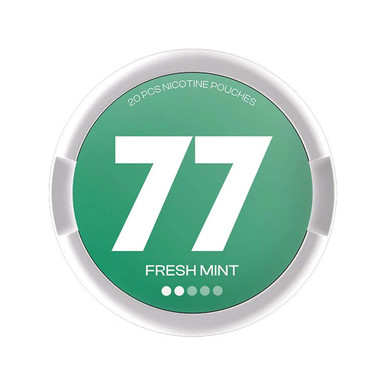
If what you want is to know exactly which fruit you are getting, several cans on our shelves name it. Cuba Black Apple Juice at £39.90 points its fruit at pressed juice rather than at whole fruit, sweeter and rounder than a green apple would be. SYX Apple Kiwi at £29.90 puts two named fruits together and takes the cool layer out altogether, so the sharpness has to come from the kiwi. the 77 apple and mint can at £39.90 is the structural twin of this product with the fruit pinned down — a named fruit plus a mint layer, same two-part architecture, no ambiguity about the fruit. Worth naming here as well: Klint Apple Mint at £36.90 is a fourth take on that pairing, but our record currently marks it as out of stock, so treat that one as reading rather than shopping until the listing changes.
Mint without the fruit
The other obvious move from a fruit-and-mint can is to drop the fruit. Edge Spearmint at £14.95 pulls the mint idea towards the sweeter spearmint corner, which is the mint that sits closest to a fruit flavour without being one. That makes it a sensible second can for somebody who likes the cool part of this tin more than the tropical part. Going further from this can rather than nearer to it, Fumi Dark Spice at £27.90 is about as far from bright cool fruit as anything we stock, and people who want a genuine contrast in a rotation rather than a variation tend to land somewhere in that direction.
What the comparison cannot settle
None of the above tells you which can is better, and we are not building towards that sentence. Flavour is subjective, declared figures are not interchangeable across brands, and the only person who can weigh a tropical blend against a named berry is the person who is going to taste it. What the comparison does do is narrow the field: it tells you which cans share this one's two-part structure, which ones name their fruit, which ones remove the fruit, and roughly where each sits on the price line. That is a real service. Ranking them would not be.
Keeping a can in usable condition
This is the part of a product page most shops leave out, and it is the part that determines whether the last third of a tin is as good as the first. A pouch is a dry format, but dry does not mean inert, and the flavour in a can is a volatile thing that leaves if you give it a route out.
The lid is the whole story
Almost everything that goes wrong with a can goes wrong because the lid was not properly on. A lid that is seated and clicked keeps the contents in the condition they arrived in for as long as most people take to get through a tin. A lid resting on top, or a lid pushed back on at an angle because the catch well is full, does not. The single most useful habit with this format is emptying the well before it starts interfering with the lid, because a full well is the most common reason a tin stops closing properly and nobody notices until the pouches have changed.
Heat, and where people leave cans
Heat is the enemy of a flavoured product, and the places cans habitually get left are the warm ones: a car dashboard, a windowsill, a coat pocket hung over a radiator, the shelf above a kettle. A tin that spends an afternoon in direct sun in a parked car is not dangerous, it is disappointing — the flavour goes flat and slightly generic, and the pouches can dry towards the stiff end of their range. A cool, dark, dry cupboard is the whole of the advice, and a drawer away from the cooker is better than a shelf above it. Bathrooms are a poor choice for the opposite reason: the humidity swings are large and the surfaces are wet.
Dry pouches, moist pouches and which one you have
Pouches vary in how moist they are when they are packed, and this is a design difference between products rather than a fault in any of them. A drier pouch tends to feel more discreet and takes a little longer to give up its flavour. A moister pouch tends to read as more immediate and to fade sooner. Both are normal. What is not normal is a pouch that has gone noticeably stiff and papery after weeks in a warm room, because that is a can that has lost moisture it was supposed to keep, and the flavour usually goes with it. You will know from the first one out of the tin.
The fridge question
People ask about the fridge often enough that it deserves an honest answer rather than a confident one. Some users keep cans in a fridge and report that the flavour holds longer; others find the condensation on a cold tin brought into a warm room does more harm than the cold does good. We do not hold any manufacturer guidance on refrigeration for this product, so we are not going to issue an instruction either way. What we will say is that if you do keep a can cold, letting it come up to room temperature before opening it avoids the worst of the condensation problem, and that no fridge rescues a tin that has already dried out.
Rotation, and buying for the shelf rather than the day
The practical consequence of all of the above is that a can is better bought to be used than bought to be stored. Where people keep several tins in rotation, the sensible habit is to work through the oldest first and to keep the spares in the same cool dark place as the one in use, rather than leaving spares in a car or a bag as a convenience. We do not publish a shelf life or a date for this listing. The packaging is where any date is printed, and if a can has been in a drawer for a year, the first pouch out of it will tell you more than anything we could write.
Where this can falls in Velo's range here
We list twenty-one products under this brand, and you can see all of them on the Velo shelf. Every Velo listing we hold carries the same £4.19 price, which makes the brand unusual on our site: within this range, price is not a variable at all, and the only things that change between one listing and the next are the flavour and the declared figures on offer. That is a genuinely useful property when you are choosing, because it removes the question of whether a different flavour costs more.
Within that range, this can belongs to the fruit-and-cool group. The mint-forward end of the brand's shelf is well populated: Velo Crispy Peppermint and the Freezing Peppermint can both go at the mint from the peppermint side, the second one named to suggest the colder of the two readings, and Velo Bright Spearmint takes the sweeter spearmint route instead. All three are £4.19 and all three are in stock on our record. If the tropical half of this can is the part you would change while keeping the cool part, that trio is where to look.
Going the other way — keeping fruit and changing which fruit — Velo Cherry Ice puts a single named stone fruit under the same kind of cool layer, and the Icy Berries can does the same with a berry blend, so it shares this can's habit of not naming one fruit. Velo Peach Ice is the closest thing in the brand's own range to a direct swap: same two-part structure, same £4.19, with a named soft fruit in place of an unnamed tropical blend. And Velo Lime Flame is the outlier of the group, taking a citrus note in a direction the name suggests is warm rather than cool. All of those are listed in stock as this is written.
Second and third cans, and why people keep them
Very few people who buy pouches buy one flavour and nothing else. The usual pattern is two or three tins in rotation, and the reason is mundane: any flavour you have a great deal of becomes less distinct the more of it you have, and a second can with a different character resets that. The choice people make is between a variation and a contrast.
A variation keeps the structure and changes one element, which is what the Velo cans above are for. A contrast changes the structure. For a real contrast to a bright cool fruit, the options on our shelves that come up most are the spice direction, the cola direction and the heavy-fruit direction, and the cans named earlier on this page cover the first and third of those. Some people run two tins that are deliberately unalike and choose by time of day; others keep a second can only as a spare and never really rotate. Both are ordinary.
If you are browsing for either kind of neighbour, the quickest routes are the shelves rather than individual products. The mint shelf is listed above and is the broadest one we have; the fruit side is easier to browse through the tropical grouping, also linked above, where the 58 listings include both named single fruits and blends. For brand-led browsing, the Pablo shelf and the Cuba listings are the two ranges most of the comparison cans on this page came from, and both are worth a look if a particular can above caught your attention. And if you would rather see the lot in one place, the full catalogue is a single page.
One strength and one price: what there is to decide
Some listings on our site offer a choice. This one does not, and that simplifies the decision to the point where it is worth saying so directly. There is a single variant: 10mg at £4.19. There is no second strength to weigh, no multi-can option to price up against a single tin, and no format choice within the listing.
What that means practically is that the only real decisions here are whether the flavour family is the one you want and whether the declared figure is the one you are looking for. If the answer to the second question is no, the strength shelves are the efficient way to look elsewhere: the 135 cans in the medium grouping is where this one lives, and the two shelves above it were linked in the strength section. If the answer to the first question is no, the flavour shelves linked above will do the job faster than reading product pages one at a time.
We should also say what we cannot do here. We will not tell you that the 10mg figure is a good place to be, or a sensible step from anywhere else, or right for somebody with any particular history. That is not modesty. It is a line we do not cross on a product page, and any shop that does cross it on your behalf is telling you something it does not know.
Ordering it, and the age check
The buying part is short. The listing shows £4.19 and our record marks it in stock, which means it was available when this page was generated rather than at the instant you are reading it; stock states move, and the listing itself is always more current than a description written beforehand. If the page you land on shows it unavailable, that is the accurate answer and this paragraph is the stale one.
This is an age-restricted product. We sell it only to people aged 18 or over, and that is a condition of sale rather than a formality. Identification may be requested on delivery, and the person accepting the parcel needs to be able to produce it, so it is worth thinking about who will be in when a delivery is due. A carrier is entitled to refuse to hand the parcel over if nobody present can satisfy the check, and that is the system working rather than failing.
One practical note on multiple cans. Because every listing under this brand is the same £4.19, adding a second or third flavour to an order does not change the arithmetic in any interesting way, which is why brand-led rotations are common with this range. That is an observation about pricing, not an encouragement to buy more than you intended to buy.
Where this page sits on the site
If you want to come back to this can, the fastest routes are the four shelves it belongs to. By strength it is filed in the medium grouping; by brand it sits with the twenty-one Velo listings; by flavour it appears on both the mint shelf and the tropical shelf, because it carries both tags. Each of those four is linked earlier on this page, and any of them will bring you back here.
Above those, the Extra Strong shelf and the Strong grouping are the other two strength views, and everything we stock is the flat list if you would rather filter by eye than by category. The structure is deliberately shallow: strength, brand, flavour, and then products. There is no fifth axis hiding somewhere, and if you cannot find a can through one of those four you probably cannot find it at all.
Questions we are actually asked about this can
Which tropical fruits are in it?
We do not know, and we are not going to guess. The only flavour information our record holds for this listing is the pair of tags, mint and tropical, and the second of those is a family rather than a fruit. A tropical blend can lean in several directions depending on who built it. The packaging is the only place a fruit would be named, so if a specific fruit matters to you, read the can or choose a listing whose name says the fruit out loud.
How many pouches are in the tin?
Our record does not carry a pouch count for this listing, so we cannot tell you. The number is printed on the packaging. We would rather leave a gap here than publish an estimate that reads like a fact, because a wrong count is worse than no count when somebody is comparing two products on quantity.
Is the 10mg version stronger or weaker than another can printed 10mg?
The two declared figures are the same number, and that is all the comparison supports. Declared figures are given by manufacturers and are not guaranteed to be measured or presented identically across brands, and pouch size, moisture and flavour load all differ between products. People who move between brands frequently report that two cans with the same figure do not read the same to them. So the number is useful for sorting a catalogue and is not a promise of equivalence.
Which strength should I buy?
We cannot tell you, and we will not. We do not know anything about you, and matching a person to a milligram figure is advice we are neither qualified nor permitted to give on a product page. What we can do is show you what is on the shelves and what each can declares. The choice is yours to make, and in this particular case the listing offers one figure only, so the decision is whether that figure is what you were looking for.
Why does this sit on the medium shelf when other cans with bigger numbers sit there too?
Our strength shelves are filing categories that take account of the whole declared range on a listing, not just one figure, which is why the groupings look slightly untidy if you read them as a strict numerical sort. We do not publish the precise rule, and rather than reconstruct it for you here we will say what is reliable: the shelf is a browsing aid, the figure printed on the can is the fact, and where they seem to disagree, trust the can.
Does the flavour last the whole time the pouch is in?
No, and no pouch of this type does. The general pattern is that flavour arrives within the first minute or two, holds for a stretch, and then thins out towards a faint background note well before most people take the pouch out. How long each of those phases lasts varies by person and by can, and a lot of people use the fading flavour as their cue to change rather than watching a clock.
Can I keep it in the fridge?
Some people do and say it keeps the flavour longer. Others find the condensation on a cold tin opened in a warm room causes more trouble than the cold prevents. We do not hold any manufacturer instruction about refrigeration for this listing, so we are not issuing one. If you do keep a tin cold, letting it warm up before opening avoids the worst of the condensation, and nothing in a fridge will bring back a can that has already dried out.
What do I do with a used pouch when there is no bin?
That is what the well in the underside of the lid is for. It holds several used pouches, which covers a journey or a shift comfortably, and it empties into general waste when you are next near a bin. Not down a drain and not into a plant pot. Because used pouches are small and pale and easy to mislay, keeping the tin closed matters most in a house with children or animals in it.
Is this listing the same as the brand's other cans apart from the flavour?
On the information we hold, the format and the price are constant across every Velo listing on this site — all twenty-one are £4.19 — and what varies is flavour and the set of declared figures offered. We cannot speak to differences in pouch size or moisture between one flavour and another within the brand, because our record does not carry those fields, and the tins themselves are the place to compare.
Where is it made?
We do not hold that information and therefore do not publish it. Our product record covers name, brand, price, declared strengths, flavour tags, stock and photographs, and manufacturing location is not one of the fields in it. Anything printed on the packaging is the authoritative answer, and anything we wrote here would be an invention.
Is the can in stock right now?
Our record marked it as in stock when this description was written, and the listing at the top of the page is the live answer. Of the comparison cans named further up, one — the Klint apple and mint listing — is marked unavailable on our record, and we have flagged it in place rather than sending you to a page you cannot order from. Everything else named above was in stock at the time of writing.
Do you have customer ratings for it?
No. We do not publish ratings, review counts or any other measure of popularity on our product pages, and we are not going to imply one in prose either. If a description on this site tells you a can is well liked, it is doing something we do not do. The flavour tags, the declared figure and the price are what we have, and they are all in the first paragraph.
The required notices, in plain words
This is an age-restricted nicotine product. It is sold only to adults aged 18 or over who already use nicotine, and it is not sold to under-18s under any circumstances. Nicotine is an addictive substance. This product is not a licensed stop-smoking medicine, and it is not offered, described or intended as one. It is not intended for non-smokers, for anyone who does not currently use nicotine, for under-18s, or for anyone who is pregnant or breastfeeding. Nothing on this page is medical advice, and nothing on this page recommends a strength for any individual. Identification may be requested on delivery, and the parcel may be refused if the age check cannot be satisfied. If you have questions about nicotine use and your own circumstances, a qualified professional is the right person to ask, not a product description.
Last word
Velo Tropical Ice is a £4.19 can with one declared figure on it, 10mg, filed on our shelves under mint and tropical and listed in stock as this was written. The flavour is a sweet fruit blend with a cool note, and the fruit is not named in our record, which is the one thing about this listing we would want a careful shopper to know before ordering. Everything else on this page is either the object described or a comparison with the cans beside it. If you want the fruit pinned down, several listings named above do that; if the blend is the appeal, this is the cheapest route to it on our shelves.
More from Velo

More medium strength pouches
More mint pouches
Where this sits
Velo Tropical Ice Nicotine Pouches appears in these categories. Browse them, or jump to something close.
You might also like