
Home / Extra Strong / Iceberg Double Apple Nicotine Pouches
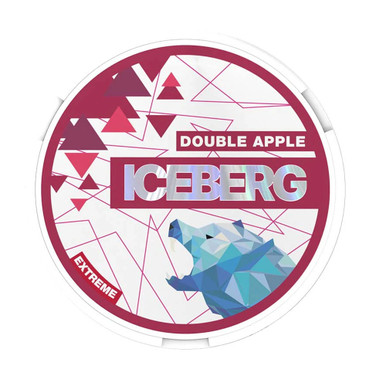
Iceberg · 50mg · 10-can pack
Read the full guide
Iceberg Double Apple Nicotine Pouches
£39.90
✔ In stock — ready to ship
100% tobacco-free
Free over £20
Same-day dispatch
Secure checkout
Iceberg Double Apple Nicotine Pouches is listed here as a ten-can pack at £39.90, in a single strength of 50mg. There is one product image on the listing. The flavour field in our records carries one word, and it is not the word you would expect — but that needs its own explanation, and it gets one in the next section rather than being glossed over here.
Before anything else: this pack is out of stock with us at present. It cannot be ordered today. The page remains published because the specification is worth having on record, because people search the name directly, and because most of what is written below — the arithmetic on a ten-can pack, how the format behaves, how this sits beside the other 50mg cans on our shelves — does not depend on whether the box is in the warehouse this week. We do not publish expected restock dates. We would be guessing, and a confident guess is the least useful thing a shop can offer. The Iceberg brand shelf, with its forty entries, is where you will see availability change first.
The full guide to Iceberg Double Apple Nicotine Pouches
5,170 words on how it eats, who it suits, how to serve it and what to put beside it.
What you are looking at
The ten-can figure is the most immediately practical number on this listing, so it is worth doing the sum straight away. £39.90 across ten cans is £3.99 a can. That is a genuine piece of information rather than a sales point, and it is the figure to hold in your head when you look at the rest of our shelves, because a good number of products are listed as single cans and the headline prices are therefore not comparable at a glance.
A note on the name and the flavour tag, because they disagree
Here is something I would rather tell you than let you discover after ordering. The product is called Double Apple. The flavour category recorded against it in our data is tropical. Those two things do not obviously agree with one another, and I am not going to pretend they do.
An apple is not a tropical fruit by any ordinary reckoning, and a shopper reading "Double Apple" will form a fairly specific expectation — orchard fruit, green or red, sweet or sharp. A shopper filtering by tropical will form a different one entirely. Both cannot be right, and our record does not contain enough information to tell you which one is.
There are a few ordinary explanations and I can set them out without pretending to know which applies. It may be a filing decision on our side, where a flavour that did not fit neatly anywhere was put on the largest available shelf. It may be that the product itself carries something beyond apple that pushed the categorisation across. It may simply be an error in our catalogue. What I will not do is describe a taste to you on the strength of a category tag I cannot verify, or on the strength of a product name, because in both cases I would be writing fiction.
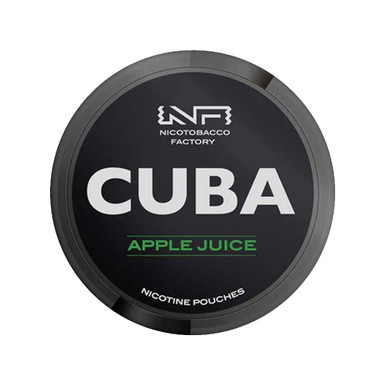
So the honest position is this: we do not hold a verified flavour description for this can. We hold a product name that says apple and a category tag that says tropical. The can itself carries the maker's own description and that is the authority. If a definite apple flavour is what you want and you want it confirmed before you buy, our Killa Apple listing at £33.50 and our Cuba Black Apple Juice listing at £39.90 both put apple in the product name and sit on apple-consistent records, and 77 Apple Mint at £39.90 states both of its components in the name.
The one part of the name I can speak to with confidence is the word "Double". It is part of the product name. It is not a statement that the can contains twice as much of anything, it is not a strength indicator, and it does not mean the pouch does anything twice over. Makers use it as a naming convention. Read it as a name and nothing more.
The pouch itself: size, seat, and the practical business of using one
This is the part of the page worth the most space, because the format is what people underestimate when they are choosing between cans. Two products can share a flavour family and a printed strength and still be entirely different objects to have in your mouth, and that difference is usually what decides whether someone finishes the pack.
The basic mechanics first. A pouch is a small sealed soft rectangle. It goes between the upper lip and the gum, usually towards the front, and it stays there. It is not chewed. It is not moved around. It is not swallowed, and neither is the can's contents at any point. Once it is seated it should be more or less possible to forget it is there, and if it is not possible to forget it is there, something about the fit is wrong for you.
On portion size: this is the single biggest comfort variable in the whole category and it is the one most often ignored. The market runs from slim and mini formats, which are physically small and sit almost flat, through to larger standard portions that have real presence against the lip. Slim formats tend to suit people who want the thing to be unobtrusive; larger portions tend to suit people who find a small pouch shifts around. Neither is superior. They are different shapes for different mouths.
Our record for Iceberg Double Apple does not state a portion size or a format designation. The pack holds the brand, the flavour category, the strength, the price, the ten-can quantity and one image — and nothing on the physical dimensions of what is inside. I will not estimate it. If format is the thing you are actually choosing on, the dependable approach is to read the individual pages of listings that state their format explicitly, rather than inferring it from an entry like this one that does not record it.
On seating a pouch: most people find it settles within the first half-minute or so. There is usually a short period where it is noticeable and then it stops being noticeable. Moving it around with the tongue is the common beginner's habit and it is the thing most likely to make it uncomfortable — a pouch that is left alone sits better than one that is fiddled with. Some people alternate the side they use out of habit; that is a personal preference rather than a rule.
On how long people keep one in: there is no correct figure and I am not going to supply one. Habits vary enormously, from a few minutes to well over half an hour, and the same person will vary within their own week. The can may carry the maker's guidance, and where it does, that is the guidance to follow. What we will not do is suggest a duration, a frequency, or a quantity, because how much anyone uses is not a shop's business to direct.
What I can describe is how the flavour behaves over that period, because that is a property of the format rather than advice. Flavour in a dry pouch is generally most defined in the opening stretch and then tapers gradually rather than switching off. Most people find the recognisable character of a flavour is clearest early and that what remains later is a simpler, rounder version of the same thing. Nobody keeps a pouch in until it has no flavour left; people take it out somewhere on that curve, and where they take it out is the personal part.
On the can: cans in this category are usually built with a lid that has a compartment in the top, intended to hold used pouches until a bin is available. That is a general observation about how these cans tend to be made — our record does not confirm the lid arrangement on this specific product, so take it as context rather than a specification. Whether or not the can has that compartment, disposal is the same and it matters: used pouches go in a bin. Not down a sink, not out of a window, and never anywhere within reach of a child or an animal. A ten-can pack means a lot of pouches passing through a household over time, which is exactly why the disposal habit is worth forming early rather than late.
Something worth saying about the physical handling, since it is the sort of thing nobody mentions and everybody works out on their own. Taking a pouch out of a can one-handed is a small skill that takes a few days to acquire and then becomes invisible. The cans are designed to be opened with a thumb and the contents are arranged so that a single pouch can be lifted clear without disturbing the rest, but a cold can, damp fingers or a hurried grab will get you two at once. Nothing is harmed by putting the spare one back; the only reason to mention it at all is that people new to a format sometimes assume the fumbling is a fault in the product rather than a matter of practice.
The other habitual detail is what to do with a pouch when you take it out and there is no bin. This is the thing the lid compartment exists to solve, and where a can does not have one, people generally fall back on carrying a small tin or simply holding on to the can until they get somewhere sensible. What should not happen is the pouch going into a pocket loose, into a drink can, or anywhere it can be picked up later by someone else. None of that is complicated; it is just a habit worth having in place before you need it.
One last practical point specific to a multi-can pack. Ten cans is a quantity that will sit somewhere for a while, so open one at a time and keep the rest sealed. A can that has been opened and half-used behaves differently from one that is still factory-sealed, and there is no advantage to having three cans on the go at once. It is also worth keeping the pack together rather than distributing cans around a house, a bag and a car — partly so you can see at a glance how many are left and when to reorder, and partly because a can that has wandered off into a coat pocket is a can nobody is keeping an eye on.
How it stands beside the other 50mg cans we carry
The second thing worth going into properly is the comparison across the shelf, because a printed strength figure only becomes useful when you have something to set it against.
Iceberg Double Apple is listed at 50mg and nothing else — there is no lower option on this particular entry, which is worth knowing if you were hoping to try the same flavour at a different figure. It sits on our Extra Strong shelf alongside ninety-seven other entries, and that shelf is where most of the direct comparisons live.
The first and most important thing to understand about comparing cans at the same printed figure is that the figure does not make them equivalent. Two cans both marked 50mg are two label declarations of nicotine content by two different makers using different formats, different flavour constructions and different portion sizes. People routinely find that the same number reads differently between brands, and that is not a defect in either can. If you take one thing from this section, take that: the number tells you where a can sits in a range, not how it will land.
With that caveat in place, the shelf comparison is still genuinely useful, and the most useful axis is price-per-can rather than headline price. Set out plainly:
| Listing | Price as listed |
|---|---|
| Iceberg Double Apple (this page, ten cans) | £39.90 |
| Cuba Black Apple Juice | £39.90 |
| Killa Apple | £33.50 |
| Elf Bar Pineapple | £29.90 |
| Fumi Fiery Peach | £27.90 |
| Nordic Spirit Tropical Mix | £4.49 |
| Pablo Exclusive Banana Ice | £3.85 |
That spread, from £3.85 to £39.90, is not a spread in quality and it is not a spread in strength. It is overwhelmingly a spread in how many cans you are buying. Nordic Spirit Tropical Mix at £4.49 and Pablo Exclusive Banana Ice at £3.85 are single-can prices; this listing's £39.90 covers ten. Comparing the two headline numbers without adjusting for quantity would tell you something completely false. Check the quantity on every listing before you set two prices side by side — it is the single most common way people mislead themselves on this site.
Among the larger packs, Cuba Black Apple Juice matches this one exactly on price at £39.90 and is the nearest comparison we hold in the apple direction. Killa Apple at £33.50 is the other apple-named entry in the same broad band. Moving outward from apple, Elf Bar Pineapple at £29.90 and Fumi Fiery Peach at £27.90 sit at the lower end of the multi-can range, and Maggie Original Jamaican Cherry Tonic Wine at £39.90 is at the same level as this pack while being an entirely different flavour proposition.
There is also a product on the neighbouring shelf that will come up in your browsing and needs a clear word. Denssi Tropical Fury, listed at £39.90, appears in our records as an energy pouch rather than a nicotine pouch. It shares a tropical flavour direction and it will sit near this can in a tropical filter, but it is a different type of product entirely. Read its own page; do not assume it matches the specification on this one.
A second axis worth comparing on, and one people tend to reach only after a few orders, is how deeply we stock the brand behind a can. That sounds like a shop's concern rather than a customer's, but it has a practical consequence: a brand we carry in depth gives you somewhere to go when a particular flavour is unavailable, and a brand represented by one or two entries does not. Iceberg is on the deeper side with forty entries. The Cuba range is another we carry broadly. Where a can you like comes from a range with several other flavours on the shelf, an out-of-stock notice is an inconvenience; where it comes from a single-entry brand, it is a dead end.
The third axis is simply whether a listing is sold as a single can or as a pack, because that determines what a comparison even means. A ten-can pack and a single can are not competing for the same purchase. One is a restock and the other is a trial. Setting this listing against Pablo Exclusive Banana Ice is not really a comparison of two products; it is a comparison of two different decisions, and the sensible buyer makes both at different times rather than choosing between them.
The conclusion I would draw from the whole comparison is unexciting and true: at the same printed figure, what actually differentiates cans is the flavour and the format, not the number. If you already know a brand's format suits you, that is worth more than any specification on the page — and it is worth more than a price difference of a few pounds across a pack, since a pack of something that does not suit you is not a saving at all.
Reading the 50mg figure
The milligram figure is a declaration by the maker of the nicotine content, printed on the can. That is the whole of what it is. It is not a rating, not a grade, and not a measure of how good the product is. A can with a higher printed figure is not a better can and a can with a lower one is not an inferior can.
We use those figures to organise the site into three strength shelves — Medium Strength, Strong and Extra Strong — and this listing is filed on the last of them. Those shelves are our own organisational scheme rather than anything the makers publish, and we do not hold or publish the exact thresholds that divide them, so the shelf a product sits on is best treated as a rough sorting aid rather than a precise statement.
What we will not do anywhere on this page is suggest that a particular figure is right for a particular person. That is not a judgement a retailer should be making, it depends on things about an individual that we neither know nor should ask, and we will not be drawn on it in the questions below either.
Iceberg as we list it
Iceberg is one of the deeper brand ranges on the site. The Iceberg listing carries forty entries spanning a range of flavour directions, with £39.90 recurring as a common price point across them.
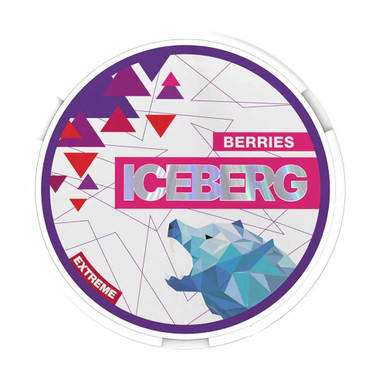
The siblings recorded against this listing all sit at the same £39.90, which is the first useful thing to know — within this range you are choosing a flavour, not a price. Iceberg Apple Lemon Pineapple is the most directly relevant of them here, since it names apple in the title alongside two other fruits and is the closest thing to a documented apple flavour the range offers us. Iceberg Kiwi Strawberry, also £39.90, is the other multi-fruit entry listed near this one. Iceberg Berries and Iceberg Black Currant cover the darker fruit direction, Iceberg Black Mint steps out of fruit altogether, and Iceberg Black and Iceberg Arasaka state no flavour in their names, leaving the can as the only description.
There is a pattern worth noticing across all of those, and it bears on the flavour-tag problem this page opened with: several Iceberg names describe the contents plainly and several do not. Apple Lemon Pineapple tells you exactly what it is aiming at. Arasaka tells you nothing. This listing sits awkwardly in between, with a name that sounds descriptive and a category tag that disagrees with it.
The caveat you need before clicking any of them: every one of those siblings is out of stock too, at the same price as this pack. The Iceberg brand shelf carries all forty entries with their live availability and is the practical page to work from.
Within the range, what I can say about this particular can is that it is a ten-can pack at a single 50mg figure, which puts it among the bulk-format entries rather than the try-one-can entries, and that it is filed on the Extra Strong shelf with the bulk of the brand.
Ten cans, and whether that is the quantity you want
This listing offers one strength and one quantity: 50mg, ten cans, £39.90. There is no smaller pack of this flavour in our records and no alternative strength on this entry, so the choice in front of you is essentially whether ten cans of one flavour is a sensible commitment — and that is a real question rather than a rhetorical one.
The argument for the bulk pack is the arithmetic. £3.99 a can is a lower effective price than most single-can purchases on the site, there is one delivery rather than several, and you are not thinking about reordering for a while. For a flavour you already know you get on with, it is straightforwardly the better buy.
The argument against is specific to this product and follows directly from the section above: you cannot currently verify from our listing what this tastes like. The name says apple, the tag says tropical, and we hold no description. Ten cans is a large commitment to a flavour you have not confirmed. If you have had this can before and know what you are getting, none of that applies. If you have not, buying ten of something unverified is a bigger risk than buying ten of something described.
The alternative pattern, if you want to test the flavour direction more cheaply first, is a single can from elsewhere on the shelf — Pablo Exclusive Banana Ice at £3.85 and Nordic Spirit Tropical Mix at £4.49 are the low-commitment entries in the fruit and tropical directions — and then a bulk pack once you know what you like. That is how most steady buyers operate: one reliable bulk name, plus a single can of something new each order.
What else people keep in the rotation
Very few people run one flavour exclusively, and the reason is practical rather than indulgent. A flavour used continuously stops registering properly; the same flavour returned to after a break reads much as it did at the start. Keeping two or three names going is maintenance of your own palate, not extravagance.
With a fruit-direction can as the main name, the useful companions are the ones that are clearly not fruit, because they are what actually resets things. Maggie Original Jamaican Cherry Tonic Wine at £39.90 is a dark, unusual flavour that sits a long way from an orchard fruit. 77 Apple Mint at £39.90 is the halfway option, keeping the apple but putting something else over the top of it.
The practical mechanics of a rotation matter as much as the choice of names in it. Two cans open at once is manageable; four is how cans get forgotten at the back of a drawer and go past their date. Most people who rotate properly keep one bulk name as the constant and swap the second slot around, rather than running three or four in parallel. That way there is always something familiar to fall back on and only one variable being tested at a time, which is also the only way to form a clear view of whether you actually like a new flavour or merely liked the change.
Within the fruit family itself, Elf Bar Pineapple at £29.90 and Fumi Fiery Peach at £27.90 are the two nearest neighbours we hold at multi-can prices, and Killa Apple at £33.50 stays in the same flavour direction with a different maker's interpretation. For breadth rather than specific picks, the tropical flavour shelf runs to fifty-eight entries, which is one of the larger flavour categories we keep, and the Cuba range and Pablo range are the two brands we carry in the greatest depth if you would rather compare within one maker.
Looking after ten cans
A bulk pack raises the stakes on storage slightly, simply because the last can will be opened a good while after the first.
Heat and light are what degrade a can. Somewhere cool, dark and ordinary — a cupboard, a drawer — is entirely sufficient, and no special arrangement is needed. What should be avoided is the sunny windowsill, the car in warm weather, the shelf above a radiator. The first thing to suffer is usually the flavour, since the brightest notes in any profile are the least durable, and with ten cans sitting for months that is a real rather than theoretical concern.
Keep unopened cans sealed until you get to them, and keep the lid properly closed on the one in use. A can left ajar dries at the edges. Some people keep cans refrigerated; it is not required, we do not recommend it either way, and if you do it, keep them sealed and away from strongly scented food, because a poorly closed can will take on whatever is next to it.
Check the date marking when the pack arrives, and bear it in mind against how quickly you will realistically work through ten cans. A bulk pack is only economical if it is used within its life. And the firm one, which applies doubly to a large pack sitting in a house: keep all of it out of reach of children and animals, in a high or closed cupboard rather than anywhere accessible.
Ordering, delivery and proof of age
Ordering works the usual way — items go into a basket from their own pages and everything travels as one delivery, which is why building a single larger order from the full product list is more sensible than placing several small ones.
Since this pack is out of stock, it cannot be added to a basket at the moment and there is no back-order facility.
Deliveries go out within the UK in plain outer packaging with no description of the contents on the outside. Timing depends on the service selected at checkout and the destination; plan for a few days rather than next morning, particularly if you are reordering against a supply that is running low.
Age verification applies to every order without exception. This is an 18+ product, we check age during the order process, and the delivery driver may ask to see photographic ID before handing the parcel over. If no adult is there to present it, the parcel will not be left. Do not send an order to an address where it cannot be received in person by someone of age, and do not ask anyone under 18 to take it in.
Where this page sits
Three routes lead here. By strength, this is one of the ninety-eight entries on Extra Strong. By brand, it is one of forty on the Iceberg shelf. By flavour, our catalogue files it among the fifty-eight entries under Tropical — a filing that, as discussed above, sits oddly against the product's own name.
If you are working down from a different strength, the Strong category and the Medium Strength category are the other two shelves, and everything we stock is available to browse whole if filters are getting in your way.
Common questions on this pack
Does it taste of apple or of tropical fruit?
I genuinely cannot tell you. The product name says Double Apple and the flavour category in our records says tropical, and those two do not agree. We hold no tasting description for this can, so anything I wrote about the flavour would be invention. The can carries the maker's own description and that is the reliable source. It is an unsatisfying answer, but it is the accurate one.
How many cans do I get for £39.90?
Ten. That is recorded in our data for this listing, and it works out at £3.99 per can. This is worth noting when you compare against other products on the site, because many listings are priced for a single can — which is why you will see figures under five pounds sitting next to figures near forty on the same shelf.
Is it in stock?
No. Our record shows it out of stock, so it cannot be ordered today. We keep the page live because the specification is useful and because people search the name. We do not give expected return dates, since we would only be estimating. Checking the Iceberg brand shelf periodically is the practical approach, as availability updates there.
Does "Double" mean it is twice the strength?
No. It is part of the product name and nothing more. The strength on this listing is 50mg, stated once, and that is the only strength figure attached to it. Makers use words like double as naming conventions across flavour ranges. It does not indicate a doubled quantity, a doubled strength, or anything the pouch does twice.
Is there a 20mg or other lower option?
Not on this listing. Our record gives one strength only, 50mg, with no alternative variant. Some other products we carry list two or more figures on a single page; this one does not. If a different figure is what you are after, the Strong and Medium Strength shelves are the places to browse rather than this entry.
How big is the pouch?
We do not hold that information. The pack records brand, flavour category, strength, price, quantity and a single image, and nothing about the physical portion size or format designation. I will not guess at it. Listings that state their format in the product name, such as Siberia Mini, are the ones to look at if size is what you are choosing on.
How long should I keep one in for?
That is not something we will advise on. Habits vary widely and it is a personal matter rather than something a shop should be directing. The can may carry the maker's own guidance, which is what to follow. The only general observation worth making is that flavour in this format tends to be most defined early and to taper gradually rather than ending abruptly.
Is 50mg stronger than it sounds?
The figure is a declared nicotine content printed on the can, and that is all it is. It tells you where a can sits relative to other cans of the same sort of product, and nothing about how it will land for any individual, which varies between people and between brands at the same printed figure. We will not tell you whether a given figure suits you — that is not a call a retailer can responsibly make.
What is the closest alternative if this stays out of stock?
Cuba Black Apple Juice matches on price at £39.90 and is apple-named with an apple-consistent record. Killa Apple at £33.50 is the other apple entry in a similar band. If you want to stay on the tropical side of the tag instead, the tropical shelf holds fifty-eight entries. Check the can quantity on any of them before comparing prices against this pack.
Why is there a Denssi product in the tropical results that is not a nicotine pouch?
Denssi Tropical Fury is recorded in our catalogue as an energy pouch, so it appears in flavour browsing alongside nicotine products while being a different kind of item. We have not hidden it, because people do look for it, but it should not be read as equivalent to this listing. Its own product page is the place to check what it actually is before ordering.
Which other Iceberg cans are recorded next to this one?
Apple Lemon Pineapple, Kiwi Strawberry, Berries, Black Currant, Black Mint, Arasaka and Black — all at £39.90. Apple Lemon Pineapple is the most relevant if apple is what brought you here, since it states the fruit in its name rather than leaving you to reconcile a name against a tag. All of them are out of stock at the moment, so the brand shelf with its forty entries and live stock states is the more useful page right now.
Will someone need to be in to sign for it?
An adult needs to be there to receive it. This is an age-restricted product, age is checked when you order, and the carrier may ask for photographic ID at the door. Without an adult present to show it, the parcel will not be handed over and will go back. Choosing a delivery address where someone of age will actually be present is the way to avoid that.
Age restriction and the required notices
This product is sold only to adults aged 18 or over who already use nicotine. We will not sell it to anyone below that age, and it is not offered to people who do not already use nicotine.
Nicotine is an addictive substance.
It is not a licensed stop-smoking medicine and is not sold or described as one. It is not intended for non-smokers, for anyone who does not already use nicotine, for under-18s, or for anyone who is pregnant or breastfeeding.
We verify age at the point of order, and photographic ID may be requested by the carrier on delivery. Store every can out of the reach of children and animals.
To summarise
Iceberg Double Apple is a ten-can pack at £39.90, £3.99 a can, listed at 50mg, currently unavailable, and carrying a flavour tag that disagrees with its own name. We have said what we hold and stopped where our records stop. For what is available now, the Iceberg shelf and the tropical category are the two useful starting points.
More from Iceberg


More extra strong pouches
More tropical pouches
Where this sits
Iceberg Double Apple Nicotine Pouches appears in these categories. Browse them, or jump to something close.
You might also like