Home / Medium Strength / Fumi Salty Raspberry Nicotine Pouches
Fumi · 4mg–8mg · 10-can pack
Read the full guide
Fumi Salty Raspberry Nicotine Pouches
£27.90
✔ In stock — ready to ship
100% tobacco-free
Free over £20
Same-day dispatch
Secure checkout
This is the page for Fumi Salty Raspberry Nicotine Pouches, sold as a pack of ten cans at £27.90. Two strengths are declared against it — 4mg and 8mg — and both carry the same £27.90 price, so the figure you pick has no effect on what you pay. The flavour grouping recorded against it is berry. Our system shows it in stock as this is written, and holds one product image. Everything factual below comes from that record.
Divide the box and you get £2.79 a can. That sum is ours rather than the manufacturer's, and it is here only so this listing can be compared with the single-can products sold elsewhere on the site. At checkout the number is £27.90 for the ten. We do not publish a portion count per can, because our record does not carry one. The printed can answers that question and we are not going to pre-empt it with a guess.
The full guide to Fumi Salty Raspberry Nicotine Pouches
5,276 words on how it eats, who it suits, how to serve it and what to put beside it.
What our record holds for this one
This is an age-restricted nicotine product for adults aged 18 or over who already use nicotine. Nicotine is an addictive substance. The full compliance wording sits at the foot of the page. Nothing written here is intended to persuade anybody to consume anything.
About the word on the front
Half of this product's name is a fruit and half of it is a taste direction, and the second half is the one that needs handling carefully.
Salty here is a flavour descriptor and nothing more. It is a word on a label describing the direction a taste is meant to travel in, in the same way that a bag of confectionery might be named for a taste it evokes. It is not a statement about composition, it is not a quantity of anything, and it is not a claim that this product contains more or less of any substance than any other product we sell. We hold no ingredient information for this listing and we would not publish it as marketing copy if we did. If you want to know what is in a can, the printed can and the manufacturer are the only honest sources.
What the descriptor conventionally signals — in confectionery, in baking and now on shelves like ours — is a savoury counterweight set against a sweet one. The purpose of it is contrast. A sweetness with something pushing back against it reads as less flat and more three-dimensional than the same sweetness on its own. That is a statement about perception, not about a recipe, and it is as far as this page will go.
Whether the descriptor suits you is a matter of taste and is genuinely divisive. A minority of people find savoury-and-sweet combinations actively unpleasant, and a box of ten cans is a poor place to discover that about yourself. If you have never got on with salted confectionery, that is a reason to be cautious here, and it is a more useful reason than anything we could tell you about the raspberry.
Placing the taste: cool, sweet, sharp and bitter
This section is the long one, and it is about taste and aroma only. Nothing else should be read into any of it.
Most flavour arguments in this category get nowhere because people are using one word — strong, mild, sweet, harsh — to mean four different things. Four rough axes make the conversation possible. A flavour has a position on each of them, and two cans with the same fruit word on the front can sit in different places on all four.
The four axes, briefly
- Cool. The presence or absence of a cooling character, independent of flavour. A fruit can be cooled or uncooled; so can a mint, which is why some mints read as icy and others as herbal.
- Sweet. How much confectionery there is in the reading — whether the fruit tastes like fruit or like a sweet shop's version of the fruit.
- Sharp. Acidity. The mouth-watering edge that gives a fruit its shape and keeps it from collapsing into sugar.
- Bitter. The least discussed and the most important at the finish. Bitterness is what stops a flavour reading as syrup and what gives darker notes their length.
A fifth, savoury, is usually ignored, and it is exactly the one this listing's name invokes. Treat it as a modifier that sits across the other four and pulls the whole reading towards contrast.
Where raspberry sits before anything is done to it
Raspberry on its own is a high, bright, red-fruit note. Against the rest of the berry family it is one of the sharper members: less jammy than blueberry, less soft and floral than strawberry, less dark and leafy than blackcurrant. It carries a real acidity, and behind the acid there is a faint perfumed quality, close to rose, which is the thing that makes raspberry recognisable rather than just red.
There is also a seedy, slightly woody character in the fruit itself — the part of eating a raspberry that is not juice. Flavour readings of raspberry tend to keep it or drop it. Kept, it makes the note read as fruit. Dropped, it makes the note read as a sweet, which is why so many confectionery raspberries taste of something that has never been near a bush.
On the four axes, an unmodified raspberry sits: not cool, medium-to-high sweet, high sharp, low bitter. That is the starting position. The descriptor on this can is there to move it.
What the savoury descriptor does to those positions
A savoury counterweight does not add a fifth taste so much as rebalance the four. Sweetness reads lower without being lower, because there is something in the reading arguing with it. Sharpness usually reads slightly rounder, because the contrast draws attention away from the acid. The finish tends to get longer, since a savoury edge lingers where sugar does not. Bitterness is generally unaffected.
The net effect, when it works, is a fruit that tastes less like a sweet and more like a thing with edges. When it does not work, the two halves stay apart instead of meeting, and you get a sweet fruit with something odd sitting next to it. Our record does not tell us which of those two this can achieves, and we are not going to write a tasting note on a manufacturer's behalf. What we can honestly do is tell you what to pay attention to when you open it.
Against the other Salty can in the range
Fumi runs a second listing with the same first word, a violet. Because they share the descriptor, people assume the two are variations on one theme. On taste and aroma they are almost opposites, and the difference is worth setting out properly.
Raspberry is a fruit note with genuine acidity. It smells of fruit — a red, slightly jammy, faintly rose-edged smell — and it tastes sharp before it tastes sweet. Its identity lives in the acid, and the savoury descriptor works against that acid to make a contrast you can point at.
Violet is not a fruit note at all. It is a floral, and florals behave differently on every axis. There is no acidity in a violet reading, so the sharp axis drops to nothing. The sweetness is perfumed rather than juicy — closer to the powdery character of a violet-flavoured confection than to anything that grows on a cane. The aroma is the dominant part, and it is a cosmetic, soapy, slightly talc-like smell that people either recognise fondly or dislike on sight. And where raspberry finishes with a clipped, tart edge, a violet finishes long and perfumed and can leave the palate feeling coated.
So: the raspberry is sharp, red, fruity and short; the violet is soft, floral, powdery and long. The savoury descriptor pushes against different things in each — against acid in one, against perfume in the other. If you have tried one and are curious about the other, do not expect a variation. Expect a different kind of thing that happens to share half a name.
Aroma on opening
The nose does most of the work in this format, and the moment the lid comes off is where a fruit can either declares itself or does not. A raspberry can should smell of red fruit first and of the savoury edge second, if at all. A flat or faintly cardboard smell on opening is usually a storage matter rather than a flavour matter, which the storage section below deals with.
Length, finish and what is left afterwards
The axes describe a flavour at its loudest. They say nothing about what happens at the other end, and the other end is where people form their opinion of a can. Three things are worth watching for.
The first is decay rate — whether the reading fades evenly or falls off a cliff. A fruit whose acid goes first, leaving sweetness behind, changes character partway through rather than simply getting quieter, and some people find that more irritating than a flavour that simply stops. The second is the finish itself: whether what remains is fruit, sweetness, or the savoury edge on its own. A savoury-edged product often finishes on the savoury part, because it is the slowest of the components to clear. The third is what the palate does next — whether a cup of tea or a glass of water tastes normal afterwards or tastes of the can.
We hold none of that for this product, and no manufacturer publishes it. It is offered as a set of things to pay attention to rather than as a description of what you will find, and it is worth paying attention on the first can of ten rather than the ninth.
The portion, the can, and what happens to a used one
A pouch is a small soft sealed portion, roughly the size and shape of a flattened jellybean. It sits between the upper lip and the gum and stays where it is put. It is not chewed, not moved around the mouth and not swallowed. Most people settle on a preferred position within their first few and then stop thinking about it.
The can is the squat plastic cylinder the whole category uses — a jar-lid diameter, a few coins deep, with a press-on friction lid rather than a thread. Cans in this format conventionally carry a shallow catch compartment under the lid for used portions. It is the most useful piece of design in the category and the one customers notice last.
How long anybody keeps a portion in varies enormously between people. We hold no usage data for this product and would not publish guidance if we did, because how much of anything a person uses is not a shop's business to direct. Disposal is brief: the catch compartment or general waste. Not a sink, not a drain, not the ground.
None of that changes between listings. Whether you are holding this box, Velo Strawberry Ice at £4.19 or Klint Blueberry at £36.90, the object behaves the same way in the hand. The flavour word, the declared figure, the pack arrangement and the price are what differ.
What people keep next to this one
Ten cans is a commitment to one flavour, and the single most common thing customers do about that is keep a second and sometimes a third can on the go alongside. This section is about how that is usually done, and there is a logic to it that is worth setting out rather than leaving to chance.
Why anybody bothers
Two reasons, both dull and both real. The first is palate fatigue: a distinctive flavour used repeatedly stops registering as distinctive, and a savoury-edged fruit is more prone to that than a plain mint, because the thing that makes it interesting is the thing you stop noticing. The second is that people's preferences move through a day and a week, and one can rarely covers all of it.
The usual arrangement is two cans — one that is the point and one that is the break from it. Some people run three. Beyond three it stops being a rotation and starts being a collection, which is fine but is a different hobby.
Pairing by contrast
The furthest thing from a savoury-edged red fruit is a plain, cold, uncomplicated note. If that is the contrast you want, look outside the berry grouping entirely. Fumi Fiery Mint keeps you inside the same brand and the same £27.90, which means no second supplier and no second price to think about. Outside the brand, the mint and menthol listings on the strong shelf are where most of the category's cold notes have ended up.
A second kind of contrast is the dark one: not cold, but deeper and more bitter than a red fruit. ZYN Blackcurrant Forest at £19.99 names a darker forest-fruit reading in its own title, and Fumi Dark Spice at the same £27.90 as this box leaves fruit behind altogether for something warm and savoury. Either will reset a palate that has gone numb to red fruit.
Pairing by adjacency
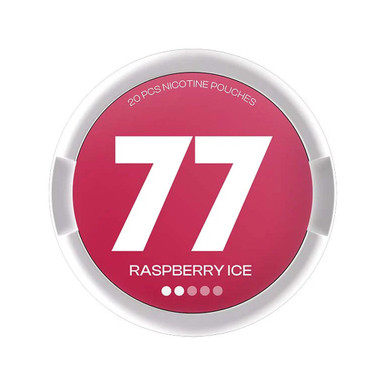
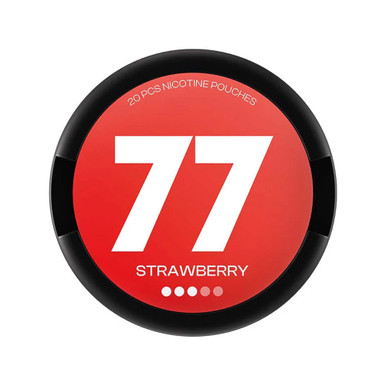
The opposite approach is to keep something close by, so the change is a shift of angle rather than a change of subject. Within berries that means moving along the family: SYX Blueberry at £29.90 takes the round, jammy, low-acid end, while the 77 strawberry can at £39.90 and Edge Strawberry at £14.95 both take the soft floral end at very different prices. All three sit on the opposite side of raspberry from where the acid is.
Staying with raspberry but changing its treatment is another move. Pablo Silver Edition Blue Raspberry at £39.90 names the confectionery reading of the same fruit — blue raspberry is a sweet-shop convention rather than a botanical one — which makes it a useful direct comparison against a savoury-edged version of the same berry.
Pairing by structure rather than flavour
A third approach ignores flavour and pairs on format. A ten-can box lives at home; a single can lives in a coat. Keeping one of each means the box does not have to travel. Nordic Spirit Blueberry at £4.49 is the cheapest berry on this page and the obvious candidate for the coat pocket, since losing it costs you £4.49 rather than a box.
Two further listings here are worth naming for completeness rather than as recommendations. XQS Berrynana Twist at £39.90 pairs berry with banana, which is a genuinely different construction rather than another red fruit. Rush Berry Ice Pro at £19.99 puts a cooling element over a berry, which is the one structural variation this listing does not offer and the easiest way to find out whether you want cooling on a red fruit at all.
Pairing by price rather than by taste
There is a fourth way to choose a companion can that has nothing to do with flavour and everything to do with what you are willing to waste. A box at £27.90 and a can at £4.19 are different kinds of purchase. One is a decision you live with for weeks; the other is a decision you can abandon after an afternoon. People who are unsure of a direction tend to test it at the low end and commit at the high end, and that is a sensible order to do things in.
It works in the other direction too. If the box is the flavour you have settled on, the companion can is the place to take risks — an unfamiliar brand, an odd pairing, something you half expect to dislike. A failed experiment at £4.49 is a shrug. A failed experiment at £39.90 sits in a drawer reproaching you.
The rotation most people actually end up with
Anecdotally, and we hold no data on this so treat it as a shop's impression rather than a finding: two cans, one fruit and one cold, with the fruit changing every few boxes and the cold one staying the same for years. The cold can is the constant because a mint is the thing least likely to go stale on a palate; the fruit rotates because fruits are where the interest is and where the fatigue is.
Seventy-six berries and where this one stands
Berry is one of the biggest flavour groupings we keep — 76 listings, which is too many to browse usefully and is the reason pages like this one exist. Understanding how that shelf is built makes it easier to navigate.
Roughly, it divides four ways. There are the red berries, sharp and bright, which is where raspberry sits with strawberry beside it. There are the blue and purple berries, rounder and jammier and much lower in acid. There are the dark berries — blackcurrant and the forest-fruit readings — which bring a leafy, slightly bitter depth the red ones do not have. And there are the compound berries, where a berry is paired with something that is not a berry at all.
Each of those quarters is represented among the listings named on this page, which is not a coincidence — the related products a shop shows you are chosen to span a shelf rather than to duplicate one corner of it. What makes this listing unusual on that shelf is not the fruit, which is common enough, but the descriptor attached to it. A savoury-edged berry is a small minority of 76, and if that is specifically what you want, the filter will not find it for you; the product names are the only way to spot them.
Price across the berry shelf ranges widely, from single cans in the low pounds to boxes at £39.90, and the spread reflects pack arrangements more than anything else. A box of ten and a single can are not comparable prices, and comparing them as though they were is the most common mistake people make when shopping a large flavour shelf.
Two numbers on one listing
This product is declared in 4mg and 8mg, and the price does not move between them. What follows is information about what those numbers are. It is not advice, and we do not suggest a figure to anybody, ever.
The figure printed on a can is a manufacturer's declaration about that product. It is a label number. It is not a measurement of anybody's experience, and it is not reliably comparable across brands, because manufacturers do not all declare on the same basis. Two cans from different companies showing the same number are two separate declarations that happen to share a digit — not a matched pair. This is the most misunderstood thing in the category.
Within a single brand and a single flavour, though, the comparison is a fair one. The 4mg and the 8mg here are the same product from the same maker with one declared figure doubled, so the relationship between them means something in a way that a cross-brand comparison does not. That is the honest limit of what a number can tell you.
Our strength bands follow the declared figures. This listing sits on the medium band, currently 135 listings and the largest of the three, because its declared range tops out where it does. The extra-strong shelf holds the other end of the catalogue. A band is a filing decision and a navigation aid. It is not a ranking, not a recommendation and not a statement about suitability for any person.
Sixteen listings at one price
Fumi runs to sixteen products with us, and the whole of the Fumi range sits at £27.90 for ten cans. The price does not move between flavours, and on listings like this one that declare more than one strength, it does not move between strengths either. A flat price across a whole brand is unusual and it changes how you shop: there is nothing cheaper to settle for and nothing dearer to stretch to, so flavour is the only variable.
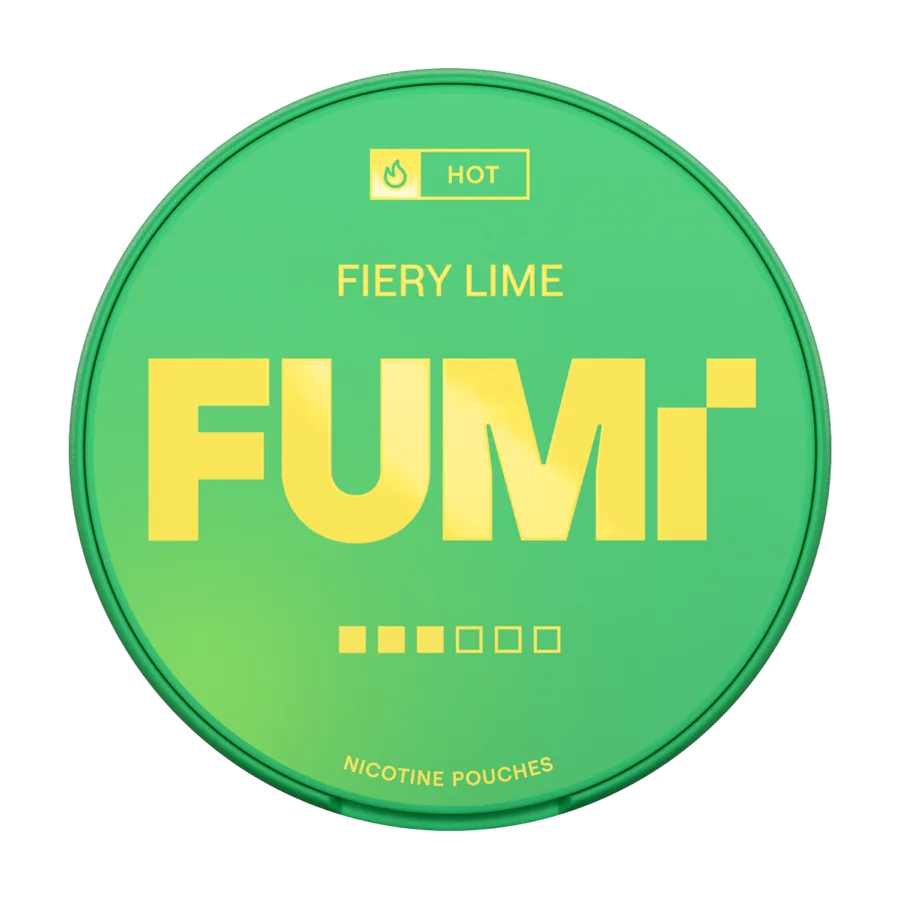
The range divides into recognisable groups. The berries and red fruits, where this listing lives with Fumi Blackcurrant and Fumi Chilled Cherry. The bright and sharp group, including Fumi Fiery Lime and Fumi Fiery Mango. A mint presence. And the two Salty listings, of which this is one, which sit slightly apart from everything else because of the descriptor they share.
The word Fiery appears on several of those titles and does not appear on this one. We hold no definition of what the brand means by it, so we will not tell you it means heat or sharpness or intensity. Its absence from this title tells you only that this can is presented as a fruit with a taste direction attached, and nothing more elaborate.
Keeping the box in good order
Ten cans will be in your house for a while, which makes storage matter more here than it would for a single can.
Cool, dry and dark is the whole of the advice. A cupboard away from the hob, a drawer, a shelf in a cool room. Not a windowsill in summer, not the top of a radiator, not a car. Heat is what degrades an aromatic note, and in a fruit the aromatic part is the part carrying the identity — lose it and a sharp red berry becomes a vague sweetness.
Keep the lid pressed home on the can you have opened rather than resting it on top. The lid is a friction fit and it is doing a job. An open can left out overnight will not be what it was in the morning.
We do not hold the moisture format for this product. Some styles in this category are drier and some are moister, they behave differently in storage, and since our record does not say which this is, the conservative approach covers both cases. Anything printed on the can about storage overrides anything on this page. Keep the box out of reach of children and away from pets — more so with ten cans in the house than with one.
What there is to decide
The decisions on this listing are few and worth stating flatly.
- Strength: 4mg or 8mg. Same product, same price, one declared figure doubled.
- Pack size: no choice. Ten cans, £27.90. We do not list a single can of this product.
- Flavour: already made, if you are on this page.
On the strength question we will not advise, and anybody who does should be treated with suspicion. What we can say is what the two numbers are and that they cost the same, which means the decision is not a financial one. If you want to hold both figures in the house rather than choose between them, nothing stops you ordering a box of each, though that is twenty cans of one flavour and the fatigue point earlier in this page applies twice over.
If you would rather try a flavour direction before committing to a box, the low-priced single cans on this page exist for that. They will not be this flavour and they will not be this brand, but £4.19 or £4.49 is a cheaper way to learn that you dislike something than £27.90 is.
Ordering, age checks and getting it to the door
Orders on this site go through age verification. This is an 18+ product sold only to adults who already use nicotine. The check happens as part of the order, and ID may be requested again on delivery — the courier is entitled to ask, and entitled to take the parcel away again if there is no adult there to receive it. If you know you will be out, send it somewhere a named adult will be.
The listed price is for the ten-can box. Delivery timescales, carriage and the rest of the mechanics live on the site's own delivery and terms pages, which is the right place for things that change. Stock showed as available when this page was written; if the listing and this paragraph ever disagree, the listing is the authority.
A box of ten is a stock purchase. People who have settled on a flavour tend to reorder on a rhythm rather than waiting for the last can, which is worth thinking about before you get there rather than after.
Routes to and from this page
Three paths lead here. By brand, from the Fumi listing page and its fifteen siblings. By strength, from the medium band. By flavour, from the berry grouping, which runs to 76 listings and is one of the larger flavour filters we keep — large enough that the filter alone will not narrow things much, which is most of the reason individual pages like this one are written at all.
Above all of those sits the complete catalogue, which is where to start if you are browsing rather than hunting. Two brand pages are useful landmarks even if you did not arrive through them: the Pablo pages and the Cuba pages are both large, both split into sub-ranges, and between them account for a good share of the berry listings on the site.
Questions this listing raises
Does "Salty" mean there is salt in it?
We cannot tell you what is in it, and the word on the front is not the place to look for that. Salty here is part of a flavour name — a description of the direction a taste travels in, of the same order as any other descriptive word on a confectionery label. It is not a statement of composition and we make no claim about the contents of the can. Our record carries the product name, the brand, the flavour grouping, the declared strengths, the price, the pack size and the stock position, and nothing about ingredients. The printed can and the manufacturer are the sources for that.
How is this different from the violet one?
On taste and aroma they have very little in common beyond the descriptor. Raspberry is a sharp red fruit with real acidity, a jammy, faintly rose-edged smell, and a short finish. Violet is a floral: no acidity at all, a perfumed and powdery sweetness, a cosmetic, talc-like aroma, and a long finish that coats the palate. Both have the savoury descriptor pushing against them, but it is pushing against acid in one and perfume in the other. Treat them as different products, not as two versions of one.
Is 4mg or 8mg the right one for me?
Not a question we will answer. A declared figure is a manufacturer's declaration about a product rather than a measure of anybody's experience, and it is not reliably comparable between brands. Within this listing, the two numbers are the same product with one figure doubled, and they cost the same. That is the information. Choosing between them is yours, and any shop telling you which to pick is overstepping.
How many pouches are in a can?
We do not hold that figure. It is not a field in our product record, and a made-up number would be worse than an admitted gap, because you would plan a reorder around it. The printed can carries the count. This applies across the brand, not just to this listing.
Can I buy one can rather than ten?
Not from this listing. It is sold as a pack of ten cans for £27.90 with no single-can option in our record. Plenty of products on the site are sold as single cans at much lower unit prices, but they are other brands and other flavours. Whether a single can of this exists anywhere else is not something we can see, so we will not say either way.
Is this a cooled flavour?
Our record does not say, and the title gives no clue in either direction. It carries none of the words — Ice, Freeze, Frost, Chill — that the category conventionally uses to flag a cooling element, which by that convention suggests the fruit stands on its own. That is an inference from a naming habit rather than a fact from our system, and we have marked it as such rather than dressing it up.
Why is everything by this brand the same price?
Because that is the price our record holds across all sixteen Fumi listings: £27.90 for ten cans, irrespective of flavour and, where more than one is declared, irrespective of strength. We do not know the commercial reason and will not invent one. The practical effect is that within this brand, price carries no information at all, so flavour is the only thing you are choosing.
Does the 8mg taste different from the 4mg?
We do not hold anything that would let us answer that. They share a flavour name and a brand, which is all our record says. Any difference in how a flavour reads between two declared figures of the same product is not something a shop can state without testing it, and we have not tested it. If somebody tells you confidently either way, ask them where the information came from.
Is it in stock?
It showed as in stock when this page was written, and the listing itself carries the live position. Where the two disagree, believe the listing. We do not hold restock dates and will not publish a guess at one, because people plan around guessed dates and then hold you to them.
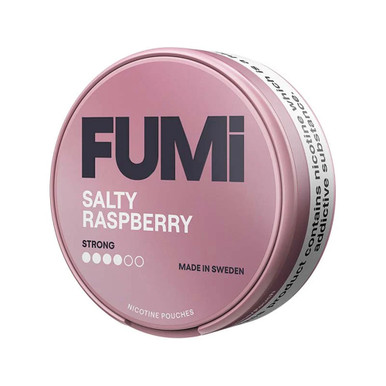
What does the image show?
One image is held against this product, which is normally the can front. Manufacturers revise packaging without notice, so treat it as an indication of what arrives rather than a guarantee, and treat the printed can as the authority on anything it states.
Will the savoury edge be obvious or subtle?
Unknown to us. Descriptors of this kind are used across a very wide range of intensities by different manufacturers — on some products the savoury part is the dominant character and on others it is a faint edge under the fruit. Our record carries the product name and the berry grouping, and nothing about where this one sits on that scale. The only honest answer is that the can will tell you and we cannot.
Why doesn't the berry filter have a raspberry section?
Our record files this product under berry, and that is the level of detail the flavour grouping works at for this listing. Some products elsewhere on the site carry a narrower fruit tag as well as the family tag; this one does not. It means the berry filter is where you will find it, alongside 75 others, and that the product name is doing the work the filter cannot. We have not added a tag that our record does not hold.
The legal part
This product is sold only to adults aged 18 or over who already use nicotine. We do not sell it to anybody under 18, and it is not intended for, aimed at or suitable for anybody who does not already use nicotine.
Nicotine is an addictive substance.
It is not a licensed stop-smoking medicine and is not offered as one. It is not intended for non-smokers, for people who do not already use nicotine, for under-18s, or for anybody who is pregnant or breastfeeding. Nothing on this page is medical advice, dosage guidance, or a suggestion that a particular strength suits a particular person or situation. Health questions about nicotine belong with a qualified professional rather than with a product description.
Age verification applies to orders placed on this site, and ID may be requested on delivery. Keep the product out of reach of children and away from pets, and put used portions in general waste.
In short
Ten cans at £27.90, declared at 4mg and 8mg with no price difference between them, filed under berry, in stock. Raspberry is the sharp, acid-led member of the berry family, and the descriptor on the front sets a savoury counterweight against that acid — a contrast some people look for and a minority actively dislike. It shares a first word with the violet in the range and almost nothing else.
We hold no portion count, no moisture format and no manufacturer's tasting note, and we have said so at each point rather than writing around the gaps. If this is not the one, the rest of the brand's sixteen listings cost exactly the same, and every page on this site is written from the same records with the same holes admitted in the same places.
More from Fumi
More medium strength pouches

More berry pouches

Where this sits
Fumi Salty Raspberry Nicotine Pouches appears in these categories. Browse them, or jump to something close.
You might also like