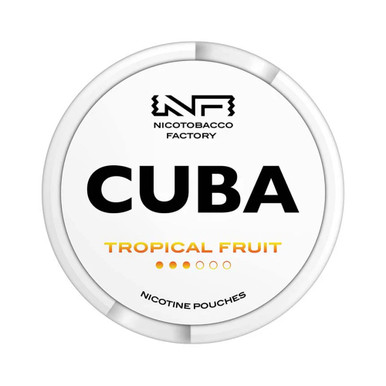
Cuba · 16mg
Read the full guide
Cuba White Tropical Fruit Nicotine Pouches
£39.90
✔ In stock — ready to ship
100% tobacco-free
Free over £20
Same-day dispatch
Secure checkout
Cuba White Tropical Fruit Nicotine Pouches are listed here at £39.90 in a single strength of 16mg per pouch. At the moment this description was written the listing is out of stock. That status lives on the product listing rather than in this text, so if you are reading this some weeks later, treat the listing as the truth and this sentence as history.
Our record for this product holds one price and no can count, which means this page will not tell you how many cans or how many pouches you are getting. That information is printed on the packaging by the people who made it. We publish the figures our catalogue actually holds — name, brand, price, strength, flavour family, stock — and we do not fill the gaps with plausible-sounding numbers, because a page that guesses at the easy facts cannot be trusted on anything else.
The full guide to Cuba White Tropical Fruit Nicotine Pouches
5,049 words on how it eats, who it suits, how to serve it and what to put beside it.
The tin, the price, and what is printed on the lid
The name is three pieces of information stacked up. Cuba is the brand, and the 47 cans we carry from them sit together on the Cuba shelf. White is the line: a dry, white pouch that stays white, as opposed to the other presentations the same house uses. Tropical Fruit is the flavour, and unlike a single-fruit name it is a deliberately broad label — a family rather than a specimen, which changes what you should expect from it before you have even opened the can.
Physically it is the tin you already know if you have bought anything in this category: a shallow round container, a lid that seats with a firm click, and a moulded recess inside the lid for used pouches. The pouches are the slim white type, laid out in a ring, dry to the touch, flattened rather than plump. Nothing about the object is surprising, and that is arguably the point of it.
What "tropical fruit" tastes like here
Blended flavour names are a different proposition from single-fruit ones, and it is worth being honest about why. When a lid says "raspberry" you can hold the can to a standard: it either tastes like the fruit or it does not. When a lid says "tropical fruit" there is no single reference object. The name describes a region of taste rather than a thing, and every brand draws that region slightly differently.
The convention across the category is reasonably consistent, though. Tropical usually means a sweet, yellow-to-orange fruit character with three or four voices in it: something mango-like providing the body, something pineapple-like providing the acid, a passionfruit-ish or citrus note giving it lift, and often a soft, rounded, coconut-adjacent sweetness underneath holding the whole thing together. That combination is what most people recognise as "tropical" whether it appears in a drink, a sweet or a pouch.
On this can, the aroma when the lid comes off is sweet and broad rather than pointed. You will not pick out one fruit from it; what you get is a general warm-fruit sweetness with a bright edge somewhere near the top. It is a loud smell, in keeping with how Cuba build their White flavours generally, but it is less specific than the smell from a single-fruit can, which is exactly what a blend is supposed to do.
In the mouth, sweetness leads and holds the front of the pouch. Behind it a tangier, sharper element comes up and gives the flavour its shape — this is where the pineapple-ish acid in the blend does its work, stopping the sweetness from turning flat and syrupy. Through the middle stretch the two sit in balance, with the rounder fruit character sitting underneath the tang rather than beside it. It reads as juice rather than as fresh fruit, which is the usual destination for this flavour family.
There is no cooling agent in the mix. Nothing here is frosted, iced or mentholated, so the fruit is carrying the whole thing on its own. Late on, the acid drops away first and you are left with the soft sweet end of the blend, which fades gradually rather than stopping.
One more thing about blends specifically: they change less over the life of a pouch than single fruits do. A sharp single fruit has a dramatic arc, because the acid that defines it burns off early and leaves the sweetness behind. A blend has several things going at once, so as one element thins another is still present, and the result is a flatter, steadier line from start to finish. Whether you read that as "consistent" or "monotonous" is a personal matter, and both readings are fair.
The reasonable summary is that this is a generous, sweet, juice-like tropical blend with enough tang to keep it from being one-note, and without the specificity you would get from a can naming one fruit. Whether that is what you want is a matter of taste rather than quality. Some people prefer a blend precisely because it does not become tiresome as quickly as a single sharp fruit; others find blends vague. Both positions are defensible.
Living with the pouch
The slim white pouch is the format that has come to dominate this category, and living with one is mostly a matter of not thinking about it. It goes behind the top lip, flat against the inside, and takes a few seconds to settle into the space it is going to occupy. After that it stays put.
The first stretch is the most expressive part — this is when the flavour is loudest, and it is a noticeable step down from that peak into the steadier middle. The middle is long, and it is where most of the pouch's life is spent. The tail end is a slow fade rather than an abrupt end. How long people keep one in before they take it out varies so widely between individuals that publishing an average would be misleading, and we are not going to present a number as though it were guidance.
Practical notes for the time it is in. Speech is unaffected once the pouch has settled. Cold drinks make no real difference; hot drinks move the whole arc along faster, so a pouch taken with coffee runs its course sooner than one taken without. Eating is possible but awkward, and most people take the pouch out for a meal rather than working around it.
Removal is clean. A dry pouch comes out in one piece and does not leave anything behind, which is the practical reason this format replaced older wet ones for most people. It goes straight up into the compartment in the lid, which is a small, sealed-ish chamber for exactly this purpose — effectively a bin that travels with the can, and the answer to what you do when there is no bin in sight.
That compartment does need emptying. Used pouches left in a lid for days will start to make the fresh ones smell of them, and the tin picks up a stale note that is hard to get rid of. Empty it when you think of it, wipe it dry, and the can stays neutral for as long as you own it.
What people actually mean by "discreet", and where the limits are
This format gets described as discreet constantly, usually without anyone unpacking what the word is doing. It is worth taking apart, because "discreet" turns out to be four separate properties that happen to arrive together, and knowing which is which tells you what to expect in a given situation.
One: there is no equipment. Nothing is held, lit, charged, filled, clicked, refilled or put down. There is no device to leave on a table and no cable to find. The entire apparatus is a tin in a pocket, and once a pouch is in, your hands are free and there is nothing on your person that needs managing. For anyone who has spent time hunting for a charger or working out where to set something down, this is the most concrete practical difference the format offers, and it has nothing to do with anything else.
Two: nothing is produced. Nothing is burned and nothing is heated, so there is no vapour, nothing leaves the mouth, nothing hangs in the air and nothing drifts across a room. We want to be exact about the limits of that statement: it describes how the format physically works and no more. It is not a claim that this format is better, cleaner or preferable to any other in any respect, and nothing on this page should be read as one.
Three: it is not visible from outside. A slim pouch sitting behind the top lip is, in practice, not something other people notice. A thicker pouch can show; a slim one generally does not, unless someone is specifically looking or you have put it somewhere unusual. This is the property most people mean when they use the word, and it is largely a function of the pouch's shape rather than anything else.
Four: the tin is small. It is pocket-sized, it does not rattle much, and it does not look like anything in particular from a distance. It goes in a coat pocket, a bag, a drawer.
Now the limits, which matter more than the list above.
Aroma is a real thing. Opening a can releases a noticeable smell, and on a loud flavour like this one it carries a couple of feet. In a quiet room, taking the lid off is the least discreet part of the whole operation. It is brief, but it exists, and anyone telling you the format is entirely imperceptible has not opened a fruit can in a meeting.
Disposal is the other weak point. The lid compartment solves it, but only if you use it. A used pouch that goes into a pocket, a cup, an ashtray, a plant pot or the side of a road is an unpleasant thing for whoever finds it, and it is the behaviour that gives the whole category a poor reputation in shared spaces. Put it in the lid. Empty the lid into a bin later. It costs nothing.
And rules are not a matter of visibility. This is the point that a lot of writing on the subject quietly skips. Whether something can be noticed and whether it is permitted are two completely separate questions, and the second one is decided by whoever runs the space you are standing in. Workplaces set their own policies and they vary enormously — some address every nicotine product explicitly, some were written for a different product and never updated, some say nothing at all. Rail operators have their own conditions. Venues, hospitals, schools, airports and sites all set their own terms, and many of them are drafted broadly on purpose.
Travel deserves its own warning. If you are flying, the airline's conditions are a question for the airline. Far more importantly, nicotine pouches are regulated very differently from one country to the next, and some places restrict or prohibit them entirely. We do not hold a country-by-country reference, we are not going to improvise one, and the consequences of assuming are yours rather than ours. Check the rules for your destination before you pack, not at the border.
There are also moments that are simply awkward. Taking a pouch out in company is one of them — it is a small, brief, slightly unlovely action, and the tin has to come out for it unless you have planned ahead. In a meeting, at a table, or partway through a conversation, most people would rather step out for ten seconds than do it in front of an audience. None of that is a problem with the product; it is a straightforward observation about doing anything in a shared space. It does mean, though, that the timing of when you start a pouch matters more than people expect. Starting one just before a two-hour meeting is a different decision from starting one in a car park.
So the useful version of "discreet" is: the format requires no equipment and is generally not noticed, and that tells you nothing whatsoever about whether you are allowed to use it where you are. The first is a property of the product. The second is a property of the place. Keeping those two apart is the whole of what this section is trying to say.
Mistakes people make with a can like this
A few patterns come up often enough with blended fruit cans that they are worth naming, mostly because each one is easy to avoid once you have seen it written down.
Judging the whole can by the first pouch. The first pouch out of a freshly opened tin is the loudest one you will have from it, and it sets an expectation the rest of the can cannot quite match. That is not a defect; it is simply what a fresh, sealed tin does. Judge a flavour on the second or third rather than the first, and you will have a fairer picture of what you have actually bought.
Buying three cans from the same corner. Blends tend to sit close to one another. Buy a tropical, a mango and a "summer fruits" at the same time and you will find you have bought one flavour three times over, with the differences too small to register after a week. If you want variety, the jump needs to be bigger: a dark berry, a mint, a cola, or the plain one. Adjacent is not the same as different.
Treating the milligram figure as a specification. The number is a filing handle, not a measurement you can carry confidently between brands. People compare a 16mg can from one house with a 16mg can from another and expect an identical experience, then conclude that one of them is mislabelled. The more reliable assumption is that the figure orders products roughly within a catalogue and no more than that.
Storing a stockpile badly. Buying several tins at once only saves anything if the last of them is still worth opening. Warm cupboards above appliances, sunny windowsills and cars are the three places a stockpile quietly degrades. A cool drawer costs nothing and solves it entirely.
Leaving the lid resting rather than closed. This is the most common of all and the easiest to fix. A lid that is placed on top of a tin is not a closed tin. Press it until it seats.
The 16mg figure and where it sits
One strength, 16mg a pouch, no variants to choose between. The figure comes from the manufacturer's own labelling and we reproduce it as given.
It earns its place on the page as a comparison tool. With a catalogue this size you need some way of sorting, and the milligram figure is the only numeric handle the category offers. This can is filed on our strong shelf, which holds 132 listings. The medium band sits below it and the extra strong band above. Those bands are our filing system, not a scale of recommendation.
Two limits on the number, stated plainly. It says nothing about flavour intensity — a loud flavour and a modest figure coexist perfectly happily, and this can is a reasonable example of a strong-shelf product whose flavour is the more noticeable half of the description. And it is not reliably comparable between brands, because the figure is not produced by a single shared method across every manufacturer in the category. Treat it as a rough ordering, not a precise scale.
We do not advise on strength. Not in the description, not in the FAQs, not if you email and ask. A shop knows what is printed on a can; it does not know anything about the person reading the page, and the gap between those two things is exactly where bad advice comes from.
The Cuba range, can by can
Cuba is one of the wider brand ranges we carry, and the flavours are spread out rather than clustered, which makes the range genuinely navigable once you know what occupies each position. Here is how it lays out on our shelves, with what each one is built to do.
The tropical corner is where this can sits — sweet, juice-like, blended rather than specific. Its near relative in the wider brand is Cuba Ninja Coconut at £39.90, which takes the soft, creamy, non-acidic end of the same climate. If you like the round part of a tropical blend more than the tangy part, that is the one to look at; if you like the tang, this can is the better fit.
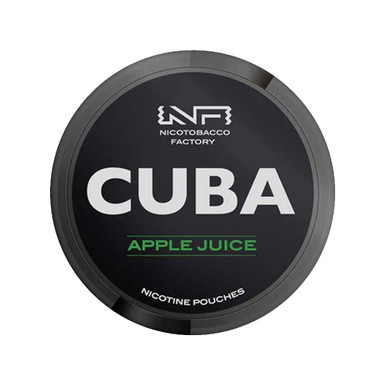
The orchard corner belongs to Cuba Black Apple Juice at £39.90. Pressed, sweet, familiar, and much less exotic in character — the flavour most likely to appeal to someone who finds tropical blends too sweet or too vague.
The dark berry corner is Cuba Black Blueberry's territory, also £39.90. Rounder and deeper than a tropical blend, with the sweetness sitting lower down. A useful contrast can to keep alongside this one rather than an alternative to it.
The stone fruit corner is Cuba Black Cherry, £39.90, which brings a slightly darker, faintly almond-edged sweetness that neither the tropical nor the berry flavours have.
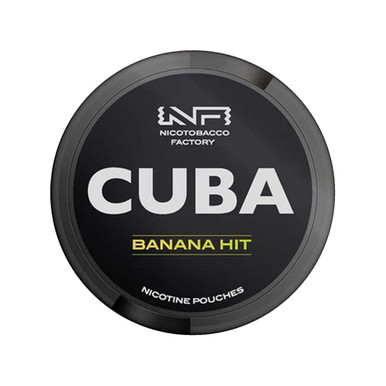
The confectionery corner is Cuba Black Banana Hit at £39.90 — creamy, low, soft, and the least fruit-like of the fruit flavours. People tend to either keep it permanently or try it once, and there is not much middle ground.
Outside fruit entirely there are two. Cuba Black Cola at £39.90 takes the soft-drink flavour idea, sweet with a faintly medicinal edge that has nothing to do with fruit. And Cuba Black Cold Dry is the plain one — the can for people who are not looking for a flavour experience at all, and the obvious palate reset if everything else on your shelf is sweet.
Two things are worth noticing about that list. The first is that everything in it is the same £39.90, which means the choice between them is purely about flavour. That is rare enough on a shelf to be worth taking advantage of. The second is that the brand covers most of the available flavour territory without duplicating itself — there is one tropical, one dark berry, one stone fruit, one orchard, one cola, one plain. If you settle on this house, you can build an entire rotation inside it without ever tasting the same idea twice, and the brand page is the efficient way to survey that.
What to keep beside it
Outside the brand, the cans that sit nearest this one on our shelves do different jobs and are worth knowing individually.
For the same flavour family from a different house, SYX Tropical at £29.90 is the closest like-for-like blend, and Velo Tropical Mango at £4.19 leads with one fruit instead of blending several, which makes it a cheap way to work out whether you prefer specificity to breadth. Elf Bar's pineapple can at £29.90 takes the single-fruit route in the sharpest corner of the same climate.
For a contrast rather than a companion, Fumi Fiery Peach at £27.90 moves to stone fruit, Clew Blueberry at £39.90 moves to dark berry, and Denssi Blueberry Freeze at the same price adds the frosted character this can does not have at all. A cold can next to a warm sweet one is the most effective two-can pairing there is, because the difference is one of sensation as well as flavour.
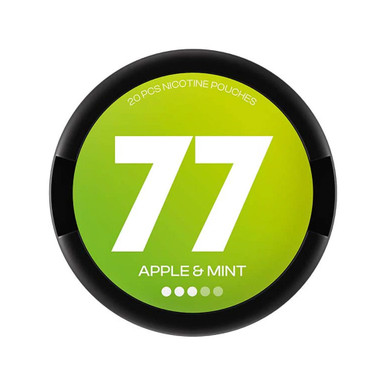
For something further afield, 77 Apple Mint at £39.90 combines fruit with mint, which is a different structure entirely, and Killa Apple at £33.50 and Pablo Gold Edition Blueberry Peach Ice at £19.95 sit at lower price points, with the full Pablo shelf worth browsing if that bracket suits you. Do check what quantity each listing represents before comparing prices; our catalogue carries singles and multi-can packs side by side.
If you would rather browse than take suggestions, the tropical shelf gathers 58 cans in this flavour family.
Keeping a tin in condition
Dry pouches have one failure mode: getting drier. Air and heat are the two causes and both are easy to manage.
Shut the lid properly every single time. Not resting, not balanced — pressed home until it seats. A can left ajar on a desk all afternoon has had a long time in open air, and you will taste the difference towards the bottom of the tin.
Keep it somewhere cool, dark and boring. A drawer or a cupboard is ideal. Direct sun on a tin, a shelf above a radiator, or a car in summer are the three classic ways to find yourself disappointed a few weeks later. Refrigeration is not needed and creates condensation when the tin comes back out to room temperature, so a cool cupboard is the better answer in every respect.
If you have more than one can, leave the ones you are not using sealed. An unopened tin holds condition far longer than an open one, and there is no reason at all to break several open at once.
Choosing between what is on the shelves
There is nothing to choose inside this listing: one strength, one price, no variants. The decisions are all comparative ones between listings.
By strength band, use the shelves — medium, strong and extra strong — rather than opening products one by one.
By flavour, decide first whether you want a blend or a single fruit, because that distinction matters more than the individual name on the lid. A blend is broader and generally wears better over a long can; a single fruit is more specific and more likely to become tiresome. This listing is firmly in the first camp.
By price, remember that the headline figure reflects quantity as well as product. And by availability — which is the awkward one here, since this listing is currently empty — the tropical shelf and the Cuba brand page are the two nearest places to look for something comparable.
Ordering, delivery and the age check
This is an 18+ product, sold to adults who already use nicotine. Age verification forms part of the ordering process and it is not something that can be skipped. ID may also be requested when the parcel arrives, and the courier can decline to hand it over if nobody present can produce it, so keep something to hand if you are expecting a delivery.
Availability is shown on the product listing itself and nowhere else is kept as current. As noted at the top, this one is out of stock as the description is written. We do not hold or publish restock dates, so we cannot answer when — and a made-up date would be worse than the honest absence of one.
If you would rather not wait, the full catalogue is the widest starting point, and the flavour and brand shelves linked throughout this page will narrow it down much faster than scrolling.
Where this sits on the site
This product is filed in three places. It appears on the Cuba brand page with the other 46 cans from the same house, on the strong shelf with the other 131 listings in that band, and on the tropical listings with the other 57 cans in this flavour family.
Anything broader starts from the catalogue as a whole, and the strength bands are the quickest filter if the number on the lid is what governs your choice.
Common questions
Which fruits are in "tropical fruit"?
We cannot give you a list, because our catalogue records the flavour family rather than a breakdown, and we are not going to reverse-engineer one from the taste. What we can describe is how it reads: a sweet, juice-like blend with a mango-ish body, a pineapple-ish tang giving it shape and a softer rounded sweetness underneath. The packaging itself is the place to look for anything more specific than that.
Is it sweeter than a single-fruit can?
Generally, yes — blends in this family tend to sit sweeter and broader than a single sharp fruit, because the rounder notes fill in behind the acid. Whether that is an advantage depends on you. Blends usually wear better over a long can; single fruits are more distinctive and more likely to tire. This is a broad, sweet example of the type rather than a restrained one.
Does it have any cooling or menthol?
No. There is nothing frosted or iced built into this flavour, and the fruit carries it unaided. If a cold sensation is what you are after, the cans with "freeze" or "ice" in their names are the ones designed for it — Denssi Blueberry Freeze is the example linked above. That is a difference in sensation as well as in flavour, which is why the two work well kept side by side.
When will it be back in stock?
We do not hold that information and will not guess at it. Stock moves for reasons that are not always visible even to us, and publishing a date we cannot stand behind would be worse than saying nothing. The listing page is where availability is kept accurate, so that is the page to check rather than this description.
How many pouches are in a can?
Our catalogue does not record that for this product, so there is no figure for us to publish. The can itself carries it on the label. We take the view that a description should state what the shop actually knows and leave gaps where it does not, rather than filling them with numbers that look right.
Can I use it in the office?
That depends entirely on your employer's policy, and we are not in a position to answer for them. Workplace rules on nicotine products differ widely: some are explicit about every format, some name only the product they were drafted around, some are silent. The only reliable route is to ask. What the format physically involves is described on this page; what is permitted where you work is not something a shop can tell you.
Is it legal to take abroad?
That depends on the country and we do not hold a reference for it. Rules on nicotine pouches vary a great deal internationally and some places restrict or prohibit them. Check the destination's own rules, and the airline's conditions separately, before you travel. We would rather say plainly that we cannot advise than offer a reassurance that might land you in difficulty at a border.
Is this the same as the Black version?
They are different lines from the same brand, with different flavour ranges. Our shelves carry more Black flavours than White ones, and both sit at £39.90 here, so the comparison between them is a flavour question rather than a price one. Beyond presentation and flavour, we are not going to characterise differences between lines that our own records do not describe.
Where is the brand from?
We do not hold that information. A brand name is a name, not a statement of origin, and we are not going to put a country on this page that our catalogue cannot support. The manufacturer's own packaging is the place to look if it matters to you.
How long does a can stay good once opened?
Longer than most people expect if the lid is kept properly closed and the tin is kept somewhere cool, and noticeably shorter if it lives in a hot car or sits open on a desk. We cannot give you a date because it depends almost entirely on how it is kept. The practical sign is that flavour from the bottom of a long-open can is less forward than it was at the top.
Should I buy this or a single-fruit can?
That is a preference rather than a ranking, and it comes down to one question: do you want a flavour that is specific or one that is broad? A single fruit is easier to recognise and more likely to become tiresome; a blend like this is vaguer and usually wears better across a whole can. If you genuinely do not know, the cheaper single-can listings on our shelves are a low-cost way to find out before committing to a larger pack.
Do the pouches dry out if I carry the tin around all day?
Carrying it is fine; the problem is heat and open air, not movement. A tin in a coat pocket is in a stable, cool-ish place and will be no worse for the journey. A tin on a dashboard in the sun, or one that spends the afternoon open on a desk, is a different matter. Close it properly between pouches and keep it out of direct heat and a can will hold up perfectly well.
Is there any difference between the pouches at the top and bottom of a can?
Not by design — they are the same product laid in the same tin. In practice, the ones you reach last have spent the longest in an opened can, so on a tin that has been open for a long time in a warm place, the later pouches can come across as less forward than the early ones. Keeping the lid shut and the tin cool largely removes the difference.
Is this product suitable for me if I do not use nicotine?
No. This is an 18+ nicotine product sold only to adults who already use nicotine, and nothing on this page is written for anyone else. If you do not already use nicotine, this is not a product for you, and we have no interest in persuading you otherwise.
The notes this page is required to carry
Nicotine is an addictive substance. This can contains nicotine. Sales are restricted to adults aged 18 or over who already use nicotine, age is checked as part of the order, and ID may be requested at the point of delivery.
This product is not a licensed stop-smoking medicine and no medical or therapeutic claim is made for it anywhere on this page. It is not intended for non-smokers, for people who do not already use nicotine, for under-18s, or for anyone pregnant or breastfeeding. Nothing here constitutes health advice, and no strength we list is presented as being suitable for any individual. Questions of that kind belong with a qualified professional, not with a retailer's product description.
Briefly, then
Cuba White Tropical Fruit is a 16mg dry white pouch carrying a broad, sweet, juice-like tropical blend with a tang running through the middle of it and no cooling element, listed at £39.90 and out of stock at the time of writing. Its character is breadth rather than specificity, which is the main reason to choose it over a can naming a single fruit — and the main reason not to, if specificity is what you like. The tropical shelf and the Cuba brand page are the sensible next stops, particularly while this listing is empty.
More from Cuba
More strong pouches

More tropical pouches
Where this sits
Cuba White Tropical Fruit Nicotine Pouches appears in these categories. Browse them, or jump to something close.
You might also like