Cuba · 16mg
Read the full guide
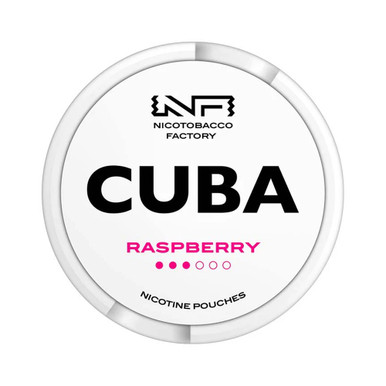
Cuba White Raspberry Nicotine Pouches
£39.90
✔ In stock — ready to ship
100% tobacco-free
Free over £20
Same-day dispatch
Secure checkout
This listing is Cuba White Raspberry Nicotine Pouches, priced at £39.90, in one strength: 16mg a pouch. It is in stock as this page is written, which is the simplest fact on the page and also the one most likely to have changed by the time you read it — the product listing itself is where availability is kept accurate, not the description.
Three words, three pieces of information. Cuba is the house; there are 47 of their cans on our Cuba brand page. White refers to the line and to the pouch itself, which is the dry, unstained, white-material type rather than anything moist or dark. Raspberry is the flavour printed on the lid, and it is a single named berry rather than a blended "forest fruits" or "berry mix" idea, which turns out to matter quite a bit when you come to taste it.
The full guide to Cuba White Raspberry Nicotine Pouches
5,350 words on how it eats, who it suits, how to serve it and what to put beside it.
Cuba White Raspberry on our shelves
Our catalogue holds a single price for this product and does not record a can count against it, so this page will not state one. The number of pouches in a can, and the number of cans in whatever outer packaging it arrives in, are printed on the product itself. We publish what our own records hold and leave the rest to the label, which is a duller policy than inventing a figure but a more reliable one.
What arrives is a tin of the standard sort: shallow, round, with a lid that seats with a click and a shallow chamber moulded into that lid for finished pouches. It fits a coat pocket, a jeans pocket at a push, and any bag without comment. That is the whole physical description, and there is not a great deal more to say about a tin.
The pouch itself, and what handling one is like
Open the can and the pouches are laid in a ring. They are the slim white type: soft, matte, dry to the fingers, holding a flattened oval shape rather than a plump round one. They do not stick to each other and they do not leave anything on your hand.
Slim is the word doing the work. A slim pouch sits flat behind the top lip and takes up very little room, which is why this shape has largely won out in the category. A thicker pouch is noticeable from outside; a slim one generally is not, unless someone is looking for it. There is a settling moment of a few seconds after you put one in, while it finds the space it is going to occupy, and after that it stays where it was put and stops asking for attention.
Once it is in, ordinary life carries on around it. You can talk normally. You can drink, though anything hot moves the flavour along faster than it would otherwise go, so a pouch taken with a cup of tea will run its course sooner than one taken with a glass of water. Eating with one in is possible but most people find it easier to take the pouch out first, not because of any rule but because chewing and a pouch are competing for the same space.
Taking one out is uneventful. It comes away dry, holds together, and goes straight into the compartment in the lid. That compartment is the reason a pouch tin has a slightly taller lid than it needs: it is a bin you carry. It fills, it needs emptying, and a lid left full for a week will start to make the fresh pouches underneath smell of the old ones. Tip it out, wipe it with something dry, and the tin stays neutral.
Two small habits separate a can that stays good from one that does not. Close the lid properly every time rather than resting it on. And do not leave the tin open on a desk while you work — a white pouch is dry by design, and the air will take it a little further in that direction every hour it is left exposed.
The last few pouches in a tin are always the ones that need the most care, for the simple reason that they have been in an opened can the longest and have had the most air over them. Nothing dramatic happens to them, but the flavour from the bottom of a can that has been open for weeks is rarely as forward as the flavour from the top of a freshly opened one. If you are the sort of person who keeps three cans half-finished, that is the pattern you will have noticed.
What the word "White" is doing on this can
"White" in this category is a line name and a description of the pouch material at the same time, and it is worth separating the two, because the word gets used loosely across the whole market.
As a line name, White is how Cuba divide this product from the others in their catalogue. On our shelves you will see White, Black and Ninja cans from the same house, and the line name is the first thing to read on the lid, because it tells you which family you are in before you get to the flavour. Two cans from different lines can carry the same fruit name and belong to quite different products.
As a description, white refers to what the pouch looks like and how it behaves: a dry white material that stays white, rather than the moist, darker presentation that older products in the wider category used. That is a statement about the physical object and nothing else. It is not a claim about the product being better in any respect, and you should be wary of pages that let the word slide into one. We are describing a colour and a texture.
The practical consequences are small but real. A dry pouch does not run. There is nothing to spit and nothing coming out of it while it sits. It comes out of the mouth in one piece and goes into the lid compartment without leaving anything behind. That is the whole of what the word means on this tin, and it is enough to matter when you are choosing between formats on a shelf.
16mg, and what that number is actually good for
The figure on this can is 16mg per pouch, and it is the only strength we list this flavour in. There is no variant selector to work through, no mild version and no stronger one hiding behind a dropdown.
The number's honest use is comparison within a catalogue. It gives you a way to line one can up against another and say which is labelled higher. That is genuinely useful when you are browsing a shelf of 132 products. What it does not do is describe an experience, and it does not convert into anything you can feel in advance of trying it. Two cans with the same number printed on them, from two different houses, are not guaranteed to be equivalent, because there is no single universal method sitting behind the figure across every brand.
On our shelves, this product is filed under the strong band. Below it sits the medium band, and above it the extra strong listings. Those are our own shelf divisions, applied so a large catalogue can be browsed at all, and they are descriptions of where a product is filed rather than advice about who should buy what.
We will not tell you which band is right for you, and we would be suspicious of a shop that did. A retailer knows what the manufacturer printed on the can. A retailer does not know anything about you. Those two facts together mean the only responsible thing to publish is the figure itself.
Raspberry in the nose and in the mouth
Raspberry is a berry with a split personality and the good versions of it keep both halves. There is the jammy half — dark, sweet, cooked, the flavour of the inside of a tart. And there is the fresh half, which is tarter, greener and slightly perfumed, the thing you notice when you eat one off the bush rather than out of a jar. A raspberry flavour that only does the first half tastes like generic red sweet. One that only does the second tastes thin and floral.
The aroma from this can leans jammy. Lift the lid and what comes up is warm, sweet and dark-red rather than sharp, with a slight confectionery roundness to it. It is not a subtle smell. Cuba's White line in general is built loud, and this can does not break the pattern.
In the mouth the balance shifts. Sweetness arrives first and arrives quickly, then within a few seconds the tart side comes up underneath it and the flavour resolves into something more recognisably raspberry than the aroma alone suggests. The tartness is the part that carries the middle of the pouch. There is a faint pip-like, seedy note in there too — the slightly astringent quality that real raspberries have and that strawberry flavours never do — and it is the main thing that stops this reading as a generic red berry.
There is no cooling element. This is a plain berry flavour with nothing frosted built into it, so the fruit has nowhere to hide and no chill to lean on. Towards the end, the tart edge goes first and a soft sweetness is the last thing to fade, which is the opposite order to how the pouch began.
Building a rotation around a red berry can
Nobody's palate stays interested in one flavour indefinitely. Keep a single can in circulation for long enough and it stops registering as a flavour at all — it becomes background, and the first can of something else you try afterwards tastes twice as loud as it should. Most regular users work this out on their own and end up keeping two or three cans on the go. This section is about doing that deliberately rather than by accident, with specific cans and specific reasons.
The first principle is that a rotation needs contrast, not variations. Three red berry cans is not a rotation; it is one flavour with three spellings. What you want is two or three cans that are doing genuinely different jobs, so that moving between them actually resets something.
The near-neighbour. This is the can that stays in the same family but shifts the emphasis. For a raspberry, the obvious moves are sideways into other berries. Clew Blueberry at £39.90 goes darker and rounder, with the tartness traded for depth. Cuba Ninja Strawberry, also £39.90 and from the same house, takes the softer, sweeter, less astringent corner of red fruit. Elf Bar's blueberry and raspberry can at £29.90 is the blended version of the same idea — the two berries together rather than one alone, which reads as fuller but less specific.
The cold one. A cooling flavour is the fastest reset available, because it changes the sensation as well as the taste. Denssi Blueberry Freeze at £39.90 keeps you in berry while adding the frosted character this can deliberately lacks. Velo Icy Berries at £4.19 does a similar thing in a single-can format, which makes it a cheap way to find out whether the iced version of a berry is something you want in the rotation at all. the 77 VB Edition mini arctic berry can at £39.90 sits in the same corner in a smaller pouch format.
The clean break. This is the can that has nothing to do with fruit, and it is the one most people skip and then wish they had not. Edge Mint at £14.95 is a straightforward mint, priced well below most of the cans on this page. From Cuba's own range, Cuba Black Cold Dry is the plainest thing the brand makes and about as far from a jammy berry as their catalogue goes. Cuba Black Cola is a different sort of break — still sweet, still loud, but built on an entirely different flavour idea.
The occasional oddity. Some people keep a fourth can that exists purely to be unlike everything else. Cuba Black Banana Hit is a fair example: creamy, low, confectionery-ish, and not remotely interchangeable with a red berry. Cuba Black Apple Juice takes the pressed-orchard-fruit route instead. Neither is likely to be anyone's main can, and that is rather the point of them.
How many to run at once is a matter of how much stock you want sitting in a drawer. Two is enough to stop a flavour going flat. Three gives you a genuine choice on any given day. Beyond three, most people find they have a favourite plus two cans slowly going stale, which is an expensive way to store disappointment. If you want to survey the options rather than take suggestions, our berry shelf holds 76 cans and is the natural place to start for anything adjacent to this one.
Staggering the reorders. The failure mode of a two- or three-can rotation is that everything runs out in the same week, which turns a steady habit into a scramble and usually ends with somebody buying whatever is available rather than what they wanted. The fix is dull and effective: do not replace cans in matched sets. When one flavour is getting low, reorder that one alone, so the cans in your rotation drift out of step with each other and you are never left with three empties at once. It also spreads the cost across the month instead of concentrating it.
Pairing by price rather than flavour. There is a second way to build a rotation that has nothing to do with taste, and it is a perfectly sensible one: keep one can at the higher end and one considerably cheaper, so you are not committing to the same outlay every time. Our shelves make that easy because the price spread is wide. Killa Blueberry at £33.50 and Pablo Gold Edition Blue Raspberry at £19.95 sit below this listing's £39.90, and Nordic Spirit Max Foresty Berry at £4.49 sits far below it. The important caveat is that these are not all the same quantity of product — our catalogue lists single cans and multi-can packs side by side, so read what you are getting rather than comparing the numbers at the bottom of the page.
One last note on rotation: keep the cans you are not currently using closed and out of the way, rather than having four open tins rattling around a bag. An unopened can holds its condition for far longer than an open one, and a rotation is only cheap if the cans waiting their turn are still good when they come round.
Where these get used, and the rules that apply
The format's defining practical quality is that it asks nothing of the space around you. There is no device, no battery, no charging, no button, no exhale and nothing to put down. A pouch goes in, and from the outside the whole business is close to invisible. That is the reason a lot of people who use nicotine at all use this format in particular, and it is worth thinking about where that does and does not leave you.
Offices and shared workplaces. An open-plan office has rules about what can be used at a desk, and those rules vary from employer to employer. Some workplaces treat pouches as unremarkable; others have policies that cover all nicotine products regardless of format, and a few have no policy at all and would rather you asked. We cannot tell you what your employer permits, and any page that assures you it is fine everywhere is writing about a world with one set of rules rather than thousands. Check, once, and then you know.
Trains and stations. Rail operators in the UK set their own conditions of carriage, and station bylaws sit on top of those. Again, the rules are specific to the operator and we are not going to summarise 20 different rulebooks into one confident sentence. What we can say about the format is practical: a tin is small, it does not need to be taken out of a bag at a barrier, and the lid compartment means a finished pouch does not need a bin you cannot find.
Flights and travel abroad. This is the setting where we would urge the most caution, and not for any reason to do with the product itself. Two separate things apply. The first is the airline's own conditions, which differ between carriers and which you should check with the carrier rather than with a shop. The second, and more important, is that nicotine pouches are regulated very differently from country to country — some places restrict or prohibit them outright, and carrying them in is not a technicality. We do not hold a country-by-country legal reference and we are not going to improvise one. If you are travelling, check the rules for your destination before you pack, not after you land.
Sites, yards and outdoor work. The practical appeal here is that the format needs no hands once it is in and nothing needs to be put down, lit, held or retrieved. Gloves, noise, cold and rain do not interfere with a pouch that is already in place. Site rules still apply and vary by contractor, so the same advice holds: ask the person who runs the site rather than assuming.
Places where something else is already prohibited. A great many indoor spaces — venues, hospitals, transport hubs, hospitality — have policies that prohibit other products by name, and we are asked about this often enough that it is worth addressing directly. Be careful with the assumption people tend to make. A rule written about one product does not automatically say anything about other nicotine products, and plenty of policies are drafted broadly enough to cover everything. The only reliable way to know is to read the policy or ask, and that is the whole of what we can tell you. We are making no claim here about one format against another beyond describing what each one physically involves.
Venues and hospitality. Pubs, restaurants, theatres, stadiums and music venues all set house rules, and those rules are frequently stricter than the law requires because the venue would rather have one simple policy than a list of exceptions. Some make no mention of pouches at all, which leaves staff to interpret a policy written for something else. If you are somewhere that matters to you, the front-of-house team will know, and asking takes ten seconds. We are not going to publish a general assurance about venues, because there is no such thing as a general venue.
Hospitals, schools and public buildings. These typically operate blanket policies across their whole estate, grounds included, and those policies are usually drafted to cover every product rather than a named list. Assume the strictest reading and check the signage. This is the category where guessing wrong is most likely to end in an awkward conversation.
At home, and where the tin lives. Nothing to add on rules, but one practical point: a tin left on a dashboard in summer is a tin of dried-out pouches by the end of the week. A glovebox is better than a dash, and a drawer indoors is better than both. The same applies to a bag left in a hot car for an afternoon — the tin is small and it heats up quickly.
Keeping a spare somewhere. Most regular users end up with a second tin stashed away from the one in their pocket: a desk drawer, a kitchen cupboard, the bottom of a work bag. The thing worth knowing is that a spare is a stored can rather than an in-use one, so it should be somewhere cool and closed rather than somewhere convenient and warm. A spare that has spent three months in a hot car is not really a spare.
The honest summary of this entire section is that the format removes equipment from the equation and removes nothing else. Wherever you are, the rules of that place still apply, they are set by whoever runs it, and they change. A description page is the wrong place to look for permission.
The Cuba shelf, either side of this can
Cuba's range on our shelves splits across lines, and knowing which line a can belongs to makes the price comparisons far easier to read. The White line is the dry white presentation this product belongs to. The Black line runs alongside it and covers most of the brand's fruit flavours in our catalogue. The Ninja line is the third we carry.
Within the fruit range, the flavours are spread deliberately so they do not tread on each other. Red berry is this can's territory. Dark berry belongs to the Black blueberry can. Stone fruit sits with Cuba Black Cherry, which brings a slightly almond-edged depth that a raspberry does not have. The softer, creamier corner is banana's. The orchard corner is apple's. And then there are the two that step outside fruit altogether — cola, and the plain unsweetened Cold Dry.
All of those are £39.90, the same as this listing, which removes price from the comparison entirely and leaves it as a straight question of flavour. That is an unusually clean choice to be offered, and it is worth taking advantage of by browsing the full Cuba shelf rather than reading six descriptions in sequence.
Looking after an open can
A white pouch starts dry and the job is to keep it no drier than it began. Two things do the damage: air and warmth.
The lid handles the air, provided it is actually closed. Seat it until it clicks rather than balancing it on top. This sounds trivial and is the single most common reason a can is disappointing by the time it is half empty.
Warmth is the other one. Somewhere cool, dark and stable is what a tin wants — a drawer, a cupboard, a shelf that is not above a radiator and not in a sunny window. Cans that live in cars have a hard life, particularly in summer. A fridge is not required and brings its own nuisance in the form of condensation when the tin comes back out into a warm room, so a cool cupboard is the better answer.
If you are holding more than one can, keep the ones you are not using sealed until their turn comes. Unopened tins keep far better than opened ones, and there is no benefit whatsoever to opening several at once.
Deciding between our listings
There is no decision to make inside this listing — one strength, one price. The choices worth thinking about are all next door.
If you are choosing by the number on the lid, use the shelves rather than the individual pages: medium, strong and extra strong each gather a whole band in one view.
If you are choosing by price, be careful comparing headline figures, because our catalogue mixes single cans and multi-can packs without making a fuss about it. the Nordic Spirit foresty berry listing at £4.49 and the Velo icy berry can at £4.19 are not simply cheaper versions of a £39.90 listing; they are a different quantity of product. the Pablo Gold blue raspberry can at £19.95 and the Killa blueberry listing at £33.50 sit at points in between. The wider Pablo shelf is worth a look if that price bracket is where you are shopping.
If you are choosing by pouch format, there is one more distinction worth knowing about. Most of the cans on our shelves hold a standard slim pouch, but some lines are built around a smaller mini format instead, which sits differently and takes up less room. The 77 VB Edition mini can is the example in this product's neighbour list, at £39.90. That is a physical difference rather than a better or worse one, and the only way to find out which you prefer is to have used both.
And if flavour is the deciding axis, the berry listings gather everything in this family, which beats working through brand pages one at a time.
Ordering, delivery and proving your age
Everything here is sold to adults aged 18 or over who already use nicotine. Age verification is part of placing an order, and it is not optional. ID may also be requested at the door when the parcel is delivered; couriers are entitled to refuse the handover if nobody present can produce it, so it pays to have something to hand rather than discovering the problem on the doorstep.
Stock status shows on the product listing and that is the only place we keep it current. This flavour is available as the page is written. We do not publish restock dates for anything, because we would be guessing, and a guessed date is worse than an honest blank.
If you are ordering more than one flavour — and the rotation section above makes the case for it — put them in one basket rather than placing separate orders, which is simpler for everyone involved.
How this page is filed
You will find this product in three places. It sits on the Cuba brand page with the rest of the house. It sits on the strong shelf, which holds 132 listings. And it sits on the berry shelf alongside 75 other cans in the same flavour family.
For a wider view, the whole catalogue is the top of the tree, and the strength and brand shelves are the two fastest ways to cut it down to a manageable size.
Questions we are asked about this one
Does it taste like fresh raspberries or jam?
The aroma is jammy and the taste sits between the two. Sweetness leads, then a tart edge comes up underneath it and carries the middle of the pouch. There is a slightly astringent, pip-like note in the background that is characteristic of real raspberries and is usually the thing that separates a raspberry flavour from a generic red berry one. It is a loud flavour rather than a delicate one.
Is there menthol or a cooling agent in it?
No. This is a plain berry flavour with no frosted or iced character. If you want the cold version of a berry, the cans with "freeze", "icy" or "arctic" in their names are the ones built for that, and several are linked on this page. The difference is a change in sensation as well as flavour, which is why a cold can works well in a rotation alongside a warm one.
How many pouches come in a can?
Our catalogue does not hold that figure for this product, so we are not going to publish one. The can carries it on its own labelling. We would rather leave a gap on the page than fill it with a number we cannot verify, because a description that invents the easy facts is not one you should trust on the difficult ones.
Is 16mg strong?
It is filed on our strong shelf, which is a description of where we put it rather than a judgement about how it will suit you. The number comes from the manufacturer. It is genuinely useful for comparing one can with another and not much use for anything else, and it is not perfectly comparable across brands. We do not advise on strength and will not start on this page.
Can I take these on a plane or abroad?
We cannot advise on that and would not want to guess. Airlines set their own conditions, and separately, the legal status of nicotine pouches varies considerably between countries — some restrict or prohibit them. Check the rules for the carrier and for your destination before you travel. That is not us being cautious for the sake of it; the consequences of getting it wrong at a border are not the airline's problem or ours.
Will my office allow it?
That is a question for your employer, not for a shop. Workplace policies on nicotine products vary widely — some cover every format explicitly, some address only the product they were drafted around, some say nothing at all. Asking once is the only reliable way to find out. We describe what the format physically involves and stop there.
How does it compare with the Black version of the same brand?
The two lines differ in presentation and in the flavours they carry. The Black listings cover most of the brand's fruit range on our shelves and are the same £39.90, so comparing them is a straight flavour decision with the price taken out of it. As for how the same fruit tastes across the two lines, that is a comparison we would only be able to make with both cans in front of us, so browse the brand page and judge the descriptions on their own terms.
Is this the same as snus?
No, and it is worth being precise about it. This is a white pouch product, sold as a nicotine pouch, and that is how our catalogue lists it. The two categories get talked about interchangeably and they are not the same thing. We describe what we stock using the terms the products themselves use.
What happens if it goes out of stock after I have got used to it?
It is the strongest practical argument for keeping more than one flavour in circulation. Stock moves, and we do not publish forecasts. If it happens, the berry shelf is the nearest place to look for something adjacent, and the rotation section above names several cans at a range of prices that occupy neighbouring territory.
Can I keep an opened can in the fridge?
You can, but we would not bother. A dry white pouch does not need refrigeration, and taking a cold tin out into a warm room brings condensation with it, which is the opposite of what you want inside a can of dry pouches. A cool cupboard or drawer does the job with none of the nuisance. Heat and open air are the two things worth avoiding; cold is not a requirement.
Does the flavour fade in the tin over time?
An opened can loses its edge more quickly than an unopened one, which is why the lid and where you keep it matter. Most people notice that the last pouches from a tin that has been open for weeks are less forward than the first ones were. Keeping the lid properly closed and the tin somewhere cool slows that down considerably. Cans you are not using are better left sealed until their turn.
Why are some listings here a few pounds and others nearly forty?
Because they are not the same quantity. Our catalogue lists single cans alongside multi-can packs, and the headline price reflects whichever the listing is. A £4.19 product and a £39.90 product usually differ in how much you are getting rather than in how good they are. Read the listing rather than the price when you are comparing, particularly across brands.
Who is this product for?
Adults aged 18 or over who already use nicotine. That is the whole of the answer. It is not for anyone under 18, and it is not for anyone who does not already use nicotine — nothing on this page is written to persuade anyone in either group to start.
The required notes
Nicotine is an addictive substance. This product contains nicotine. We sell it only to adults aged 18 or over who already use nicotine, age is verified as part of every order, and ID may be requested when the parcel is handed over.
It is not licensed as a stop-smoking medicine and we make no medical or therapeutic claim for it whatsoever. It is not intended for non-smokers, for anyone who does not already use nicotine, for under-18s, or for anyone pregnant or breastfeeding. No strength on this page is presented as being appropriate for any particular person, and nothing written above is advice about health. For anything in that territory, ask a qualified professional rather than a retailer.
To finish
Cuba White Raspberry is a 16mg dry white pouch carrying a loud, jammy-then-tart raspberry with a slight pip-like astringency and no cooling element, listed at £39.90 and in stock at the time of writing. Its most useful quality within a collection is that it is specific: a named single berry rather than a blend, which makes it easy to pair against a dark berry, a cold one or something outside fruit entirely. The berry shelf and the Cuba brand page are where to go next.
More from Cuba
More strong pouches

More berry pouches
Where this sits
Cuba White Raspberry Nicotine Pouches appears in these categories. Browse them, or jump to something close.
You might also like