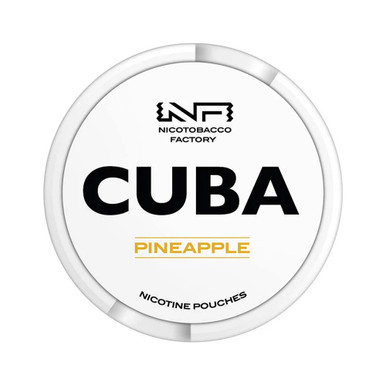
Cuba · 16mg · 10-can pack
Read the full guide
Cuba White Pineapple Nicotine Pouches
£39.90
✔ In stock — ready to ship
100% tobacco-free
Free over £20
Same-day dispatch
Secure checkout
Cuba White Pineapple Nicotine Pouches are listed here at £39.90 for a ten-can pack, in a single strength of 16mg per pouch. At the time this page was written the listing is out of stock, so if you have landed here from a search result rather than from the shelf, that is the first thing worth knowing. Everything else below still holds, because the product does not change while the shelf is empty — only its availability does.
The name splits into three parts and each one tells you something. Cuba is the brand, and you can see everything of theirs we carry on the Cuba brand shelf. White is the line within that brand: a dry, white, unstained pouch rather than the darker presentation Cuba use elsewhere. Pineapple is the flavour name on the lid, and in this instance it is a single named fruit rather than a blend or an invented word, which is rarer in this category than you might expect.
The full guide to Cuba White Pineapple Nicotine Pouches
5,167 words on how it eats, who it suits, how to serve it and what to put beside it.
The White Pineapple can, described plainly
Physically, you are buying a standard pouch tin: a shallow cylinder with a lid that clicks shut, and a recessed upper compartment in that lid for finished pouches. The pouches themselves are the white slim type — soft, dry to the touch, rounded at the ends, sitting flat rather than round. A White pouch stays white, which is the practical point of the line and the reason the word is on the can. There is no juice running out of it and nothing to spit.
One pack is ten cans. That is a roll rather than a single tin, and it is the only format we list for this product, so the £39.90 is the whole of the pricing story here. Nothing on this page will quote you a per-pouch figure or a usage rate, because how anyone gets through a roll is their own business and not something a shop should be modelling for you.
Pineapple, as a taste and an aroma
Take the lid off and the aroma is the loudest thing about this can. Pineapple as a flavour idea is bright, sharp and a little bit sticky, and the aroma leads with the sharp part: a tangy, almost acidic note that arrives before anything sweet does. Underneath it there is a rounder, jammier smell, closer to tinned pineapple in syrup than to a fresh fruit cut on a board. Those two things sitting together — sharpness on top, syrup underneath — are what makes the smell recognisable in a second, even with the can held at arm's length.
In the mouth, the order reverses. The first thing that comes through is the sweetness, and it is a generous sweetness rather than a restrained one. The tang follows a beat later and then holds, and it is the tang that carries the rest of the pouch. Pineapple has a natural edge to it that can read as prickly or even faintly sour at the sides of the tongue, and that edge is present here rather than sanded off. If you have had tropical-flavoured pouches that taste like generic fruit squash, this is not that; the fruit is specific enough that you would name it blind.
There is no cooling agent doing work in the background on this one. It is not a frosted or iced flavour, and nothing about it is built to feel cold. That leaves the fruit exposed, which is a fair test of a flavour: an iced pouch can hide a thin profile behind the chill, and a warm fruit pouch cannot. What you get instead is a steady sweet-tart line that runs most of the way through the pouch's life and fades at the end rather than dropping off a cliff.
Late on, the syrupy note is what lingers. The sharpness goes first, the sweetness thins to something more like the memory of the fruit, and there is a mild, clean fruit-skin bitterness right at the end. That bitterness is characteristic of pineapple rather than a fault in the can.
How a fruit note like this is built in a dry white pouch
This is the part of the category that is worth understanding properly, because it explains why two cans that say "pineapple" on the lid can taste so different from one another, and why the same fruit name behaves differently in a pouch than it does in a drink or a sweet.
Start with the obvious constraint: a white pouch is dry. Flavour in a drink arrives dissolved and all at once; flavour in a dry pouch has to be released slowly by the moisture already in your mouth, and that release is uneven by nature. The first thirty seconds are always disproportionately loud, because whatever is on the surface goes first. Then there is a long middle where the release settles into something steadier, and finally a tail where there is simply less left to give. Every flavour in this format is designed around that three-stage arc whether or not the brand talks about it, and a flavour that is "well built" is one whose character survives all three stages rather than front-loading everything into the first thirty seconds.
Pineapple is an awkward fruit to do this with, which is why it is a good example. Its identity sits in two places that pull in opposite directions: a high, volatile, almost solvent-like brightness at the top, and a heavy caramelised sweetness at the bottom. Get the balance wrong towards the top and the pouch reads as sharp and thin, closer to a citrus than to pineapple at all. Get it wrong towards the bottom and it reads as generic tinned fruit — sweet, yellow, unidentifiable. The version on this can sits closer to the middle, with enough of the top note in the aroma to announce itself and enough weight in the body to keep it from evaporating after a minute.
The second constraint is that a pouch is not chewed or swallowed, so there is no texture to help the flavour along. A sweet gets to be sticky; a drink gets to be cold and wet. A pouch has nothing but the flavour line itself and whatever cooling or warming sensation is built in. That is why so many fruit pouches in this category are iced: the chill gives the brain a second thing to pay attention to and covers any thinness in the fruit. This can does not take that route, and whether that is a plus or a minus depends entirely on what you want from a fruit pouch.
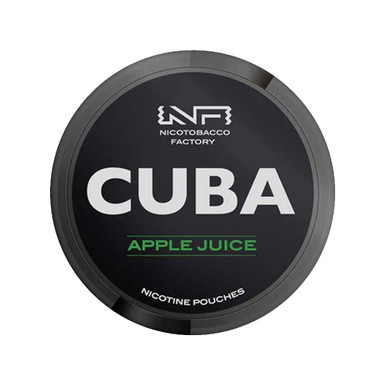
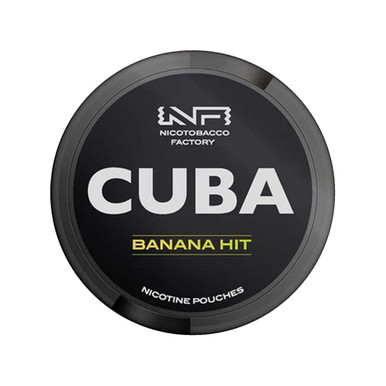
The third thing that shapes a fruit note is the company it keeps on the shelf. Brands rarely design a flavour in isolation; they design it to sit next to their other flavours without duplicating them. You can see that logic clearly across Cuba's own range. Cuba Black Apple Juice goes after a soft, pressed, orchard-fruit sweetness. Cuba Black Banana Hit takes the creamy, low, almost confectionery end of fruit. Cuba Black Cherry aims at a darker, stoned-fruit sweetness with a slight almond edge to it. Pineapple's job in that line-up is to be the acid one — the can you reach for when the others feel too round. Once you see the range as a set of non-overlapping jobs, individual flavour decisions stop looking arbitrary.
It is also worth comparing across brands, because the same fruit is interpreted very differently depending on house style. Elf Bar's pineapple can is listed here at £29.90 and is the most direct comparison we stock — same fruit, different house. SYX Tropical at £29.90 goes the blend route instead, so the pineapple in it is one voice in a chord rather than the soloist. Velo Tropical Mango, at £4.19 for a single can, leads with mango and lets the other tropical notes sit behind it. And Cuba Ninja Coconut, £39.90, shows what the same brand does when it takes the soft, creamy, non-acidic corner of the same flavour family. None of those is a better or worse construction than the others. They are different answers to the question of what "tropical" should mean on a lid.
The last variable is simply how loud a brand builds its flavours in general. Some houses aim for a subtle, background flavour that stays out of the way. Cuba's White line is not subtle; it is built to be obvious from the moment the pouch goes in. If you have used the brand before you already know the register, and this can sits squarely in it. If you have not, that is the most useful thing to know before ordering ten of them.
The format in practice
The pouches are the slim white type. In the hand they feel dry and slightly springy, and they hold their shape rather than slumping. They sit flat against the inside of the top lip, which is where the slim shape earns itself — a fatter pouch pushes the lip out visibly, and a slim one largely does not.
Placement is a matter of habit rather than technique. Most people take one from the can, sit it in place with a thumb, and forget about it. There is usually a short settling period of a few seconds while the pouch finds its position, and after that it stays put unless you go looking for it with your tongue. Talking, drinking and eating are all possible with one in, although a hot drink will speed the flavour along and shorten the useful life of the pouch noticeably.
How long people keep one in varies enormously, and we are not going to put a number on it as a recommendation. What we can say factually about the format is that the flavour arc described above is what governs the decision for most people: the pouch is at its most expressive early, settles into a plateau, and eventually has little left to give. People tend to take it out somewhere on that fade rather than at a fixed time on a clock.
Disposal is where the catch compartment in the lid earns its place. The upper recess in the lid is a small chamber sized to take used pouches, so a finished one goes up into the lid rather than into a pocket, a bin you cannot reach or the side of a road. It is a small piece of design that matters more than it sounds, particularly if you are somewhere without a bin to hand. The compartment fills up, obviously, and the can needs emptying and a wipe every so often; leaving used pouches in the lid for days is what makes a tin smell stale.
One practical note on the lid itself: pouch tins are designed to click shut, and a can that is not fully closed is a can that will dry out faster and, if it is loose in a bag, will eventually come open. Press the lid home until it seats properly. It is the single most common reason a can underperforms by the time someone gets to the bottom of it.
What 16mg means as a figure on the lid
This can is listed at 16mg, and that is the only strength we have it in. That number is the figure the manufacturer prints for the pouch, and it is useful mainly as a way of comparing one can to another within the same catalogue. It is not a dose we are suggesting, it is not a target, and it does not translate neatly into how any individual experiences the product. We publish it because it is on the can and because you would rightly want to know it before ordering.
Where it sits on our shelves is easy to describe. This product is filed under the strong shelf, which currently holds 132 cans. Below that we keep the medium strength shelf, and above it the extra strong shelf. A 16mg can sits comfortably inside the strong band rather than at either edge of it. That is a statement about our shelf structure, nothing more.
Two things the figure does not tell you are worth saying out loud, because the number gets over-read constantly. The first is that it does not describe flavour intensity. A pouch can carry a loud flavour and a modest figure, or the reverse, and the two are set independently. The second is that milligram figures are not perfectly comparable across brands even when they look identical, because manufacturers do not all measure and present them the same way. Treating 16mg on one brand as exactly equivalent to 16mg on another is a rough approximation at best.
What we will not do is tell you which number suits you. That is not a judgement a shop is in any position to make, and anyone on a product page willing to make it for you is telling you something about their standards rather than about the product. The figure is information. What you do with it is yours.
Buying rhythm: ten cans at a time, and what that changes
This listing is a ten-can pack at £39.90, and that single fact changes the way people buy it compared with the single-can lines on the same shelves. It is worth thinking through properly, because pack format affects a lot more than the price at the bottom of the page.
Start with the arithmetic, which is the honest part. £39.90 across ten cans works out at £3.99 a can. Set that against the single cans we list and the picture is clear enough: the Velo tropical can is £4.19 on its own, and Pablo Gold Edition Blueberry Peach Ice comes in at £19.95. Multi-can listings at other price points include Killa Apple at £33.50 and Fumi Fiery Peach at £27.90. The per-can figure on a roll is usually the lower one, which is the entire reason rolls exist as a format. That is a pricing observation and not encouragement to buy more than you were going to.
The real trade-off with a roll is not money, it is commitment. Ten cans of one flavour is a decision you are making once and living with for a while. If pineapple is already a known quantity for you, that is straightforward. If it is not, a ten-can pack is a large first bet on a flavour you have not tasted, and there is a reasonable argument for trying the same fruit in a cheaper single-can format first — the Elf Bar pineapple listing at £29.90 is the closest thing we stock to a like-for-like comparison. We would rather say that plainly than sell you ten cans of something you end up not reaching for.
The second thing a roll changes is storage, and it is the thing people underestimate. One can lives in a coat pocket. Ten cans need somewhere to live, and where you put them determines what condition the last three are in by the time you get to them. The sensible pattern is to break the roll: keep one can in circulation, and keep the remaining nine somewhere cool, dark and undisturbed rather than following the open can around in a bag. A roll stored properly and opened one can at a time behaves very differently from a roll that has been rattling around in a car for a month.
Third is reordering rhythm. People who buy in rolls tend to fall into one of two patterns. The first is the single-flavour buyer: one flavour, one roll, reorder when the roll runs low, never any variety. That pattern is simple and cheap and works well until the flavour goes out of stock — which, as this page notes at the top, happens. The second pattern is the rotation buyer: two or three flavours kept in parallel, with a different can in the pocket depending on the day. Rotation costs more to set up because you are holding more stock, but it is far more resilient to a shelf being empty and it prevents the palate fatigue that a single flavour eventually produces.
If you are building a rotation around this one, the useful thing is to pick cans that do genuinely different jobs rather than three versions of the same idea. A second fruit that is not tropical — Clew Blueberry at £39.90, say — gives you somewhere different to go. Something with a cooling character, like Denssi Blueberry Freeze at the same price, changes the sensation as well as the flavour. And something outside fruit altogether, such as Cuba Black Cola or the plainer Cuba Black Cold Dry, gives the rotation a genuine reset point. Three cans that are all tropical fruit will start tasting like one can within a fortnight.
Fourth, the spare. Anyone who uses pouches regularly ends up keeping a spare can somewhere that is not their usual pocket — a desk drawer, a glovebox, the bottom of a work bag. The thing to know is that a spare is a stored can, not an in-use can, and heat is what ruins stored cans. A glovebox in July is a bad drawer. If you are going to keep a spare in a car, keep it somewhere shaded and accept that it will not last as well as one kept indoors.
Finally, the out-of-stock question, since it applies here. When a listing is empty, the options are to wait, to take the same fruit from another house, or to move sideways within the brand. Nothing on this page is going to tell you when it will be back, because we do not publish restock dates and guessing at one would be worse than useless. What we can tell you is where the near neighbours are: our tropical flavour shelf holds 58 cans, and everything we list under Cuba runs to 47.
Where this one falls in the Cuba line-up
Cuba run several distinct lines and we carry cans from across them, so it helps to know which line you are looking at before comparing prices and flavours.
The White line, which this can belongs to, is the dry white-pouch presentation. The Black line sits alongside it and accounts for most of the brand's fruit range on our shelves: Cuba Black Blueberry, the Black cherry can and the apple juice one are all £39.90, the same as this listing, which makes cross-line comparison unusually simple. The Ninja line is the third one we carry, and the Ninja coconut can is the example of it in this product's neighbour list.
Within the fruit flavours, the brand's range covers a reasonably wide spread. There is the acid corner, which is where pineapple lives. There is the dark-fruit corner, occupied by cherry and blueberry. There is the soft-and-creamy corner where the banana can sits. There is the cola corner, which is its own thing entirely and not really a fruit at all. And then there is the plain, unsweetened end of the range in Cold Dry, which is the one to look at if a page full of fruit descriptions is not what you came for.
Everything in that list is on the Cuba brand shelf if you would rather browse the lot than read about them one at a time. It is the quickest way to see the full spread of what the brand does at this price point.
What people keep alongside it
Variety in this category is mostly about having somewhere else to go when a flavour starts to fade into the background. A few specific suggestions, each with a reason attached rather than a vague nod.
For a sharper, colder contrast, 77 Apple Mint at £39.90 pairs a fruit with a mint element, which is a different structure from this can entirely and resets the palate rather than extending it. For a straight berry alternative at the same price, the Clew blueberry can stays in fruit but moves from acid to round. For something with a built-in cooling character, Denssi Blueberry Freeze does the frosted version of the same berry idea.
If cost is the deciding factor for a second can, the cheaper listings on the neighbour list are worth a look: Velo's tropical mango at £4.19 and the Pablo Gold Edition blueberry and peach can at £19.95 are both well under this listing's price, though they are different pack formats, so compare what you are actually getting rather than the headline number. The wider Pablo range is worth browsing on the same basis.
And if you want the same fruit family from a different house to see how another brand interprets it, the SYX tropical can and Elf Bar's pineapple are the two closest comparisons on our shelves, at £29.90 each.
Keeping a can in usable condition
White pouches are dry by design, and dry things get drier. The two enemies are heat and air, and both are manageable with very little effort.
Air first. The lid clicks shut for a reason, and a can that is properly closed between uses holds its condition far better than one left ajar on a desk. It takes a second and it is the highest-value habit in this whole section.
Heat second. Cool, dark and stable is what you want — a drawer, a cupboard, a shelf away from a radiator or a window. Direct sunlight on a tin does it no favours, and a car in summer is the classic way to find a can of disappointing pouches three weeks later. A fridge is not necessary for a dry pouch and introduces condensation when the can comes back out, so it is not something we would push you towards; a cool room is enough.
With a ten-can pack, the rule of thumb is to open one and leave the other nine sealed until they are needed. Unopened cans keep their condition for far longer than opened ones, so breaking the whole roll open at once for no reason is just accelerated ageing for nine tins. Keep the roll somewhere out of the way and pull from it as you need.
Finally, empty the catch compartment. Used pouches sitting in a lid for a week will make the whole tin smell of them, and that smell transfers to the fresh pouches underneath. A quick empty and a wipe with a dry cloth every so often keeps the can neutral.
Choosing between what we list
There is not much of a choice to make within this listing itself, which simplifies things. There is one strength, 16mg, and one pack format, ten cans at £39.90. No decision tree, no variant table to puzzle over.
The real choices are the ones next to it. If the strength band is what you are deciding on, the shelves are the place to compare: the medium shelf, the strong one where this can sits, and the extra strong listings above it. Browse by shelf and you can see the whole band at once rather than clicking through individual products.
If pack size is the deciding factor, note that our catalogue mixes formats freely. Some listings are single cans, some are multi-can packs, and the headline price alone will mislead you if you do not check which is which. A £4.19 listing and a £39.90 listing are not usually the same purchase in different sizes.
And if flavour is the axis, the tropical shelf gathers everything in this family in one place, which is a faster way to survey the options than working through the brand pages one by one.
Buying, delivery and the age check
This is an 18+ product and we sell it only to adults who already use nicotine. Age verification is part of the order process, and ID may be requested on delivery — if the person who answers the door cannot show it, the courier can refuse to hand the parcel over. That is not a formality we can waive at the door, so it is worth having something to hand if you are expecting a delivery.
Orders are placed through the site in the usual way. Availability is shown on the listing itself and is the only place we keep it current; at the time of writing this one is out of stock, and that status will change on the product page before it changes anywhere else. We do not hold or publish a restock schedule, so we cannot give you a date.
If the listing is empty when you arrive and you would rather not wait, the full catalogue is the place to start looking for an alternative, and the shelves mentioned throughout this page will narrow it down quickly.
Finding this page again
This product sits in three places on the site. It is on the Cuba brand shelf with the other 46 cans from the same house. It is on the strong shelf with the other 131 listings in that band. And it is on the tropical shelf alongside 57 other cans in the same flavour family.
If you are browsing rather than looking for something specific, the whole catalogue is the widest view, and the strength bands — medium and extra strong — are the fastest way to cut it down if the milligram figure is what matters to you. Brand pages such as the Pablo listings do the same job if you shop by house instead.
Questions we get asked
Is this a single can or a pack?
A pack of ten cans, at £39.90 for the pack. That is the only format we list it in. There is no single-can option on this listing, so if you want to try the flavour in a smaller quantity first, you would be looking at a different product rather than a smaller version of this one. The neighbour links on this page point at several cheaper listings, though they are different brands and different flavours, not smaller versions of this can.
What strength is it?
16mg per pouch, and that is the only strength we carry it in. The figure comes from the manufacturer's own labelling and we publish it exactly as given. We will not tell you whether that number suits you, because that is not something a shop can responsibly judge on your behalf. If you want to see how it sits against the rest of our catalogue, the strength shelves linked on this page group everything by band.
Why is it out of stock, and when will it be back?
We do not hold that information in a form worth publishing. Stock moves for a lot of reasons — supply, demand, timing — and we would only be guessing if we put a date on this page. The product listing itself is where availability is kept current, so that is the page to check rather than this description. If you need something in the meantime, the tropical shelf is the nearest place to look.
Does it taste like fresh pineapple?
Closer to tinned than fresh, if you want the honest version. The aroma has the bright, sharp top note you get from a fresh fruit, but the body is sweeter and rounder than a fresh pineapple would be, with a syrupy quality to it. There is a mild fruit-skin bitterness at the tail end. It is clearly and recognisably pineapple rather than a vague tropical blend, which is not true of every can wearing the same fruit name.
Is there any cooling or menthol element?
No. This one is a plain fruit flavour with no frosted or iced character built into it. If a cooling sensation is what you are after, you would want one of the cans with that explicitly in the name — Denssi Blueberry Freeze is the example linked on this page, and the mint-containing flavours elsewhere on our shelves do the same thing in a different flavour family.
Will the pouch stain anything?
The White line is a dry white pouch, which is the practical reason the word appears on the can. It is not a wet or dark pouch and there is nothing running out of it. Beyond that, we are not going to make claims about what does or does not happen with prolonged use of any product, because that is not a statement we are in a position to stand behind.
How long does one pouch last?
That varies far too much between people for a number to be meaningful, and we are not going to publish one as guidance. What is consistent is the shape of the experience rather than its length: the flavour is at its loudest early on, settles into a steadier middle, and fades towards the end. Most people take a pouch out somewhere on that fade rather than at a fixed point on a clock.
Where is Cuba as a brand based?
We do not hold that information and will not invent it. The brand name is a brand name, not a statement of origin, and we would rather say plainly that we cannot tell you than put a country on this page that we cannot verify. If it matters to you, the manufacturer's own packaging and materials are the place to look rather than a retailer's description.
How many pouches are in a can?
Our listing records the pack as ten cans at £39.90 but does not carry a per-can pouch count, so we are not going to state one. The can itself carries that information on its labelling. We only publish the figures our own catalogue holds, and inventing the rest to make a page look more complete is exactly the habit that makes product descriptions untrustworthy.
Can I mix this with other flavours in one order?
Yes — the basket takes whatever combination of listings you put in it, and a lot of people buy two or three flavours at once precisely so they have somewhere else to go when one starts to fade into the background. The variety section on this page suggests a few specific pairings with a reason attached to each, rather than just listing cans at you.
Is it suitable for someone who does not use nicotine?
No. This is an 18+ nicotine product sold to adults who already use nicotine, and nothing on this page is addressed to anyone else. If you do not currently use nicotine, this product is not for you, and we are not going to dress that up.
The notes that belong on any page like this
Nicotine is an addictive substance. This product contains nicotine and is sold to adults aged 18 or over who already use it. We do not sell it to anyone under 18, and age verification forms part of every order. ID may be requested when your parcel is delivered, and the courier can refuse the handover if it cannot be produced.
This is not a licensed stop-smoking medicine and makes no medical claim of any kind. It is not intended for non-smokers, for anyone who does not already use nicotine, for under-18s, or for anyone who is pregnant or breastfeeding. Nothing on this page is medical advice, and no strength listed here is presented as being suitable for any particular person or circumstance. If you have questions of that sort, a qualified professional is the right person to ask, not a retail page.
In short
Cuba White Pineapple is a 16mg dry white pouch with a loud, recognisably sharp-and-syrupy pineapple flavour and no cooling element, sold here as a ten-can pack at £39.90 and currently out of stock. It sits in the acid corner of a brand range that otherwise leans round and sweet, which is the clearest single reason to pick it over its siblings. If the shelf is empty when you arrive, the tropical listings and the wider Cuba range are the two obvious places to look next.
More from Cuba
More strong pouches

More tropical pouches
Where this sits
Cuba White Pineapple Nicotine Pouches appears in these categories. Browse them, or jump to something close.
You might also like