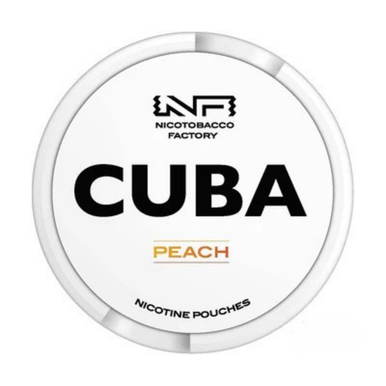
Cuba · 16mg
Read the full guide
Cuba White Peach Nicotine Pouches
£39.90
✔ In stock — ready to ship
100% tobacco-free
Free over £20
Same-day dispatch
Secure checkout
This page is Cuba White Peach Nicotine Pouches, and the first thing to be clear about is the quantity. This is the ten-can listing — the name of the listing says so — and the £39.90 price is the price of the whole pack rather than of a single tin. The declared strength is 16mg, there is no second strength option, and the listing is in stock at the time of writing.
That pack size changes how almost everything on this page should be read, so we will get the arithmetic out of the way immediately. £39.90 across ten cans is £3.99 a can. That is a division, not a marketing figure. It matters because our catalogue mixes single-can listings and multi-can listings on the same shelves, which means a headline price on one page is frequently not comparable with a headline price on another. If you have been browsing the shop and wondering why some listings are a few pounds and others are approaching forty, this is the reason, and the per-can number is the one to compare.
The full guide to Cuba White Peach Nicotine Pouches
5,017 words on how it eats, who it suits, how to serve it and what to put beside it.
What you are buying on this listing: ten cans, not one
One point of honesty about where that ten comes from. Our structured product data does not carry a cans-per-pack field for this listing — the field is empty — so the ten is taken from the name of the listing itself rather than from a separate data point we hold. We are flagging that rather than glossing it, because a customer buying a multipack is entitled to know exactly how firm each number on the page is. The listing name and the product page are the authority on the quantity; check them at checkout.
The flavour is recorded in our data as tropical, and the product is named for peach. Those are not quite the same statement and we have not reconciled them, because we file cans into a fixed set of flavour categories and peach falls into our tropical grouping, which holds 58 listings. The name on the tin is peach. The shelf it lives on is tropical. Both are true and neither is a mistake.
A note before the detail: everything here concerns an adult nicotine product, available only to people aged 18 or over who already use nicotine. The compliance section near the foot of this page states the position in full.
The tins themselves, and what happens to a finished pouch
Ten cans is ten of the same object, so the object is worth describing once and properly.
Each tin is a shallow round cylinder with a lid that lifts clear and presses back down. The face carries the brand, the range name and the flavour, and the declared strength figure sits where it can be read without opening anything. On a ten-can pack that detail matters less than usual, since every tin in the box is identical, but it matters a great deal the moment one of these cans ends up in a drawer next to something else.
Inside each tin, pouches lie flat in a ring around the base. We do not publish a pouch count. Our product data does not hold one for this listing and we are not going to multiply a guess by ten and present the result as a fact, so the printed can is the place to read it. The same applies to net weight and to the dimensions of an individual pouch.
The upper section of a tin of this type is normally a catch lid: a separate compartment for used pouches, reached by turning or lifting the top. It is a bin, nothing more, and its value is that you are not carrying a used pouch in a tissue while you find somewhere to put it. On a ten-can pack there is a small practical consequence worth naming — ten cans eventually means ten catch lids to empty, and people who keep a multipack tend to be less diligent about emptying them than people with a single tin. Used pouches belong in a bin, whether the catch lid or general waste. Never down a sink, a drain or a toilet. Never on the ground. Never anywhere a child or an animal could reach, and that applies to a box of ten as much as to one tin.
Empty tins go in the general waste too, closed. A box of ten produces ten empty tins over its life and they are not a thing to leave lying about.
Peach, described as a taste
Peach occupies a specific and fairly narrow place among fruit flavours, and it is worth pinning down because people often expect something else.
The defining quality of a peach profile is softness. Where a berry is bright and a citrus is sharp, a peach is round — a gentle, slightly floral sweetness with a faint honeyed quality underneath and very little acidity to cut across it. It is one of the least aggressive fruit flavours in the category. There is often a light note that reads as skin or fuzz in a good rendering, a faintly green or tannic edge sitting under the sweetness, though that is a subtlety rather than a headline.
Because there is so little acid in it, a peach flavour tends to read as sweeter than its actual sugar content would suggest — there is nothing competing with the sweetness, so the sweetness is what you notice. That is the same effect that makes a confectionery flavour read as simple, and it is worth knowing before you buy ten tins of it. If you find soft, low-acid flavours cloying over a long stretch, a peach multipack is a considerable commitment to that register.
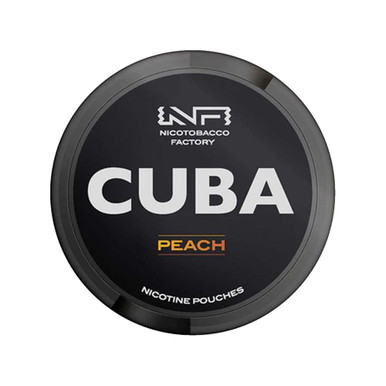
Nothing in the naming of this one points to a cooling element. Peach flavours elsewhere in the category are sometimes paired with a cold sensation and generally say so on the lid — the Pablo Gold Edition Blueberry Peach Ice listing at £19.95 is the clearest example we stock, with the cold stated in the name. This one carries no such signal and should read as fruit rather than cold. Fumi Fiery Peach at £27.90 is the other peach-named listing in this comparison set, and reading both pages is a quicker way to understand the flavour's range than reading either alone.
On the arc across a pouch: soft, multi-note fruit flavours usually lose their brightest element first and settle into the heavier, sweeter base through the middle, thinning at the end. The last third of a peach pouch will generally taste rounder and less lively than the first third, and that is the normal behaviour of the family rather than a sign of a badly kept tin.
That is taste and aroma, described as taste and aroma. We are not going to tell you what the pouch does beyond the flavour.
16mg as a printed figure
The declared strength here is 16mg and there is no alternative on this listing. The number is the manufacturer's stated strength, printed in a standard place across the whole category, and its job is comparison between labels — it lets you set two cans beside each other and say which declares higher. That is what it is for.
It is not a prediction of taste, of duration, or of how intense anything will feel. Portion size, how dry the material is, the flavour sitting on top and individual habit all come between the printed number and the experience, which is why two cans showing the same figure can read quite differently from one another.
As a sorting device, 16mg files this listing on the Strong shelf, which holds 132 listings. The medium category is below it and the extra strong category above. Those three shelves exist to arrange the catalogue by declared figure and for no other reason at all.
The ladder, and why a ten-can pack makes reading it more consequential
The strength ladder is the single most misunderstood thing on a pouch shelf, and this listing is a good place to work through it properly, because buying ten identical tins is the situation in which getting it wrong costs the most.
What the ladder actually is
Three shelves — medium, strong, extra strong — into which we sort every listing according to the figure the manufacturer has declared. That is the whole of it. The shelves are a filing system. They are not tiers of quality, they are not stages in a progression, they are not a scale anybody is meant to move along, and they carry no recommendation in either direction. We sort by the number because the number is the only strength information that exists in a standard form across every brand we stock, and a shop with several hundred listings has to sort by something.
What the figure tells you
One thing, reliably: how this can's declared strength compares with another can's declared strength. If two tins are printed 16mg and 20mg, the second declares higher. That comparison holds across brands because the declaration format is standard, and it is genuinely useful when you are trying to work out where an unfamiliar can sits relative to a familiar one.
What the figure does not tell you
Rather a lot, and this is the part that gets skipped. It does not tell you how the can will taste. It does not tell you how long a pouch stays interesting. It does not tell you how a pouch will feel, because a figure on a lid is a declaration about the product and not a description of anybody's experience of it. It does not account for portion size, which varies between a regular, a slim and a mini and changes the object in your mouth considerably. It does not account for how dry or moist the material is. And it is not a dosage figure of any kind, is not presented as one by anybody, and should not be read as one.
There is also a comparison trap worth naming. Because the figure is the only standardised number on a can, people reach for it when comparing two products that differ in half a dozen other ways, and then treat the comparison as more precise than it is. Two cans that declare the same figure but use different portion sizes are not equivalent objects. The number is a starting point for a comparison, not the end of one.
Why ten cans raises the stakes on all of this
On a single-can listing, a strength figure that does not suit you is a £3.99 problem in per-can terms and you move on. On a ten-can listing it is a £39.90 problem, and you are holding nine more tins of the same figure and the same flavour. That is not an argument for or against buying a multipack — it is an argument for reading the figure on the page before you add it to a basket rather than afterwards, and for being reasonably confident about the flavour direction as well as the number.
The practical implication, if you are unsure, is that a single can of something comparable is the cheaper way to find out. Our shelves carry plenty of single listings at lower headline prices — Velo Tropical Mango at £4.19 and the Pablo Gold Edition peach listing at £19.95 are the two lowest in this comparison set — though as with every price on this site you should open the page and check what each listing actually contains before assuming it is a single tin.
What we will not say about the ladder
We will not tell you which shelf to shop from. We will not describe any figure as a sensible place to start, will not call a number suitable for any person, circumstance or condition, and will not answer the question when it is asked directly. We publish the figure on every listing, we sort the shop by it, and there our involvement ends. A customer who already uses nicotine knows their own habits better than a catalogue does.
The format at multipack scale: portion, seat, duration and ten tins of it
The format is the same on this listing as on every other pouch we sell, and the useful thing to add here is what changes when you have ten of them rather than one.
Portion size
Pouches come in what the category loosely calls regular, slim and mini. A regular is the wider, shorter shape; a slim is narrower and longer; a mini is the smallest thing on most shelves. We do not publish a portion size for this listing, and the printed can is the place to read it. The relevance to a multipack is direct: every tin in the box is the same portion, so if the shape does not suit you, it does not suit you nine more times. Anyone who is uncertain about portion size is better served finding that out on a single tin first. Lines that name themselves as mini, which is the most reliable size signal available across our catalogue, make that easier to do deliberately.
How the pouch sits
Between the lip and the gum, normally the upper lip and normally to one side rather than dead centre. It should lie flat and stay where it is put; one that keeps moving has usually been placed too far forward. Nothing needs chewing, adjusting or repositioning once it is in. Most people find a side that suits them and stay with it, and there is nothing to learn beyond that.
How long people keep one in
We publish no recommended time and are not going to invent one. What we observe across the category is that people work to the taste rather than to a clock, taking a pouch out once the flavour has thinned to the point where there is little left to notice, which lands most people somewhere in the region of twenty to forty minutes with a great deal of variation on either side. Any guidance the manufacturer prints on the can takes precedence over that observation. The format is built around one pouch at a time, and we do not describe, suggest or encourage anything else.
What ten tins changes in practice
Three things, none of them dramatic. First, consistency: every tin in the pack is the same product, so the format questions above are answered once and stay answered for the life of the box. Second, sequencing: nine sealed tins sit unopened while one is in use, which is a storage question rather than a use question and is covered further down. Third, waste volume: ten tins eventually means ten empty tins and ten catch lids full of used pouches, all of which need binning properly rather than accumulating in a drawer.
Where a peach listing falls among the Cuba cans
Cuba runs to 47 listings on the Cuba brand page, spread across several named ranges, and the great majority sit at £39.90. That flat price is the reason the per-can arithmetic at the top of this page matters so much: when several listings share a headline figure, whether each one is a single tin or a pack of ten is the variable doing all the work, and the only way to establish it is to read the listing.
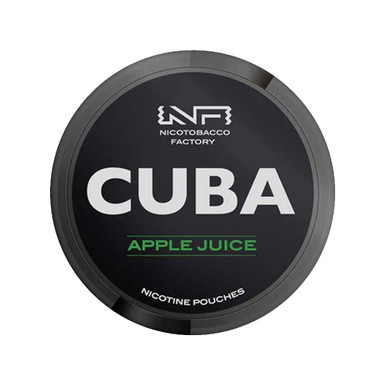
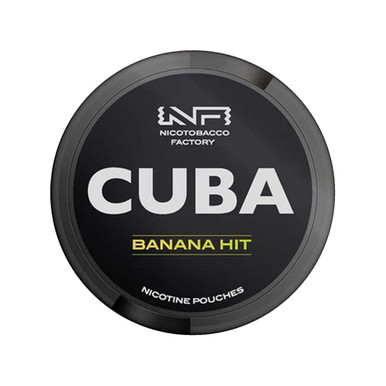
By flavour, this listing sits in the soft, sweet half of the shelf. Its closest relative is Cuba Black Banana Hit at £39.90, because banana shares peach's roundness and low acidity more closely than any other fruit the brand lists. Cuba Black Apple Juice at the same price is the lighter, juicier neighbour, and Cuba Black Cherry and Cuba Black Blueberry, both £39.90, cover the darker and slightly sharper fruit territory.
The far end of the shelf is where the brand keeps its cold and its unusual listings: Cuba Black Cold Dry at £39.90 is the plainest and coldest thing it offers through us, and Cuba Black Cola, again £39.90, sits in the spiced soft-drink register that belongs to no fruit family at all. Cuba Ninja Coconut at £39.90 comes from another of the brand's named ranges and is the one other soft, creamy tropical option on the shelf.
Check the declared strength on each Cuba listing individually rather than assuming a single figure runs across the brand. Ranges within a brand can differ, and the figure is printed on every page for exactly that reason.
What to keep beside ten tins of one flavour
This is the section that matters most on a multipack listing, and it is the opposite of the advice a shop would give if it were trying to sell you more. Ten tins of a single soft, sweet flavour is a lot of one thing, and the well-known consequence is that the flavour stops registering. Palate fatigue is not a defect in the can and it is not fixed by a higher figure. It is fixed by having something else available.
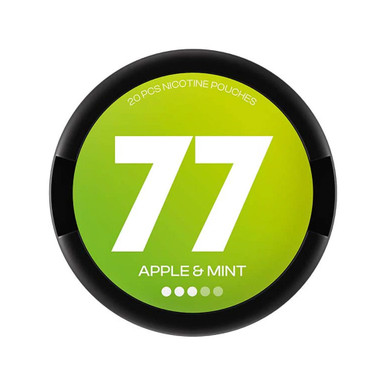
For the sharpest available contrast, citrus and apple are the two directions furthest from a soft peach. Killa Apple at £33.50 brings orchard-fruit acidity, and the 77 Apple Mint can at £39.90 combines that with a mint element, which makes it about as complete a change of direction as this comparison set offers.
For a change of fruit without leaving sweetness behind, Clew Blueberry at £39.90 and Denssi Blueberry Freeze at the same price go darker and, in the Denssi's case, add a cold element the name states outright. Elf Bar Pineapple at £29.90 stays tropical but swaps roundness for a sharper, more acidic fruit, and the SYX Tropical listing at £29.90 is the blended option in that family rather than a single fruit.
For a second peach rather than an escape from it, the Fumi Fiery Peach can at £27.90 is the direct comparison, and the Pablo Gold Edition blueberry and peach listing at £19.95 pairs the fruit with a berry and a cold element. Velo Tropical Mango at £4.19 is the lowest headline price in this set and a different tropical fruit again.
If none of those narrows it, the shelves are faster than individual pages: the tropical category runs to 58 listings, the Pablo brand page is a different starting point entirely, and the complete product listing holds everything we stock in one place.
Storing nine sealed tins and one open one
Most storage advice is written for a single can. A multipack has a slightly different problem, because most of what you have bought will sit unopened for a while.
The sealed tins. Keep the unopened cans together, somewhere cool, dark and dry — a drawer or a cupboard at ordinary room temperature does everything that is required. The enemies are the usual ones and they are worse over a long storage period than a short one: heat, direct sunlight and damp. A box of ten left on a sunlit shelf for a month is in a worse state at the end of it than a single can would be over a week. If the manufacturer has printed a date marking on the tins, read it when the pack arrives rather than when you reach the last one, because that marking is the thing that governs how long the pack is worth keeping and we do not hold or publish it.
The open tin. Press the lid down properly rather than balancing it on top — an open lid is the commonest reason a can goes flat before it is finished. Take pouches from the edge of the ring rather than digging at the middle, and take them with dry fingers, because every damp hand that goes into a tin leaves moisture behind.
Do not decant. Moving pouches into another container loses you the sealed lid, the catch lid, the printed strength figure, any date marking and the manufacturer's guidance. On a multipack there is no reason to do it at all, since you already have ten purpose-made containers.
Refrigeration. We hold no information on whether it helps or harms and make no claim in either direction. A storage instruction invented by a retailer is worth nothing. Whatever the manufacturer prints on the tin is the authority.
Children and animals. This is not a preference and a multipack makes it more pressing rather than less, because there is more of it in the house. Sealed tins, the open tin, empty tins and used pouches all go somewhere children and animals cannot reach, closed, at all times. A box of ten is not a thing to leave on a kitchen worktop.
What there is to choose between here
On this page, nothing. One variant is listed — 16mg at £39.90 — with no second strength and no alternative pack size on this listing. The choice is whether you want ten cans of this flavour at this declared figure.
The real choice sits one level up, between this listing and a single-can listing elsewhere in the shop, and it comes down to two things. The first is per-can cost, which at £3.99 here is a straightforward division you can perform against any other listing once you know how many tins it contains. The second is commitment: a multipack fixes your flavour and your declared figure for ten tins, which is fine if you already know both and a poor idea if you do not. A customer who has not had this flavour before is, on the arithmetic alone, better off establishing that on something smaller.
If a different declared figure is what you want, that means a different listing rather than a different option here, which is what the medium shelf, the Strong shelf and the extra strong shelf are for. We will tell you where this rung sits. We will not point you up or down.
Ordering a multipack, delivery, and the check at the door
The listing is in stock as we write. The can — or rather the pack — goes into a basket at £39.90, you check out, and it is dispatched as a parcel. Stock positions change and the listing itself is the live source rather than this paragraph.
A note on what arrives, since multipacks raise the question more often than single listings do: what you receive is what the listing describes, and the listing page rather than this description is the definitive statement of the contents. If a delivery does not match what the listing said, that is a matter for customer service rather than something a product description can resolve.
Shipping cost, courier and timescale are not printed on listings. They belong to the site's delivery information, the one place they can be maintained accurately; duplicated across several hundred listings they would be out of date on most within a month. A heavier parcel is not automatically slower or dearer, and the delivery pages rather than this one are where that is set out.
Age verification. This is a nicotine product, sold to over-18s only. Age checks apply at the point of sale, and ID may be requested on delivery. A courier can decline to hand over a parcel to anyone who cannot show they are 18 or over, and the order will not be completed if that check is not satisfied. If someone else takes parcels in at your address, they need to be able to pass the same check — and that is worth thinking about before ordering a larger pack to an address where you may not be in. Under-18s are not sold to here, and neither are adults placing an order for one.
Where this listing lives on the site
Three filters will bring you back to this pack. The flavour filter files it on the tropical shelf among 57 other listings, notwithstanding that the tin is named for peach — our flavour groupings are a fixed set and peach belongs to that one. The strength filter places it among the 131 other listings on the Strong shelf. The brand filter puts it with the 46 other cans on the Cuba page.
If you are not sure yet which of those you are shopping by, the full catalogue is the honest starting point and the category filters will narrow things faster than scrolling. Bookmarking the listing directly is worth doing if this is specifically the pack you want, since a flavour shelf of 58 listings takes some getting through.
Questions that come up on this listing
How many cans do I actually get?
The listing is the ten-can pack and its name says so. Our structured data does not carry a separate cans-per-pack field, which is why we are pointing you at the listing name and the product page rather than at a database field. Check the quantity on the listing and at checkout before you pay. We would rather say that plainly than have you assume it from a description.
How many pouches are in each can?
We do not hold that number and will not print one, least of all multiplied by ten and presented as a pack total. The printed can carries the count. We know it is the figure customers most want before committing £39.90 and we would rather leave the gap visible than publish something that could be counted and contradicted.
Why does this cost £39.90 when other listings are under £5?
Because the listings contain different quantities. This one is a ten-can pack, which works out at £3.99 a tin. Some other listings are single cans and some are packs, and the only way to compare fairly is to open each page, establish the quantity, and divide. A headline price on its own tells you very little on this site.
Is the flavour peach or tropical?
The tin is named for peach. Our catalogue files it under tropical, because that is the flavour grouping peach falls into in our fixed set of categories. Both statements are accurate and the discrepancy is a filing convention rather than a description of the taste. If you are browsing by flavour, tropical is where you will find it.
Can I buy a single can of this instead?
Not on this listing, which is the ten-can pack. Whether a single-can version exists elsewhere in the catalogue is a question for the shelves rather than this page — the brand shelf and the tropical shelf are where to look, and each listing states what it contains. We are not going to assert the existence of a listing we have not checked.
Does it have a cooling element?
Nothing in the name signals one, so it should read as a fruit flavour rather than a cold one. Peach cans that pair the fruit with a cold sensation generally say so on the lid, and this comparison set contains an example that does. We have not tasted and scored these cans as a shop, so we are reading the naming rather than reporting a test.
How should I store nine unopened tins?
Together, somewhere cool, dark and dry, at ordinary room temperature — a drawer or cupboard is sufficient. Avoid heat, direct sun and damp, all of which matter more over a long storage period than a short one. Read any date marking the manufacturer has printed on the tins when the pack arrives rather than when you reach the last one, since we do not hold or publish that information.
How long do people leave one in?
No time is recommended by us and none is going to be invented. The habit across the category is to follow the taste, taking a pouch out when the flavour has worn thin, and for most people that lands between about twenty and forty minutes, with a good deal of individual variation. Whatever the manufacturer prints on the can outranks this answer.
Will you tell me what strength to order?
Not a question we will answer, and a multipack does not change that. We print the declared figure on every listing and sort the catalogue by it so customers can see where each one falls, and that is the full extent of a retailer's proper involvement. We do not recommend strengths and do not describe any figure as suitable for any person or situation.
What do the pouches contain?
Ingredient and contents information is not published on our listings, and paraphrasing one here is not something we are willing to do. The manufacturer's own statement is printed on each tin, and that, alongside whatever the brand publishes directly, is where it should be read.
Is this suitable for someone who does not use nicotine?
No. This is an adult nicotine product for over-18s who already use nicotine, and it is intended for nobody else. No part of this page speaks to people who do not already use nicotine, and a ten-tin listing least of all.
Compliance and legal information
Read this before ordering.
- 18+ only. Sold exclusively to adults aged 18 or over. We do not sell to under-18s, and we do not sell to an adult buying on behalf of an under-18.
- For adults who already use nicotine. This product is intended only for people who already use nicotine. Nothing on this page is directed at anybody else or should be read as an invitation to begin.
- Nicotine is an addictive substance. Stated plainly, because it is true of this product.
- Not a licensed medicine. This is not a licensed stop-smoking medicine, and it is not intended for non-smokers, for people who do not use nicotine, for under-18s, or for anyone who is pregnant or breastfeeding.
- ID may be requested on delivery. Proof of age may be asked for at the door, and where that check is not satisfied the parcel goes back undelivered.
- Keep out of reach of children and animals. Sealed tins, open tins, empty tins and used pouches, all kept closed and out of reach. A multipack means more of it in the house, which makes this more important rather than less.
- No medical advice is given here. This page offers no medical, dosage or health guidance whatsoever. Anything touching nicotine and your own circumstances is a question for a healthcare professional, not for a retailer.
The pack, summarised
This is the ten-can Cuba White Peach listing at £39.90, which is £3.99 a tin, declared at 16mg, in stock as we write, and carrying a soft, low-acid fruit flavour with no cooling element signalled in the name. The format is the ordinary one and is identical across all ten tins: a round can, a lift-off lid, a catch lid for used pouches, and nothing to charge, clean or assemble.
The gaps are stated rather than papered over: no pouch count, no portion size, no cans-per-pack field in our data, no tasting panel and no view on which strength anybody should buy. If a ten-tin commitment to one flavour is more than you want today, the tropical shelf and the Cuba range are the two places to widen the search, and both contain a great deal more than this single pack.
More from Cuba
More strong pouches

More tropical pouches
Where this sits
Cuba White Peach Nicotine Pouches appears in these categories. Browse them, or jump to something close.
You might also like