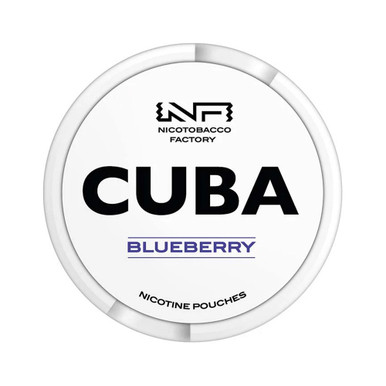
Cuba · 16mg
Read the full guide
Cuba White Blueberry Nicotine Pouches
£39.90
✔ In stock — ready to ship
100% tobacco-free
Free over £20
Same-day dispatch
Secure checkout
The product here is Cuba White Blueberry Nicotine Pouches: brand Cuba, line White, flavour Blueberry, filed under berry. Declared strength 16mg, and that is the only figure attached — no second variant sits behind the listing offering an alternative. Price £39.90. One photograph. Not in stock with us as this is written, and no pack configuration in our data, meaning we cannot tell you from our own record whether that price covers one tin or several.
Both of those gaps are stated at the top rather than buried, because they are the two things anyone would most want resolved and because filling them with a reasonable-sounding guess would be worse than leaving them open. Prices elsewhere in the catalogue are not evidence about this one. The live listing and the manufacturer's packaging are where the pack question gets answered.
The full guide to Cuba White Blueberry Nicotine Pouches
5,230 words on how it eats, who it suits, how to serve it and what to put beside it.
Cuba White Blueberry: what the record says
What follows divides into three kinds of statement and nothing else: a description of the object, a comparison against other tins on our shelves, and an admission where the record runs out. Two sections in the middle of the page go considerably deeper than the rest, one on the format and one on the milligram figure, because those are the two subjects customers ask about most and the two most often answered badly.
The necessary preliminary: an age-restricted nicotine product, sold only to adults of 18 or over who already use nicotine. Full compliance wording sits near the foot of the page.
Blueberry as a taste, and why it is the quietest of the dark fruits
Blueberry is filed on the berry shelf with 75 other listings, and within that group it occupies a very particular position: it is the mildest and the most floral of the dark fruits, and it is the one whose real-world flavour is quietest.
That last point is worth taking seriously, because it explains almost everything about how blueberry behaves as a flavour. An actual blueberry is a subtle thing. It has very little acid, a gentle and slightly sugary sweetness, a faint powdery quality that comes off the skin, and an aroma so restrained that you have to put your nose to a bowl of them to find it. Compared with a blackcurrant, which announces itself from the other side of a room, blueberry barely speaks. The consequence is that blueberry as a flavour category is more of a construction than a transcription — what people recognise as a blueberry flavour is a slightly sweeter, slightly more perfumed version of the fruit, because a literal one would be too faint to identify.
So what does it read as here? Soft and rounded, with the sweetness sitting forward and very little acidity behind it. There is a floral lift to it — something in the violet direction, faint but present, and the thing that separates blueberry from every other dark fruit on the shelf. There is a mild powdery, skin-like note underneath. And the finish is clean and short rather than drying or lingering; it does not grip and it does not sour. The aroma off an open tin is gentle rather than immediate.
Against its relatives, the contrasts are clear enough to be useful. Blackcurrant is the opposite in almost every respect: high in acid, pungent, with a green leafy note on top that makes it unmistakable and divides opinion sharply. Blackberry is rounder and jammier than blackcurrant but considerably drier than this — it finishes with a faintly tannic, tea-like grip and carries a woody, seedy bramble character that blueberry has nothing of. Cherry is not a berry in the first place but a stone fruit: glossier, sweeter, sharper at the edge, and carrying an almond-like note off the stone that none of the berries produce. Of the four, blueberry is the softest, the least acidic, the only floral one, and the easiest to stay with over a long stretch precisely because it does the least to demand attention.
That mildness is a genuine trade-off rather than a virtue. People who want a fruit that makes an impression often find blueberry underpowered, and people who tire quickly of assertive flavours often find it the only one they can use continuously. Both reactions are ordinary. If you want to hear it plainly against a sharper construction, Elf Bar Blueberry Raspberry at £29.90 sets the same soft fruit against a sharp one in a single tin, and the Clew blueberry tin at £39.90 is a second single-note reading of the same fruit from a different maker.
There is also the question of how the flavour moves over the life of a pouch, and a mild fruit moves less than a loud one. Flavour in a dry pouch has an opening, a long plateau and a thinning tail. Where a sharp fruit loses its edge first and can read quite differently at minute twenty from how it read at minute two, blueberry has little edge to lose and mostly just gets quieter — the shape stays the same and the volume drops. The floral lift is the exception: it is the most delicate part of the flavour and the first thing to go, so the tail of a blueberry pouch reads as a plain soft sweetness with the distinguishing note gone from it. That is the one genuine criticism you can make of a mild fruit in this format, and it is worth knowing before rather than after.
Much of what is being described here reaches you through the nose rather than the tongue, since there is no heat and no liquid involved. That is why an assertive fruit translates into a pouch so readily and a reticent one has to be helped along. Blueberry is the most reticent of the four dark fruits on our shelves, which is precisely why the flavour category leans a little sweeter and a little more perfumed than the actual berry ever does.
The format, in more detail than most pages give it
This is the section that deserves the most space, because the format is the part of the purchase that is identical across almost every product we sell and therefore the part nobody explains properly. What follows is about the physical object and how it behaves. It is not about what the product does, and there is nothing in it about ingredients or the mechanics of the thing, which we do not publish for any listing.
Sizes, and what our record does and does not say
The category uses a small vocabulary for pouch size — slim, regular, mini and large are the usual terms — and those words describe the physical dimensions of a pouch rather than anything else. A slim pouch is narrower and longer. A mini is shorter and less deep. A regular is wider and fuller. The words are not standardised between manufacturers, so one maker's slim and another's regular can be closer than the labels suggest.
Our record does not state which of those this product is. We hold the brand, the line, the flavour, the declared strength, the price and the stock position, and pouch format is not among them. The tin itself carries that information, and we would rather point you at the tin than assign it to a size category on the basis of the brand's other products. It matters, because size affects how a pouch sits far more than most people expect — the same figure in a larger pouch feels like a different object in the mouth.
Dry pouches, and why the distinction matters
These are dry white pouches rather than the moist kind. The difference between the two formats shows up mainly over time rather than in a single use. A moist pouch releases its flavour more quickly and tends to be more noticeable from the first few seconds; a dry one starts more gradually and holds its level for longer. A moist tin is also more sensitive to storage, because there is moisture in it to lose, whereas a dry tin is relatively stable and mostly at risk from heat rather than from air.
The practical consequence of the dry format is patience. A dry pouch does not arrive all at once, and people coming to one from a moist product sometimes read the first half-minute as the whole of it and conclude that nothing much is happening. The steady middle is where a dry pouch does its work.
How it sits, and what not to do with it
A pouch goes under the lip and stays there. It is not chewed, not moved around, and not swallowed. Once placed it settles within the first minute or so, and after that it is largely unobtrusive — the initial awareness of an object being there fades quickly, which is why people routinely forget how long one has been in.
Duration is the question we are asked most and the one with the least satisfying answer. It varies enormously between individuals, far more than it varies between products, and anything from around twenty minutes to the better part of an hour is completely ordinary. Some people run considerably shorter than that. We publish no recommended duration on any page on this site — we do not hold one, and issuing one would be advice rather than information, which is not a retailer's role. The only general observation worth making is that the flavour fades well before there is any other reason to take one out, so flavour is the usual prompt.
The tin, the ring and the catch compartment
Inside, the pouches lie flat in a ring around the tin. That arrangement is more useful than it looks, because the gap in the ring is a running portion counter — you can see at a glance roughly how much of a tin is left without counting anything, which is how most people know when to reorder.
The top section of the lid is a separate shallow catch compartment. Used pouches go in there. That is what makes the format self-contained: you are never holding something you need to dispose of, and you are never looking for a bin at an inconvenient moment. The compartment gets emptied into a bin when it fills. Nothing goes down a sink, a drain or a lavatory. Used pouches, like unused ones, are kept away from children and animals, and that is not a formality — it is the single most important handling point on this page and it is repeated in the compliance section.
One small mechanical note. The lid is push-fit, and it needs pressing fully home rather than resting on top. A lid that is not properly closed will work loose in a bag, and a tin that has been travelling half-open for a fortnight reads flatter than a fresh one. That is not a defect; it is a tin that has been left open.
A fresh tin, and the last pouch out of it
A tin is not identical from first pouch to last, and knowing that in advance saves people from concluding that a product has changed when it has not. The first pouch out of a newly opened tin is the one that has had the least air, and it generally reads as the fullest. As the ring empties, the remaining pouches have spent progressively more time in a tin that has been opened and closed, and the flavour drifts quieter. That drift is gentle if the lid has been pressed home each time and considerably more noticeable if it has not.
The last pouch is also, practically, the fiddliest to get out, because there is nothing beside it to lever against. Tipping the tin is easier than digging at it. None of this is unique to this product — it is how the format works across every brand on the site — but it is the sort of thing nobody mentions and everybody notices, and it is the main reason people report that a tin "went off" toward the end when what actually happened is that it was open for three weeks.
What we do not publish about the format
We do not hold a pouch count for this listing, we do not hold pouch dimensions, and we do not hold a weight. All three are printed on the manufacturer's packaging and the packaging is the authority for them. Nor do we hold, as noted above, a pack configuration — so the number of tins in the £39.90 is unknown to us too. That is four separate blanks in one section, which is more than we would like, and stating them is better than filling them.
The strength ladder, and what a printed figure is worth
The second thing worth real space is the milligram figure, because it is the number people shop on and the number most often over-read. Everything in this section is information about how the figure and our shelves work. None of it is advice about what anybody should buy.
What the number is a statement about
The figure on a lid is a declaration by the manufacturer concerning the contents of a pouch. It is not a rating, not a score, and not a prediction about anyone's experience. A higher number is not a better product and a lower one is not a lesser product; they are different declarations about different things. Two people using the identical tin will describe it differently, and neither description is the number's fault.
It is also declared per pouch rather than per tin, which sounds obvious until you compare a small tin and a large one carrying the same figure and notice that you are comparing like with like on one axis and not on another. Since our record does not carry a pouch count for this listing, we cannot do that arithmetic for you here even if it were useful.
Why comparison across brands is weaker than it looks
Within a brand, declared figures are reliable relative to each other, because the brand uses them to order its own range — that is what they are for. Across brands they are a much blunter instrument. Different makers arrive at their declarations in their own way, and lining up two products from different companies by their printed numbers alone produces a comparison with more confidence in it than the underlying data supports.
Two further confounds sit outside the number entirely. The first is flavour, and cooling in particular: a heavily chilled tin and an uncooled one carrying identical figures are not read as the same, because the cold is doing something the number does not describe. Denssi Blueberry Freeze at £39.90 and this listing are a good illustration of that gap — the same fruit family, very different readings, and the printed figure does not explain the difference. The second is pouch size, discussed above, which our record does not give for this product.
How our three bands are drawn, and what they are for
We file by declared strength into three bands. The medium band sits below this one, the strong band holds this product along with 131 others, and the extra strong band sits above, where tins such as the Killa blueberry can at £33.50 and 77 VB Edition Mini Arctic Berry at £39.90 are filed.
Those boundaries are ours. They are a filing convention adopted so that a catalogue of several hundred products can be browsed in a sensible order, and they are not a regulatory classification. The practical consequence is that the edges are soft: a product filed at the ceiling of one band and a product filed at the floor of the next are closer to each other in declared terms than their appearance on separate pages implies. Anyone using the bands as a precise instrument is using them for something they were not built for.
What the ladder is useful for
The bands are a navigation tool. They let somebody who already knows roughly what they are looking for skip most of the catalogue, and they let a flavour shelf be read in a sensible order. They are not a recommendation engine and we will not use them as one. We publish the declared figure, file the product accordingly, and explain what the filing means — the choice of which band to shop from belongs to the buyer, and anyone with a specific reason to be careful should be asking someone qualified rather than reading a product page.
Where blueberry sits on the Cuba shelf
We carry 47 Cuba products, and the brand page shows the shape of the range faster than any description. Cuba runs several lines: White, to which this belongs, Black, and Ninja. Flavour names recur across them, which is the brand's main source of confusion at the point of ordering — Cuba Black Blueberry is a separate listing from this one, not a second label for it. We hold the line, the flavour and the declared strength for each. We hold nothing from Cuba explaining what else separates the lines, so we are not going to describe a difference we cannot evidence. Read the line name printed on the lid alongside the flavour.
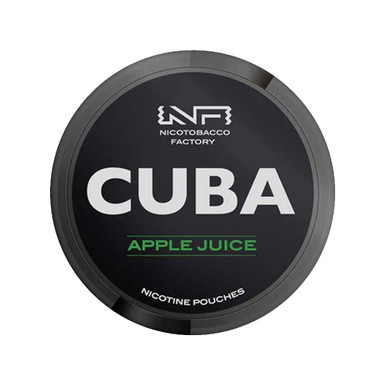
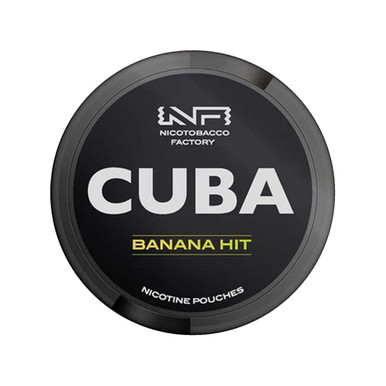
Moving outward from the dark-fruit corner where this sits: Cuba Black Apple Juice at £39.90 is the orchard option, crisper and lighter with a cleaner finish. Cuba Black Cherry at £39.90 is the stone fruit — sweeter, glossier, and carrying that almond edge no berry has. Cuba Black Banana Hit at £39.90 is the soft tropical, creamy and entirely without acid. Cuba Black Cola at £39.90 leaves fruit for a soft-drink character altogether, and Cuba Black Cold Dry at £39.90 is the plain, unsweetened far end of the range. Cuba Ninja Strawberry at £39.90 shows what the third line does with a berry.
Every one of those is £39.90, which means movement inside the Cuba range is a question of taste and not of budget. That is not the case across the wider catalogue — a berry from the Pablo shelf is a very different spend.
What goes beside a mild berry
Rotations are the normal arrangement rather than the exception, and the useful principle is contrast. A soft, low-acid, floral fruit is easy to live with and correspondingly easy to stop noticing, so the tins kept alongside it tend to differ on an axis this one is weak on.
Sharpness is the first. If what you occasionally want is an edge, a high-acid berry supplies it — Pablo Gold Edition Blue Raspberry at £19.95 leans sweet and bright, while Nordic Spirit Max Foresty Berry at £4.49 is a composed berry blend rather than a single fruit and the cheapest berry among the neighbours listed here.
Cold is the second, and the most common. Velo Icy Berries at £4.19 is the inexpensive way to find out whether a chilled berry suits you, and the Denssi freeze tin referenced earlier is the fuller version of the same idea. A cooled tin behaves on a different schedule from an uncooled one, the cold outlasting the fruit rather than fading with it.
The third slot is usually something unrelated to fruit entirely, because a rotation composed of three berries is not really a rotation. Edge Mint at £14.95 is the cheapest clean break among the cans linked from this page.
To be plain about it: describing how people arrange a rotation is not a suggestion about quantity. Keeping three tins rather than one says nothing about how much of any of them gets used, and nothing here is written to imply that it does.
Storage, and what actually degrades a tin
Dry pouches are forgiving, but three things take a toll: heat, direct light, and a lid left unsecured.
Heat is the serious one and it matters disproportionately for this particular flavour. Blueberry's character is already quiet, and the floral lift that distinguishes it from the other dark fruits is the most volatile part of it — which means a warm tin loses precisely the thing that makes blueberry identifiable as blueberry, leaving a general sweetness behind. A pungent fruit has enough in reserve to survive a hot cupboard with its identity intact. This one does not. Keep it away from dashboards, radiators, sunny windowsills and bags that live next to a warm laptop.
Light does the same damage more slowly. A dark drawer at room temperature is the whole requirement — no refrigeration, no decanting, no special container.
Keep the tin out of reach of children and pets, and somewhere it will not be picked up by mistake. We publish no date or shelf-life information for this product; whatever the manufacturer prints on the packaging is the source. And because we do not know the pack configuration, the sensible default is to store whatever arrives as though the unopened part of it will be waiting a while — which costs nothing and is correct either way.
What this listing leaves open to choice
Almost nothing, and it is more honest to say that than to imply a range of options. One declared strength, 16mg. One price, £39.90. No variants. No pack configuration in our record, so quantity cannot be weighed from this page either.
The decisions therefore happen elsewhere. Band is a choice between shelves rather than within a product, and the whole catalogue filters on it. Flavour is a choice made by moving along the berry shelf. If the unknown pack size is what is holding you up, rely on the live listing rather than this page, or choose a product whose configuration is stated.
We are not going to suggest that a particular strength suits a particular kind of person. We do not hold that information and it would not be ours to offer.
Buying it, and the two points where age is checked
The unhelpful fact first: this is out of stock with us as this page is written. Product pages remain published because they are a permanent record rather than a live shelf label, but nothing ships while the flag is down, and the flag on the listing updates independently of this paragraph. Treat the listing as current and this sentence as historical.
When it is available, the transaction is ordinary. One basket covers the site, brands and bands mix freely in a single order, and nothing about this category requires a separate checkout.
Age is verified twice. Once at checkout, which every order passes through without exception. Once at the door: ID may be requested on delivery, and the courier will not release a parcel to anyone who cannot produce it. Where no adult of 18 or over is present to receive it and show identification on request, the delivery does not complete and the parcel goes back for a second attempt. Having something carrying a date of birth to hand on the delivery day is the simplest way to avoid a wasted journey. Nothing is handed to anyone under 18, and no instruction left with an order changes that.
How this page is filed, and how to get back to it
Three shelves carry this listing: the strong band alongside 131 other products, the Cuba brand page alongside 46 others from the brand, and the berry shelf alongside 75 other berry listings. Those are three independent routes back, which matters because the usual reason a product is hard to find again is that it was filed under a heading the customer did not think to search.
Above them sit the broader hubs — the medium and extra strong bands on either side of this one, and the main shop page from which everything is reachable. Brand pages suit people who have settled on a maker; flavour shelves suit people chasing a taste; bands suit people who already know where they are looking.
Questions we get about this tin
How many tins is £39.90?
We do not know. Our product record has no pack configuration for this listing, and inferring one from what other products cost would be guesswork dressed as information. It could be a single tin or a box. The live listing and the manufacturer's packaging are the two places that settle it, and we would rather point you there than print a figure we cannot support.
How many pouches in a tin, and what size are they?
Neither is published by us. Pouch count, pouch size and weight all live on the manufacturer's labelling, and the packaging is the authoritative source. Our record runs to name, brand, line, flavour family, declared strength, price and stock position, and stops there. Pouch size in particular is worth checking on the tin, because it affects how a pouch sits more than the printed figure does.
Is blueberry sweeter or milder than the other dark fruits you stock?
Milder, and gently sweet rather than strongly so. It has the least acid of the four, the quietest aroma, and a faint floral note that none of the others carry. Blackcurrant is far sharper and more pungent, blackberry is drier and more tannic, and cherry is a stone fruit with an almond edge. If blueberry seems underpowered to you, that is a common reaction rather than a fault in the tin.
Is there any cooling or mint in it?
No. Our record lists a single flavour family against this product, berry, with no ice or mint component recorded. It is an uncooled fruit from start to finish. A chilled berry is a different tin rather than a different expectation of this one, and the freeze and icy listings linked above are where those sit.
Is 16mg strong?
It is filed in the band we label strong, which sits above medium and below extra strong on this site. That is a statement about our filing and nothing more. The figure is a manufacturer's declaration about a pouch rather than a forecast about a person, and how any strength reads for a given individual is not something we are able to tell you.
Which strength should I get?
We do not answer that question. Publishing the declared figure, filing by band and explaining what the bands mean is where our role ends. The choice is the buyer's, and anybody with a particular reason for caution should be asking a qualified person rather than a shop page.
How long do people keep one in?
It varies far more between individuals than between products, and twenty minutes and an hour are both entirely ordinary. We publish no recommended duration for any listing on the site, because we hold none and because issuing one would be advice rather than information. The used pouch goes into the catch compartment in the lid, and the compartment is emptied into a bin.
Is this a slim or a regular pouch?
Our record does not say, so we cannot tell you. Those terms describe physical dimensions and they are not standardised between manufacturers in any case, which makes second-hand assignment doubly unreliable. The tin carries that information on its labelling. It is a fair question and the honest answer is that the data we hold does not include it.
Is it in stock?
It was not at the time of writing. Individual flavours move in and out of stock considerably more often than whole ranges do, so the flag on the listing is the live answer and is more current than this sentence will be.
Can I mix this with other brands in one order?
Yes. A single basket covers the entire site, and combining brands, flavour families and strength bands in one order makes no difference to processing, packing or delivery. Age verification applies to the order as a whole rather than item by item.
Do you publish ingredients or technical information?
No, for any product on this site. Ingredient lists and technical specifications come from the manufacturer's own labelling printed on the packaging, and we will not restate a label second-hand. On an age-restricted product the difference between a label and somebody's paraphrase of a label is worth keeping intact.
Do you know who makes it, or where?
We do not, and we publish nothing on the subject. Our record holds a brand name and no information about origin, ownership or manufacture. Anything printed on the tin about that is the manufacturer's own statement, and the tin is where to read it.
Why does the flavour seem weaker near the end of a tin?
Because a tin that has been opened and closed for a few weeks is not in the same condition as one opened yesterday, and a quiet flavour shows that drift sooner than a loud one does. Pressing the lid fully home each time and keeping the tin somewhere cool and dark is the whole of the remedy. If it still reads flat, the likeliest explanation is heat rather than age — a warm cupboard takes the delicate part of a mild fruit first.
Is this the same product as the Black version of the flavour?
No. They are two separate listings that share a flavour name, and the line printed on the lid is what tells them apart. What we hold for each is the line, the flavour and the declared strength, and we hold no statement from Cuba explaining what else differs between the White and Black lines. Since we cannot tell you, the practical step is to check the line name rather than rely on the flavour alone.
What if I do not get on with it?
Taste is individual and we cannot predict yours. Blueberry's particular risk is not that people dislike it but that they find it too quiet, which is a different problem and usually solved by a sharper or a cooled tin rather than by leaving the flavour family. The berry shelf holds 75 alternatives and several sit among the neighbours above. Our standard returns policy applies here as it does across the site.
Compliance and legal information
Nicotine is an addictive substance.
This product is sold only to adults aged 18 or over who already use nicotine, and on no other basis. We do not sell to under-18s under any circumstances. Every order is subject to an age check at checkout, and ID may be requested on delivery — where a courier asks and no adult present is able to produce it, the parcel is not handed over.
Cuba White Blueberry Nicotine Pouches are not a licensed stop-smoking medicine, hold no such authorisation, and are not supplied for any such purpose. The product is not intended for non-smokers, for anyone who does not already use nicotine, for anyone under 18, or for anyone who is pregnant or breastfeeding. Nothing above is medical advice, and nothing above should be read as encouragement to take up nicotine or to move to any particular strength.
Store the product, and dispose of used pouches, out of reach of children and animals. Every factual statement on this page — the name, brand, line, price, declared strength, flavour family and stock position — comes from our own product record for this listing. Where that record is silent, and it is silent on pack size, pouch count and pouch format, this page says so rather than estimating. The manufacturer's printed packaging is the authority on anything appearing on the tin.
To finish
Cuba White Blueberry is a 16mg listing at £39.90, filed on the berry shelf, the strong band and the Cuba brand page, out of stock as this is written and carrying no pack configuration in our data. As a flavour it is the gentlest of the dark fruits we stock — low in acid, softly sweet, faintly floral, clean at the finish, and quiet enough that the main risk is finding it underpowered rather than disliking it. The format is a dry white pouch in a standard round tin with a catch compartment in the lid, and the printed figure is a declaration about a pouch rather than a prediction about a person. Everything we hold is set out above, and the three things we do not hold are marked where they arise.
More from Cuba
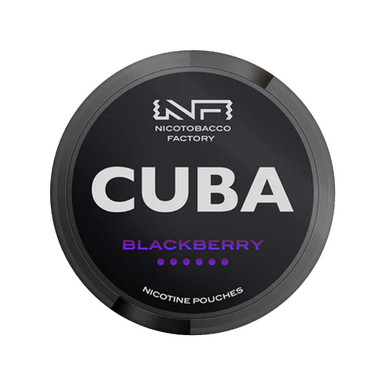
More strong pouches

More berry pouches
Where this sits
Cuba White Blueberry Nicotine Pouches appears in these categories. Browse them, or jump to something close.
You might also like