Cuba · 16mg
Read the full guide
Cuba White Blackberry Nicotine Pouches
£39.90
✔ In stock — ready to ship
100% tobacco-free
Free over £20
Same-day dispatch
Secure checkout
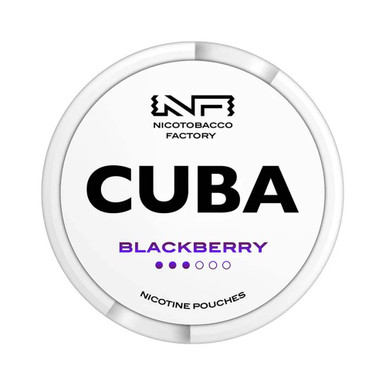
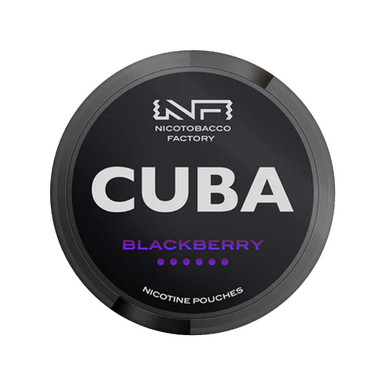
Cuba White Blackberry Nicotine Pouches is a Cuba product from the brand's White line, carrying the flavour name Blackberry, and filed by us in the berry family. The declared strength is 16mg and it is the only figure on the listing — there is no alternative variant sitting behind it. The price is £39.90. One image is attached. At the time of writing, the product is not in stock here, and our record does not tell us how many tins that price buys.
That last point is worth pausing on. Our data carries a pack configuration for some listings and not for others, and this is one of the ones it does not cover. We therefore cannot say whether £39.90 is a single-tin price or a multi-tin one, and we are not going to reason our way to a number from what other products cost. The live listing and the packaging itself are the places that answer it. Leaving the gap visible is the only defensible option.
The full guide to Cuba White Blackberry Nicotine Pouches
5,172 words on how it eats, who it suits, how to serve it and what to put beside it.
The listing itself, stated first
The rest of this page describes the object, sets it against other cans we carry, and marks the places where our record runs out. Before any of that: this is an age-restricted nicotine product for adults of 18 or over who already use nicotine, and the full compliance wording appears in its own section below.
The tin, the lid and what happens after
Physically this is the same round tin the whole category has settled on — a shallow cylinder with a push-fit lid, flat enough to carry without it announcing itself through a pocket. The lid face carries the brand, the line, the flavour and the declared strength. Printing the strength on the top is not a design flourish: if you keep more than one tin around, the lid is the only surface you ever look at, and having the number there is what stops the wrong one being opened.
The top section of the lid is a separate catch compartment, and it is the part of the design that does the most practical work. A used pouch goes in there rather than into a pocket, a cup, a plant pot or a hand until a bin appears. Emptied when it fills, it means the tin is self-contained — you are never carrying something you need to get rid of. Nothing goes down a drain or a sink, and nothing used or unused is ever left where a child or an animal could get at it.
Inside, the pouches sit flat in a ring. These are dry rather than moist pouches, which mostly changes how a tin behaves over weeks rather than how a single pouch behaves over minutes. A pouch is placed under the lip, stays where it is put and is not chewed. How long anyone keeps one in varies enormously by person, and the variation between individuals is far wider than the variation between products. We do not print a recommended duration on any page on this site: we do not hold one, and it is not a shop's place to issue one.
We also do not publish a pouch count. That is on the manufacturer's labelling along with weight and dimensions, and the printed packaging is the authority for all of it.
Sixteen milligrams, and the limits of the figure
The number on this lid is a declaration by the manufacturer about the contents of a pouch. That is the whole of what it is. It is not a forecast, not a rating, and not a measure of how anything will read to a particular person, and the distance between a declaration and an experience is the thing most worth understanding about pouch labelling.
Declared figures are internally consistent within a brand, because a brand uses them to order its own range. Across brands they are a looser instrument: two products from different makers printed with the same figure are not thereby equivalent, and treating the numbers as a universal scale produces confident conclusions that are not supported. The figure also says nothing about the flavour, and flavour does a great deal of work — a strongly cooled tin and an uncooled one carrying identical numbers are not read the same way. Pouch size and format sit outside the number as well.
Our shelves put 16mg in the strong band. Beneath that sits the medium band; above it sits the extra strong band, which is where cans such as Killa's blueberry tin at £33.50 and the 77 VB Edition Mini Arctic Berry can at £39.90 are filed. Those band boundaries are drawn by us for the purpose of organising a catalogue. They are not a regulatory scale, and a product at the top of one band sits closer to the bottom of the next than the separate pages suggest. All of that is a description of filing. None of it is advice about which figure anyone should buy.
Discretion, setting, and rules made by other people
Of everything there is to say about this format, the part customers ask about most often is where it can actually be used — and the honest answer has two halves, one about the object and one about rules that neither we nor the manufacturer set.
What the format does and does not require
Start with the practical inventory, because it is short and it is factual. There is no device. Nothing needs charging, nothing needs refilling and nothing needs to be held. The whole of the equipment is a tin, and the only thing it leaves behind is the used pouch itself, which goes into the compartment in the lid. There is no noise beyond the click of that lid. Once a pouch is placed it stays placed, which means the whole business of using one is a single brief action rather than a continuing one. The tin travels flat in a pocket or a bag and looks like a tin.
The honest counterweight is that discretion is not invisibility. Placing a pouch is a visible action if someone happens to be looking. The tin is recognisable to anyone who knows what it is. And a pouch in place is perceptible to the person using it throughout, which is rather the point. Describing the format as discreet means it does not require a device, an exit or a fixed place to stand; it does not mean nobody will ever notice.
Offices, sites and other people's policies
Workplaces set their own rules and they are not uniform. Some employers write policies covering all nicotine products regardless of format, some cover only products that produce something visible, and some say nothing at all — in which case the absence of a rule is not the same as permission. Construction sites, laboratories, food premises and healthcare settings routinely carry stricter conditions than an office does, for reasons that have nothing to do with the product category and everything to do with the environment.
We cannot tell you what any particular employer or site permits. We do not hold that information, it changes without notice, and it would be irresponsible to offer a general answer that might contradict a written policy someone has signed. The staff handbook or site induction is the source. That is not a deflection; it is genuinely the only correct answer a shop can give.
Trains, aircraft and travelling with a tin
Transport is the area where people most often assume a general rule exists. It does not. Rail operators publish their own conditions of carriage, airlines publish their own conditions of carriage, and the two differ from each other and between companies. International travel adds a second layer entirely, because the import and sale of nicotine pouches is regulated differently from one country to another and some jurisdictions restrict them sharply.
We hold none of that. We cannot advise on what any carrier allows on board, what any country allows through its border, or how a given quantity would be treated. Anyone travelling with a tin should check the carrier's own published conditions and the destination country's own rules before leaving, and should treat a shop page as no kind of authority on either. We would rather say that plainly than offer a reassuring generalisation that turns out to be wrong at a border.
The tin as something you carry
Separate from the question of rules is the plainer question of what it is like to have one with you, and here the shape of the object does most of the work. A round tin is flat and rigid, so it does not deform in a pocket, does not crush in a bag and does not leak. It survives being sat on. It needs nothing else to function — no charger, no cable, no spare part, no second item to keep track of — which is why the entire kit for a day out is the tin itself.
There are two practical drawbacks worth stating alongside that. The first is the lid: a push-fit lid that has not been pressed fully home can work loose in a bag, and a tin that opens in a bag is a genuine nuisance rather than a theoretical one. The second is the catch compartment, which is excellent until it is full, at which point it needs emptying somewhere and the tin stops being self-contained until it is. Neither is a fault; both are the sort of thing you learn in the first week and then never think about again.
Venue rules, and why "allowed" is the wrong question
Pubs, restaurants, cinemas, gyms and stadiums all set their own conditions of entry, and those conditions are written venue by venue rather than nationally. House rules also tend to be drafted by broad category rather than item by item, so a policy may predate pouches entirely and may not name them anywhere in its wording. We do not hold any venue's rules and we cannot tell you what a particular door will say, so the venue itself is the only reliable source. Some venues cover pouches explicitly in those conditions and some do not mention them at all, and the absence of a rule is not the same thing as permission — it is simply the absence of a rule. Where a venue has not addressed it, the courteous approach is to ask rather than to assume, and where signage exists, the signage governs.
None of that is a comparison between product categories, and nothing in this section should be read as one. It is a description of where the responsibility for the rules actually sits, which is with venues, employers, carriers and governments — not with us and not with the tin.
Blackberry, described as a taste and an aroma
Blackberry sits on the berry shelf alongside 75 other listings, which is a filing decision rather than a statement that all berries are alike. As a flavour it is one of the quieter dark fruits and the differences are specific enough to be worth setting out properly.
The aroma comes first, and blackberry's is notably restrained. Where some dark fruits announce themselves from an open tin, this one is softer and more pulpy — less perfume, more fruit. There is a faintly woody, bramble-like quality behind it, the smell of the hedge rather than the smell of a sweet, and it sits close to the fruit rather than lifting away from it. That restraint is the first thing to know: if you are expecting something that fills a room when the lid comes off, blackberry is not that.
On the tongue it is rounder and jammier than its neighbours. The acidity is present but modest, so the sweetness has room to spread rather than being cut through. What distinguishes blackberry from every other fruit on this shelf, though, is what happens at the back: a dry, faintly tannic finish, closer in character to stewed fruit or to tea than to a bright berry sweet. Real blackberries have seeds and a tough skin, and the flavour that gets built from them keeps a memory of both. That slightly grippy, almost savoury tail is the signature, and it is the reason blackberry reads as more grown-up than the other dark fruits to some people and as slightly flat to others.
Set against its relatives the contrasts sharpen. Blackcurrant is far louder — high acid, pungent, with a green leafy note on top that blackberry simply does not have. Blueberry is softer and more floral, low in acid, with a powdery skin note and an aroma quieter even than this one. Cherry is not a berry at all but a stone fruit: glossier, sweeter, with a clean sour edge and an almond-like note that no berry carries. Among those four, blackberry is the least sweet-seeming, the least aromatic, and the only one with a genuinely drying finish.
Two nearby cans make useful references. Clew Blueberry at £39.90 is the soft, low-acid end of the shelf and demonstrates how much gentler a mild berry can be. Elf Bar Blueberry Raspberry at £29.90 puts a mild fruit against a sharp one in one tin, which is a different construction entirely from the single unlayered note on this page.
Flavour in a dry pouch also has a shape over time, and a low-acid fruit takes that shape differently from a sharp one. There is an opening, a long steady middle and a thinning tail, and what changes between them depends on what the flavour is made of. A high-acid fruit loses its edge first and can read noticeably different at minute twenty from how it read at minute two. Blackberry has less edge to lose, so the middle is unusually stable — the fruit simply holds its level and then gets quieter. The interesting part is the tail, because the tannic dryness that sits underneath the fruit does not fade at the same rate as the sweetness above it. As the sweetness thins, the dry finish becomes proportionally more prominent, which is why this flavour reads noticeably drier at the end of a pouch than at the start. That is characteristic rather than a defect, and it is the single most distinctive thing about how blackberry behaves in this format.
It is also worth noting how much of this is arriving through the nose rather than the tongue. With no heat and no liquid involved, aroma carries a great deal of what people call taste, which is why pungent fruits translate readily into a pouch and reticent ones have to work harder. Blackberry is at the reticent end, and the compensation is the texture of the flavour rather than its volume — the pulp and the dryness rather than the perfume.
What people keep in the drawer alongside it
Almost nobody runs one tin. Two or three in rotation is the normal arrangement, and the reason is straightforward: a single flavour used continuously gets less interesting, and the fix is contrast rather than quantity. A rotation built around a dry, moderately sweet, quietly aromatic berry works best when the other tins in it differ on an axis this one is weak on.
The cold contrast
The most common second tin is a cooled one, because temperature is the axis blackberry has nothing on at all. Denssi Blueberry Freeze at £39.90 is the clearest example among the neighbours listed here — a chilled berry behaves on its own timetable, the cold running past the point where the fruit has faded, which makes it a genuinely different object rather than a variation. Velo Icy Berries at £4.19 is the inexpensive way to find out whether cooled berries suit you before committing to anything larger.
The sweeter contrast
If the thing you occasionally want that blackberry withholds is straightforward sweetness, a confectionery-leaning berry is the counterweight. Pablo Gold Edition Blue Raspberry at £19.95 sits at that end, and Cuba Ninja Strawberry at £39.90 keeps you inside the same brand while moving to a brighter, lighter fruit from the Ninja line.
The clean break
The third slot in most rotations is not a fruit at all. A mint gives the palate something entirely unrelated to reach for, and Edge Mint at £14.95 is the least expensive clean break among the cans linked from this page. A plain unsweetened tin does the same job from the other direction. The general principle is that a rotation needs at least one member that shares nothing with the others, or it stops functioning as a rotation and becomes three versions of the same tin.
The like-for-like
Finally, some people rotate within a narrow band rather than across it, keeping several similar berries and moving between them by mood. Nordic Spirit Max Foresty Berry at £4.49 is the cheapest entry point among the berry neighbours here, and a composed berry blend rather than a single fruit, which makes it a reasonable like-for-like companion.
To be explicit about what this section is not: describing how people arrange a rotation is not a suggestion about how much anyone should use. Three tins in a drawer and one tin in a drawer say nothing about consumption, and nothing here is written to imply otherwise.
Where blackberry falls on the Cuba shelf
We list 47 Cuba products, and the brand's own page is the quickest way to see the shape of them. The brand runs several lines — White, which this belongs to, Black, and Ninja — and the flavour names repeat across them. That repetition is the brand's principal navigational hazard: Cuba Black Blueberry and a White blueberry are two listings, not one product under two labels. We hold the line, the flavour and the declared strength for each, and we hold nothing from Cuba setting out what else separates its lines, so we will not invent a distinction. Read the line name on the lid.
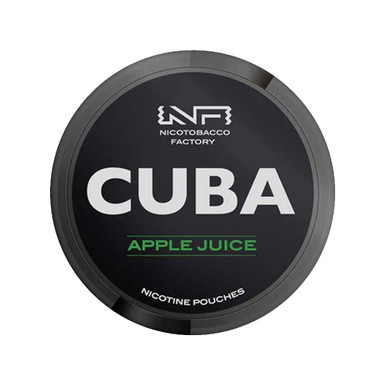
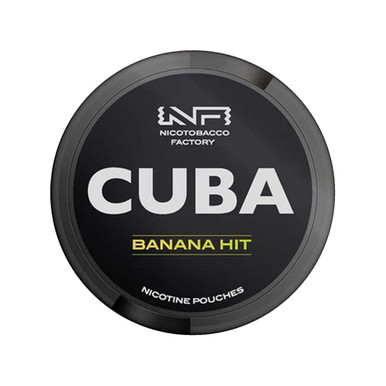
Within the range, this tin sits in the dark-fruit corner, which is the busiest part of the shelf. Moving outward from it: the orchard corner holds Cuba Black Apple Juice at £39.90, crisper and lighter with a cleaner finish than any dark fruit. The stone-fruit corner holds Cuba Black Cherry at £39.90, which is glossier and sweeter and carries that almond edge. The soft tropical corner, represented by Cuba Black Banana Hit at £39.90, is close to the opposite of this tin in temperament — creamy and low-acid where this is dry and tannic. Cuba Black Cola at £39.90 leaves fruit behind altogether for a soft-drink character, and Cuba Black Cold Dry at £39.90 is the plain, unsweetened extreme of the range.
The useful commercial observation is that all of those carry the same £39.90 price, so movement within the Cuba range costs nothing. That is not true across the wider site, where a berry from the Pablo shelf represents a very different outlay from a berry here.
A flat price across a range changes how people browse it, and it is worth drawing that out. Where every tin costs the same, there is no cheap corner and no expensive one, so nobody is nudged toward a flavour by what it costs and nobody hesitates over trying a different one on price grounds. The whole decision reduces to taste. That is unusual enough in this category to be the most practically useful thing to know about the Cuba shelf as a whole, and it is the reason the brand tends to be browsed by flavour rather than filtered by price. It also means that any comparison between a Cuba tin and a cheaper listing elsewhere on the site is not really a comparison of value until you know what each pack contains — and on this particular listing, as set out at the top, we do not.
Keeping a tin in decent order
Dry pouches are the more forgiving of the two formats, but three things still degrade a tin: heat, direct light and a lid that has not been pressed home.
Heat is the one that does real damage. Aromatic character is volatile, and warmth takes it first. That matters slightly less for this flavour than for a pungent one — blackberry's aroma is modest to begin with, so there is less to lose — but what it does have is the part that would go. A tin left on a dashboard through a warm afternoon, or stored above a radiator, will read flatter than a fresh one, and the dry tannic finish becomes proportionally more prominent as the fruit around it recedes. Sunlight does the same thing more gradually.
The lid is a habit rather than a technique: pressed fully down, not balanced on top. A tin that has been travelling half-closed in a bag for a fortnight is not a faulty tin, it is a tin that has been left open. Beyond that there is nothing required — no refrigeration, no decanting, no container. Store it out of reach of children and pets, keep it somewhere it will not be picked up by mistake, and treat any date printed on the packaging as the authority, because we publish none.
What this listing actually lets you choose
Not much, and saying so is more useful than implying otherwise. One declared strength, 16mg. One price, £39.90. No alternative variants. No pack configuration in our data, so quantity is not a lever you can pull from this page either.
The real choices therefore sit outside the listing. Strength band is a choice between shelves rather than within a product, and the full catalogue filters on it. Flavour is a choice made by moving sideways along the berry shelf. And if the missing pack size is the thing stopping you, the honest route is to rely on the live listing rather than this page, or to pick a product where the configuration is stated outright.
We will not tell you that a particular strength suits a particular sort of person. That is not information we hold, and offering it would be neither accurate nor appropriate.
Ordering, delivery and proving your age
The awkward fact first: this is out of stock with us as this page is written. Product pages stay published because they are a permanent record rather than a live shelf label, but nothing is dispatched while the stock flag is down. That flag updates independently of this text, so it is the current answer and this paragraph is not.
When it is available, there is nothing unusual about the transaction. One basket serves the whole site, brands and strength bands mix freely in a single order, and no separate checkout applies to any category.
Age verification occurs twice and neither instance is optional. There is a check at checkout, which every order passes through. Then there is the door: ID may be requested on delivery, and a courier will not release a parcel to anyone unable to produce it. If nobody aged 18 or over is present to receive it and show identification when asked, the delivery does not complete and the parcel goes back for a second attempt. Keeping something with a date of birth on it to hand on the delivery day avoids that. No parcel is handed to anyone under 18, and no delivery instruction left on an order alters that position.
The three routes back here
This product is filed in three places, which is three separate ways of finding it again. It appears on the strong shelf with the other 132 listings at that band, on the Cuba brand page with the other 46 products from the brand, and on the berry shelf with 75 other berry listings. Which of those is most useful depends on how you shop: brand pages suit people who have settled on a maker, flavour shelves suit people chasing a taste, and strength shelves suit people who already know which band they are looking in.
Above those sit the broader hubs, with the medium and extra strong bands on either side of this one and the main shop page above everything. Three routes is deliberate, because the most common reason a product is hard to find again is that it was filed under a heading the customer did not think to search.
Questions that come up about this one
How many tins does £39.90 buy?
We cannot tell you. Our record holds no pack configuration for this listing, which is the single significant gap in what we have. It may be a single tin or a box of them, and guessing from the prices of other products would be exactly the kind of reasoning that produces a confident wrong answer. The live listing and the manufacturer's packaging are the two places that settle it.
How many pouches are in a tin?
Not published by us. That figure lives on the manufacturer's labelling, printed on the packaging, and the packaging is the authoritative source for it, along with weight and dimensions. What our record contains is the name, brand, line, flavour family, declared strength, price and stock position, and nothing beyond that list.
Is blackberry the same thing as blackcurrant?
No, and they are much less alike than the names suggest. Blackcurrant is high in acid, pungent, and carries a green leafy note on top that makes it identifiable the moment a lid comes off. Blackberry is rounder, jammier, quieter in aroma and finishes dry and faintly tannic. If you have tried one and disliked it, that is not a reliable guide to how you will find the other.
Does it contain any mint or cooling?
No. Our record lists one flavour family against this product, berry, with no ice or mint component recorded. It is an uncooled fruit throughout. If a chill alongside the berry is what you want, that is a different tin rather than a different expectation of this one, and the freeze and icy cans linked earlier are where those are filed.
Can I use this at work?
That depends entirely on your employer's policy and we have no way of knowing what it says. Policies vary widely, some cover all nicotine products and some cover only those that produce something visible, and a policy that does not mention pouches is not the same as one that permits them. Your staff handbook or site induction is the source. We are not in a position to give you an answer and would be wrong to try.
Can I take a tin on a flight or abroad?
We do not hold that information. Airlines publish their own conditions of carriage and they differ between carriers, while the rules governing import and sale of these products differ from country to country and are restrictive in some places. Check the carrier's published conditions and the destination's own rules before travelling. A shop page is not an authority on either, and treating one as such is how people end up in difficulty at a border.
Is 16mg considered strong?
It is filed in our strong band, which sits above medium and below extra strong on this site. That is a statement about where we shelve it and nothing more. The figure is a manufacturer's declaration about a pouch, not a prediction about a person, and how any given strength will read for you is not something we can tell you.
Which strength should I choose?
We do not answer that. Our job is to publish the declared figure, file the product by band and explain what the bands mean as filing. The decision belongs to the buyer, and anyone with a specific reason to be cautious should be asking a qualified person rather than reading a product description.
Is it in stock now?
It was not when this was written. Individual flavours move in and out of stock much more often than whole ranges do, so the flag on the listing is the live answer and is more current than this sentence will ever be.
Do you publish ingredients or technical detail?
No, for any listing on this site. Ingredient information and technical specifications come from the manufacturer's own labelling on the packaging, and we will not restate a label second-hand. On an age-restricted product the difference between a label and a paraphrase of one is worth preserving.
Who makes it and where does it come from?
We do not know and we publish nothing about it. Our record holds a brand name and no information about origin, ownership or manufacture. Whatever the tin says on that subject is the manufacturer's own statement, and the tin is where to read it.
How long do people keep one in?
It varies more between individuals than between products, and anything from around twenty minutes upwards is entirely ordinary. We publish no recommended duration anywhere on this site, because we hold none and because it is not something a retailer should be advising on. When it comes out it goes into the catch compartment in the lid, and the compartment is emptied into a bin rather than anywhere else.
Can I order this alongside other brands and strengths?
Yes. A single basket covers the entire catalogue, and mixing brands, flavour families and strength bands in one order has no effect on how it is processed, packed or delivered. The age verification applies to the order as a whole rather than line by line, so one check covers everything in it.
What if the flavour is not for me?
Blackberry's dry, tannic finish is the part people most often find they do or do not get on with, and there is no way to know in advance. We cannot predict taste. What we can do is make moving sideways quick: the berry shelf holds 75 alternatives and the softer and sweeter cans among the neighbours above are the obvious next steps. Our standard returns policy applies here as everywhere else on the site.
The required notices
Nicotine is an addictive substance.
Sales of this product are made only to adults aged 18 or over who already use nicotine. We do not sell to under-18s in any circumstances. An age check runs on every order at checkout, and ID may be requested on delivery — if a courier asks and no adult present can produce it, the parcel is not handed over.
Cuba White Blackberry Nicotine Pouches are not a licensed stop-smoking medicine, carry no such authorisation and are not offered for any such purpose. This product is not intended for non-smokers, for anyone who does not already use nicotine, for anyone under 18, or for anyone who is pregnant or breastfeeding. Nothing written above is medical advice, and nothing written above should be taken as encouragement to begin using nicotine or to move to a different strength.
Keep the product and any used pouches out of reach of children and animals. Every factual statement on this page — name, brand, line, price, declared strength, flavour family and stock position — is drawn from our own product record. Where that record is silent, and it is silent on pack size and pouch count, the page says so rather than estimating. The manufacturer's printed packaging is the authority on anything that appears on the tin.
Last word
Cuba White Blackberry is a 16mg listing at £39.90 with no pack configuration in our data and no stock against it as this is written. As a flavour it is the quiet, dry member of the dark-fruit group: modest in aroma, jammy rather than sharp, and finishing with a faintly tannic grip that neither blackcurrant, blueberry nor cherry shares. It is filed on the strong shelf, the berry shelf and the Cuba brand page, sits in the same £39.90 bracket as every other Cuba tin we list, and pairs most naturally with something cooled or something unrelated. Everything we hold is written above; the two things we do not hold are marked where they fall.
More from Cuba
More strong pouches
More berry pouches
Where this sits
Cuba White Blackberry Nicotine Pouches appears in these categories. Browse them, or jump to something close.
You might also like