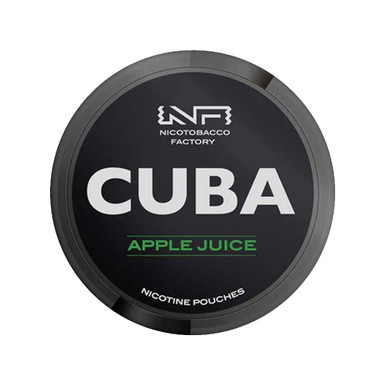

Cuba · 16mg
Read the full guide
Cuba White Black Currant Nicotine Pouches
£39.90
✔ In stock — ready to ship
100% tobacco-free
Free over £20
Same-day dispatch
Secure checkout
This page covers Cuba White Black Currant Nicotine Pouches — brand Cuba, line White, flavour Black Currant, filed by us under the berry family. The listed price is £39.90 and the declared strength is 16mg, which is the only figure attached to the product; there is no second variant behind it carrying a different number. One photograph accompanies the listing. As this page is written, the product is not in stock with us.
There is one gap in that record worth flagging immediately rather than at the bottom of the page. We do not hold a pack configuration for this listing. Some Cuba products in our catalogue carry a can count and this one does not, which means we cannot tell you from our own data whether £39.90 buys a single tin or a box of them. That matters commercially, it is the first thing anyone would want to know, and inventing a figure to fill the hole would be worse than admitting it. The live listing and the manufacturer's own packaging are where that answer comes from.
The full guide to Cuba White Black Currant Nicotine Pouches
5,246 words on how it eats, who it suits, how to serve it and what to put beside it.
Cuba White Black Currant: the record we hold
Everything else below falls into one of three categories: the object described, the object compared with other cans on our shelves, or another honest note about something our record does not contain. That is the whole method of this page.
The necessary preliminary: this is an age-restricted nicotine product sold only to adults of 18 or over who already use nicotine. The compliance section near the foot of the page states the position in full, and nothing here is written to persuade anybody to take up nicotine.
Out of the tin: what the object does
The packaging is the round pouch tin the whole category uses — a shallow cylinder, a lid that lifts clear and presses back down, sized to sit flat in a pocket rather than bulge in one. Brand, line and flavour are printed on the top face along with the strength, which is a genuinely practical piece of design rather than decoration. A drawer with four different cans in it is a drawer where you are identifying everything by lid, and the printed strength is the thing that stops a mistake.
The upper section of that lid is a catch compartment: a shallow well, separate from the pouches, intended to hold used ones until you are next standing beside a bin. Using it is a habit rather than an instruction, but it is the habit the format is designed around, and it is the difference between the tin doing its job and a used pouch ending up somewhere it should not. Nothing goes into a sink or a drain. Nothing is left within reach of a child or an animal — a point the compliance section repeats because it is the one that genuinely matters.
The pouches themselves lie flat inside, arranged in a ring. These are dry pouches rather than moist ones, which principally changes how a tin ages rather than how one pouch performs. A pouch goes under the lip, stays where it is put, and is not chewed. Duration is entirely a matter of the individual — twenty minutes and an hour are both perfectly ordinary answers, and the spread between people is wider than the spread between products. No duration is recommended anywhere on this site, because we do not hold one and because advising on it is not a shop's role.
Pouch count is another blank in our record. We know the flavour, the line, the declared strength and the price; we do not know how many pouches are inside a tin, and we are not going to approximate. The printed packaging is the authority on that, on weight, and on anything else stamped by the manufacturer.
Blackcurrant described as a taste, and set against its nearest relatives
Blackcurrant is filed under berry on our berry shelf, which holds 76 listings, but that filing flattens a real distinction. Of all the dark fruits that end up under the same label, blackcurrant is the most assertive and the most easily identified, and it is worth explaining exactly why before comparing it to anything.
Take the aroma first, because with this fruit the aroma arrives before anything else. Blackcurrant is pungent in a way that no other berry is. There is a green, leafy, faintly resinous note sitting on top of the fruit — the smell of the bush as much as the berry — and it is the most distinctive thing about the character. Open a tin of it beside a tin of almost anything else and you will identify the blackcurrant without being told. That top note is what makes the flavour unmistakable and it is also, for a minority of people, the reason they avoid blackcurrant entirely. It divides opinion more than any other dark fruit.
Then the taste. Blackcurrant is high in acid and tastes it. There is a definite sourness running underneath the sweetness rather than alongside it, and the fruit carries a slight astringency — a drying quality at the finish that makes the mouth feel tightened rather than coated. That combination of sweet, sour and drying is the three-part shape of the flavour, and it holds up in a dry pouch better than gentler fruits do precisely because it has so much to work with.
Against its neighbours, the contrasts are specific. Blackberry is the rounder, jammier fruit: lower in acid, quieter in aroma, with a seedy, almost woody bramble edge and a tea-like tannin at the back rather than blackcurrant's sharp leafiness. Blueberry is milder again, the gentlest of the dark fruits — soft, low in acid, faintly floral, with a powdery skin note and an aroma so quiet that confectionery versions usually have to lean toward the candied to be recognised at all. Cherry is not a berry in the first place; it is a stone fruit, glossier and sweeter, with a clean sour edge and a distinct almond-like note off the stone that none of the berries carry. Blackcurrant is the sharpest, the loudest and the most aromatic of the four, and it is the only one with that green, leafy top note.
If you want to hear the differences side by side on our shelves, the Clew blueberry can at £39.90 is the soft end of the same family, while Elf Bar Blueberry Raspberry at £29.90 sets a mild fruit against a sharper one in a single tin. This flavour is a single note with nothing layered across it, which makes it a useful reference point for anyone trying to work out what they actually want from a berry.
One more thing about a sharp fruit specifically: it changes shape over the life of a pouch more than a soft one does. A flavour in a dry pouch has an opening, a long plateau and a thinning tail, and acidity does not survive those three phases evenly. The sourness and the leafy top note are loudest in the first few minutes and fade faster than the sweetness underneath them, so a blackcurrant that reads bracing at the start often reads almost jammy by the middle, and drier again at the end as the sweetness finally drops away. A low-acid fruit does not do that — it simply gets quieter. Whether you find that arc interesting or unstable is a matter of temperament, but it is the practical difference between living with a sharp berry and living with a mild one, and it is more noticeable in a dry format than it would be anywhere else.
Aroma is also doing more of the work here than most people assume. In a format with no heat and no liquid, a good deal of what gets called taste is reaching you through the back of the nose rather than across the tongue, which is precisely why a pungent fruit translates so well into a pouch and a shy one struggles. Blackcurrant is at the pungent end of that scale, and that is the single best explanation for why it is one of the most commonly stocked berry flavours in the category.
A note on what this section is not. Everything above is a description of taste and smell. It is not a statement about what the product does, and nothing in it should be read as one.
The buying rhythm: one tin, a box, and the spare
The way people buy pouches is more patterned than it looks, and it is worth describing plainly because it is the part of the purchase that this listing leaves genuinely open. There are broadly three buying rhythms in this category, and each of them runs into a different question with this particular product.
The single tin, bought as a trial
The most cautious rhythm is one tin at a time. It costs least to be wrong, it lets a flavour be tested over several days rather than judged in ten minutes, and it suits anyone moving around a flavour family rather than settled in one. Where this listing is concerned, the honest position is that we cannot tell you whether a single tin is what £39.90 buys. Our record has no can count for it. If a genuine one-tin trial is what you are after and you do not want to wait for the stock position to resolve, several of the cans linked from this page are unambiguously single-tin listings at much lower prices — Nordic Spirit Max Foresty Berry at £4.49 and Velo Icy Berries at £4.19 are the clearest examples on the berry side.
The box or roll, bought as a supply
The second rhythm is the bulk one: a settled flavour, bought in multiples, reordered on a cycle rather than a whim. It costs less per tin almost everywhere it is offered and it removes the small recurring decision of whether to reorder. Its weakness is obvious — a box is a commitment to a taste, and taste moves. People who buy this way tend to have been on the same flavour for months before they start, which is exactly why it is a poor first move on a flavour as divisive as blackcurrant.
The spare, kept deliberately
The third habit is not a purchase pattern so much as a discipline: keeping one unopened tin behind the one in use, so that running out is never sudden. It is the single most useful thing anyone in this category does, because the alternative is an unplanned purchase made on availability rather than preference. The spare is also what takes the sting out of stock movement. Individual flavours go in and out of stock far more often than whole ranges do — this very listing is out at the moment — and a spare in a cupboard is what turns that from a problem into a detail.
What being wrong costs, in each rhythm
The three rhythms differ mainly in what a mistake costs, and it is worth setting that out because the flavour on this page is one people change their minds about. Getting a single tin wrong costs one tin and a few days. Getting a box wrong costs the price of the box and, more to the point, weeks of reaching for something you have gone off — and the second of those is what actually puts people off bulk buying, not the money. Getting the spare wrong costs nothing at all, because a spare of a flavour you like is never wasted; it just waits.
That asymmetry is why the conventional order of operations in this category is trial, then settle, then stock up, and why jumping straight to the third step on an unfamiliar flavour is the move most often regretted. It applies with particular force to a divisive taste. Nobody is ambivalent about blackcurrant for long.
How the reorder actually happens
In practice, most reordering is not a fresh decision at all. People return to a product page, check the price and the stock flag, and order the same thing again, and the only real variable is whether they add something new alongside it. That is why the shelf links on this page are worth more than they look: the Cuba brand page with its 47 listings and the strong strength shelf with its 132 are both one click from here, and both are faster than searching. Where a reorder does change, it usually changes by one step — a neighbouring flavour on the same shelf, or the same flavour family from a different brand, rather than a leap across the catalogue.
One thing this section is not doing is encouraging anyone to buy more than they otherwise would. Describing how people organise their purchases is not the same as suggesting a quantity, and nothing above should be read as a recommendation to increase anything.
Reading the 16mg on the lid
Sixteen milligrams is the declared figure for this product and the only one on the listing. It is a manufacturer's declaration about what is in a pouch. It is not a forecast of how a pouch will read to any particular person, and the gap between those two things is wider than the printed number suggests.
Three things complicate the figure. The first is that declarations are consistent within a brand but only loosely comparable between brands — a range is ordered internally by these numbers, and lining two different brands up by their printed figures alone is a rougher comparison than it appears. The second is that the number says nothing about the flavour, and flavour changes the reading considerably: a heavily cooled tin and an uncooled one carrying the same figure are not the same experience of that figure. The third is that pouch size and format are not in the number either.
Our own filing puts 16mg on the strong shelf. Beneath it sits the medium shelf and above it the extra strong shelf, where cans such as the Killa blueberry can at £33.50 and 77 VB Edition Mini Arctic Berry at £39.90 are filed. Those three shelves are a filing convention of ours, and the lines between them are drawn by us rather than by anybody's regulator. A product at the ceiling of one band and a product at the floor of the next are closer to each other than their separate pages imply. This is information about how the site is organised. It is not guidance on what to buy.
Where this tin falls in Cuba's range, and what each corner of it is for
Cuba is one of the larger brands we carry and its shelf spreads across several lines and most of the common flavour families. Understanding the shape of the range is the quickest way to work out whether the flavour beside the one you are looking at is a small step or a large one.
The lines come first. White, which this product belongs to, and Black are the two major ones, and Ninja is a third. The flavour names repeat across them, and that repetition is the most common source of confusion when ordering — Cuba Black Blueberry and a White blueberry are separate listings, not two labels for the same tin. What our record holds for each is the line, the flavour and the declared strength. What it does not hold is any statement from Cuba explaining what else separates the lines from one another, so we will not offer one. Read the line name on the lid as carefully as the flavour name.
Within the range, the flavour corners sort roughly like this:
| Corner of the range | Example on our shelves | What it is for |
|---|---|---|
| Dark fruit | This tin, and its blueberry sibling | Sweet with an acid backbone; the busiest corner of the shelf |
| Orchard fruit | Cuba Black Apple Juice, £39.90 | Crisper and lighter than the dark fruits, with a cleaner finish |
| Stone fruit | Cuba Black Cherry, £39.90 | Glossier and rounder; the almond-edged alternative to a berry |
| Soft tropical | Cuba Black Banana Hit, £39.90 | Low acid and creamy-sweet; the opposite temperament to this tin |
| Soft drink | Cuba Black Cola, £39.90 | Sweet without being fruit; a change of category rather than of flavour |
| Plain and unsweetened | Cuba Black Cold Dry, £39.90 | No fruit at all; the furthest point in the range from a berry |
| Ninja line | Cuba Ninja Strawberry, £39.90 | A separate line running its own flavour set, berries included |
The practical observation from that table is that price is not a variable inside the Cuba range on our shelves — the listings above are all £39.90, so moving between corners costs nothing extra and is purely a question of what you want to taste. That is unusual. Across the wider site, moving between brands changes the price substantially, and a berry from the Pablo shelf is a very different spend from a berry from this one.
As for which corner suits whom, we will go as far as the taste description and no further. Someone who wants sharpness and aroma is in the dark-fruit corner already. Someone who finds blackcurrant too loud is describing a preference for the soft tropical or orchard end. Someone who wants no sweetness at all is describing Cold Dry. That is a map of flavours, not advice about people.
Berries worth keeping in rotation beside this one
Most people run two or three tins rather than one, and a rotation built entirely from sharp dark fruits stops being a rotation quite quickly. The useful contrasts to a high-acid, high-aroma blackcurrant are the mild, the cooled and the entirely unrelated.
For mildness, the blueberry end of the berry shelf is the obvious counterweight — the Clew tin mentioned above is the plainest version of it. For cooling, Denssi Blueberry Freeze at £39.90 puts a chill against the fruit and behaves on a different schedule to an uncooled tin, the cold outlasting the fruit rather than fading with it. For a berry with a sweeter, more confectionery reading, the Pablo Gold Edition Blue Raspberry can at £19.95 is the nearest thing among the neighbours listed here.
For something genuinely unrelated, a mint is the standard answer, and Edge Mint at £14.95 is the cheapest clean break from fruit among the cans linked on this page. Keeping one fruit and one mint is the most common two-tin arrangement in the category, for the straightforward reason that they do not compete with each other for the same part of the palate.
Rotations also often run across strength bands rather than within one, and the cans linked from this page happen to illustrate the point well. The Killa and 77 tins referenced earlier are filed above this one; the Nordic Spirit and Velo tins are filed below it. That spread is a description of how the site is organised and of what customers put in a basket together — it is not a suggestion that anyone should be moving up or down a band, and we would not offer one.
The last honest caveat on pairing: variety is a matter of taste, not of quantity. Keeping three tins in a drawer instead of one says nothing about how much of any of them anybody gets through, and nothing in this section is written to suggest otherwise.
Cupboard conditions
Dry pouches keep better than moist ones, which is the practical upside of the format, but a tin still has three enemies: heat, light and a lid that is not properly closed.
Heat is the serious one, and it matters more for this flavour than for most. Blackcurrant's character sits disproportionately in its aroma, and aromatic notes are the first thing a warm cupboard takes. A tin that has spent a July afternoon on a car dashboard or a fortnight on a shelf above a radiator will read duller and flatter than a fresh one, and the green, leafy note at the top is what goes first. Direct sunlight does the same thing more slowly. A cool dark drawer is the entire requirement.
The lid is the part most often got wrong. Pressing it fully home rather than resting it on top is what keeps the last pouch behaving like the first. Beyond that there is nothing to do — no refrigeration, no decanting, no special container. Keep the tin out of reach of children and pets, and keep it somewhere it will not be picked up by accident. We publish no shelf-life or date information for this product; whatever the manufacturer prints on the packaging is the source for that.
There is a storage question specific to this listing that we cannot resolve, and it follows from the missing pack configuration. If £39.90 turns out to buy a multi-tin box, then most of what you have bought will be sitting unopened for a long stretch while one tin is in use, and where that box lives matters more than where a single tin lives — a cool cupboard rather than a car, a bag or a windowsill. If it turns out to be a single tin, the question does not arise. Since our record does not say which, the honest advice is to store whatever arrives as though the unopened part of it is going to be waiting a while, which costs nothing and is right either way.
What is actually adjustable on this listing
Very little, which is worth saying directly rather than implying. One declared strength, 16mg. One price, £39.90. No variants behind the product offering an alternative figure. And, as flagged at the top, no pack configuration in our record, so quantity is not something you can weigh from this page either.
That leaves the real decisions outside the listing. If strength band is the axis you are choosing on, that is a choice between shelves and the full site listing filters by it. If flavour is the axis, the berry shelf is where to move sideways. And if the unknown pack size is the thing holding you up, the sensible approach is to treat the live listing as the source of truth rather than this page, or to buy a flavour from a listing where the configuration is stated.
We will not suggest that one strength suits one sort of person. We do not hold that information and it would not be ours to give.
Placing an order, and the two age checks
Starting with the inconvenient fact: this product is out of stock with us as this page is written. The listing remains published because a product page is a permanent record rather than a live shelf label, but nothing ships while the stock flag is down. The flag on the listing itself updates independently of this text, so treat that as current and this paragraph as historical.
When it is available, ordering is unremarkable. It shares one basket with everything else on the site, mixes freely with other brands and strength bands, and needs no separate transaction.
The age check happens twice. Once at checkout, which every order on this site passes through without exception. And once at the door: ID may be requested on delivery, and the courier will not release a parcel to anyone who cannot produce it. If no adult of 18 or over is present to take it and show identification when asked, the delivery fails and the parcel goes back for another attempt. Having something with a date of birth on it ready on the delivery day is the simplest way to avoid a wasted trip. Nothing is delivered to anyone under 18, and no note left with an order changes that.
How this page is filed
Three shelves carry this listing. It sits on the strong shelf with the other 132 products at that band, on Cuba's own page with the other 46 products we list from the brand, and on the berry shelf beside 75 other berry listings. Of those three, the berry shelf is usually the most useful, because most people browsing a fruit pouch are shopping a flavour family rather than a brand.
Above them are the broader hubs — the medium and extra strong shelves on either side of this one, and the main shop page from which everything is reachable. Between the brand page, the flavour shelf and the strength band, there are three separate routes back to this product, which is worth knowing given how often the answer to "where was that one" is that it was filed under something you did not search for.
Things people ask about this tin
How many cans do I get for £39.90?
We do not know. Our product record carries no pack configuration for this listing, which is unusual for the brand and is the one significant gap in what we hold. It could be a single tin or a multi-tin box and we will not guess between them. The live listing and the manufacturer's packaging are the two places that answer it, and we would rather say this plainly than print a number we cannot support.
How many pouches are inside a tin?
Also not something we publish. The figure is on the manufacturer's own labelling, printed on the packaging, and that is the authoritative source. Our record covers name, brand, line, flavour family, declared strength, price and stock status — that is the complete list, and anything outside it is not ours to state.
Is this the same as the Black version of the flavour?
No — they are separate listings for separate products that share a flavour name. What we hold for each is the line, the flavour and the declared strength, and we hold nothing from Cuba explaining what else distinguishes White from Black. Since we cannot tell you, the sensible practical step is to check the line printed on the lid rather than relying on the flavour name alone.
Is blackcurrant a sweet flavour or a sharp one?
Both, which is rather the point of it. There is real sweetness, but it sits over a definite acidity and finishes slightly drying, and the pungent green-leaf note in the aroma is what makes it unmistakable. It is the loudest of the dark fruits we stock. If that description reads as too much rather than as appealing, the milder blueberry cans linked on this page are the gentler end of the same shelf.
Does it have any cooling or mint in it?
No. Our record lists one flavour family for this product, berry, with no ice or mint component recorded against it. It is an uncooled fruit. A cooled berry is a different tin rather than a different expectation of this one, and the freeze and icy listings referenced above are where those sit.
Is 16mg a lot?
It is the figure the manufacturer declares, and on our shelves it is filed in the strong band, above medium and below extra strong. That tells you where the product sits in our filing and nothing more. The number is a statement about a pouch rather than a prediction about a person, and how any strength reads for a given individual is not something we are able to tell you.
Which strength is right for me?
Not a question we will answer. We publish the declared figure, file the product by band, and explain how the bands relate. The choice belongs to the buyer, and anyone with a particular reason to be careful about it should be asking a qualified person rather than reading a shop page.
Is it in stock?
Not as this was written. Stock on individual flavours moves far more than stock on whole ranges does, so the flag on the listing is the live answer and is more reliable than this sentence. If it matters, check the listing rather than this paragraph.
Can I put this in the same order as other brands?
Yes. One basket covers the entire site and mixing brands, flavours and strength bands has no effect on processing or delivery. The age verification applies to the order as a whole rather than to individual items within it.
Do you list ingredients or technical specifications?
No, for any product on this site. Ingredient information and technical detail come from the manufacturer's own labelling on the packaging, and we will not summarise a label second-hand. A paraphrase of a label is not a label, and on an age-restricted product that distinction is worth keeping.
Do you know who makes it or where it comes from?
We do not, and we publish nothing about it. Our record holds the brand name and no information about origin, ownership or manufacture. Anything on that subject printed on the tin is the manufacturer's own statement and the tin is where to read it.
How long does a pouch stay in?
That is entirely individual, and the range between people is wide — twenty minutes and an hour are both completely ordinary answers. We publish no recommended duration for this or any other listing, because we do not hold one and because it is not a thing a shop should be advising on. The used pouch goes into the catch compartment in the lid, and the contents of that compartment go into a bin.
Why is the price the same as much smaller cans from other brands?
Because price on this site tracks what is in the pack as well as the brand, and pack sizes vary enormously across the catalogue. Several of the listings linked from this page are single tins costing a few pounds, and comparing those figures against £39.90 without knowing what each one contains would be misleading. In this particular case we cannot make the comparison for you, because the pack configuration for this listing is the one piece of data our record is missing.
What happens if the flavour does not suit me?
Blackcurrant divides people more than most fruits do, largely because of that leafy top note, so it is a reasonable thing to be uncertain about. We cannot predict anyone's taste. What we can do is make moving sideways easy — the berry shelf holds 75 other options and the milder cans among the neighbours above are the obvious next step. Our usual returns policy applies here exactly as it does across the rest of the site.
Compliance, stated plainly
Nicotine is an addictive substance.
We sell this product to adults aged 18 or over who already use nicotine, and on no other basis. Sales to under-18s do not happen. Every order passes an age check at checkout, and ID may be requested on delivery; where the courier asks and an adult cannot produce it, the parcel is not handed over.
Cuba White Black Currant Nicotine Pouches are not a licensed stop-smoking medicine, hold no such authorisation, and are not offered for that purpose. The product is not intended for non-smokers, for anyone who does not already use nicotine, for anyone under 18, or for anyone pregnant or breastfeeding. Nothing on this page constitutes medical advice, and nothing on it should be read as encouragement to begin using nicotine or to move to any particular strength.
Store the product, and dispose of used pouches, out of reach of children and animals. Every fact stated above — the name, brand, line, price, declared strength, flavour family and stock position — comes from our own product record. Where that record is empty, and it is empty on pack size and pouch count, this page says so rather than estimating. The manufacturer's printed packaging remains the authority on anything appearing on the tin.
Summing up
Cuba White Black Currant is a 16mg listing at £39.90, filed on the berry shelf, on the strong shelf and on Cuba's own page, out of stock at the time of writing, and carrying no pack configuration in our data — a gap we would rather state than paper over. The flavour is the sharpest and most aromatic of the dark fruits we stock: sweet over a real acidity, drying at the finish, and topped by a green, leafy note that makes it identifiable across a room and divides opinion accordingly. Beside it, blackberry is jammier, blueberry is softer, and cherry is not a berry at all. Everything we hold about this product is set out above, and the two things we do not hold are marked as such.
More from Cuba
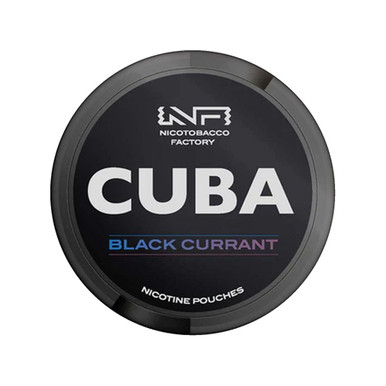
More strong pouches

More berry pouches
Where this sits
Cuba White Black Currant Nicotine Pouches appears in these categories. Browse them, or jump to something close.
You might also like