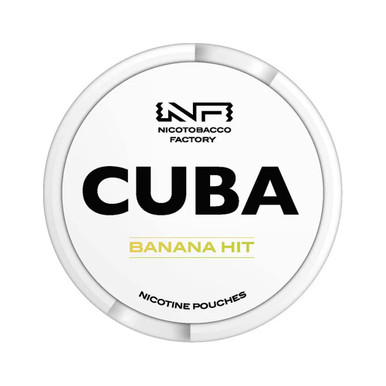
Cuba · 16mg · 10-can pack
Read the full guide
Cuba White Banana Hit Nicotine Pouches
£39.90
✔ In stock — ready to ship
100% tobacco-free
Free over £20
Same-day dispatch
Secure checkout
The product on this page is Cuba White Banana Hit Nicotine Pouches. The brand is Cuba, the line is White, the flavour the manufacturer has given it is Banana Hit, and our record files it under the tropical flavour family. It is listed at £39.90, that price covers ten cans, and the declared strength is 16mg — a single figure, with no second option sitting behind it. One product photograph is attached to the listing. At the time of writing this page, we do not have it in stock.
That paragraph is the entire factual content of the listing, and it is worth saying so at the top rather than burying it. Everything below is one of three things: a description of the object, a comparison with other cans that sit on our shelves, or an admission that a particular piece of information is not something we hold. We would rather leave a gap visible than fill it with a plausible guess, because a plausible guess on a nicotine listing is still a guess.
The full guide to Cuba White Banana Hit Nicotine Pouches
5,171 words on how it eats, who it suits, how to serve it and what to put beside it.
What is actually on this listing
Before anything else, the housekeeping. This is an adult nicotine product. We sell it only to people aged 18 or over who already use nicotine, and the full compliance wording sits in its own section further down. Nothing on this page is an encouragement to anyone to begin.
The word White in the name is the manufacturer's label for one of its lines, and the word Hit in Banana Hit is the manufacturer's flavour name rather than a description written by us. We are not going to translate either one into a promise, because we do not hold a definition of what Cuba means by them beyond what is printed on the can. What we can tell you is where Banana Hit sits relative to everything else on our shelves, and that is what most of this page is about. The Cuba brand shelf runs to 47 listings, and this is one of them.
Banana Hit placed on four axes: cool, sweet, sharp and bitter
Most flavour writing on pouch pages collapses into adjectives that could belong to anything. A more useful approach, and the one this page takes, is to place a flavour on four separate axes and let the reading stand on its own. Cool, sweet, sharp and bitter are not the only dimensions a flavour has, but they are the four that customers most often ask about at a counter, and they are the four that actually separate one can from another when both say "fruit" on the lid.
Cool: low, and deliberately so
Banana Hit is not a cooled flavour. There is no menthol reading in it, no ice register, none of the physical chill that dominates a mint or a freeze can. Whatever coolness you notice comes from the format rather than the flavour — a dry pouch has its own faintly neutral character before any flavour registers, and that is not the same as a cooling note. If you put this next to Denssi Blueberry Freeze, also £39.90, the contrast is stark: one is built around a chilled berry and the other has no chill component at all. That is the single clearest thing to say about Banana Hit before any of the other three axes, because a reader expecting a cold fruit will find nothing of the kind here.
Sweet: high, and rounded rather than bright
Banana is one of the sweetest fruit characters available to a flavour, and it is sweet in a particular way. It is not the bright, glassy sweetness of a boiled sweet or the syrupy sweetness of a cola. It is soft, rounded and slightly creamy, the kind of sweetness that fills out rather than cuts. That softness is an inherent property of the fruit rather than a choice anyone made: ripe banana carries very little acid, so sweetness has nothing to push against and reads as broad instead of sharp. In a pouch that translates into a flavour that arrives gently and sits at a steady level, rather than arriving as a spike. Compare it against the pineapple end of the same family — Elf Bar Pineapple at £29.90 is the obvious reference — and you have two tropical flavours whose sweetness behaves in opposite ways.
Sharp: low, which is the defining feature
Almost every fruit flavour on our shelves has some acid in it. Berries have it, citrus is built from it, apple depends on it, and even a peach reads slightly tart at the edges. Banana is the exception, and that exception is the whole personality of this can. There is no pucker, no tang, no sourness at the back. For some people that is exactly the appeal and for others it is what makes banana the one fruit they never buy, and both reactions are common enough that we would not describe either as unusual. If you want to hear the contrast, the tropical shelf carries plenty of high-acid alternatives; the SYX Tropical can at £29.90 and Velo Tropical Mango at £4.19 both sit further along the sharp axis than this one does.
Bitter: present but slight, and mostly at the finish
There is a mild bitterness in the tail of most banana flavours, and it is worth naming because it is the thing people notice on a second can rather than a first. It reads a little like the skin of the fruit rather than the flesh — a faint dryness that appears once the sweetness has settled. It does not dominate and it is not unpleasant, but it is there, and it is more noticeable in a dry format than it would be in a liquid one, because there is nothing washing it away. Among the flavours we carry, a coffee or a liquorice would sit far further along this axis; banana barely registers on it by comparison.
Put the four readings together and you get a flavour that is warm rather than cold, full rather than bright, round rather than sharp, and slightly dry at the very end. Anyone who already knows what they want from a fruit can will recognise from that description whether this is their kind of can or the opposite of it. That is the point of the exercise.
The pouch itself, and the can it comes out of
Cuba White Banana Hit comes in the standard round tin that almost all pouches ship in: a shallow cylinder, a lid that lifts off and presses back on, small enough to close your hand around and flat enough to sit in a jacket pocket without making a shape. The lid carries the brand, the line and the flavour, with the strength figure printed where you can read it without opening anything. That detail matters more than it sounds if you keep several different cans about the place, because the top of a lid is the only part of a can most people ever look at.
The lid on a can of this type doubles as a catch compartment. The upper section is a separate shallow well, and the convention is that a used pouch goes in there rather than into a pocket, a cup or a bin you are not standing next to. It is a small design decision that does most of the practical work of the format. Empty the catch section into a bin when it fills up. Nothing goes down a sink, a drain or a lavatory, and a used pouch should never be left where a child or an animal could reach it — that last point is not a formality, and it is repeated in the compliance section for a reason.
Inside, the pouches are laid flat in a ring. These are dry white pouches rather than the moist kind, which changes how the can behaves over time more than it changes how any individual pouch behaves in the moment. A pouch is held under the lip, sits still once it is placed, and is not chewed. How long people keep one in varies enormously between individuals, and anything from around twenty minutes to the better part of an hour is ordinary. We do not print a recommended duration on this page and we will not invent one; there is no figure in our record for it, and it is not something a shop should be advising on in any case.
We do not publish a pouch count for this can. Our product data carries the number of cans in the pack — ten — but not the number of pouches inside each one. The printed can is the authoritative source for that, along with weight, dimensions and anything else the manufacturer has stamped on the packaging.
16mg, read as a number on a lid
The strength declared for this product is 16mg, and it is the only strength on the listing. There is no 10mg version of Banana Hit in our record and no stronger one either, so unlike some listings on the site there is no ladder to climb within the product itself. What follows is information about how that figure works, and it is emphatically not advice about which figure anyone should be buying.
The first and most important thing about a milligram figure on a pouch lid is that it is a declaration about the contents of a pouch, not a prediction about an experience. Two cans printed with the same number can read very differently from one another, and two people using the same can will not describe it the same way. The number is a manufacturer's declaration, published consistently across a brand so that its own range can be ordered internally. Read across brands it is a much looser instrument than it looks.
The second thing is that the number is only one of several variables. Flavour changes how a pouch reads, because a heavily cooled can and an uncooled one printed with identical figures do not feel like the same object. Pouch size changes it. Format changes it — a dry pouch and a moist pouch are not interchangeable. None of that shows up in the number, which is why we shelve by declared strength and then describe everything else in words.
On our shelves, 16mg falls into the strong band, which currently holds 132 listings, and sits above the medium band and below the extra strong band. Those three shelves are a filing system, not a recommendation, and the boundaries between them are ours. A can that sits at the top of one band and a can that sits at the bottom of the next are neighbours in reality even though they appear on different pages here. If you want to see what the bands look like in practice, Killa Apple at £33.50 sits on the extra strong shelf while the Velo tropical mango can at £4.19 sits well below this one. We are describing where cans are filed. We are not telling anybody which shelf to buy from.
Building a recognisable banana in a dry pouch
The second thing worth spending real space on is how a flavour like this reads at all in a dry format, with no liquid and no heat involved. This section is about perception and about the shape of the flavour over time. It is not about ingredients: we do not publish ingredient information for any product on this site, and the can's own labelling is the only place to go for that.
Start with the problem the format sets. In a drink or a sweet, flavour arrives all at once and in volume. A dry pouch has neither of those advantages. What it has instead is time and proximity — the flavour is released slowly and it is released close to the nose, which means aroma does a great deal more of the work than most people realise. Much of what anyone calls the "taste" of a pouch is arriving through the back of the nose rather than across the tongue, and that is true of every can on our shelves regardless of brand.
Banana is an unusually good fit for that mechanism, because banana is an unusually aromatic fruit. The character people recognise as banana is carried almost entirely in its aroma rather than in any distinctive taste — take the smell away and what remains is a bland sweetness that nobody would name. That is why a banana flavour is recognisable within a second or two of a can being opened, and why the aroma off an open tin is such a good preview of this one specifically. With a subtler fruit you have to wait; with this one you do not.
Next, the arc. A flavour in a dry pouch has three phases, and they are more distinct here than in most formats. There is an opening, in the first minute or two, which is the loudest the flavour will be and which for a banana note is dominated by that aromatic sweetness. There is a long middle, where the flavour settles to a plateau and stops changing much at all — this is the majority of the time a pouch spends in place, and it is where the difference between a well-constructed flavour and a thin one shows up. And there is a tail, where the flavour thins out and whatever bitterness the character carries becomes proportionally more noticeable, simply because there is less sweetness left to cover it.
Banana behaves distinctively at each of those three stages. The opening is immediate and unmistakable. The middle is unusually stable, because a low-acid flavour has less to lose as it fades than a sharp one does — an acidic berry loses its edge first and can read quite different at minute twenty from how it read at minute two, whereas a banana note largely just gets quieter. The tail is where that faint skin-like dryness comes forward. If you want to hear how differently a cooled flavour manages the same three phases, the Pablo Gold Edition Blueberry Peach Ice can at £19.95 is a useful thing to have in the cupboard for comparison, because a cooling component behaves on its own schedule and can outlast the fruit it was paired with.
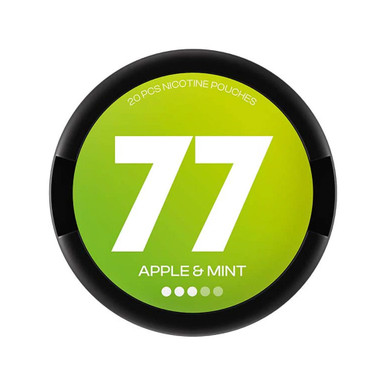
The last point is about the difference between a single-note flavour and a composed one. Banana Hit is a single-note flavour: one fruit, stated plainly, with nothing layered across it. A composed flavour such as 77 Apple Mint at £39.90 or Fumi Fiery Peach at £27.90 sets two characters against each other, and the interest comes from the tension between them. Single-note cans are less complicated and they wear differently over a long can — some people find a single note easier to stay with day after day, and others find it the first thing they get tired of. Neither of those is a fault in the can.
Banana Hit inside the Cuba range we carry
Cuba runs several lines and we list 47 of its products. The two you will see most often on this site are White, which this can belongs to, and Black, which is the other major line and which mirrors many of the same flavour names. There is also Ninja, a third line, represented here by cans such as Cuba Ninja Coconut at £39.90 — a useful reference point for this page, since coconut is the other soft, low-acid, creamy tropical character in the range and the closest thing to Banana Hit in temperament rather than in fruit.
The flavour names repeat across lines, which is the single most confusing thing about the brand for anyone ordering quickly. Cuba Black Banana Hit exists as a separate listing at the same £39.90, and it is a different product from the one on this page despite sharing a flavour name. We hold the line name, the flavour and the declared strength for each, and we do not hold a document from Cuba explaining what else differs between its White and Black lines. Rather than speculate, we will simply say this: check the line on the lid as well as the flavour, because the names alone will not tell the two apart in a cupboard.
The rest of the Cuba shelf spreads across flavour families. There is an orchard fruit corner, where Cuba Black Apple Juice at £39.90 sits. There is a berry corner holding Cuba Black Blueberry. There is a stone fruit represented by Cuba Black Cherry. There is a soft-drink character in Cuba Black Cola. And there is a plain, uncooled non-fruit option in Cuba Black Cold Dry, which is about as far from a sweet tropical fruit as the brand's own range goes. All of those are £39.90, which makes moving between them a question of taste rather than of budget.
What people keep beside a tropical can for variety
Very few people who buy pouches stay on one flavour indefinitely, and the most common pattern we see is two or three cans kept in rotation rather than a single one bought over and over. A sweet, soft, uncooled fruit like this one pairs naturally with something that contrasts with it on at least one of the four axes described above, because a rotation built entirely from similar cans stops working as a rotation.
The easiest contrast is temperature. A cooled can next to an uncooled one gives you two genuinely different things to reach for, and the berry-and-ice corner of the site is full of options — the Clew Blueberry can at £39.90 sits at the gentler end of that, and the Denssi freeze can mentioned earlier sits at the colder end. The second easiest contrast is acid. If the thing you occasionally miss in a banana flavour is an edge, the sharper tropical cans are the obvious counterweight, and the tropical flavour shelf with its 58 listings is where to look for them.
The third contrast is price, and it is a practical one rather than a matter of taste. This listing is a ten-can purchase at £39.90 and that is a real commitment to one flavour. Several of the neighbours above are sold in much smaller units, which makes them a sensible way to test a flavour family before committing to a larger box of it. The Pablo shelf is worth a look on that basis, and the Velo can referenced earlier is the cheapest single entry among the neighbours listed on this page.
One honest note about pairing: we are describing how customers organise their own rotations, not telling anyone how much to use or how often. Nothing in this section is a suggestion to use more than you would otherwise, and keeping two cans instead of one is not a recommendation to get through two cans instead of one.
Keeping the cans in reasonable condition
Dry pouches are more forgiving than moist ones, which is the practical advantage of the format from a storage point of view, but they are not indifferent to how they are kept. Three things do the damage: heat, sunlight and an open lid.
Heat is the worst of them. A can left on a dashboard in summer, on a windowsill above a radiator, or in a bag pressed against a laptop that has been running all afternoon will not be improved by it. The flavour is the first casualty — aromatic characters are volatile by nature, and a banana note is more aromatic than most, which means this particular flavour has more to lose from a hot cupboard than a plain or heavily cooled one would. Sunlight is a slower version of the same problem. A dark drawer or a cupboard at room temperature is all that is required.
The lid is the part people get wrong. Pressing it fully down rather than resting it on top is what keeps a can behaving consistently to the last pouch, and a can that has been sitting half-closed in a bag for a fortnight will read flatter than a fresh one. That is a genuine effect and not a defect in the product.
Because this listing is a ten-can pack, storage matters more here than it does for a single-can purchase. Nine cans will be sitting unopened while one is in use, and those nine want a cool dark cupboard rather than a car door pocket. Keep the whole box out of reach of children and pets, and keep it somewhere it will not be picked up by mistake. We do not publish a shelf-life date for this product; the can carries whatever date information the manufacturer prints, and that is the source to check.
One strength, one price: what there is to decide
This is a short section because the listing gives you very little to decide between. There is one declared strength, 16mg. There is one price, £39.90. There is one pack configuration, ten cans. There are no variants behind the listing offering a different figure, and there is no single-can option on this particular product page.
So the real choices happen elsewhere. If the strength band is what you are choosing on, the decision is between shelves rather than within this listing, and the full catalogue is filtered by strength from the top of the site. If the flavour is what you are choosing on, the tropical shelf is the place to browse sideways. If the quantity is what is giving you pause, that is a fair thing to weigh: ten cans of a single flavour is a large commitment to a taste you may not have tried, and buying one can of something similar first is a more cautious route. Several of the neighbours linked on this page are sold in far smaller units for exactly that reason.
We are not going to tell you that one strength suits one kind of person. We do not know who is reading, we do not hold that information, and it would not be our place to offer it if we did.
Ordering it, and what happens when the parcel arrives
The first thing to say is the awkward one: this product is not currently in stock with us. The listing stays up because the page is a permanent record of a product we carry rather than a live shelf label, but nothing can be dispatched while the stock flag is off. Stock status changes without a rewrite of this page, so the listing itself is the thing to check rather than this paragraph.
When it is available, the process is ordinary. The price is £39.90 for the ten-can pack. Orders go through the same basket as everything else on the site and can be mixed freely with other products — there is no separate checkout for one brand or one strength band.
Age verification is not optional and it happens in two places. There is a check at checkout, which every order on this site passes through, and there is a check at the door: ID may be requested on delivery, and the courier will not hand over a parcel to anyone who cannot produce it. If nobody of 18 or over is present to receive it and show ID where asked, the delivery does not complete and the parcel goes back for a second attempt. Having something with a date of birth on it to hand on the delivery day is the simplest way to avoid that. We do not deliver to anyone under 18 under any circumstances, and no instruction left with an order changes that.
Finding this page again, and what sits around it
Three shelves carry this product, and between them they are the fastest way back to it. It appears on the strong strength shelf with the other 132 listings filed at that band. It appears on the Cuba brand page with the other 46 products we list from the brand. And it appears on the tropical flavour shelf alongside 57 other tropical listings, which is the most useful of the three if what you are actually shopping for is a flavour family rather than a brand.
Above those sit the broader hubs. The medium shelf and the extra strong shelf are the neighbours of the band this can is filed under, and everything we list is reachable from the main shop page. If you came in looking for a brand rather than a flavour, the brand pages are the shortcut; if you came in looking for a taste, the flavour shelves are.
Questions we are asked about this can
How many cans do I get for £39.90?
Ten. This listing is a ten-can pack rather than a single tin, and the £39.90 covers the box rather than one can. That is unusual enough across the site to be worth stating twice — several of the products linked from this page are single-can listings at much lower prices, and comparing £39.90 against £4.19 without noticing the difference in what is being bought would give you a very misleading impression of the relative cost.
How many pouches are in each can?
We do not hold that figure. Our product record carries the number of cans in the pack but not the number of pouches inside each one, so we are not going to print a number we cannot stand behind. The can itself carries that information on its labelling, and the manufacturer's printed packaging is the authoritative source for it. The same applies to weight and dimensions.
Is Banana Hit cooled or minty in any way?
No. Our record lists a single flavour family for this product, tropical, with no mint or ice component recorded against it, and nothing in the flavour reads as cold. If a chill is what you want alongside the fruit, that is a different can rather than a different expectation of this one, and the freeze and ice listings linked earlier on this page are where to look.
What is the difference between the White and the Black version of this flavour?
Both exist, both are £39.90, and they are separate products with separate listings. What we hold for each is the line name, the flavour name and the declared strength — and we do not hold a statement from the manufacturer explaining what else distinguishes the White line from the Black one. Rather than guess, we will say plainly that we cannot tell you, and suggest checking the line name printed on the lid before ordering either.
Is 16mg strong?
It falls in the band we file as strong, which sits above our medium shelf and below our extra strong shelf. That is a statement about where the can is filed on this site and nothing more. The figure is a manufacturer's declaration about a pouch rather than a prediction about anyone's experience of it, and we are not able to tell you how any particular strength will read for you.
Which strength should I buy?
That is not a question a shop should answer, and we are not going to. We publish the declared figure, we file the product on a strength shelf, and we describe how the bands relate to each other. Choosing between them is yours, and anyone with a specific reason to be careful about it should be asking someone qualified rather than a product page.
How long do people keep one in?
It varies a great deal from person to person, and anything from around twenty minutes upwards is unremarkable. We do not publish a recommended duration for this or any product, because we do not hold one and because it is not something we would advise on. The used pouch goes in the catch section in the lid, and the catch section goes into a bin.
Is it in stock?
Not at the time of writing. The stock flag on the listing is the live answer and it is more current than this paragraph will be, so check the listing itself rather than taking this sentence as final. Availability of individual cans in a range moves around more than the range itself does.
Can I order this alongside other brands?
Yes. One basket covers the whole site, and mixing brands, strengths and flavour families in one order makes no difference to how it is processed or delivered. The age check applies to the order as a whole rather than to individual lines in it.
Do you publish ingredient or technical information?
No. We publish the name, brand, line, flavour family, declared strength, price, pack size and stock status, and that is the complete list of what we hold. Ingredient information, technical specifications and any regulatory detail come from the manufacturer's own labelling, which is printed on the packaging. We will not paraphrase that second-hand on a product page, because a paraphrase of a label is not a label.
Where is it made, and who makes it?
We do not know and we do not publish it. Our record holds the brand name and nothing about origin, ownership or manufacturing. Anything printed on the can about that is the manufacturer's own statement and the can is the place to read it.
What if I order it and do not get on with the flavour?
Taste is individual and we cannot predict yours, which is the practical argument against a ten-can commitment to a flavour you have not met. Banana is a divisive character and the low-acid, high-sweet reading described above is the whole of it — there is nothing hiding behind it. If it turns out not to suit you, the site is built to move sideways quickly, and our standard returns policy applies here as it does everywhere else on the site.
Legal and compliance information
Nicotine is an addictive substance.
This product is sold to adults aged 18 or over who already use nicotine, and on that basis alone. We do not sell to anyone under 18. An age check runs at checkout on every order, and ID may be requested on delivery — where it is asked for and cannot be produced by an adult receiving the parcel, the courier will not complete the handover.
Cuba White Banana Hit Nicotine Pouches are not a licensed stop-smoking medicine, are not authorised as one, and are not intended or offered for that purpose. This product is not intended for non-smokers, for people who do not already use nicotine, for anyone under 18, or for anyone who is pregnant or breastfeeding. Nothing written above is medical advice. Nothing written above should be read as a suggestion to begin using nicotine, to use more of it, or to choose any particular strength.
Keep this product, and used pouches, out of reach of children and pets. Every factual statement on this page — the name, the brand, the line, the price, the declared strength, the flavour family, the pack size and the stock position — is taken from our own product record for this listing. Where our record is silent, we have said so on this page instead of estimating. The manufacturer's printed packaging is the authoritative source for anything that appears on the can.
The short version
Cuba White Banana Hit is a ten-can box at £39.90, declared at 16mg, filed under tropical, and not in stock with us as this is written. The flavour is warm rather than cold, broadly sweet rather than bright, almost entirely without acid, and faintly dry at the finish — a single-note banana with nothing layered over it, which is either exactly what you want from it or exactly why you will not buy it. It sits on the strong shelf, on the Cuba brand page, and on the tropical flavour shelf, with the Ninja line's coconut can as its nearest relative in temperament. Everything we know about this product is on this page, and everything we do not know is marked as such.
More from Cuba
More strong pouches

More tropical pouches
Where this sits
Cuba White Banana Hit Nicotine Pouches appears in these categories. Browse them, or jump to something close.
You might also like