Home / Medium Strength / 77 Salted Caramel Nicotine Pouches
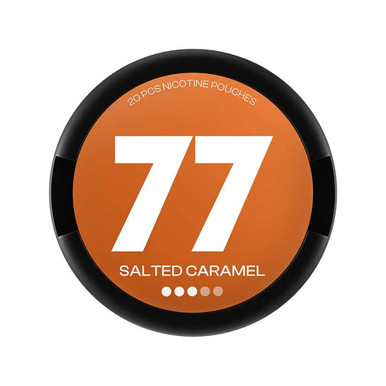
77 · 10.4mg · 10-can pack
Read the full guide
77 Salted Caramel Nicotine Pouches
£39.90
✔ In stock — ready to ship
100% tobacco-free
Free over £20
Same-day dispatch
Secure checkout
77 Salted Caramel Nicotine Pouches are listed at £39.90 for a pack of 10 cans, in one strength only: 10.4mg. As this page was written the listing showed as out of stock. The availability marker on the listing itself updates; this sentence does not, so believe the listing.
Two details about that opening paragraph are worth pulling out, because they change how the product is actually bought. The first is the pack size. This is not a single tin. £39.90 buys ten cans, which puts it in the bulk half of our catalogue rather than the pick-one-up half, and it means the storage question stops being academic — nine of those cans are going to sit somewhere for a while before you reach them. That is why this page spends a long section on keeping cans in good condition rather than treating it as an afterthought.
The full guide to 77 Salted Caramel Nicotine Pouches
5,139 words on how it eats, who it suits, how to serve it and what to put beside it.
Opening the Salted Caramel tin
The second is the shelf placement. Our catalogue files this can under the Coffee flavour shelf, which holds nine listings in total. That needs explaining, because the can is named Salted Caramel and does not taste of coffee. Our coffee shelf is where the dark, roasted and dessert-adjacent flavours are gathered, since running a separate shelf for every confectionery variation would give us shelves with one product on them. So the filing tells you which neighbourhood of the catalogue this belongs to, not what is in the tin. If you came here from that shelf expecting a coffee flavour, this is the correction.
Otherwise the facts are straightforward. It is a 77 product, so it appears on the 77 brand listing with the other twenty-eight cans we carry from them, and its 10.4mg figure puts it on our Medium Strength shelf among one hundred and thirty-five listings. One image, one strength, one price. What we do not publish, here or anywhere, is composition or technical detail — that information belongs on the manufacturer's packaging and we leave it there.
Caramel and salt, described as flavour
Salted caramel as a flavour idea has been thoroughly worked over by the confectionery trade, so most people arrive at this can already knowing roughly what to expect. The useful question is which version of it this is, because the name covers a wide spread — from a pale, buttery toffee at one end to a dark, almost burnt sugar at the other, with wildly varying amounts of salt on top.
This one sits in the middle, leaning dark. Open the lid and the aroma is warm and sugary, with a distinctly cooked edge to it rather than the raw sweetness of a boiled sweet. There is a butterscotch note in there, and underneath it something closer to treacle. It smells like a dessert rather than like a fruit, and the difference is obvious immediately if you have a mint or a berry can open beside it.
In the mouth the sequence is fairly clear. Sweetness arrives first and it is genuinely sweet — this is not one of the restrained cans. Within the first minute a buttery, dairy-adjacent roundness comes in behind it, which is the part that makes it read as caramel rather than as generic sugar. Then the salt arrives, and the salt is what the whole flavour is built around. It is not heavy-handed. It is a savoury edge that cuts across the sweetness and stops it becoming sickly, and it becomes more noticeable the longer the pouch is in, because the sugar fades faster than the salt does.
The back half of a pouch is therefore quite different from the front half. Early on it is a sweet dessert flavour. Later it is a drier, saltier, slightly burnt-sugar thing, closer to the last bit of a toffee than to the first. Some people prefer the back half and leave the pouch in accordingly. That shift is the most distinctive thing about the can.
Cooling: effectively none. There is no mint element and no freeze component, so if you are used to a cold sensation accompanying every pouch, its complete absence here is noticeable and takes a moment to adjust to. The flavour is warm in character from start to finish. Aroma on the breath afterwards is sweet and fades reasonably quickly, and the empty tin will hold a faint toffee smell for a while, which is more pleasant than most.
How the pouch sits, and what the lid is for
Physically this is the standard slim white pouch — a soft rectangle with rounded corners, dry out of the tin, going soft within about a minute. The slim format means it tucks under the lip without a pronounced bulge, and most people stop registering it once it has settled.
Where it goes is a matter of habit rather than instruction. Under the top lip, slightly off-centre, pressed flat along the gum line with the tongue, is how the majority do it. If it folds over it will feel wrong and straightening it out fixes it. None of this needs a shop to explain it to anybody who already uses pouches.
Duration is where the flavour shift matters. Because the salt outlasts the sugar, there is a genuine reason to keep this one in longer than you might a fruit can that goes flat once its acid has gone. Somewhere between twenty and forty minutes covers what most people seem to do, and plenty go past that. We are not going to print a recommended time, because there is not one and inventing a figure would be dishonest. The pouch does not become unpleasant; it becomes plainer.
The can is a two-part object. The deep well holds the fresh pouches, and the lid contains a shallow catch compartment with its own base, into which used pouches go. Click the lid back down and they stay there until you find a bin. Three or four is a comfortable load; more than that and the lid will not close flush, which is the can telling you to empty it. On a sweet flavour like this one there is an extra argument for emptying it often — sugary residue in a warm lid goes stale-smelling faster than a mint does.
Used pouches belong in general waste. Not in a sink, not on the ground. The tin is a small plastic pot and goes wherever your council takes that plastic grade.
Ten cans in a cupboard: storage, condition and what goes wrong
Because this listing is a ten-can pack, storage stops being a footnote and becomes part of the purchase. You are buying a supply, not a tin, and the last can in that pack might be opened a couple of months after the first. So it is worth being clear about what actually degrades a pouch, what does not, and what a can in poor condition is like — none of which is dramatic, and all of which is easy to avoid.
Dry and moist are two different things
The first thing to be straight about is which kind of product this is, because storage advice differs completely between them and the two get muddled constantly. Traditional moist portions are a wet product. They are sold chilled, they are kept in a fridge, and they have a genuinely short life once they warm up. Modern white pouches of the sort sold here are a dry product. They are not chilled in transit, they do not need a fridge, and they do not spoil in the way a wet product spoils.
That distinction matters because someone who has used moist portions in the past will often put a pack of these in the fridge out of habit and then worry when they are not sure they should have. The short answer is that it is unnecessary rather than wrong, and that it achieves very little. A chilled can smells muted for the first minute after opening and returns to normal as it warms. If you are storing a ten-pack for a long stretch, cool and dark is marginally better than warm and bright, but a kitchen cupboard achieves that perfectly well without involving the fridge at all.
What heat actually does
Heat is the one thing that will noticeably change a can, and it works on the flavour rather than on the pouch. A car glovebox in summer, a sunny windowsill, the top of a radiator, a bag left in direct sun at the beach — all of these will get a tin well above room temperature for hours at a time, and the effect is that the lighter, more volatile parts of the flavour go quiet. On a caramel flavour, the parts most at risk are the buttery top notes, which are exactly the notes that make it read as caramel rather than as plain sweetness. What you are left with is flatter and more one-dimensional. It is not spoiled and it is not unpleasant; it is just less of what you paid for.
Repeated heating and cooling is worse than a single warm afternoon. A tin that lives in a car through a whole summer will end up noticeably duller than one that has sat in a drawer. If you keep a can in a vehicle for convenience, keeping it in the glovebox rather than on the dashboard, and not leaving the whole ten-pack out there, is the sensible split.
Moisture, condensation and the lid seal
The pouches are meant to be dry when they go in. Anything that dampens them early will bring the flavour forward and shorten it, and the most common way that happens is not a spilled drink but condensation — taking a cold tin into a warm room, opening it straight away, and letting warm air meet cold plastic. Letting a chilled can come up to room temperature before opening it avoids that entirely, and is the one genuine argument against fridge storage for a product that does not need it.
Beyond that, the lid does the work. These tins close properly and a properly closed tin is close to airtight in practice. The failure mode is human: a lid not pressed all the way down, a can rattling around loose in a bag with the lid half-seated, a tin left open on a desk while you get on with something. A few hours open will dry pouches further and quieten the flavour. It is recoverable in the sense that the pouches are still perfectly usable, but you will not get the flavour back.
What a can in poor condition is actually like
It is worth setting expectations honestly, because people imagine something more dramatic than what happens. A badly stored dry pouch is not mouldy, not sticky and not dangerous-looking. It is simply duller. The flavour arrives weaker, the sweetness reads thinner, and the whole thing finishes sooner. On this can specifically, a heat-tired tin loses the butter and keeps the salt, so it tastes saltier and less interesting rather than obviously wrong.
Pouches also have a date printed by the manufacturer on the packaging, and that date rather than anything on this page is the one to work to. With ten cans in hand, the practical habit is simply to work through them in the order you opened the pack rather than dipping into a fresh one and leaving a half-used tin behind. Rotating stock is unglamorous and it is the whole of the technique.
Carrying one tin while the other nine stay put
With a ten-pack the sensible split is obvious once somebody says it out loud: the pack lives somewhere stable and one tin travels. A can carried in a trouser pocket takes a certain amount of abuse — it gets sat on, it warms to body temperature and cools again several times a day, and the lid gets knocked against things. None of that ruins a tin, but it is a harder life than a cupboard shelf, and there is no reason to give all ten cans that treatment when only one of them is being used.
Bag pockets are kinder than trouser pockets, mainly because the lid is less likely to be forced part-open by pressure. If you have ever pulled a tin out and found the lid a millimetre proud of the rim, that is what has happened, and a few hours like that in a warm bag is enough to take the edge off the flavour. Pressing the lid firmly down until it clicks, every time, is the whole of the maintenance this object requires.
The catch lid is a storage question too
Half of keeping a can pleasant has nothing to do with temperature. A lid loaded with yesterday's used pouches sits directly above the fresh ones, and on a sugary flavour that smell carries. Emptying the catch every time you empty your pockets costs three seconds and makes more day-to-day difference to how a tin behaves than any amount of careful cupboard placement.
Reading 10.4mg as a number
This listing has one strength: 10.4mg. The milligram figure is the main sorting tool customers use, so it is worth saying exactly what it is.
It is a content figure supplied by the manufacturer and printed on the packaging. It describes what is in the product. Brands state it per pouch or per gram depending on their own house convention, and those conventions are not standardised across the industry. That means the same number on two tins from two different makers is not a like-for-like comparison, and ranking cans across brands by that number alone does not work as cleanly as people assume. It is a label, not a score.
We band the figures so the catalogue can be browsed. At 10.4mg this sits in the medium band, alongside everything else on the medium-strength listing. Above it are the Strong shelf and the Extra Strong shelf. Those bands exist to make one hundred and thirty-five listings navigable, nothing more. They are not a progression and there is no suggestion anyone should move through them.
We will not tell you which figure is right for you. A retailer is not the right source for that, we know nothing about any individual customer, and a product page that starts making that sort of judgement has stopped describing a product. We publish what the packaging says and leave the decision where it belongs.
This can against the rest of the 10.4mg shelf
The more useful comparison, and the one people actually want, is horizontal rather than vertical: not how this relates to stronger cans, but how it sits against the other things we stock in the same band. One hundred and thirty-five listings is a lot to hold in your head, so here is where this one falls within it.
Against the other dessert and dark flavours
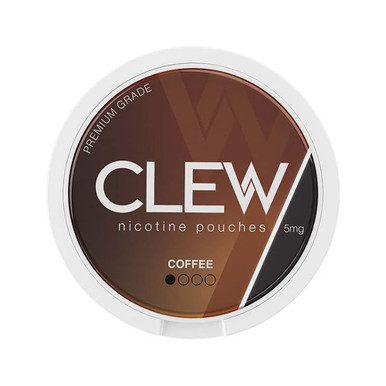
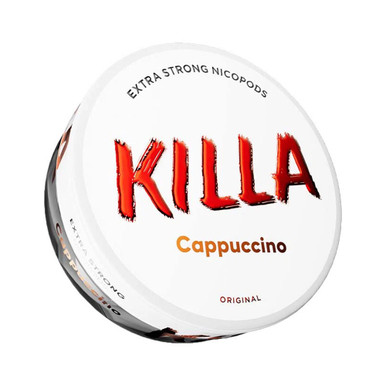
The closest neighbours are the cans on the same Coffee shelf, and it is a short shelf — nine listings. Clew Coffee at £39.90 is the direct like-for-like on price and the nearest thing to a true roasted coffee flavour we carry, which makes it the obvious comparison if roast rather than sugar is what you want. ZYN Coffee Mini at £19.99 approaches the same flavour family in a smaller pouch format and at roughly half the outlay. Killa Cappuccino at £33.50 comes at it from the milky end, which on paper is the closest in character to a sweet caramel, though the two are more different in the mouth than the descriptions suggest — the cappuccino keeps a roasted bitterness that this can does not have at all.
That is the honest summary of the dessert corner: Salted Caramel is the sweetest and the least bitter of the group, and the only one of them built around salt. If bitterness is what you like in a dark flavour, the coffee cans do it and this one does not.
Against the fruit cans at the same price
Plenty of the medium band is fruit, and several sit at exactly this price. Pablo Silver Edition Blue Raspberry is also £39.90 and is a completely different shape of flavour: sharp, bright, acidic, front-loaded. SYX Apple Kiwi at £29.90 is green and tart. Fumi Blackcurrant at £27.90 leads with acid. Put any of those next to this can and the contrast is sweetness against sharpness — caramel has no acid in it whatsoever, which is precisely why the salt has to do the job of cutting the sugar.
Cheaper fruit options exist in the same band too. UBBS Cherry at £19.95 is the frank confectionery choice, and Nordic Spirit Blueberry at £4.49 is the single-can way to try a soft berry flavour without a bulk commitment. Both cost a fraction of this listing, which is the other axis worth weighing: a ten-can pack at £39.90 is a different sort of decision from a £4.49 tin.
Against the mints
The mint end of the band is where this can has least in common with anything. Klint Arctic Mint at £36.90 is cold, clean and sugar-light. Edge Spearmint at £14.95 is the cheap, straightforward mint of this part of the catalogue. Neither is remotely comparable on flavour, and that is exactly why people buy one of each. A warm sweet can and a cold clean can cover opposite ends of what anyone wants across a day, and between them they make the ten-can pack a lot less monotonous than it would otherwise be.
Salted Caramel among the other 77 cans
Across the twenty-nine 77 listings we stock, the range splits roughly into mints, fruits, colas, teas and a small dessert group. Salted Caramel belongs to the dessert group, and it is the most straightforwardly sweet thing in it.
Its nearest relative in feel is 77 Cola Vanilla, also £39.90, which shares the warm, rounded, vanilla-adjacent sweetness even though the cola element takes it somewhere else entirely. 77 Cola Ice is the same soft-drink idea with a cold element bolted on, which makes it a useful reference point for anyone wondering how much difference a cooling component makes to a sweet flavour: a great deal, as it turns out.
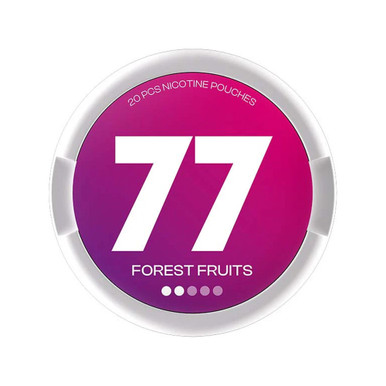
At the other end of the brand's range, 77 Forest Fruits is the jammy berry option and 77 Apple Mint splits its work between a fruit flavour and a cooling one. The smaller-format sub-line is worth knowing about if pouch size matters more to you than flavour: 77 Ghost Original Mini and the Ghost Mini Mango tin both use a reduced pouch in the same £39.90 bracket. Everything in the brand's range we list is at that price, so within 77 the choice is never about money.
What people keep in the rotation alongside it
A ten-can pack of a single sweet flavour is a lot of the same thing, and most people who buy at this volume keep something contrasting on the go beside it. The logic is simple: sweetness gets tiring long before a supply runs out.
The usual counterweight is cold. the Edge Spearmint can is the cheapest way to have a clean mint available at £14.95, and the Klint tin is the colder, more serious option if you want the contrast to be stark. The second common counterweight is acid — a sharp fruit resets the mouth after a run of dessert flavour, and the Fumi Blackcurrant tin does that job at £27.90.
If you would rather stay in the dark, dessert half of the shelf while still changing flavour, the Clew Coffee can is the obvious step across, and the ZYN Coffee Mini tin does it in a smaller pouch. For a wider trawl of what else sits in the sweeter and darker parts of the catalogue, the Cuba brand shelf and the Pablo listings are the two largest ranges we carry and both run long flavour lists.
What there is to choose on this listing
Very little, which makes this an unusually simple page to buy from. There is one strength, 10.4mg, one price, £39.90, and one pack configuration, ten cans. There is no strength choice to weigh, no mini version, and no single-can option on this listing.
The only real decision is the volume one. Ten cans of a distinctly sweet flavour suits somebody who already knows they like salted caramel. It suits somebody trying it for the first time considerably less well, and it would be dishonest to pretend otherwise. If you want to find out whether this flavour family works for you before committing £39.90, the cheaper single tins elsewhere in the shop are the sensible route, even though none of them is this exact flavour.
On availability: at the time of writing this was out of stock, and we cannot give a return date because supply is not ours to control. An invented date would be worse than an honest blank. The wider 77 catalogue is the place to look if you need something from the brand in the meantime, and the nine cans on our coffee and dessert shelf cover the nearest flavour territory.
Checkout, delivery and proving your age
Ordering is the same on this listing as on any other. Add it to the basket, combine it with anything else in the shop, and it ships together. There is no rule against mixing brands, strengths, pack sizes or flavour families in one order, and most baskets containing a ten-can pack also contain a couple of single tins of something else.
This is an 18+ product and we sell it to over-18s only. Age verification is part of checkout, and the courier may ask for identification at the door when the parcel is handed over. Somebody aged eighteen or over has to be there to take it. If there is nobody to show ID, the parcel is not left. That applies to every nicotine product on this site and is not something anyone here can set aside on request.
Delivery costs, dispatch cut-offs and timings live on the checkout and delivery pages, not here. We keep them off product descriptions on purpose, because a shipping promise written into a product page months ago will eventually be wrong, and a wrong promise is worse than a pointer to the live one.
If you are ordering from outside Great Britain or intending to travel with a ten-can pack, be aware that rules on these products vary widely between countries and some prohibit them outright. Customs limits on quantity are a real consideration when you are carrying ten cans rather than one. We do not hold country-by-country information and cannot advise on any specific destination — that checking is genuinely yours to do.
How to get back to this listing
Three routes lead here. By brand, through the 77 shelf, where all twenty-nine of our listings from them sit together. By strength, through the Medium Strength band, which collects every can we file at this level across all brands. By flavour, through our coffee and dessert shelf — remembering that this is a filing category for dark and dessert flavours generally, not a claim that the can tastes of coffee.
If none of those is how you browse, the full catalogue listing runs the lot in one place. And if you are working by strength band rather than flavour, the Strong shelf and the Extra Strong shelf are the next two bands up.
Things customers ask about this pack
Does it taste of coffee?
No. It tastes of caramel and salt. The coffee categorisation is our filing system, not a description of the flavour — our coffee shelf is where the dark and dessert-leaning cans are gathered, because giving every confectionery flavour its own shelf would leave us with shelves holding a single product. If you want an actual roasted coffee flavour, the other listings on that shelf are where to look rather than this one.
How many cans do I get for £39.90?
Ten. This is a multi-can pack rather than a single tin, which is the main thing to understand before ordering, because the price makes a lot more sense once you know that and a lot less sense if you assume it is one can. Ten cans of one flavour is a supply rather than a purchase, so it suits somebody who already knows they like this flavour better than somebody trying it on spec.
Is it very sweet?
Yes, at the start. It is one of the sweeter cans on our shelves in the first few minutes, which is what a caramel flavour is supposed to be. The salt cuts across it and becomes more prominent as the pouch goes on, so the back half is noticeably drier and saltier than the front half. Anyone who finds sweet flavours tiring will find the early part heavy going; anyone who likes dessert flavours will find it does the job properly.
Does it need to go in the fridge?
No. These are dry pouches, not the moist chilled sort, and they do not require refrigeration. A cupboard, drawer or bag pocket is entirely adequate. Cool and dark is marginally better than warm and bright if you are storing a ten-pack for a long time, but a fridge adds nothing except a condensation risk when you open a cold tin in a warm room. If you do chill them, let a can come up to room temperature before opening it.
How long does a can stay good once it is open?
Longer than most people expect, provided the lid is properly shut between uses. These are dry pouches and they do not spoil in the way a wet product does; what happens instead is a slow loss of flavour intensity. The manufacturer prints a date on the packaging and that is the figure to work to. The practical habit with a ten-pack is to finish an open tin before starting a new one rather than having three half-used cans on the go.
What happens if it gets hot?
The flavour goes quieter. Heat drives off the lighter parts of a flavour first, which on this can means the buttery caramel notes, leaving something flatter and proportionally saltier. It does not become unsafe or unpleasant, it just becomes less interesting. A car in summer is the usual culprit. Keeping the bulk of a ten-pack indoors and only carrying one tin around is the easy way to avoid it.
Which strength is right for me?
We do not answer that, and we would treat any retailer that did with suspicion. This listing carries one figure, 10.4mg, taken directly from the manufacturer's packaging, and we publish it as given. Choosing between strengths is not something a shop can reasonably do on a customer's behalf, since we know nothing about the person asking. The numbers are published; the decision stays with you.
Is there a smaller pack or a single can?
Not on this listing. Salted Caramel is sold here as a ten-can pack at one price, with no single-tin option. Other listings in the shop do offer single cans, and several are considerably cheaper, so if buying one tin is what you need, look elsewhere in the catalogue rather than on this page. The pack configuration shown on the listing is the only one we hold for this product.
Is it cold at all?
No. There is no mint or cooling element in this can whatsoever, and its complete absence is noticeable if every other pouch you use has some. The flavour is warm in character throughout. People who want a cooling sensation alongside a sweet flavour generally keep a separate mint tin in rotation rather than looking for a caramel can that does both, because we do not stock one that does.
Can I combine this with other products in one order?
Yes, freely. Brands, strength bands, pack sizes and flavour families can all be mixed in a single basket and will arrive together. Combining a bulk pack with one or two cheaper single tins of something contrasting is a very common way to order, and there is no surcharge or restriction attached to doing it.
Do you publish what is in it?
No. We do not publish composition, ingredient or technical information for any product we sell. The packaging that arrives with the cans carries the manufacturer's own information and that is the correct place to read it. Anything beyond what is printed there is a question for the manufacturer rather than for a retailer, and we would rather point you at the right source than paraphrase something we did not write.
Is there any cheaper way to try this flavour family first?
Not this exact flavour, no — we do not carry a single-can version of it. What we do carry is a short shelf of dark and dessert-leaning cans at a range of prices, and the cheaper ones on it will at least tell you whether that half of the catalogue suits you before you commit £39.90 to ten tins of one thing. That is an imperfect answer and it is the honest one; there is no sample size on this listing.
Why does the back half taste different from the front half?
Because the sweetness and the salt fade at different rates. The sugary part of the flavour is at its loudest in the opening minutes and drops away steadily, while the savoury edge holds on for much longer. The result is that a pouch you have had in for half an hour tastes drier, saltier and less like a dessert than the same pouch did at the start. It is the normal behaviour of this flavour rather than a sign of anything being wrong with the can.
When will it be back in stock?
We do not know, and we would rather say so than guess. Restock timing depends on supply we do not control, and a made-up date on a product page helps nobody. The stock indicator on the listing is live and is the thing to watch. In the meantime the other 77 cans and the rest of the dessert shelf cover similar ground.
Compliance and legal notes
This product contains nicotine, and nicotine is an addictive substance.
Sale is restricted to adults aged 18 or over who are already nicotine users. We do not sell to under-18s under any circumstances. Age verification forms part of our checkout process and the delivery courier may request identification before handing the parcel over.
This is not a licensed stop-smoking medicine and it is not intended for non-smokers, for anyone who does not already use nicotine, for under-18s, or for anyone who is pregnant or breastfeeding. No statement on this page is a health, medical or therapeutic claim, and none should be read as one. Questions about nicotine and your own circumstances are for a healthcare professional, not for a shop.
To sum up
77 Salted Caramel is a ten-can pack at £39.90, single strength at 10.4mg, currently unavailable. The flavour is a dark, cooked caramel that starts frankly sweet and finishes drier and saltier, with no cooling element at all. It is filed on our coffee shelf for organisational reasons rather than because it tastes of coffee.
Buying ten cans of one sweet flavour is a commitment, so it rewards people who already know this is a flavour they like and punishes people trying it blind. If that is you, the storage notes above are the useful half of this page. If you are still deciding, the rest of the dessert and coffee shelf and the cheaper single tins across the medium band are the lower-risk way in.
More from 77
More medium strength pouches
More coffee pouches
Where this sits
77 Salted Caramel Nicotine Pouches appears in these categories. Browse them, or jump to something close.
You might also like