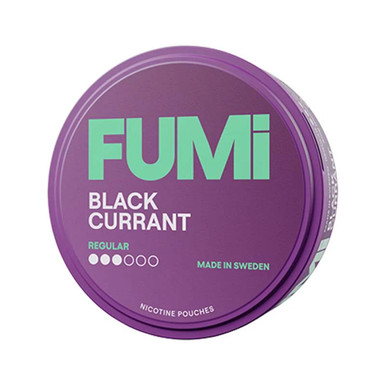
Home / Medium Strength / Fumi Salty Violet Nicotine Pouches
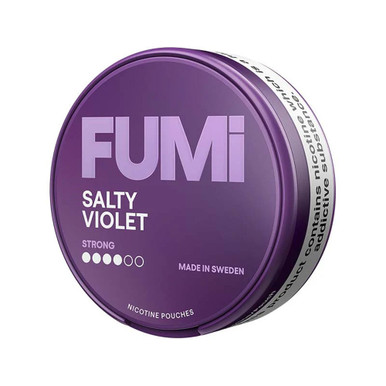
Fumi · 4mg–8mg · 10-can pack
Read the full guide
Fumi Salty Violet Nicotine Pouches
£27.90
✔ In stock — ready to ship
100% tobacco-free
Free over £20
Same-day dispatch
Secure checkout
This page covers Fumi Salty Violet Nicotine Pouches, listed as a pack of ten cans at £27.90, declared in two strengths — 4mg and 8mg — at the same price for either. Our system shows it in stock at the time of writing and holds one product image against it. That is the whole of the record, and every factual statement on this page comes out of it.
Ten cans at £27.90 divides to £2.79 a can. The division is ours, not the manufacturer's, and it exists so this listing can be set against the single-can products elsewhere on the site. The figure that applies at checkout is £27.90 for the box. We do not hold a portion count per can and will not invent one; the printed can carries it.
The full guide to Fumi Salty Violet Nicotine Pouches
5,092 words on how it eats, who it suits, how to serve it and what to put beside it.
Everything the record says
This is an age-restricted nicotine product for adults aged 18 or over who already use nicotine. Nicotine is an addictive substance. Full compliance wording closes the page. None of what follows is written to persuade anybody to consume anything — it is a description of a box, two numbers and a flavour name, for somebody who is already shopping.
One gap you should know about before you browse
Our record carries no flavour category for this product. The field is empty. Every other listing on the site sits in at least one flavour grouping — berry, mint, tropical and so on — and this one sits in none, because nobody has ever filed it.
The consequence is entirely practical. This box does not appear on any flavour filter. If you browse the site by taste, you will not meet it; it surfaces only through the Fumi brand page, through the medium-strength shelf, through search, or through a link like this one. It also means the usual "more like this" logic has nothing to work with, which is part of why this page spends longer than most on describing what the flavour actually is.
We have left the gap rather than filling it with a guess. Violet is a floral, and we do not run a floral grouping large enough to file it under; putting it under berry or mint to make the filters tidier would be worse than leaving it blank, because a wrong tag is more misleading than a missing one. So the record says nothing, and now so do the filters, and this paragraph is the explanation you would otherwise have had to work out for yourself.
What "Salty Violet" describes
Two words, and both of them need care. What follows is about taste and aroma and about nothing else.
The first word
Salty is a flavour descriptor here and only that. It names a direction a taste travels in, the way any descriptive word on a confectionery label does. It is not a statement about composition, it is not a quantity, and it is not a claim that this product contains any more or less of anything than any other product we sell. We hold no ingredient information for this listing. If you want to know what is in the can, the can and the manufacturer are the only honest sources, and we will not stand in front of them with a guess.
What the descriptor conventionally signals is a savoury counterweight set against a sweet one. The point of it is contrast: a sweetness with something arguing back reads as less flat than the same sweetness alone. That is an observation about how people perceive taste, not a recipe, and it is the limit of what this page will say about the word.
The second word
Violet is the more unusual half, and it is the half that decides whether you will get on with the can. It is a floral, not a fruit, and florals behave differently from everything else on a shelf like ours.
The reference point most people in Britain have is the small hard violet-flavoured sweet — a chalky, perfumed thing that tastes of scent rather than of food. That is not a criticism; it is the whole character of the flavour, and it is why violet divides opinion more sharply than any fruit does. People who like it describe it as delicate, old-fashioned and clean-edged. People who dislike it describe it as soapy, or as tasting of grandmothers' handbags. Both descriptions are of the same thing.
Broken into parts: there is no acidity to speak of, which immediately sets it apart from any berry or citrus. The sweetness is perfumed rather than juicy, and it reads higher and thinner than fruit sweetness. The aroma does most of the work — a powdery, cosmetic, faintly talc-like smell that arrives before any taste does. And the finish is long. A violet does not clip off the way a sharp fruit does; it lingers, and it can leave the palate feeling faintly coated.
Against the other Salty listing in the range
Fumi runs a second can with the same first word, a raspberry. Sharing a descriptor makes people assume the two are variations on one idea. They are not, and anyone expecting a floral version of the fruit will be surprised.
The raspberry is a fruit note led by acid. It smells of red fruit — jammy, with a faint rose edge behind it — and it tastes sharp before it tastes sweet. Its finish is short and clipped, and the savoury descriptor there works against the acid, which is the thing you notice it pushing on.
The violet has no acid at all for the descriptor to push against, so it pushes against the perfume instead, and that is a completely different sensation: a savoury edge under a floral reads as depth, where a savoury edge under a sharp berry reads as contrast. The violet is softer, rounder, longer and considerably more perfumed. The raspberry is brighter, sharper and gone sooner. If you have tried one, do not buy ten cans of the other on the assumption that it will be similar.
Aroma when the lid comes off
With a floral, opening the can tells you more than it does with a fruit, because the aroma is the dominant part of the flavour rather than an accompaniment to it. A violet should smell perfumed and powdery straight away. If it smells of very little, that is usually a storage matter rather than a product one, and the storage section below covers it.
One can, ten cans, and how people actually reorder
This listing is sold one way only: as a box of ten. That single fact changes the whole shape of buying it, and this section is about the practical consequences rather than about the product.
Why the unit matters more than the price
A box of ten and a single can are not competing offers; they are different kinds of purchase. A single can is a decision you can abandon in an afternoon. A box is a decision you live with for weeks. The per-can arithmetic — £2.79 here — makes the box look like the obvious choice against a single can at £4.19 or £4.49, and on unit price it is. On risk it is not, because the unit price only matters if you finish the box.
That matters more than usual with a flavour like this one. Violet is the most divisive kind of note on our shelves. The sensible order of operations with a divisive flavour is to establish that you like it and then buy the volume, not the other way round. We cannot sell you a single can of this to test, because we do not list one, and we would rather say that plainly than let the arithmetic do the persuading.
The two buying patterns we see
Customers split roughly into two habits, and they shop entirely differently.
The first is the settled buyer. One flavour, known and liked, bought in volume and reordered on a rhythm — not when the last can runs out but when the box is around a third down. For this habit the box is the right unit and the flat brand price makes the decision easy, because there is nothing to compare within the range except flavour.
The second is the rotating buyer, who keeps two or three open at once and gets bored of any single flavour within a fortnight. For this habit a ten-can box of one thing is a commitment that needs thinking about. It works if the box is the constant and something smaller is the variety — Velo Bright Spearmint at £4.19 and Nordic Spirit Blueberry at £4.49 are priced for exactly that role — and it works badly if the box is meant to be the variety.
Keeping a spare, and where
The most common reordering mistake is running the box to zero before ordering. Delivery takes as long as it takes, age-verified deliveries can need somebody in to receive them, and the gap is entirely avoidable by reordering earlier. People who have settled on a flavour tend to keep one unopened can somewhere separate from the box — a drawer at work, a bag, a car — specifically so that the last can is never the one in play.
A related habit worth mentioning: keep the box and the travelling can apart. A ten-can box lives in a cupboard and does not need to leave the house. One can travels. That keeps the bulk of the purchase in stable conditions, which the storage section explains the reason for, and it means a lost can costs you a can rather than a box.
Working out a rhythm
People who buy in tens eventually work out a rhythm, usually by getting it wrong once. The arithmetic is personal and we are not going to do it for you — we hold no usage data and it is not a shop's place to model somebody's consumption — but the method is the same for everybody. Note the date you open the box. Note the date you open the last can. The gap is your box interval, and the point to reorder is that interval minus however long delivery and an age-verified handover realistically take in your household, with a few days' margin.
Doing that once gives you a number you can use for years, because the pack size does not change and neither does the price. It also tells you something more useful than the arithmetic does: whether you finish a box at a steady rate or in bursts. Bursty use is the pattern that empties a cupboard unexpectedly, and it is the one that benefits most from a spare can kept out of the rotation.
What a box commits you to
Ten cans of one flavour is a real commitment, and with a floral it is a bigger one than with a mint. Mint is the flavour least likely to wear out its welcome; a perfumed floral is among the most likely, because the thing that makes it distinctive is exactly the thing that becomes tiring with repetition. None of that is a reason not to buy it. It is a reason to be honest with yourself about whether you like violet or are merely curious about it, because curiosity is a one-can emotion and this is a ten-can product.
Handling one, and what the can is for
A pouch is a small, soft, sealed portion, roughly the size and shape of a flattened jellybean. It sits between the upper lip and the gum and stays put. It is not chewed, not moved around and not swallowed. Settling one takes a moment and most people find a preferred position early and keep to it.
The can is the standard squat cylinder — jar-lid diameter, a few coins deep, with a press-on friction lid rather than a screw thread. By convention these cans carry a shallow catch compartment under the lid for used portions, which is the most genuinely useful piece of design in the category and the one people notice last.
How long anybody keeps a portion in varies widely between people. We hold no usage data for this product and would not publish guidance if we did — how much of anything a person uses is not a shop's business to direct. Disposal is short: catch compartment or general waste. Not a sink, not a drain, not the ground.
One detail specific to a box rather than a can: ten cans arrive as a sealed brick, and most people break into it a can at a time rather than opening the outer pack fully. There is a practical reason for that beyond tidiness — an intact outer keeps the remaining cans together and makes it obvious at a glance how far down the box is, which is the information you need for the reorder rhythm described above.
Every can we sell behaves the same way in the hand. Whether it is this box, White Fox Double Mint at £34.90 or UBBS Cherry at £19.95, the object is the object. What changes between listings is the flavour name, the declared figure, the pack arrangement and the price.
Sixteen listings, one price, and what each is for
Fumi runs to sixteen products with us and the entire range sits at £27.90 for ten cans. The price does not move between flavours and, on listings that declare more than one figure, it does not move between strengths either. That is unusual and it matters: within this brand, price carries no information whatsoever. Nothing is the budget option and nothing is the premium one. Flavour is the only variable there is.
Which makes a map of the range more useful than it would normally be. Taken as taste directions rather than as recommendations, the shelf reads roughly like this.
The dark and deep group
Fumi Blackcurrant is the sharpest of the dark fruits, with a leafy edge under it that separates blackcurrant from generic dark fruit. Fumi Chilled Cherry takes a rounder, sweeter stone fruit and puts a cooling element over it, which is a different structure from an uncooled fruit. Both are for somebody who wants weight rather than brightness.
The bright and sharp group
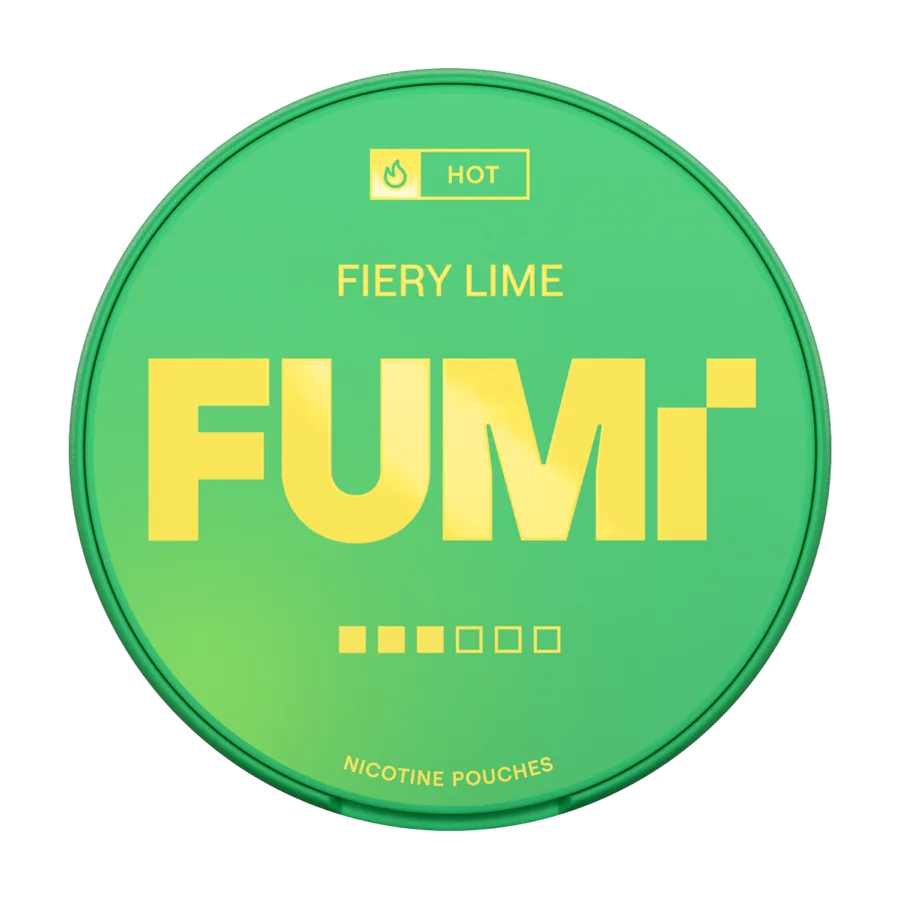
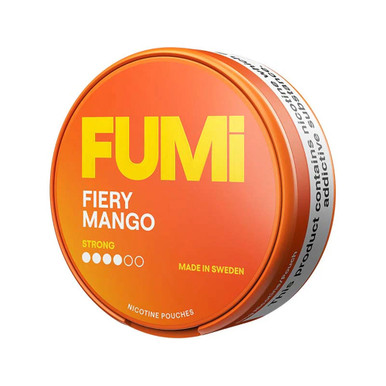
Fumi Fiery Lime is the most acidic thing in the range by the plain meaning of its fruit, and Fumi Fiery Mango the most obviously tropical. These are for people who want the flavour to announce itself. The word Fiery recurs across the range and we hold no definition of what the brand means by it, so we will not tell you it means heat, sharpness or intensity — only that it is on those titles and not on this one.
The mint presence
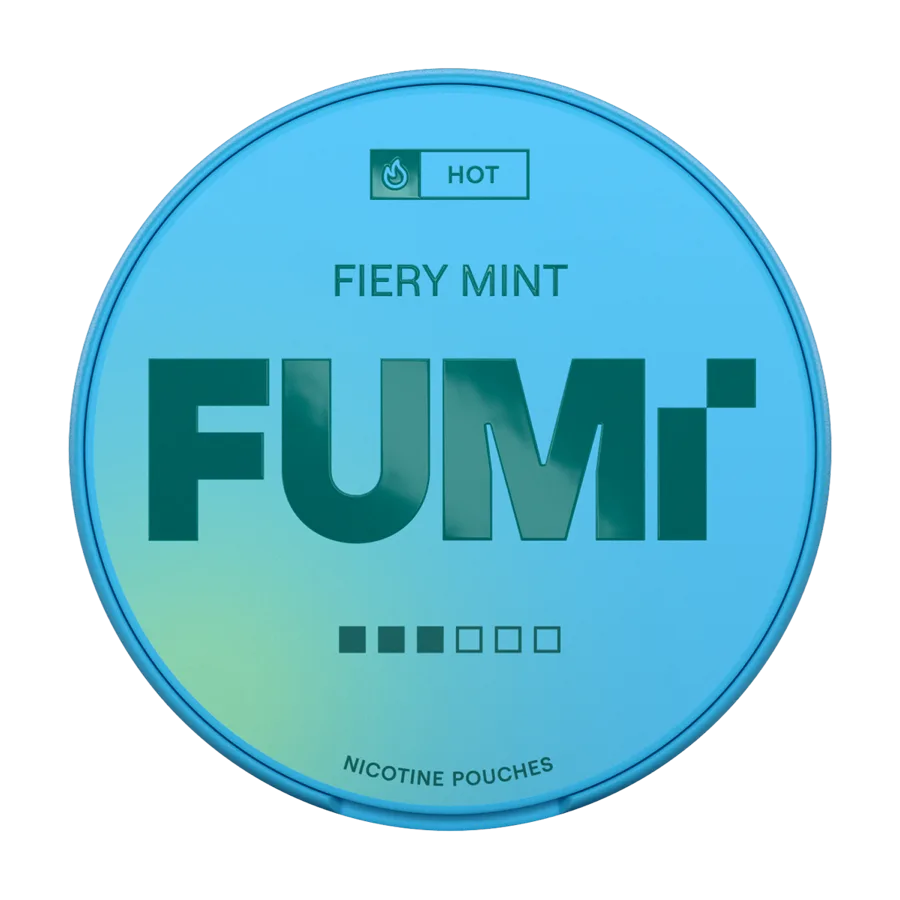
Fumi Fiery Mint is the brand's cold option and the natural companion to any of the others, for the reason mints usually are: they are the flavour least likely to become tiring and the easiest reset between other things.
The outliers
Fumi Dark Spice leaves fruit behind entirely for something warm and savoury, and is the least conventional thing in the range. This listing and its raspberry counterpart are the other outliers, because of the descriptor they share. Between them, those three are what makes the Fumi shelf more interesting than a straight run of fruits, and they are also the three most likely to be wrong for somebody who bought on the name alone.
If you want to see the whole range side by side rather than through a description, the brand's own page lists all sixteen at the same price. It is a short shelf and it is worth reading end to end before committing to a box.
Shopping a shelf when the filters will not help
This listing is a good illustration of a general problem, and the general problem is worth a section of its own because it applies well beyond this one product.
Filters on a shop like this are built from fields in a database. They are only as good as the fields, and the fields are entered by people. When a field is populated correctly, the filter is the fastest way to shop. When it is empty — as the flavour field is here — or wrong, the filter quietly hides things from you, and nothing on the screen tells you that it is happening. You do not see an absence.
Three habits get round that. The first is to shop by brand as well as by attribute: a brand page lists everything from that maker regardless of how well its records are filled in, which is why the sixteen-product Fumi page shows this box when no flavour filter will. The second is to read product names rather than trusting groupings, because the name is written by the manufacturer and the grouping is entered by a retailer, and the two are not equally reliable. The third is to use the strength bands as a coarse net rather than a fine one — the medium shelf's 135 listings are too many to browse comfortably, but they are a complete set, and completeness beats convenience when you are hunting for something specific.
The wider point is that a gap in a record is not a fault in the product. This can is exactly what it is regardless of what our database says about it, and a listing with an empty field is not a listing with something wrong with the goods. It only means the shop's own index is imperfect, which every shop's index is.
4mg and 8mg, as printed numbers
Two figures are declared on this listing and they cost the same. What follows is information about what the numbers are. It is not advice; we do not recommend figures to anybody.
A figure on a can is a manufacturer's declaration about that product. It is a label number, not a measurement of anybody's experience, and it is not reliably comparable between brands, because manufacturers do not all declare on the same basis. Two cans from different companies showing the same number are two separate declarations that share a digit. This is the single most misunderstood thing in the category and we repeat it on every page for that reason.
Within one brand and one flavour the comparison is fairer. The 4mg and the 8mg here are the same product from the same maker with one declared figure doubled, so the relationship between them means something that a cross-brand comparison does not.
Our strength shelves follow the declared figures and nothing else. This box sits in the medium band, which currently runs to 135 listings and is the largest of the three. Above it are the strong shelf at 132 listings and the extra-strong shelf. Placement is arithmetic applied to labels. It is not a ranking, not a recommendation and not a statement that any band suits any person.
Keeping a box in condition
Ten cans will be in the house a while, so storage matters more here than with a single can. It is also the thing most likely to spoil something you have already paid for.
Cool, dry, dark. A cupboard away from the hob, a drawer, a shelf in a cool room. Not a windowsill, not a radiator top, not a car in summer, not the shelf above a kettle. Heat degrades aromatic character first, and with a floral the aroma is not a garnish on the flavour — it is most of the flavour. A violet that has been kept warm loses the part that makes it a violet, which is a worse outcome here than the same treatment would produce with a blunt mint.
Keep the lid pressed home on whichever can is open rather than balanced on top. The lid is a friction fit and it is doing a job. An open can left out overnight will not be what it was.
One more thing specific to a box. The cans at the bottom of a ten-pack may sit unopened for a long stretch, so where you put the box matters more than where you put the can in use. A cupboard that is cool in January and warm in July is only half a good place, and the last can out of a box that spent a summer near an oven will not be the same as the first one was.
We do not hold the moisture format for this product. Some styles in this category are drier and some moister; they behave differently in storage, and since our record does not say which this is, the conservative approach covers both. Anything the printed can says about storage takes precedence over this page. Keep the box out of reach of children and away from pets, which applies more to ten cans in a house than to one.
A second can worth having
A perfumed floral is a strong single note and most people want something plain alongside it. There are two sensible directions.
The first is cold and simple. Edge Spearmint at £14.95 and Klint Arctic Mint at £36.90 sit at opposite ends of the price range for essentially the same job, and XQS Arctic Freeze at £39.90 names the coldest reading of the three in its own title. Any of them will clear a palate that has gone numb to perfume.
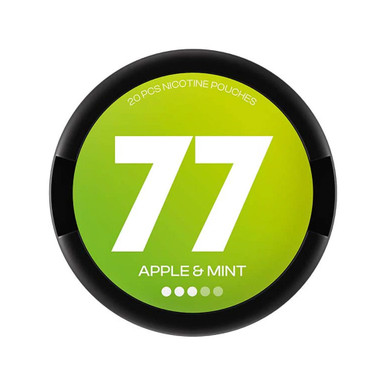
The second is a fruit with real acidity, which is the thing this can has none of. Pablo Silver Edition Blue Raspberry at £39.90 names a confectionery berry, SYX Apple Kiwi at £29.90 pairs two sharp pale fruits, and 77 Apple Mint at £39.90 puts an orchard fruit next to a mint. Each is a change of subject rather than a variation, which is what a floral needs beside it.
The decisions in front of you
- Strength: 4mg or 8mg, same product, same price.
- Pack size: none. Ten cans at £27.90 is the only way this is listed.
- Flavour: the real decision, and an unusually divisive one.
We will not advise on the strength question and you should be wary of a shop that does. The two figures cost the same, so the choice is not financial. On the flavour question the honest position is the one stated further up: violet is a love-or-loathe note, ten cans is a lot of it, and if you are curious rather than certain, a cheaper single can of something else is a better place to spend an experiment.
Ordering, the age check, and delivery
Orders here go through age verification. This is an 18+ product sold only to adults who already use nicotine. The check is part of the order process, and ID may be requested again at the door — the courier can ask, and can decline to hand over the parcel if there is no adult present to take it. If you will be out, send it somewhere a named adult will be.
The price shown is for the ten-can box. Delivery timescales and the rest of the mechanics are on the site's delivery and terms pages, which is where things that change belong. Stock showed as available when this was written; the listing carries the live position and is the authority if the two disagree.
Where this page sits
Because the flavour field is empty, this listing has fewer routes into it than most. It hangs off the Fumi brand page with fifteen siblings, and it sits in the medium band with 134 others. It appears on no flavour filter at all. That is the complete set of paths, which is worth knowing if you ever want to find it again — bookmark it, or go via the brand.
The full catalogue is the place to start if you are browsing rather than hunting for this specifically. Two other brand pages are useful landmarks: the Pablo pages and the Cuba pages are both large and both split into sub-ranges, which makes them a different shopping experience from a flat sixteen-product shelf like Fumi's.
Questions we get about this box
Why doesn't this show up under any flavour?
Because the flavour field in our record is empty for this product. It is not a display fault and it is not deliberate filing — nobody has ever assigned it a grouping. The result is that it cannot be reached through any flavour filter and only appears via the brand page, the strength shelf, search or a direct link. We have chosen to explain the gap rather than to invent a tag, because a wrong grouping would mislead more people than a missing one.
Does "Salty" mean salt has been added?
We cannot tell you what is or is not in the can, and the name is not evidence either way. Salty here is part of a flavour name — a description of a taste direction, like any descriptive word on a confectionery label — and it is not a statement about composition. Our record holds the product name, brand, declared strengths, price, pack size and stock, and nothing about ingredients. The printed can and the manufacturer are the sources for that question.
What does violet actually taste of?
Perfume, in the most literal sense. It is a floral rather than a fruit: no acidity, a high thin sweetness, a powdery and cosmetic aroma that arrives before the taste, and a long finish. The nearest common reference is the small hard violet-flavoured sweet. People who like it call it delicate; people who do not call it soapy. Both are describing the same thing accurately, which is why it divides opinion more than any fruit on our shelves.
Is it like the Salty Raspberry?
Only in name. The raspberry is sharp, red, acidic and short-finishing, and the savoury descriptor there works against the acid. This one has no acid at all, so the descriptor works against the perfume instead, which reads as depth rather than as contrast. Expect a different kind of product that shares half a title, not a variation on a theme.
How many pouches are in each can?
Not a figure we hold. Our record does not carry a portion count and we will not publish an invented one, because you would plan a reorder around it. The printed can states it. This applies across the brand rather than just to this listing.
Can I try one can first?
Not of this product. It is listed only as a pack of ten at £27.90 and we do not hold a single-can option for it. Given how divisive the flavour is, that is worth saying plainly rather than burying — if you are unsure about violet, this listing gives you no cheap way to find out, and there is no version of the arithmetic that changes that.
Is 4mg or 8mg better?
Neither, and not a question we will answer. A declared figure is a manufacturer's declaration about a product, not a measure of anyone's experience, and it is not comparable across brands. Within this listing the two are the same product with one number doubled, at the same price. The choice is yours and a shop making it for you is overstepping.
Is there any cooling in it?
Our record does not say. The title carries none of the words the category conventionally uses to flag a cooling element — Ice, Freeze, Frost, Chill — which by that convention suggests there is none. That is an inference from a naming habit rather than a fact from our system, and the can is the authority.
Why is every Fumi product £27.90?
Because that is the price our record holds for all sixteen of them: £27.90 for ten cans, regardless of flavour and, where several are declared, regardless of strength. We do not know the reasoning and will not invent one. The practical effect is that price tells you nothing within this brand, so flavour is the whole of the decision.
Is it in stock and how fast does it come?
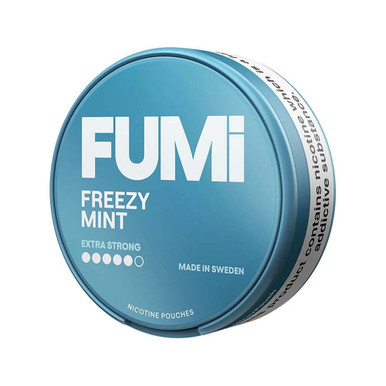
It showed as in stock when this page was written; the listing itself carries the live position and wins any disagreement with this paragraph. Delivery timescales belong on the delivery page rather than here, because they change. We do not hold restock dates and will not guess at one — people plan around guessed dates. The single image we hold is normally the can front, and since manufacturers revise packaging without notice, treat it as an indication of what arrives rather than a guarantee.
Will I be able to find this page again?
Only through the brand page, the medium-strength shelf, the site search or a saved link, since the product appears on no flavour filter. If you expect to reorder it, the pragmatic answer is to bookmark this page or to reach it through the brand each time. We would rather tell you that than have you hunting through flavour categories it will never appear in.
Do the two strengths smell different when the can is opened?
We do not hold anything that would let us answer that. Both carry the same flavour name and come from the same maker, which is all our record says. Whether a declared figure changes how a floral reads on opening is not something a shop can assert without having tested it, and we have not. Treat confident claims either way, from anybody, as opinion rather than information.
Legal and age requirements
This product is sold only to adults aged 18 or over who already use nicotine. We do not sell it to anybody under 18, and it is not intended for, aimed at or suitable for anybody who does not already use nicotine.
Nicotine is an addictive substance.
It is not a licensed stop-smoking medicine and is not offered as one. It is not intended for non-smokers, for people who do not already use nicotine, for under-18s, or for anybody who is pregnant or breastfeeding. Nothing on this page is medical advice, dosage guidance, or a suggestion that any strength suits any person or circumstance. Health questions about nicotine belong with a qualified professional, not with a product description.
Age verification applies to orders placed on this site and ID may be requested on delivery. Keep this product out of reach of children and away from pets, and dispose of used portions in general waste.
Last word on this one
Ten cans for £27.90, declared at 4mg and 8mg with no price difference, in stock, and carrying no flavour tag at all — which is why you will not find it on a filter and why this page had to do the describing instead. Violet is a perfumed, powdery, long-finishing floral with no acidity in it, and it is the most divisive note on our shelves. That combination — a strong opinion-splitting flavour sold only in tens — is the thing to weigh before ordering.
We hold no portion count, no moisture format, no flavour grouping and no manufacturer's tasting note, and we have said so at each point rather than papering over it. If this is not the one, the other fifteen in the range cost exactly the same, and every page on this site is written from the same records with the same gaps admitted in the same places.
More from Fumi
More medium strength pouches
More fumi pouches
Where this sits
Fumi Salty Violet Nicotine Pouches appears in these categories. Browse them, or jump to something close.
You might also like