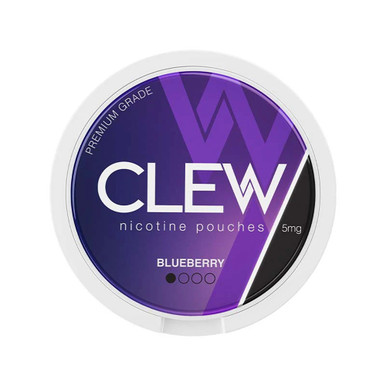

Clew · 5mg–20mg · 10-can pack
Read the full guide
Clew Wintergreen Nicotine Pouches
£39.90
✔ In stock — ready to ship
100% tobacco-free
Free over £20
Same-day dispatch
Secure checkout
Clew Wintergreen Nicotine Pouches are listed here at £39.90 for a pack of ten cans, in four declared strengths: 5mg, 10mg, 15mg and 20mg. Every one of the four carries the same £39.90 price. The product shows as in stock at the time of writing and we hold one image of it.
Ten cans at £39.90 is £3.99 a can on the arithmetic. We mention that because prices on this site are not all quoted on the same basis — some listings are single cans and some are multipacks — so a larger number beside a product name does not necessarily mean a more expensive can. Where we know the pack count, we print it, and here it is ten.
The full guide to Clew Wintergreen Nicotine Pouches
5,167 words on how it eats, who it suits, how to serve it and what to put beside it.
What this listing covers
There is one gap in our data for this product that we would rather flag at the top than bury: our structured flavour field for this can is empty. For most products on this site we hold a list of flavour terms. For this one we hold none. The can is named Wintergreen and that is what the brand calls it, but we are not going to manufacture a flavour list we do not have. What the can itself declares, printed on the can, is the authoritative source. We come back to this properly further down.
The rest of this page is a description of the object, a comparison with other cans on our shelves, and — where we are missing something — a plain statement that we are missing it. This is an age-restricted nicotine product sold only to adults over 18 who already use nicotine, and the full compliance wording has its own section at the foot of the page.
The can, considered as a physical object
Most product copy skips straight past the packaging to the contents. That is a mistake for this category, because the can is the part of the product you interact with most often. You open and close it dozens of times. You carry it. You find it in a bag by feel. It sits on a desk or a windowsill or in a car door. If the tin is badly made you will notice long before anything else about the product registers.
The format is a shallow cylinder, the same basic shape every pouch brand uses. Two parts: a body that holds the pouches, and a lid that lifts clear and presses back on. The diameter is roughly that of a small jar lid, and the depth is a fraction of the diameter, so the whole thing is a disc rather than a pot. It closes inside a fist. That geometry is not an accident — it is what makes the object pocketable, and pocketability is most of the design brief for a tin like this.
The lid. The lid does three separate jobs and it is worth separating them. First, it seals. A pouch can that is not properly shut will not stay in the condition it was in when you opened it, and the single most common cause of a can going off faster than expected is a lid that has not seated all the way down. Second, it labels. The top of the lid is where the brand name, the product name and the strength figure are printed, and that printed face is the only part of the can you look at when there are three or four in a drawer. If you keep, say, a 5mg and a 20mg can side by side, the lid print is doing the entire job of telling them apart. Third, it holds. Which brings us to the compartment.
The catch compartment. Cans in this style have a recess inside the top of the lid, separated from the main chamber, intended as a place to put a pouch you have finished with. Its purpose is entirely practical: it means you are not holding a used pouch and looking for a bin at an inconvenient moment. It is a holding space, not a storage solution. Two things follow from that. One, empty it regularly into a bin — a compartment left to fill up is unpleasant and it is also the thing that most often stops the lid from closing flat, which then causes the drying-out problem described above. Two, used pouches need keeping away from children and animals exactly as unused ones do, and a lid compartment is not a secure container. Pouches go in general waste. Not down a sink, not down a toilet.
The interior. Inside the main chamber the pouches sit flat, arranged in a ring around the inside wall with the centre left open. That arrangement is what lets you get a single one out with one finger rather than tipping the can. When a can is full the ring is tight and the first one takes a bit of persuading; as the can empties, the remaining pouches have more room to move about. That is normal and it is the same on every brand.
What we cannot tell you about the inside. We do not hold a portion count for this product. We do not know, from our own data, how many pouches are in one of these cans, and we are not going to estimate it from what other brands do, because pouch counts vary and a guess printed as a fact is worse than an admission. The number is on the can. The same applies to the physical size or weight of an individual pouch, to the can's dimensions, and to any date marking — all of that is manufacturer-declared information printed on the packaging, and none of it is in the data we hold. If those things matter to your decision, and for some people the pouch format is the entire decision, the can is where to read them.
In a pocket. The practical test of a tin is what happens when it is not on a table. A disc of this shape goes flat into a jacket pocket, a bag pocket or a car door bin without much complaint. It does not sit well in a tight trouser pocket, where the shape works against you and the lid is more likely to get levered. The failure mode to know about is the lid coming partly loose under pressure — a tin that has been sat on, or crushed at the bottom of a bag, can end up with the lid unseated without it being obvious from the outside. If a can has been through that, press the lid down firmly rather than assuming it is shut.
A ten-can pack changes the calculation. Buying ten at once means nine of them are in storage at any given time and one is in circulation. That is a different relationship with the packaging than buying one can. The outer box is doing the protecting for the nine, which is a good argument for keeping them in it rather than scattering loose tins through a drawer where lids get knocked. It also means the can you are carrying can be treated as expendable — if one gets crushed, you have not lost the lot.
What to check when a multipack arrives. Worth two minutes on the day it turns up rather than discovering something a month later. Check the outer box is intact and that the count is right — ten cans is what this listing covers. Check that the lids are all seated flat; a tin that has been pressed at an angle in transit can arrive with a lid sitting slightly proud, and pressing it home takes a second. Check that the strength figure printed on the lids is the one you ordered, because with four figures available at an identical price it is the sort of thing that is easy to mis-select at checkout and easy not to notice until you open one. And read whatever is printed on the can itself — date markings, declared contents, manufacturer information — because that printed face is the authoritative source for everything we have told you we do not hold.
One tin at a time. There is a reasonable case for opening one can and leaving the other nine sealed rather than breaking into several. An unopened tin is in the state it left the manufacturer in; an opened one is on its own clock from the moment the seal goes. Nothing about this is dramatic, and we are not going to put a figure on how long an opened can stays at its best, because we do not hold that information. But the general principle — open one, finish it, open the next — is sound housekeeping for any multipack and costs nothing to follow.
Wintergreen, and what we can honestly say about it
Here is the situation stated plainly. The product is called Wintergreen. Our flavour data for it holds no entries at all — the field is empty, not ambiguous. So we can tell you the name on the can, and we can tell you what the word wintergreen generally denotes as a flavour family, but we cannot give you a flavour breakdown for this specific can as a fact, because we do not have one.
What the word denotes, generally: wintergreen is its own flavour, and the most useful thing to know about it is that it is not a mint, although it usually ends up shelved near mints and is often assumed to be one. The character people recognise as wintergreen is sweeter than peppermint and rounder than spearmint, with a distinctive aromatic quality that reads as cool without being cold in the way a frosted mint is. There is a faintly medicinal edge to it — that is a taste descriptor rather than a comment of any other kind — and it is the aspect of wintergreen that divides people most sharply. It is a flavour with a strong identity, and the reactions to it tend to be strong in proportion.
If you have not had a wintergreen product before, that division is the thing worth knowing. Plenty of people meet it and take to it immediately. Plenty of others find the aromatic sweetness is simply not what they want in their mouth for a sustained period. Very few people are indifferent. Against a mint, which almost everyone finds at least acceptable, wintergreen is a much more polarising thing to buy ten cans of sight unseen.
What we are not going to do is write a tasting note for this can and present it as fact. We have no flavour data for it, and inventing a detailed description of a product's taste would be exactly the sort of gap-filling this site tries not to do. If you want the brand's own description of the flavour, the can carries it. What we can offer instead is the comparative context below, which is genuinely useful and which we can stand behind, because it is built entirely from facts we do hold.
The pouch in use
A nicotine pouch is a small sealed pouch that goes in the mouth, between the lip and the gum, and stays there. It is not chewed, it is not sucked in any deliberate way, and it is not swallowed. That description covers every product on this site regardless of brand.
The handling is what the section above describes: lid off, one pouch out, lid back on. Most people place it at the front under the top lip, where the lip itself holds it. It stays put until you move it. If it is uncomfortable in one position you can shift it; if it is uncomfortable in every position, take it out. Nothing on a product page should be encouraging you to persist with something that is bothering you.
How long people keep one in is a personal habit and varies a great deal. We do not publish a recommended duration, and we are not going to, because that shades into telling you how much to consume. What is generally true across the category is that flavour reads strongest early and tails off, and many people treat the point at which it has gone quiet as the natural end of it.
On pouch sizes: the industry uses several, from larger flat formats down to the smaller ones usually badged mini, as with 77 Ghost Mini Mango at £39.90. We hold no size classification for this can. Read the packaging.
Reading the number on the lid
This product is listed in four declared figures — 5mg, 10mg, 15mg and 20mg — and all four are £39.90 for the ten-can pack.
The figure is a manufacturer-declared number describing the can. Within this product's own set it orders the range: 5mg is the lowest of the four, 20mg the highest, with 10mg and 15mg in between. That ordering is the entire content of the information.
We do not advise on strength. We will not tell you which figure to choose, we will not describe any figure as suitable for any person or circumstance, and we do not characterise what any of them are like. Those are not coy omissions — they are things a retailer has no business doing. If you already use nicotine products you have your own frame of reference, and it is worth more than anything we could write here.
It is also worth knowing that figures are not automatically comparable across brands, because brands declare on different bases. Our strength shelves — the Medium Strength shelf, the Strong shelf and the Extra Strong shelf — are how we file things so that they can be found. They are navigation, not measurement. This can is filed under Strong.
Because the price is flat across all four figures, the strength choice carries no cost consequence on this listing. That is not true everywhere on the site, so it is worth noting where it applies.
How this sits against everything else on the Strong shelf
This is where the useful comparison lives, and it is a comparison we can actually make from data rather than from opinion. Our Strong band currently holds 132 cans. This one is among them. What does the rest of that shelf look like, and where does a wintergreen can sit inside it?
The first thing to understand about a strength shelf is that it is not a flavour shelf. Everything on it has been filed into the same band, which means the band tells you nothing about what any of it tastes like. Two cans sitting next to each other under Strong can be as far apart as coffee and lime. So browsing by strength is a way of narrowing to a set you are willing to consider and then choosing on other grounds entirely — and the other grounds are usually flavour and price.
On price, this can sits at the upper end of what the shelf holds. £39.90 is a ten-can pack price, and several of the cans filed alongside it are quoted on quite different bases. Edge Mint is listed at £14.95. Pablo Gold Edition Blue Raspberry is £19.95. Fumi Fiery Lime is £27.90, Elf Bar Blueberry Raspberry £29.90, Killa Apple £33.50, Klint Avalanche Mint £36.90. And Nordic Spirit Max Foresty Berry sits right at the bottom of that spread at £4.49.
That range — £4.49 to £39.90 — looks dramatic until you remember it is comparing different pack bases. We do not hold pack counts for every one of those products, so we cannot convert them all to a per-can figure, and we are not going to pretend a £4.49 listing and a £39.90 listing are the same kind of purchase. What we can say with confidence is the narrow, honest version: where the listing price looks low, check the pack count before concluding anything about value. That is the single most useful piece of advice on this page and it costs us nothing to give.
On flavour, the shelf clusters. Looking at the cans filed near this one, the clusters are obvious. There is a mint and cool group — Edge Mint and the Klint can are both in it, at very different prices. There is a berry group, where Elf Bar's blueberry-raspberry pairing, the Nordic Spirit berry can and the Pablo blue raspberry all sit. There is a sharp fruit corner occupied by the Fumi lime. There is a tropical corner with the 77 mango. There is an orchard-fruit entry in the Killa apple. And there is the occasional genuine outlier, of which Cuba Ninja Coconut at £39.90 is a good example — coconut is a profile almost nothing else on the shelf attempts.
Wintergreen is an outlier in the same way coconut is. It does not belong to the mint cluster, despite being shelved near it, and it does not belong to any of the fruit clusters at all. It is its own thing. That has a practical consequence when you are browsing: if you filter to Strong and scan for something in the family you already like, a wintergreen can will not look like an obvious neighbour of anything. It is not a variation on a can you already know. It is a separate proposition, and it wants to be chosen deliberately rather than picked up as a near-enough substitute for a mint.
The other consequence is about how the strength shelf and the brand shelf interact. Because this is filed under Strong and because the brand offers the same product across four figures from 5mg to 20mg, the same flavour appears in more than one band depending on which figure you take. The shelf you find a can on is a function of the variant, not of the flavour. That trips people up when they remember finding something under one band and cannot find it there again.
Using the two shelves together is the efficient way to browse. The pattern that works is to start with whichever axis you are least flexible on. If you already know which brand you are buying, go to the brand page first and take whatever strength band that lands you in — there are only eight cans on Clew's brand page, so the whole range fits on one screen and reading it takes a minute. If instead you are loyal to a strength band and open on flavour, start from the band and scan across it, accepting that you will be looking at a dozen brands at once and that the prices will be quoted on several different bases. Trying to hold both axes at once is what produces the experience of going round in circles, and it is a navigation problem rather than a stock problem.
A related point about the 132 figure: it is a count of cans filed in that band, not a count of distinct flavours. Multi-strength products like this one contribute a listing per variant where the variants fall in different bands, and several brands run near-identical profiles under different names. So the practical variety on the Strong shelf is smaller than 132 suggests, and the number is better read as a measure of how much there is to scroll through than as a measure of how many genuinely different things there are to taste.
If you want to see the bands either side for context, the medium band and the extra strong band are the neighbours, and the full shop listing ignores banding entirely.
The rest of what Clew makes
Clew's brand page holds eight cans. We carry listings for six siblings alongside this one, and all six are priced at £39.90, the same as this product — so within that group, price is not a variable and flavour is the whole decision.
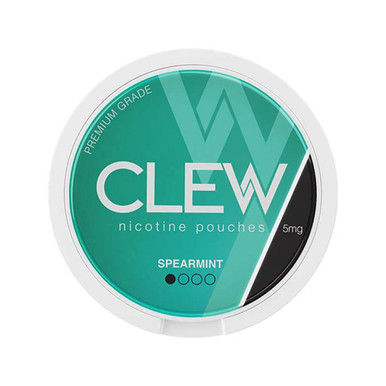
Three of the six are in the mint family and they are genuinely different from one another rather than three versions of the same idea. Clew Cool Mint is the plain cool reading. Clew Spearmint takes the sweeter, softer, more herbal branch. Clew Menthol heads for the sharp end where cooling is the point. For anyone arriving at wintergreen from a mint habit, those three are the nearest reference points the brand offers — near, but, as set out above, not the same family.
Two are fruit. Clew Blueberry is the dark, rounder one; Clew Citrus is the sharp one, and between them they cover most of what the brand does with fruit. The sixth is Clew Coffee, which is the only can in the range that brings roast and bitterness into play and is consequently the least like any of the others.
The brand page shows eight cans against the six siblings we list here, so there is more on that shelf than is described on this page. Rather than guess at what it is, we would send you to the shelf, which is always more current than body copy.
What people run alongside a can like this
Because wintergreen is polarising and distinctive, it tends to be one of two or three cans in rotation rather than the only one. The usual logic for a second can is contrast on an axis you can name.
If you want contrast by temperature, the cool end is straightforward: the Edge mint can at £14.95 is the cheaper route in and Klint's avalanche mint at £36.90 is the other. If you want contrast by sweetness and fruit weight, the Elf Bar berry pairing at £29.90 and Denssi Blueberry Freeze at £39.90 approach dark fruit from two directions, one plain and one with a cooling element named on the can. The Nordic Spirit berry can at £4.49 is a third reading of berry again, at a very different listed price on a different pack basis.
If you want something that shares nothing at all with wintergreen, the sharp and tropical corners are where to look: Fumi's lime can at £27.90, the 77 mango in mini format at £39.90, the Killa apple can at £33.50, or Pablo's blue raspberry at £19.95. And for the genuinely unusual, the Cuba Ninja coconut can at £39.90 is the other outlier profile on the shelf.
None of this is an argument for buying more than you came for. It is an answer to a question people ask, which is what else is worth a look next to this one.
Looking after a can
The advice is short because there is not much to it.
Press the lid fully shut every time. Clear the catch compartment so it can seat properly. Keep cans out of direct sun and away from heat sources — the windscreen of a parked car, a radiator shelf and a sunny windowsill are the three places cans reliably suffer. A drawer, a cupboard or a bag is fine. Room temperature is fine.
Some people keep cans in the fridge. That is a habit, not an instruction, and we are not going to claim it does anything in particular, because we hold no storage guidance from the manufacturer for this product. Whatever is printed on the can, including any date marking, takes precedence over anything written here.
With a ten-can pack, keep the unopened nine in the outer box rather than loose. Boxed tins do not get their lids knocked. And keep all of it, used pouches included, where children and animals cannot get to it.
Deciding what to order
Two decisions, and they do not interact.
Strength is the first, and we cannot help with it. The four figures order the range and that is all we are able to tell you about them.
Quantity is the second, and on this listing it is fixed: ten cans at £39.90. The real question is whether ten cans of wintergreen is the right first purchase if you have never had a wintergreen product. Given how divided opinion on this flavour family tends to be, that is a genuine consideration rather than a rhetorical one. Ten cans of something you turn out not to like is an expensive way to find out. If you are unsure, it is worth looking at whether anything comparable is available in a smaller quantity before committing — everything we stock in one list is the place to scan for that.
If you already know wintergreen suits you, the flat pricing means there is nothing left to weigh. Choose the figure and order it.
Buying, delivery and age checks
You must be 18 or over to buy this product, and we sell only to adults who already use nicotine.
Age verification runs at checkout, and depending on the result you may be asked to confirm your age before the order is accepted. The courier may also ask for identification at the door. If there is nobody aged 18 or over present to receive the parcel and show ID, it will not be left. That applies to everyone, without exception, and it is easier to plan a delivery around than to argue with.
We show this product in stock at the time of writing, but stock changes and the live listing is always more current than page copy. If the two disagree, the listing is right. Prices are in pounds sterling.
Where this page sits
Two shelves lead directly here. By brand, this brand's own page gathers the range. By strength band, the 132 cans filed as Strong is the wider set this belongs to.
From there the site opens out in the obvious directions. Other brand pages work the same way if you would rather browse by maker — the Cuba brand page and the Pablo brand page are two of the bigger ones. The strength bands either side are the Medium Strength shelf and the Extra Strong shelf. And if filtering is getting in the way, the full shop listing is simply everything.
Questions people ask about this one
What does wintergreen taste like?
We hold no flavour data for this specific can, so we cannot give you a description of it as a fact. Generally, wintergreen is a distinct flavour family — sweeter than peppermint, with a rounded aromatic character and a faintly medicinal edge — and it is not a mint, although it is often assumed to be one. For this product's actual declared flavour description, the can is the source.
Is wintergreen just another mint?
No. It is frequently shelved near mints and frequently mistaken for one, but it is its own flavour family with its own character. If you like mint, that is not a reliable predictor that you will like this, and the reverse is also true. It is worth treating as a separate decision rather than as a variation on a mint you already know.
How many pouches does a can hold?
We do not hold a portion count for this product and we are not going to estimate one from other brands, because counts vary. The can carries that number. What we can confirm is that this listing is ten cans for £39.90.
Why is there no flavour listed on your page?
Because our flavour field for this product is genuinely empty rather than because of an oversight in the writing. We would rather show you the gap than fill it with a plausible guess. It is one of the few products on the site where that field has nothing in it.
Which strength is right for me?
We cannot answer that and are not permitted to. We do not recommend strengths, do not describe any figure as suitable for anyone, and do not characterise what any of them are like. The four figures run 5mg, 10mg, 15mg, 20mg, lowest to highest, and that ordering is the whole of what we can tell you.
Why are all four strengths the same price?
That is simply how the product is listed: £39.90 for the ten-can pack at every one of the four figures. We hold no explanation from the brand for its pricing and will not invent one. The effect for you is that strength choice does not change the cost.
Is this a large pouch or a small one?
We do not hold a pouch size or format classification for this product, so we cannot tell you. Pouch size is one of the things people most often care about, so it is worth checking on the can rather than taking a guess from us.
How long should I keep one in?
There is no answer we are willing to give, because publishing a duration is effectively advising on how much to use. It varies widely between people. Flavour is generally strongest early and fades from there.
Where is this made?
We do not hold country of origin or manufacturing information for this product. Whatever the manufacturer declares on the packaging is the reliable source, and we are not going to fill that gap with speculation.
Is it popular? What do other people think of it?
We do not publish ratings, reviews, rankings or sales figures, so we cannot tell you and would not want to imply anything either way. The comparative information on this page is drawn from our own catalogue — prices, brands, shelf counts — and not from anyone's opinion.
Can I order different strengths together?
Yes. Each variant is a separate listing, so you add whichever combination you want. People commonly run something cool alongside something distinctive — the cool mint from this same brand is the obvious pairing, at the same £39.90.
What should I do with used pouches?
Put them in the lid compartment temporarily if you need to, then into general waste. Do not flush them and do not put them down a sink. Empty the compartment regularly — a full one is the usual reason a lid stops closing flat — and keep used pouches away from children and animals.
Compliance and legal notice
Sold to adults aged 18 and over only. We supply nicotine pouches exclusively to adults who already use nicotine. Age verification is carried out at checkout and ID may be requested on delivery; a parcel will not be handed over to anyone who cannot show they are 18 or over.
Nicotine is an addictive substance. That applies to every can we sell, at every declared figure, including the lowest one listed on this page.
Clew Wintergreen is not a licensed stop-smoking medicine and is not supplied as one. It is not intended for non-smokers, for anyone who does not already use nicotine, for anyone under 18, or for anyone who is pregnant or breastfeeding. Nothing on this page is medical advice, and nothing on it is guidance on how much to use. Questions about nicotine and your own health belong with a qualified healthcare professional.
Keep all nicotine products, used pouches included, out of reach of children and animals.
To summarise
Clew Wintergreen is a ten-can pack at £39.90, available in 5mg, 10mg, 15mg and 20mg at that same price, filed on our Strong shelf and part of an eight-can brand range. Our flavour field for it is empty, so we have told you what the word generally means and pointed you at the can for the rest rather than writing a tasting note we cannot support.
What we can offer in its place is context: a properly detailed account of the tin itself, and an honest picture of where a distinctive, non-mint flavour sits among the 132 cans it shares a strength band with. If you want to see that band for yourself, the Strong shelf is the place, and Clew's eight-can shelf is the other direction to go from here.
More from Clew
More strong pouches

More clew pouches
Where this sits
Clew Wintergreen Nicotine Pouches appears in these categories. Browse them, or jump to something close.
You might also like