Home / Medium Strength / 77 Pink Punch Nicotine Pouches
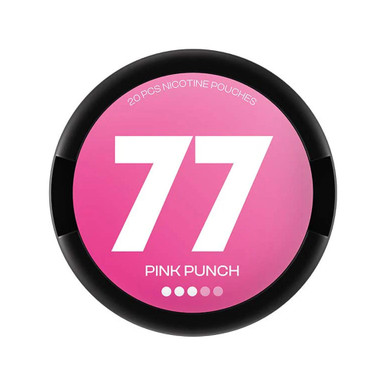
77 · 10.4mg
Read the full guide
77 Pink Punch Nicotine Pouches
£39.90
✔ In stock — ready to ship
100% tobacco-free
Free over £20
Same-day dispatch
Secure checkout
This page covers 77 Pink Punch Nicotine Pouches. Our record gives one declared strength, 10.4mg, one price, £39.90, and a stock position of available at the time of writing. It gives no flavour categories at all, and no can count. That is the complete set. It is a shorter set than we hold for most listings, and rather than disguise that with a page full of atmosphere, this description is built around what can be said truthfully: the object itself, the number on it, and where both sit against the rest of our shelves.
Product pages usually work by expanding a large pile of manufacturer data into prose. This one works the other way round. We have a small pile, so the page spends its length on the two things a shop can genuinely tell you that a can cannot: what the physical object is like to live with, and how the figure printed on it relates to the figures printed on the two hundred-odd other cans in the room. Those are the two sections doing the work here, and they are both long.
The full guide to 77 Pink Punch Nicotine Pouches
5,022 words on how it eats, who it suits, how to serve it and what to put beside it.
Pink Punch: everything our record actually holds
Standing note, stated at the top rather than buried: this is an adult nicotine product, sold only to people aged 18 and over who already use nicotine. Full compliance wording has its own section at the foot of the page.
The flavour line on this listing is blank
The honest starting point is an absence. Most of our listings carry one or two flavour categories, which is how a can ends up on a flavour shelf. This one carries none. It is not that the categories are unusual or that we have filed it somewhere odd — the field is empty.
The practical consequences are immediate and worth stating plainly. First, we are not in a position to describe what this can tastes of, and we are not going to write a tasting note out of the name. A product description that invents a flavour profile from four letters on a lid is worse than useless, because it reads exactly like one written from knowledge. Second, because the flavour field is empty, this listing does not appear on any of our flavour shelves. It is reachable by brand and by strength and not by taste, which is why the navigation section near the foot of this page is shorter than it would otherwise be.
What can be said about the name, carefully and with the limits attached: "punch" is a term used across food and drink naming for a mixed fruit composition rather than a single named fruit, and "pink" in flavour naming is a colour cue rather than a taste. That is a statement about how words are used on labels generally. It is not a statement about the contents of this can, we have not verified it against this product, and you should not treat it as a description. The printed can is the only authority on what the flavour actually is, and if that detail matters to you before you order, the can is where to read it.
We would rather leave this section unsatisfying than fill it. A blank in a shop's record is a fact about the shop, and the correct response is to show the blank.
The can, taken apart
With no flavour data to work from, the object itself becomes the most informative thing on the page — and it deserves the attention anyway, because it is the part of the purchase you handle several times a day and the part most product descriptions dispose of in a clause.
Shape, and the way the lid works
A pouch can of this type is a shallow round tin: a cylinder much wider than it is tall, sized to close a hand around. There is no hinge, no screw thread and no catch. The lid lifts straight off and presses straight back down, and the only thing holding it is friction between two rims.
That friction fit is the single most important piece of engineering in the object, and it is worth paying attention to on the first can of any purchase. Too loose and the lid works free in a bag; too tight and getting it off one-handed becomes a nuisance. A well-made can sits between the two and stays that way for the life of the can. The most common way people wreck the fit is mechanical: a can squashed slightly out of round — sat on, trodden on, left at the bottom of a rucksack under a laptop for a fortnight — never seals properly again, and there is no fixing it.
The printed face, which matters more on this listing than most
The top of the lid is where the information lives: the brand, the product name, and the declared strength figure. On a listing where our own record is thin, that printed face is not a convenience, it is the primary source. Flavour detail, pouch count, the manufacturer's own description, origin, dates, any warnings and any technical statement — all of it is on the packaging and none of it is here. If you want to know something about this product that this page has not told you, the answer is almost certainly printed on the can.
There is a second reason the lid face matters, which applies to every can rather than just this one. Anybody who buys pouches regularly ends up with several cans in the house at once, and from above they are near-identical discs. Makers often distinguish flavours within a range by colour alone. Getting into the habit of reading the lid rather than recognising it is a small discipline that saves a certain amount of irritation, and it matters most for a can whose name does not tell you what is inside.
Inside: the ring, and the count we cannot give you
Lift the lid and the pouches are arranged flat in a ring around the inside of the base, laid back-up so that a fingertip can lift one out without digging. It is a sensible arrangement and it is close to universal across the category. As the can empties the ring thins and the remaining pouches slide about; that is normal.
How many are in the ring is something we do not know. Our record carries no pouch count for this product and we are not going to estimate one. An estimate dressed as a fact is the exact failure this page is trying to avoid, and a plausible number is more dangerous than a blank because nobody questions it. The printed can carries the count.
The same applies to the can's diameter, its depth, its weight and the material it is made of. None of that is in our record. If it is stamped on the packaging, the packaging is the place to read it, and if it is not stamped anywhere, then neither of us knows.
The compartment under the lid
Most modern pouch cans include a second, shallower compartment between the lid and an inner disc, sitting above the pouches themselves. Its purpose is mundane and useful: it holds used pouches until you find a bin. Whether this particular can has one is not something our record tells us, so open it and look rather than taking our word for it.
If it is there, two things are worth knowing. It fills faster than people expect — it is shallow by design, because the pouches need the depth — and it is the part of the can that becomes unpleasant if it is ignored. Emptying it whenever you open a fresh can is about the right rhythm. It is for carrying rubbish to a bin, not for storing rubbish indefinitely, and used pouches belong in a bin rather than down a drain or a toilet.
Carrying it: pocket, bag, drawer
In the hand the can is a puck, and its awkwardness is all in the diameter rather than the depth. It lies flat in a jacket pocket without showing. It is less comfortable in a close-fitting trouser pocket, not because it is thick but because it is wide and does not bend. In any bag with a small internal pocket it disappears entirely, and in a bag without one it migrates to the bottom and gets knocked about, which brings you back to the out-of-round problem above.
At home the practical issue is accumulation rather than carrying. A can in use, a part-used can from something you went off, and a couple of spares from the last order is four shallow tins that look the same from above and do not stack stably. One drawer, lids up, is the entire filing system required — and, for reasons set out in the storage section below, it should be a drawer that children cannot get into.
Using one: three movements and a decision about when to stop
The format is identical across every product we sell. A pouch is a small sealed sachet that is placed in the mouth between the lip and the gum — most commonly at the front, under the top lip — and left there. It is not chewed, not sucked like a sweet and not swallowed, and it comes out in one piece.
The handling is three movements: lid off, one pouch out, lid on. Once in place the lip holds it and it stays put unless it is moved. It can be shifted from one side of the mouth to the other if the position it is in becomes uncomfortable. If it is uncomfortable wherever it goes, take it out; there is no merit in persevering with something that does not sit well.
How long people keep one in is the question we are asked most and the one with the least precise answer. The range people describe across the whole pouch category runs from something like twenty minutes to about an hour, with plenty of people outside that in both directions. What generally decides it is the taste rather than a clock: flavour is at its clearest early and fades from there, and most people take a pouch out when there is nothing left to taste. That is a description of what people do. It is not an instruction, and nothing about a pouch needs finishing.
The strength ladder, and the rung this can is on
The second long section of this page is about the number, because with no flavour data the number is the other thing this listing genuinely tells you. What follows is what it means, what it does not mean, and how the rungs of our own ladder are arranged.
What the figure is
10.4mg is a declared amount per pouch, published by the manufacturer and printed on the lid. Its role is comparative: it exists so that cans can be sorted into an order, so that a shop can file them, and so that somebody who already buys from one part of the range can find that part again. That is the whole of its function on a retail page.
On our shelves it places this listing on the medium-strength shelf, which holds a hundred and thirty-five cans and is comfortably our largest strength category. If you know you buy from the middle of the range, that shelf is where this can lives and where its nearest equivalents are.
What the figure is not
It is not a promise that two cans printed with the same number are interchangeable. Pouch size varies between products. So does moisture. So does flavour intensity, and so does the way a particular manufacturer constructs a pouch. None of those variables appear anywhere in a milligram figure, and a figure that captures one property is routinely read as though it captured all of them.
It is also not a recommendation, and this page is not making one. We do not know anything about the person reading, we do not give advice on what figure anybody should be buying, and we would be the wrong source for it if we did. Everything in this section is shelf layout: here is the ladder, here is the rung, here is what is above and below. What you do with that is yours.
The rungs we actually run
Our ladder has four rungs and they are not evenly loaded, which is itself worth knowing. The medium shelf that holds this listing is the busiest by a wide margin. Above it, the strong shelf and then the extra-strong shelf carry the listings with higher declared figures on the lid.
The consequence of that uneven loading is practical: the middle of the range has by far the most choice in it, and the further you move from the middle in either direction, the fewer cans there are to move between. If variety matters to you, the shelf you buy from determines how much of it is available, and that is a stocking fact rather than a statement about the products.
Same number, different can
Within the group of cans around this figure, the useful comparisons on our shelves are these. White Fox Double Mint at £34.90 and Klint Arctic Mint at £36.90 are the two cans nearest this listing on price among the mint-led options. XQS Arctic Freeze at £39.90 and Pablo Silver Edition Blue Raspberry, also £39.90 match this listing's price exactly, which makes them the natural pair to set beside it if price is the variable you are holding constant.
Further down the price column, SYX Apple Kiwi at £29.90, Fumi Blackcurrant at £27.90, UBBS Cherry at £19.95 and Edge Spearmint at £14.95 spread across most of the middle of our pricing, and at the bottom sit Nordic Spirit Blueberry at £4.49 and Velo Bright Spearmint at £4.19. Before you read that spread as a bargain hunt, note the caveat that applies across this whole site: some listings are priced as a single can and some as a larger quantity, and we do not publish a can count for this one. Two prices are not comparable until you know what each covers.
Pink Punch among the other 77 cans
We list twenty-nine products from this maker, and the 77 brand page gathers all of them. The range is wide — fruit cans, mint cans, fruit-and-mint pairings, cola presentations, teas, dessert-leaning names and a sub-line built on a smaller can — and it is the kind of range where a buyer can stay inside one maker for a long time without repeating themselves.
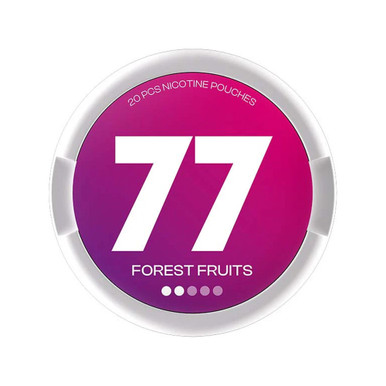
Against that spread, this listing is one of the brand's fruit-leaning names, though as set out above we cannot confirm the composition. If you want a can from the same maker where the name does tell you what is in it, 77 Apple Mint at £39.90 and 77 Forest Fruits at the same price are the two clearest: the first a single named fruit with mint behind it, the second a mixed dark-berry composition. Both are on the same price line as this can.
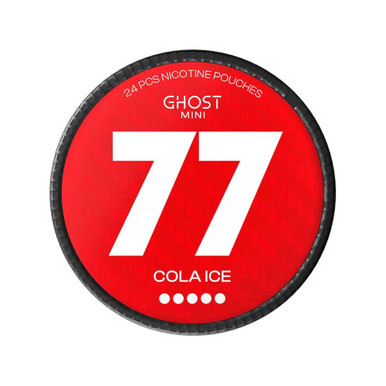
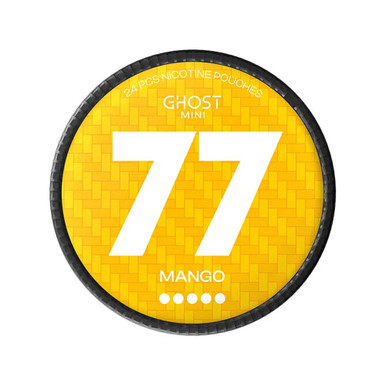
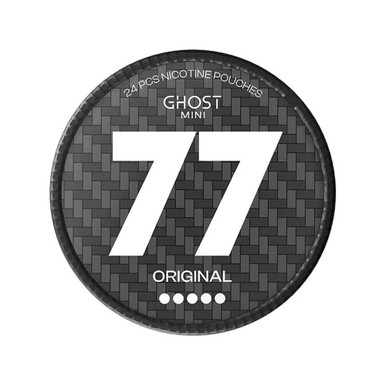
Moving off the fruit shelf, the maker runs two cola variants — 77 Cola Ice and 77 Cola Vanilla, both £39.90 — which are about as far from a fruit composition as the range goes while staying sweet. And there is the smaller-format line, which is a difference of object rather than of taste: 77 Ghost Mini Mango and 77 Ghost Original Mini, each £39.90. Given how much of this page is about the can as a physical thing, a mini can is worth knowing about — it is a genuinely different object in a pocket.
What people keep beside a can like this
Regular buyers almost never keep one flavour and nothing else, and with an unlabelled name there is an extra reason to have something known in the house alongside it: if the new can turns out not to suit, you are not left with nothing.
The straightforward approach is to keep one can you already know well and one you are trying. For a known quantity in the mint direction, the £34.90 White Fox Double Mint is a doubled mint description, Klint Arctic Mint at £36.90 is built around a cold presentation, and Velo Bright Spearmint at £4.19 is the cheapest way on our shelves to have a spearmint-led can in the drawer.
For a known quantity in the fruit direction, the choice is wider: Fumi Blackcurrant at £27.90 for a dark, deep berry, UBBS Cherry at £19.95 for a single sweet stone fruit, the £4.49 Nordic Spirit Blueberry for a lighter berry, and SYX Apple Kiwi at £29.90 for the sharper, more acidic end of what we carry. Any of those gives you a clearly identified flavour to sit beside one that is not.
For something further out again, XQS Arctic Freeze at £39.90 and the Pablo Silver Edition Blue Raspberry at the same price are the two cans in this group that are most obviously built around a single strong idea — one cold, one a specific berry treatment — and either makes a clean contrast with a mixed fruit name. Edge Spearmint at £14.95 is the most economical of the mint-led options mentioned anywhere on this page.
If you would rather browse than take a shortlist, the Pablo range and the Cuba range are two of the larger maker pages we run, and the full shop listing holds everything at once.
Keeping the can in good order
Storage for pouches is short and mostly consists of treating an opened tin sensibly.
Keep the lid on, pressed down until it sits flush rather than balanced on top. The lid is the only thing between the contents and the air, and a can left open overnight will be drier and duller in the morning. This is the commonest way people spoil something they have already paid for.
Keep it cool, dark and dry. The three places cans reliably deteriorate are a sunny windowsill, the inside of a parked car in summer and a shelf above a radiator. Heat does more damage to flavour than anything else you can do short of leaving the lid off. A drawer or a cupboard is entirely sufficient, and no refrigeration is needed. Some people keep cans in a fridge by preference; we neither recommend it nor advise against it.
Check the printed date on the base and work through older cans before newer ones. If you keep more than one or two at a time, putting new stock at the back of the drawer takes seconds and prevents the archaeology of finding a forgotten can behind the tea.
Store every can out of reach of children and animals, and mean it. A pouch can is small, brightly printed and easy to open, which is exactly the combination that makes a low drawer the wrong place for it. This is an adult product and it should be kept like one.
One variant, one price, and what is left to decide
Some of our listings carry several strengths on a single page and require you to pick one before adding to basket. This is not one of them. There is a single variant — 10.4mg at £39.90 — no option to select and no price that changes depending on what you choose. Whatever there is to decide here, it is not a decision about a dropdown.
The quantity question is the one that remains, and on this listing it is complicated slightly by the fact that we do not publish a can count. That means we cannot tell you from this page whether £39.90 is buying you one can or a larger quantity; the basket is where that becomes explicit before you pay. If you are ordering something whose flavour our record does not describe, it is worth checking that figure rather than assuming it, because the size of the commitment depends on it entirely.
If the declared figure rather than anything else is what does not suit, the remedy is a different shelf rather than a different option on this page. The strong shelf and the extra-strong shelf hold the listings with higher declared numbers, and the medium shelf this listing sits on holds a hundred and thirty-four others at figures in this region. That is where they are; it is not a suggestion that you go.
Ordering it, and what happens at the door
We list this product as in stock at the time of writing, so the ordinary process applies: add it to a basket alongside anything else from everything we stock and check out. Brands, flavours and strengths mix freely within one order and there is no rule requiring separate baskets for different kinds of can. One basket means one parcel and one occasion on which somebody has to be in.
Stock positions move, and a written page is a snapshot rather than a live feed. The basket is the authority on what can actually be bought at this moment: if it adds and checks out, it is there.
We sell only to adults aged 18 and over. Age verification forms part of the order process and cannot be waived by asking. Photographic ID may be requested on delivery, and a courier is entitled to refuse to hand over a parcel to anyone who cannot produce acceptable identification or who appears to be under 18. A refused parcel goes back. Having ID to hand, and not arranging for someone under 18 to take the delivery in, avoids the situation entirely.
For delivery timings and carriers, our shipping pages carry the current position and are a better source than a paragraph here that will be out of date within a few months. The one durable piece of advice is to consolidate an order rather than split it.
Where this page sits in our navigation
This listing is reachable from two shelves rather than the usual four, and the reason is the empty flavour field discussed at the top of this page: with no flavour category recorded, the can does not appear on any of our flavour shelves.
The two routes that do exist are the 77 brand page, where it sits among the maker's twenty-nine listings, and the medium-strength shelf, where it sits among a hundred and thirty-five. Of the two, the brand page is much the faster way back, for the obvious arithmetic reason.
If you are browsing rather than looking for this specific can, maker pages are generally the better way in, because a range has an internal consistency that a strength shelf does not. The Cuba range and the Pablo range are two of the bigger ones we carry, and the complete catalogue is there if you would rather start at the top. The strong shelf and the extra-strong shelf are the other two strength categories, if the ladder is how you prefer to navigate.
Questions we get about this listing
What does Pink Punch taste like?
We do not hold that information. The flavour field in our record for this product is empty, which is unusual and which we would rather show you than paper over. We are not going to write a tasting note from the name, because a description invented from a label reads exactly like one written from knowledge and is far more misleading than a blank. The printed can carries the manufacturer's own flavour description, and that is the place to read it.
Why is it not on any of your flavour shelves?
For the same reason. Our flavour shelves are built from the flavour categories in each product record, and this record has none, so the listing has nothing to attach it to a flavour page. It is filed by brand and by strength only. That is a gap in our data rather than a statement about the product, and if the record is completed later the listing will appear on whichever shelves it belongs to.
Is it a fruit flavour?
We cannot confirm it. The name suggests a fruit composition in the way that names of that kind usually do, but "usually" is not a fact about this can and we are not going to present an inference as though we had checked it. If the answer matters before you buy, the can is the authority, and several clearly labelled fruit listings are named elsewhere on this page if you would prefer to buy something described.
Is there a pouch count on this listing?
We do not hold a pouch count for this product. Our record carries price, strength, stock position and nothing else of that kind. Rather than publish an estimate that would be read as a fact, we will say plainly that it is not something we know. The printed can carries the count, along with weight, dimensions and anything else stamped on the packaging by the manufacturer.
What does the £39.90 actually cover?
Our record does not carry a can count for this listing, so we cannot answer that from this page. Some of our listings are priced as a single can and some as a larger quantity, which is why you should never compare two prices on this site without checking what each one covers. The basket makes it explicit before you pay for anything, and on a listing with this little flavour information it is worth checking rather than assuming.
Can you tell me whether 10.4mg would suit me?
We do not answer that question for anybody. It is a personal decision, we know nothing about the person asking, and a shop would be the wrong source for a recommendation even if we were inclined to give one. What we will give you is the layout: this listing is 10.4mg, it sits on a medium shelf of a hundred and thirty-five cans, and there are strong and extra-strong shelves above it. The rest is yours.
Does the can have a compartment for used pouches?
Most cans of this general type do — a shallow space under the lid, above an inner disc, intended to hold used pouches until you reach a bin. We do not hold a specification sheet for this particular can, so we cannot promise you it is there, and the sensible move is to open the can and look. If it is, empty it regularly; it fills faster than people expect and is the part of the can that gets unpleasant when ignored.
Is there a recommended length of time to keep one in?
We do not give instructions on that. The range people describe across the category is roughly twenty minutes to about an hour, with a good many people outside it in both directions. Flavour is generally the thing that decides it rather than a clock, because it is clearest early and fades from there. There is nothing about a pouch that needs finishing, and taking one out whenever you want to is entirely normal.
Is it in stock right now?
We list it as available at the time this page was written, but a description cannot keep pace with a stock system. The basket is the live answer: if the listing lets you add it and check out, it is there, and if it has gone the page will say so rather than letting you order something we cannot send. We would rather you found out on the page than after the money had changed hands.
Can I put it in the same order as other brands?
Yes. There is no restriction on mixing brands, flavours or strengths in a single basket, and most orders are mixed. One basket is better than several in every practical respect — one parcel, one delivery, one occasion on which somebody has to be at the door with identification. If you are building a mixed order from this maker, the 77 range page is the quickest way to add several cans without searching for each.
Do you publish ingredients or technical detail?
No. We do not publish ingredient lists, composition, manufacturing information or technical specification for this or any other product on the site, and we do not paraphrase what is printed on the packaging either. The can and the manufacturer's own materials are the correct source. Our pages cover price, strength figure, format, availability and comparison with the rest of our stock, and they stop there deliberately.
Who makes it and where?
We do not hold that. Country of origin, manufacturing site and corporate ownership are not part of our record for this listing, and given how much of this page is about not inventing missing data, inventing that would be a poor way to finish. If the printed can carries it, read it there.
Will I be asked for ID on delivery?
Expect to be. Age verification is part of the order process, and photographic identification may be requested at the door as well. Whether a particular courier asks on a particular day is their call, but the parcel can be refused if ID cannot be produced or if the person accepting it appears to be under 18. We sell only to adults aged 18 and over who already use nicotine, and these checks are what keep that true. They cannot be opted out of.
Legal and compliance notes
This product is for adults aged 18 and over only, and we sell it only to adults who already use nicotine.
Nicotine is an addictive substance.
It is not a licensed stop-smoking medicine, and it is not intended for non-smokers, for anyone who does not already use nicotine, for anyone under the age of 18, or for anyone who is pregnant or breastfeeding. Nothing on this page constitutes a health claim, a medical claim or advice about your own use. If you have questions about nicotine and your health, a healthcare professional is the person to ask, not a retailer.
Age verification is carried out as part of the order process, and photographic ID may be requested on delivery. Couriers may refuse to release an order to anyone who cannot produce acceptable identification or who appears to be under 18. Keep this and every product of its kind stored securely and well out of the reach of children and animals.
To finish
77 Pink Punch is a single-variant listing at 10.4mg and £39.90, from a maker whose full range runs to twenty-nine products on our shelves, and we list it as available at the time of writing. Our record carries no flavour categories for it and no can count, which is why this page has spent its length on the object and the number rather than on a tasting note it is in no position to write.
Where we hold a fact, it is printed above. Where we do not — the flavour, the pouch count, the can count, the origin — the page says so. A shop that fills its gaps with plausible writing is a shop whose facts cannot be trusted anywhere else on the site either, and we would rather this page read short than read invented.
More from 77
More medium strength pouches
More 77 pouches
Where this sits
77 Pink Punch Nicotine Pouches appears in these categories. Browse them, or jump to something close.
You might also like