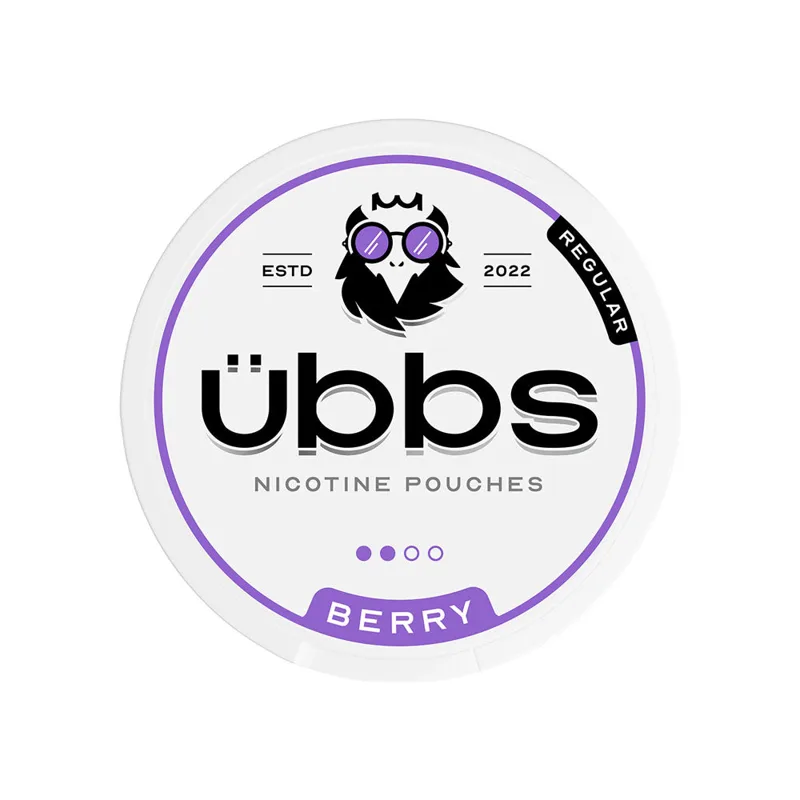
Home / Medium Strength / UBBS Salted Caramel Nicotine Pouches
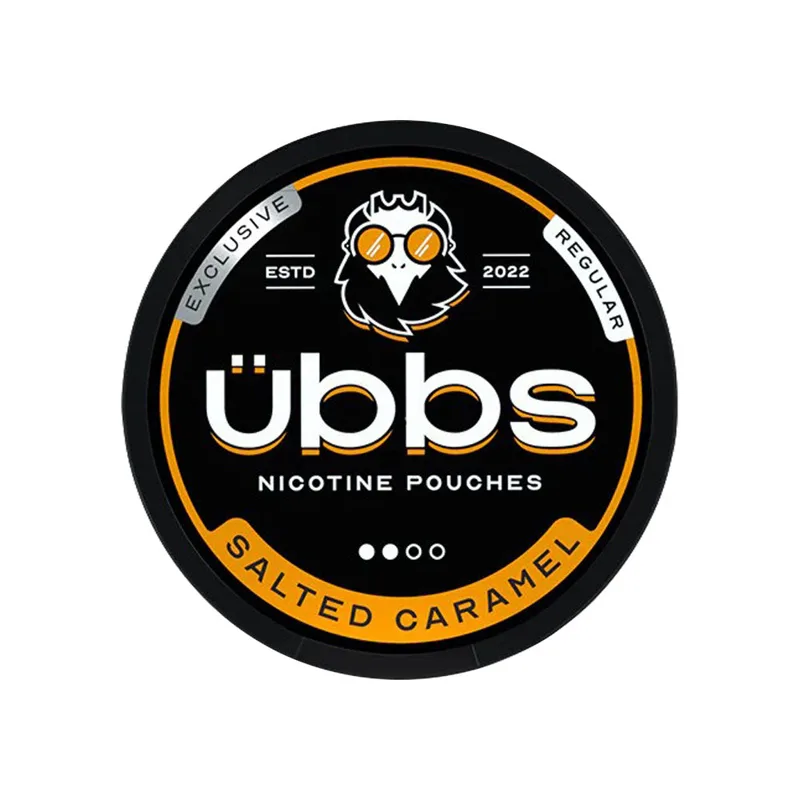
UBBS · 6mg–11mg · 5-can pack
Read the full guide
UBBS Salted Caramel Nicotine Pouches
£19.95
✔ In stock — ready to ship
100% tobacco-free
Free over £20
Same-day dispatch
Secure checkout
UBBS Salted Caramel Nicotine Pouches is flagged unavailable in our stock record as this is written. That sentence goes first because everything after it is written for somebody deciding whether to wait or to order something else, and burying the stock position under a thousand words of description would waste your afternoon.
There is no restock date attached to the record. None is held, none is forecast, and we are not going to write "back soon" to keep a page feeling optimistic — a date invented to manage a reader's mood is the sort of small lie that makes everything else on a shop page suspect. The stock flag is the entire extent of what we know about its return.
The full guide to UBBS Salted Caramel Nicotine Pouches
4,942 words on how it eats, who it suits, how to serve it and what to put beside it.
You cannot buy this one today
What the page can still do is tell you what the listing is, so you know what you would be waiting for, and point at what else we hold that occupies nearby ground. The brand's other cans are available and are dealt with properly below, as are the coffee-tagged listings from other brands, which is where the closest substitutes sit given how this one is filed.
A flavour name, a different tag, and what each is worth
The lid says Salted Caramel. Our catalogue files the listing under the flavour tag coffee. Those two words are not the same word and the discrepancy is worth putting near the top rather than smoothing over.
Neither is a mistake, exactly. The name is the manufacturer's own; the tag is our shelving decision, and salted caramel belongs to the same broad family of dark, sweet, roasted-adjacent flavours that our small coffee shelf collects — a shelf of only nine listings, which is the narrowest flavour grouping we run. Dropping a caramel into it is a filing choice, not a description, and it means this listing sits among coffee cans without being one.
Salted caramel as a taste
Taken as a flavour name, salted caramel describes a familiar confectionery register: cooked sugar, taken far enough to turn dark and slightly bitter at the edge, with the savoury counterweight that keeps a caramel from reading as flatly sweet. It is a rounder, heavier flavour than a fruit and a much warmer one than a mint — closer to a dessert than to anything bright. The aroma associated with the name is buttery and toasted rather than sharp.
That is what the words mean in ordinary flavour language. It is not a statement about what is in this pouch. We hold no information about the composition of this product — none at all, including any question of salt. The name is a flavour name, exactly as "cherry" is on another can, and it tells you what the manufacturer set out to evoke rather than what was used to do it. Anyone asking whether the can actually contains salt is asking a question our record cannot answer, and the printed labelling on the tin is the only place to look.
Nor do we hold a tasting note that would tell you how sweet, how dark or how salty the result reads. One flavour name and one filing tag is the whole of our sensory information, and this page will not manufacture more.
The listing as recorded
Brand: UBBS. Flavour name: Salted Caramel. Price: £19.95 for a pack of 5 cans, which is £3.99 a can. Two declared strengths, 6mg and 11mg, both at that same £19.95. One image on file. Tag: coffee. Stock: unavailable, as set out above.
And the empty fields, listed so you know they are gaps rather than omissions: pouches per can, pouch weight, pouch format, tin dimensions, producer, country, dates, and any flavour description beyond the two words already discussed. Our system holds nothing in any of them. The can's own labelling is authoritative for the lot, which is a slightly awkward answer for a product you cannot currently buy, and it is still the true one.
Eleven milligrams is an unusual figure to see declared, given how much of this catalogue runs on round numbers. We have no account of why the brand chose it and will not invent one. It is simply what the label declares, and we reproduce it as given.
Where this can falls in the UBBS range
All twelve UBBS listings we hold share one commercial shape: £19.95 for five cans, without exception. Within this brand, then, the only variables are the flavour name and the declared figures — there is no price to weigh, no pack size to compare, nothing but taste and the number on the lid. The brand's own shelf shows all twelve with live availability, which is the practical place to check the ones this page describes.
The range splits into three groups, and this listing sits alone in one of them.
The cold group
Three mint-tagged cans make up the brand's cold side. UBBS Menthol at £19.95 runs 6mg, 11mg and 14mg; UBBS Peppermint at the same price runs 6mg, 11mg and 20mg and is the highest figure the brand offers us; a spearmint can completes the trio and sits on the brand shelf with them. All three carry the same one-word tag mint in our catalogue, so we cannot tell you how they differ from one another beyond the lid names and the ladders. Adjacent to them, UBBS Cola Ice at £19.95 puts a cola flavour over a cold base, which makes it the range's hinge rather than a straight mint.
The fruit group
UBBS Cherry at £19.95 is the stone-fruit listing, and UBBS Peach Passion, also £19.95, is the tropical one — filed under tropical rather than under peach, and listed at a single declared 4mg, which is both the lowest figure in the brand's range with us and the only UBBS listing offering just one variant.
The dark group, where this one lives
Two listings sit in the warm, dark corner of the range: this can and UBBS Coffee at £19.95, which is the brand's straightforwardly roasted flavour and shares this listing's shelf tag. With the salted caramel unavailable, the coffee can is the only UBBS listing on that shelf you can currently order, which makes it the obvious in-house substitute for anyone who came here for something dark rather than cold or fruity.
Who each of them is for, as far as we can say
| If you want | The UBBS listing | Declared figures |
|---|---|---|
| A dark, sweet, dessert-register flavour | This can — currently unavailable | 6mg, 11mg |
| A dark, roasted flavour you can order today | The brand's coffee can | see its own page |
| Cold and nothing else | The three mint-tagged cans | up to 20mg on the peppermint |
| Cold with a flavour over it | The cola listing | see its own page |
| Sweet fruit | The cherry can | see its own page |
| Tropical fruit, lowest figure in the range | The peach and passion listing | 4mg only |
That table sorts by flavour and by nothing else, because flavour is the only axis on which a shop can responsibly say who a can is for. On which declared figure suits which person we have nothing to offer and say so plainly further down.
Buying rhythm: packs, spares and reordering
This is the section that matters most on a page for something unavailable, because the whole business of running out is a question of rhythm rather than of taste.
Five cans against a single tin
A five-can pack and a single tin are different purchases with different consequences. A single tin is a low-commitment way to find out whether you like a flavour, and a wasteful way to buy something you already know you like. A five-can pack is the reverse: it is the arrangement for a flavour you have settled on, and it is four cans of regret if the flavour turns out not to suit you. This listing offers only the five-can arrangement at £19.95, so it is a pack for somebody who already knows what they are buying.
Elsewhere on the site the arithmetic looks very different from listing to listing. Nordic Spirit Blueberry at £4.49 and ZYN Coffee Mini at £19.99 are priced in brackets that suggest quite different pack shapes, but our record gives us their prices and stock flags without their can counts, so we cannot tell you the per-can figure for either and will not guess at it. Each listing's own page carries its own numbers.
How people actually reorder
The pattern among regular users of this format is fairly consistent. A pack gets opened, one can goes into a coat or a bag, and the rest stay at home. The reorder is triggered not by running out but by starting the last can — which is the small habit that separates a planned order from a Friday-evening scramble. Anyone who waits until the final can is empty is relying on delivery timescales they do not control.
The second habit worth naming is the spare. Most people who use this format keep one unopened can somewhere separate from the main supply: a desk drawer, a glovebox in winter, a bag pocket. Not as a stockpile — as insurance against the day the order is late. The spare is also the reason a five-can pack suits regular users better than a single tin: it makes keeping one out of circulation painless.
How long a pack lasts, and why we cannot tell you
People reasonably want to convert £19.95 into a number of weeks, and the conversion needs two figures: how many pouches are in a can, and how many a person gets through. We hold neither. The count is not in our record for this listing, and the second figure is personal and none of our business to estimate — publishing a typical daily number would be dosage guidance wearing a spreadsheet's clothes.
What you can do is work it out for yourself once, and then it is settled for good. Count the pouches in the first can, note how long that can lasts you, and multiply by five. That is a real answer built from your own use rather than an average that describes nobody. It is also the only kind of answer a shop can honestly help you reach.
What a stock flag does to that rhythm
An unavailable listing breaks the rhythm at exactly the point it is least convenient, and the honest response is not to promise a return date but to have a second flavour you are content with. That is the practical argument for keeping two cans on the go that this site makes on a lot of pages: it is not about variety for its own sake, it is that a shop's stock position is outside your control and outside ours.
If this was your regular can, the substitution question is dealt with in the next two sections. If you are reading this page having never ordered it, the fairest summary is that you are looking at a listing you cannot act on and an alternatives list you can.
The coffee shelf, and what else sits near this listing
Our coffee grouping holds nine listings, which makes it the smallest flavour shelf on the site by a wide margin — the mint shelf, for scale, runs to well over a hundred. A narrow shelf is a genuine piece of information for anyone who prefers dark flavours: the field is small, and when one listing on it goes out of stock, the remaining options are countable on two hands.
The nearest relatives our pack offers, all currently available, are Clew Coffee at £39.90, the ZYN coffee mini at £19.99 and Killa Cappuccino at £33.50, which is the one of the three whose name points at a milkier register rather than a plain roast. Alongside them, 77 Cola Vanilla at £39.90 is the closest thing in the group to a sweet, dessert-leaning flavour without being a fruit — vanilla over cola rather than caramel, but the same broad intention.
Further out, the pack puts five listings beside this one that are not dark at all: Fumi Blackcurrant at £27.90, the Nordic Spirit blueberry can at £4.49, Pablo Silver Edition Blue Raspberry at £39.90 and SYX Apple Kiwi at £29.90 on the fruit side, and Klint Arctic Mint at £36.90 and Edge Spearmint at £14.95 on the cold side. They are neighbours by shelf arithmetic rather than by flavour, and they are listed here for completeness rather than as substitutes for a caramel.
One caution on all those prices. Our pack carries each listing's price and availability but not its can count, so none of those figures is comparable with this listing's £19.95-for-five and we are not going to imply otherwise. A £39.90 pack could hold ten cans and be the cheaper per can; a £4.49 listing could be a single tin. Open each page and read what its own price covers.
If you came here for this can and it is not available
Three honest routes, in rough order of how close they stay to what you were after.
First, stay with the brand and change flavour: the UBBS coffee pack is the same £19.95 for five cans, sits on the same shelf tag as this listing, and is the nearest thing the brand has to it. Second, stay with the flavour family and change brand: the coffee-tagged cans named above are the field, and it is a small one. Third, accept a wider change and browse the brand's twelve listings or the coffee shelf in full, rather than working from a description someone wrote on a particular Tuesday.
What we would rather you did not do is take the availability on this page as current without checking. A tile on a shelf carries the live flag; this paragraph carries a snapshot. If the listing has come back, the shelf will say so before the copy does.
A fourth route exists and is worth naming even though it is the least satisfying: wait, and use something you already have. Nobody needs a shop's encouragement to buy a replacement they are lukewarm about, and a listing that is unavailable this month is not an argument for ordering a can you do not want. If none of the alternatives above appeals, the honest recommendation is none of them.
One practical note for anyone substituting across brands rather than within UBBS. Two things change at once when you do that — the flavour and the declared figure, because every brand sets its own numbers by its own methods — and it can be hard afterwards to say which of the two changes you are reacting to. Keeping one familiar can running while you try an unfamiliar one is how most regular users handle it, and it costs nothing but a little patience.
Why we print the manufacturer's flavour name and stop there
Two words reach you from this listing: the brand's name for the flavour, and our tag. It is worth explaining why we do not add a third layer of our own description, since almost every other shop does.
The manufacturer's name is the only flavour information with an author who actually knows what they made. It is chosen by the people who built the flavour, printed on the can, and consistent everywhere the product appears. Our tag is a shelving decision made by us, useful for browsing and useless as a description — which is exactly why this page has been careful to say which of the two words is doing which job.
A third layer — a shop's own tasting note — would have no author with knowledge behind it. Someone would write "rich, buttery, with a long finish" having never had the can in their mouth, and it would read more convincingly than either of the two honest words above it. On an age-restricted product that nobody can currently buy, an invented sensory description is not a harmless flourish; it is the part of the page a reader is most likely to trust and least able to check.
So the flavour sections here describe what the words mean in ordinary usage and say plainly where our knowledge stops. It makes for a drier page. It also means everything on it is something you could verify against the tin.
The format, plainly
A pouch is a small sealed portion, placed between the lip and the gum — most people use the upper lip — and left there. It is not chewed, opened or swallowed. Once positioned it needs no attention, and most people settle quickly on a side and a placement that suits their own mouth, which differs from person to person more than any brand difference does.
How long one stays in varies widely and individually. The flavour is at its most defined early and tapers from there, which for a sweet, dark flavour tends to be a gentler curve than for a sharp one. We do not publish a recommended duration, a daily count or an interval between pouches — that is dosage guidance and not a retailer's business. Anything of that kind belongs with the manufacturer's own printed instructions.
Cans in this format are typically built in two levels: the lower one holds unused pouches, and a shallow ring or shelf under the lid takes used ones until a bin is available. Treat that compartment as a temporary holder rather than a day's storage — once it is full the lid no longer seats properly, and a lid sitting proud means an open can. Used pouches go into household waste in a closed bin, not down a sink, not flushed, not on the ground, and never left where a child or an animal could reach them.
The format is quiet and needs nothing charged, filled or emptied, which makes it easy to use without being noticed. Being unnoticed is not the same as being allowed. Employers, venues, airlines and transport operators set their own rules about products of this kind and it is for them to state those rules; we are not going to paraphrase somebody else's policy and get it wrong.
The 6mg and 11mg figures
Two declared strengths sit on this listing, both at £19.95 for five cans. The figure is label information — what the manufacturer declares for that variant — and nothing else. It is not a rating, not a quality indicator and not a promise about anything.
The pair puts the listing on our medium shelf, which runs to 135 listings. The strong grouping and the extra strong shelf sit above it. Those bands are our own filing convention so that declared figures can be browsed across brands, not an industry standard — and because different manufacturers arrive at their numbers by their own methods, a figure on one brand's lid and the same figure on another's are not interchangeable. The shelves make browsing possible; they do not make the numbers mean the same thing.
We cannot advise which of the two figures would suit you. Not in general terms, not relative to whatever you use now, and not after a few clarifying questions. A higher declared figure is not a better can and a lower one is not a worse can. If the question matters in your circumstances it belongs with someone qualified to answer it, and a shop page is emphatically not that.
Keeping cans in condition
Heat spoils pouches quietly. A can left on a dashboard, a radiator shelf, a sunlit windowsill or on top of a warm appliance loses flavour and changes texture without looking any different from the outside, and a summer glovebox is the most efficient way to ruin one. Cool, dark and dry is the whole of the instruction.
Keep lids fully closed, which means seated rather than resting. Keep unopened cans of a multi-can pack in their sleeve and open one at a time. And keep the lot somewhere out of reach of children and animals — five cans of an adult nicotine product wants a high cupboard or a drawer rather than a worktop or a coffee table.
On refrigerating moist cans: some people do it. We hold no storage guidance from this brand, so we will neither recommend nor dismiss the practice, and inventing a manufacturer's instruction would be worse than declining to answer. Read the label on the tin; where it is silent, a cool cupboard is the choice nobody disputes.
Ordering, age checks and delivery
While the listing is unavailable there is nothing to add to a basket, so this section describes how an order works here generally rather than how this one would.
Everything on this site is sold only to adults aged 18 or over. Age is verified as part of the order process, and ID may be requested on delivery. A courier is entitled to refuse to hand over an age-restricted parcel to anyone who cannot produce identification, and cannot leave one in a porch or with a neighbour, so please do not ask them to. Passing an age-restricted product on to anyone under 18 is an offence and not a favour.
We do not operate a waiting list, a back-order or a notification on this listing, and saying so is more useful than implying one exists. Checking the brand shelf periodically is the same information we have, arrived at by the same route.
Where this page sits
Three filings place this listing: the coffee flavour shelf with its nine listings, the medium strength grouping with 135, and the UBBS brand page with the range's other eleven cans. The complete catalogue sits above all three and is the sensible starting point when you do not yet know what you are narrowing towards.
For brand-led browsing, the Pablo shelf and the Cuba listings are two of the larger single-brand groupings we carry, and the Cuba range in particular leans darker than most of our shelves, which is relevant if a dark flavour is what brought you to this page.
Questions, including the awkward ones
When will it be back?
We do not know and we hold no date. Our record carries a stock flag and nothing behind it — no forecast, no expected week, no supplier note. Anything we told you would be invention dressed as customer service. Checking the tile on the brand shelf gives you exactly the information we have, at the moment you look at it, which is better than a promise.
Can I order it now and wait for it?
No. The listing is not orderable while it is flagged unavailable, and we do not take back-orders on it or hold a notify-me list. If a dark flavour is what you are after today, the brand's coffee can and the small coffee shelf are the honest alternatives, and both are covered above.
Does it actually contain salt?
We cannot tell you. Our record holds no composition information for this product at all — not ingredients, not a breakdown, nothing. "Salted caramel" is a flavour name describing a recognisable confectionery taste, in the same way "cherry" names a flavour on another can, and a flavour name is not a declaration of contents. The printed labelling on the tin is the only source for anything of that kind.
Why is a caramel filed under coffee?
Because our flavour tags are broad buckets rather than precise descriptions, and the dark, sweet, roasted-adjacent flavours are gathered under one heading so they can be browsed together. It puts the listing among coffee cans without making it one. The lid name is the more accurate description of the flavour; the tag tells you which aisle we shelved it in.
Is £19.95 for one can or for five?
Five — it is a pack price covering 5 cans, working out at £3.99 each. Worth keeping in mind when this page sits next to a listing priced at four or five pounds, since those are very likely single tins and the figures are not measuring the same thing. Our pack does not hold other listings' can counts, so check each page's own numbers rather than inferring from a headline price.
Which of the two strengths should I pick?
We cannot tell you. A retailer is not in a position to advise anyone on which declared nicotine figure is right for them, and any shop that offers to is overstepping. The listing declares 6mg and 11mg at the same price, the label is authoritative on what each means, and the question itself belongs with someone qualified.
How many pouches are in a can?
We do not hold that figure and will not print an invented one. Counts in this category commonly sit in the teens or low twenties and vary by brand and format, but a range is not an answer. The can states its own count on the labelling — which, for a listing you cannot currently order, is admittedly an unsatisfying place for the answer to live.
Are these slim or wider pouches?
Not held. Format is one of several fields our record leaves empty for this listing, and we are not going to assert a shape we cannot verify. If format matters to you, the brand's other cans are the nearest thing to a guide, and even there we hold no format field — so the honest answer is that the tin is the only source.
Who makes UBBS and where is it produced?
We do not hold a manufacturer or a country for any UBBS listing, so we cannot tell you. Our record carries the brand name, the price, the declared strengths, the pack size, a flavour tag, one image and a stock flag. That is the complete contents of it. Whatever origin information is legally required will appear on the packaging.
Is the brand's coffee can the same flavour as this?
No, and the difference is in the names rather than in anything we can measure. The coffee listing is named for a roasted flavour; this one is named for a caramel. Both are filed on the same shelf because our tags are broad. Beyond the names we hold no comparative detail, so we cannot tell you how close they taste — only that the manufacturer chose to name them differently.
Are the listings you have linked here in stock?
All the products linked from this page are shown as available in the pack it was written from — this listing is the only unavailable one in the set, which is why the warning is at the top rather than scattered through. Availability moves faster than copy gets updated, so treat a shelf tile as the live answer and this paragraph as a snapshot of the day it was written.
Is a sweet flavour weaker than a mint?
Those are two unrelated things. The flavour name describes taste; the milligram figure is a separate declaration on the label, and the two do not track each other in any direction. A sweet can and a cold can with the same declared figure are declaring the same figure. Any impression otherwise comes from how flavours read on the palate, not from anything printed on a lid.
Do the 6mg and 11mg cans taste the same as each other?
Our record treats them as variants of one listing sharing a name, a flavour tag, a pack size and a price, differing in the declared figure. Whether anything else differs between them is not addressed by our data, and we are not going to claim they are identical in every other respect with no basis for saying it. The labels on the two cans are the authority.
Is the coffee shelf worth browsing if I do not like coffee?
Possibly, since this listing is proof that the shelf holds things that are not coffee. Our tags are broad, and the dark, sweet and roasted-adjacent flavours end up together regardless of what the lids say. With nine listings on it, reading all nine names takes under a minute, which is quicker than deciding from the shelf's title alone.
Why keep a page up for something you cannot sell?
Because the page still answers questions. It tells you what the listing is, what our record holds and does not hold, what the flavour name means, what else is close, and what the stock position actually is — which is more useful than a dead link or a listing quietly removed. It also means that if it returns, the description is already here and has not been rewritten in a hurry.
Compliance, in full
Sold to adults aged 18 or over who already use nicotine, and to nobody else. Age is verified during the order process and ID may be requested on delivery.
Nicotine is an addictive substance. That applies equally to both declared figures on this listing and to every other product on this site.
This product is not a licensed stop-smoking medicine and we make no medical, therapeutic or cessation claim for it of any kind. It is not intended for non-smokers, for anyone who does not already use nicotine, for anyone under the age of 18, or for anyone who is pregnant or breastfeeding. Nothing on this page is medical advice, and nothing on it is addressed to anyone who does not already use nicotine.
Keep cans and used pouches out of reach of children and animals. Do not supply this product to anyone under 18. Where our record is silent — and this page has been explicit about how often it is — the manufacturer's printed labelling on the can governs.
Where that leaves things
A five-can pack at £19.95, £3.99 a can, in 6mg and 11mg, named for a caramel and filed under coffee, and not available to order at the moment with no date behind that. We hold no composition information, no tasting note and no origin, and have said so rather than filling the gaps.
If you want something dark today, the brand's coffee pack is the same price and the nearest in-house match, and the nine-listing coffee shelf is the rest of the field. If you would rather wait for this one, the brand shelf will show it before this description does.
More from UBBS
More medium strength pouches
More coffee pouches
Where this sits
UBBS Salted Caramel Nicotine Pouches appears in these categories. Browse them, or jump to something close.
You might also like