Pablo · 17mg
Read the full guide
Pablo Gold Edition Pineapple Nicotine Pouches
£19.95
✔ In stock — ready to ship
100% tobacco-free
Free over £20
Same-day dispatch
Secure checkout
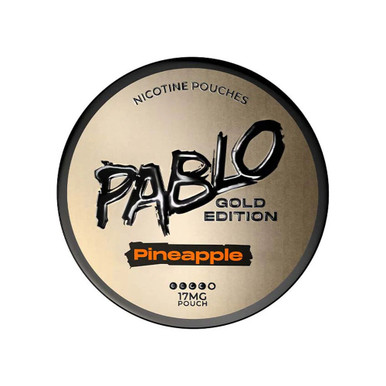
This page belongs to Pablo Gold Edition Pineapple Nicotine Pouches. Our listed price is £19.95. One declared strength is filed against it, 17mg, with no second variant sitting behind it. The stock field reads in stock as this was written. One flavour tag is attached, the single word tropical. One photograph is on file. That is the record in full, and every factual statement below is drawn from it, from a plain description of the object, from a comparison against other cans on our own shelves, or from an admission that we do not hold something.
Two points about the name, settled up front. Gold Edition is the manufacturer's name for a line inside the Pablo range, printed on the lid the way any sub-range name is printed on any lid. It is naming rather than grading. It does not mean this can was made to a higher standard than one without the word on it, and we would not be in a position to claim that even if we wanted to, because we hold no information about how any of these products are put together. And the price: we list this at £19.95 and the Pablo Exclusive cans at £3.85. The obvious explanation for a gap that size is that one of those is a single can and the other is a multi-can pack. The cans-per-pack field on this listing is blank, so that remains a reasonable guess rather than something our record supports. If the count affects your order — and for most people it will — ask us and we will check the actual stock rather than reason backwards from a price.
The full guide to Pablo Gold Edition Pineapple Nicotine Pouches
5,101 words on how it eats, who it suits, how to serve it and what to put beside it.
The Pineapple can, and the whole of the record behind it
The object itself is the standard shallow round tin. The lid lifts clear of a lip and presses back down onto it, and the lid face carries the Pablo name, the Gold Edition line, the flavour and the milligram figure. Portions sit flat inside in a ring, and the underside of the lid is a hollow well with a rim around it, which is the catch compartment. Nothing in this is a device. Nothing charges, nothing is refilled, nothing has a power source, nothing switches on. The can is the entire product and it works the moment the lid comes off.
Pineapple is filed on three shelves. It sits in the Strong band among 132 listings, on the Pablo brand page among 56, and in the tropical flavour grouping among 58. Those are the three ways in and the three ways out.
The format in practice, from lid to general waste
A portion is a small soft rectangle with rounded corners, shaped to lie along the gum. It goes under the upper lip, tucked into the space between lip and gum, and once placed it stays put without being held. That is the practical shape of the format in one line: after the first few seconds there is nothing in your hands, nothing to set down on a table and nothing to pick up again.
How long anyone keeps one in is a matter of individual habit and we are not going to print a number as though it were a specification. What can be said generally is how the flavour behaves over a session: the definition is clearest at the start, softens through the middle, and by the later part is largely gone, although plenty of people leave a portion in well past that point because by then the taste is not the reason it is there. With a can like this one, where the sharpness and the sweetness both sit high, the sharpness fades first and the sweetness lingers behind it.
Portion size is worth a note because it is one of the few physical variables in the category. Some makers offer a smaller portion, usually labelled mini or slim, alongside a standard one. Our record does not carry a portion-size specification for this listing, and there is no mini or slim wording in its name, whereas the listings that do carry a smaller portion generally say so in theirs. If the physical size is the deciding factor for you, ask us before ordering rather than finding out after the lid is off.
The catch well in the lid is the reason these tins are shaped as they are. A used portion goes into the well, the lid presses back down, and the whole matter is dealt with at the next bin. Nothing loose goes into a pocket. The consequence is that a can in regular use holds used portions above and fresh ones below, so it is worth opening it level rather than at an angle. Empty the well regularly. Used portions go in general waste, the empty tin goes wherever your local authority directs that kind of tin, and the can lives closed and out of reach of children and pets.
Pineapple as a taste and an aroma
What follows is our account of how this can tastes and smells. It is a sensory description, not a specification and not an ingredient statement, and the manufacturer's labelling on the tin is the authority for anything printed on the tin.
Pineapple is an unusual fruit to build a flavour on because it is loud at both ends at once. Most fruits lead with either sugar or acid; pineapple leads with both, and that double-loudness is what makes it recognisable in a fraction of a second and what makes it divisive. The sweetness is high and has a syrupy, almost candied quality to it. The acidity is equally high and arrives at the same moment rather than behind it. The result is a flavour with very little middle ground — it is either exactly what you wanted or slightly too much of everything, and there is not much space between those two reactions.
There is a further characteristic worth naming because people notice it and wonder whether something is wrong. Fresh pineapple produces a faint prickling sensation at the edges of the tongue, and flavours built on pineapple often carry a suggestion of that same rasp. In this can it is present but restrained — a slight textural edge to the sharpness rather than a separate event. It is characteristic of the fruit rather than a fault in the can.
Where this one sits between the two possible pineapples is worth stating plainly. Fresh pineapple is greener, more fibrous in impression, with a vegetal note under the sugar. Tinned pineapple is rounder, sweeter, softer at the edges and considerably more uniform. This can reads closer to the tinned end: the sugar is forward, the green note is faint, and the overall shape is smooth rather than fibrous. That is the more common choice for this format, presumably because a rounded concentrated reading holds its definition better than a literal one does.
The aroma leads and it leads loudly. Lifting the lid gives you a high, juicy, sugary top note with a faintly fermented edge to it — the smell of pineapple that has been open a while rather than pineapple being cut. There is a light green top edge above the sugar. As with nearly everything in this format, the aroma is more concentrated than the taste that follows, so the open tin will overstate what arrives afterwards.
Cooling: none. There is no ice or freeze in the name and there is no cold layer in the can, which leaves the fruit to carry the whole thing on its own. Bitterness: essentially none in the finish, unlike some of the sharper tropical fruits, which carry a resinous or seedy trail. On four axes, then — no cooling, high sweetness, high sharpness, no bitterness — it is one of the loudest fruit profiles on the tropical shelf and one of the easiest to identify without being told what it is.
Carrying one, using one, and whose rules apply where
This section covers the part of the format most people actually ask about: what it is like to have a can with you during an ordinary day, and — the more important half — who decides where a nicotine product may be used. The first half we can describe. The second half we cannot answer, and the reason we cannot is worth setting out properly rather than skating over.
What carrying one is actually like
The tin is flat, rigid and about the diameter of a drinks coaster. It goes in a coat pocket, a trouser pocket, a bag or a glovebox without being awkward, and it will not be crushed by normal handling. The one practical caution is that a can carried loose among keys will eventually have its lid caught and lifted, which is a mess you only make once; a pocket of its own or an inner bag pocket solves it.
Using one is quiet. There is no device to take out, nothing to hold, nothing that makes a noise, nothing that needs charging and no consumable to change. A portion goes in, and from that point there is no ongoing activity at all. That is simply a description of the mechanics of the format. It is not an argument for using one anywhere in particular, and this page is not making one.
Why this page will not tell you where you can use it
People ask us fairly often whether a nicotine pouch is permitted in a particular setting — a workplace, a venue, a stadium, a hospital site, a train, a plane, a school run, a hire car. We do not answer those questions, and not because we are being unhelpful. We answer them badly, because the answer is not ours to give.
Venues, employers, transport operators and landowners set their own rules, and only they can state them. An employer's policy on nicotine products is a matter for that employer and is often written separately from anything else in their handbook. A stadium or a theatre sets its own conditions of entry. Transport operators publish their own conditions of carriage and they differ from one another. A hospital trust, a school, a leisure centre and a hire car company each have their own position. None of those bodies has told us what their rules are, none of them would consider a retailer's product page an authority, and a rule we printed here today could be wrong tomorrow without anyone informing us.
So the honest instruction is the dull one: if you want to know whether a particular place permits it, ask that place. Read the employer's policy, check the operator's conditions, look at the signage, or ask whoever runs the building. That is a slower answer than a product page confidently telling you it is fine everywhere, and it is the only answer that will not get someone into difficulty.
Travelling with a can
The same principle applies with more force across a border. What may be brought into a country, in what quantity, and whether a nicotine product may be sold or used there at all, is a matter of that country's law and its customs rules. Several countries treat this category quite differently from the United Kingdom. We have no standing to advise on any of it and we are not going to summarise foreign law on a product page. Check the rules for your destination with an official source before you travel with anything, and check the carrier's position separately, because the two are not the same question.
At home
One thing here is not a matter of anyone else's rules. A can kept where a child or a pet can reach it is a problem in any setting, and the lid on these tins is not a childproof closure. Keep it closed, keep it high or locked away, and empty the catch well rather than leaving used portions in a tin that might be picked up. That is stated again in the compliance section below because it belongs in both places.
Where Gold Edition sits inside the Pablo range
The Pablo brand page carries 56 listings, and most of what we hold falls into two lines: Gold Edition and Exclusive. The difference, as our record has it, amounts to the line name on the lid, the flavour selection and the price — £19.95 here, £3.85 on the Exclusive listings. With the pack-size field blank we cannot close that gap for you, and we are not going to offer a plausible reason and let it read as a fact.
As shelves rather than as products, the two behave differently. The Exclusive line is the broader of the two in our stock and reaches further into confectionery and cooled-fruit territory. Gold Edition is narrower and leans towards single named fruits with no cooling in the name, and this can is a clean example: one fruit, named plainly, nothing stacked over it. That is an observation about our own shelves and not a claim about either line's quality, and the word gold remains part of a name rather than a grade.
Pablo is not the only house arranged this way. The Cuba brand page has the same structure of sub-ranges under a single name, and if you would rather learn one brand properly than sample across many, a brand page is a more efficient route than a flavour shelf.
What people keep alongside a pineapple can
Most people who use this format keep two or three cans in rotation rather than one, because a single flavour used continuously stops registering — the can has not changed, the palate has. A loud flavour like this one flattens as readily as a quiet one, and arguably sooner. The useful question is what to put beside it. Every reason below comes from the record: the flavour in the name, the brand, the price or the stock state.
The nearest neighbour on our shelves
Gold Edition Blueberry Peach Ice is the closest thing to this listing that we stock — same line, same £19.95, same blank pack-size field — while going somewhere quite different in the can, pairing berry and stone fruit under a cooling layer. If you want the line's shape with a different flavour idea, that is the one.
Other readings of tropical
The tropical shelf is broad and its members are not interchangeable, which is the main limitation of filing by a single word. The SYX tropical can at £29.90 carries the same tag but is another house's interpretation of it. Velo Tropical Mango at £4.19 names one fruit, and mango sits at the soft, sweet, low-acid end — close to the opposite corner from the double-loudness here. Elf Bar's own pineapple listing at £29.90 is the direct comparison if you want to see how two houses read the same fruit, and they rarely read it identically. The Cuba Ninja coconut can at £39.90 is the group's outlier, tropical by geography and nothing like the rest by taste. There is also Iceberg's apple, lemon and pineapple listing at £39.90, which puts pineapple into a three-fruit blend — but our record currently marks that one out of stock, so treat the link as a look at the listing rather than something you can order today.
Deliberately unlike
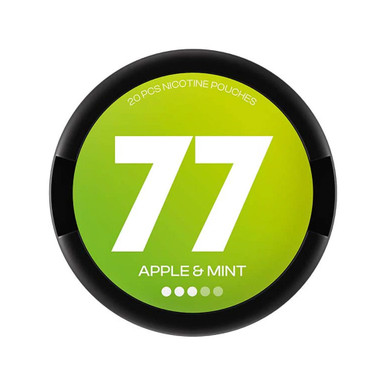
Rotations work better when the cans differ properly. Clew Blueberry at £39.90 is a dark rounded berry with none of the acidity here. The 77 apple and mint can at £39.90 changes two things at once, moving to orchard fruit and adding cooling. The Killa apple can at £33.50 is a third house's apple without the cooling. Fumi Fiery Peach at £27.90 brings in a soft stone fruit, which is about as far from a sharp sugary pineapple as fruit gets while still being fruit.
Inside the Pablo range
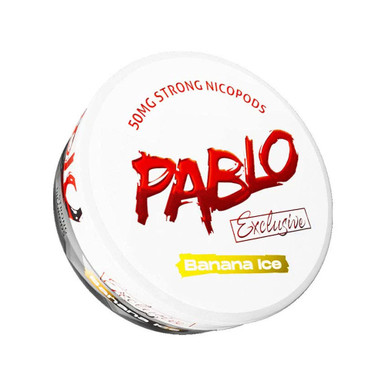
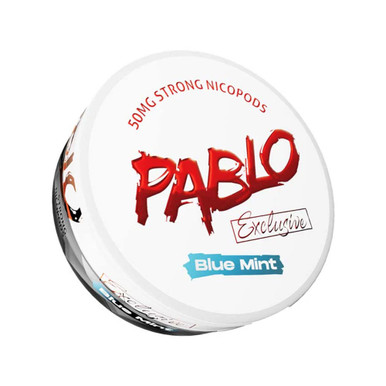
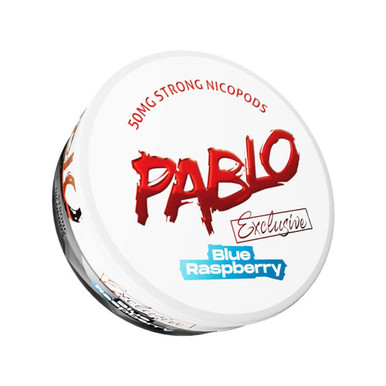
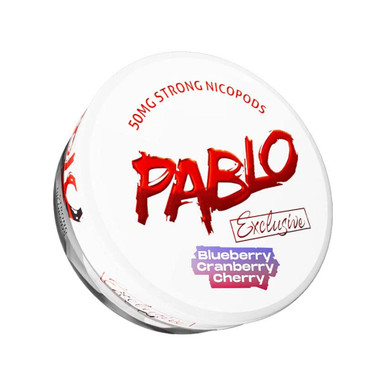
To keep the rotation in one house, the Exclusive line offers several directions at £3.85 each. Pablo Exclusive Blue Mint leaves fruit behind entirely. The Banana Ice can keeps a soft sweet fruit and adds a cooled finish. The Bubblegum listing at £3.85 is the most openly confectionery thing the brand has on our shelves. The Exclusive Blue Raspberry can is a confectionery berry rather than a literal one, the three-fruit Blueberry Cranberry Cherry listing is the most layered, and Blueberry Peach Ice in the Exclusive line is the cheaper counterpart to the Gold Edition can mentioned above. Our pack for this page holds those listings by name, price and stock state only, not by declared figure, so no numbers are attached to them here.
How a recognisable flavour gets built into a dry pouch
This is the part people find genuinely interesting and it is also the part where it is easiest to stray into territory we will not go into. So, the boundary first: we do not publish ingredient or composition information for any listing on this site, and nothing below describes what is inside a can. What follows is an account of the perceptual problem a flavour has to solve in this format, and how that shows up in the tasting. The can's own labelling is the authority on anything else.
The problem the format sets
A flavour in this format has an unusually narrow set of tools. It has to become recognisable in a small object that sits in one place and is not moved about, with no liquid carrying it and no warmth developing it. There is no build-up and no variation — whatever is going to happen has largely happened within the first stretch. That is a much harder brief than it sounds, and it explains most of what people notice about flavours in this category.
Three things happen in sequence, and they are not the same thing
The first is the aroma from the open tin, which does an enormous amount of the identification work. A great many flavours are recognised at the lid rather than in the mouth, and makers clearly know it, because the aroma is almost always more concentrated than what follows. The second is the arrival, the first stretch after a portion is placed, which is where the flavour has its clearest definition. The third is the trail, what remains once the definition has gone — usually a simplified version of the same idea, often just sweetness or just cooling depending on what the can was built around. Judging a can on any one of those three alone will mislead you, which is why the descriptions on our pages try to cover all three.
Why concentrated readings beat literal ones here
A literal fruit reading depends on subtleties that this format struggles to carry — watery texture, a green edge, the difference between ripe and just-ripe. A concentrated or confectionery reading depends on a few strong signals, and strong signals survive. That is why so many cans across the category taste closer to a sweet than to the fruit itself, and why the ones that attempt literal readings tend to be described as faint. This pineapple can sits at the concentrated end, which is the more reliable choice for the format.
Why mint cans are the easy case and fruit is the hard one
Cooling is a single strong signal and it is unmistakable, which is why mint cans dominate the category and why they are the most consistent between brands. Fruit is harder because a fruit is a bundle of signals rather than one, and dropping any of them changes which fruit you are tasting. Coffee and tea flavours are harder still, because they depend heavily on aroma and bitterness, and bitterness is a difficult thing to place in something that stays in the mouth for a long stretch. Pineapple is unusually forgiving among fruits precisely because it is loud at both ends — sugar and acid together are two strong signals, and two strong signals is enough to be unmistakable.
Where cooling fits, when it is there
Cooling is best understood as a separate layer stacked over whatever else is in the can rather than as part of the flavour. That is why the names work the way they do — a fruit name, then ice or freeze appended — and why a cooled version of a fruit and an uncooled version of the same fruit are genuinely different products to use rather than variations on a theme. This can has no such layer, which is worth restating here: what you get is the fruit on its own.
What none of this tells you
It tells you nothing about what is in a can, nothing about how any of it is manufactured, and nothing about what any of it does. It is a description of tasting, written to help you predict whether a can will suit your palate before you buy it. Where a fair question about this product runs past that boundary, the answer on this page is that we do not hold the information.
Keeping a can in good condition
Heat is the thing that matters. A tin left on a dashboard, a sunny windowsill or anything that runs warm will not be the can it was, and the loss does not come back. Ordinary room temperature in a drawer or cupboard is entirely sufficient.
The seal is second. The lid presses onto a lip and needs pressing rather than resting — a lid left slightly proud looks closed and is not, and a can stored that way dries out from the top down over a few days. Check it has seated all the way round before the tin goes into a bag.
The catch well is third and is the one people forget. Used portions left to accumulate for a week stop the lid seating cleanly, which takes you straight back to the second point. Emptying it takes seconds.
We do not print a best-before date, a production date or a shelf-life figure for this listing, because our record does not hold any of them. The can carries whatever the manufacturer has printed and that is what to read.
What there actually is to choose here
Less than on some pages. One declared strength, 17mg. One price, £19.95. No strength selector, no size selector, no multi-buy recorded. The decision is whether this flavour at this figure is the one you want, and that is the whole of it.
The blank pack-size field is the only gap that could affect an order and the one to settle beforehand. Ask us and we will confirm the count against real stock rather than leaving you to infer it.
What the milligram figure is, and what it is not
The figure on this lid is 17mg and our record holds no other for this listing. It is a strength figure the manufacturer declares and prints on the packaging, reproduced here exactly as we hold it. Its honest use is comparative and within a brand: it lets you line up cans from the same maker and see which the maker has declared as carrying more. Across brands it is a rougher guide, because there is no reason to assume two houses arrived at their printed numbers by the same route.
Our bands exist so the catalogue can be browsed. This can is filed under Strong; we also keep a Medium band for lower declared figures and an Extra Strong band for higher ones, and our Strong grouping runs to 132 products, which tells you it is a wide band rather than a narrow one. Those bands describe where stock is filed. They do not describe where a person belongs.
We cannot advise which declared strength suits you and we will not attempt it. We have no information about you, and a printed figure does not carry enough meaning for anyone to match it to a person from a product page. A higher number is not an achievement and it is not better; it is a different figure on a different can. Nothing on this site should be read as encouragement to work upwards through the bands.
Ordering, the doorstep and the age check
The order runs as the rest of the site does. The listing goes into the basket at £19.95, checkout carries an age confirmation step, and the order ships from our own stock. The in-stock state above is a snapshot from when this was written; the basket is the live reading and will be the first to tell you if something has gone.
The age check is not a formality. We sell only to adults aged 18 or over who already use nicotine. ID may be requested on delivery, and where it is requested and no adult at the address can produce it, the parcel will not be handed over — worth planning around if the delivery address is a workplace or a shared building where someone else signs for parcels.
Carriers, postage and delivery windows appear at checkout rather than on product pages, because they change and a product page goes stale.
Finding this page again
Three routes: the Strong band, the Pablo page, and the tropical shelf. The last of those is worth a caveat. Our record attaches exactly one flavour word to this listing — tropical — and nothing more specific. There is no pineapple shelf in our taxonomy, so this can is filed alongside every other tropical listing regardless of how differently they taste. That is a limitation of the shelving rather than a statement about the flavour, and it is why the description above spends so long placing the can on the sweet and sharp axes: the tropical grouping will not tell you, so the words have to.
If shelves are not how you like to browse, our full catalogue page lists everything in one place.
Questions we are asked about this can
How many cans is £19.95?
We do not hold that figure. The cans-per-pack field on this listing is blank, so the record cannot answer it, and the price difference against the Exclusive line is not evidence we are prepared to treat as an answer. Ask us before ordering and we will confirm it against the stock we actually have.
Is this a fresh pineapple or a tinned pineapple flavour?
Closer to tinned. The sugar is forward, the green vegetal note is faint, and the overall impression is smooth and rounded rather than fibrous. Concentrated readings of this sort hold their definition better in this format than literal ones do, which is the likely reason the category leans that way generally.
Why does my tongue prickle slightly?
That edge is characteristic of pineapple as a flavour rather than a fault in the can. Fresh pineapple produces the same sensation and flavours built on it often carry a suggestion of it. In this can it is restrained — a slight texture to the sharpness rather than a separate event. Beyond noting that it is characteristic, we have no further information to offer about it.
Is there a cooled version of this flavour?
Not under this name in our stock. There is one Gold Edition Pineapple listing and no iced variant of it on our shelves. Cans with ice or freeze in their names are where cooling lives, and several are linked further up.
Can I use it at work or on a train?
That is for your employer and the operator to say, not us. Employers set their own policies on nicotine products, transport operators publish their own conditions of carriage, and venues set their own conditions of entry. None of them has told us their rules and none would treat a retailer's page as authoritative. Ask the organisation concerned or read their published policy.
Can I take a can abroad?
That depends entirely on the destination's law and customs rules, and on your carrier's conditions, which are two separate questions. Several countries treat this category very differently from the United Kingdom. We have no standing to advise on foreign law and we are not going to summarise it here. Check an official source for the country you are travelling to before you pack anything.
What does 17mg mean?
It is the strength figure the manufacturer declares on the packaging, held in our record and reproduced exactly. It is useful for comparing cans from one maker and much looser across makers. It is not a dose, not a rating and not a recommendation, and we cannot tell you whether it is the right figure for you.
Is Gold Edition better than the Exclusive line?
No. Gold Edition is a line name chosen by the manufacturer, not a quality grade, and the word gold in it means nothing beyond being part of a name. What differs between the two lines on our shelves is the name, the flavour selection and the price.
How long does the flavour last?
We do not publish a figure, because people differ enough that any number would mislead. The general arc is clearest definition early, softening through the middle, mostly gone by the later part. With this profile the sharpness fades before the sweetness does.
What do I do with a used portion when there is no bin?
Put it in the well under the lid and close the tin. That compartment is separate from the fresh portions and exists precisely for that. Empty it when you next pass a bin rather than letting it fill over a week, and used portions go into general waste.
Will an opened can dry out?
It can, if the lid is not seated properly or the tin is kept somewhere warm. Press the lid down onto the lip and keep the can at ordinary room temperature out of direct sun. Stored sensibly it holds condition perfectly well. The manufacturer's printed storage wording is the authority over anything here.
Do you publish reviews or ratings?
No, and none are quoted on this page. The flavour description above is our own account, written to help you place the can before buying. It is not a report of anyone else's opinion and it is not a ranking.
The compliance wording, set out in full
Nicotine is an addictive substance.
Pablo Gold Edition Pineapple Nicotine Pouches are sold only to adults aged 18 or over who already use nicotine. An age confirmation step runs at checkout, we do not sell to anyone under 18, and ID may be requested on delivery. Where it is requested and no adult at the address can produce it, the parcel will not be handed over.
This product is not a licensed stop-smoking medicine and holds no authorisation of that kind. It is not intended for non-smokers, for anyone who does not already use nicotine, for anyone under 18, or for anyone who is pregnant or breastfeeding. Nothing on this page is medical advice, nothing on it recommends a particular declared strength to a particular person, and nothing on it should be read as a suggestion that anybody begin using nicotine.
Keep the tin closed and out of reach of children and pets, and put used portions in general waste. Every product fact above — name, brand, price, declared strength, flavour tag and stock state — comes from our own product record for this listing, and where the record does not hold something we have said so rather than estimating. The manufacturer's labelling on the can is the authority for anything printed on the packaging.
In short
Pablo Gold Edition Pineapple is an uncooled tropical fruit that is loud at both ends — high sugar and high acid arriving together, with a faint prickle at the edges and a rounded, tinned rather than fresh reading of the fruit. It is listed at £19.95 with one declared figure of 17mg and marked in stock as this was written, its pack size is not recorded and we have not guessed at it, and it is filed under Strong, under Pablo and under tropical. Where it may be used is a matter for the employer, operator or venue concerned and not for this page. What we hold about this product is set out above. What we do not hold, we have said we do not hold.
More from Pablo
More strong pouches

More tropical pouches
Where this sits
Pablo Gold Edition Pineapple Nicotine Pouches appears in these categories. Browse them, or jump to something close.
You might also like