Home / Extra Strong / Pablo Exclusive Tropical Punch Nicotine Pouches
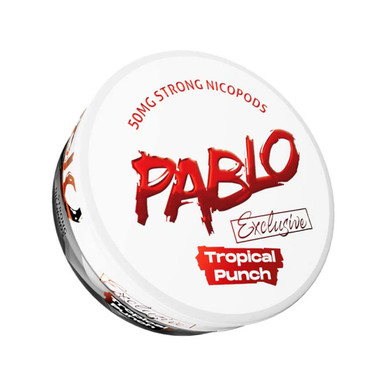
Pablo · 50mg
Read the full guide
Pablo Exclusive Tropical Punch Nicotine Pouches
£3.85
✔ In stock — ready to ship
100% tobacco-free
Free over £20
Same-day dispatch
Secure checkout
This page belongs to Pablo Exclusive Tropical Punch Nicotine Pouches, listed at £3.85 with a single declared strength of 50mg. The flavour record carries one entry, tropical. There is one variant rather than a choice of figures, one product image attached to the listing, and the can is showing as in stock at the time this page was written. That short list — brand, product name, price, declared strength, flavour tag, stock position — is the whole of what our catalogue holds for this can.
Everything else below falls into one of three categories, and it is worth naming them at the outset so you know what you are reading. Some of it is a description of the physical object, which is the same round tin the whole category uses. Some of it is comparison against other cans on our own shelves, where we can quote a price, a declared figure and a stock position because those things are recorded. And some of it is a plain statement that a particular detail is not something we hold. We would rather leave a visible gap on the page than fill it with a number nobody gave us.
The full guide to Pablo Exclusive Tropical Punch Nicotine Pouches
5,365 words on how it eats, who it suits, how to serve it and what to put beside it.
Pablo Exclusive Tropical Punch: what the listing actually holds
One of those gaps is worth flagging immediately, because it is the detail most likely to matter at the basket stage. Our record does not carry a cans-per-pack figure for this listing. The £3.85 is what our record gives, and the record does not state how many tins that figure covers. Elsewhere in the catalogue you will find listings at £39.90 and listings at £4.19, and the distance between numbers like those usually reflects how many cans a listing contains rather than any judgement about the cans themselves — but usually is not the same as recorded. For this product we have not been given the figure, so treat the listing page and the basket as the authority rather than anything inferred from the price.
One last piece of housekeeping before the detail, because it governs the entire page: this is an age-restricted nicotine product, sold to adults who already use nicotine. The full wording sits in its own section at the foot of the page, and it is worth reading rather than scrolling past.
The format in practice, described plainly
A pouch is a small soft white sachet, roughly the size and shape of a short, flat bean. It is dry to the touch and stays dry in the tin. It sits between the upper lip and the gum, off to one side, where the lip holds it without you doing anything to keep it there. Once it is in place it does not need managing. There is no device. There is nothing to charge, nothing to fill, nothing to click into anything else, no battery to fail on you and no part that needs replacing. The tin and its contents are the whole of the product, which is the main practical difference between this and most of the other things sold under the same age restriction.
It is also quiet, in the literal sense. Nothing about the format announces itself across a room — there is no sound, no gesture and no equipment in the hand. That is a description of the object, not a suggestion about where to use it; venue rules are covered further down and are not ours to write.
How long anyone keeps one in varies enormously between individuals, and our record says nothing about it. Manufacturers sometimes print guidance on the can, and where they do, the can is the authority. We are not going to publish a duration, a frequency or a quantity, because doing so would amount to telling you how to use a nicotine product, and that is not a thing this shop does. The can is in front of you and your own habits are your own.
Disposal is the last mechanical point and the one most often skipped. A used pouch goes in the bin. It does not go down a sink, a drain or a toilet, and it does not go on the ground. The lid compartment on this style of tin exists precisely so that a used pouch has somewhere to sit until a bin turns up, which is discussed at length in its own section further down this page. Keep the tin, opened or not, out of reach of children and animals.
Tropical, taken strictly as a taste
The flavour record for this can holds exactly one entry: tropical. The product name adds a second word, punch, and between them those two words are the whole of what we can honestly tell you about how it tastes. Everything in this section is about what those words conventionally describe, not a claim about what this particular tin will do on your palate.
Tropical, as a flavour heading, is a family rather than a single note. It covers the sweeter, softer, more perfumed fruit shapes — mango, pineapple, passion fruit, guava, papaya and their relatives — as opposed to the sharper orchard fruits or the darker berries. The family has a recognisable overall character even when you cannot name the individual fruits in it: it reads sweet rather than tart, rounded rather than sharp-edged, and it tends to carry a faint floral quality at the top that is the main thing separating it from a plain sweet-fruit note. Some people find that floral edge the most identifiable part of the family; others barely register it.
The word punch is doing something different. In flavour naming it almost always signals a blend rather than a single fruit — the drinks-bowl sense of the word, several fruits in one glass, no one of them clearly in charge. That is a naming convention, and it is a reliable one, but it is a convention rather than a specification. Our record does not list which fruits are involved, in what proportion, or which of them arrives first. If you want a can where the name commits to specific fruits in a specific order, the catalogue has plenty; this is not one of them, and that is worth knowing before you order rather than after.
What we cannot tell you is the longer list. We hold no sweetness scale, no sharpness note and no indication of how the flavour changes over the time a pouch is in. We also hold no cooling descriptor for this can — no ice, frost, freeze or arctic appears anywhere in the name or the record — so if you are after a cold finish, the absence of that word is the only signal either of us has, and a can whose name does carry one is the more reliable pick.
The one thing worth saying about a dry format generally is that it presents flavour without any of the volume a drink gives you. There is no liquid, no temperature, no carbonation and no quantity — just a small dry object resting in one place. That tends to make named flavours read as more of a suggestion than a reproduction. A tropical punch here is recognisably in the tropical family; it is not a glass of anything, and expecting it to be one is the most common way people end up disappointed with a can that is doing exactly what it says.
Moving between cans on our shelves: what changes and what does not
Most people who buy from this shop are not buying their first can. They are moving across the shelves — trying something from a brand they have not had, or a flavour family they have not had, or a listing whose price looks different from the one they usually pick up. It is worth being specific about which variables actually change when you do that, because the catalogue makes some differences look bigger than they are and hides others behind a name.
The format does not change. Across every brand on this site, the object is the same: a round tin, a lid, a ring of dry pouches, a compartment for used ones. Move from this can to Killa Apple at £33.50 or to Cuba Black Apple Juice at £39.90 and the thing in your hand behaves identically. Nobody needs to relearn anything. That is the stable floor under every comparison on this page.
The declared figure changes, and it changes a lot. Every brand chooses its own numbers and prints them on its own lids, and those numbers are not set to a shared scale. This can declares 50mg, which puts it on our Extra Strong shelf alongside 97 others. Move to the Strong shelf or to the medium strength listings and the figures printed on the lids drop accordingly. What that figure means in practice, and what it emphatically does not mean, has a section of its own below.
The price changes for reasons the page may not explain. This is the one that catches people out most often. Within a single screen of the catalogue you can find Nordic Spirit Tropical Mix at £4.49 and Siberia Mini at £39.50, and it would be a mistake to read the gap as a quality ranking. Listings on this site differ in what they contain, and our records are not uniform about saying so — this one, as noted, has no cans-per-pack figure at all. Compare like with like by checking each listing individually, and do not let a number do work it was never meant to do.
The flavour tag changes, but it is a coarse instrument. Our tags file cans into families, not into descriptions. This one carries a single tag, tropical, which is why it appears on the tropical shelf next to 57 other cans that taste nothing like each other. Elf Bar Pineapple at £29.90 and Denssi Tropical Fury can sit under headings adjacent to this one without being anything like a substitute for it. The tag tells you which aisle to stand in. It does not tell you what is in the tin.
Stock changes, and it changes without warning. A good part of this catalogue is unavailable at any given moment, and the pages stay up so that you can find them again. Iceberg Double Apple, listed at £39.90, is out of stock as this page was written — worth looking at if you are curious about the line, but not a page you can order from today. We flag that here rather than letting you find out at the basket.
What does not change, finally, is our position on advice. Whatever you are moving from and whatever you are moving to, we are a shop with a product record, not a source of guidance on what to put in your mouth. We will tell you what is on the shelf, what it costs and whether we have it. The rest is yours.
50mg, read as a figure on a lid
This listing declares one strength and one only: 50mg. There is no alternative variant to choose between on this page, so the figure is a fact about the can rather than a decision you are being asked to make here.
Here is what that number is. It is a manufacturer's declaration, printed on the tin, describing the product as the manufacturer describes it. We reproduce it exactly as we were given it, because reproducing it accurately is the one useful thing a retailer can do with it. We use it for one further purpose: sorting. Cans get filed onto strength shelves by their declared figure, which is why this one appears under Extra Strong and why the same catalogue also runs a Strong shelf and a medium shelf for cans declaring lower numbers.
Here is what that number is not. It is not a grade or a score. A higher figure on a lid is not a better can, a more serious can, or a can for anyone in particular, and we are not going to arrange this page so that it reads that way. It is not a scale you climb. The catalogue is not a ladder and there is nothing at the top of it to reach — the shelves are a filing system, not a progression, and a can declaring a low number is exactly as much a product as a can declaring a high one.
Nor is the figure comparable across brands in the way people assume. Manufacturers declare on their own terms, and two cans printing the same number are not thereby the same product. We hold no methodology for any brand on this site and cannot reconcile them.
And here is the thing we say on every page carrying a strength figure, because it matters more than anything else in this section: we cannot advise which strength suits you. Not by body size, not by how long you have used nicotine, not by what you used last week, not by any other characteristic. We do not know you, we are not qualified to make that judgement, and a shop that offered to make it would be doing something it has no business doing. The number is on the lid. The decision is not ours to help with.
Tropical Punch inside the Pablo range
Pablo runs to 56 listings on our Pablo brand pages, and the range splits into named lines rather than being one undifferentiated block. This can belongs to the Exclusive line, which is where most of the fruit names sit and where the £3.85 listing price on this page recurs across sibling after sibling.
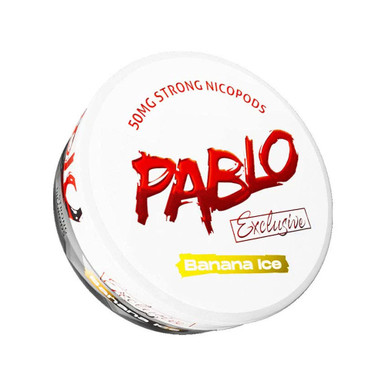
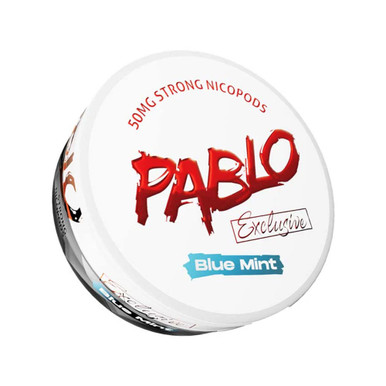
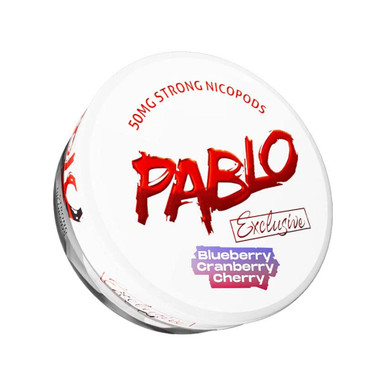
That consistency is the most useful thing about the line for anyone comparing within it. Because the price is the same across the Exclusive siblings we hold, the choice between them genuinely is a flavour choice rather than a budget one. Exclusive Banana Ice, also £3.85 and in stock, pairs a single soft fruit with a cold descriptor in the name. Exclusive Bubblegum at the same £3.85 goes in the confectionery direction instead of the fruit one. Exclusive Blue Mint, in stock at £3.85, is the line's mint-forward option. And Exclusive Blueberry Cranberry Cherry, again £3.85 and available, is the one that names three fruits outright rather than gathering them under a collective noun the way this can does — which makes it the closest thing in the line to a stated-ingredients version of the punch idea.
The brand also runs a Gold Edition line, which is worth a word because the name invites an assumption. On our records, Gold Edition listings carry a different declared figure and a different listed price from the Exclusive ones. That is all we can tell you. Gold Edition is the manufacturer's name for a line, not a quality tier we have verified, and nothing in our record supports reading it as the better or more refined half of the range. If a page on this site ever implies otherwise, that page is wrong.
The can as an object: lid, compartment, count and pocket
The tin deserves a section of its own, because for a product with no device attached the packaging is a larger part of the ownership experience than people expect.
The shape and the hand. A pouch tin is a shallow cylinder, wider than it is tall, roughly the footprint of a small jar lid. It sits flat in a palm and is meant to be opened one-handed, thumb under the lip of the lid. That geometry is not incidental — it is why the format has settled on a round tin rather than a rectangular box, and it is consistent across every brand we stock, including this one.
The lid and what is printed on it. The lid is the only surface of the can you ever actually read once it is in a drawer or a bag, and manufacturers know it. Brand mark, flavour name, declared figure: those three things go on the top face, in that rough order of prominence, on essentially every can in this catalogue. If you keep more than one tin about the place, the value of that convention becomes obvious quickly. A lid that does not declare its own strength is a lid you end up prising off to identify, and then you have opened a can you did not mean to open.
The catch compartment. Most tins in this format have a second, shallower space under the lid — a separate chamber, sometimes a full false floor in the lid itself, sometimes a smaller crescent. It is there so a used pouch has somewhere to go when there is no bin within reach, and it is the single most practical piece of design in the whole category. It is not a storage feature and it is not a second flavour compartment. It should be emptied into a bin when you get to one rather than left to accumulate, for reasons of simple hygiene. Our record does not state whether this particular tin has the full-lid style or the crescent style, and we are not going to guess; the can in your hand will tell you in about a second.
The count. We do not publish a pouch count for this product. Our record does not carry one, the printed can is where that figure lives, and a number we inferred would be worse than no number at all. Counts do vary across the catalogue, and they vary in ways that are not always obvious from the outside — two tins of identical external size do not necessarily hold the same number of pouches, because pouch dimensions differ between lines. If the count matters to you for working out what a can actually costs you, the printed tin is the only honest source.
The pocket test. The format's chief practical property is that the entire product is one small rigid object. It goes in a coat pocket, a bag's zip compartment, a glovebox or a desk drawer, with no second item to remember and nothing that needs a flat surface. The tin is rigid enough not to crush, and the lid holds closed well enough to survive a pocket — although a lid opened and closed a few hundred times does loosen, and a tin at that stage is better kept somewhere it will not be knocked about.
Keeping a tin in condition
Storage for this format is short and unglamorous. Keep the lid properly closed between uses — not resting on, actually pressed down until it seats. The main thing that degrades an open tin is air, and a lid that is nearly closed is functionally an open tin.
Keep it somewhere cool and out of direct sun. A car in summer is the single worst place for a can, and a windowsill is the second worst; heat and light do a tin no favours and a warm tin does not recover its original condition once it has cooled. A drawer, a cupboard, a bag pocket or anywhere at ordinary room temperature is fine, and no special conditions are needed beyond that.
Keep unopened cans sealed until you are actually going to use them. If you hold more than one tin, working through them one at a time rather than having three open at once is straightforward common sense — three open cans age at three times the rate of one. Some people keep cans in a fridge; we neither recommend it nor advise against it, because our record says nothing about it and the manufacturer's own labelling is the place to look for storage guidance.
Finally, and it bears repeating even though it appears elsewhere on this page: cans, open or sealed, belong out of reach of children and animals. A tin is a small, brightly printed, rattly object, and it should be kept somewhere that is not interesting to anyone who should not have it.
What people keep beside this one
Very few people who buy regularly run a single can. Most keep two or three on the go, partly because a flavour you have had constantly for a fortnight stops registering and partly because it is useful to have a spare. What follows is a set of honest comparisons from our own shelves rather than a list of recommendations, with the price and stock position stated for each so you know what you are clicking into.
If you want to stay in the same fruit territory but with a name that commits to one fruit instead of a blend, the Elf Bar Pineapple can at £29.90 is the most direct version of that, and it is in stock. Denssi Tropical Fury Energy Pouches at £39.90 sit near this one on the tropical shelf and are also available — note that this is a differently named line and its own page is the place to read what it actually is, rather than assuming it is a like-for-like swap.
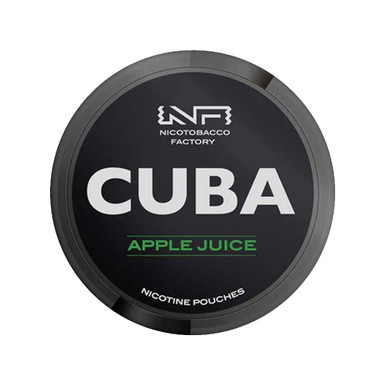
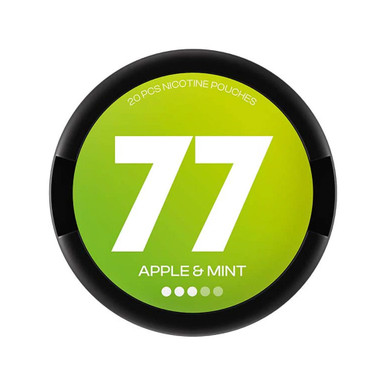
For a sharper, orchard-fruit direction rather than a soft tropical one, the 77 Apple Mint listing at £39.90 puts an apple note against mint and is in stock, and Killa's apple can at £33.50 is the same fruit family from a different brand at a different price. Cuba Black Apple Juice, £39.90 and available, takes the juice-like reading of apple instead of the crisp one; the wider Cuba brand pages are where the rest of that range lives if the house style suits you.
For something entirely unlike this can — which is often the point of a second tin — Fumi Fiery Peach at £27.90 is a single stone fruit and is in stock, and the Maggie Original Jamaican Cherry Tonic Wine can at £39.90 is about as far from a tropical blend as this catalogue goes while still being a fruit name. Siberia Mini, £39.50 and in stock, is a smaller-format listing from a brand with a very different house character.
And one honest warning, repeated because it saves a wasted click: the Iceberg Double Apple page is currently out of stock. The listing is live and the £39.90 price is on it, but you cannot order it today.
Choosing, when the listing offers one of everything
This is a short section because this listing makes it short. There is one declared strength, 50mg, and one price, £3.85. There is no variant selector to work through and no pack-size decision recorded on our side, which removes most of what this section would otherwise cover.
What is left is the comparison outward rather than inward. If 50mg is not the figure you are looking for, the decision is a different listing rather than a different option on this one, and the strength shelves are the fastest route: the Extra Strong shelf where this can sits carries 98 listings, and the Strong and medium shelves carry the cans declaring lower figures. Use those as filters, then read the individual listings, because the shelf only sorts by the printed number and tells you nothing else.
On pack size, our answer is the same one given at the top of this page and it will not improve with repetition: we do not hold a cans-per-pack figure for this product. If you need to know whether £3.85 buys one tin or several before you commit, the listing page and the basket are the places that will tell you, and neither this description nor any inference from the price should be treated as an answer.
Ordering, delivery and the age check
The listing is in stock at the time of writing, at £3.85. Stock positions on this site move, and the live listing rather than this paragraph is the authority if the two ever disagree.
This is an 18+ product and the sale is restricted accordingly. An age check runs as part of checkout; it is a routine step and it applies to everyone, without exception and regardless of how long an account has existed. ID may also be requested on delivery. Where it is requested and nobody present can produce it, the parcel will not be handed over — the courier has no discretion in the matter and neither do we.
Orders are dispatched once the age check has cleared. Delivery timings, carriers and postage costs are set out in the shop's own delivery and returns information rather than on product pages, because they apply to the whole catalogue and change independently of any individual listing. Putting a delivery estimate in a product description would guarantee that it goes stale here first.
If something arrives damaged, or a tin is not what the listing described, contact us rather than working it out yourself. The usual limitation applies and is worth stating plainly: opened age-restricted consumables are not generally returnable, for reasons of hygiene and law rather than commercial preference.
Finding this page again
There are four reliable routes back to this can. By brand, it is on the 56-listing Pablo shelf with the rest of the range. By strength, it is filed under Extra Strong with the other 97 cans declaring figures in that band. By flavour, it is on the tropical shelf among 58 listings, which is the widest net of the three and the best place to browse if you are open to something adjacent rather than identical.
The fourth route is the blunt one: everything we stock, unfiltered, which is worth a scroll if you are not sure what you are after and would rather see the whole catalogue than a slice of it. The site's filters can be stacked — brand plus strength, or flavour plus strength — which is usually quicker than scrolling, and the strength shelves in particular are the fastest way to narrow a long list down to something readable.
Questions we actually get asked about this can
Does the name tell me which fruits are in the blend?
No, and we do not hold that information separately. The flavour record carries one entry, tropical, and the product name adds the word punch, which in flavour naming conventionally indicates a blend of fruits rather than a single one. Which fruits, in what proportion, and which of them leads is not recorded on our side. The can's own labelling is the place to look. If you specifically want named fruits, a listing whose name states them outright is a more reliable purchase than this one.
Is 50mg the strongest figure you stock?
Our Extra Strong shelf is the band this can is filed under, and it holds 98 listings with a range of declared figures. We are not going to publish a ranking of the highest numbers in the catalogue, because a page organised around that idea would be presenting a high figure as something to aim for, and it is not. The declared figure is a label detail. If you want to see what is filed where, the strength shelves sort by the printed number and you can read them for yourself.
How many pouches are in the can?
We do not know, and we will not estimate. Our product record does not carry a pouch count for this listing, and counts genuinely do vary between brands and between lines within a brand. The number is printed on the tin. Any figure we put on this page would be a guess dressed up as information, which is worse than an admission that we do not hold it.
Why is this £3.85 when other cans are £39.90?
Because listings on this site differ in what they contain, and the price reflects the listing rather than a judgement about the product. A listing that contains several cans will naturally carry a higher figure than one that contains fewer. Our record for this product does not state how many cans £3.85 covers, which is why we flag it rather than explain it away. Check the listing and the basket before ordering. Do not read a price difference as a quality difference in either direction.
Is the Gold Edition line better than the Exclusive line?
We hold nothing that would let us answer that. On our records the two lines differ in declared figure and listed price, and that is the extent of it. Gold Edition is the manufacturer's name for a line, not a grading we have verified, and reading it as a premium tier is an assumption rather than a fact. Prices on this site reflect what a listing contains and how a brand positions itself, not a quality ranking made by us.
Can I use one of these indoors, at work, or on a train?
That is not ours to answer, and any shop that tells you otherwise is guessing on your behalf. Venues, employers, airlines and transport operators set their own rules about what is permitted on their premises and in their vehicles, those rules differ from one to the next, and they change. Ask the operator, read the posted policy, or check your staff handbook. We sell the product; we have no standing to tell you where you may use it.
Do you have a cooled or iced version of this flavour?
Not under this name. Nothing in this can's name or record carries a cooling descriptor, so there is no iced variant of Tropical Punch to point you at. Within the same brand and at the same £3.85, the Exclusive Banana Ice listing does carry a cold descriptor in its name, which makes it the nearest in-brand thing to what you are asking for, albeit on a completely different fruit. Elsewhere on the shelves, cans with ice, freeze or arctic in the name are the ones to look at.
Does an unopened can go off?
Manufacturers put date markings on cans, and the can is the authority on its own. Our record does not carry a shelf-life figure or a best-before date for this listing, so we cannot give you a period in months and will not invent one. In practical terms the sensible approach is the ordinary one: keep sealed cans cool and out of sun, do not buy more than you will get through, and read what is printed on the tin.
Can I keep two different cans on the go at once?
Plenty of people do, and there is nothing about the format that prevents it. The only practical consequence is the one in the storage section: two open tins are both ageing, where one open tin is only one. Keep the spare sealed until it is actually in rotation. If you want a second can specifically to contrast with this one, something from a different flavour family is a more interesting pairing than another tropical blend.
Will you tell me which strength to buy?
No. Not by a rule of thumb, not by comparison with what you used before, and not in a private message either. We do not know you, we are not qualified, and steering anyone toward a particular nicotine strength is not something a shop should do. What we will do is print the declared figure exactly as the manufacturer gives it and file the can on the right shelf so you can find what you are looking for. The choice itself is entirely yours.
Legal and compliance information
Nicotine is an addictive substance.
This product is sold only to adults aged 18 or over who already use nicotine, and on that basis alone. We do not sell to anyone under 18. An age verification step runs at checkout, and ID may be requested on delivery; where it is requested and cannot be produced by an adult at the address, the parcel will not be released.
Pablo Exclusive Tropical Punch Nicotine Pouches are not a licensed stop-smoking medicine and are not authorised, licensed or intended for any such purpose. This product is not intended for non-smokers, for anyone who does not already use nicotine, for under-18s, or for anyone who is pregnant or breastfeeding. Nothing on this page is medical advice. Nothing on it should be read as encouragement to begin using nicotine, or as a recommendation of any particular strength for any particular person.
Keep this product out of reach of children and animals. Every factual detail above — the product name, the brand, the £3.85 price, the declared 50mg figure, the tropical flavour tag and the stock position — comes from our own product record for this listing. Where that record is silent, this page says so rather than estimating. The can itself, and the manufacturer's labelling printed on it, is the authoritative source for anything that appears on the packaging.
The short version
Pablo Exclusive Tropical Punch is a single-variant listing: 50mg declared, £3.85, one flavour tag reading tropical, in stock as this was written, and no cans-per-pack figure on our record. It sits in the Exclusive line among 56 Pablo listings, on the Extra Strong shelf among 98, and on the tropical shelf among 58.
Press the lid down properly, keep the tin out of a hot car, put used pouches in a bin, and keep the can away from children and animals. Everything we hold about this product is on this page, and everything we do not hold is on it too.
More from Pablo
More extra strong pouches
More tropical pouches
Where this sits
Pablo Exclusive Tropical Punch Nicotine Pouches appears in these categories. Browse them, or jump to something close.
You might also like