
Home / Extra Strong / Pablo Exclusive Strawberry Lychee Nicotine Pouches
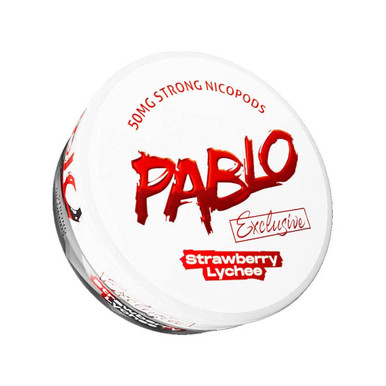
Pablo · 50mg
Read the full guide
Pablo Exclusive Strawberry Lychee Nicotine Pouches
£3.85
✔ In stock — ready to ship
100% tobacco-free
Free over £20
Same-day dispatch
Secure checkout
Pablo Exclusive Strawberry Lychee Nicotine Pouches are held here at £3.85 with a single declared strength of 50mg. One variant sits behind the listing, there is one product image, and availability read in stock at the time of writing. Stock moves faster than descriptions do, so the live flag on the listing is the one to act on.
Four shelves hold it. The Pablo brand page carries this and fifty-five other listings from the same house. The Extra Strong band, at ninety-eight listings, is where the declared figure files it. On flavour it is tagged twice and only twice: the Berry shelf at seventy-six listings and the Strawberry shelf at nineteen.
The full guide to Pablo Exclusive Strawberry Lychee Nicotine Pouches
5,003 words on how it eats, who it suits, how to serve it and what to put beside it.
The listing: Pablo Exclusive Strawberry Lychee
That is a smaller tag set than the name implies, and the gap is worth naming immediately rather than burying in the flavour section. Lychee has no shelf of its own on this site. There is no filter anywhere in our catalogue that will find you a lychee product. In our data this can is a strawberry can, full stop, and the second fruit — which is the entire reason anybody would choose this listing over the eighteen other strawberry ones — is recorded nowhere except in the product name. Anyone shopping by filter will never see what makes this can different. That is a limitation of our shelving and it is the reason the flavour section below runs long.
The cans-per-pack field on our record is empty. Not one, not zero — absent. We are not going to put a figure there on the strength of a guess, so the honest statement is that £3.85 is the price against the listing as shown and the listing page itself sets out what that covers. Portion count is the same situation: printed on the manufacturer's packaging, not held by us.
What lychee does to the strawberry
Nineteen strawberry listings, and the only thing that separates them is what has been done to the fruit. Lychee is the most unusual answer to that question on our shelves, because it does not do what second fruits usually do.
The two common moves are to sharpen or to thicken. A sharp partner — a green fruit, a citrus, an acidic berry — cuts through the strawberry and keeps it from going jammy. A rich partner — a cream note, a dessert construction — rounds it out and pushes it towards compote. Lychee does neither. It has very little acid in it and almost no body. What it has instead is perfume.
Lychee as a flavouring is floral. The dominant character is close to rose water, with a soft musk sitting underneath it and a sweetness that is broad and low rather than sharp and high. It is aromatic in the way a scent is aromatic — the sensation arrives partly through the nose rather than entirely on the tongue, and that is unusual in a fruit pouch. It is also slightly heady. There is a fullness to lychee that has nothing to do with thickness.
Put over a strawberry, that does something specific: it lifts the fruit rather than cutting or weighting it. The strawberry stays recognisably itself but gains a scented top layer, and the whole thing moves into a softer, more perfumed register than a plain strawberry can occupies. The effect is closer to a floral sweet than to fruit, and it is the least fruit-like of the strawberry pairings we stock even though both of its named components are fruit.
The honest caveat is that floral flavours divide people sharply, and lychee is one of the most divisive of them. To some palates the rose note reads as fragrant and distinctive. To others it reads as soapy, and once somebody has decided a flavour tastes of soap there is no recovering it. That is not a fault in the product and it is not a matter of the can being good or bad — it is a genuine split in how people perceive floral notes, and there is no way to know which side of it you are on until you try. We would rather flag that up front than let anyone discover it after ordering.
One more comparative note on intensity, because floral does not mean faint. Lychee is not a quiet flavouring in the way a kiwi or a pear note is quiet — it is easy to identify from the first second and it does not need a whole can to reveal itself. What it lacks is not volume but edge. There is nothing in it that grabs, no acidity to cut through and no cooling to sharpen the outline, so it can be strongly present and still feel gentle. People who dislike it rarely say it is weak; they say it is too much of the wrong thing. That distinction matters when you are deciding whether to try it.
Aroma on opening: scented first, fruit second. It does not smell like a strawberry can. It smells sweet and perfumed, with the red fruit sitting somewhere behind the floral note rather than in front of it. There is nothing green in it, nothing dairy, and nothing cooled.
Across the length of a portion the balance stays fairly stable, which is another way this can differs from its shelf-mates. Sharp pairings fade and reveal the fruit underneath; dessert pairings reorder themselves as the sweetness thins. Here the floral element is present from the first moment to the last and does not really recede — it simply gets quieter along with everything else. The finish is soft and slightly scented rather than dry or clean.
The format itself, at length
This is the section most product pages skip in two sentences, which is odd, because the format is the part a person interacts with dozens of times and the part that determines whether they carry on with it. It is worth doing properly.
The portion
A pouch is a small soft rectangle with rounded ends, sealed on all sides, dry to the touch. Dryness is the defining physical property of this style: the portions do not stick to one another, they do not mark your fingers, and they do not need anything done to them before use. That is what makes a tin of them practical to carry.
They are uniform within a can — same size, same weight, same give under a finger. A new tin is packed tightly enough that the first portion usually has to be lifted out with a fingernail rather than pinched, and after that the stack loosens and the rest come away easily. There is a slight resilience to them, somewhere between firm and soft, and they hold their shape in use rather than flattening out.
How it sits
It goes between the upper lip and the gum, towards the front. Most people end up slightly off-centre rather than dead centre, because the middle is where it is most noticeable to the person wearing it. Once in place it stays put without being held and without any conscious effort.
Two things take getting used to. The first is the simple presence of something in your mouth that is neither being chewed nor swallowed, which registers strongly for a day or two and then stops registering at all. The second is that it is not entirely static — it shifts a little when you talk, eat or drink, and needs an occasional nudge back into place with the tongue. That becomes automatic within a handful of uses and stops being a conscious act.
Talking is unaffected in any meaningful way after the first few times. Eating is a different matter and most people take the portion out first, not because anything goes wrong if they do not but because the two experiences interfere with each other. Drinking is fine, though anything hot or strongly flavoured will change what the pouch tastes like while you are doing it.
How long people keep one in
This varies enormously between individuals and we do not publish a recommended duration, because that would be guidance about use and it is not ours to give. What we can offer is the descriptive picture. Some people remove a portion after ten or fifteen minutes. Others leave one in for the better part of an hour. A great many simply go by flavour, taking it out once it has stopped being interesting.
On this particular can, the flavour-led approach produces a shorter session than it does on a sharp or cooled can, because the floral note thins gradually rather than surviving as a distinct element at the end. There is no clean finishing point the way there is with a cooling can, where the cool outlasts the flavour and gives you an obvious moment to stop. Here it simply fades. That is a description of how a flavour behaves, not a suggestion about how long anyone should do anything.
The lid, the catch compartment and disposal
The tin is built in two functional halves. Lift the lid and the fresh portions are underneath. Twist the top plate of the lid and a shallow compartment opens inside it, intended for used portions. That compartment is the single feature that makes this format workable when there is no bin within reach, and it is why the tins are noticeably deeper than the portions alone would require.
It holds several used portions without complaint. It does not hold a fortnight's worth pleasantly — a compartment left full sits directly over the fresh portions, separated by a plate rather than a seal, and will eventually make itself known when you open the can. Emptying it when you start a new tin is the whole of the maintenance this object needs.
Used portions go into general waste. Not a sink, not a toilet, not a hedge, not out of a car window, and never left loose on a table, a worktop or a car seat where a child or an animal could reach one. That last point is the one that genuinely matters and it is the reason the catch compartment exists at all.
A can after a week in a pocket
Tins age in use, and it is worth knowing how. The lid loosens — a can that took a firm twist on day one takes a light one by the end of the week, which is convenient and also means it is easier to leave imperfectly closed without noticing. The printing scuffs where the tin has rubbed against keys or a phone, more on some finishes than others. The rim picks up a little grime if it lives in a trouser pocket rather than a jacket.
None of that affects the portions, which are sealed individually of nothing but their own wrapper and sit in a stack that gets easier to pick from as it empties. What does affect them is the catch compartment filling up above them, and the accumulated warmth of being carried against a body all day in summer. Neither is dramatic. Both are the reason a can that has been carried for a week smells slightly less lively on opening than one straight out of a cupboard.
What the format does not involve
There is no device, nothing to charge, nothing to refill and no accessories. The can is the entire kit. That makes it an unusually low-maintenance thing to carry, and it also means there is nothing to go wrong mechanically — a can either has portions in it or it does not.
The number 50mg, and what we do with it
Fifty is the figure the manufacturer prints on this can. We store it as given, and we use it to decide which strength shelf the listing appears on. That is the entirety of our relationship with the number.
Our record holds the string 50mg without a unit basis alongside it. Different makers state these figures against different things and we do not hold a normalised version, so the can's own wording is the authoritative source and the place to read it properly. We are not going to supply a unit we have not been given.
We also do not interpret it. We cannot advise which strength suits any individual person, and nothing anywhere on this page is a recommendation toward a particular figure. We know nothing about whoever is reading, so any steer would be invention dressed up as service.
And the point that needs making plainly on every high-figure listing: the number is not a score and there is nothing to be earned by it. A higher declared figure is not a better product, not a mark of experience, not a stage anyone should be working towards. It is a different line on a label. Our Medium Strength shelf and the Strong shelf hold a very large share of the catalogue between them and are not lesser shelves in any sense. The extra strong grouping holds ninety-eight listings across a real spread of printed numbers, so two cans filed on the same band are not necessarily declaring the same thing.
Moving between cans on our shelves
Most people arrive at a page like this one already using something else, and the useful question is what carries over from one can to the next and what does not. Our honest account, variable by variable.
What carries over completely: the object and the habit
Everything physical transfers. A tin from one house is very like a tin from another — same rough diameter, same two-part lid, same catch compartment, same behaviour in a pocket. The way you open it, carry it, place a portion and dispose of it is identical across our entire catalogue. Nobody has to relearn anything when they change can, and there is no house on our shelves with a meaningfully different physical design.
Buying habit transfers too. The reorder rhythm someone has settled into does not change because the label does, and people who keep a spare tend to keep a spare regardless of what is in it.
What does not carry over at all: your expectation of a fruit
Flavour is where the assumption breaks. A shopper who likes strawberry and reasons that they will therefore like every strawberry listing is going to be wrong more often than not, and this can is the clearest demonstration of it on our shelves — it shares a fruit with eighteen other listings and tastes like almost none of them.
The reliable pattern, as far as one exists, is that the house matters more than the fruit. Each maker has a recognisable way of constructing a flavour that runs across their whole range, and two cans of the same fruit from different houses can differ more than two different fruits from the same house. That is why the sibling links on this page are grouped by house rather than by fruit, and it is why Pablo Exclusive Strawberry Cheesecake at £3.85 and in stock is a more informative comparison than a strawberry can from somewhere else — same house, same price, same declared figure, same fruit, and a completely different result.
What carries over only partly: the declared figure
People moving between cans often assume the printed numbers are directly comparable. We cannot support that assumption. We store what each maker states and nothing about the basis of it, so two listings showing the same figure are not guaranteed to be measuring the same thing. It is not a trap so much as a limit on what a shop can tell you, and the can is where the real wording lives.
What changes fastest: price configuration and stock
Price on this site is a statement about how a listing is configured rather than about quality. Across the cans linked from this page the figures run £3.85, £4.19, £14.95, £27.90, £33.50 and £39.90, and our record holds those prices without recording what sits behind them. Velo Strawberry Ice at £4.19, in stock, is the only one in the same bracket as this listing. Fumi Strawberry at £27.90 and Killa Exclusive Strawberry Watermelon at £33.50 are both in stock and both configured differently. Open each listing rather than comparing the numbers.
Stock changes faster still, and in both directions. Iceberg Kiwi Strawberry at £39.90 and Edge Strawberry at £14.95 are both currently unavailable, so those two are pages to read rather than order from today. We have linked them anyway, because an unavailable listing is still the best description of a product you might want later, but we are not going to send anyone to a page they cannot buy from without saying so.
Keeping something else in rotation
A floral can is one of the more likely ones to want a counterweight, precisely because the perfumed register is distinctive and a palate tires of distinctive things faster than it tires of plain ones.
The sensible first choice is something with no floral character whatsoever. 77 Strawberry at £39.90 and in stock is the unelaborated version of the same fruit and makes an instructive pair with this one — the same red fruit with nothing over the top of it. Denssi Strawberry Freeze, also £39.90 and available, puts a cooling note where the perfume sits here, which is about as different a treatment of one fruit as our shelves offer.
For a sharp rather than a soft partner, XQS Strawberry Kiwi at £39.90 and in stock pairs the strawberry with a green, acidic fruit — the opposite intervention to a floral one. And for a complete departure from red fruit altogether, Cuba Black Blueberry at £39.90, in stock, moves to dark berry, with the wider Cuba shelf behind it if you want to see how one house handles several fruits. The full catalogue is there for browsing without a starting point.
Where this sits in the Pablo Exclusive line
Fifty-six Pablo listings sit on this site, and within the Exclusive range the comparison is unusually clean: same tin, same £3.85, same declared figure, flavour the only variable. Six siblings are close enough to be worth naming and all six are currently available.
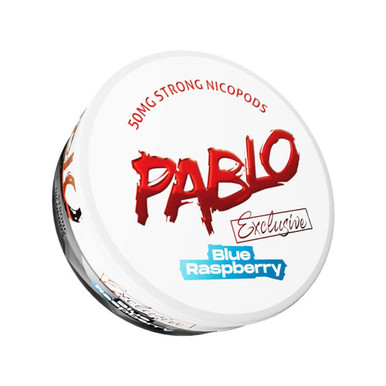
Pablo Exclusive Bubblegum is the other can in the line that is openly not trying to be fruit — a confectionery flavour with no pretence otherwise. If what appeals here is a scented, sweet-shop register rather than a fruit one, that is the sibling to look at. At the opposite end, Pablo Exclusive Blue Raspberry is the sharp, bright, unrounded option and has nothing soft about it.
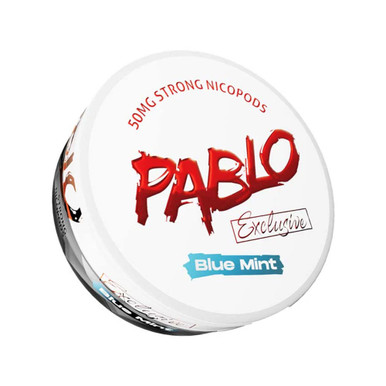
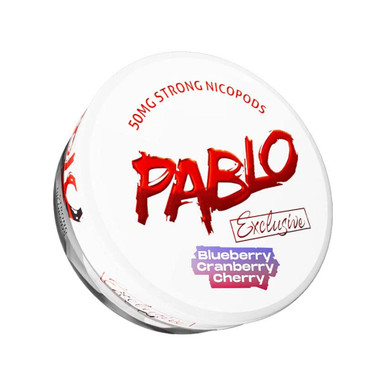
Pablo Exclusive Banana Ice is the range's soft, creamy option with a cooling finish, which is the nearest thing to this can in terms of gentleness even though the flavours are unrelated. Pablo Exclusive Blueberry Cranberry Cherry stacks three dark fruits with no cooling and no floral element at all, and Pablo Exclusive Blueberry Peach Ice layers dark fruit with stone fruit and then cools the result. Pablo Exclusive Blue Mint is the palate reset — cooling with no fruit sweetness behind it — and is the most useful second can for anyone whose main can is as distinctive as this one.
Six of fifty-six. The Pablo shelf holds the rest with live availability across all of them.
Storage and condition
Heat is the main enemy and a floral can is more exposed to it than most, because aromatic notes are the lightest part of a flavour and the first thing lost when a tin warms up. A can left on a dashboard, above a radiator or in a sunlit bag will still work; it will just have less of the perfume that is the reason you bought it. A drawer or a cupboard is all the protection it needs.
The lid is the second thing. These tins seal well but not airtight, and the twist plate on the catch compartment is easy to leave slightly short of closed. A can left ajar overnight comes back drier and considerably quieter on the nose.
Third, the used compartment, which has already had its paragraph and deserves the repeat: empty it when you open a new tin, because it sits directly over the fresh portions.
On refrigeration we have no view and will not invent one. We do not publish storage instructions of our own — the manufacturer's are printed on the can and those are the ones that govern. The only additional point is the obvious safety one: a small, brightly printed tin is exactly what a child or an animal will investigate, so keep it somewhere deliberate rather than on a low shelf or a coffee table.
Strengths and pack sizes: what there is to decide
Nothing, here. One variant is recorded — 50mg at £3.85 — with no second strength, no larger tin and no multipack option in our data. The decision is this can or a different can.
Plenty of listings on this site do carry a choice, and the two kinds of page look identical until you reach the buy box, so it is worth knowing in advance which kind you are on. Different declared figures live on the strength shelves rather than inside this product, and those shelves are a filing system rather than a ladder. We will describe what is on them; we will not steer anybody between them.
On pack size, the answer stands as given at the top: our record has no cans-per-pack figure, so we will not state one. The listing sets out what is being sold, and with comparable cans on this page running from £3.85 to £39.90 that is a check worth making before checkout rather than after.
Ordering, delivery and the age check
The buying process is unremarkable — listing, basket, checkout, confirmation, at the price displayed when the order is placed.
Age verification is the part that catches people out. This is an age-restricted product sold only to adults aged 18 or over. Verification may be carried out at the point of order, and ID may also be requested on delivery. A courier who asks and is not satisfied will not release the parcel, and that is not discretionary. If the parcel is going somewhere another person will receive it, that person has to be able to meet the same check.
Availability on this listing was in stock as written. Two of the pages linked above were not, and both are marked where they appear.
Finding this page, and finding your way off it
Four routes lead here. By house, the Pablo listings. By declared figure, the Extra Strong band. By flavour, either the Berry shelf at seventy-six or the Strawberry shelf at nineteen — and, as set out at the top, neither of those records the lychee.
Above those sit the wider groupings: Medium Strength and Strong as the neighbouring bands, everything we stock as the complete view, and brand shelves such as Cuba's own page behaving exactly as Pablo's does.
A word on using the shelves well. Flavour shelves are broad and will hand you results that share a fruit family and very little else — this listing is the proof of that, since it will appear in a strawberry search next to cans that taste nothing like it. Brand shelves are narrower and more predictable, because house style carries further than fruit does. Starting from a house you already know and browsing its flavours will usually get you somewhere you like faster than starting from a fruit. Every count quoted on this page is live as written and may have moved since.
Things worth asking before you order
What does lychee actually taste like in a pouch?
Floral, sweet and low in acid. The closest reference point is rose water, with a soft musky quality underneath it. It is aromatic rather than sharp, and a good part of the sensation arrives through the nose rather than on the tongue. It does not thicken the strawberry and it does not cut it — it puts a scented layer over the top of it. The full description is in the flavour section above, which is longer than usual precisely because our filters record none of this.
Why is there no lychee category on your site?
Because we have not created one, and with a single listing behind it there would be little point. The consequence is that this can is filed purely as a strawberry product and its distinguishing feature is invisible to anyone browsing by flavour. We would rather explain that plainly than let the tagging imply the can is interchangeable with the rest of the strawberry shelf.
Is it going to taste soapy?
It might, to you. Floral flavours split people, and lychee is among the most divisive. Some palates read the rose note as fragrant, others read it as soap, and that difference has nothing to do with the quality of the product. We cannot tell you in advance which group you fall into and we are not going to pretend otherwise. It is the single most useful warning on this page.
How does it compare to your other Pablo strawberry can?
The cheesecake version is the same house, same price and same declared figure, and it treats the fruit in the opposite way — weighting and rounding it with a dairy tang and a dry base note rather than lifting it with perfume. It is in stock. Between the two you can hear what a single house does when it pushes one fruit in two different directions, which is a more informative pairing than two strawberry cans from two different makers.
What is the 50mg measured against?
We do not hold that. Our record stores the manufacturer's string, 50mg, and nothing about its basis. The can carries the maker's own wording and that is the authoritative version. We would rather state the limit of what we know than publish a confident answer we cannot support.
Which strength should I buy?
We will not answer that, and no shop should. We have no information about you and therefore no basis for a recommendation. The factual position is all we can offer: this listing is one variant at one figure, and the strength shelves show the spread of what else we carry.
How many cans is £3.85?
Our record has no cans-per-pack figure for this listing and we are not going to invent one. The product page states what is being sold, and with neighbouring listings priced up to £39.90 that is worth reading before you order.
How many portions does a tin hold?
We do not hold that number. Counts are printed by the manufacturer and vary between brands and formats. A plausible-looking figure we had not verified would be worse than a blank, so it is blank.
Does the flavour last as long as a cooled can?
As a description rather than a measurement: no. Cooled cans keep a detectable element going after the flavour itself has thinned, which gives them a longer apparent life and a clearer end point. A floral can has no such backstop and simply fades. That is about how the two kinds of flavour behave, not about how long anybody should use one.
Is lychee a sweet flavour or a light one?
Both, which is part of what makes it hard to describe. The sweetness is high but it is broad and low-pitched rather than sugary and sharp, so it does not read as intense in the way a confectionery flavour does. At the same time the floral element is genuinely light and sits near the top of the flavour. The result is a can that is sweeter than it first seems and less heavy than its sweetness would suggest. If you want a single word for it, scented is closer than sweet.
Why does this page spend so long on the flavour?
Because our own shelving records none of it. A can whose distinguishing feature has no tag, no filter and no category is a can that only a written description can explain, and the alternative would be a product page that told you nothing the product name had not already said. Where our data is thinner than the name, the prose has to be thicker. That is the trade we have made on this listing.
Is the can in stock?
It was when this description was written, and the live marker on the listing is the reliable answer. Where this page links to something unavailable — the Edge strawberry listing being one of two — the text says so at the point of linking.
Will the can look like the photograph?
Broadly. There is one image on the listing and it is representative rather than guaranteed, since manufacturers revise artwork without notifying retailers. The written facts — brand, product name, declared figure, price — are the parts we stand behind.
Can I try one portion first?
No. We sell by the can, we do not split them, there is no sampling, and opened age-restricted goods cannot be returned. Given how divisive this particular flavour is, the sensible approach is to buy the smallest configuration of it we list rather than committing to more.
Age restriction and the legal position
This product is for adults aged 18 or over who already use nicotine. We do not sell it to under-18s, and nothing written on this page is addressed to anyone who does not already use nicotine products.
Nicotine is an addictive substance.
It is not a licensed stop-smoking medicine and is not offered, described or intended as one. It is not intended for non-smokers, non-nicotine-users, under-18s, or anyone who is pregnant or breastfeeding. We make no health claim about this product in any direction, and nothing above should be read as one.
ID may be requested on delivery, and age verification may also take place when the order is placed. Any question about whether a nicotine product is appropriate for you personally is one for a healthcare professional rather than a retail page.
In brief
A £3.85 single-variant can from the Pablo Exclusive line, declared 50mg, filed extra strong, and tagged berry and strawberry only — our shelving does not record the lychee at all. The second fruit is floral rather than sharp or rich: rose-water scented, soft, low in acid, lifting the strawberry into a perfumed register instead of cutting or thickening it. Divisive, and honestly so. One image, no cans-per-pack figure on record, in stock as written. If the floral register is not for you, the other eighteen strawberry listings go in eighteen other directions.
More from Pablo
More extra strong pouches
More berry pouches
Where this sits
Pablo Exclusive Strawberry Lychee Nicotine Pouches appears in these categories. Browse them, or jump to something close.
You might also like