
Home / Extra Strong / Pablo Exclusive Pineapple Nicotine Pouches
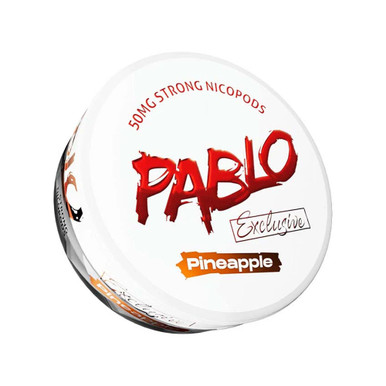
Pablo · 50mg
Read the full guide
Pablo Exclusive Pineapple Nicotine Pouches
£3.85
✔ In stock — ready to ship
100% tobacco-free
Free over £20
Same-day dispatch
Secure checkout
Pablo Exclusive Pineapple Nicotine Pouches are listed at £3.85 with one declared label figure, 50mg. A single variant sits behind that price rather than a set of options, so choosing the can is the only decision the listing asks of you. Stock reads as available as this page is written, and we hold one photograph.
That handful of items is the complete set of product-specific data behind this page. Nothing below has been borrowed from a neighbouring listing, inferred from a similar can, or assumed because it sounded likely. Where a gap exists it is named where it occurs, and there are two or three on this page.
The full guide to Pablo Exclusive Pineapple Nicotine Pouches
5,044 words on how it eats, who it suits, how to serve it and what to put beside it.
What is on the shelf here
The title breaks into three parts that do different work:
- Pablo — the manufacturer's trade name, printed on the can by the company that makes it. It describes nothing about the contents. Everything carrying it sits on the Pablo shelf, fifty-six listings at present.
- Exclusive — a line name within that brand. What the word is meant to designate has not been communicated to us, so we are not going to construct an explanation for it. It is on the can, therefore it is in the title.
- Pineapple — the flavour name the manufacturer chose. Our catalogue files this can on the Tropical shelf, which holds fifty-eight listings. Name and tag agree here, which is worth confirming because on some listings they do not.
Pineapple, described as taste and aroma
The manufacturer has given us one word: Pineapple. We hold no maker's tasting note for this can and we are not going to write one and let it pass as theirs. What follows is a description of the flavour family, written so that somebody can place the territory before deciding whether to buy into it.
Pineapple is one of the more distinctive names on any flavour shelf, and it is distinctive for a specific reason: it carries genuine acidity alongside genuine sweetness, in a combination that very few other fruits manage. Most fruit names lean one way. An orange is sharp-fronted. A banana is round and sweet. Pineapple does both at once, and the resulting impression is the tang people recognise instantly — bright, slightly abrasive at the edges, sweet underneath.
There is also a woody, slightly green character to the fruit that sometimes survives into a flavouring and sometimes does not. Where it does, the result reads as closer to fresh fruit. Where it is stripped out, what remains is the sweeter, softer, juice-tin reading — rounder, less abrasive, more obviously a drink than a fruit. Both are common targets in manufactured flavouring and the name on a can does not disclose which one a maker aimed at.
On aroma, pineapple sits high. It is among the more assertive fruit names in terms of what reaches the nose, and it is recognisable from scent alone in a way that, say, a pear or an apple generally is not. That has a practical consequence with a dry pouch: a can named this way tends to declare itself when the lid comes off.
What we can state without inventing anything: this can is named Pineapple, we file it as tropical, it is £3.85, and the declared figure is 50mg. Anything more exact about the taste belongs to the manufacturer and appears on the can, not here.
Building a rotation around a pineapple can
Very few regular customers run one flavour and nothing else. Two or three cans in rotation is the usual pattern, and since this page's assigned subject is pairing, it is worth setting out properly why that happens and how people actually go about it.
The reason rotation exists
The explanation people give most often is that a flavour used constantly stops registering. It is not specific to this product category and it is not mysterious — the same thing happens to any taste encountered without interruption. An interval of something else restores it. Rotating two or three cans provides that interval while keeping every flavour in the set.
A second, duller reason is supply. Stock moves across a catalogue of this size, and anybody running a single flavour exclusively will eventually want it on a day it is unavailable. A second can in the drawer solves that, and it costs nothing over time because both get used.
A third reason, less often stated but obvious once said, is that buying two cans at once halves the number of times you have to think about ordering. For a product bought repeatedly, the administrative cost of reordering is a real cost, and people manage it by holding a small buffer rather than by ordering more often.
Pairing a loud fruit is different from pairing a quiet one
Here is the part specific to this can. Pineapple is a loud note — high on sweetness, high on tang, assertive on aroma. Loud notes pair differently from quiet ones, and the mistake people make is pairing two loud fruits together and then finding neither of them reads clearly any more.
The better move with an assertive fruit is usually one of two things. Either pair down, into something structurally quieter, so that the contrast is one of volume rather than of family. Or pair sideways into a completely different register — mint, soda, confectionery — where there is no competition at all because the two cans are not attempting the same job.
Pairing across into a second tropical fruit, which is the instinctive choice, tends to be the least effective of the three, because both cans are working the same corner of the map. That is an observation about how people report using the catalogue, not a rule, and plenty of customers do exactly that and are perfectly happy.
Pairing down and sideways, with specifics
For the sideways move inside the same brand and the same £3.85, Pablo Exclusive Blue Mint is the mint-family option and the cleanest break available without leaving the line. Pablo Exclusive Bubblegum at £3.85 takes the confectionery route instead, which some people prefer precisely because it is sweet without being fruit.
For pairing down into a quieter fruit, the three-berry can in this line, £3.85 stacks dark berry notes that sit lower and broader than a tangy tropical one, and Pablo Exclusive Blue Raspberry, £3.85 is a confectionery-berry build that reads sweeter but less acidic.
If cooling is the variable you want to experiment with rather than flavour family, Pablo Exclusive Blueberry Peach Ice at £3.85 carries the cooling suffix that this can's name does not, and the banana-named can, also £3.85 does the same thing to a much softer fruit. Changing one variable at a time is the only way to find out which variable you actually care about.
How many cans a rotation actually needs
Two is the point at which rotation starts working at all, because one can is not a rotation and the whole effect depends on having something to move to. Three is where most people seem to settle, and the reason given is that three allows one flavour to be genuinely rested rather than merely alternated with. Beyond three or four the arrangement tends to collapse under its own weight: cans get forgotten at the back of a drawer, older ones go unused while newer ones are opened, and the practical result is worse rather than better.
There is a storage consequence to this, which the section further down picks up. A rotation of three cans is three lids that need to stay closed and three dates to keep an eye on. Keeping them somewhere they are all visible at once — a shallow tin, a drawer, a shelf rather than a bag — is the difference between a rotation you manage and a rotation that quietly manages itself into a drawer full of half-used cans.
A related point on how people build the set. The most common approach is not to buy three cans at once but to add one at a time, keeping whatever is already working and introducing a single new flavour alongside it. That changes one variable, which makes the result readable. Buying three unfamiliar cans together produces three impressions that are difficult to separate from one another, and most people who do it once do not do it twice.
What the neighbouring shelf offers
Across brands, the picture widens considerably and the prices stop matching. The table below sets out the neighbours this listing surfaces, with the figure we hold and the current position, so that nothing has to be discovered at the basket.
| Neighbour | Listed price | Currently |
|---|---|---|
| Elf Bar Pineapple | £29.90 | In stock |
| Nordic Spirit Tropical Mix | £4.49 | In stock |
| Denssi Tropical Fury Energy Pouches | £39.90 | In stock |
| Cuba Black Apple Juice | £39.90 | In stock |
| Killa Apple | £33.50 | In stock |
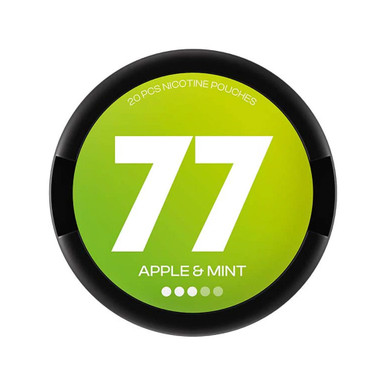
| 77 Apple Mint | £39.90 | In stock |
| Fumi Fiery Peach | £27.90 | In stock |
| Maggie Original Jamaican Cherry Tonic Wine | £39.90 | In stock |
| Siberia Mini | £39.50 | In stock |
| Iceberg Double Apple | £39.90 | Out of stock |
Two points about that table. The first is the out-of-stock line: the double apple can from Iceberg cannot be ordered today, and the page is there to read rather than to buy from. The second is the prices, which vary by a factor of ten and are not a like-for-like comparison — different listings cover different quantities, and this one holds no cans-per-pack figure at all.
Fifty milligrams as printed information
The declared figure on this can is 50mg, reproduced exactly as the manufacturer states it. It is label information and it is nothing more than that.
The precision matters because this number is the first thing most people look for and the thing most frequently asked to mean more than it does. A declared milligram figure is a specification set by the company that makes the product and printed on its packaging. It belongs in the same class as a size printed on a garment label. It is not a score, not a rating, not a grade, not a tier, and not a description of anybody who buys it.
We publish it because it is on the can and because a listing that withheld it would be less useful. We do not interpret it, we do not translate it into what to expect, and we do not tell anyone which figure belongs in their hand. In the plainest possible terms: we cannot advise which strength suits any individual, and we will not try to. We are a shop with a stock list, we have no idea who is reading this, and no retailer is placed to make that judgement for a person.
A related point on comparison. Each manufacturer sets its declared figures in its own way. Two cans from two companies showing similar numbers are not interchangeable on that basis, and a figure from one range does not convert neatly into a figure from another. Anybody who buys across brands regularly will have noticed this.
Our filing places this can under Extra Strong, the band that holds ninety-eight of our listings, and we also run a Medium Strength shelf and a Strong shelf. Those names are administrative labels, generated from the figures manufacturers print so that the catalogue can be browsed by number. They are not a ladder, not a sequence and not a statement that one band is preferable to another. A higher printed number does not make a can better, and getting to one is not an achievement. It is a filing system and nothing else was ever intended by it.
Handling the can, and what the pouch does once it is in
The container deserves its own section, since it is what you handle every day and what determines whether a product is a nuisance to carry.
These cans are short lidded cylinders — about the diameter of a large coin, barely taller than they are wide, and rigid enough to share a pocket with keys. Most, including the ones we handle from this brand, have a catch compartment built into the lid: a shallow recess partitioned off from the main body, for used pouches until a bin appears. It removes a genuinely awkward moment. The trade-off is that the can becomes its own small waste container and wants emptying into household rubbish every few days. Used pouches belong in general waste, not down a sink or a drain and not on the ground.
The pouches are small dry sachets. They go between lip and gum, usually the upper lip, and once placed they stay put without needing to be held or adjusted. No device features anywhere in this. There is nothing to charge, nothing to switch on, no heat, no cable, no spare part, and no sound. The can is the whole of the equipment.
How long a pouch stays in varies enormously between people and is not something we will attach a number to. Some take one out well before the flavour has gone, some leave it until it has, and both are ordinary. Guidance on duration, frequency or quantity is not a shop's business to issue, and this page issues none.
On pouch format: our data holds no portion count and no size designation for this listing. Whether the pouches inside are slim, regular or mini is not recorded, so we will say we do not know rather than pick the likeliest answer. The can declares it. Experience with other cans from the same maker's range is a better guide than anything we could responsibly write here.
Cool, sweet, sharp and bitter: placing a pineapple note
Four axes explain most of what separates one can from another in this catalogue, and they are more useful than adjectives because they position a can relative to others rather than promising anybody a sensation. Each reading below shows the reasoning behind it.
Sharp — high, and this is the defining axis
Pineapple's signature is acid. It is the trait that makes the fruit recognisable and the one that survives most reliably into a flavouring. Expect this axis to be the loudest of the four, and expect a pineapple-named can to read brighter and more forward than a berry or an orchard fruit. If sharpness is the thing you look for, this name points directly at it.
Sweet — also high, which is what makes the combination unusual
Most high-acid fruits are not especially sweet, and most sweet fruits are not especially acidic. Pineapple is both, and that simultaneous reading is the whole character of the fruit. In a flavouring the balance can be pushed either way — a juice-tin target lands sweeter, a fresh-fruit target keeps more acid — but both readings sit well up this axis.
Cool — low, on the evidence of the name
This can is called Pineapple with nothing appended. Cooling-led cans in this category almost always say so in the name, with Ice, Frost, Freeze or similar, and the absence of such a word is the best available signal. Against the cooling end of the catalogue, expect this one to sit low. That is a reading of naming convention rather than a promise about contents.
Bitter — low, with a caveat
Pineapple carries little bitterness in the sense that citrus peel does. What it can carry is a faintly astringent, green, almost woody edge, which is a different sensation but sometimes gets described as bitter by people reaching for a word. Whether that edge survives into this particular build is not something we know, because we hold no maker's description. It is an honest unknown rather than a hedge.
What the four add up to
High on sharp, high on sweet, low on cool, low on bitter: in shorthand, a bright and loud can. That summary is most useful as a warning in the other direction — somebody who prefers soft, rounded, low-acid builds is being pointed away by this name, and something on the orchard-fruit or berry side of the catalogue would suit that preference better. Which of those is the right description of you is not a judgement a shop should be making.
Reading the axes against other cans on the shelf
The axes earn their keep when you use them comparatively rather than absolutely. Set this reading beside Fumi Fiery Peach, £27.90, which names a stone fruit rather than a tropical one: peach sits lower on sharpness and softer at the front, so the two are not competing for the same position even though both are fruit. Set it beside Cuba Black Apple Juice at £39.90 and the difference is one of weight — a juice-named orchard build reads rounder and less abrasive than a tangy tropical one. Set it beside Siberia Mini, £39.50, a mint-family can, and the four axes barely apply to both products in the same terms at all, which is exactly the point of keeping a mint in a rotation alongside a fruit.
None of those comparisons is a ranking, and none of them is a statement that a given can will be experienced in a particular way by a particular person. They are positions on a map, derived from what the names and the flavour families tell us, and they exist so that moving between listings is a navigable exercise rather than a series of unrelated guesses.
The one axis we have deliberately left out
People sometimes ask why intensity is not one of the four. It is left out because it is the axis most likely to be confused with the declared milligram figure, and the two are not the same thing at all. How loud a flavour reads and what number is printed on the can are separate properties, set by separate decisions, and a can can be quiet in flavour with a high printed figure or the reverse. Keeping the tasting axes strictly to taste avoids implying a relationship we have no basis for asserting.
Keeping a can in condition
Dry pouches want dry, reasonably cool storage. The places to avoid are the predictable ones: direct sun, a car dashboard, a windowsill through summer, a shelf over a radiator, a bathroom where the air repeatedly turns damp.
A properly closed lid does more work than people expect. Aromatic character drifts out of a can left a quarter turn open in a warm room, and for a can with as much nose as a pineapple name implies, that is the part with most to lose. A can kept shut and cool holds its character for longer, and the effort involved is a second per use.
Refrigeration is common practice for some moist products in the wider category. It does not follow automatically for a dry can, and we are not going to instruct anybody to put this one in a fridge. The manufacturer's storage wording printed on the can is the authority on that question — ahead of this page and well ahead of general consensus about a different kind of product.
On rotation, apply the kitchen rule: older can first. Anybody following the pairing section above will have two or three cans going at once, and a shallow tin or drawer where all the lids are visible in one glance makes rotation something you can see rather than something you have to remember.
Where this can falls within the brand's range
Fifty-six listings carry this brand name across our shelves, divided into several named lines, of which the Exclusive line is the widest here. Its flavour names run across mints, sodas, berries, confectionery, orchard fruits and tropical fruits, making it one of the broadest single lines in the catalogue.
Within that spread, Pineapple is a single-fruit entry with no cooling suffix and no compound construction. What the label says is most of what the label is telling you. On a shelf that includes three-part fruit names and mint-fruit hybrids, this is one of the more legible propositions.
Its nearest structural relatives are the other single-fruit names in the line. The furthest from it, structurally, are the compound builds and the confectionery names. All of them are priced identically at £3.85, so there is no pricing signal steering the choice between flavours — the decision is a flavour decision with nothing else pulling at it.
Two pineapple cans, one catalogue
This listing has an unusual neighbour: Elf Bar Pineapple, listed at £29.90 and currently available. It is the same fruit name from a different manufacturer, which makes it the single most instructive comparison on this page, and also the one most likely to mislead if read carelessly.
What the shared name guarantees is that both makers were aiming at the same fruit. What it does not guarantee is anything else. Where each build sits between the fresh-fruit and juice-tin readings, how much of the green edge survives, how sweet the result is, whether any cooling element is present, and how the flavour is shaped across the time the pouch is in — all of that is set independently by each company. Two cans with the same fruit on the label are two different products that happen to share a word.
The prices are also not comparable as printed. £3.85 against £29.90 is not a statement that one is eight times the other in any meaningful sense, because we hold no cans-per-pack figure for this listing and the two entries may well cover different quantities. Read each listing's price against its own stated contents rather than against the other's.
Beyond that pair, the wider tropical grouping is worth browsing on its own terms. Nordic Spirit Tropical Mix at £4.49 is a compound tropical build rather than a single fruit, which is a genuinely different proposition. The tropical shelf holds fifty-eight entries in total, and the spread within it is much wider than the shared tag suggests.
Deciding, on a listing with one option
There is very little to decide here. One declared figure of 50mg, one variant, one price of £3.85. Our data holds no cans-per-pack value against this product, so a multi-can quantity is a basket question rather than something the listing can answer.
The genuine choice is which shelf to be reading. If the figure on this can is higher than the figures you usually buy, the direct route is to look at the medium band or the strong band and assess those listings on their own terms. We will not say which band you belong in. We will confirm that they exist and that browsing by declared number is a normal way to use this site.
If flavour is the axis, the tropical grouping holds the closest relatives by tag, and the entire catalogue on one page is there for when a slice is not what you want to see.
Ordering, delivery and age verification
This is an age-restricted product and the buying process is built accordingly. Sales are to adults aged 18 or over who already use nicotine. Age verification forms part of placing an order, and identification may be requested on delivery. A courier may decline to complete a handover where age cannot be established, and that is not a matter of their discretion.
On availability: this can reads as in stock as this page is written. Stock moves, which is why the unavailable neighbour in the table above is marked rather than left to be found at checkout. The live position on the listing itself always takes precedence over anything written in advance, this page included.
On price: £3.85 is what we hold. Prices elsewhere in the catalogue differ widely and frequently are not comparing the same thing — quantities vary between listings, and where a cans-per-pack figure is held it is shown on that product's page. None is held here, which is why nothing on this page describes the price as good or poor value against anything else.
Problems with an order — damage, a missing item, the wrong item — go through our ordering and returns process, which has its own pages rather than living inside a product description.
Routes out of this page
Three shelves meet here. By declared figure, this can is filed with the ninety-eight listings in the Extra Strong band. By manufacturer, it belongs to the fifty-six cans under this brand. By flavour family, it is one of the fifty-eight tropical entries.
Those three routes map onto the three ways people usually arrive at a product page: by maker, by number, or by what they want it to taste of. If none of those is how you think about it, everything we stock is one scrollable page.
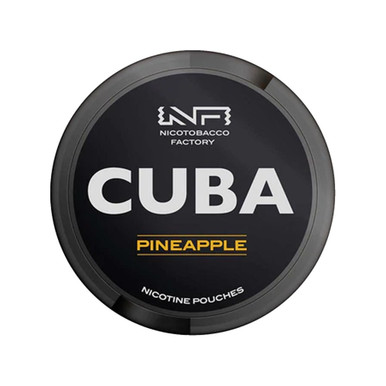
Brand shelves tend to be the most useful route once somebody has found a maker whose builds agree with them. The Cuba shelf is another large one and is organised identically — the filing is deliberately consistent across the site, so switching between makers never means learning a new layout.
Questions we get about this can
Is this the fresh-fruit kind of pineapple or the tinned kind?
We cannot tell you, because we hold no manufacturer tasting note for this can. Both targets are common in manufactured flavouring: one keeps the green, slightly woody edge and more of the acid, the other is rounder and sweeter. The section above sets out how they differ so the distinction is recognisable once you have tried it. Putting words in the maker's mouth would be inventing information.
How does it compare with the other pineapple can you list?
They share a fruit name and nothing else that we can verify. Different manufacturers make independent decisions about acidity, sweetness, cooling and the shape of the flavour across time, so a shared name is a shared target rather than a shared result. Both are in stock. The prices are very different and are not directly comparable, because we hold no cans-per-pack figure for this listing.
How many pouches come in a can?
Our data holds no portion count for this listing, so there is no honest number to print here. The can declares it, and that declaration is the source to rely on. Where portion count is the deciding factor, check the can or ask before ordering rather than trusting a figure typed onto a page by somebody working from a catalogue export.
Does it have a cooling element?
Nothing in the name indicates one and we hold no information saying so. Cans built around cooling in this category almost always announce it with a word like Ice or Freeze in the name, and this one is Pineapple and nothing further. That is reasoning from naming convention rather than a statement about what is in the can, and it is as far as we can honestly go.
Is there a weaker version of this flavour?
Not on our shelves. The listing holds one declared figure, 50mg, and one variant at £3.85. Whether the manufacturer produces this flavour at other figures is outside what our catalogue can tell you — the absence of another variant here means we do not list one, not that none exists.
Why are apple cans showing as related products?
Because related products are generated from shared shelves rather than from a taste judgement. Several of those apple-named cans share the Extra Strong band with this one, and shelf overlap is what the system uses. They are neighbours in the filing, not neighbours in flavour, and we would rather explain that than present the list as a curated flavour recommendation.
Where is it made?
We do not hold that information and will not guess at it. Country of origin and manufacturing arrangements are not part of the data behind this listing. Anything printed on the can is the manufacturer speaking for themselves, and that is the source worth trusting.
Am I allowed to use these at work or in a venue?
That is for the employer or the venue to say, not for us. Workplace policies and conditions of entry are written by the organisations that run those places, they differ considerably, and a policy that is silent on pouches is not a policy that permits them. Ask whoever administers the rules. A shop's product page carries no weight against a rule set by someone else.
Which strength is the right one for me?
We cannot advise on that for anybody. It is not a judgement a retailer is placed to make, and we are not going to make it indirectly by implying that one band is a beginning and another is a destination. The strength shelves here are filing derived from figures manufacturers print — not a ranking, not a route, not a progression.
How should the can be stored?
Lid shut, cool, dry, out of direct sun, away from the obvious hot spots such as a parked car or a radiator shelf. On an aromatic can this is worth the small effort, because scent is the part of a build most inclined to drift off over days in a warm room. If the manufacturer prints more specific storage wording on the can, that wording is the one to follow.
Why is there such a spread of prices on your tropical shelf?
Because the listings are not all covering the same thing. Quantities differ between them, and where a cans-per-pack figure is held it is displayed on that product's page. Where it is not held, as on this listing, we say so plainly rather than let the price imply a comparison it cannot support. Read each price against its own stated contents.
The notice required on this product
This product contains nicotine, and the following applies without exception.
- Sold only to adults aged 18 or over, and only to those who already use nicotine.
- Nicotine is an addictive substance.
- It is not a licensed stop-smoking medicine and is not offered, described or intended as one anywhere on this site.
- It is not intended for non-smokers, for anyone who does not already use nicotine, for anyone under 18, or for anyone pregnant or breastfeeding.
- Keep out of reach of children and animals.
- Age verification applies to every order, and ID may be requested on delivery.
No health claim is made about this product on this page in any direction, and nothing written above should be read as one. Anything bearing on your own health is a matter for a qualified professional rather than a retailer's description.
Final note
Pablo Exclusive Pineapple is a single-flavour, single-strength can at £3.85 with a declared figure of 50mg, filed as tropical and in stock as this is written. One image, one flavour word, one number — and every paragraph above has either been built from those or has said openly where our information ends. If the rest of the maker's catalogue is what you are after, the full brand shelf is the next page to open.
More from Pablo
More extra strong pouches
More tropical pouches
Where this sits
Pablo Exclusive Pineapple Nicotine Pouches appears in these categories. Browse them, or jump to something close.
You might also like