Home / Extra Strong / Pablo Exclusive Kiwi Nicotine Pouches
Pablo · 50mg
Read the full guide
Pablo Exclusive Kiwi Nicotine Pouches
£3.85
✔ In stock — ready to ship
100% tobacco-free
Free over £20
Same-day dispatch
Secure checkout
This page belongs to Pablo Exclusive Kiwi Nicotine Pouches, listed at £3.85. Our product record carries one declared strength, 50mg, one flavour tag, tropical, a single product image, and a stock status that reads in stock as this page was written. That short list — brand, product name, price, declared strength, flavour tag, image count, stock — is the whole of what our record holds on this can. Everything written below is either a description of the object, a comparison against other cans sitting on our own shelves, or a plain statement that we do not hold a piece of information you might reasonably want.
It is worth setting out at the top what this page will not attempt, because it governs the shape of the rest. We do not print ingredient lists or explain anything about how the contents of a pouch behave. We make no statement about anybody's wellbeing in any direction. We do not carry reviews or ratings, so nothing here is presented as a popular verdict. Where a sensible question has an answer we would have to invent, we write that we do not have it. That produces a duller page than the confident alternative, and it is the only version worth publishing for a product sold under age restriction.
The full guide to Pablo Exclusive Kiwi Nicotine Pouches
4,898 words on how it eats, who it suits, how to serve it and what to put beside it.
Pablo Exclusive Kiwi: what this listing actually holds
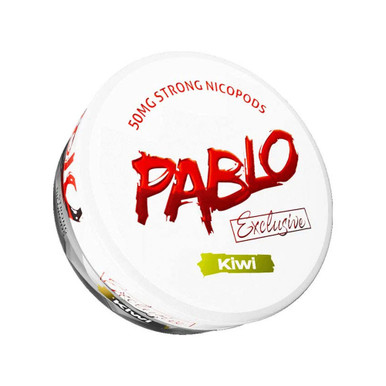
The object itself is a shallow round tin with a lid that lifts clear of the base and presses back down onto it. The lid face carries the Pablo name, the flavour, and the milligram figure. The pouches inside sit in a ring, dry to the touch, soft-edged, white. There is nothing to assemble, nothing to charge, and no part of it that needs a second piece of equipment. A pouch goes under the upper lip, stays where it is put, and comes out again by hand.
This is an adult nicotine product. It is listed and sold on the basis that the buyer is 18 or over and already uses nicotine, and the full wording on that sits in its own section at the foot of the page. Nothing above that section is addressed to anybody else.
The can as an object: lid, well, and what fits in a pocket
Most of what people notice about a can of pouches over a week has nothing to do with the flavour. It has to do with the tin — how it opens, how it closes, whether it survives being sat on, and whether the lid stays shut in a coat pocket. This section is about the container rather than the contents, because the container is the part you handle forty times before the contents run out.
Opening and closing
The lid on a Pablo can is a friction fit. It comes off with a thumb under the rim and goes back on with a push until you feel it seat. There is no thread to line up and no hinge to snap, which means the failure mode people worry about — a lid that works loose in a bag — depends entirely on how firmly it was pushed back down rather than on any mechanism. A properly seated lid on a can of this type is not easy to shift by accident. A lid balanced on top of the base is very easy to shift, and it is the most common way a pocket ends up with loose pouches in it.
Practically, that turns into one habit worth having: close the can with the same deliberate press every time, including the time you are in a hurry. It costs half a second. The alternative costs a tin of pouches and a pocket that needs turning out.
The well in the lid
Lift the lid and turn it over and you find a shallow hollow with a lip around it. That well is the catch compartment. Its purpose is to hold used pouches until you are somewhere you can empty it, and it is the single feature that makes the format workable in places where there is no bin within reach — a train, a car, a queue, the middle of a job. It takes several used pouches before it needs attention, and it is a compartment rather than a sealed chamber, so a can carried well is a can carried the right way up.
Emptying it is a matter of tipping the contents into general waste. Not into a sink, not into a planter, not out of a car window. Used pouches are small, pale and easy to lose track of on a surface, and a household with children or pets in it has an obvious reason to keep the tin closed and stored out of reach rather than left on a kitchen worktop.
How many are in the tin
Our record does not carry a portion count for this listing, and we are not going to estimate one. The number is printed on the packaging and the packaging is the authority for it. The same applies to the weight of a single pouch, the diameter of the tin and the depth of the base. If a figure is stamped on the can and not in our data, the can is where to read it, and we would rather say so than produce a plausible number that turns out to be wrong.
The one figure we can speak to with confidence is the price, because it is ours: £3.85 covers this listing as the site presents it. What it does not do is tell you the unit economics against a listing priced differently elsewhere in the catalogue, because our record does not store what quantity each price covers. That comparison has to be made on the two listing pages rather than from a paragraph here.
What is printed on the lid, and why it matters
The top face of the tin carries three pieces of information: the maker's name, the flavour, and the declared figure. That combination is designed to be read from above, and the reason it is worth a paragraph is that most people end up with more than one can and store them stacked. When four tins are lying in a drawer or a glovebox, the lid face is the only part you can see, and a range that prints its flavour clearly on the top is a range you can work through without picking each tin up and turning it over.
The Pablo Exclusive cans are consistent about this across the line, which is part of why a rotation built inside the range is easy to manage. Between brands it is less predictable — some makers put the flavour on the side and the brand mark on the top, which is fine on a shelf and unhelpful in a drawer. None of that is a judgement about the contents of any can. It is a note about reading tins at arm's length, which is a real part of living with the format.
Carrying it
A can of this shape lives comfortably in a jacket pocket, a jeans pocket, a bag pocket or a glovebox, and it is rigid enough that it does not deform under ordinary pressure. It is not, however, armoured. A tin in a back pocket under a person's full weight will eventually go out of round, and a lid that has been distorted never seats as well again. People who carry a can daily tend to settle on one pocket and use it consistently, which is less about tidiness than about knowing where the thing is without patting yourself down.
Temperature matters more than impact. A tin left on a dashboard in summer sun or in a car overnight in February is being treated worse than a tin that has been dropped. We come back to that in the section on keeping a can in good condition.
Kiwi, described as a taste
Kiwi is an unusual flavour to find on a pouch, and it is worth describing carefully because there is less shared reference for it than there is for mint or cola. The fruit itself has a particular profile: a green, seedy sweetness with a distinct acid edge to it and a faintly floral top note that sits somewhere near melon without being melon. A flavouring that aims at kiwi has to decide how much of that acid edge to keep, because acid is the part that makes it recognisable and also the part that is hardest to hold in a small dry format.
This one reads as the sweeter interpretation with the tartness left in rather than sanded off. The fruit arrives first and the sharpness follows a beat later, which is roughly the order in which a real kiwi presents itself. It is a green flavour rather than a tropical-punch one — there is no pineapple brightness to it and no heavy mango weight. The aroma off a freshly opened tin is soft and fruit-led rather than sharp.
Our record files this can under a single flavour tag, tropical, and that is worth a note because it can read oddly. Kiwi is not tropical fruit in a greengrocer's sense. On this site, the tropical grouping is a broad fruit bucket holding 58 listings, and kiwi is filed there because that is where the fruit-forward cans live, not because anyone is claiming a relationship with pineapple. More significant is what the record does not carry: there is no mint tag and no ice tag against this can, and the product name does not include the word ice. On our data, then, this is a fruit can with no declared cooling element, which distinguishes it from a good deal of what else we stock.
One limit on all of the above. This is a description written by people who stock the product, not a specification, and flavour is subjective. What we can state without hedging is which flavour grouping the can is filed under, because that comes out of the record rather than out of anyone's mouth.
The pouch itself, in ordinary use
A pouch out of this tin is a small soft rectangle with rounded corners, dry rather than wet to the touch, and light enough to vanish in a closed hand. It goes under the upper lip and sits against the gum. The first thing most people register is that a fresh pouch feels slightly bulkier than it looked in the tin, and that the impression settles within a minute or two as it takes the shape of the space it is in. After that it is largely unremarkable to hold in place.
How long anyone keeps one in is a question with no single answer, and we would rather give the honest range than a tidy figure. Some people take one out inside ten minutes. Others leave one seated for the better part of an hour. The same person varies across a day and across cans. The flavour does not hold level across that time either — it arrives quickly, holds for a stretch, and then thins until what remains is closer to a background note than a taste. A great many people treat the fading of the flavour as the signal to change, not because there is a rule but because a pouch with nothing left in it is doing nothing anyone wanted.
People talk and drink with one in. Some eat with one in and some do not, which is preference rather than practice and we are not going to write it up as guidance. Taking one out is a matter of hooking it with a fingertip. It then goes in the lid well, or straight into general waste if a bin is to hand.
50mg on the lid, read strictly as a number
The figure printed on this can is 50mg, and it is the only strength this listing comes in. We publish it because it is on the can and because it is the field people sort by. Beyond that, we want to be precise about what we are and are not telling you.
First, the figure is the manufacturer's declaration, not a measurement we have taken. Second — and this matters more than it sounds — our record stores the string 50mg and does not store the basis on which it is declared. Different producers state their figures differently, and we are not going to assume which convention applies here and present the assumption as fact. The can's own labelling is the authority on what the number refers to. If that sounds like an evasion, consider the alternative: us guessing on a nicotine product's listing page.
Third, and most importantly, the number is not advice. Our site sorts cans into strength bands so that the catalogue can be browsed, and this listing falls into the extra strong band, which currently holds 98 listings. Alongside it we run a medium strength shelf and a strong shelf. Those are filing categories. They are not a ranking, not a ladder, and not a sequence anybody is meant to move along. A higher number on a lid is not an achievement and it is not a mark of quality — it is a different declared figure on a different can.
We cannot tell you which strength suits you. We are a shop, we hold no information about any individual, and choosing a strength is not something we are able or willing to advise on. What we can do is publish the figure the manufacturer declares, publish it the same way on every listing, and let you compare like with like. If you want a question answered about your own use of nicotine, a shop's product page is the wrong place to look for it.
The same band, other cans: what else sits at this end of the shelf
Because this can is filed in the extra strong band, the most useful comparison we can offer is with the other things in the catalogue filed the same way or close to it. This is a shelf comparison, not a recommendation, and none of what follows should be read as suggesting one can is better than another. What varies between them is brand, flavour, format and price, and those are the only axes we can honestly compare on.
Within touching distance on flavour
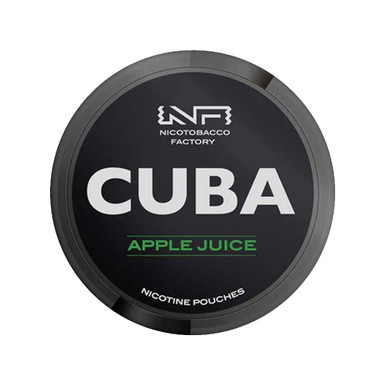
Kiwi sits in the fruit end of the catalogue, and the nearest neighbours by flavour family rather than by brand are worth naming. Cuba Black Apple Juice is listed at £39.90 and points its fruit at pressed juice rather than at whole fruit, which is a rounder, sweeter reading of an orchard flavour and a useful contrast with kiwi's acid edge. 77 Apple Mint, also £39.90, takes a green apple and puts a cool layer underneath it, so it shows you what this can would be like if it carried the cooling element that it does not. Killa Apple at £33.50 is the same orchard idea again from a third brand at a third price.
One to name with a caveat: Iceberg Double Apple at £39.90 is currently out of stock, so the page is there to look at but not to buy from today. We would rather say that before you click than after.
Other fruit directions at other prices
Moving away from green fruit, Elf Bar Pineapple at £29.90 is the brightest, sharpest fruit we stock in this part of the catalogue and the closest thing to an actual tropical reading of the flavour shelf this can is filed on. Fumi Fiery Peach at £27.90 goes soft and heavy where kiwi is light and sharp, with a warm edge to it that the name is honest about. Nordic Spirit Tropical Mix at £4.49 is the closest listing to this one on price of anything in the fruit grouping, and the mix format means it does not commit to a single fruit at all.
Further out, Maggie Original Jamaican Cherry Tonic Wine at £39.90 is the most unusual flavour description in this section of the catalogue and reads nothing like a fruit can — cherry, yes, but built around a much darker and more bittersweet idea. Siberia Mini at £39.50 is a different proposition again and is listed as a mini format, so the thing that changes there is the size of the portion rather than the flavour family.
A listing that is not the same kind of product
Denssi Tropical Fury at £39.90 shares the tropical shelf with this can, but it is listed as an energy pouch rather than a nicotine pouch, which makes it a different category of product entirely. We mention it because it will appear next to this can when you browse by flavour, and it would be unhelpful to let you find it without saying that the descriptions on this page do not apply to it. Its own listing covers what it is.
What the comparison cannot tell you
Prices across the cans named above run from £3.85 to £39.90, and that spread is much too wide to be about flavour. Our record does not store what quantity each price covers, so a straight comparison of the two numbers is not a comparison of value. Read each listing page for what it says it contains. Where our data is silent, we would rather point at the gap than paper over it with a per-unit figure we have worked out by assumption.
Where this can sits in the Pablo range on our shelves
The Pablo brand page currently holds 56 listings, which makes it one of the larger single-brand shelves we run. The Exclusive line that this can belongs to is the bulk of it, and the pattern across that line is consistent: one declared strength per listing, the same £3.85 price, and the flavour as the only variable between cans.
That consistency is the useful thing about a large single-brand shelf. When the tin, the format and the price do not change between two listings, the difference between them is genuinely just the flavour, and you can make a straight comparison without holding four other variables in your head. It is a very different exercise from comparing across brands, where the can, the portion, the price and the declared figure all move at once.
If you want to see the full breadth rather than the Pablo corner of it, the whole catalogue is browsable in one place, and the Cuba brand page is the nearest comparable single-brand shelf we run for anyone who wants to see how another maker organises a range of this size.
What people keep beside this can for variety
Very few people buy one flavour and nothing else. The common pattern is two or three cans in rotation, and the reason is plain: any flavour you have a lot of becomes less distinct the more of it you have, and a second can with a different character resets that. Because the Pablo Exclusive cans all sit at the same price with the same declared figure, a rotation built inside the range changes exactly one thing at a time.
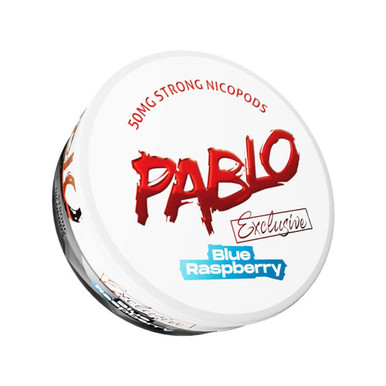
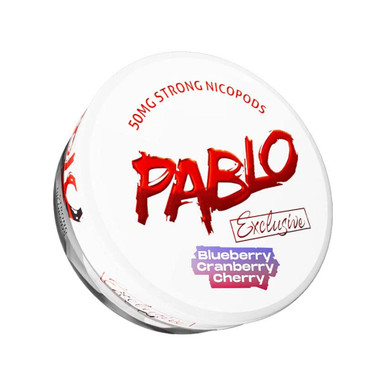
Staying close to the fruit: Pablo Exclusive Blue Raspberry at £3.85 keeps a bright sharp fruit but swaps green for red and pushes the sweetness up, and the Blueberry Cranberry Cherry can, same price, stacks three darker fruits where this one runs a single light one. Blueberry Peach Ice is the one to look at if you want to know what the range does when it adds a cold layer over fruit, since that is the element this kiwi can does not have.
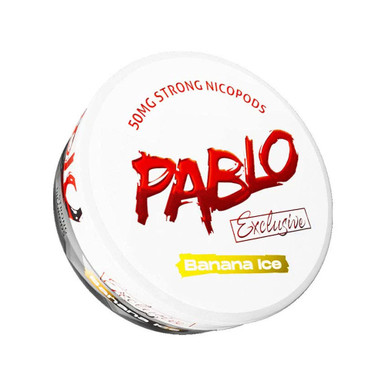
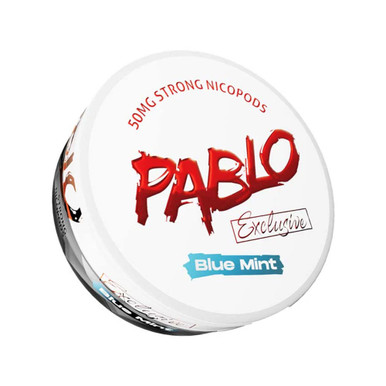
Going further from the original: Pablo Exclusive Banana Ice is a soft heavy fruit rather than a sharp light one, again at £3.85, and Pablo Exclusive Bubblegum leaves the fruit shelf altogether for a confectionery flavour. For a rotation built on maximum contrast rather than variation, the Blue Mint can is the obvious partner — it removes the fruit entirely and gives you a cold mint can from the same maker, at the same price, in the same tin. All five of those are marked in stock as this was written.
Keeping a can in reasonable condition
A tin of pouches is not delicate, but it is not indestructible either, and most of what shortens the life of a can is avoidable. Keep the lid properly seated. Store it somewhere cool and out of direct sun. A dashboard in July and a car footwell in January are both worse for a tin than a kitchen drawer, and a bathroom shelf is worse than either because of the humidity rather than the temperature.
Some people keep an opened can in a fridge on the theory that it holds the flavour longer. We are not going to endorse or dismiss that, because we have not tested it and the manufacturer's own storage instruction is printed on the packaging. What we will say is that the instruction on the can outranks anything a shop writes on a web page.
The rest is straightforward. Keep the tin closed when it is not in use, keep it out of reach of children and pets, and do not decant the contents into something else — an unlabelled container with pouches in it is a bad idea in any household. Used pouches go in general waste, and the lid well exists so that they have somewhere to be until they get there.
Choosing, when there is only one of it
This listing offers one configuration. There is one declared strength, 50mg, one price, £3.85, and our record carries no multi-can option and no can count, so there is no pack-size decision to make on this page. That is unusual enough to be worth stating plainly, because on some listings elsewhere in the catalogue there genuinely is a choice to make and here there is not.
What that leaves is the choice between this can and a different can, which is the comparison the sections above are for. If the flavour is the variable you care about, the Pablo range is the cheapest way to change it without changing anything else. If the declared figure is what you are comparing, the strength shelves will sort the catalogue for you, and we will publish every figure we hold — but the decision belongs to you, and, to repeat the point made above, we cannot advise on it.
Ordering, delivery and the age check
This listing is marked in stock as this page was written. Stock moves, and the listing page itself is the current position rather than this paragraph. Add the can to a basket and check out in the ordinary way; the price shown at checkout is the price on the listing.
Age verification is not optional and is not a formality. We sell only to adults aged 18 or over, there is an age check at checkout, and ID may be requested on delivery. Where ID is asked for and an adult at the address cannot produce it, the parcel will not be handed over. It is worth knowing that before you choose a delivery address — an order sent to a workplace reception or a neighbour is an order that may not complete.
On returns, our standard policy applies, with the obvious limit that an opened can of a consumable is not resaleable. That is worth bearing in mind when buying an unfamiliar flavour for the first time: there is no way to try one without opening the tin, which is precisely the difficulty, and the practical answer most people land on is to treat a first can of anything new as a small experiment rather than a commitment.
Finding your way back to this page
This can is reachable from four places on the site. It sits on the 98-listing extra strong shelf, on Pablo's own brand page with the other 55 listings from the same maker, and in the tropical fruit grouping alongside 57 other cans. All three routes lead here, and which one is quickest depends on whether you are shopping by declared figure, by brand or by flavour.
If none of those is how you think about it, the full shop index lists everything we hold in one place. The strength shelves are the coarsest filter and the flavour shelves the most useful if you already know roughly what you want the can to taste of.
Questions we are actually asked about this can
How many pouches are in the tin?
We do not hold that figure. Our record has no portion count against this listing, and rather than estimate we will point you at the packaging, which states it. This is not us being cagey — it is a genuine gap in our data, and the number printed on the can is right while a number we made up would only sometimes be.
Does 50mg mean per pouch?
Our record stores the declared figure as the text 50mg and does not store the basis of the declaration. We are not going to tell you what convention the manufacturer used, because we would be guessing. The labelling on the can itself is the authority for that, and it is worth reading before you buy if the basis matters to you.
Is this can cooling?
Not according to our data. The record carries one flavour tag, tropical, with no mint or ice tag against it, and the product name does not include the word ice. On that basis this is a fruit can without a declared cooling element. If you want the cooling layer from the same maker at the same price, the Blueberry Peach Ice listing is the nearest example in the range.
Why is kiwi filed under tropical?
Because our tropical shelf is a broad fruit grouping rather than a botanical one. It holds 58 listings and functions as the place fruit-forward cans live. Kiwi is not tropical fruit in the strict sense, and we would rather explain the filing than pretend the category name is doing precise work.
Which strength should I choose?
We cannot answer that. We hold no information about you, we are not qualified to advise on it, and a shop giving that kind of answer on a product page would be doing something it has no business doing. What we will do is publish every declared figure we hold, consistently, so that you can compare listings against each other. The decision itself is not ours.
What is in the pouches?
We do not publish ingredient, composition or technical information for this product. The manufacturer's labelling on the can carries that and is the authoritative source. This applies to every nicotine product on the site rather than to this listing in particular.
Can I take a can abroad?
Rules on bringing nicotine products into a country vary widely and some countries restrict or prohibit them outright. We do not hold a list of national rules and we are not going to guess at one. Check the destination's published requirements, and the carrier's, before travelling with any nicotine product.
Is there a multi-can option?
Not on this listing. Our record shows a single configuration at £3.85 with no can count and no multipack variant. If that changes, the listing page will show it before this paragraph does.
How does the price compare with other cans you stock?
£3.85 is at the low end of what appears on our shelves, and other listings in the comparison sections above run up to £39.90. Those numbers are not directly comparable, because our record does not store what quantity each price covers. The listing pages do a better job of that comparison than we can do here.
What if the flavour is not for me?
There is no way to test a flavour without opening the can, and an opened can is not resaleable, so our returns policy cannot help with a preference. The practical answer is that a first can of an unfamiliar flavour is best treated as a small experiment, and that the Pablo range makes that a cheaper experiment than most, since every can in it sits at the same price.
Do you have reviews for this product?
No. We do not run ratings or reviews on this site and we will not manufacture them. Nothing on this page is presented as the opinion of other customers, because there is no such body of opinion for us to report.
The required wording, in full
Nicotine is an addictive substance.
Pablo Exclusive Kiwi Nicotine Pouches are sold only to adults aged 18 or over who already use nicotine. There is an age check at checkout, we do not sell to anyone under 18, and ID may be requested on delivery. Where it is requested and no adult at the address can produce it, the parcel will not be handed over.
This product is not a licensed stop-smoking medicine and holds no authorisation of that kind. It is not intended for non-smokers, for anyone who does not already use nicotine, for anyone under 18, or for anyone who is pregnant or breastfeeding. Nothing on this page is medical advice, and nothing on it should be read as a suggestion that anybody begin using nicotine or select any particular strength.
Keep the can closed and out of reach of children and pets. Dispose of used pouches in general waste. Every product fact above — brand, name, price, declared strength, flavour tag and stock status — comes from our own record for this listing. Where the record is silent we have said so instead of estimating, and the manufacturer's labelling on the can is the authority for anything printed on the packaging.
The short version
Pablo Exclusive Kiwi is a green, slightly tart fruit can with no declared cooling element, listed at £3.85 in one declared strength of 50mg, and in stock as this was written. It is filed in the extra strong band, on the Pablo shelf with 55 other listings from the same maker, and in the 58-listing tropical grouping. The nearest things to it on our shelves are the Killa apple can at £33.50 for a comparable orchard-fruit reading from another brand, and Pablo's own Blue Mint at the same £3.85 if what you want beside it is a can with nothing fruit about it at all. Everything we know about this product is on this page, and everything we do not know, we have said we do not know.
More from Pablo
More extra strong pouches
More tropical pouches
Where this sits
Pablo Exclusive Kiwi Nicotine Pouches appears in these categories. Browse them, or jump to something close.
You might also like