
Home / Extra Strong / Iceberg Emerald Nicotine Pouches
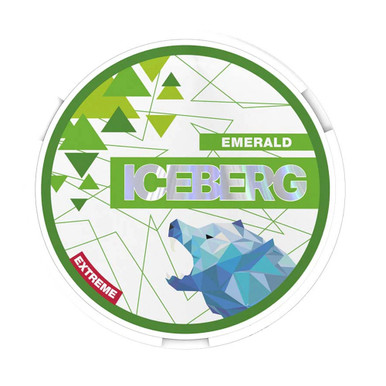
Iceberg · 50mg · 10-can pack
Read the full guide
Iceberg Emerald Nicotine Pouches
£39.90
✔ In stock — ready to ship
100% tobacco-free
Free over £20
Same-day dispatch
Secure checkout
Iceberg Emerald Nicotine Pouches is listed at £39.90 for a pack of 10 cans. The brand is Iceberg, the product name on the lid is Emerald, and there is a single declared strength behind the listing: 50mg, with one variant at that figure and that price. The stock field reads out of stock. The flavour field is empty — we hold no flavour tags against this product whatsoever.
That last point deserves more attention on this page than it would on most, and it shapes what follows. On a can called Blueberry, an empty tag field is an administrative gap: the name tells you where the flavour is pitched even when the record does not. Emerald tells you nothing of the kind. It is a colour, or a stone, and neither is a taste. So this page is largely about the can, the pack, the brand shelf and the money, because those are the things we can describe from a record rather than from imagination.
The full guide to Iceberg Emerald Nicotine Pouches
5,102 words on how it eats, who it suits, how to serve it and what to put beside it.
The Emerald listing, in the terms our record holds it
We would rather publish a page that is open about its gaps than one that reads confidently and is partly invented. Nothing here is an ingredient list, an account of what a pouch does once it is in place, or a statement about anybody's wellbeing in any direction. Where a sensible question runs into something we do not hold, the page says so and moves on.
This product is sold to adults aged 18 or over who already use nicotine. The full notice is set out near the foot of the page in its own section, and nothing written above it is addressed to anyone else.
What arrives: the tin, the lid, the ten of them
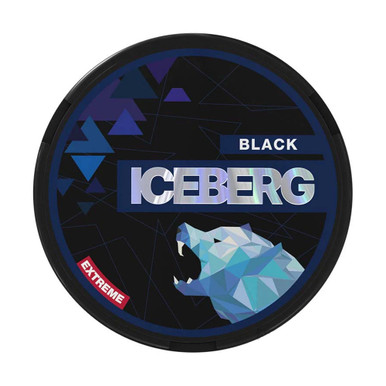
A single can is a shallow round tin with a lid that lifts clear and presses back down. The lid face carries the brand, the product name and the milligram figure. That printed figure is more useful than it sounds once there are several cans in the same drawer, because you identify cans by reading their tops rather than by picking each one up and turning it over.
Under the lid the pouches sit in a flat ring, pale and soft-edged. How many are in a can is not something our record states, and we are not going to put a number to it. The count is printed on the packaging by the people who filled the tin, and an estimate typed here would sit alongside real figures while being a guess, which is worse than leaving the space blank. The same reasoning covers the weight of a pouch, the diameter of a tin and the dimensions of the outer pack of ten.
The underside of the lid is dished rather than flat — a shallow well with a lip on it. That well is a catch compartment for used pouches, and it is the piece of design that makes the format workable away from a bin. It holds several before it needs turning out.
Buying this listing means ten of those tins arriving together. Our record holds one product image, which shows a can as supplied. Brands do refresh packaging artwork without telling retailers in advance, so read the picture as a representation rather than a promise about the exact lid in the box.
Wearing one: the short practical version
The pouch is a small soft rectangle with rounded corners, dry to the touch, light enough to vanish in a closed fist. It goes under the upper lip and stays there. A fresh one feels bulkier than it looked in the tin for the first minute or two, then settles into the space and becomes unremarkable. People talk with one in place without anyone noticing and drink with one in place without thinking about it. Eating is a split — some take one out for a meal, some do not — and that is a personal habit rather than a rule we are going to invent.
How long a pouch stays in has no standard answer. Ten minutes and the better part of an hour are both entirely normal, the same person varies through a day, and the spread between two people is wider than the spread between two brands. The flavour, where a can has one, is not level across that time: it arrives, holds, then thins to a background note, and many people use the thinning as their signal to change rather than working to a clock.
Removal is a fingertip hook. The used pouch goes into the well under the lid, and the well goes into general waste when it fills. Not down a sink, not into a garden, not out of a car window. Used pouches are small and pale and easy to lose sight of on a desk or a console, which is the practical reason a can belongs closed and out of reach in a house with children or animals in it.
None of the above is specific to Emerald. It is true of every can we stock, from Siberia Mini at £39.50 to Cuba Black Cola at £39.90. What changes between products is the name on the lid, the number beside it and the price, not the physical business of using one.
Emerald is a name, not a tasting note
We cannot tell you what this tastes like. That is the plain position and there is no version of this section that improves on it. Our flavour field is empty, so the can is filed under no flavour grouping on the site and appears in no flavour browsing at all. The product name supplies nothing either: Emerald is a colour name, and while colour names are common enough across this category, they are chosen for the look of a can rather than to describe a flavour family in the way that Blueberry or Cola does.
Could we guess? Green names across the trade often accompany mint or menthol flavours, and someone writing this page without any scruples would say so as if it were a fact about this particular can. We are not going to, because that inference would be built on a colour association rather than on anything in our record or on the packaging in front of us. If it turned out to be a fruit flavour, or a gum flavour, or something else entirely, we would have misled you in a way that is entirely avoidable by simply not doing it.
The aroma from an open tin is usually the quickest guide to where any flavour is pitched, often a better one than a written description. We hold no note on that for this can either. What we would suggest instead, for anyone who wants a documented flavour rather than a surprise, is buying from a listing where the record actually carries a tag. Cuba Black Cherry at £39.90 is filed under a flavour and is exactly what the name says. The Cuba Black blueberry can, same price, is equally literal. Both are a more honest purchase for a first-time buy than a can whose flavour we cannot confirm.
One last note on the name. Where a product name and a flavour tag disagree on our site, we say so rather than smoothing it over. Here there is no disagreement to report, only an absence: the name says nothing and the tags say nothing, and that is the whole of it.
The 50mg figure, as a label rather than a recommendation
The number on this can is 50mg. It is a manufacturer's declaration about nicotine content, and the convention across this category is that such figures are expressed per gram rather than per pouch. That distinction is the most commonly misread thing in the whole category, because two cans printed with the same figure and filled with different portion sizes are not making the same statement about a single pouch.
Brands do not all round, express or reference their figures identically, so we reproduce what each one declares and stop there. We do not convert figures between brands, we do not restate them in other units, and we do not rank cans against each other by the number, because ranking would imply the numbers are directly comparable and they are not.
Our site sorts products into bands so the catalogue can be browsed by declared figure. This can sits on the Extra Strong shelf, which holds 98 listings and is the largest of those bands. Beneath it are the Strong band and the Medium Strength band. Those bands are a filter and nothing else. They are not a ladder, not a quality order, and not a route anyone is intended to travel along; a can in a higher band is not an improved version of a can in a lower one.
What the figure will not tell you is how long a pouch lasts, which is governed entirely by the person holding it, or how a flavour is pitched, which is independent of the declaration. It also does not tell you whether a can is right for you, and we are not going to pretend otherwise. That decision rests on things you know about yourself that a shop does not know and will not ask.
The Iceberg shelf, and where Emerald falls on it
This is the section worth spending time on, because when a record is this thin on flavour, the brand context is most of what remains. We hold 40 listings under this brand, collected on the Iceberg brand page, and the shape of that range as it appears in our data is worth describing honestly — meaning from prices, pack sizes and shelf placement, not from marketing copy we did not write.
The pattern across the 40
Two things stand out. The first is that Iceberg is a broad range by flavour naming: the brand does not run a small tight set of four or five names but a long list, and a good share of those names are fruit, gum and mint variations rather than a single house style repeated. The second is that a large proportion of the range sits in the upper declared band, which is why the 98 extra strong listings and the brand page overlap so heavily. If you sort our catalogue by that band, Iceberg is one of the names you meet most often.
Emerald is an ordinary member of the range on every axis we can measure. It carries the brand's common price point of £39.90, the common ten-can pack, and a declared figure at the top of our banding. Where it is unusual is only in what our record does not hold: no flavour tag, and a name that gives no flavour direction. On the brand shelf it therefore sits as one of the harder cans to choose blind, which is worth knowing before you buy ten of them.
Which Iceberg can suits which kind of buyer
We can be useful here without overreaching. Someone who knows exactly which flavour family they want should be buying from an Iceberg listing whose name is literal, because those are the ones where name, tag and contents line up and there is nothing to be surprised by. Someone who buys for variety and treats an unknown name as part of the interest will be perfectly happy with a can like this one. Someone buying a ten-can pack as their first purchase from the brand is, on balance, better served by a listing they can read the flavour of, simply because ten cans is a lot of a flavour you did not expect.
Those are statements about information and money rather than about the product's qualities, which is the only ground on which a shop can sensibly make them. What we will not do is tell you which declared figure suits you, or characterise any can as a good introduction to nicotine, because no can is and nothing on this site is offered on that basis.
How the brand sits against the rest of our catalogue
Structurally, the closest comparison to Iceberg in our catalogue is Cuba. The Cuba shelf runs the same £39.90 price point and the same multi-can pack shape, with a long list of literal flavour names. If what appeals here is the pack economics rather than the brand specifically, that is the other place on the site where the same purchase exists in a different livery.
The contrast case is Pablo. Pablo's listings are priced per single can at £3.85, which is a fundamentally different way of buying: cheaper to experiment with, more expensive per can, and better suited to someone assembling a rotation of four or five flavours than to someone restocking one they already know. Between those two shapes sits the Siberia Mini listing at £39.50, which is close to this can in headline price while being a different product proposition in the hand.
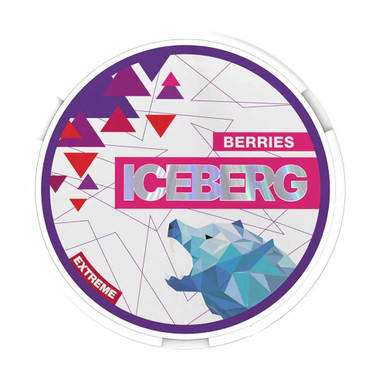
Back inside the brand, our record files six cans directly against this listing, and they are the practical answer to the section above: if a name you cannot read the flavour of is the problem with Emerald, four of the six solve it. Iceberg Black Currant names one fruit and nothing else. The Iceberg Berries can names a family rather than a single fruit, which is a half-step in the same direction. Apple Lemon Pineapple is the most literal name in the six, spelling out all three, and Iceberg Black Mint is the only one of them that puts mint on the lid. Every one of the four carries the same £39.90 as this pack, so choosing a name you can read costs nothing extra.
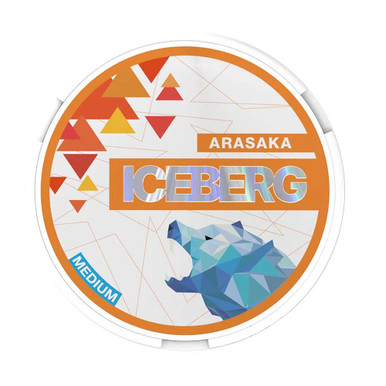
The remaining two siblings have the same problem this can does. Iceberg Arasaka and the Iceberg Black listing are named for a word and a colour respectively, so like Emerald they tell you where the can sits in the brand's naming and nothing about the taste. Both are £39.90 as well.
One caveat covers all six and it is not a small one. Every one of them is marked out of stock on our record, exactly as this listing is, so following those links will show you the range but will not put anything in a basket. What this page cannot print is a strengths table for the six, because the declared figures for those cans are held on their own pages rather than on this one, and the brand shelf carries the live position where this page would carry a stale copy of it.
How people actually buy this: one can, ten, or a spare in the drawer
The second substantial section on this page is about buying rhythm, because with a ten-can pack at £39.90 the decision people wrestle with is rarely which flavour and usually how much at once. It is a question about money and logistics, which makes it one of the few questions on a page like this that can be answered properly.
The single can and the pack, as two different decisions
A pack of ten is cheaper per can than buying singles and more expensive to be wrong about. A single can is the opposite on both counts. That is the whole trade-off and everything else is detail. Where it bites hardest is on a listing like this one, where the flavour is undocumented: committing to ten cans of an unknown flavour is a different proposition from committing to one, and anyone who dislikes surprises should weigh that before the price.
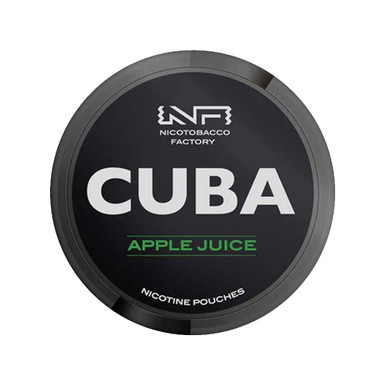
Our catalogue supports both patterns. This listing and Cuba Black Apple Juice at £39.90 are pack purchases. Pablo Exclusive Banana Ice at £3.85 is a single-can purchase. Neither is better value in the abstract; they are answers to different questions, and the honest advice is to buy singles while you are still deciding what you like and packs once you have decided.
The arithmetic, written out
That trade-off is easier to see with the division actually done. Ten cans for £39.90 is £3.99 a can. This page can state that with confidence, because the pack size is one of the few quantitative facts our record genuinely holds against this listing — for most of the other products named here the pack field is empty, and a per-can figure would be an invention rather than a calculation.
Having done the sum, one qualification to the rule of thumb above is worth making plainly. A pack is usually cheaper per can than buying singles, which is why people buy packs. It is not automatically cheaper, and the neighbour list on this very page contains an exception: the Pablo single at £3.85 comes in under £3.99. Fourteen pence is not a reason to do anything in particular and it is certainly not an argument for either listing. It is a reason to do the division rather than assume the answer, because on this catalogue the assumption does more work than the price tag deserves.
The other thing the figure gives you is the shape of the decision. £39.90 is the outlay and £3.99 is the unit, and on a listing whose flavour we cannot describe those two numbers ask different questions. Somebody undecided about an undocumented flavour is deciding whether to spend £39.90 to find out, not £3.99. The unit price is the reassuring number and the outlay is the real one, which is the sort of thing worth noticing before a basket rather than after a delivery.
Reordering, and the interval nobody can tell you
The one figure that would make reordering easy — how long a pack lasts — is the one nobody can supply, including us. It depends entirely on how many pouches a person uses in a day, which is personal, varies week to week, and is not something we are going to ask about or estimate. What we can say is the arithmetic: a ten-can pack lasts ten times as long as one can, whatever one can lasts for you, and after a couple of packs most people know their own interval well enough to reorder on a rough schedule rather than in an emergency.
The practical habit that follows from that is ordering before the last can rather than after it. Delivery takes as long as it takes, stock on individual lines moves without warning — this very listing is out of stock as we write — and ordering with one can still in the drawer converts a supply problem into a non-event. That is the only reason this section exists.
Keeping a spare, and rotating the stack
A ten-can pack has one management task attached to it: rotation. Check the date marking on the base of each tin when the pack arrives, and open them oldest first. In practice this means putting the new pack behind the remains of the old one rather than in front, which takes five seconds and is the whole of the discipline required.
People who carry a can also tend to keep a second one somewhere fixed — a drawer at home, a bag pocket, a locker — as insurance against leaving the first one somewhere. That is a habit rather than a recommendation from us, and the only thing we would add to it is the storage point made below: a spare left in a hot car is a spare in the worst possible place.
When a line is unavailable
Because this listing is currently out of stock, the buying rhythm question has a third part: what to do in the gap. We cannot give a restock date and will not invent one. The two useful pages are the brand's own shelf, which reflects what is actually available from Iceberg right now, and the extra strong band, which is the wider shelf this can is filed on. Between them they cover the two reasons someone might be on this page.
Cans worth having in the rotation beside it
Very few people buy one flavour and nothing else. Two or three cans in rotation is the usual pattern, and the reason is mundane: anything you have a lot of becomes less distinct, and a second can with a different character resets that. With this listing unavailable, the list below is both a rotation suggestion and a list of alternatives.
At the matching price, the Cuba Black cans are the closest like-for-like. Cuba Black Banana Hit at £39.90 is the soft, round option; Cuba Black Double Fresh at the same price goes cold instead; and Cuba Black Cold Dry is the driest of the cold ones on that shelf. A fruit can and a cold can together give a rotation two genuinely different things to reach for, which works better than two fruit cans that start to blur into each other after a fortnight.
For something further from the usual flavour vocabulary, Maggie Original Jamaican Cherry Tonic Wine at £39.90 carries the most distinctive flavour name we stock at this price. People who like keeping one unusual can in the rotation tend to end up there. And if the point of the rotation is variety rather than volume, the single-can route through the Pablo shelf at £3.85 a can builds a four-flavour rotation for less outlay than one ten-can pack.
Storage, and what actually spoils a can
Keep the lid fully closed between uses. The lid is the only barrier between the contents and the air, and a tin left open overnight on a worktop is the most common cause of a can that disappoints the next day. A lid knocked ajar inside a bag is the second most common, and it is worth a glance before the can goes in a pocket.
Keep cans out of direct sun and away from heat. The standard example is a car dashboard in summer; a sunny windowsill is the same problem at a slower pace. Cool and dark is the entire instruction — a drawer, a cupboard, a bag pocket. Some people keep cans refrigerated and prefer them that way, which is a preference and not a requirement; the only thing to watch is condensation when a cold tin is opened straight away in a warm room.
With ten cans, storage and rotation are the same job. Keep the unopened tins together, closed, upright, and out of reach of children and animals. Follow the instructions printed on the packaging, and where anything on the can differs from anything on this page, the can is right and the page is not.
Choosing, when the listing offers one of everything
On some products this section weighs two or three variants against each other. Here there is nothing to weigh: one declared strength at 50mg, one variant, one price of £39.90, one pack size of ten cans. The listing does not branch. If 50mg is not the figure you want, the answer is a different listing rather than a different option on this one, and the strength bands are the efficient way to find it.
The medium band collects the lower declarations we stock, the strong band sits above it, and the extra strong shelf holds the top. Browsing by band narrows several hundred listings to a manageable number far faster than opening product pages one at a time, and it is how most regular customers navigate the site.
The remaining choice is about pack shape rather than strength, and it is covered above: ten cans at £39.90, or singles elsewhere at £3.85. On a listing whose flavour we cannot describe, that choice carries more weight than usual, which is the one piece of genuine decision-making this page contains.
Checkout, delivery and proof of age
The listing is out of stock as written, so this describes the process when it is available. Everything on this site is sold to adults aged 18 or over. Age verification applies at the point of sale, and ID may be requested on delivery — a courier can decline to hand the parcel over if nobody able to satisfy that check is present. It is not a formality applied at anyone's discretion.
Parcels go out in plain outer packaging. Delivery options, carriers, timings and costs are the ones shown at checkout, and those are the numbers worth trusting because they reflect today rather than whenever this paragraph was written. We do not hold shipping or returns terms in the product record, so no delivery window is quoted here that might be wrong by the time you read it.
If you want to know when an unavailable line returns, use whatever notification option the live product page offers, and watch the 40 Iceberg listings in the meantime — that page moves when the brand's stock moves, which this one does not.
Where this page sits on the site
Two shelves lead here: the brand page and the extra strong band. There is no third route, because with an empty flavour field this can appears in no flavour browsing at all — a consequence of the data gap described at the top rather than a decision anyone made about the product.
Above those sits the full catalogue index, which lists everything we stock and is the right starting point for anyone who does not yet know which brand or band they want. From there, brand pages and strength bands are the two main ways down into the catalogue, and the Cuba range is the brand page most often reached from this one, for the price and pack reasons set out earlier.
Straight answers to the obvious questions
What flavour is Iceberg Emerald?
We do not know and we are not going to guess. Our flavour field for this listing is empty and the product name is a colour rather than a flavour family, so neither source tells us anything. Green product names often sit alongside mint flavours across the trade, but inferring this can's contents from a colour association would be invention rather than information, and it is exactly the kind of confident sentence that turns out to be wrong.
Why does the product not appear under any flavour category?
Because it carries no flavour tags in our record. Flavour shelves are built from those tags, so a listing with none is absent from all of them. It is a gap in our data rather than a statement about the can. Use brand browsing or the strength band to find it.
What am I getting for £39.90?
Ten cans. Our record holds a pack size of ten against this listing and the price applies to the pack rather than to a single tin. That matters when comparing against listings priced per can, because the two figures describe different purchases and putting them side by side without noticing is the easiest mistake to make on this site.
How many pouches are in each tin?
Not something we hold. The count is printed on the can and that is where to read it. We take the same position on pouch weight and tin dimensions: where a figure is on the packaging and absent from our record, we point at the packaging rather than estimating.
What does 50mg refer to?
It is the manufacturer's declared nicotine content for that can, and across this category such figures are conventionally given per gram rather than per pouch. We reproduce the declaration as printed. We do not convert it, express it differently, or use it to rank products, because brands do not all reach their figures by the same route.
Is 50mg high?
It falls in the upper band of what we stock, which is why the can is filed on the extra strong shelf. We will not go further than that placement, because saying whether a figure is high for you would be advice about your own use, and that is not something a retailer should be handing out.
Is there a 20mg Emerald?
Not on this listing, which holds one strength and one variant. Some Iceberg lines carry more than one declared figure, so if a lower number is what you need, the brand page is the place to check which of the 40 listings offer one.
When is it back in stock?
We do not know. Supply on individual lines moves without notice and a date invented here would be worthless. The brand shelf shows the live position and is the page to watch instead of this one.
Is a ten-can pack cheaper than buying singles?
Per can, yes — that is generally what a pack price is for. Whether it is the better purchase depends on whether you already know you want ten of this flavour, and on a listing whose flavour we cannot describe, that is a real question rather than a rhetorical one. Singles from the Pablo range at £3.85 exist precisely for the case where you are still deciding.
How should I store ten cans?
Together, closed, upright, cool, dark and out of reach of children and animals. Check the date marking on the base of each tin when the pack arrives and open them oldest first, putting new stock behind old rather than in front. Avoid hot cars and sunny windowsills. Follow anything printed on the packaging in preference to anything written here.
What do I do with used pouches?
They go into the well under the lid, which is what that hollow is for, and the well is emptied into general waste. Not down a sink, not into a garden or a gutter, not out of a window. Keep the tin closed and stored out of reach, which applies to used pouches as much as to unused ones.
Do you publish reviews or ratings for this can?
No. We do not carry ratings, review counts or customer quotes on product pages, and we will not summarise opinions we have not gathered. If a statement cannot be supported from our own record or from the object itself, it does not appear on the page.
The notice attached to this product
This is an 18+ product, sold only to adults who already use nicotine. We do not sell to anyone under 18, and no part of this page is addressed to anyone who does not already use nicotine.
Nicotine is an addictive substance. Nothing written above modifies that, and it is not qualified here.
This product is not a licensed stop-smoking medicine and is not offered as one. It is not intended for non-smokers, for anyone who does not currently use nicotine, for under-18s, or for anyone pregnant or breastfeeding. Nothing on this page is medical advice; questions about your own circumstances belong with a qualified professional rather than a shop.
ID may be requested on delivery. Age verification applies at the point of sale and a courier may withhold a parcel where that check cannot be completed. Store cans closed and out of reach of children and animals, and follow the instructions printed on the packaging, which take precedence over this page.
The short version
Emerald is a 50mg Iceberg can sold ten to a pack at £39.90, filed on the extra strong shelf, carrying no flavour tags in our record, with a name that gives no flavour away, and currently unavailable. If you want a documented flavour, the Cuba Black apple can at the same price is the more sensible purchase. If you want this brand specifically, the Iceberg shelf shows what is in stock today, and the main index leads to everything else we hold.
More from Iceberg

More extra strong pouches
More iceberg pouches

Where this sits
Iceberg Emerald Nicotine Pouches appears in these categories. Browse them, or jump to something close.
You might also like