Cuba · 16mg
Read the full guide
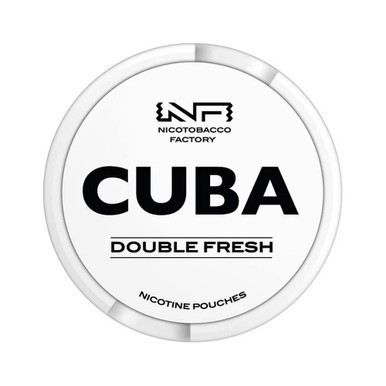
Cuba White Double Fresh Nicotine Pouches
£39.90
✔ In stock — ready to ship
100% tobacco-free
Free over £20
Same-day dispatch
Secure checkout
Start with the thing you need before anything else on this page is any use: this listing is currently out of stock. It is showing as unavailable in our system as this page is written, so if you have arrived intending to order today, that is the answer, and the rest of this page is here for when it returns or for the purpose of comparison against something that is available now.
What we hold on the product itself is short. Cuba White Double Fresh Nicotine Pouches, listed at £39.90, one declared strength of 16mg, one variant at that figure, and mint recorded as the flavour. That is the record. Everything below is drawn from it, from a description of how the format behaves, and from comparisons with cans we do currently have on the shelf.
The full guide to Cuba White Double Fresh Nicotine Pouches
4,928 words on how it eats, who it suits, how to serve it and what to put beside it.
Cuba White Double Fresh: the listing, and its current status
A note on the name before we go on, because it invites a particular kind of guessing. Double Fresh is the manufacturer's own product name. Our flavour field against it says mint and nothing more. We are not going to decode the word "double" into a formulation, a layering, a construction or a specification of any sort, because our record contains no such thing and reverse-engineering a recipe out of a marketing name is how product pages end up carrying confident nonsense. The name is a name.
This is an adult nicotine product and the required notices have their own section towards the foot of the page.
Mint, taken purely as a taste
Our flavour classification here is mint, which is simultaneously the most common entry on a pouch shelf and the least precise. Mint is not one taste; it is a family that stretches from the sweet, rounded, almost confectionery end through to a bare, cold, almost medicinal one, with a great deal of territory in between.
Described as taste and aroma and nothing else: take the lid off and mint is what comes off the open can, immediately and without ambiguity. It is the same character you already have a reference for from every other mint thing you have ever put in your mouth — green, cool-reading, with the particular clean quality the word itself conjures. On the tongue it presents in the same shape, and the coolness is the part people notice first because coolness is a sensation as much as a flavour and sensations arrive faster than tastes.
Where mint cans differ from one another is mostly in two places. The first is how much sweetness sits under the mint — some are noticeably sweet, others read almost bare. The second is how far towards the cold end the coolness is pushed. Those two variables between them account for most of why two cans both honestly labelled mint can be quite different objects.
We hold 148 listings on our mint flavour shelf, which is the largest single flavour grouping on the site by a wide margin, and that number is itself the evidence for the point above. If mint were one flavour, nobody would need 148 versions of it.
How a recognisable flavour gets built into a dry pouch
This is the part of the page worth the most space, because it is the thing nobody explains and everybody wonders about: how does something with no liquid in it, sitting still in your mouth, end up tasting distinctly of a named thing?
The first and most important caveat: we are describing what a taster perceives, not what a manufacturer does. We do not hold the formulation for this or any can on the site, we have no access to how it is put together, and we are not going to describe its contents, its construction or its chemistry. What follows is about perception — the experience end, which is the end a customer actually occupies.
Flavour arrives as a sequence, not as a single event
The most useful thing to understand is that a pouch flavour is not one taste held steady; it is an arc. Something arrives early and strongly, something sits underneath it for the middle stretch, and something rather plainer is left at the end. People describing a can they liked are almost always describing that arc, even when they think they are describing a single taste.
With a mint-named can, the early part is typically the coolest and the most assertive, because cooling sensations register fast. The middle stretch is where sweetness and the green mint character do most of their work and where the differences between two mint cans really live. The tail is where a can either keeps some interest or goes flat, and it is usually the tail that determines whether someone finishes a can or leaves it in a drawer.
Why a dry format presents flavour differently from a liquid
Almost every flavour reference an adult has was learned from something wet — a drink, a sweet that dissolves, a chewing gum that works with saliva. A pouch is a dry object held still. The consequence is that the flavour reaches you gradually and at a fairly constant rate rather than in the rush-and-fade of something you chew or sip.
That has two practical effects worth knowing before you order. The first is that recognition is usually immediate but slightly less vivid than the same flavour in a drink — the reference transfers, but with some of the intensity taken off. The second is that the arc is much longer. A sweet is over in two minutes; a pouch's flavour life is measured in tens of minutes. Stretching a flavour idea across that much time is a genuinely different thing from delivering it all at once, and it is why people who find a flavour too sweet in a drink sometimes find it well judged in a pouch, and the other way round.
What the cooling part of a mint can is doing
Worth separating out, because people routinely conflate two different things. Coolness and mint flavour are not the same axis, even though they turn up together on almost every mint-named can. Mint is a taste. Coolness is a sensation — the impression of cold in the absence of anything actually being cold. A can can carry a great deal of one and comparatively little of the other, which is why some mint cans read as green and herbal while others read as a blast of frost with a mint accent somewhere behind it.
The practical use of that distinction is in reading unfamiliar lids. Names built around ice, frost, freeze, arctic and cold are generally signalling the sensation. Names built around spearmint, peppermint and plain mint are generally signalling the taste. That is a pattern in how the trade names things rather than a rule anyone is obliged to follow, and there are cans that ignore it entirely, but as a rough guide for scanning a shelf it is better than nothing.
Why the name and the experience come apart
Product names are chosen to sell cans and to differentiate them from the manufacturer's other cans. They are not descriptions written to a standard. Two cans from two companies carrying near-identical names can sit in noticeably different places on sweetness and coolness, and a can with an elaborate name is not thereby more elaborate in the mouth.
This is the honest reason we keep declining to interpret "Double Fresh" for you. The flavour field says mint. The name says what the manufacturer chose to call it. Joining those two things into a description of how the flavour is built would be us writing fiction in the register of fact, and you would have no way of telling the difference. If the packaging carries the manufacturer's own description, that description is theirs and worth more than ours.
The format, in practice
A pouch is a small sealed unit placed in the mouth, between the lip and the gum line, and left there. It is not chewed and it is not swallowed. Nothing is lit and nothing is inhaled. That describes what the object does and carries no claim about it in any direction.
In use: lid off, one pouch out, lid firmly back on before anything else. It goes at the front of the mouth, usually under the top lip, held in place by the lip itself. It stays put. Moving it from one side to the other is normal and fine; if it is uncomfortable wherever it goes, take it out, because comfort is individual and no part of this format asks anyone to push through.
Duration varies so much between people that publishing an average would create a false impression of a norm. Reported practice runs from a few minutes to the better part of an hour, with the usual reason for stopping being that the taste has finished — the tail end of that arc described above. We set no time, we advise no time, and the manufacturer's own printed usage wording is the wording that applies.
Used pouches go in a bin. The catch compartment under the lid exists to hold one temporarily when there is no bin to hand; it is a staging post and not a destination, and it needs emptying well before it is full, because a full compartment stops the lid seating properly and a lid that does not seat properly is the root of most complaints about any can. Nothing goes down a sink or a drain, and nothing goes out of a car window.
The can is a plastic tin. Whether your local authority collects that particular plastic at the kerbside varies between councils and is not something we can answer for a given postcode, so your council's own recycling guidance is the place to look. It is a small point but it comes up often enough to be worth writing down rather than leaving people to guess.
We do not hold pouch dimensions or a format designation for this listing, so we are not going to tell you whether these are slim, regular or otherwise. The can carries that if the manufacturer prints it. What is safe to say is that every pouch within a given can matches every other, so the first one is representative of the rest.
Reading the 16mg figure
The 16mg here is the nicotine content declared by the manufacturer for a pouch, taken from their labelling and reproduced exactly. It is a label figure. We have not measured it and we do not adjust it, and where our page and a physical can disagree, the can is right and we would like to know so we can fix the record.
The number orders cans that were declared on the same basis, and that is the limit of what it does. Across manufacturers it does not transfer, because declarations are made against different formats by different conventions, so equal numbers do not mean equal cans. We publish each company's figure beside each company's product and we do not convert between them.
Our shelves are filed by declared band as a navigational convenience. This listing sits in the Strong band, currently 132 listings. Beside it we run a Medium Strength band and an Extra Strong band. They are drawers in a cabinet, not steps on a ladder, and nothing about how a can is filed constitutes advice about who should have it. We will not tell you that 16mg is right for you; we do not know you and are not in a position to.
Where this sits in the Cuba range
The Cuba shelf here carries 47 listings, one of our larger brand groupings, split into named lines of which White is one. Every Cuba listing we hold is £39.90, so a choice between two Cuba cans is a flavour choice with no price attached to it.
The nearest cooling-named can inside the brand's other main line is Cuba Black Cold Dry, at the same £39.90, and while this listing is unavailable it is a reasonable place to look. We are not going to tell you what separates the White line from the Black line, because our record holds the line names and not the distinction between them, and a confident paragraph about an unverified difference is worth nothing to anyone.
Within the brand the fruit-named cans are the significant change of direction from a mint listing. Cuba Black Blueberry takes soft berry, Cuba Black Cherry dark stone fruit, and Cuba Black Apple Juice the orchard end, all at £39.90. Cuba Black Banana Hit is the most unusual name in the group. The Black cola can is the one most people can picture without having tried it, which makes it a reasonable reference point when you are mapping a range you do not know. Staying cool but changing brand line, Cuba Ninja Ice Cool is the cooling-named can in the Ninja line at the same figure.
Where a pouch can and cannot be used: what a shop can actually tell you
The most frequent practical question we get has nothing to do with taste. It is some version of: can I use this at work, on a train, on a flight, on site? It is a reasonable question and it deserves a careful answer rather than a convenient one.
The answer is set by whoever owns the place, not by us
Rules about nicotine products in a given setting are made by employers, venue operators, transport companies, airlines and building managers. They vary between organisations, they vary between countries, and they change. We are a shop. We have no visibility of your employer's policy, your rail operator's conditions or your airline's rules, and any general reassurance we offered would be a guess about somebody else's document.
So the honest position is this: we cannot tell you whether you may use this product in any specific place, and you should ask the organisation that runs it. That is an unsatisfying answer and it is the only accurate one available to us.
A rule about one thing is not a rule about another
This needs saying directly because the assumption is widespread. A policy written about a different product is a policy about that product and nothing else. It does not automatically tell you how an organisation treats a pouch, and we are not going to suggest that a pouch is permitted somewhere on the grounds that something else is prohibited there. Many organisations write their policies to cover all nicotine products explicitly, precisely so that this question does not arise. Others do not mention pouches at all, which is an absence rather than a permission. Reading the actual policy, or asking, is the only route to an answer you can rely on.
The practicalities, where there is no rule in play
Where you are somewhere with no restriction and simply want to know how the format behaves away from home, there are a few genuinely practical points. The first is disposal: you will need somewhere for a used pouch, which is the whole reason the catch compartment exists, and it is worth checking it is empty before you go out rather than discovering it is full on a train. The second is the can itself — it travels well in a coat or bag pocket and badly in a tight trouser pocket over a long day. The third is that lids work loose in bags, so press it down properly before it goes in.
Asking the question properly
If you do intend to ask an employer or a venue, it is worth asking about the right thing. "What are the rules here" and "can I use a nicotine pouch here" are different questions and will sometimes get different answers, so asking the second one directly saves a misunderstanding later. Many organisations have a written policy document rather than an opinion, and asking to see the relevant clause is usually quicker than a conversation. Where a policy names a category — all nicotine products, all oral products, anything consumed on the premises — the category matters more than the brand or the format.
The other thing worth doing is asking once rather than assuming from precedent. A colleague doing something without being challenged is not evidence of a permission, and nor is the absence of signage. We mention this not to be officious but because the consequence of getting it wrong falls on you and not on us, and a shop that implied otherwise would be doing you a disservice.
Travelling with one
Crossing a border adds rules we are even less able to speak to. Import limits, permitted products and duty are set by the destination country and can differ sharply from the rules here. Airlines set their own conditions of carriage on top of that. We cannot advise on your route, your carrier or your destination, and we would rather say so than hand you something reassuring that turns out to be wrong at an airport. The carrier and the destination's own customs guidance are the places to check.
What to keep alongside, and what to buy while this one is away
Since this listing is unavailable, this section does double duty: it is both the usual note on keeping variety in a drawer and a practical list of what is on the shelf now.
Staying in the mint family, there is a wide price spread. Clew Cool Mint and Denssi Cold Mint both sit at £39.90, matching this listing's figure. Klint Avalanche Mint comes in a little under at £36.90. Fumi Fiery Mint is £27.90. At the bottom of the range, Edge Mint at £14.95 and the Nordic Spirit frosty mint can at £4.49 are by a distance the least expensive mint cans we carry. None of these is a substitute version of this product; they are separate listings from separate manufacturers with their own declared figures.
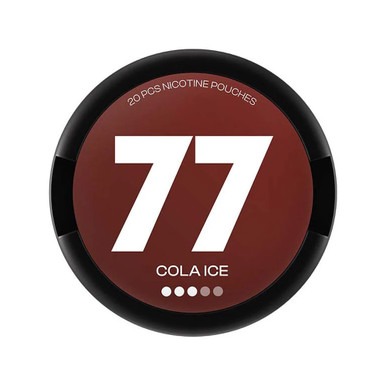
If you would rather have contrast than a near-match, the fruit cans are where to go. Elf Bar Cool Storm at £29.90 keeps a cool character while changing everything else about the flavour. Killa's banana ice can at £33.50 and the 77 VB Edition Mini arctic berry can at £39.90 take the fruit route with a cold note still running through them, which is a smaller jump than a plain fruit can would be.
The general principle, for what it is worth: two cans that sit close together in flavour terms will blur into one within a fortnight, and the point of a second can is that it should be somewhere else. Two or three on the go is the pattern most people settle into, and past three, cans sit long enough for the flavour in them to fade before they are finished.
There is also a price dimension worth stating plainly rather than glossing over. At £39.90, this listing sits at the upper end of what we charge, and buying two cans at that level is a real outlay. If a second can is intended as variety rather than as a staple, buying it from the cheaper end of the shelf is a perfectly sensible way to do it — the spread between £4.49 and £39.90 across the mint cans above is not a quality ladder that we are aware of, it is a set of different products from different manufacturers priced differently. We hold the prices; what they are worth to you is not something a shop page can work out on your behalf.
One last practical note about buying while a listing is unavailable. People sometimes wait for a specific can to return rather than trying anything else, which is entirely reasonable, but it does mean the drawer runs empty at an inconvenient moment. If you would rather not gamble on a restock date we cannot give you, picking something from the currently available cans above is the straightforward answer, and nothing about doing so commits you to it afterwards.
Storage, and the three things that go wrong
A lid left half-seated overnight is the commonest fault and the easiest to avoid: press it down every time, including when you are in a hurry. Heat is the second — a car in summer, a windowsill, a radiator shelf or the cupboard above a cooker are all poor places, while a drawer, a bag pocket or a bedside table are all fine. We do not suggest a refrigerator, which achieves nothing and adds condensation. The third is a catch compartment left to fill, which prevents the lid seating and thereby causes the first fault all over again.
Keep the can where children and animals cannot reach it — a closed drawer or a high shelf rather than a coffee table. We publish no shelf life because we hold none; any date on the packaging is the manufacturer's and is the one that counts. A can open a long time generally has less flavour left in it than a fresh one, which is an observation about flavour and nothing more.
Variants, pack sizes and what there is to pick
There is one variant on this listing, 16mg at £39.90, so there is no strength selector and nothing to configure. Our record carries no can count, which means we cannot tell you whether that price covers one tin or several, and we are not going to work it out backwards from the price. The contents stated at checkout and the packaging that arrives are the reliable answers, and if either disagrees with our page we will correct the page.
If you want to browse by declared figure rather than by product, the Extra Strong listings sit in their own band, and the whole catalogue is browsable in one view if filtering is not how you like to shop. The Pablo range is the other large brand group if you are comparing across manufacturers.
Ordering, delivery and age verification
While this listing is out of stock there is nothing to order from this page, but the process is worth setting out so it holds for whenever it returns or for whatever you buy instead.
Age verification runs at checkout before an order can complete. On delivery, the courier may ask for identification, and if nobody aged 18 or over is present to produce it, the parcel goes back rather than being left. Ordering to an address where an adult will be in, with photographic identification to hand, avoids a wasted attempt. Expect to be asked rather than being caught out by it.
On restocking: we cannot promise a date for any individual listing, because that depends on supply we do not control. The product page is the live answer on availability and it will update before this paragraph does.
Finding this listing again
Three routes lead here. By declared figure, among the 132 listings in the Strong band. By manufacturer, inside the 47-listing Cuba group. By flavour, among the 148 mint listings, which is the busiest flavour shelf we run and worth a browse in its own right while this can is unavailable.
Questions we are asked about this one
When will it be back in stock?
We cannot give you a date. Restocking depends on supply we do not control, and a promised date we then missed would be worse than no date at all. The listing itself updates when availability changes, so that page is the answer rather than anything written here. In the meantime the mint listings and the wider Cuba group both hold cans that are currently available.
What does "Double Fresh" mean?
It is the manufacturer's product name. Our flavour record against this listing says mint, and it says nothing about what "double" refers to. We are not going to interpret a product name as though it described a construction or a specification, because we have no record of one and the resulting paragraph would be invention. Any description the manufacturer prints on the packaging is theirs and is the one worth reading.
Is it stronger than the other mint cans you stock?
Its declared figure is 16mg, which is a larger number than some mint cans we carry and a smaller number than others. That is a comparison of printed figures, and between different manufacturers it does not carry much further than the arithmetic, since declarations are made on different bases. It is not a statement about what anyone will experience, and we are not able to tell you whether it is stronger for you.
Can I use it in the office?
That is your employer's decision and we have no sight of their policy. Many organisations write nicotine policies that cover all products explicitly; some do not mention pouches, which is an absence rather than a permission. We are not going to tell you it is allowed somewhere on the basis of what is prohibited there. Ask whoever sets the rules for the building.
How many pouches are in a can?
Not a figure we hold, so not one we will print. Counts vary across this market and taking a plausible number from a similar product would be inventing a specification. Where the manufacturer states a count it will be on the can itself, and if that disagrees with anything on our site we would like to be told so the record can be corrected.
What is it made of?
We do not publish ingredients for this or any can and we will not reconstruct a list from inference. The packaging carries the manufacturer's declaration and that is authoritative. If you need certainty about a specific substance before buying, read the can's own statement or approach the manufacturer, rather than relying on what a retailer has written.
What is the difference between the White and Black lines?
We do not know, and we are not going to make something up. Our record holds the line names as part of each product title and holds nothing at all about what separates them. Both lines are priced identically here at £39.90. If you want to look across the divide, the Black line's cooling-named can carries its own record, and comparing two product pages directly will tell you more than a summary invented by a retailer.
Does the flavour last the whole time the pouch is in?
Generally not, and that is normal rather than a fault. Flavour follows an arc — strongest early, steady through the middle, thinner at the end — and it usually finishes before anyone decides to remove the pouch. Most people use the fading of the taste as their signal. We are describing what people report rather than prescribing a moment, and we cannot tell you when yours should be.
Can I fly with a can?
Airline conditions of carriage and the destination country's import rules govern that, both are outside what we can see, and both change. We would rather tell you plainly that we cannot answer it than give you something reassuring that fails at a border. Check with the carrier and with the destination's customs guidance before you pack one.
Why does the can have a compartment in the lid?
It is there to hold a used pouch when no bin is within reach. That is its entire purpose — it is temporary storage, not disposal, and the pouch should move to a bin at the first opportunity. Leaving the compartment to fill is the main reason a lid stops sitting flat, so emptying it sooner than seems necessary is worth the small effort.
Why does the mint shelf have 148 listings on it?
Because mint is not one flavour. It is a family covering everything from sweet and rounded to bare and frost-like, and because cooling sensation and mint taste are separate variables that manufacturers dial independently, the number of distinguishable positions is genuinely large. The shelf is big because the category is broad, not because there are 148 versions of one thing. It also means browsing it rewards a bit of patience — two cans three rows apart can be quite unlike each other.
Should I buy a mint can and a fruit can, or two mints?
That depends entirely on what you want and we are not going to steer you. What we can offer is the pattern: two cans that sit close together in flavour terms tend to blur within a fortnight, so if the second can is meant to provide variety, distance between them helps. If you simply want two cans of broadly the thing you already like, two mints at different points on the sweetness and coolness axes will do that. Both are ordinary ways to buy.
Do you sell a cheaper mint can?
Considerably cheaper, yes. The Edge mint can is £14.95 and Nordic Spirit's frosty mint is £4.49, against this listing's £39.90. They are different products from different manufacturers with their own declared figures and their own tastes, not budget editions of this one.
Legal notices for this product
Nicotine is an addictive substance.
This product is for adults aged 18 or over who already use nicotine. We do not sell to under-18s, and no part of this page is written for anyone who is not already a nicotine user.
It is not a licensed stop-smoking medicine and we make no medicinal claim for it. It is not intended for non-smokers, for people who do not already use nicotine, for anyone under 18, or for anyone who is pregnant or breastfeeding.
Age verification applies at the point of sale and identification may be requested on delivery. Keep the can out of reach of children and animals.
To finish
Cuba White Double Fresh as our record has it: £39.90, 16mg declared, mint as the flavour, one variant, and out of stock at the time of writing. Where this page could tell you something — the format, the figure, the arc a flavour follows, what else is on the shelf — it has. Where it could not, including what the name means and where you are permitted to use the thing, it has said so rather than filling the space. The can and the people who run the building are the better sources for those.
More from Cuba
More strong pouches
More mint pouches
Where this sits
Cuba White Double Fresh Nicotine Pouches appears in these categories. Browse them, or jump to something close.
You might also like