Home / Medium Strength / ZYN Spearmint Nicotine Pouches
ZYN · 1.5mg–11mg · 5-can pack
Read the full guide
ZYN Spearmint Nicotine Pouches
£19.99
✔ In stock — ready to ship
100% tobacco-free
Free over £20
Same-day dispatch
Secure checkout
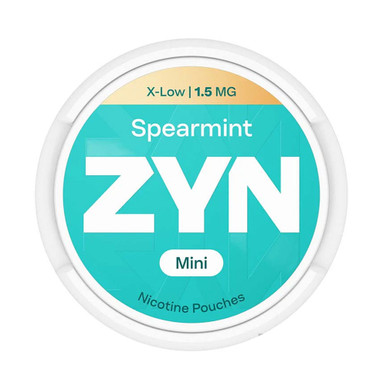
ZYN Spearmint Nicotine Pouches are listed at £19.99 for five cans, and the record carries four declared strengths — 1.5mg, 3mg, 6mg and 11mg — every one of them at the same price. The listing is in stock at the time of writing. One flavour tag, mint, one image, four rungs.
Four declared figures is more than almost anything else in the brand's range carries, and the spread is what makes it interesting. From 1.5mg at the bottom to 11mg at the top is a range of better than seven to one between the smallest number on the listing and the largest, which is about as wide as a single product listing gets on our site. Most listings offer one figure or three clustered together. This one covers most of the usable span in one place.
The full guide to ZYN Spearmint Nicotine Pouches
5,053 words on how it eats, who it suits, how to serve it and what to put beside it.
Spearmint: the listing, and the widest ladder in the range
That produces an oddity in our own filing worth flagging early. We assign one strength shelf per listing, and this one sits on our Medium Strength shelf. A listing whose lowest rung is 1.5mg is not, on that rung, a medium-strength product by any sensible reading — and a listing whose top rung is 11mg is well clear of the bottom of the band. The shelf is a single label applied to a listing that spans several bands, and it is a convenience of our filing rather than a description of every variant underneath it. If you are browsing by shelf, this can will turn up in one band and not in the others, which is a limitation of how we file rather than a statement about the product.
The rest of the record is plainer. The single mint tag files the can on our Mint shelf, which at a hundred and forty-eight listings is the largest flavour shelf on the site — mint is the default flavour of this whole format and the shelf sizes show it. As a ZYN can it also sits with twenty-one others on the ZYN brand page. Three shelves, four rungs, one price.
Spearmint as a taste, and what separates it from the rest of the mint shelf
Mint is not one flavour and treating it as one is the most common mistake people make when they buy from a shelf of a hundred and forty-eight mint listings and wonder why they all taste different.
Spearmint is the sweet, rounded, soft-edged member of the family. Its character is herbal rather than icy — closer to the leaf itself than to anything crystalline — and it carries a distinct sweetness that reads almost as a fruit note at the edges. It is the mint of chewing gum and of mint sauce rather than the mint of a strong confectionery mint. What it does not have is a hard cold edge, and that absence is the single most useful thing to know about it.
Peppermint, by contrast, is sharper, more astringent and considerably colder in character. The arctic and polar-styled mints on our shelf go further again, building a deliberate, almost architectural cold that is the point of the can rather than a side effect of the flavour. Those cans and this one occupy opposite ends of the same shelf, and somebody moving from an arctic mint to a spearmint will find the change dramatic rather than incremental. Somebody moving the other way often finds the arctic style overwhelming for the first day or two.
The aroma of a spearmint can leans sweet and green. It reads as fresh leaf rather than as anything crisp or medicinal, and it is noticeably less penetrating than a cold mint aroma — an opened can is less obvious to people nearby than a hard mint would be. Several people who use mint cans in shared spaces settle on spearmint for that reason alone.
Over the life of a portion, spearmint behaves differently from cold mint in a way that matters. A cold mint is at its most intense in the first minute and the cold element fades faster than the flavour underneath, which produces a noticeable drop and then a long, plainer tail. Spearmint has no cold element to lose, so the curve is gentler: a modest opening, a long plateau, and a slow fade with no sudden step down. People who dislike the crash from a cold mint often find this more agreeable. People who buy mint cans specifically for the cold find spearmint underwhelming, which is a fair reaction and worth knowing before you buy five cans of it.
One honest limit, as on every page here. The single word mint is the entire flavour record we hold. There is no manufacturer description, no component list, and no indication of where between sweet-herbal and cold this particular can has been pitched. What is written above describes how spearmint as a flavour behaves in this format and how it sits against its neighbours on the shelf. It is not a reading from a specification, because we do not have one.
Four rungs: what a milligram figure is, and what it is not
A listing with four declared figures is the right place to be precise about what those figures are, because a ladder invites people to read a progression into it that the numbers do not support.
The number is a declaration
The figure is what the manufacturer declares and prints on the can. We carry it through to our record without altering it, and we publish it because it is printed there and because people filter by it. It is not a rating, not a score, not a rank, and not a measurement of anything a person will experience. It does not become a quality judgement by being larger, and the can at the top of a ladder is not a better product than the can at the bottom.
The ladder on this listing
| Declared strength | Price | Cans per pack | Step from the rung below |
|---|---|---|---|
| 1.5mg | £19.99 | 5 | — |
| 3mg | £19.99 | 5 | 1.5mg |
| 6mg | £19.99 | 5 | 3mg |
| 11mg | £19.99 | 5 | 5mg |
Two features of that table are worth drawing out. The first is that the price never changes: £19.99 buys five cans at any of the four rungs, so the figure you pick has no bearing whatever on what you pay. There is no cost argument pulling in any direction, which is unusual and removes a distraction.
The second is that the steps are uneven and get larger as you go up. From the bottom rung to the next is a step of 1.5mg; from there to the next is 3mg; the last step is 5mg. The gap between the top two rungs is more than three times the gap between the bottom two. That pattern reflects nothing more than which figures the manufacturer chose to produce, and it is worth noticing only because a four-rung ladder can look evenly spaced at a glance when it is nothing of the sort.
What a shared shelf does and does not mean
All four rungs are filed under a single shelf on our site, for the reason set out at the top of this page. Above the medium band sit the Strong band and then the Extra Strong shelf, and a can moves between those shelves on its declared figure alone. Our shelf boundaries are our own filing convention rather than any industry standard, and nothing about a shelf boundary is a statement about a product.
Comparing figures across brands is a looser exercise than matching numbers suggest. Different manufacturers arrive at their declarations by their own methods, and a figure is only strictly comparable with other figures from the same range. Two cans from different brands carrying the same printed number are not thereby equivalent, and a page that implied they were would be doing you a disservice.
What the figure tells you about flavour
Nothing at all, and this is the most common misreading of a ladder. Strength and flavour are set independently of one another. All four rungs on this listing are the same spearmint flavour at the same price; the number printed on the can says nothing about how sweet, how loud or how long-lasting the taste will be. A can at the bottom of a ladder is not a diluted version of the one at the top in flavour terms.
What we will not tell you
Which rung suits you. That is not a formality and it is not modesty. We do not know you, we hold no information that could support such a judgement, and a retail page is not a place where that judgement can properly be made. We are not going to suggest a figure, not going to imply that people typically pick one, and not going to describe any rung as a sensible place to be. The four numbers are published because they are printed on cans. Anyone with questions about their own nicotine use should take them to a healthcare professional rather than to a shop.
The can itself, considered as a piece of everyday hardware
The flavour is why somebody chooses a particular can. The container is why they get on with it or quietly stop bothering, and it deserves more than a passing sentence.
The lid, and the click
The lid is a simple interference fit onto the body — no gasket, no thread, no latch. It is either properly seated or it is not, and there is very little middle ground. Closing it produces a small positive click, and that click is the only reliable confirmation you get, because an unseated lid does not look unseated. It looks closed.
The diagnostic in ordinary use is resistance on opening. A can that comes open more easily than you expected has been standing ajar since you last used it, and everything inside has been meeting open air for however long that was. Press until it clicks and check by feel, not by eye. It is the single most useful habit for keeping a can in the condition it was in when you opened it, and it costs nothing.
The catch compartment, and its actual capacity
The lid is a chamber in its own right, with a shallow moulded floor, and used portions go in there until you pass a bin. It is the format's best idea and it is smaller than most people assume.
Three used portions sit in it without complaint. Four fit. At five the lid will not seat flush, and a lid that will not seat flush leaves the whole can standing open — which means overfilling the compartment does more harm than carrying one used portion to a bin ever would. There is also the plain matter that the compartment sits directly above the fresh portions, so a loaded lid announces itself every time the can is opened. On a sweet herbal flavour the stale note is mild compared with a fruit can, but it is there. Emptying the lid whenever you pass a bin takes two seconds.
How many portions are in a can
We do not hold that number and we are not going to quote one. Our record holds cans per pack — five — and that is the only count on it. Portions per can is printed on the can itself, and it is the single most common question we cannot answer from our own data. It is a fair thing to want to know before committing to a five-can pack, and the honest position is that the packaging has it and we do not.
What we can say is that the count is the same across the rungs of this listing as far as our record is concerned, because nothing on the record distinguishes them on quantity: same price, same cans per pack, four different printed figures.
One-handed operation
The can is designed to be worked with one hand and mostly succeeds. The grip band around the rim gives a thumb something to push against, the lid releases with a positive click, and with a little practice a can can be opened, a portion taken and the lid reseated without the other hand being involved.
Two situations defeat it. Cold hands are the first: the click needs a bit of thumb pressure, and a numb thumb does not deliver it cleanly. Gloves are the second — the grip band is too shallow to work through most gloves, and the usual outcome is a can dropped on a pavement. Neither is a design fault so much as a limit worth knowing about if a lot of your handling happens outdoors in winter.
Pockets, specifically
A jacket pocket takes a can and you forget it is there. A coat pocket, the same. A front trouser pocket works and prints a visible disc through thinner fabric, which bothers some people and not others. A back pocket works but is the position most likely to nudge the lid proud when you sit down, which is the seal problem arriving by another route. A shirt pocket is a poor choice: the can is heavy for its size and tips out when you lean forward. A watch pocket will not take one at all.
Bags, drawers and stacking
A can loose in a bag with keys is being worked at from every side, and the rim is where it gives. Once the fit has been loosened it never tightens again, after which every point made about the lid above applies permanently. An inner pocket or a small pouch prevents it entirely at no cost.
Cans stack flat, top to bottom, which is the tidy way to keep several in a drawer rather than having them roll about every time it opens. A stack also makes it obvious at a glance how many are left, which heads off the more annoying problem of discovering there are none. A can is roughly the diameter of a mug base, which is a reasonable way to picture the space several of them take in a cupboard.
Using one, in practice
The portion is a slim rectangle with rounded ends. It goes under the upper lip, beds along the channel between lip and gum rather than sitting as a lump in one place, and is then left alone. It is less visible than the older round shape and puts less pressure on any single patch of gum.
Placement settles quickly. Most people find one side and stay there; some alternate through the day; a few use the lower lip instead, which works but is more visible and easier to dislodge while talking. Talking is unaffected after the first minute, and the only thing anyone watching closely will notice is the instinct to test a new portion with the tongue in the first thirty seconds.
How long a portion stays in varies enormously and no figure quoted as typical would be honest. The consistent part is the arc: most present early, settling onto a plateau, fading over a long tail. On spearmint that tail is longer and flatter than on a cold mint, so the moment to change is less obvious — there is no sharp drop to signal it. Where somebody draws the line is personal, and we have no view on it.
Removal is the reverse of placement and the used portion goes into the lid compartment, or straight into general waste. Not down a sink, not into food recycling, and never left anywhere a child or an animal could reach it. That last point is the only non-negotiable item on this page.
A hundred and forty-eight mint listings, and where this one sits among them
Mint is the largest flavour shelf we run, and it is not close. The shelf covers everything from soft herbal mints like this one through peppermint and double-mint blends to the arctic-styled cans built around cold as the main event. Treating that shelf as one category is how people end up with cans they dislike.
The useful way to read it is as a spectrum with sweetness at one end and cold at the other. Spearmint sits firmly at the sweet, herbal end. Edge Spearmint at £14.95 and Velo Bright Spearmint at £4.19 are the nearest comparisons we carry — both are spearmint by name, both are available, and the second is a single-can listing, which makes it the cheapest way on our shelves to find out whether a spearmint direction suits you before committing to five cans of anything.
Moving along the spectrum, SYX Cool Mint at £29.90 sits in the middle ground where mint is still recognisably sweet but has an edge to it. White Fox Double Mint at £34.90 combines mint types for something more layered than a single-note can. And Klint Arctic Mint at £36.90 is the far end — a can built around cold rather than around mint sweetness, and about as different from a spearmint can as two things on the same shelf can be. All are available at the time of writing.
One consequence of a shelf that large is that browsing it is close to useless without a second filter. A hundred and forty-eight listings is more than anyone will read through, and the names are the only quick guide to where on the spectrum each one sits. The words to read for are the cold ones — ice, arctic, frost, polar — and the qualifier words like double or extra, which usually signal a blend of mint types rather than a single one. A bare mint name with no qualifier, as here, generally points at the plainer, softer end. That is a reading of naming conventions across the shelf rather than a rule, and the can itself remains the authority.
What people keep alongside a spearmint can
Rotation is the normal pattern — two or three cans on the go, changed when one gets dull — and the useful question is which companion provides an actual change. With a soft herbal mint the options divide neatly into more mint and not mint.
Within the brand, ZYN Cool Mint X is the plainer, cooler mint against this one, which makes it a real alternate rather than a near-repeat. ZYN Blueberry Mint keeps the mint and adds fruit over the top, which is the gentler way to vary things without leaving the flavour family. Both are £19.99 and both are available.
For a genuine change of direction the brand's fruit cans do more work. ZYN Black Cherry at £19.99 brings a dark stone fruit with a bitter back note, ZYN Blackcurrant Forest brings tartness, and ZYN Citrus brings acidity — three quite different ways of being not-mint. The outlier of the range is ZYN Coffee Mini, roasted and bitter in a smaller portion, which some people keep specifically because it resets the palate between everything else.
Across brands, the contrasts get broader. 77 Apple Mint at £39.90 is orchard fruit with a mint edge, which is close enough to this can to be comfortable and different enough to register. Nordic Spirit Frosty Berry at £4.49 is a single can and a cold berry, so it changes both variables at once. Pablo Silver Edition Blueberry Peach Ice at £39.90 stacks two fruits and a cold element into one can. For something with no relationship to mint whatsoever, UBBS Cola Ice at £19.95 is a confectionery flavour with a cold edge, and Fumi Dark Spice at £27.90 goes into warm, spiced territory that shares nothing at all with a herbal mint. All of those are in stock.
Where this sits in the brand's range
The twenty-two ZYN listings on our shelves fall into a large mint block, a berry block, a scattering of single-fruit cans and two or three deliberate oddities. This can belongs to the mint block, which is the part of the range most people arrive at first, and within it this is the soft one.
Two facts about the range as we hold it. The pricing is flat — every ZYN listing on our record is £19.99 regardless of flavour or declared figure — so price carries no information about which can to pick. And the ladders are uneven between flavours: some carry a single declared figure, some carry three. Four rungs, as here, is the widest we hold for this brand, which makes this listing the one place in the range where the full spread of declared figures is available under one flavour.
Storage, and keeping a can in the condition you bought it in
Two things matter — the lid and heat — and the lid has already had its section above, because it causes more disappointing cans than everything else combined.
Heat is the other. Drawers, cupboards, bedside tables and inside pockets are all fine. Cars in summer, windowsills in the afternoon, shelves above radiators and bags left in direct sun are all avoidable and all worth avoiding. Warmth dries the contents further and takes the top off the flavour first, and on a herbal mint the part that goes is the sweet green character that distinguishes it from a plain cold mint — which is to say, precisely the part you bought it for. A cooked can is not dangerous and is not spoiled in any meaningful sense. It is simply duller than it was, permanently.
Cold is much less of a problem than people fear. A fridge does no harm, though nothing about the format needs one; if you keep cans cold, take one out a few minutes before using a portion, because cold mutes flavour and more than one person has written off a perfectly good can that had simply not warmed up. Freezing achieves nothing.
On dates, check the can. We do not hold or publish batch or date information on our listings and we will not estimate it, because an estimate on that would be worth nothing at all. Store it sensibly, close the lid properly, and keep it well out of reach of children and animals.
Choosing between the rungs and the pack size
The listing offers four declared figures and one pack size at one price. What that means in practice is that the only decision within the listing is which number is printed on the can you receive, and it is a decision we cannot help with, for the reasons given in full above.
What we can set out is the shape of the choice as a matter of fact. All four rungs are the same flavour, the same format, the same five-can pack and the same £19.99. Nothing changes except the printed figure. If you already use cans from this range you will know which number is on the one in your pocket; if you do not, the can in front of you is a better guide than a product description could ever be.
On pack size there is no choice at all on this listing: five cans, or nothing. Our catalogue mixes single-can listings and multi-can packs without flagging the difference prominently, so if the quantity matters to you, read the listing rather than the price. The whole catalogue can be filtered by brand, flavour and declared strength together, which is the quickest way to see what exists in each combination.
Buying, delivery and age verification
This listing is available at the time of writing, at £19.99 for five cans in whichever of the four declared figures you select.
Everything we sell is 18+ and age-restricted. You confirm your age at checkout and it is not a step we can waive. ID may be requested on delivery, and a driver who is not satisfied is entitled to decline to hand the parcel over. We do not sell to anyone under 18 under any arrangement, at the door or otherwise.
Delivery windows, charges, returns and the status of an individual order are handled by our delivery and returns information rather than by a product description, and that is the right place for them because it is kept current in a way a page like this is not. What this page can tell you is what the record holds: £19.99, five cans, four rungs, in stock.
Where to go from this page
Three shelves carry this can. The 148 mint listings are the biggest flavour shelf we run and hold everything discussed above, from the soft herbal end to the arctic end. The brand's twenty-two listings are where to look if the can and the format matter to you more than the flavour. And the medium band holds the largest share of the catalogue, with the caveat about wide ladders noted at the top of this page.
If you are looking across brands rather than within one, the Pablo range and the Cuba listings are two of the largest we carry, and both hold mint cans of their own at various points on the sweet-to-cold spectrum.
Questions we are asked about this one
How is spearmint different from the other mints you sell?
Spearmint is the sweet, herbal, soft-edged member of the mint family — closer to the leaf than to anything icy. Peppermint is sharper and more astringent; the arctic-styled cans are built around cold as the main feature. On a shelf of a hundred and forty-eight mint listings those are genuinely different experiences, and moving from one end to the other is a dramatic change rather than a small one.
Why does a listing that starts at 1.5mg sit on the medium shelf?
Because we assign one strength shelf per listing, and a listing spanning 1.5mg to 11mg does not fit neatly into any single band. The shelf label describes where we have filed the listing, not every variant underneath it. It is a limitation of our filing and we would rather explain it than let you draw a conclusion from it.
Do the four strengths taste different from each other?
Not in the sense the question usually means. Strength and flavour are set independently, and all four rungs are the same spearmint flavour at the same price. The printed figure does not tell you how sweet or how loud the taste will be, and a lower rung is not a diluted version of a higher one in flavour terms.
Which of the four should I pick?
We cannot tell you and will not. We do not know you, we hold nothing that would support such a judgement, and a shop is not a proper source of that kind of guidance. The numbers are published because they are printed on the cans and because people filter by them. A higher figure is not a better product.
How many pouches are in each can?
We do not hold that figure. Our record has cans per pack — five — and nothing on portions per can, which is printed on the packaging itself. It is the most common question we cannot answer from our own data, and we would rather say so than publish a number we have estimated.
Is there a cooling sensation?
Our record holds one word, "mint", and no detail beyond it, so we cannot describe what this specific can was built to. What can be said generally is that spearmint is the sweet, herbal end of the mint family rather than the cold end, and cans that are built around cold usually signal it in the name with an ice, arctic or frost word. This name carries none of those.
Why is every strength the same price?
Because that is how the listing is priced. £19.99 buys five cans at any of the four declared figures. Flat pricing across a ladder is common in this range and simply means the number you choose has no effect on what you pay.
Is it good for anything in particular?
We make no claims of any kind about what this product does. It is a flavoured nicotine pouch sold to adults who already use nicotine, and this page describes the can, the format, the flavour as a taste, and where the listing sits on our shelves. Nothing more than that, deliberately.
Can I use one while talking or drinking?
Talking is unaffected after the first minute or so. Drinking makes little difference except with anything hot, which flattens the flavour for a while and then lets it recover partly. Eating overwrites the flavour comprehensively, which is why most people take a portion out before a meal rather than during it.
How long does an opened can stay in good condition?
Longer than people expect, provided the lid is properly seated every time and the can is kept away from heat. The variable that matters is cumulative exposure to air rather than days on the calendar. A can used daily and closed properly will outlast one that spent a single warm afternoon standing ajar.
Is five cans of one flavour too much to commit to?
Only you can answer that, but it is worth thinking about before ordering rather than after. Five cans of a single flavour is a real commitment, and a soft herbal mint tends to wear better over repeated use than a loud can does, because there is less to tire of. If you are unsure whether a spearmint direction suits you, the single-can spearmint listing mentioned above costs a fraction of a five-can pack and answers the question directly.
Can I order different strengths in one go?
Yes. An order can combine any in-stock listings across brands, flavours and declared figures, including more than one rung of this listing. Nothing about ordering restricts you to a single figure, and the practical matter of which one to pick remains yours.
Compliance, stated plainly
This product is sold to adults aged 18+ who already use nicotine, and on that basis alone.
Nicotine is an addictive substance.
It is not a licensed stop-smoking medicine and is not intended for non-smokers, for anyone who does not already use nicotine, for under-18s, or for anyone pregnant or breastfeeding. Nothing on this page is a health claim, a medical claim, or any suggestion that a person should take up nicotine use.
Age is verified at checkout and ID may be requested on delivery. Keep cans out of reach of children and animals. Anything concerning your own nicotine use is a matter for a healthcare professional rather than a retailer.
In brief
ZYN Spearmint is a five-can listing at £19.99, available, and carrying four declared figures — 1.5mg, 3mg, 6mg and 11mg — at one flat price, which makes it the widest ladder in the brand's range on our shelves. The flavour is the sweet, herbal, soft-edged end of a mint shelf that runs all the way to arctic cold at the other end, and the curve of a portion is gentler for having no cold element to lose. The can is the usual slim-portion design with a catch compartment in the lid, and the lid is the thing that decides whether the last can in a pack is as good as the first.
More from ZYN
More medium strength pouches
More mint pouches
Where this sits
ZYN Spearmint Nicotine Pouches appears in these categories. Browse them, or jump to something close.
You might also like