Home / Medium Strength / Velo Orange Ice Nicotine Pouches
Velo · 10mg
Read the full guide
Velo Orange Ice Nicotine Pouches
£4.19
✔ In stock — ready to ship
100% tobacco-free
Free over £20
Same-day dispatch
Secure checkout
Velo Orange Ice Nicotine Pouches is a single can priced at £4.19, with one declared strength recorded against it — 10mg — and two flavour words in our classification: mint and citrus. It is available as this page is written. That is the complete set of facts we hold, and this description is assembled from those facts, from what is true of the pouch format in general, from comparison with other cans on our own shelves, and from open acknowledgement of the places where our information simply stops.
Before anything else: this is an adult nicotine product, sold to people aged 18 or over who already use nicotine, and the wording required on that has a section of its own toward the end. Nothing on this page is written to persuade anybody to consume anything.
The full guide to Velo Orange Ice Nicotine Pouches
5,014 words on how it eats, who it suits, how to serve it and what to put beside it.
The listing: Velo Orange Ice
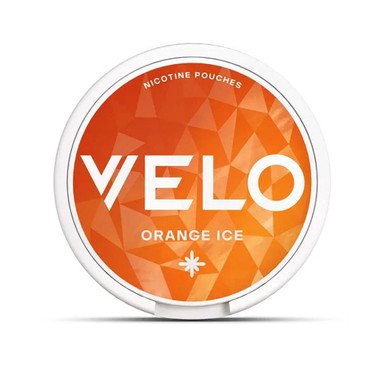
The object is a standard round pouch tin — shallow, plastic, a palm's width across, lid off and lid on. Velo's printing carries the brand, the product name and the strength figure in the layout the manufacturer has chosen. We hold a single photograph against this listing, so if you wanted to study the can from several angles before deciding, one image is the limit of what we can show you. The pouch count and the pouch format designation are both absent from our record. They are printed on the tin, and rather than produce a number that sounds about right, we will say directly that we do not have them.
Orange, mint, and the word Ice
Two flavour families are recorded against this can rather than one, which is less common than it sounds and makes the description more interesting to write. Our classification says mint and it says citrus. The product name says Orange and it says Ice. Lining those up: orange is a member of the citrus family, so the fruit half of the name and the fruit half of the classification agree; and the mint classification is the part of our record that corresponds to the word Ice.
Take the fruit first. Orange is the sweetest and roundest member of the citrus family. It is the one that reads as juice rather than peel — where lemon cuts and grapefruit turns bitter, orange arrives with enough sugar in the flavour profile to soften its own acidity. That is why orange is the citrus that appears most often in confectionery framing and why an orange-flavoured product usually reads as approachable rather than bracing. There is still acid in it, and there is still a trace of the peel-bitterness that defines the family, but both sit further back than they do in the sharper citruses.
Now the mint side. A mint classification alongside a fruit one describes a flavour built in two parts, with a mint note sitting beside the fruit note rather than replacing it. As a taste, mint reads bright and slightly astringent, and it changes the shape of a fruit note it is paired with by cutting the roundness. Orange and mint is a well-established pairing for exactly that reason: the mint stops the orange reading as syrup, and the orange stops the mint reading as bare. We hold no note on the balance Velo has struck between them, so which of the two leads is not something we can tell you.
The word Ice needs stating plainly. It is a flavour name, and it is Velo's range word, used on this can in the same slot where other cans in the range carry a different word. It describes the character of the taste and the feel in the mouth as the manufacturer has branded them. It is not a claim about cold, nothing here is chilled, and we are making no statement about any sensation this product produces. Mint-family flavours are often described in cool-sounding vocabulary because that is the language people reach for when they describe how a mint note tastes, and that is the whole of what is being said here. If you read Ice as a promise about temperature, our record does not support you. It supports two flavour words: mint and citrus.
The aroma, when you lift the lid, is the compound one you would expect from a two-part flavour. Orange is a warm, juicy smell with an oily edge from the peel side of the profile; mint is a brighter, thinner smell that sits on top of it. Which reaches you first is likely to depend on the balance in the can and possibly on the person, and it is not something our data records. What we can say is that a two-part flavour generally announces itself more completely than a single-note one, and that opening a can of this in a small room is not a discreet act.
Flavour duration we cannot give you as a figure. The flavour in a dry pouch is most defined early and thins with time, and where an individual decides there is nothing left to taste varies too much for an average to be honest. We publish no timing data for this can because we hold none.
Both classifications have shelves of their own here. The citrus shelf holds twenty-five listings and the mint shelf holds one hundred and forty-eight, which is the largest flavour grouping on the site by a wide margin. This can appears on both, because it is classified under both.
Using the format: the pouch, the position, the lid
None of this section is specific to orange or to mint. It describes the format, and it is equally true of every can we sell. A nicotine pouch is a small sealed pouch, soft to the touch, that is placed in the mouth and left there. It is not chewed, and it is not swallowed.
Opening and taking one out
The lid lifts with a thumb under its edge and a short push, and it is a one-handed action once you have done it a couple of times. Inside, the pouches sit flat in a ring around the base of the tin. That geometry makes the first pouch slightly awkward to prise up and every subsequent one easy, and nothing adheres to anything, so an open tin turned over will surrender its entire contents in one go.
Placement
A pouch goes at the front of the mouth, tucked between lip and jaw, most commonly under the top lip. The lip holds it in place and so does the shape of the space; nothing sticks and nothing clips. That is why it stays put during ordinary conversation and why it shifts during anything more strenuous involving the face.
Moving it around is normal. People slide a pouch from one side to the other or from upper lip to lower, and doing so is not a sign that something has gone wrong. If a pouch is uncomfortable in one position, try a second before writing off the product; if it is uncomfortable in every position, take it out. This format does not ask anybody to tolerate something that does not feel right, and there is no reason at all to do so.
Speech alters a little. A pouch under the top lip reads as a slight fullness to anyone who is looking for it, and a few consonants sit differently for a minute or so until attention drifts elsewhere. That is a description of a small object occupying a small space, and it is not a claim about how noticeable the product is to other people or about anyone's reaction to it.
Duration, and the honest absence of a number
People report keeping one in for anything from a few minutes to the better part of an hour, and there is no useful average inside a range that wide. The stated reasons for taking one out cluster into three: the taste has flattened, the pouch has started registering as an object rather than receding into the background, or the person has simply had enough of it. We do not set a duration, do not suggest one, and are not the right party to. Whatever usage guidance Velo prints on the tin is the guidance that carries weight, and it is printed there because the manufacturer is entitled to give it.
The catch compartment and disposal
The lid on most pouch cans, this one included, has a shallow moulded compartment in the top, walled off from the chamber where the unused pouches sit. Used pouches go in there until a bin is available. It is a purely practical piece of design and it is smaller than people expect — three or four used pouches will fill it, after which the lid will not seat flat and the whole tin feels wrong in the hand. Empty it more often than you think you need to, because a lid that will not close is a tin that will eventually open inside a bag.
A used pouch goes into general waste. A bin, in other words — not a sink, not a lavatory, not the side of a road. The tin is plastic and can go into household recycling to whatever degree your local authority accepts that grade of plastic, which differs council by council and is not something we can answer for your postcode.
10mg on the tin: what the figure is and is not
A single declared figure is recorded here, 10mg, at £4.19. There is no ladder of variants on this listing — one can, one number, one price — which distinguishes it from plenty of listings in the catalogue that carry three or four declared figures at once.
The number is a manufacturer's declaration about the can, printed in milligrams on whatever basis Velo uses. It is not a dose, it is not a quality grade, and it is not a score to be beaten. We publish it because it is on the product and you should be able to see it before ordering. A can carrying a higher number is not a better can, and this page will not treat the figures as a ladder that anybody ought to be climbing.
Numbers also do not port between manufacturers. A 10mg declared by Velo and a 10mg declared by another company are two separate statements made by two separate parties, and nothing in our record establishes that they were arrived at on the same basis. Setting them side by side and doing arithmetic on them looks precise and is not.
The part we want to be unmistakable is this: we cannot advise which strength suits you. We hold no information about you, we have no basis on which to form a view, and a product page would be the wrong place to offer one even if we did. Anybody who wants guidance about their own nicotine use should put the question to a healthcare professional rather than to a shop.
On our own shelves, 10mg with nothing above it files this listing under Medium Strength, a shelf currently holding one hundred and thirty-five listings. Our shelving follows the top of a declared range, so a listing whose range runs higher will sit further up even if it also offers a 10mg can. That is a filing convention on our side rather than a statement about any individual tin, which is worth knowing if you are comparing shelf placements between listings.
The tasting note: where this can sits on four axes
A single adjective is a poor way to describe a flavour, and four axes cover most of what people actually mean. What follows places this can on each of them, using the flavour classification we hold and the behaviour of those families generally, and saying clearly where we are reasoning from the family rather than from a note about this specific tin — because we hold no such note.
Sweet
Higher than most of the citrus shelf, on the strength of the fruit alone. Orange carries more sugar in its flavour profile than lemon, lime or grapefruit, and that is the single most useful thing to know about it as a taste family member. Against the site's genuinely sweet cans, though, this is moderate rather than high. UBBS Cola Ice at £19.95 is the comparison worth making here: cola is a sweeter, more syrupy framing of a flavour that also carries citrus elements, and it is in stock as this is written.
Sharp
Present, moderate, and softened by the fruit. Citrus as a family leads with acid, but orange is the member that leads with it least. If sharpness is the quality you are actually after, the family's harder-edged members will deliver more of it, and XQS Citrus Cooling at £39.90 sits in the same two-part territory as this can — a citrus classification with a cool-reading name attached — at a very different price point.
Cool
This is the axis where the mint classification does its work, and it is the one that most clearly separates this can from a straight orange. A mint note read as a taste and a mouthfeel is bright and faintly astringent, and it is what the word Ice on the lid corresponds to in our record. To be precise about the limits of that: we are describing how a mint flavour note tastes, not asserting that the product produces a cold sensation, and we make no claim of that sort anywhere on this page. If you want this axis pushed harder, the site's committed mint cans go much further — Klint Arctic Mint at £36.90, SYX Cool Mint at £29.90 and White Fox Double Mint at £34.90 are all mint-first rather than fruit-first, and all three are in stock.
Bitter
Low, but not absent, and it comes from the peel side of the citrus profile. A trace of bitterness under a citrus note is what stops the flavour reading as squash, and orange carries less of it than the sharper members of the family. For contrast on this axis, Fumi Dark Spice at £27.90 is built around a spice framing rather than a fruit one, which puts a quite different kind of depth underneath the taste. Spice, in that name, is the manufacturer's flavour word in the same way Ice is here.
The two-part comparisons
Cans classified under both a fruit and a mint are the true structural neighbours of this one, whatever fruit is involved. 77 Apple Mint at £39.90 pairs an orchard fruit with mint. Nordic Spirit Frosty Berry at £4.49 pairs a berry with a cool-reading range word and is the only listing in this comparison set priced within touching distance of £4.19. Pablo Silver Edition Blueberry Peach Ice at £39.90 stacks two fruits and an Ice word together. Edge Spearmint at £14.95 is the counter-example: a mint with no fruit alongside it at all, which is the thing this can would taste least like. All of them are in stock at the time of writing.
What the axes cannot settle
One limitation deserves saying outright rather than burying. Our flavour classification is a filing decision made against a short list of families. It is not a tasting note. Two cans that share a classification look identical in our data whether or not they taste alike, and a range word on a lid — Ice, or any other — is branding rather than a description we can verify. Where our record gives us no basis to separate two products, we will tell you that instead of manufacturing a difference to fill the space. For this can, the classification gives us mint and citrus, and that is genuinely all the separation we can offer against any other can classified the same way.
Where this falls inside Velo's range on our shelves
The Velo shelf carries twenty-one listings, every one of them £4.19 in our record. That uniform price is the most useful structural fact about the range: choosing between two Velo cans never involves money, only the flavour words and the declared figures. Seven of the twenty-one appear on this page. The rest are on the shelf, which is the right place to meet them, since describing listings whose facts are not in front of us is exactly what this page is written to avoid.
The range divides roughly into a mint group, a fruit group, and a handful of cans like this one that our classification places in both at once.
The mint group
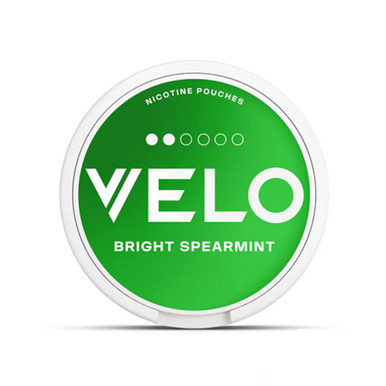
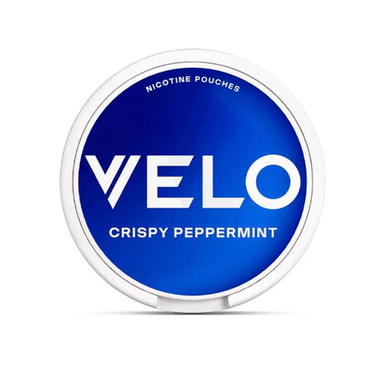
Velo Crispy Peppermint and Velo Freezing Peppermint, both £4.19, are the peppermint pair. Our record holds the same classification for both and no separate tasting note, so the only difference we can point to between them is the adjective Velo has printed — Crispy against Freezing. Both of those words are flavour naming by the manufacturer, and neither is a claim by us about temperature or any sensation. Velo Bright Spearmint at £4.19 is the spearmint rather than peppermint option, which is a genuine difference in taste: spearmint reads rounder and sweeter, peppermint sharper.
The fruit group
Velo Cherry Ice at £4.19 is a single defined stone-fruit note and Velo Icy Berries at £4.19 is a blend that reads broader and less specific. Both carry Velo's Ice or Icy word in the same position this can does, which is the clearest evidence available that the word is a range convention rather than a description of anything. Velo Lime Flame at £4.19 is the other citrus in the brand's lineup here, and it carries a different range word — Flame — in the same slot. Flame is likewise a flavour name and not a statement about heat; nothing about it is hot and we claim nothing about sensation. As tastes, lime and orange are the two ends of the citrus family: lime greener and more bitter, orange rounder and sweeter.
Who each part of the range suits
Put as plainly as we can without pretending to know anybody's preferences: the peppermint pair are for people who want a mint and nothing else; Bright Spearmint is for people who have decided spearmint is the mint they prefer; Cherry Ice and Icy Berries are for people who want a defined fruit with a cool-reading name on it; Lime Flame is for the sharper end of citrus; and this can is for people who want the roundest citrus in the range with a mint classification alongside it. Those are descriptions of where the cans sit in relation to one another, not recommendations, and the flavour words are the only evidence any of them rest on.
What to keep alongside it
Buying a single flavour and sticking to it is less common than keeping two or three cans in rotation, and the reason people give is always the same: a taste stops registering as distinct when it is the only one you ever encounter. If that matters to you, the natural directions from here are either further into mint or further into fruit, since this can already occupies the middle ground.
Further into mint, within the brand, means the peppermint pair or Bright Spearmint at the same £4.19. Across brands it means the three mint-first cans named in the tasting note above. Further into fruit means Cherry Ice or Icy Berries inside Velo, or the two-part fruit cans from other brands listed earlier. And if none of that appeals, the whole catalogue on one page is the unfiltered view, while the Pablo shelf and Cuba's range are the two largest brand collections on the site if you would rather browse by maker. For declared figures above this one, the Strong shelf and the Extra Strong shelf are where those listings sit — offered as navigation, with no suggestion that anybody should be heading that way.
Keeping the tin in good order
The short version is that a pouch tin wants to be kept cool, dry and closed, and every failure mode is a version of one of those three being ignored.
Heat is the serious one, and vehicles are where it happens. A car left in sun becomes an oven within an hour, and a tin that has spent an afternoon on a dashboard is not the tin that went in. Airing cupboards and radiator shelves do the same thing more slowly. A drawer, a cupboard or a bag pocket that does not sit against glass is the entire specification.
An open lid is the everyday one. A dry pouch left exposed dries further, and a dried pouch gives a thinner flavour that finishes sooner — not unsafe, just diminished. Press the lid fully home each time, and keep the catch compartment clear enough for the lid to seat, because a crowded compartment and a lid that will not close are the same problem described twice.
Crushing is the third. A tin carried at the bottom of a bag under something heavy will deform eventually, and a deformed tin does not close properly. A side pocket rather than the main compartment is the fix. Anything Velo prints on the can about storage takes precedence over all of the above, which is general to the format rather than specific instruction from the manufacturer.
The choice available on this listing
It is a narrow one, which is worth stating so you are not hunting for options that do not exist. There is a single declared figure, 10mg. There is a single price, £4.19. There is a single can — our record holds no multi-can option for Orange Ice, so people who want a spare buy a second tin rather than a roll.
That makes the real decision a comparison between listings rather than between variants of this one. If the declared figure here is not the figure you want, the answer is a different product, not a different version of this product, and the strength shelves linked above are how you locate those. We will not tell you which to pick and will not imply that any of them is an upgrade on any other.
Price deserves a caveat in the same breath. At £4.19 this is at the inexpensive end of the catalogue, and the comparison listings named on this page run from £4.49 up to £39.90. Our fact pack carries no can count for any of them, and prices in the upper part of that spread usually signal a listing that is not a single tin. We will not assert that any particular one is a multi-can pack, because our record does not say so — but nor will we leave the price column looking like a straight comparison of one object against another. Open the listing and read what it states it contains. Inside the Velo range the question does not arise at all, since every Velo listing in our record is the same £4.19 and the comparison reduces to flavour words and declared figures with the money held still.
Ordering, delivery and proof of age
Buying is unremarkable: add the can to the basket at £4.19 and pay. Delivery terms live at checkout, where they are kept up to date, rather than being described in a product page that would go stale the moment anything changed.
Age verification is not negotiable. This is an 18+ product, our checkout requires confirmation that you are 18 or over, and identification may be requested when the order is delivered. A delivery can be refused and sent back if it cannot be produced. This applies to every order, however many you have placed before.
Availability changes without descriptions changing with it. Every in-stock statement on this page describes the position at the time of writing, and the live listing is the authority on the day you read it.
Routes back to this page
Four shelves hold this listing: Medium Strength by declared figure, the Velo shelf by brand, and both the citrus and mint shelves by flavour classification — the double classification is why this one appears on two flavour shelves rather than one. The full catalogue page holds it alongside everything else.
All of those are unranked filtered lists. Where a listing appears on a shelf reflects the sort order in use and carries no recommendation whatsoever, which is worth saying because position is routinely read as endorsement and there is none here to read.
Questions people ask about this one
Does Ice mean the pouch is cold?
No. Ice is the flavour name Velo has printed on the can, describing taste and mouthfeel as a piece of branding, and it corresponds in our record to the mint classification sitting alongside citrus. It is not a claim about temperature, and we make no claim about any sensation this product causes. Mint flavours are often described with cool-sounding words because that is how people describe the taste, and that is the whole of what is being said.
Is this orange or is it mint?
Both, according to our classification, which records mint and citrus against the listing. What we cannot tell you is the balance between them — whether the fruit leads and the mint sits behind it, or the reverse. Our record holds two family names and no tasting note, so anybody claiming to describe that balance in detail from our data would be making it up. The can and Velo's own material are where that detail lives.
Why does this appear on two flavour shelves?
Because it carries two flavour classifications. A listing filed under both mint and citrus appears on both shelves, which is how the filtering is built. It is not a sign that the product is unusual or special — it is a straightforward consequence of having two family words in the record rather than one.
How many pouches are in the can?
We do not hold that figure. The field is empty in our record for this listing, so rather than offer a plausible-sounding number we will point you at the tin, which has it printed on it, and at Velo's own material. It is a fair question with an unsatisfying answer.
Which strength should I get?
We cannot advise on that and will not try. This listing carries only one declared figure in any case, but the principle holds across the site: we know nothing about you, have no basis for an opinion, and a shop is the wrong place to be steering anybody's choice of strength. Guidance about your own nicotine use belongs with a healthcare professional.
Is 10mg strong?
It is a figure printed on a can by the manufacturer and we will not characterise it as strong or otherwise. Our shelving files it under Medium Strength, but that is our own classification of the number and our own shelf boundary rather than a judgement about the product. Comparing it against a number on another company's can tells you less than it appears to, since those are independent declarations.
How does this compare with the other orange-named cans you sell?
Honestly, our data lets us go only so far. We can tell you what classification we hold against this listing — mint and citrus — and what declared figure it carries. What we do not hold is a tasting note for any can, which means that where two products share a classification our record gives us no basis at all to separate them, and we are not going to invent one to make a page read better. Where classifications differ, that difference is real and we will say so. Where they do not, the shelf is the place to compare the listings side by side.
Where is it made?
Not something we hold or will state. Our record runs to name, brand, price, declared strength, flavour classification and availability, and country of origin is not among those fields. The can and the manufacturer's material publish it.
Is there a bigger pack?
Not according to our record — no multi-can option is listed for Orange Ice, so £4.19 buys one tin. Other listings in the catalogue are multi-can products at correspondingly higher prices, which is why comparing a £4.19 line with a £39.90 one on price alone will give you the wrong impression unless you check what each one actually contains.
How long does an open can stay good?
No shelf-life figure sits in our record, so we will not put a period on it. In general terms, a dry pouch kept cool, dry and lidded holds condition for a good while, and one left open or warm changes faster and tastes thinner for it. Any dating or storage wording printed on the tin overrides everything in this answer.
Is it in stock?
It was when this was written, and every availability note here carries that qualification. Stock moves without the description moving with it, so the live listing is the only dependable answer. If it has gone, the Velo shelf and the two flavour shelves are the quickest places to see what is actually available.
What do I do with the used pouch?
It goes in the catch compartment in the lid until you find a bin, then into general waste. The compartment takes three or four before the lid stops closing flat, so it wants clearing more often than most people manage. Not down a sink and not out of a window. The empty tin is plastic and goes into household recycling as far as your council takes that grade, which varies by area and is not something we can check for you.
Required notices
Nicotine is an addictive substance. This product contains nicotine and is sold only to adults aged 18 or over who already use nicotine. It is not sold to under-18s.
It is not a licensed stop-smoking medicine and is not offered, described or intended as one. It is not intended for non-smokers, for anyone who does not already use nicotine, for anyone under 18, or for anyone pregnant or breastfeeding. Nothing on this page constitutes medical advice, and nothing on it makes a statement about health, safety or harm in any direction.
Proof of age may be requested on delivery, and a delivery may be refused where it cannot be produced. Any question about nicotine and your own circumstances is one for a healthcare professional, not for a retailer.
The short version
Velo Orange Ice is a single tin at £4.19 carrying one declared figure, 10mg, and two flavour classifications: mint and citrus. Orange is the roundest, sweetest member of the citrus family; the mint classification is what the word Ice corresponds to in our record; and Ice itself is branding on a lid rather than a claim about temperature. Pouch count, format designation and origin are not in our data and have not been invented here. The mint shelf, the citrus shelf and the Velo shelf are the three fastest routes to everything adjacent to it.
More from Velo

More medium strength pouches
More mint pouches
Where this sits
Velo Orange Ice Nicotine Pouches appears in these categories. Browse them, or jump to something close.
You might also like