
Home / Extra Strong / Pablo Exclusive Pink Lemonade Nicotine Pouches
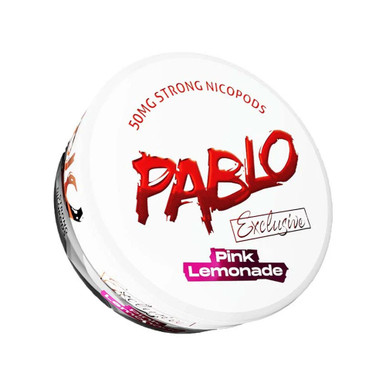
Pablo · 50mg
Read the full guide
Pablo Exclusive Pink Lemonade Nicotine Pouches
£3.85
✔ In stock — ready to ship
100% tobacco-free
Free over £20
Same-day dispatch
Secure checkout
Pablo Exclusive Pink Lemonade Nicotine Pouches are held at £3.85 with one declared label figure of 50mg. The listing carries a single variant, so price and figure arrive together and there is no second option behind the button. Stock reads as available as this page is written. Our records contain one photograph.
Those five items are the whole of the product-specific data behind this page. Everything below is either built from them, or is description of the format that anybody handling one of these cans can check for themselves, or is flagged as something we do not hold. There are several of the third kind and each is named where it comes up.
The full guide to Pablo Exclusive Pink Lemonade Nicotine Pouches
4,982 words on how it eats, who it suits, how to serve it and what to put beside it.
The listing, stated plainly
The title has three components doing three different jobs. Pablo is the manufacturer's trade name, printed on the can by the company that makes it; every can carrying it sits on the Pablo shelf, fifty-six listings deep. Exclusive names a line within that brand, and what the word is meant to designate has never been explained to us, so we will not explain it either. Pink Lemonade is the flavour name the manufacturer chose, and our catalogue files it on the Citrus shelf alongside twenty-four other entries.
One observation about that filing before anything else. The citrus tag is a reasonable home for a lemonade-named can, since lemon is a citrus fruit, but a shelf tag is a filing decision on our side and not a description of the contents. It tells you where the can lives in our catalogue. It does not tell you what the manufacturer put in it, and the rest of this page keeps those two things apart.
What the milligram figure on the label is
The declared figure printed on this can is 50mg, reproduced exactly as the manufacturer states it. That is label information and it carries no further meaning on this page.
The precision is worth a paragraph, because this number gets more weight put on it than it can bear. A declared milligram figure is a specification set by the company that makes the product and printed on the packaging — the same category of information as a size on a garment label or a rating stamped on a plug. It is not a score, not a grade, not a tier, not a rating, and not a statement about the person buying the can.
We print it because it is on the can and a listing that hid it would be less useful than one that did not. We do not interpret it, we do not convert it into an expectation, and we do not tell anybody what figure belongs in their hand. In the plainest words available: we cannot advise which strength suits any individual, and we are not going to try. We are a shop with a catalogue. We have no knowledge of who is reading, and no retailer is placed to make that call for a person.
Comparison between makers is the related trap. Manufacturers set their declared figures independently and by their own methods. Two cans from two companies showing similar numbers are not equivalent on that basis alone, and a figure from one range does not convert cleanly into a figure from another's. Anybody who buys across brands will already have found this out.
On our shelves this can is filed under Extra Strong, the band holding ninety-eight listings, and we also keep a Medium Strength shelf and a Strong shelf. Those three names exist purely so that the catalogue can be browsed by number, and they are generated from whatever manufacturers print. They are not a ladder, not a sequence, not a progression and not a statement that one band is better than another. A higher printed figure does not improve a can, and reaching one is not an accomplishment of any sort. The bands are filing, and filing is all they were built to be.
Pink lemonade, described as taste and aroma
We hold two words from the manufacturer — Pink Lemonade — and no tasting note. What follows describes the flavour family so that somebody can decide whether the territory is familiar. It is not a description of this particular can dressed up as one.
Start with what a lemonade name means as a flavour target, because it is not the same as a lemon name. A lemon-named flavour points at the fruit: sharp, aromatic, with peel bitterness available at the edges. A lemonade-named flavour points at a drink made from the fruit, which is a different construction — sweetened, diluted, rounded off, and usually carrying an impression of carbonation. The sharpness is still present but it is framed rather than exposed. That gap between fruit and drink is the single most useful distinction on this page.
Now the modifier. Pink is a colour word doing flavour work, which is a common convention in flavour naming and worth taking literally rather than decoratively. In a pink lemonade, the pink conventionally comes with a soft red-fruit character folded into the lemon base — raspberry, strawberry, redcurrant or a general berry impression, depending on who is making it. The result is a lemonade with a second, rounder note sitting underneath the citrus, which tends to lower the perceived sharpness and raise the perceived sweetness.
So the honest summary of what separates this from a plain lemonade name is: a second fruit layer. A plain lemonade is a single-axis build — citrus, sweetened, soft. A pink lemonade is a two-layer build — the same citrus frame with a berry note beneath it, which rounds the front edge and adds body in the middle. In aroma terms, the plain version reads higher and cleaner in the nose; the pink version reads slightly lower and fuller, because berry character sits under citrus character rather than above it.
We are describing a convention rather than reporting this can's contents, and the distinction matters. We have not been told what note the manufacturer used, how much of it there is, or whether the colour word refers to a flavour decision at all rather than simply to the appearance of the packaging. What we can state is that our catalogue lists both a lemonade and a pink lemonade from this line, at the same price, and that the names conventionally signal the difference described above.
Building a drink flavour inside a dry pouch
The technical question underneath this listing is more interesting than it first looks. A fruit flavour in a dry pouch is a reasonably direct proposition: name a fruit, build towards it. A drink flavour is a step removed, because the thing being imitated is itself already an imitation — a manufactured beverage with its own conventions, its own sweetness, and physical properties that a dry sachet cannot reproduce at all.
Dryness is the constraint everything else works around
This is a dry pouch. It starts with very little moisture in it and the flavour becomes available progressively, once the pouch is in place and has taken up moisture, rather than arriving all at once the way a drink does. No device features anywhere: nothing charges, nothing switches on, nothing is heated, there is no liquid and no cable. The entire apparatus is a small sealed sachet sitting still under the upper lip.
The first practical consequence is a delay at the front. The opening stretch is usually quieter than the middle, because there has not yet been enough moisture taken up for much to be released. Anybody meeting a new can can read that quiet opening as a weak flavour and then be caught out by the middle. That is the format working as designed.
The parts of a drink that cannot be carried across
A carbonated drink delivers its character through several channels at once: taste, aroma, temperature, dilution and the physical prickle of carbonation. A dry pouch has access to two of those — taste and aroma — and none of the others. There is no liquid to be cold, no dilution to soften anything, and no gas to produce a prickle.
What a maker can do is build towards the impression of those missing parts using the two channels available. The suggestion of carbonation is generally approached through a sharp, slightly abrasive top note that arrives early, because that is the part of a fizzy drink that registers as taste rather than as sensation. The roundness of dilution is approached through sweetness and through keeping bitterness out of the build. Whether any given can succeeds at this is a matter of opinion and not something we are going to assert on a maker's behalf.
Layering two notes rather than one
A pink lemonade name implies two flavour components rather than one, and layering in a dry format has its own behaviour worth knowing about. The components rarely arrive together. Volatile aromatic character — the citrus part — presents early and falls away at a steeper angle. Heavier, less volatile character — the berry part — arrives later and holds a flatter line. The practical result of layering a bright note over a rounder one is a flavour with a shape: citrus-led at the front, berry-led through the middle and towards the end.
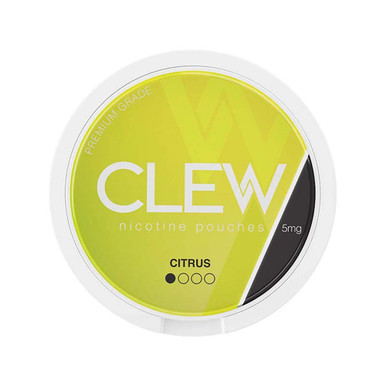
That shape is the main difference between a two-layer build and a single-note build in this format, and it is why a compound name is worth reading carefully rather than treating as decoration. A single-note citrus can such as Clew Citrus, listed at £39.90 is a flatter proposition by construction. A compound build is not better, but it is different, and knowing which one is in your hand explains a lot about how it behaves.
Why the citrus shelf holds twenty-five different things
There are not twenty-five citrus fruits, so the shelf clearly is not organised around fruit. It is organised around a family, and within that family the variables are numerous: fruit versus drink target, single note versus layered, cooling element present or absent, how sweet the build is, how much bitterness has been left in, how quickly the whole thing arrives and departs.
Which is why Velo Lime Flame at £4.19, XQS Citrus Cooling at £39.90 and this can can all share one shelf and be three entirely separate propositions at the counter. A shelf gathers cans that share a family. It makes no promise that they resemble one another, and it should never be read as one.
The can, the pouch and the lid
The physical object is worth its own section, because it is the part you handle daily and the part that decides whether something is a nuisance to carry.
Cans in this category are short lidded cylinders — roughly the diameter of a large coin, barely taller than they are wide, rigid enough to share a pocket with keys without being damaged. Most, including those we handle from this brand, carry a catch compartment in the lid: a shallow recess partitioned from the main body, intended to hold used pouches until a bin is available. It is a small piece of design solving a genuinely awkward problem. The trade-off is that a can becomes its own small waste container over a few days and wants emptying into household rubbish. Used pouches go in general waste — not down a sink, not into a drain, not on the ground.
The pouches are small dry sachets. They are placed between lip and gum, most often under the upper lip, and once positioned they stay put without being held or adjusted. There is no equipment beyond the can itself, no sound, and nothing to set down on a table or carry separately.
Duration is a matter of individual preference and not something we will attach a number to. Some people remove a pouch well before the flavour has gone; others leave it until it has. Both are ordinary. Guidance on how long, how often or how many is not a retailer's business to issue, and none is issued here.
On pouch size, our data holds no format designation and no portion count for this listing. Whether the pouches are slim, regular or mini is not recorded against it, so we will state the gap rather than pick the likeliest answer. The can declares it. Prior experience with other cans from this maker's range is a better guide than a guess written on a description page.
Buying one can, buying several, and how reordering actually goes
This section is about purchase rhythm rather than product, and it is the more practically useful of the two subjects this page is built around. It also starts with a limitation.
What we can and cannot tell you about quantity
Our data holds no cans-per-pack figure for this listing. The £3.85 price is attached to the listing as it stands, and we are not going to characterise what that covers beyond what the listing itself says, because we do not hold it. If the difference between a single can and a multi-can quantity matters to your order — and for a repeatedly purchased item it usually does — that is a question resolved at the basket rather than on this page.
This also explains why prices across our catalogue vary so dramatically. Neighbouring listings show figures from £3.85 to £39.90, and those are frequently not comparing the same thing at all. Where a cans-per-pack figure is held, it appears on that product's page. Where it is not, as here, we say so. The one thing we will not do is present this price as good or poor value against a listing whose contents we have not stated.
Single can, and why people still buy that way
The single can is the low-commitment purchase and it has an obvious use: trying a flavour you have not had before without committing to a quantity of something that may not suit you. For a can at £3.85 that reasoning is straightforward. Anybody adding the plain lemonade can from the same line alongside this one to compare the two directly is making exactly that kind of purchase, and it is a sensible way to settle a question the description page cannot settle for you.
The argument against buying singly is delivery. Ordering one can at a time means paying for carriage repeatedly and waiting repeatedly, which is why almost nobody continues to do it once they have settled on what they like.
Buying a quantity, and the honest caveat
Buying several cans at once reduces the per-order overhead and removes the gap between running out and receiving more. The caveat is the obvious one: a quantity of a flavour that turns out not to suit you is a quantity you are stuck with. The usual practice people describe is to buy singly until a flavour is established as one they return to, and only then buy several — which is a sound approach and requires no advice from us to arrive at.
There is a secondary caveat about dates. A larger quantity takes longer to work through, and cans carry their own date markings. That is worth a glance when the order arrives rather than a discovery six weeks later.
There is a third consideration that people tend to discover the hard way, which is storage capacity. Several cans need somewhere sensible to live — dry, cool, out of the sun — and a quantity bought without thinking about where it will sit often ends up on a windowsill or in a car, which is precisely where the storage section below says not to put it. Buying a quantity is a decision about shelf space as much as about price.
Keeping a spare, and how reordering tends to work
The pattern most regular customers describe is a buffer rather than a schedule: one can in use and one unopened behind it, with a reorder placed when the spare is opened rather than when the last can runs out. It requires no calendar and no tracking, because the act of opening the spare is itself the reminder.
Stock movement is the other reason a buffer is worth keeping. Availability across a catalogue this size changes, and a flavour that is in stock today may not be on the day you need it. That is not a sales argument — the honest version is that the catalogue is large, stock shifts, and a single-can-at-a-time approach occasionally leaves people without the flavour they wanted. Iceberg Guava Lime, listed at £39.90, is out of stock as this is written, which is a live illustration of exactly that; the page is worth reading if you are surveying the citrus shelf, but nothing can be ordered from it today.
Rotation changes the arithmetic
Anybody running two or three flavours rather than one is working through each can more slowly, which stretches the reorder interval and makes a buffer easier to maintain. It also means a single flavour being unavailable is an inconvenience rather than a problem, because there is something else already open. That is the practical case for rotation, separate from the flavour case, and it is the one people tend to find persuasive after the second time a favourite is unavailable.
What sits beside this can in a rotation
Specific suggestions, with a reason attached to each rather than a bare list.
The most direct comparison, as above, is the plain lemonade in this same line at £3.85: same maker, same line, same price, one word of difference in the name, and that word conventionally signals an added berry layer. Running the two together is the cleanest way to find out whether the layered build or the single-note build suits you better.
For a genuine break rather than a comparison, Pablo Exclusive Blue Mint, £3.85 is the mint-family option and the widest swing available inside one line. Pablo Exclusive Bubblegum at £3.85 stays sweet while leaving fruit behind entirely.
For another layered fruit build, the three-berry can in this line, £3.85 stacks dark notes where this one layers a light berry under a citrus, and Pablo Exclusive Blue Raspberry, £3.85 takes a single berry in a confectionery direction. Pablo Exclusive Blueberry Peach Ice at £3.85 introduces a cooling suffix this can's name does not carry, and the banana-named can, also £3.85 does the same to a much softer fruit.
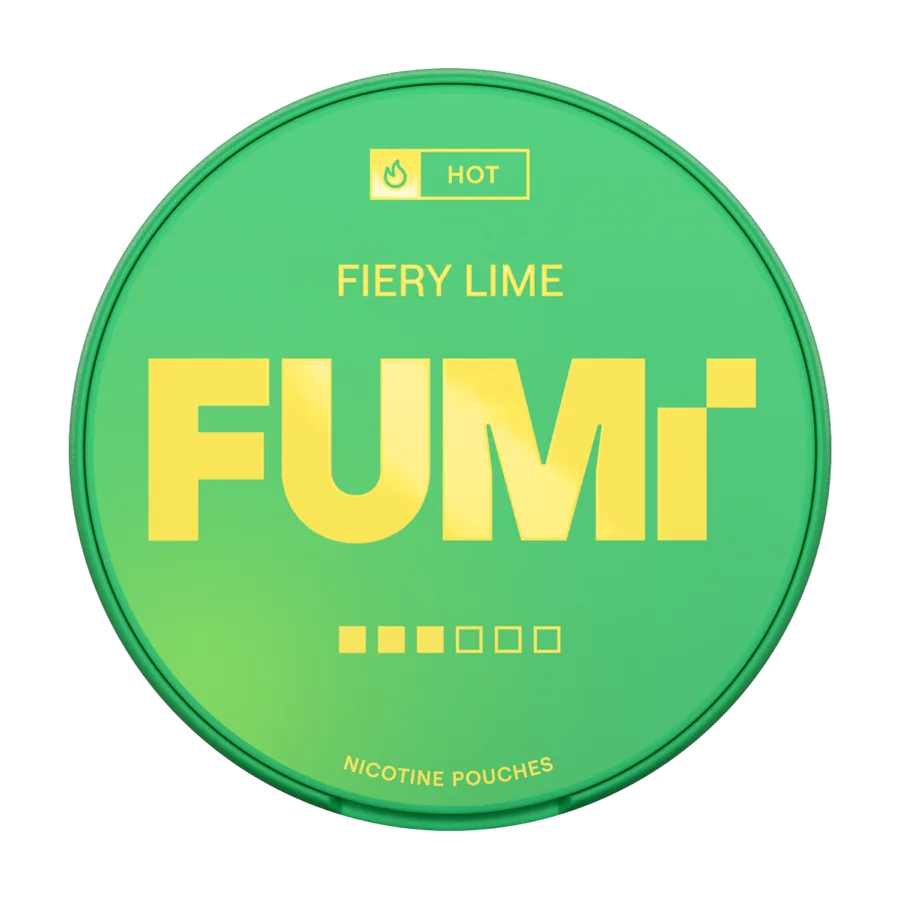
Across makers, Killa Exclusive Lemonade at £33.50 is another lemonade-named can from a different company, which makes it the obvious cross-brand comparison for anybody interested in how differently two makers interpret the same drink target. Fumi Fiery Lime, £27.90 goes the other way, naming the fruit rather than the drink. Cuba Black Apple Juice at £39.90 is an orchard-fruit juice build, Maggie Original Jamaican Cherry Tonic Wine at £39.90 is one of the more unusual names we carry, and Siberia Mini, £39.50, is a mint-family can in a smaller format.
Where this sits within the brand's range
Fifty-six listings carry this brand across our shelves, arranged into several named lines, of which the Exclusive line is the broadest here. Its flavour names cover mints, sodas, berries, confectionery notes, single fruits, compound fruits and drink targets such as this one.
Within that spread, Pink Lemonade belongs to the drink-named group rather than the fruit-named group, which is a smaller set. It is also a compound name, in that the colour modifier conventionally signals a second component. Between those two characteristics it is one of the more constructed propositions in the line, as against a single-word fruit name where the label tells you essentially everything the label can tell you.
Every can in this line on our shelves is £3.85. There is no pricing signal distinguishing one flavour from another, so nothing but the flavour name is guiding the choice between them.
Keeping a can in usable condition
Dry pouches want somewhere dry and reasonably cool. Avoid the predictable places: direct sun, a car dashboard, a summer windowsill, a shelf above a radiator, a bathroom where the air turns damp repeatedly.
Closing the lid properly is the habit with the most effect. Aromatic character escapes from a can left a quarter turn open in a warm room, and a citrus-framed build has a good deal of its identity in exactly that fraction. A can kept shut and cool holds its character noticeably longer, at a cost of about one second per use.
Refrigeration is standard practice for some moist products in the wider category. It does not transfer automatically to a dry can and we are not going to tell anybody to put this one in a fridge. The manufacturer's own storage wording on the can is the authority on that, ahead of this page.
On rotation and dates: cans carry their own markings, and the sensible practice is the kitchen one — open the older can first. For anybody keeping a buffer as described above, a shallow tin or drawer where every lid is visible in one glance turns stock control into a glance rather than a memory exercise.
Choosing, on a listing that offers one option
There is very little to decide here. One declared figure of 50mg, one variant, one price of £3.85, and no cans-per-pack value held. The listing does not present a choice; it presents a can.
The choice worth making is which shelf to be reading. If the figure on this can is higher than what you normally buy, the straightforward step is to look at the medium band or the strong band and read those listings on their own terms. We will not say which band you belong in. We will confirm they exist and that browsing by declared number is a normal way to use this catalogue.
If flavour is your axis, the citrus grouping holds the closest relatives by tag, and the whole catalogue on one page is there for when a slice is not what you want to see.
Finding your way onward
Three shelves intersect at this page. By declared figure, the can is filed with the ninety-eight listings in the Extra Strong band. By manufacturer, it belongs to the fifty-six cans under this brand. By flavour family, it is one of the twenty-five entries filed as citrus.
Those three routes match how people generally arrive: by maker, by number, or by what they want it to taste of. Where none of those fits, everything we stock is a single page that can be scrolled from top to bottom.
Brand shelves tend to be the most useful entry point for anybody who has settled on a maker whose builds agree with them. The Cuba shelf is another substantial one and is laid out identically — filing is kept consistent across the whole site so that moving between makers never means learning a new structure.
Ordering, delivery and proof of age
This is an age-restricted product and the process reflects it. Sales are to adults aged 18 or over who already use nicotine. Age verification forms part of placing an order, and identification may be requested on delivery. A courier is entitled to withhold a parcel where age cannot be established, and that is not a discretionary decision on their part.
On stock: this can reads as available as this page is written. Availability across the catalogue moves, which is why the unavailable neighbour above is flagged rather than left to be discovered at checkout. The live position on the listing page always takes precedence over anything written in advance, this page included.
On price: £3.85 is what we hold against this listing, with no cans-per-pack figure recorded. Prices elsewhere in the shop differ considerably and often are not comparing equivalent quantities. Each listing's price is best read against its own stated contents.
Where an order goes wrong — damage in transit, a missing line, the wrong item — that is handled through our ordering and returns process, which has its own pages rather than living inside a product description.
Questions this listing attracts
What is the actual difference between this and your plain lemonade can?
By name, one word; by convention, a second flavour layer. A plain lemonade name points at a single sweetened citrus build. A pink lemonade name conventionally adds a soft red-fruit note underneath that citrus, which rounds the front edge and adds body through the middle. Both are from the same line and both are £3.85. We hold no maker's description for either, so this is a comparison of naming conventions rather than of verified contents.
Does the pink refer to a flavour or just to the packaging?
We cannot say for certain on this can. In flavour naming generally, pink in a lemonade name signals an added berry character, and that is the convention described above. Whether this manufacturer intends it that way, or whether the word refers to the appearance of the product or the can, is not something we have been told. Reporting the convention and marking the uncertainty is more honest than picking one and stating it.
How many pouches are in the can?
Our data holds no portion count for this listing, so there is no honest number for us to publish. The can declares it, and that is the source worth relying on. If portion count is the deciding factor in your order, check the can or ask before buying rather than trusting a figure written by somebody working from a catalogue export.
Is this sold in rolls or only as single cans?
Our data holds no cans-per-pack figure for this product, so this page cannot confirm either way. Other listings in the catalogue do carry multi-can arrangements, and their prices reflect that, which is part of why the spread of prices across the shop is as wide as it is. The basket is where quantity gets resolved for this one.
Is there a cooling element in it?
Nothing in the name suggests one and we hold no information indicating one. Cans built around cooling in this category almost always announce it in the name with a word such as Ice or Freeze, and this one is Pink Lemonade and nothing further. That is an inference from naming convention rather than a claim about contents.
Does it come in a lower strength?
Not on our shelves. This listing holds one declared figure, 50mg, and one variant at £3.85. Whether the manufacturer produces this flavour at other figures is beyond what our catalogue records — the absence of a second variant here means we do not list one, which is narrower than saying none exists anywhere.
Which of your three lemonade-named cans should I get?
Not a question we will answer for you, but the differences are stateable. The plain lemonade in this line and this can share a maker, a line and a price, with the pink modifier conventionally signalling an extra layer. The lemonade can from Killa is a different manufacturer at £33.50, so build conventions and quantity may both differ. All three are in stock.
Why do your related products include an apple can and a mint one?
Because related products are generated from shared shelves rather than from a taste judgement made by a person. Cans that share the Extra Strong band with this one become neighbours in the system whether or not their flavours have anything in common. It is a mechanical result of how the catalogue is filed, and we would rather explain it than present the list as a curated set of flavour recommendations, which it is not.
Where is this made?
We do not hold that information and will not guess at it. Country of origin and manufacturing arrangements are not part of the data behind this listing. Whatever is printed on the can is the manufacturer speaking for themselves, and that is the source to trust.
Can I use these at work or on public transport?
That is for the employer or the operator to state, not for a shop. Workplace policies and conditions of carriage are written by the organisations concerned and vary widely, and a policy that says nothing about pouches is not a policy that permits them. Ask whoever administers the rules where you are. Nothing on a product page carries any weight against a rule set by someone else.
Which strength should I pick?
We cannot advise on that for anybody. It is not a judgement a retailer is placed to make, and we will not make it indirectly by implying that one band is a starting point and another is somewhere to arrive at. The strength shelves here are filing derived from figures manufacturers print. They are not a ranking and not a route.
How should the can be stored once opened?
Lid shut, cool, dry, out of direct sunlight, away from the obvious hot spots. On a can whose character sits partly in its aroma, a properly closed lid is worth the trivial effort, because that is the part most inclined to drift away over days in a warm room. If the manufacturer prints more specific storage wording, follow that in preference to this paragraph.
Required notice for this product
This product contains nicotine. The following applies to it without exception.
- Sold only to adults aged 18 or over, and only to people who already use nicotine.
- Nicotine is an addictive substance.
- It is not a licensed stop-smoking medicine and is not offered, described or intended as one anywhere on this site.
- It is not intended for non-smokers, for anyone who does not already use nicotine, for anyone under 18, or for anyone who is pregnant or breastfeeding.
- Keep out of reach of children and animals.
- Age verification applies to every order, and ID may be requested on delivery.
We make no health claim about this product in any direction, and nothing above should be read as one. Anything touching on your own health belongs with a qualified professional rather than with a retailer's description page.
To finish
Pablo Exclusive Pink Lemonade is a single-strength can at £3.85 with a declared figure of 50mg, filed by us under citrus and in stock as this is written. One image, two flavour words, one number, and no quantity figure — every paragraph above has either been built from that short list or has said plainly where the list runs out. If the wider range is what you came for, the full brand shelf is the next page worth opening.
More from Pablo
More extra strong pouches
More citrus pouches
Where this sits
Pablo Exclusive Pink Lemonade Nicotine Pouches appears in these categories. Browse them, or jump to something close.
You might also like