Home / Extra Strong / Pablo Exclusive Liquorice Nicotine Pouches
Pablo · 50mg
Read the full guide
Pablo Exclusive Liquorice Nicotine Pouches
£3.85
✔ In stock — ready to ship
100% tobacco-free
Free over £20
Same-day dispatch
Secure checkout
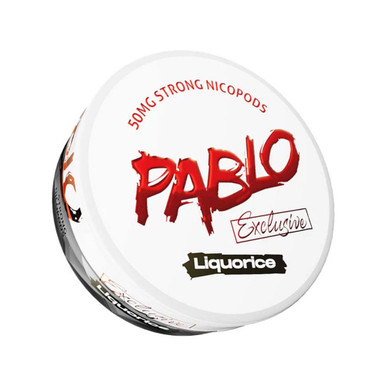
This page belongs to Pablo Exclusive Liquorice Nicotine Pouches, priced at £3.85. Our product record holds one declared strength, 50mg, one flavour tag — which is mint, and we will come back to that shortly because it does not match the name — one product image, and a stock status of in stock as this was written. Those few fields are everything our data contains about this can.
That limitation shapes the page. Where our record is silent we say so rather than filling the space, and there is a fair amount of silence: no portion count, no can dimensions, no composition. We do not publish ingredient or technical information for nicotine products, we do not describe anything that happens after a pouch is in place, and we make no statement in any direction about anybody's wellbeing. What is left is the object, the taste, the shelves it sits on, the price, and honest notes about the gaps. That is a narrower page than some, and it is the only kind worth publishing for a product sold under age restriction.
The full guide to Pablo Exclusive Liquorice Nicotine Pouches
4,857 words on how it eats, who it suits, how to serve it and what to put beside it.
Pablo Exclusive Liquorice: the record behind this listing
The can is a shallow round tin with a friction-fit lid. Lift the lid and the pouches sit in a ring in the base — small, soft-edged, dry to the touch, white. Turn the lid over and there is a shallow well in the underside, which is where used pouches go until you can get to a bin. There is nothing to charge and nothing to assemble. A pouch sits under the upper lip and is taken out by hand.
This is an adult nicotine product, listed and sold on the basis that the buyer is aged 18 or over and already uses nicotine. The complete wording on that sits in its own section towards the foot of the page, and nothing above it is addressed to anybody else.
The pouch in ordinary use
A pouch from this tin is a small soft rectangle with rounded corners. It is light enough to disappear in a closed hand, and it goes under the upper lip and stays put. A fresh one feels a little bulkier than it looked in the tin, and that impression settles within a minute or two as it takes the shape of the space. After that most people stop noticing it as an object. Conversation and drinking carry on normally with one in; eating with one in is a preference some people have and others do not, and we are not going to write that up as a rule.
How long anyone keeps a pouch seated varies too much for a single figure to be honest. Ten minutes at one end of the range, most of an hour at the other, and the same person varies from morning to evening. Because the flavour thins gradually rather than stopping, most people go by the taste rather than by a clock. We do not publish a recommended duration and would not: we do not have one, and a shop that invented one would be doing something it has no standing to do.
Our record carries no portion count for this listing, so we cannot tell you how many pouches a tin holds. That number is printed on the packaging, and so are the weight of a pouch and the size of the can. Taking a used pouch out is a matter of hooking it with a fingertip. It goes in the lid well — which takes several before it needs emptying, and which is the whole reason the format works on a train or in a car — and from there into general waste. Not a sink, not a plant pot, not out of a window. Used pouches are small and pale and easily left on a surface, which is the practical reason a household with children or pets keeps the tin closed and out of reach.
A word on the tin, since it is the part you handle most. The lid is a friction fit rather than a thread: thumb under the rim to open, firm press to close. Seated properly it does not shift on its own, and the common cause of loose pouches in a bag is a lid balanced on the base rather than pushed home. The top face carries the maker's name, the flavour and the declared figure, which is what makes a stack of tins in a drawer readable from above. A can of this shape is rigid enough for a jacket or a bag but will go out of round under a person's full weight in a back pocket, and a distorted lid never seats as well again.
Liquorice, as a flavour, and a note about the tag on it
Start with the tag, because it is the first thing anyone paying attention will notice. Our record files this can under a single flavour tag, mint. The product is called Liquorice. Those two things do not match, and we are not going to pretend otherwise or quietly write a mint page around a liquorice name. The most likely explanation is a filing decision rather than a statement about the contents — liquorice and anise-type flavours are frequently grouped with the cool and dark end of a catalogue because there is nowhere more obvious to put them, and our mint grouping is easily the largest flavour shelf we run at 148 listings. What we can tell you with certainty is what the tag says and what the name says. What we cannot tell you is which of them better describes the can, because our record holds no separate description and we are not going to invent one.
As a flavour idea, liquorice is distinctive and polarising, and it is worth describing plainly. The taste people call liquorice is dark and sweet with a genuine bitter edge underneath it, and an aniseed character running through the middle that is the part most people either take to immediately or do not. It is a deep flavour rather than a bright one — closer to the back of the palate than the front — and it has a slightly drying quality to it that fruit flavours do not.
Where this reading sits within that idea is on the sweeter side rather than the salt-and-bitter side, with the aniseed clearly present rather than buried. The aroma from a freshly opened tin is unmistakable and comes up immediately; this is not a subtle flavour and it is not trying to be. If the tag on our record is pointing at something real, it would be a cool note sitting behind the liquorice rather than a mint flavour in its own right, but that is an inference from a data field and we would rather flag it as one than state it as fact.
One general caveat, the same one we put on every flavour description: this is written by people who stock the product, not by the people who made it, and taste is personal. The filing is the only part that comes straight out of the record.
The tasting note: cool, sweet, sharp and bitter
Describing a flavour by name only gets you so far, particularly with something as divisive as this one. A more useful approach is to place a can on four separate axes, because the four move independently and a can can be high on one and low on another. What follows is that exercise for this listing, with the same four axes we would apply to anything else on the shelves.
Cool
This is the axis our record is ambiguous about, and it is the ambiguity discussed above. The product name carries no cooling word — no "ice", no "frost", no "arctic" — and on our data the only signal in the cooling direction is a flavour tag that says mint. Taken together, the honest summary is: probably some cool presence behind the flavour rather than none at all, and certainly nothing like the cooling of a can built for it. For the far end of that axis, Klint Arctic Mint at £36.90 and Denssi Cold Mint at £39.90 are where the catalogue puts its money, and neither of those is in any way a liquorice flavour.
Sweet
High, and higher than people who have not had a liquorice pouch expect. Liquorice as a flavour family runs from the frankly confectionery to the austere, and this one sits well toward the confectionery end. The sweetness is what makes it approachable to anyone who knows the flavour from sweets rather than from anywhere else, and it is also the element that fades first as a pouch goes on, which leaves the darker part of the flavour more exposed towards the end. That progression is characteristic rather than a fault.
Sharp
Low. There is no citrus brightness here and no fruit acid, and that is the clearest structural difference between this can and most of the rest of the Pablo range. Sharpness is the axis that makes a flavour feel immediate and lively; its absence is what makes this one feel slow and heavy by comparison. If you want the same maker at the same price with that axis pushed right up, Pablo Exclusive Blue Raspberry is the opposite corner of the range, and it costs the same £3.85.
Bitter
Present, deliberate, and the reason people either return to this flavour or never buy it twice. The bitterness sits under the sweetness rather than alongside it, and it is the component that gives the flavour its depth. Very little else on our shelves is built this way: the nearest thing in structure, though not in taste, is Fumi Dark Spice at £27.90, which also puts a dark, low, slightly bitter idea at the centre rather than a bright one. If bitterness is not something you want in a flavour, this is a can to skip, and we would rather say that plainly than sell you a tin you will not finish.
Reading the four together
Summed up: low sharpness, high sweetness, real bitterness, ambiguous cool. That combination puts this can a long way from the centre of gravity of our catalogue, which is dominated by bright fruit and cold mint. It is a specialist flavour and it behaves like one. That is a description of where it sits, not a judgement — a can at the edge of a catalogue is not a worse can, and a can in the middle of it is not a more obvious choice.
50mg: reading the number on the lid
The declared figure on this can is 50mg, and it is the only strength this listing comes in. We publish it because it is on the can and because it is the field people sort by.
What it is: the manufacturer's own declaration. What it is not: a measurement of ours, and not a figure whose basis our record stores. We hold the string 50mg and nothing about the convention behind it, and rather than assume one and present the assumption as fact on a nicotine product page, we will point at the labelling on the can, which is the authority for it.
The site sorts listings into strength bands so that a catalogue this size can be filtered. This one falls on the extra strong shelf, which currently holds 98 listings, and we run a medium band and a strong band alongside it. Those are filing categories and nothing more. They are not a ladder, not a sequence, and not something to be worked along. A larger figure on a lid is not an achievement, not a mark of quality, and not a thing we are inviting anybody to aim at — it is a different number on a different can.
We cannot advise which strength suits anyone. We hold no information about any individual, we are not qualified to give that kind of advice, and a product page is the wrong place for it to appear even by implication. Our job is to publish every declared figure we hold, in the same format on every listing, so that a comparison between two cans is a comparison of like with like.
What people keep alongside this one, and why the pairing matters here
Rotation is the norm — two or three cans on the go, changed by mood rather than by schedule — and the reason is straightforward: a flavour you have a lot of becomes less distinct the more of it you have. For most cans, that is a mild convenience. For this one it is closer to essential, because a flavour this heavy and this far from the middle of the catalogue is the kind people tire of faster than a neutral one. This section is longer than the equivalent on most of our pages for exactly that reason.
The obvious pairing: something bright
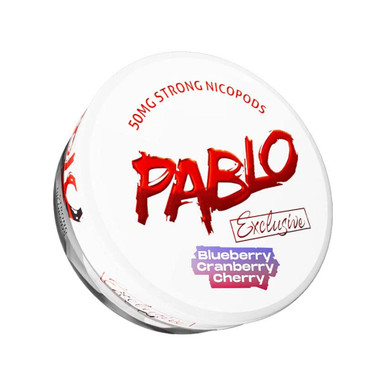
The most common second can next to a liquorice one is something at the opposite end of the sharp axis, and the range supplies that at the same price. Pablo Exclusive Blueberry Cranberry Cherry at £3.85 stacks three fruits and is about as far from a dark, slow flavour as the maker's own line goes while staying in the same tin. Blueberry Peach Ice, same price, adds a cold layer over fruit, which changes two axes at once and makes the contrast sharper still.
Staying dark, changing the flavour
If what appeals here is the depth rather than the liquorice specifically, the pairing to look at is another can built around a low, heavy idea. The Fumi dark spice listing at £27.90 is the closest structural match on our shelves — different flavour entirely, same architecture. It is the pairing that gives you variety without swinging the whole profile from one end of the catalogue to the other.
Cold mint as a palate reset
A large number of people keep a straightforward cold mint can beside whatever else they are using, because a cold mint is the least demanding flavour in the catalogue and functions as a neutral position to return to. Within the Pablo range, the Blue Mint can does that job at £3.85 in the same tin. Outside it, Clew Cool Mint at £39.90, Edge Mint at £14.95 and Elf Bar Cool Storm at £29.90 are three different readings of the same idea at three very different prices, and all three are marked in stock as this was written.
Worth flagging in the same breath: Iceberg Black Mint at £39.90 would belong in that list, but it is currently out of stock, so the page is there to read rather than to buy from today.
Fruit with a cool edge, as a middle position
Between a bright fruit and a plain cold mint there is a middle position — fruit with cooling over it — and two listings show it well. 77 Apple Mint at £39.90 puts a green, slightly tart apple under a cool layer, and Killa Banana Ice at £33.50 does the same trick with a soft heavy fruit instead of a sharp light one. Either makes a sensible second can beside something as singular as liquorice, because they change the flavour without going all the way to the other end of the catalogue.
The wider fruit shelf
Two more for completeness. Cuba Black Apple Juice at £39.90 reads as pressed juice rather than whole fruit — rounder and sweeter than the 77 apple can, and a straightforward fruit contrast to this listing. And within the maker's own line, Pablo Exclusive Banana Ice and Pablo Exclusive Bubblegum, both £3.85, are the two cans that move furthest toward confectionery, which is the one direction a liquorice flavour already partly occupies. Some people find that pairing works well for that reason and others find it too much of the same thing.
How many cans a rotation actually needs
Two is the most common answer and three is the point at which most people stop. The argument for two is that it takes almost no organising: one can in a pocket, one in a drawer, and the second exists purely so the first does not become the only thing you ever taste. The argument for three is that two flavours at opposite ends of the catalogue can both start to feel like extremes, and a neutral third — usually a plain cold mint — gives you somewhere in the middle to sit.
Beyond three it becomes a storage problem rather than a taste one. Opened tins do not improve while they wait, and a drawer with six half-used cans in it usually means several of them have been open far longer than anyone intended. None of this is advice about how much of anything to have, and we are not making any suggestion of that kind. It is a note about how many tins are practical to keep on the go, which is a question about drawers.
What we are not doing in this section
We are not ranking these. Every can named above is a listing we stock, described by its price, its flavour family and its brand, and the reason given for each pairing is a reason about taste and contrast rather than about anything else. Nothing here says one can is better, and nothing here is a suggestion about how much of anything anyone should have.
How much weight our flavour tags can carry
This listing is a good occasion to explain what the flavour tags on this site are for, since here one of them clearly does not describe the can. The tags are a navigation device. They exist so that a catalogue of several hundred listings can be filtered down to something browsable, and they are applied at the level of a family rather than a recipe. A tag tells you which shelf a can has been put on. It does not tell you what the can tastes like, and on the evidence of this page it does not always agree with the name on the lid either.
That matters in both directions. A shelf as large as the mint grouping holds cans that are very different from each other — cold mints, spearmints, mint-and-fruit combinations, and at least one liquorice listing — so arriving at a can from that shelf tells you less than you might assume. Equally, a small shelf can be misleading in the other direction, because a narrow grouping makes its members look more alike than they are.
Where a tag and a product name disagree, we treat the name as the stronger signal about taste and the tag as a fact about our filing, and we say so on the page rather than resolving the conflict silently. The alternative would be to edit our own record until the page reads smoothly, which would make the catalogue tidier and our data less true. If you spot a tag that looks wrong elsewhere on the site, it is worth telling us; we would rather correct a record than have a page argue with itself.
Where this sits on the Pablo shelf
The Pablo brand page holds 56 listings, making it one of the larger single-maker shelves on the site, and the Exclusive line accounts for most of it. The line is unusually consistent: one declared strength per listing, a flat £3.85 price, the same tin, and the flavour as the only variable.
Within that line, this can is an outlier by flavour. The bulk of the range is fruit and mint, and a liquorice entry sits on its own. That is worth knowing if you are browsing the brand page looking for something similar: there is not really a second liquorice can on that shelf, and the nearest things to it are the darker confectionery flavours rather than another anise-led one. If you want to see how a different maker lays out a range of comparable size, the Cuba shelf is the closest equivalent we run, and the whole catalogue is browsable in one index if you would rather not filter at all.
Keeping the can in reasonable condition
Three things shorten the life of a tin and all of them are avoidable. Heat comes first — a dashboard in summer or a car standing in the sun is a worse place for a can than anywhere indoors. Humidity is second, which is why a bathroom shelf is a poorer choice than it looks. A lid that has not been pressed home is third, and it is the one that actually costs people a tin, usually inside a bag.
Some people keep an opened can in a fridge on the theory that the flavour holds longer. We have not tested that and will neither endorse nor dismiss it. The manufacturer prints storage guidance on the packaging and that guidance outranks anything a shop writes on a web page, this one included.
The rest is plain. Keep the tin closed when it is not in use. Keep it out of reach of children and pets. Do not decant the contents into an unlabelled container. Put used pouches in general waste rather than leaving them on a worktop or a car console.
What there is to choose between on this listing
Not much, and it is more useful to say so than to manufacture a decision. There is one declared strength, 50mg. There is one price, £3.85. Our record carries no can count and no multipack variant, so there is no pack-size option on this page at all.
The real choice, then, is between this can and a different one, which is what the comparison sections above are for. If you are sorting by declared figure, the strength shelves will do that. If you are sorting by taste, the flavour shelves will — with the caveat, specific to this listing, that the flavour shelf it sits on says mint and the name says liquorice. We will not tell you which figure or which band to prefer, for the reasons set out earlier.
Ordering, delivery and the age check
The listing is marked in stock as this was written, and the listing page is the live position rather than this paragraph. Checkout is ordinary and the price shown on the listing is what you pay.
Age verification is not a formality here. We sell only to adults aged 18 or over, an age check runs at checkout, and ID may be requested on delivery. Where it is requested and no adult at the address can produce it, the parcel will not be handed over — which is worth considering before sending an order to a workplace reception or a neighbour.
Our standard returns policy applies, with the unavoidable limit that an opened can of a consumable cannot be resold. There is no way to test a flavour without opening the tin. With a flavour as divisive as this one that matters more than usual, and the sensible course is to treat a first can as a small experiment rather than a stock-up.
Finding this listing again
Three shelves lead here. The extra strong band is the broadest, holding 98 listings. Pablo's own page is the route to take if you are browsing by maker. And the mint grouping, with 148 listings, is where our filing has put this can — which, as set out above, is a filing decision rather than a description, and is the reason someone browsing that shelf for a cold mint can may be surprised to find a liquorice one on it.
If none of those routes suits, the full index of everything we stock is the place to start. Flavour shelves are usually the most useful entry point when you know what you want a can to taste of; strength shelves when you are comparing declared figures across brands.
Questions we get asked about this can
Why is a liquorice can filed under mint?
That is a fair question and the honest answer is that we do not know. Our record holds one flavour tag against this listing and it reads mint. The name reads Liquorice. We have not changed either to make the page tidier. Most likely it is a filing decision — liquorice and anise flavours have no obvious shelf of their own — but that is an inference and we are not going to present it as an explanation from the maker.
Does that mean it tastes of mint?
We cannot tell you that from our data. The name is the strongest signal we have about the taste, and the name says liquorice. If there is a cool element in the can it would sit behind the main flavour rather than replace it. For a can that is genuinely built as a cold mint, the Klint arctic mint listing at £36.90 is a much clearer example.
Is this a salty liquorice or a sweet one?
It reads as the sweeter interpretation rather than the salt-and-bitter one, with the aniseed character clearly present. We hold no description from the maker, so that is our reading of the flavour rather than a specification, and taste in this particular flavour family varies more between people than in almost any other.
How many pouches are in the tin?
We do not hold that figure. Our record carries no portion count for this listing and we are not going to estimate one. The number is printed on the packaging, which is the authority for it.
Does 50mg mean per pouch?
Our record stores the declared strength as the text 50mg and does not record the basis on which it is declared. We will not guess at that on a nicotine product's page. The labelling on the can states it.
Which strength should I go for?
We cannot answer that. We know nothing about any individual customer and we are not qualified to advise. We publish every declared figure we hold in the same format across the catalogue so that listings can be compared against each other; the choice itself is not ours to make or to nudge.
What is in the pouches?
We do not publish ingredient, composition or technical information for this or any nicotine product on the site. The manufacturer's labelling on the can carries that and is the authoritative source for it.
Is there a multipack?
Not on this listing. Our record shows a single configuration at £3.85 with no can count and no multipack variant. If that changes, the listing page will show it before this paragraph does.
Why is this £3.85 when other cans are £39.90?
Because the two figures are not describing the same quantity, and our record does not store what quantity each price covers. Treating them as directly comparable would mislead, so we have avoided doing it anywhere on this page. The listing pages are where that comparison can properly be made.
Can I take a can abroad?
Rules on bringing nicotine products across borders vary widely and some countries restrict or prohibit them outright. We hold no list of national rules and will not guess at one. Check the destination's published requirements, and the carrier's, before travelling.
Do you publish ratings or customer opinions?
No. There is no scoring system on this site and we do not write testimonials, so nothing above is presented as anybody else's verdict. That is worth stating on a flavour as divisive as this one, because a score would be the least useful number we could give you. Everything on the page is either a field from our own record, a description written by people who stock the can, or a comparison with other listings we hold.
What if I dislike it?
With liquorice that is a real possibility rather than a polite caveat — it is one of the few flavours people reject outright. An opened can cannot be resold, so a returns policy will not help. At £3.85 this is at least a cheaper way to find out than most listings on our shelves.
The required notices
Nicotine is an addictive substance.
Pablo Exclusive Liquorice Nicotine Pouches are sold only to adults aged 18 or over who already use nicotine. An age check runs at checkout, we do not sell to anyone under 18, and ID may be requested on delivery; where it is requested and no adult at the address can produce it, the parcel will not be handed over.
This product is not a licensed stop-smoking medicine and holds no authorisation of that kind. It is not intended for non-smokers, for anyone who does not already use nicotine, for anyone under 18, or for anyone who is pregnant or breastfeeding. Nothing on this page is medical advice and nothing on it should be read as a suggestion that anybody begin using nicotine or choose any particular strength.
Keep the can closed and out of reach of children and pets, and dispose of used pouches in general waste. Every product fact above — brand, name, price, declared strength, flavour tag, stock status — comes from our own record for this listing. Where the record holds nothing we have said so rather than estimating, and the manufacturer's labelling on the can is the authority for anything printed on the packaging.
The short version
Pablo Exclusive Liquorice is a dark, sweet, genuinely bitter flavour with low sharpness and an ambiguous cool element, listed at £3.85 in one declared strength of 50mg and in stock as this was written. Our record files it under the mint tag despite the name, and we have left that discrepancy on the page rather than hiding it. It sits in the extra strong band and on the Pablo shelf of 56 listings. The closest thing to it in structure on our shelves is Fumi Dark Spice at £27.90, and the most common thing people put beside it is a plain cold mint such as the Denssi cold mint can at £39.90. Everything we know is on this page, and everything we do not know, we have said we do not know.
More from Pablo
More extra strong pouches
More mint pouches
Where this sits
Pablo Exclusive Liquorice Nicotine Pouches appears in these categories. Browse them, or jump to something close.
You might also like