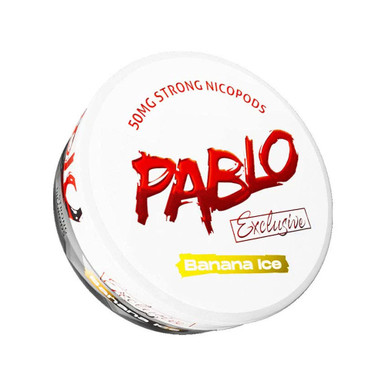
Home / Extra Strong / Pablo Exclusive Green Mint Nicotine Pouches
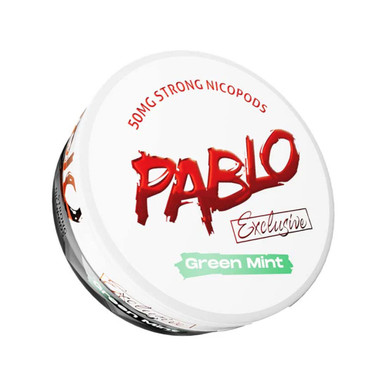
Pablo · 50mg
Read the full guide
Pablo Exclusive Green Mint Nicotine Pouches
£3.85
✔ In stock — ready to ship
100% tobacco-free
Free over £20
Same-day dispatch
Secure checkout
This page belongs to Pablo Exclusive Green Mint Nicotine Pouches. The listed price is £3.85, one strength is declared at 50mg, our record marks the can in stock as this was written, and one flavour tag is filed against it: mint. Six fields, and that is the entirety of what we hold. Nothing on this page has been imported from a source we are unwilling to name, and where the record stops, the page says so rather than continuing.
That is a real constraint and it produces a particular kind of page. There is a great deal about this can that a shopper would reasonably want to know — how many pouches are in the tin, how damp they are, how it compares with the mint can beside it on the shelf — where the honest answer is that our data does not carry it. Those answers appear below in that form. A page that filled them in with plausible sentences would read better and be worth less, and for an age-restricted product it would also be the wrong thing to do.
The full guide to Pablo Exclusive Green Mint Nicotine Pouches
5,163 words on how it eats, who it suits, how to serve it and what to put beside it.
What the Green Mint listing covers
Three shelves hold this listing: the extra strong band at 98 entries, the Pablo range page at 56, and the mint grouping, which runs to 148 listings and is the largest flavour folder on the site.
This is an adult nicotine product, sold to people aged 18 or over who already use nicotine. The full wording sits at the foot of the page and governs everything above it.
Green as a flavour word
The name of this can is unusual in its own range, and the unusual part is what it leaves out. Green Mint contains no temperature word at all. There is no ice, no frost, no arctic, no cold — just a colour attached to a leaf. In a line where most of the mint-tagged cans announce a cooling element in their names, a can that declines to is making a different kind of statement, and it is the one genuine signal available here.
What green conventionally points at is the leaf itself rather than the sensation: the herbal, vegetal, faintly sweet character of the plant, closer to a spearmint register than to a sharp medicinal one. Greenness in a mint is roundness and a little sweetness, with the herb identifiable as a herb rather than dissolved into a general impression of cold. Named that way, the flavour tends to arrive as something you taste rather than something you feel, and the aroma from an open tin runs leafy and slightly sweet rather than sharp.
That reading rests on a naming convention, and the convention is all we have. Our record holds the single word mint with no sub-type, so it does not tell us spearmint, peppermint or anything else, and we are not going to select one and print it as though it came from the data. The can carries whatever the manufacturer chose to state, and that is the authority.
The honest complication is that this can shares that single tag with two others in the same line. Pablo Exclusive also runs Frosted Mint and Frosted Ice, and against all three our record holds the same £3.85, the same 50mg, the same in-stock flag and the same one-word tag. On the data, the three are indistinguishable. We are not going to invent tasting notes to make three pages look different from one another.
Where this one does differ, and it is a difference in wording rather than in anything we have measured, is that the other two both put a temperature word in front of the leaf and this one does not. Between the frosted pair, even the naming gives little away — they are near-synonyms. Between them and this can there is at least a visible distinction on the label: two cans named for cold, one named for a colour. That is a weak signal and we are presenting it as one. Anyone who needs the question settled properly will settle it by holding the cans, not by reading a paragraph about them.
There is one further distinction worth drawing, because it explains why descriptions of mint cans disagree so often. Mint contributes a taste. A cooling element contributes a sensation, and a can can carry a strong one of those with very little of the other. A name like this one, which points at the leaf and says nothing about temperature, is emphasising the taste channel. Whether that means the sensation is absent, or merely not the thing the name chose to advertise, is not something our record settles — and the difference between "no cold in it" and "cold not mentioned on the label" is exactly the sort of gap a product page should not fill in on the reader's behalf.
Flavour is subjective in any case, and this section is a reading of a name by people who sell the product rather than a specification. The only part of it that comes from the record is the word mint.
The can, considered as an object
This is the longest section on the page. It is about the tin rather than what is in it, which is a subject product copy usually skips and which turns out to matter more than the flavour once a can has been in use for a week.
The lid and how it works
The lid lifts clear of the base and presses back down onto a lip. It is a friction fit — not a thread, not a clip, not a gasket — and that choice determines most of how the tin behaves. A friction fit can be worked one-handed, repeatedly, dozens of times a day, without becoming tiresome. That is the whole point of it, and no sealing arrangement that performed better at keeping air out would survive being opened that often.
The cost of that decision is that the tin is resistant to opening rather than proof against it, and it is never airtight. A can rattling loose in a bag alongside keys can be found open later. A lid tipped back on at one edge rather than pressed home all the way round will sit slightly proud and let air work at the contents for as long as it is left that way. Pressing the lid down evenly around its whole circumference takes about a second and is the single most useful habit attached to this format.
The face of the lid is where the labelling lives — brand, line, flavour, milligram figure. That sounds like packaging trivia until you have four cans stacked in a drawer, at which point reading the tops is how you choose one, and a legible figure and flavour on the lid is the difference between a glance and turning the whole stack over.
The catch compartment
The underside of the lid is a shallow well with a raised edge around it. That well is the catch compartment, and it exists so a used pouch has somewhere to go when there is no bin within reach. It is the piece of design that makes the format workable on a train, in a passenger seat, in a meeting, or anywhere else where getting up to find a bin is not an option.
It holds several before it needs attention. Two practical notes follow from where it sits. First, a full well rests directly above the fresh pouches in the ring below every time the lid closes, so emptying it as a routine rather than at capacity is worth doing — plenty of people skip it entirely at home, bin a used pouch straight away, and keep the compartment for occasions that genuinely call for it. Second, the well has a lip rather than a proper retaining edge, so it is not a good place to store fresh pouches; they move when the tin moves, and they sit in the part of the can most exposed to air each time the lid comes off.
When the compartment is emptied, the contents go into general waste. Not a sink, not a drain, not a plant pot, not out of a window. Used pouches are small and pale and extremely easy to lose track of on a desk or a car console, which is the practical reason for keeping the tin closed and out of reach of children and pets whenever it is not actually in a hand.
The ring, and the pouches in it
Inside the base, the pouches sit flat in a ring around the inner wall, with the centre left open. That arrangement is not decorative. It keeps every pouch at the edge where a finger and thumb can reach it, which means a can can be worked without tipping it up or shaking anything out, and it means the last few are no harder to retrieve than the first. A tin packed loose would fail at both of those.
A pouch itself is a small pale rectangle with rounded corners, soft, light enough to be lost in a closed hand. How dry or damp it is varies across this category — some lines are noticeably dry, some distinctly damp — and our record places this one nowhere on that scale, so it is another thing the can will tell you and we cannot. A drier pouch holds its shape like a small firm cushion and settles more slowly once seated; a damper one feels softer and slightly cool between the fingers and conforms faster. Neither behaviour is better, and preferences run strongly in both directions without tracking the flavour at all.
Once seated under the upper lip a pouch stays where it is put. The usual first impression is more bulk than expected, fading within a minute or two as it takes the shape of the space. After that it is unremarkable to hold in place, and people talk and drink with one seated without thinking much about it. How long anyone keeps one in has no correct answer and we will not publish a figure, because a duration printed by a retailer reads as instruction; the honest spread runs from about ten minutes to the better part of an hour and the same person varies across a day.
Portion count, and what we cannot tell you
How many pouches a tin holds is printed on the packaging and absent from our record. We are not going to estimate it, because a guess from us would only compete with a number already on the can in front of you, and the can would be right. The same applies to the weight of a single pouch and to the dimensions of the tin.
That last gap is worth stating plainly because it limits something people reasonably want: a cost-per-pouch comparison. Without a portion count we cannot calculate one, and neither can anyone reading this page from the listing alone. The £3.85 is a price for a listed unit, and our cans-per-pack field is empty, so we cannot even confirm from the record what that unit consists of. Anyone wanting to work out value per pouch will need the number printed on the tin, which we do not hold.
What fits in a pocket
The tin is roughly the footprint of a small jar lid and thin enough to lie flat rather than bulge. That is why it travels without much thought in a coat pocket, a jacket pocket, or the small pocket of a bag. A trouser pocket is the awkward case, not because the tin cannot take it but because a friction-fit lid under sustained pressure from an odd angle is the commonest way a lid works loose in the first place.
None of those descriptions is a measurement. Our record holds no dimensions at all, so this is a description of a shape that anyone who has handled one will recognise rather than a specification. As with everything else physical about the can, the object itself is the authority.
The figure on the lid
This listing declares 50mg and publishes no second variant. The figure is a manufacturer's declaration printed on the packaging, reproduced in the listing exactly as supplied. It is a label value: not a score, not a rating, not a grade, not a measure of how well made anything is.
We would rather be direct than leave the usual framing implied, because this range attracts it. A larger figure is not better. It is not more advanced, not a level, not a target, and not an achievement. There is nothing on these shelves to work up to, and a listing in one band is not a senior version of a listing in another — the bands are a filing system that lets a large catalogue be browsed, and that is their entire function.
The figure also describes nothing you would taste. It says nothing about flavour, portion size, moisture, or how long a pouch keeps its character, and it does not carry across manufacturers, because format and construction vary independently of what is printed. Reading two brands against each other on declared numbers alone is the commonest mistake made when moving between lines, and our record holds no comparative data that would let us do it responsibly on anyone's behalf.
The bands are medium, strong, and the extra strong shelf this can files under. A listing lands in one because of the figure its manufacturer declared and for no other reason. We cannot advise which strength suits anyone. We hold no information about any individual reading this and a product page is not a place where that question can be answered responsibly, so printing the declared figure accurately is the whole of what we can usefully do with it.
Building a rotation around a green mint
Most people run two or three cans rather than one, for the plain reason that a single flavour used continuously becomes less distinct and a second can with a different character resets it. What makes a good second can is real difference rather than a near-miss — two cans doing almost the same thing blur into each other, which defeats the point of carrying both.
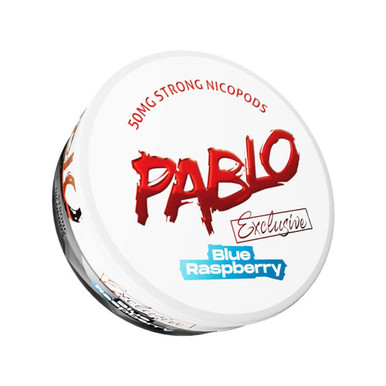
Inside the Pablo Exclusive line that means looking away from the mints, since the other two are the cans this one is hardest to distinguish from. Banana Ice at £3.85, in stock, is a soft creamy fruit under a cold layer and is about as far from a leafy green mint as the line goes while keeping the same tin and price. Blue Raspberry, also £3.85 and in stock, is the line's bright confectionery-register fruit with no herb character anywhere in it.
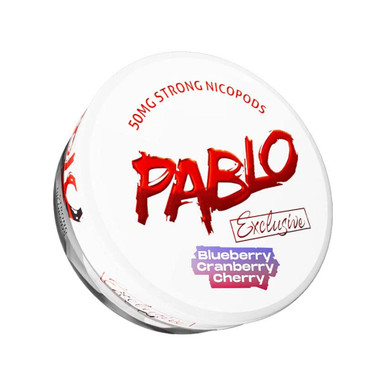
For something in between, Blueberry Peach Ice at £3.85 runs two fruits under a single cold note, and the Blueberry Cranberry Cherry can at the same price puts three together with a tart cranberry edge. Pablo Exclusive Bubblegum, £3.85, leaves fruit behind altogether for a sweet-shop flavour. All are marked in stock.
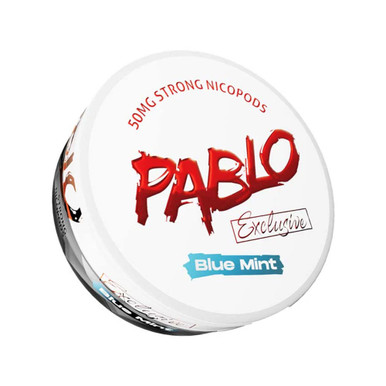
The one in-line can we would name with a caveat is Blue Mint at £3.85, in stock. It is a third mint-tagged listing in the same range, which makes it a poor rotation partner for exactly the reason given above — but it at least attaches a colour rather than a temperature to the leaf, which puts it closer to this can's naming logic than either of the frosted pair.
Green Mint's place on the Pablo shelf
Pablo runs to 56 listings on the page collecting the brand, and the Exclusive line is the section this can belongs to. The useful property of a single line is that most variables hold still: the same tin, the same £3.85, and across this part of the range the same declared figure. Flavour is the only thing that moves, which makes an in-line comparison far more meaningful than one across brands, where four things change simultaneously.
It is worth saying what a 56-listing brand page is actually good for, since it is the route we point at most often on this page. Its value is that it holds constant the things that are otherwise hardest to compare. When you move between two manufacturers you change the tin, the portion, the price, the declared figure and the flavour all at once, and any impression you form about the flavour is contaminated by the other four. Move between two cans on the same brand page in this range and four of those five stay put. That is the only circumstance in which a flavour comparison is worth much, and it is the reason the brand page is more useful here than either of the other two shelves.
Within the line this can sits in a cluster of three mints that our data cannot separate, which is an awkward thing for a brand page to contain and an honest thing to state. Everything else we link from this page is fruit or confectionery. Whether three near-identical records represent three genuinely different cans or a naming exercise is not something we can determine, and we would rather leave the question open than answer it with an invention.
How it compares with the rest of the shelf
The second substantial section here looks outward, at what else we stock. As above, the comparison runs only on what we hold — name, brand, price, declared figure, flavour tag, stock state — and not on anything we would have to make up.
Mints that name a temperature
Most of the mint shelf takes the approach this can declines to take. Denssi Cold Mint at £39.90, in stock, is the plainest example of a leaf with a temperature word attached. Clew Cool Mint at £39.90, also in stock, pitches its temperature word gentler, and Klint Arctic Mint at £36.90, in stock, pitches it considerably harder. Set against those three, this can is the one making no claim about cold at all, which is the clearest contrast the naming offers.
Edge Mint at £14.95, in stock, is the closest parallel on the shelf in that respect — another mint that attaches no temperature word — and it is also the least expensive of the group. Elf Bar Cool Storm at £29.90, in stock, goes furthest the other way, describing a sensation and never mentioning a leaf.
The dark-and-cold comparison most people reach for would be Iceberg Black Mint at £39.90, but our record marks it out of stock. The link will show you the listing; it will not let you order the can today, and it is better to know that here than at the basket.
Cans doing something else entirely
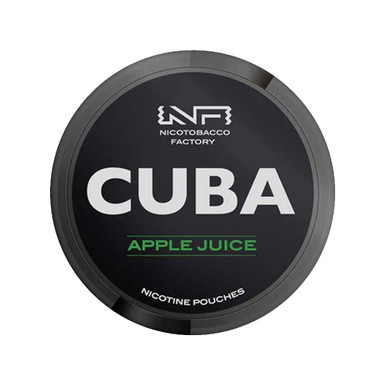
77 Apple Mint at £39.90, in stock, keeps a mint framework but puts a crisp green fruit in front of it — useful for seeing what a leaf character does when it has something to sit behind. Cuba Black Apple Juice at £39.90, in stock, removes the mint entirely for a pressed-fruit flavour, and the wider range it belongs to sits on the Cuba brand page.
Killa Banana Ice at £33.50, in stock, applies a cooling element to a soft creamy fruit, and Fumi Dark Spice at £27.90, in stock, is the furthest thing here from a green mint — warm and spiced rather than leafy and cool, which is precisely what makes it a sensible second can rather than a competitor to the first.
One general caution about all of the above. Every can named shares the mint tag with this one, and that shared tag establishes very little. The mint shelf holds 148 listings from many manufacturers, in different tins, at figures spread across all three bands and at prices from under fifteen pounds to nearly forty. The tag is a navigation tool that lets a shopper narrow a large catalogue. It is not evidence that two cans in the same folder resemble each other, and this page does not treat it as such.
Keeping a tin in decent condition
Cool, dark, dry, closed. A drawer covers nearly all of it and nothing we stock needs more.
Two places people reach for that are worse than a drawer are worth naming, because both look sensible. A bathroom shelf is poor, not because damp is the enemy — a pouch losing moisture is the usual problem — but because a bathroom cycles between humid and dry twice a day, and repeated cycling is harder on a can than either condition held steady. A gym bag is poor for a related reason: warm and damp, then left in a cold car, which is the same cycling with a larger temperature swing added to it. A kitchen or bedside drawer does nothing interesting, which is precisely its merit.
Moisture only ever leaves a pouch, so a lid pressed home properly is the cheapest thing you can do for a can. Heat changes a tin faster than time does — a dashboard in summer, a sunlit windowsill, a coat pocket against a radiator — and none of it reverses on cooling. For a mint specifically, the leafy character at the front is carried largely by aroma, and aroma is what thins first in a tin left open, so a neglected green mint tends to lose the part that makes it recognisable while a cooler, plainer impression remains.
We hold no expiry date, batch date or best-before figure for this listing, so whatever the manufacturer prints on the can is the authority. That is a real gap rather than an oversight: dating is printed per batch, and a retail record of the kind we keep holds the listing rather than the batch, so no version of this page could tell you how old a particular tin is. If you buy several at £3.85, work through the oldest first and keep the rest closed and out of the light.
Deciding what to order
There is one variant here: 50mg at £3.85. No alternative figure, no larger tin, no multi-can option on this record, so a different figure means a different listing rather than a different option on this page.
With the cans-per-pack field empty, the only real decision is how many tins to buy at once, which is a storage question, and the section above covers what a sealed can wants from where you keep it. It is also the reason the price comparisons on this page are left unexplained: several cans named above are listed at £39.90 against this one's £3.85, and since we hold no pack-size data for any of them, we cannot tell you whether that reflects a multi-can pack, a different tin, or different pricing.
Ordering it, and the door
The can goes into the basket at the listed price and checkout collects a delivery address, with an age check running as part of that process. We do not sell to anyone under 18 and the check applies regardless of order size.
ID may be requested on delivery. Where it is requested and no adult at the address can produce it, the parcel will not be handed over. Worth planning around if the delivery address is a workplace, a neighbour, or anywhere a parcel might be taken in by somebody other than the person who ordered it.
Delivery timings, courier arrangements and live availability are held at checkout rather than written into this copy, since a delivery promise in a product description goes stale within a week. The stock flags quoted here were accurate at the time of writing, which is a caveat that applies across the whole catalogue.
Where this page sits on the site
Three routes lead back here. The Pablo listings are the most direct for anyone navigating by manufacturer, and the most useful of the three, since the tin and price hold constant across the range. The 148-entry mint shelf is the flavour route and will need narrowing before it is much help.
The extra strong band is the third and the weakest, because a shared declared figure is close to the least informative thing two cans can have in common — it tells you what is printed on two lids and nothing about either product. We offer it because people do browse that way, not because it is a good way to browse. Failing all three, every listing on one page is the fallback.
Questions people ask about this one
Is Green Mint colder or milder than the frosted cans in the range?
We cannot tell you. Our record holds the same price, the same declared figure, the same stock state and the same single mint tag for all three, so nothing in the data separates them. The only distinction available is that this one names a colour and the other two name a temperature, which suggests a difference in emphasis but is a reading of labels rather than a measurement.
Does green mean spearmint?
Conventionally it points that way — green in a mint name usually indicates the leafy, herbal, slightly sweet register rather than a sharp one. But our record holds only the word mint with no sub-type, so we cannot confirm it. Choosing spearmint on your behalf and printing it would be inventing a fact, and the manufacturer's labelling is the authority.
How many pouches come in a tin?
Not something we hold. The portion count is printed on the packaging and our record does not duplicate it. This also means we cannot give a cost per pouch, since that calculation needs a number we do not have.
Is 50mg high?
It is the figure the manufacturer declares, and it files this listing in our extra strong band. We will not characterise it further, because saying whether a number is high is a step toward telling a person what to choose, and we cannot advise which strength suits anyone.
Can I get this flavour at a lower strength?
Not on this listing, which publishes one declared figure and no variants. Other mint cans across the catalogue carry their own figures on their own pages, but we hold no matched lower-strength version of this specific product.
Why is the lid not airtight?
Because it is a friction fit, and that is deliberate. A lid designed to be opened and closed many times a day with one hand cannot also seal tightly — a tight seal would be slow and awkward to work repeatedly. The trade-off is that the tin resists air rather than excluding it, which is why pressing the lid home evenly matters.
Can I keep fresh pouches in the lid compartment?
You can, but most people who try it stop. The well has a shallow lip rather than a retaining edge, so a fresh pouch kept there moves when the tin does, and it sits in the part of the can most exposed to air whenever the lid comes off. The ring below is where fresh pouches keep best.
Why is this £3.85 when other mint cans are £39.90?
We cannot account for it from the record. The pack-size field is empty for this listing and for the more expensive ones, so we hold nothing showing whether the gap is a multi-can pack, a larger tin, or different pricing. A theory presented as an answer would be worse than saying we do not know.
Does a mint can lose its character faster than a fruit one?
We hold no shelf-life data for any listing, so we cannot claim a difference. What is fair to say is that the leafy part of a mint is carried largely by aroma, and aroma thins first in a tin left open, so a neglected mint tends to lose its most recognisable quality noticeably. That is how people describe it rather than something measured.
Is a tin all right in a bag all day?
Usually, with one caution. A can loose in a bag with keys and similar can be found open later, and a tin that has been open in a bag all day is not in the condition it started in. A pocket in the bag rather than the main compartment solves most of it.
Why does this page keep saying you do not know?
Because the alternative is inventing things. Our record has six fields, and a page of this length written from six fields either describes the object and the shelves honestly or fills the space with confident detail that has no source. For an age-restricted product the second option is not available, so where a fair question runs past what we hold, saying so is the answer.
Should I empty the catch compartment every time?
Every time is more than necessary, but emptying it as a routine rather than waiting for it to fill is worth doing. A full well sits directly above the fresh pouches in the ring below each time the lid closes. Many people avoid the question at home by binning a used pouch straight away and keeping the compartment for occasions when there is genuinely no bin in reach, which is what it was designed for.
Is there any difference between the three Pablo mints other than the name?
None that we can show you. Frosted Ice, Frosted Mint and this can carry the same price, the same declared figure, the same stock flag and the same single flavour tag in our record. We are not going to write three sets of tasting notes to make three pages look distinct. The names differ, and this one is the only one of the three that names no temperature, which is a real difference in labelling and a weak basis for anything more.
Is the stock position shown here current?
No. The flags quoted were correct when the page was written, and stock is the one fact that changes without the page changing, so each listing's own page carries the live position. Of the cans named above, the one we know to be unavailable is the Iceberg dark mint listing, flagged where it appears.
Compliance, in full
Nicotine is an addictive substance.
Pablo Exclusive Green Mint Nicotine Pouches are sold only to adults aged 18 or over who already use nicotine. An age check runs at checkout, we do not sell to anyone under 18, and ID may be requested on delivery. Where it is requested and no adult at the address can produce it, the parcel will not be handed over.
This product is not a licensed stop-smoking medicine and holds no authorisation of that kind. It is not intended for non-smokers, for anyone who does not already use nicotine, for anyone under 18, or for anyone who is pregnant or breastfeeding. Nothing on this page is medical advice, and nothing on it should be read as encouraging anybody to begin using nicotine or to choose any particular declared strength.
Keep the tin closed and out of reach of children and pets, and put used pouches in general waste. Every fact above — name, brand, price, declared strength, flavour tag and stock status — comes from our own product record for this listing. Where the record holds nothing we have said so rather than estimating, and the manufacturer's labelling on the can is the authority for anything printed on the packaging.
To close
Green Mint is the can in this range that names a colour instead of a temperature, listed at £3.85, declared at 50mg, and in stock as this was written. It sits on the extra strong band, the Pablo range and the mint shelf. Its closest parallel elsewhere on our shelves, on naming alone, is the plainly named Edge can at £14.95, and its closest relatives by record are the two frosted mints in its own line, from which our data does not separate it — a limitation we have stated rather than papered over. What we know is on this page, and what we do not know is marked as such.
More from Pablo
More extra strong pouches
More mint pouches
Where this sits
Pablo Exclusive Green Mint Nicotine Pouches appears in these categories. Browse them, or jump to something close.
You might also like