
Home / Extra Strong / Pablo Exclusive Frosted Mint Nicotine Pouches
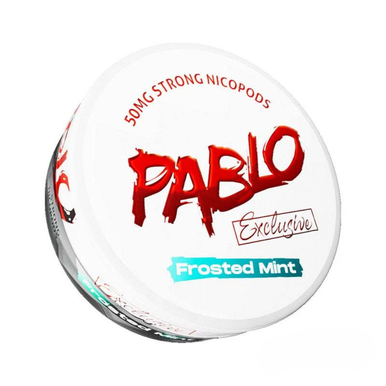
Pablo · 50mg
Read the full guide
Pablo Exclusive Frosted Mint Nicotine Pouches
£3.85
✔ In stock — ready to ship
100% tobacco-free
Free over £20
Same-day dispatch
Secure checkout
This page covers Pablo Exclusive Frosted Mint Nicotine Pouches, listed at £3.85, declared at a single strength of 50mg, marked in stock in our record as this was written, and filed under one flavour tag: mint. That is the whole of the product record. There is no fuller version of it held elsewhere, and nothing on this page has been imported from a source we are unwilling to name.
Working from a six-field record means a page like this has two honest modes. It can describe the object, the format and the shelves it sits on, which are things we can see. Or it can say that something is not known. What it cannot do is fill the gaps with confident-sounding sentences, and there are more gaps here than a typical product page admits to. Portion count, pouch weight, tin dimensions, moisture level, how this compares with the can next to it on the shelf — none of that is in our data, and each time one of them comes up below, the answer is the same unsatisfying one.
The full guide to Pablo Exclusive Frosted Mint Nicotine Pouches
5,161 words on how it eats, who it suits, how to serve it and what to put beside it.
What the Frosted Mint can actually is
The object is the shallow round tin used across this category. The lid lifts clear and presses back onto a lip, and its face carries the Pablo name, the Exclusive line, the flavour and the milligram figure, printed so it can be read with the can still in a stack. Inside, pouches lie flat in a ring. The underside of the lid is a shallow hollow with a raised edge — the catch compartment, which exists for used pouches and is one of the few genuinely thoughtful pieces of design in the format.
Three shelves hold the listing: our extra strong band at 98 listings, the Pablo range page at 56, and the mint flavour grouping, which runs to 148 listings and is the largest single flavour shelf on the site.
This is an adult nicotine product, sold to people aged 18 or over who already use nicotine. The full wording is at the foot of the page.
Mint with a temperature word attached
The name of this can is built from two parts that do different jobs, and separating them is the clearest way to describe what it is. Mint is the taste word: it names a flavour family, and it is also the single tag our record holds against the listing, so on this can the name and the data agree. Frosted is not a taste word. It describes a temperature impression laid over the mint rather than a second flavour sitting beside it.
Read that way, the structure is mint first and cold second. The leaf is what the can is announcing, and the frost is the treatment applied to it. In practice a mint built on that order tends to read greener and rounder at the front than a can that leads with cold — there is a recognisable leaf character to taste rather than a sensation with a flavour somewhere behind it — with the cooling arriving as a frame around the mint rather than in front of it. The aroma from an open tin follows the same sequence: the herb note first, the sharpness a moment later.
That is a reading of a name, and it needs a large caveat, which is the honest centre of this section. The Pablo Exclusive line contains a second can called Frosted Ice. Against that listing our record holds £3.85, 50mg, in stock, and one flavour tag reading mint — which is, field for field, identical to what it holds against this one. Two separate listings, two separate pages, and nothing in our data distinguishes them except the name.
We are not going to invent a tasting note to justify the second page. What we can do is point at the difference in the names themselves, which is real even if it is only a difference in wording: this can puts the leaf in the name and qualifies it with a temperature; the other one names temperature twice and never says mint at all. In this category that word order usually signals where the emphasis sits, and that is the basis for saying this one is likely the more leaf-forward of the pair. It is an inference from naming convention. It is not a measurement, we hold no measurement, and anyone who needs the question settled properly will have to hold both cans rather than read a paragraph about them.
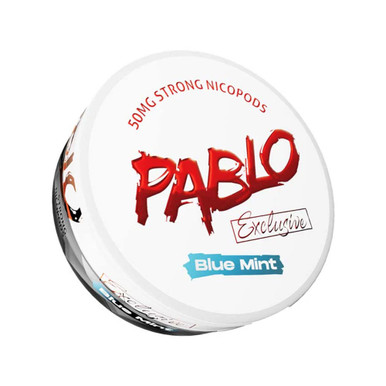
There is a third mint-tagged can in the same line, and it is worth naming here for contrast rather than leaving to a later section. Blue Mint, also £3.85 and in stock, is the one that attaches a colour to the leaf instead of a temperature — which tells you nothing about how cold it is and at least does not overlap with either of the frosted pair in the way they overlap with each other.
One more distinction is worth drawing, because it explains why two people can describe this can in flatly contradictory terms without either being mistaken. Mint contributes a taste. A cooling element contributes a sensation. They are separate things that happen at the same time, and which of the two a person notices first varies enormously. Ask one person about a can like this and you get a description of a green, herbal flavour; ask another and you get a description of cold, with the flavour treated as a detail. Both are describing the same tin. Our record, holding one word, takes no position on which of the two is doing the heavier work.
Flavour is subjective and this is a description rather than a specification. The only part of it that comes from the record is the word mint.
The pouch, handled as an object
A pouch from this tin is a small pale rectangle with rounded corners, soft, and light enough to be lost in a closed hand. How many are in the can, what one weighs and how wide the tin is are all printed on the packaging and absent from our record, so we will not estimate any of them. Where the can and our data disagree, the can is right; where our data is silent, as it is here, the can is the only source.
Moisture level is the property people ask about most and the one we can say least about. Pouches across this category range from noticeably dry to distinctly damp, and our record does not place this line anywhere on that scale. A drier pouch holds its shape like a small firm cushion and settles more slowly once seated. A damper one feels softer, slightly cool between the fingers, and conforms faster. Neither behaviour is superior; people have firm preferences in both directions and those preferences do not track the flavour.
Seated under the upper lip, a pouch stays where it is put. The usual first impression is more bulk than expected, fading within a minute or two as it takes the shape of the space. After that it is unremarkable to keep in place, and people talk and drink with one seated without much thought. Whether to eat with one in is a matter of individual practice and not something a shop should be turning into a rule.
Duration has no correct answer. The real spread runs from around ten minutes to the better part of an hour, and the same person varies across a day. We will not publish a figure, because a duration printed by a retailer reads as instruction. The flavour arc, though, is a property of the product rather than the person: it arrives, holds through a middle stretch, and thins to a trace. On a cold-framed mint the cooling and the taste often fade at different rates, and the point at which nothing identifiable remains is what most people treat as the signal to change.
Removal is done with a fingertip, and the used pouch goes into the lid well. That hollow holds several before it needs emptying, which is what makes the tin workable on a train or in a passenger seat. When it fills, the contents go into general waste — not a sink, not a drain, not the ground. Used pouches are small, pale and easy to lose track of on a desk, which is the practical reason the tin should be closed and out of reach of children and pets whenever it is not in use.
Reading 50mg off the lid
This listing declares 50mg and publishes no other variant. The figure is a manufacturer's declaration printed on the packaging, which we reproduce in the listing exactly as supplied. It is a label value: not a score, not a rating, not a grade, and not a measure of how well made a can is.
We want to be plain about the framing this range tends to attract, because it is wrong and we would rather not leave it implied. A larger figure is not better. It is not more advanced, not a target, not a level, and not an achievement of any kind. There is nothing here to work up to and no progression built into our shelves — the bands are a filing system so that a catalogue of this size can be browsed, and a listing in one band is not a senior version of a listing in another.
Equally, the number describes nothing you would taste. It carries no information about flavour, portion size, moisture, or how long a pouch holds its character, and it does not transfer meaningfully between manufacturers, because format and construction vary independently of the printed figure. Comparing two brands on their declared numbers alone is the most common mistake made when moving between lines, and our record holds no comparative data that would let us do it responsibly on anyone's behalf.
The bands themselves are simple. There is a medium band, a strong band, and the extra strong shelf this can files under. A listing lands in one because of the figure its manufacturer declared and for no other reason. We cannot advise which strength suits anyone. We hold no information about any individual reading this, and a product page is not a place where that question can be answered responsibly. What we can do is print the declared figure accurately and leave the decision alone.
How this can sits against the rest of the shelf
This is the longest section on the page. It exists because the most useful thing a shop can offer about a can with a six-field record is context — what else is on the shelf, what each of those does differently, and where the honest limits of the comparison are. What follows compares listings on the things we actually hold: name, brand, price, declared figure, flavour tag and stock state. It does not rank them, because we have nothing to rank them on.
The limits of comparing cans on our data
Start with the constraint, because it shapes everything after it. Our record holds no tasting notes, no coldness scale, no moisture rating, no portion counts and no measure of intensity for any listing on the site. Two cans can share a flavour tag, a declared figure and a price and still be entirely different objects in the hand, and nothing in our data would show it. When this section says one can is "cooler" or "sweeter" than another, that is a reading of names and flavour families offered as a reading — never a specification, and never something we could evidence from the record.
There is also a pricing oddity worth naming before the comparisons start, because it looks like an error and is not one we can explain. This can is £3.85. Several of the cans below are £39.90. Our cans-per-pack field is empty for every one of them, which means we hold nothing that would tell you whether that gap represents a single tin against a multi-can pack, a different tin size, or simply different pricing. We are flagging the gap rather than explaining it, because the explanation would be a guess.
Other cold mints we stock
The closest comparisons by naming convention are the cans that also put a temperature word next to the leaf. Denssi Cold Mint at £39.90, in stock, is the plainest version of that construction on the shelf. Clew Cool Mint at £39.90, also in stock, pitches its temperature word a degree gentler, and Klint Arctic Mint at £36.90, in stock, pitches it considerably harder. All three name the leaf and qualify it, which is the same structure this can uses.
Two take a different approach to naming. Elf Bar Cool Storm at £29.90, in stock, never uses the word mint at all and describes a sensation instead, which makes it the odd one out among the cold cans rather than a close relative. Edge Mint at £14.95, in stock, goes the other way and attaches no temperature word whatsoever, so on names alone it is the most neutral mint in this group.
The obvious dark-and-cold comparison would be Iceberg Black Mint at £39.90, except that our record marks it out of stock. The link will show you the listing but you will not be able to order it today, and we would rather say so here than let you discover it at the basket.
What a shared flavour tag does and does not mean
Every can named in the section above carries the same single mint tag that this one does, and it is worth being explicit about how little that shared tag establishes. The mint shelf runs to 148 listings. They come from different manufacturers, in different tins, at different portion sizes, at declared figures spread across all three of our bands, and at prices from under fifteen pounds to nearly forty. The one thing they demonstrably have in common is that somebody filed each of them under the same word.
Tagging is a navigation tool. It exists so that a shopper who knows they are looking for a mint can narrow 148 candidates out of a catalogue of several hundred, and it does that job well. What it cannot do is imply that two cans sharing the tag are close relatives, and a product page that treats a shared tag as evidence of similarity is misusing its own filing system. When this page says one can resembles another, that judgement rests on the names, the brand and the price — never on the fact that both were filed in the same folder.
Cans that are not trying to do the same thing
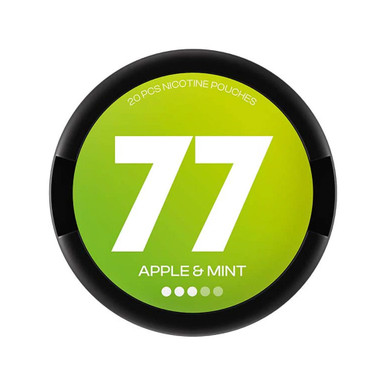
A shelf comparison is more useful when it includes the cans that are genuinely unlike this one, because those are the ones worth keeping beside it rather than instead of it. 77 Apple Mint at £39.90, in stock, keeps a mint structure but puts a crisp green fruit in front of it, which changes the whole shape of the flavour while leaving the framework recognisable. Cuba Black Apple Juice at £39.90, in stock, drops the mint entirely for a pressed-fruit flavour; the wider range it belongs to sits on the Cuba brand page.
Killa Banana Ice at £33.50, in stock, is a soft creamy fruit under a cold layer — the same cooling idea applied to something with no relationship to a leaf. And Fumi Dark Spice at £27.90, in stock, is the furthest thing from this can on the list: warm and spiced where this is green and cold, which is exactly why it makes a sensible second can rather than a rival to the first.
Frosted Mint's place on the Pablo shelf
Pablo runs to 56 listings on the page that collects the brand, and the Exclusive line is the section of it this can belongs to. The practical advantage of staying inside one line is that the variables hold still: the same tin, the same £3.85, and in this part of the range the same declared figure, which leaves flavour as the only thing that moves. Comparing two cans inside a line is a far more meaningful exercise than comparing across brands, where four things change at once.
Within the line, this can sits at the cold end alongside the two mints already discussed. Everything else in the Exclusive range that we link from this page is fruit or confectionery. Banana Ice at £3.85, in stock, puts a cold layer over a soft creamy fruit — the same treatment this can applies to a leaf, applied to something quite different. Blueberry Peach Ice, same price and also in stock, does it with two fruits at once.
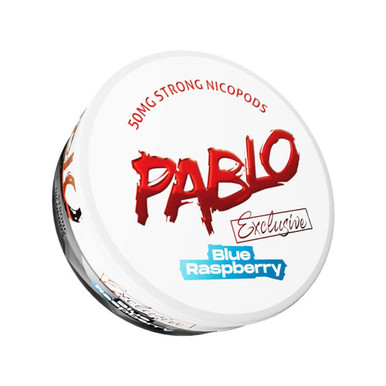
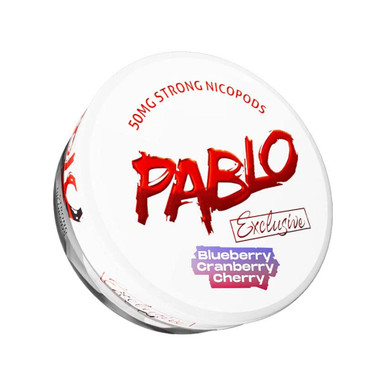
Away from the cold cans, Blue Raspberry at £3.85 is the line's bright confectionery-register fruit, the Blueberry Cranberry Cherry can at the same price runs three fruits together with a tart cranberry edge, and Pablo Exclusive Bubblegum leaves fruit behind for a sweet-shop flavour. All are marked in stock, all £3.85, and the line extends well past the seven cans named on this page — the brand page is where to see the remainder.
Looking after a tin
This is the section that changes how a can performs, and it is the one most often skipped. A tin that has been kept badly does not taste the way it did when it was opened, and a large share of complaints that begin "this one was disappointing" turn out on questioning to be about handling rather than about the product.
What actually changes in a can over time
Two things drift. The first is moisture, which only ever moves in one direction — out — and which a press-fit lid slows rather than stops. The second is the volatile, aromatic part of the flavour, which is the part you meet first when a tin is opened and the part that thins first when it has been left open. That second point matters more for a mint can than for a fruit one. The green, herbal character at the front of a mint is carried almost entirely by aroma, so a mint that has been left open tends to lose its most recognisable quality early while the cooling impression is still present. The result is a can that reads flatter and colder than it did — the frost outlasting the leaf.
That is the specific failure mode worth knowing about for this listing, and it is the reason the single most valuable habit is the least interesting one: press the lid home all the way round, every time, rather than tipping it back on at one edge.
A survey of bad places to keep a can
Heat is the fastest way to change a tin, and it is easy to do accidentally. A dashboard in summer, a windowsill in direct sun, a coat pocket hung against a radiator, the top of a laptop that has been running all day. All reach temperatures that alter how a can behaves, and none of it reverses when the tin cools again.
Damp is the less obvious one, and it is worth its own mention because people reach for it as a solution. A bathroom shelf is a poor place for a tin, not because moisture is the enemy — a pouch losing moisture is the usual problem — but because repeated cycling between humid and dry is harder on a can than either condition alone, and a bathroom does that twice a day. A gym bag is bad for a related reason: warm, damp and then left in a cold car, which is the same cycling with more temperature swing on top.
What is left after eliminating those is unglamorous and sufficient: a drawer. Cool, dark, dry, closed, at a stable temperature, out of reach of children and pets. Nothing on our shelves needs more than that, and no storage product will improve on it.
Keeping several tins
At £3.85 a can, buying more than one at a time is a normal pattern, and it introduces a small stock-keeping question that is worth answering properly. Our record holds no expiry date, no batch date and no best-before figure for this listing, so we cannot tell you how long a sealed tin keeps. Whatever the manufacturer prints on the can is the authority, and if nothing is printed, we have no second source.
It is worth being clear that this is a real gap rather than an oversight we could close by looking somewhere else. Dating information of that kind is printed by the manufacturer for each batch, and a retail product record of the sort we keep holds the listing rather than the batch. That means no version of this page, however carefully written, could tell you how old the tin in front of you is or how long it has left. The can can tell you. We cannot, and a page that offered a confident figure here would be describing something it has no access to.
What follows from that is the same discipline you would apply to anything else in a cupboard. Keep sealed tins together, work through the oldest first, and open one at a time rather than having three on the go — three part-used tins age in parallel and all three are worse for it. Empty the catch compartment as a routine rather than when it overflows, since a well full of spent pouches sits directly above the fresh ones every time the lid goes back on.
What there is to decide
Less than a product page usually pretends. This listing has one variant: 50mg at £3.85. There is no alternative figure, no larger tin and no multi-can option attached to the record, so a different figure means a different listing rather than a different option here.
The cans-per-pack field is empty, which is a genuine gap rather than a display quirk — we cannot tell you from the record what £3.85 buys beyond one listed unit. Given that, the only real decision is how many to order at once, which is a storage question, and the section above covers what a sealed tin wants from the place you keep it.
Ordering it, and what happens at the door
The can goes into the basket at the listed price and checkout collects a delivery address, with an age check running as part of that process. We do not sell to anyone under 18, and the check applies regardless of order size.
ID may be requested on delivery. If it is requested and no adult at the address can produce it, the parcel will not be handed over. That is worth thinking about in advance where the delivery address is a workplace, a neighbour, or anywhere a parcel might be taken in by someone other than the person who ordered it.
Delivery timings, courier arrangements and live availability are held at checkout rather than written into this copy, deliberately, since a delivery promise in a product description goes stale within a week. The stock flag quoted here was accurate when the page was written, a caveat that applies across the whole catalogue.
Where this page sits on the site
Three routes lead back here dependably. The Pablo brand listing is the most direct for anyone who navigates by manufacturer. The mint shelf with its 148 entries is the flavour route, though its size means it usually needs narrowing before it is useful.
The third is the 98-listing extra strong band, which is the broadest and least specific of the three since it gathers every brand and flavour declaring a figure in that range. If none of those matches how you browse, every listing on one page is the fallback.
Which route is most useful depends on what you are actually holding constant. Someone who has settled on this brand and wants to move around inside it is best served by the range page, where the tin and the price stay the same and only the flavour changes. Someone tracking a flavour across manufacturers wants the mint shelf, accepting that it will need narrowing. The band page is the least useful of the three for most purposes, because a shared declared figure is the weakest thing two cans can have in common — it tells you what is printed on two lids and nothing about either product. We list it because people do browse that way, not because we think it is the best way to browse.
Questions we are asked about this one
What is the difference between Frosted Mint and Frosted Ice?
In our record, nothing. Both carry £3.85, 50mg, in stock and a single mint tag. The only distinction we can point to is the naming: this one puts the leaf in the name and treats the cold as a qualifier, while the other names temperature twice and omits mint entirely. That suggests where each places its emphasis, but it is a reading of two words rather than data, and we will not dress it up as more.
Which type of mint is it?
Our record does not specify. The tag is the single word mint with no sub-type recorded, so we cannot tell you whether the can is built on spearmint, peppermint or menthol. Choosing one of those for you and printing it would be inventing a fact. The manufacturer's labelling on the can is the authority.
Is it very cold?
We have no way of answering that. There is no coldness measure in our data and no scale we could place listings on, so any ranking we offered would be made up. The word frosted in the name indicates a cooling element is part of the design; how pronounced it is relative to any other can is something only holding both will settle.
How many pouches does a tin hold?
We do not hold that figure. The portion count is printed on the packaging by the manufacturer and our record does not duplicate it, so an estimate from us would only compete with a number already on the can. The same applies to the weight of an individual pouch.
Is 50mg a strong one?
It is the figure the manufacturer declares, and it files this listing in our extra strong band. We will not go further, because characterising a number is a step toward telling a person what to pick, and we cannot advise which strength suits anyone. The figure is label information about a product, not a judgement about a reader.
Can I get this flavour at a lower strength?
Not through this listing, which publishes one declared figure and no variants. Other mint cans across the catalogue carry their own figures on their own pages, but we do not hold a matched lower-strength version of this specific product.
Why do some mint cans cost ten times as much?
We cannot account for it from the record. The pack-size field is empty for this listing and for the more expensive ones, so we hold nothing that would show whether the difference reflects a multi-can pack, a larger tin, or different pricing. Publishing a theory as though it were an answer would be worse than saying we do not know.
Does a mint can go off faster than a fruit one?
We have no data on shelf life for any listing, so we cannot make that claim. What is fair to say is that the green, herbal part of a mint is carried largely by aroma, and aroma is what thins first in a tin left open — so a neglected mint can tends to lose its most recognisable quality noticeably. That is a description of how people report it, not a measured difference.
Should I keep tins in the fridge?
Some people do. We hold no manufacturer guidance on refrigeration for this line, so we will not recommend it or argue against it. The one practical note is that a cold tin brought into a warm room collects condensation on the outside, so let it reach room temperature before taking the lid off.
Is the catch compartment meant to be emptied often?
It works better if it is. The well holds several used pouches, which is what makes the tin practical away from a bin, but a full compartment sits directly against the fresh pouches underneath every time the lid closes. Emptying it as routine rather than at capacity is the difference between a tin that is pleasant to open on day ten and one that is not.
If two cans share the mint tag, are they similar?
Not necessarily, and the tag is a weak signal on its own. The mint shelf holds 148 listings from many different manufacturers, in different tins, at declared figures spanning all three of our bands and at prices from under fifteen pounds to nearly forty. The tag tells you which folder a listing was filed in so a large catalogue can be narrowed down. It does not establish that two cans in the folder resemble each other.
Why does this page keep saying you do not know things?
Because the alternative is inventing them. Our product record carries six fields, and a page of this length written from six fields will either describe the object and the shelves honestly or start filling space with confident-sounding detail that has no source. For an age-restricted product the second option is not available to us. Where a reasonable question runs past the edge of what we hold, saying so is the answer rather than a failure to give one.
Is the availability shown here current?
No. The stock flag quoted on this page was right at the time of writing and is the one fact that changes without the page changing, so the listing itself is the live position. Of the cans mentioned above, the one we know to be unavailable is the Iceberg dark mint listing, flagged where it appears.
Compliance, set out in full
Nicotine is an addictive substance.
Pablo Exclusive Frosted Mint Nicotine Pouches are sold only to adults aged 18 or over who already use nicotine. An age check runs at checkout, we do not sell to anyone under 18, and ID may be requested on delivery. Where it is requested and no adult at the address can produce it, the parcel will not be handed over.
This product is not a licensed stop-smoking medicine and holds no authorisation of that kind. It is not intended for non-smokers, for anyone who does not already use nicotine, for anyone under 18, or for anyone who is pregnant or breastfeeding. Nothing on this page is medical advice, and nothing on it should be read as encouraging anybody to begin using nicotine or to choose any particular declared strength.
Keep the tin closed and out of reach of children and pets, and dispose of used pouches in general waste. Every fact above — name, brand, price, declared strength, flavour tag and stock status — comes from our own product record for this listing. Where the record holds nothing we have said so rather than estimating, and the manufacturer's labelling on the can is the authority for anything printed on the packaging.
In summary
Frosted Mint is a mint can with a temperature word attached to it, listed at £3.85, declared at 50mg, and in stock as this was written. It sits on the extra strong band, the Pablo range and the mint shelf. Its nearest neighbour by naming convention is the Denssi cold mint listing at £39.90, and its nearest relative by record is the Frosted Ice can in this same line, from which our data does not separate it at all — a limitation we have stated rather than covered over. Everything we know is on this page, and the several things we do not know are marked as such.
More from Pablo
More extra strong pouches
More mint pouches
Where this sits
Pablo Exclusive Frosted Mint Nicotine Pouches appears in these categories. Browse them, or jump to something close.
You might also like