Home / Extra Strong / Pablo Exclusive Frosted Ice Nicotine Pouches
Pablo · 50mg
Read the full guide
Pablo Exclusive Frosted Ice Nicotine Pouches
£3.85
✔ In stock — ready to ship
100% tobacco-free
Free over £20
Same-day dispatch
Secure checkout
This is the page for Pablo Exclusive Frosted Ice Nicotine Pouches. The listed price is £3.85. One strength is declared against it, 50mg, and our record marks the can in stock as this was written. The single flavour tag we hold for it is mint. Those six items are the entirety of the product record. No seventh fact exists behind the scenes, and nothing on this page has been filled in from a source we cannot name.
That constraint shapes the page more than it might sound. There are questions about this can that a shopper would reasonably expect answered here — how many pouches in a tin, how cold is cold, how it measures against a rival can — where the honest answer is that our record does not carry it. We write that answer rather than a confident one. An age-restricted product is not the place to be creative with facts, and a page that admits its own gaps is more use than one that papers over them.
The full guide to Pablo Exclusive Frosted Ice Nicotine Pouches
5,322 words on how it eats, who it suits, how to serve it and what to put beside it.
Pablo Exclusive Frosted Ice: the listing in short
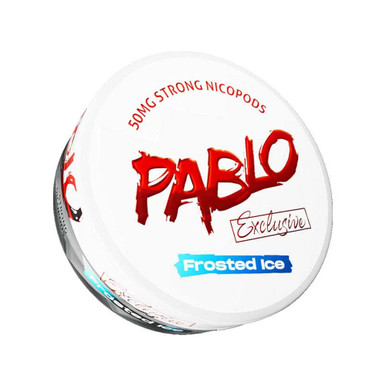
The can is the standard shallow round tin used across this whole category: a lid that lifts clear and presses back down onto a lip, the brand name and the Exclusive line on the face, the flavour name beside it, and the milligram figure printed where it can be read without opening anything. Inside, the pouches sit flat in a ring. The underside of the lid is a shallow hollow with a raised edge, which is the catch compartment for used pouches.
Three shelves hold this listing. It is in the extra strong band, currently 98 listings; on the Pablo brand page with 56 other Pablo lines; and in our mint grouping, which at 148 listings is by a distance the largest flavour shelf we run.
This is an adult nicotine product, sold on the basis that the buyer is 18 or over and already uses nicotine. The full wording is at the foot of the page and applies to everything above it.
A name that describes temperature, and a tag that describes taste
There is something worth pointing out about this can's name before describing anything, because it is the honest starting point. Frosted Ice contains no taste word. Frosted is a temperature word and ice is a temperature word, and between them they tell you the can is built around cold and tell you nothing whatsoever about what it tastes of. The taste word is supplied by our record, not by the name: the single flavour tag filed against this listing is mint.
So what you have is a can named for its sensation and tagged for its flavour family, and the two halves have to be read together. Our data does not narrow it further than that. It does not say spearmint, it does not say peppermint, it does not say menthol, and we are not going to pick one of those three on your behalf and print it as though it came from the record. The can in your hand carries whatever the manufacturer chose to state; that is the authority, and our tag is a filing decision rather than a description.
What can be said about the naming convention, offered as a reading rather than a fact, is that in this category the word order tends to signal where the emphasis falls. A name that leads with cold and never mentions a leaf is generally pointing at a can where the cold is the headline and the mint is the carrier underneath it — a clean, sharp, almost transparent cold rather than a sweet green leafy one. The aroma from an open tin of something built that way is more sharpness than sweetness, with very little in the way of a herb note in front of it. That is what the name of this can suggests it is doing.
We are flagging that as interpretation deliberately, because the Pablo Exclusive line contains a second can whose name is nearly a synonym, and the difference between them is exactly the kind of thing that gets invented on product pages. Our record holds the same single mint tag, the same £3.85, and the same 50mg against both. On the data, the only thing separating Frosted Ice from its near-namesake in the same line is the name itself. We will come back to that in the section on the range, because it deserves a straight answer rather than a paragraph of confident nonsense.
It is worth separating two things that often get run together when people describe a can like this, because they are not the same and the difference is the whole of what a cold-named can is doing. One is flavour, which is what you taste. The other is the cooling sensation, which is a physical impression rather than a taste and which can be present in a can whose flavour is almost neutral. A name built out of two temperature words is pointing hard at the second of those. Whether the first is doing much work alongside it is not something our record can settle, and it is the single most common reason two people describe the same cold can in completely different terms — one is answering about the flavour and the other about the sensation, and neither is wrong.
There is also the matter of what frosted adds to ice, given that both words point the same way. Our honest answer is that it probably adds emphasis rather than information. Doubling a temperature word is a naming habit in this category rather than a technical distinction, and reading a second, separate property into the word frosted would be inventing something. We mention it because it is the kind of detail a product page is tempted to over-explain, and the tempting explanation here would be made up.
One further limit: flavour is subjective, and this section is a reading of a name by people who sell the product. Yours may land differently, and if it does, the record does not contradict you — the record only ever said mint.
50mg, read as a number printed on a lid
The milligram figure is the most-looked-at and least-understood thing on a can, so this section deals with it at length. Frosted Ice declares 50mg and publishes no second variant at a different figure. What follows is information about what that number is and is not. None of it is a recommendation.
Where the number comes from
The figure is declared by the manufacturer and printed on the packaging. We reproduce it in the listing exactly as supplied. It is a label value and nothing more elaborate than that. We do not measure it, verify it, or convert it into anything else, and where a manufacturer states it differently on a different line we publish their version rather than normalising it into ours.
Because it is a label value, it is not a score. It is not a rating out of anything, not a quality grade, and not a mark of how well made a can is. A larger printed figure does not indicate a better product, a more refined flavour, or a more serious version of the same thing. Two cans can carry very different figures and be identical in every respect that determines whether you enjoy one.
The framing we will not use
This range attracts a particular way of talking, and we want to be direct about refusing it. A higher figure is not an achievement. It is not a level. It is not a challenge, a milestone, a rite of passage, or something to build toward. There is no ladder here in the sense of a thing to climb — the bands on this site are a filing system, not a progression, and a listing in one band is not an advanced version of a listing in another.
Nor is there a smaller-to-larger story to tell about any individual. We hold no information about anybody who reads this page and we have no way of forming a view about them. We cannot advise which strength suits anyone. That sentence is the whole of our position on the subject, and it is not softened anywhere else on this page.
What the figure does not describe
A number on a lid says nothing about taste. It says nothing about how long a pouch holds its flavour, how large the portion is, how dry or damp the pouch feels, or how any of that compares with a can from another maker. Those are independent variables. Reading across two brands on the declared figure alone is the most common error people make when they move between lines, precisely because the figure looks like the one comparable thing and is in fact the one thing that carries no information about the experience of a can.
Our record also holds no comparative data — nothing that would let us rank listings against each other on anything beyond the printed figures. When a page on this site sets two numbers side by side, that is all it is doing.
Why we print the figure at all
Given how much of this section is spent explaining what the number does not mean, it is fair to ask why we lead the listing with it. The answer is that it is declared information about the product and withholding it would be worse. A manufacturer prints a figure on a can; a shop that stocks that can should show the same figure in the same terms rather than hiding it behind a band name or a vague word. People are entitled to read the label before they buy, and the listing is the only place they can do that before the tin is in their hand.
What we try not to do is dress the figure up. It appears in the specification where a specification belongs, it determines which band the listing files under, and it does not appear anywhere on this page as a selling point, a boast or a reason to prefer this can over another. That is a deliberate line and it is the reason several paragraphs here read flatter than product copy usually does.
How the bands are organised
Listings are sorted into bands so the catalogue can be browsed. We run a medium band, a strong band, and the 98-listing extra strong shelf that holds this can. A listing lands in a band because of the figure its manufacturer declared, full stop. There is no editorial judgement in the sorting and no implied ordering of merit between the three. If you want to see the full spread of figures we carry without the bands in the way, the complete catalogue is one page.
What there is to decide on this listing
Very little, and inventing a decision would be dishonest. There is one variant: 50mg at £3.85. No alternative figure is attached to this product record, no larger tin, no multi-can option. A different figure means a different listing.
On quantity, the cans-per-pack field in our record is empty for this product. That is a real gap rather than a formatting quirk, and it has a visible consequence when you browse: several mint cans elsewhere on the site are listed at £39.90 against this one's £3.85, and because we hold no pack-size data for either, we cannot tell you whether that gap is a multi-can pack, a different tin, or different pricing. We would rather leave that unexplained than explain it with a guess.
So the only real choice attached to this page is how many tins to buy at once, which is a question about where you are going to keep them more than anything else.
The format itself, from seating a pouch to emptying the lid
This is the longest section here, because the format is the part of the product that is genuinely the same across the whole category and therefore the part where a detailed description is actually useful rather than promotional.
The portion in the hand
A pouch from this tin is a small soft rectangle with rounded corners, pale, light enough to disappear in a closed fist. Our record does not state the portion count in the can, the weight of a single pouch, or the dimensions of the tin. Those are printed on the packaging by the manufacturer and our data does not duplicate them, so we are not going to estimate. If a number is stamped on the can and missing from our record, the can is right and we are silent.
What can be described is the handling. Pouches in this category come in a range of moisture levels — some lines noticeably dry, some distinctly damp — and where any particular can falls is something the can tells you and our record does not. A drier pouch holds its shape like a small firm cushion and takes a little longer to settle. A damper one feels softer and slightly cool between the fingers and conforms faster. Neither is better. They are different behaviours, and people are firmly divided about which they prefer.
How it sits once it is in
A pouch is seated under the upper lip and stays put. The usual first impression is that a fresh one feels bulkier than it looked in the ring, and that the impression fades inside a minute or two as it takes the shape of the space it is in. After that it is unremarkable to hold in place. People talk with one seated and drink with one seated. Some eat with one in and some take it out first; that is a preference, and we are not going to publish a preference as though it were guidance.
Where the pouch is placed is likewise a matter of individual practice rather than instruction. Some people keep to one side and stay there, some move it, some find that a can they have used for months suddenly feels different because they changed where they seated it without noticing. None of that is something a shop can usefully prescribe.
How long people keep one in
There is no single answer and we will not manufacture one. The honest spread is wide: some people change after ten minutes, others leave one seated for the better part of an hour, and the same person varies across a day, across flavours, and across whether they are busy or sitting still. Publishing a duration from a shop reads as instruction, and duration is not something we are in a position to instruct anybody about.
What is fair to describe is the arc of the flavour, because that is a property of the product rather than of a person. It arrives, holds through a middle stretch, then thins out until what remains is closer to a trace than a taste. With a cold-forward can the thinning has a particular character: the cooling sensation and the flavour do not always fade at the same rate, and a good number of people find the cold outlasts the taste rather than the other way round. Many treat the point where nothing identifiable is left as the moment to change, for the plain reason that a pouch with nothing in it is not doing anything anyone wanted.
The tin as something you carry
The format is not only the pouch; it is also the object the pouches come in, and that object has to survive a day in a pocket. The shallow round tin is about the footprint of a small jar lid and thin enough to sit flat rather than bulge, which is why it travels in a coat pocket, a jacket pocket or the small pocket of a bag without much thought. A trouser pocket works less well, not because the tin cannot take it but because the lid is a press fit and sustained pressure from the wrong angle is the most common way a lid comes loose.
That press fit is worth understanding as a piece of design rather than a flaw. It is built to be opened and closed many times a day with one hand, which rules out anything that seals tightly, because a tight seal is slow and awkward to work repeatedly. The trade-off is that the tin is resistant to casual opening rather than proof against it. A can rattling loose in a bag with keys in it can be found open later, and the contents of a tin that has been open in a bag all day are not in the condition they started in.
Our record holds no dimensions for the tin, so none of the above is offered as measurements. It is a description of a shape that anyone who has handled one will recognise, and the can in your hand is the authority on how big it actually is.
Taking one out, and the lid
Removal is a fingertip job. The used pouch goes into the well in the lid — the hollow under the top of the tin exists for exactly that, holds several before it needs dealing with, and is the reason the format works on a train, in a passenger seat, or anywhere else with no bin in reach. When the well fills, the contents go into general waste. Not a sink, not a drain, not a plant pot, not out of a window.
Used pouches are small, pale and very easy to lose track of on a desk or a car console, which is the practical reason for keeping the tin closed and out of reach of children and pets whenever it is not actually in a hand. That is the one piece of handling advice on this page that is not optional.
Storage, briefly
Keep the can cool, dark, dry and closed. That covers nearly all of it. Moisture only ever moves out of a pouch over time, so a tin left with the lid ajar will read duller and shorter a week later than it did on the day it arrived, and a lid pressed home all the way round rather than at one edge is the single cheapest thing you can do for a can.
Heat does more damage faster than dryness. A dashboard in summer, a coat pocket against a radiator, the top of a laptop that has been running all day — all are warm enough to change how a can behaves, and a tin that has been hot and then cooled does not come back. Direct sunlight is worth avoiding for the same reason. A drawer is enough; nothing on our shelves needs anything more elaborate than a drawer.
The catch compartment deserves one line of its own here, because it interacts with storage in a way people do not expect. A well left full of spent pouches sits directly against the underside of the lid, immediately above the fresh pouches in the ring below it. Emptying it as a matter of routine rather than when it overflows is the small habit that separates a tin that is pleasant to open on day ten from one that is not. Some people skip the well entirely at home and bin a used pouch straight away, keeping the compartment for occasions when there is genuinely no bin.
Our record holds no expiry date, batch date or best-before figure for this listing, so whatever the manufacturer prints on the can is the authority on dating. If you buy several tins at £3.85 each, treat them like anything else in a cupboard: oldest first, the rest closed and out of the light.
Frosted Ice within the Pablo Exclusive line
Pablo runs to 56 listings on the brand page collecting the range, and the Exclusive line is the part of it this can belongs to. Staying inside one line has a practical advantage: the tin, the price and — in this section of the range — the declared figure all hold still, so the only variable that moves is the flavour. That makes it much easier to form an opinion about a flavour difference than it is when you jump between brands and change four things at once.
Now the awkward one, promised earlier. This line also carries a can called Frosted Mint, and our record holds against it exactly what it holds against this one: £3.85, 50mg, in stock, one flavour tag reading mint. Two listings, same brand, same line, same price, same figure, same tag, different name. On our data, the difference between them is the name and nothing else. We are not going to fabricate a tasting note to justify two pages. What we can offer is the naming convention — this can leads with cold and never says mint, the other puts mint in the name — which suggests where each one places its emphasis, and which is a reading rather than a measurement. If the distinction matters to you, the honest route is to hold both cans, not to trust a paragraph.
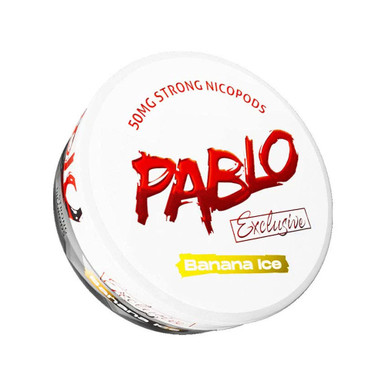
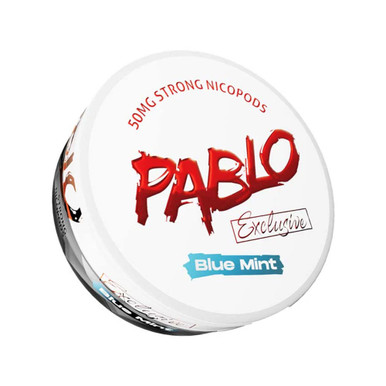
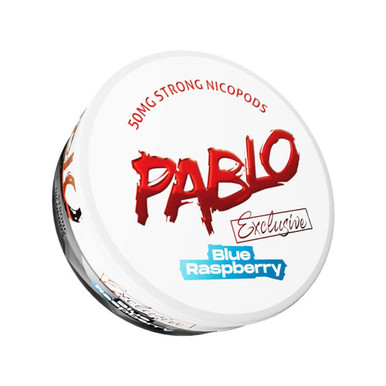
The same caution applies in a milder form to the Blue Mint can at £3.85, in stock, which is the line's third mint-tagged option and at least announces a colour rather than a temperature. Beyond the mints, the Exclusive line is mostly fruit: Banana Ice at £3.85 pairs a soft creamy fruit with a cold layer, Blue Raspberry at the same price is the bright confectionery end of the fruit range, and Blueberry Peach Ice puts two fruits under one cold note. All are marked in stock.
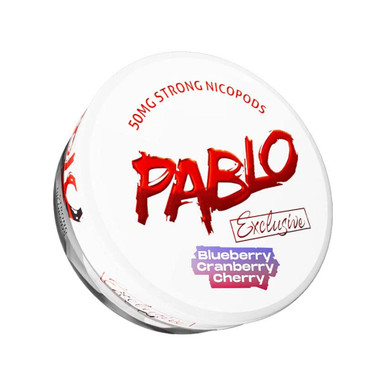
Further out again, the Blueberry Cranberry Cherry listing is the line's three-fruit can with a tart cranberry edge, and Pablo Exclusive Bubblegum leaves fruit behind entirely for a sweet-shop flavour. Both £3.85, both in stock. The line runs well beyond the seven cans this page names, and the brand page rather than this paragraph is where to see the rest.
What people keep beside a cold can
Rotation is the normal pattern. Two or three cans in circulation, changed by mood rather than by schedule, for the plain reason that a single flavour used continuously becomes less distinct and a second one with a different character resets it. Since this can sits in the biggest flavour grouping we run, there is a lot to rotate with.
Other cold cans on our shelves
Klint Arctic Mint at £36.90, in stock, is the closest thing in the catalogue to this can by naming convention — another listing that puts the cold in front of the leaf. Denssi Cold Mint at £39.90, also in stock, does the same thing with plainer wording, and Clew Cool Mint at £39.90 pitches the temperature a notch lower in its own name. Elf Bar Cool Storm at £29.90, in stock, is the one among them that does not use the word mint at all, which makes it the nearest parallel to this can's approach of naming a sensation instead of a taste.
Two more sit at the ends of the price spread. Edge Mint at £14.95, in stock, is the plainest-named mint on the shelf, and Iceberg Black Mint at £39.90 would be the obvious dark-and-cold comparison except that our record marks it out of stock. That link will show you the page; it will not let you buy the can today. Better to know that here than at the basket.
Deliberately different cans
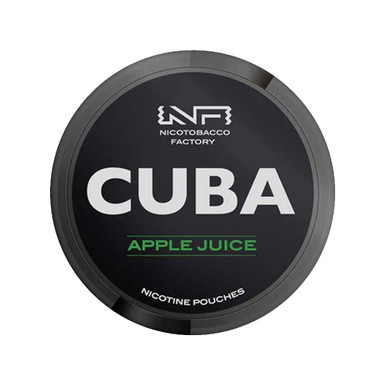
A rotation works better when the second can is not a near-miss of the first. 77 Apple Mint at £39.90, in stock, keeps a mint structure but puts a crisp green fruit in front of it, which is enough of a change to register. Cuba Black Apple Juice at £39.90, in stock, drops the cold altogether for a pressed-fruit flavour, and the wider Cuba range sits on its own brand page if that direction appeals.
Further still, Killa Banana Ice at £33.50, in stock, is a soft creamy fruit with a cold layer over it — a completely different flavour built on a familiar structure. And Fumi Dark Spice at £27.90, in stock, is the furthest thing from this can that we would seriously suggest keeping beside it: warm and spiced rather than cold and clean, which is precisely why it works as the other half of a pair.
Ordering, delivery and the age check
Ordering is the same as anywhere else on the site. The can goes into the basket at the listed price, checkout takes a delivery address, and an age check runs as part of that process. We do not sell to under-18s and the check is not waived for small orders.
ID may be requested on delivery. If it is requested and no adult at the address can produce it, the parcel will not be handed over. Worth planning around if the delivery address is a workplace, a neighbour's house, or anywhere a parcel might be taken in by somebody other than the person who ordered it.
Current delivery timings, courier arrangements and live stock all sit at checkout rather than in this copy, deliberately — a delivery promise written into a product description is stale within a week. The stock flag quoted on this page is the position at the time of writing, and that caveat applies across everything we list.
Finding your way back here
Three routes lead to this page reliably. The Pablo listings page is the most direct if you think in brands; all 56 are there and the Exclusive line is grouped within it. The 148-strong mint shelf is the route if you think in flavours, though it is a big shelf and worth narrowing.
The third is the extra strong band, which is the least specific of the three because it collects every brand and flavour family declaring a figure in that range. If none of those matches how you browse, the whole catalogue on one page is the fallback.
Questions people ask about this can
Which kind of mint is it?
Our record does not say. The flavour tag is the single word mint, with no sub-type recorded, and the product name supplies two temperature words rather than a taste word. We will not pick between spearmint, peppermint and menthol on your behalf and present the choice as information. The manufacturer's labelling on the can is the only authority on that point.
How is this different from the Frosted Mint can?
By name. That is the honest answer. Our record holds the same price, the same declared figure, the same stock state and the same single flavour tag for both listings, so we hold nothing that distinguishes them. The naming convention suggests this one leads with cold and the other leads with the leaf, but that is a reading of two words, not data.
Is it colder than other mint cans you stock?
We cannot tell you. There is no coldness measure in our data, no scale we could place cans on, and no comparative information of any kind in the record. Every can's own name and labelling is what you have to work with, and comparing two of them is something only holding both will settle.
How many pouches are in a tin?
Not something we hold. The portion count is printed on the packaging and our record does not duplicate it, so an estimate from us would only compete with the number already on the can in front of you. The same applies to pouch weight and tin size.
Is 50mg high?
It is the figure the manufacturer declares, and it places this listing in our extra strong band. We will not characterise it beyond that. Saying whether a number is high is a step toward telling a person what to choose, and we cannot advise which strength suits anyone.
Is there a lower-strength version of Frosted Ice?
Not on this listing. It publishes one declared figure and no variants. Other cans in the mint grouping carry their own figures on their own pages, but we do not hold a matched lower-strength version of this exact product.
Why is this £3.85 when other mint cans are £39.90?
We cannot explain it from the record. The cans-per-pack field is empty for this listing and for the others, so we hold no pack-size data that would account for the difference. It might be a single tin against a multi-can pack; it might not be. We are not going to publish a theory as an answer.
Does the cold fade before the flavour?
Many people report that it does not fade at the same rate as the taste, and with a cold-forward can the cooling often outlasts anything identifiable as a flavour. That is a common description rather than a measurement — we hold no timing data for this or any listing, and individual experience varies enough that a published figure would be misleading.
Where should I keep an open tin?
Somewhere cool, dark and dry, with the lid pressed home all the way round. A drawer is enough. The two things worth avoiding are heat and a lid left ajar, because both dry a can out faster than time alone does and neither is reversible once it has happened.
What do I do with used pouches away from a bin?
The lid well holds several. That hollow under the top of the tin exists for exactly this purpose, which is what makes the can practical away from home. When it is full, the contents go into general waste — never into a sink, a drain, or the ground.
Can I use the lid compartment for unused pouches too?
Nothing stops you, but it is not what the well is shaped for and most people who try it go back. The compartment has a shallow lip rather than a proper retaining edge, so a fresh pouch kept up there tends to move when the tin does, and it is sitting in the part of the can most exposed to air every time the lid comes off. The ring below is where fresh pouches keep best.
Does this can come in a larger tin or a multipack?
Not on this listing. One variant is published, at one price, and our cans-per-pack field is empty, which means we hold no information about pack formats for this product at all. If a larger format exists somewhere, it is not something our record knows about, and we would rather say that than imply the single tin is the only format in existence.
Is the stock position on this page live?
No. The stock flag quoted here was correct when the page was written, and stock is the one fact on it that changes without the page changing. The listing itself is the live position. Of the cans named above, the one we know to be unavailable is the Iceberg dark mint listing, flagged where it appears.
Compliance information in full
Nicotine is an addictive substance.
Pablo Exclusive Frosted Ice Nicotine Pouches are sold only to adults aged 18 or over who already use nicotine. An age check runs at checkout, we do not sell to anyone under 18, and ID may be requested on delivery. Where it is requested and no adult at the address can produce it, the parcel will not be handed over.
This product is not a licensed stop-smoking medicine and carries no authorisation of that kind. It is not intended for non-smokers, for anyone who does not already use nicotine, for anyone under 18, or for anyone who is pregnant or breastfeeding. Nothing here is medical advice, and nothing here should be read as encouraging anybody to begin using nicotine or to select any particular declared strength.
Keep the tin closed and out of reach of children and pets, and put used pouches in general waste. Every fact stated above — name, brand, price, declared strength, flavour tag, stock status — comes from our own product record. Where the record holds nothing we have said so rather than estimating, and the manufacturer's labelling on the can is the authority for anything printed on the packaging.
To finish
Frosted Ice is a can named twice over for cold and tagged once for mint, listed at £3.85 with a single declared figure of 50mg and marked in stock as this was written. It sits on the extra strong band, the Pablo brand page and the mint shelf. Its nearest neighbour on our shelves by naming convention is the Klint arctic can at £36.90, and its nearest relative by record is the Frosted Mint listing in the same line, from which our data does not distinguish it at all. Everything we know is on this page, and the several things we do not know are marked as such.
More from Pablo
More extra strong pouches
More mint pouches
Where this sits
Pablo Exclusive Frosted Ice Nicotine Pouches appears in these categories. Browse them, or jump to something close.
You might also like