Killa · 16.5mg
Read the full guide
Killa Exclusive Tropical Punch Nicotine Pouches
£33.50
✔ In stock — ready to ship
100% tobacco-free
Free over £20
Same-day dispatch
Secure checkout
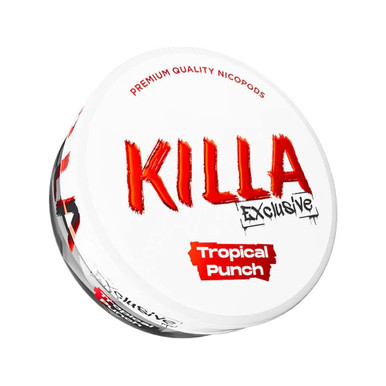
Killa Exclusive Tropical Punch Nicotine Pouches are catalogued here at £33.50. One declared figure appears on the label — 16.5mg — and the listing holds a single variant at that figure and that price. Nothing else is configurable. Our record marks the product as available as this text is prepared, and one photograph of the can is held against it.
That short paragraph contains every fact we have. The rest of this page works with those facts rather than around them, and where our record has a hole in it the page names the hole. There are three such holes on this listing, and each is set out below where it becomes relevant rather than being buried at the end.
The full guide to Killa Exclusive Tropical Punch Nicotine Pouches
4,997 words on how it eats, who it suits, how to serve it and what to put beside it.
Killa Exclusive Tropical Punch: what the listing actually says
Three words on the can, and what each one is doing
The title has a brand word, a line word and a flavour phrase in it, and they are three different kinds of statement. Separating them out first saves confusion later.
Killa is the manufacturer's trade name. It is the word the maker prints on its cans, in the same way that every other brand in this catalogue prints one. A trade name describes the company's identity, not the contents of the tin, and nothing on this page treats it as a claim about the product. We file it as a brand and nothing else, which is why the can appears on the shelf we keep for this brand, currently 31 listings deep.
Exclusive is a range name inside that brand. Manufacturers across this category habitually split their catalogues into named lines, and this is one of those. We hold no statement from the company about what the word is supposed to mark — a flavour set, a production run, a packaging style, or nothing at all — so there is no explanation here. It is on the label, so it is in our title.
Tropical Punch is the flavour phrase, and it is the only part of the three that is describing what is inside. Our own classification holds a single term for this can, tropical, which files it on the tropical shelf alongside 57 other listings.
Placing this one on four axes
Rather than write a tasting note we have no authority for, it is more useful to describe the space the flavour sits in. Four axes cover most of what people actually mean when they describe a can: how cool it is, how sweet, how sharp, and how bitter. What follows locates the tropical family on each, and then says which of them our data settles for this particular can and which it does not.
The cool axis
Cooling is the axis that varies most within this category and the one that changes a flavour's character most decisively. A cool element is not a taste in the ordinary sense; it is a sensation that sits underneath the taste and stretches it out, making a flavour feel longer and thinner than the same flavour without it. Names in this category signal cooling with words like ice, freeze, frost, chill and arctic.
None of those words is on this can, and our classification holds no mint or ice term for it. On the evidence we have, this is a fruit construction without a declared cooling element. That is an inference from an absence rather than a positive fact, and an absent tag is weaker evidence than a present one, so the can is the last word. But it is a reasonable reading, and it is what separates this listing from the several ice-tagged fruit cans elsewhere in the catalogue.
The sweet axis
Tropical fruits are, as a family, the sweetest group of flavours in general use — mango, pineapple, passion fruit, guava and papaya all sit high on this axis before anything is done to them. A "punch" construction usually sits higher still, because the convention it borrows from is a mixed fruit drink rather than a single fruit. It would be surprising if this can read as restrained on sweetness, and it would be dishonest of us to state as a fact that it does not, since we hold no note either way.
The sharp axis
Sharpness is acidity — the citrus edge that stops a sweet flavour from becoming cloying. Tropical constructions almost always carry some, because pineapple and passion fruit bring their own and because most fruit-punch conventions include a citrus component. Sharpness is what makes a sweet flavour read as fruit rather than as confectionery, and its absence is usually what people mean when they say a fruit note tastes artificial.
The bitter axis
Bitterness is the axis where tropical sits lowest. It matters in coffee constructions, in some herbal and liquorice notes and at the back of certain dark berries, but a tropical punch has very little use for it. If you are after bitterness as a counterweight, this family is the wrong place to look for it, and the coffee end of our catalogue is the right one.
What "punch" tends to signal
The word is borrowed from drinks, where a punch is a mixture rather than a single fruit. Applied to a flavour name it generally signals that several fruit notes are present and that no one of them is meant to dominate. It does not tell you which fruits, and our record does not either — we hold the single family term and no component list. If you want a can where the specific fruit is named and known, a single-fruit listing is the more predictable choice; if the appeal of a mixture is that it is not one thing, this is the construction for it.
What we will not do here
We do not publish tasting notes written in-house. Everything above describes the family and the naming conventions around it, which is information, and stops short of telling you what this can tastes like, which would be invention. Nobody at this shop has a mandate to describe a flavour you can buy and judge yourself.
The pouch and the can, handled
The pouch is a small soft sachet with a fabric-like outer, placed between the lip and the gum and left alone. It is not chewed. It is not swallowed. Pouches are used singly.
Sizes are described loosely across the category. A slim portion is long and narrow and lies flat along the gum line. A mini is shorter and fatter and takes less lateral room. Standard portions fall between the two. Which of those a can uses changes how noticeable it is rather than how much is in it, and preferences on that tend to be firm once formed. Our record does not carry a format designation for this listing, which is the second of the three holes. The can states it.
The can itself is a squat cylinder, about the footprint of a large coin and not much taller than it is wide, which is what lets it sit flat in a pocket rather than press into a leg. Inside the lid there is usually a shallow second chamber, walled off from the fresh pouches underneath. That chamber is for finished pouches, and it exists because the interval between taking one out and finding a bin is frequently long.
Used pouches go into a household bin when the chamber is emptied. Not a sink. Not a lavatory. Not a gutter, a plant pot or a car park. The chamber makes the correct disposal route realistic, which is the entire reason it is worth mentioning on a product page.
How long any individual keeps a pouch in is their own pattern and we are not going to publish a duration that would read as an instruction. The honest description is that people stop when the flavour has faded, that the point at which that happens differs between products and between individuals, and that the pouch then comes out by hand and goes in the lid.
One structural note about the format that a product page ought to mention: it requires nothing of you once the pouch is placed. There is no equipment to carry, nothing to charge, nothing to refill and nothing that has to be put down before you use your hands. That is a description of how the format is built rather than a reason to use it, and it is the main reason the can is the only object involved. Everything you need is in the tin, and when the tin is empty the whole thing is finished with.
The flip side is that the can has to go everywhere the pouches do. A format with no accessories is also a format with no spare parts, so a can left at home is simply a can you do not have. That is why people who use them regularly tend to end up with a second can somewhere — a car, a coat, a desk drawer — rather than a single one that travels everywhere.
16.5mg, treated as a printed specification
The label figure is 16.5mg, copied here exactly as our record holds it. It is a specification the manufacturer publishes about the product, printed on the packaging, and that is the whole category of thing it belongs to. It is not a grade, not a score, and not a statement about anybody.
Our catalogue files this can on the Strong band, which currently gathers 132 listings. The two other bands are Medium below it and Extra Strong above. Those names sort by the size of the declared figures and by nothing else. They are labels on drawers.
We would rather the bands were not read as a route. Nothing in this catalogue is laid out as a progression, there is no sequence to advance along, and a larger printed figure is not a thing anyone has achieved by arriving at it. The bands exist so that a browse can be narrowed. Where the number is not the axis you care about, the unfiltered catalogue is generally a better place to start, because most people choose by flavour or by brand.
Declared figures also do not travel cleanly between manufacturers. Each company arrives at its own figure by its own method, so two cans from two houses showing similar numbers are not for that reason comparable products. Inside a single brand the comparison is firmer. Every other Killa listing carries its own figure on its own page, and those pages are where to read them rather than here.
We cannot advise which strength suits any particular person, and we will not pretend otherwise. We are a catalogue and a stock system. We have no idea who is reading, and the question is not one a shop is equipped to answer for an individual. Anyone with a question about their own use should take it to someone qualified rather than to a retailer's product page.
Building a rotation around a tropical can
This is the longest section here, because a mixed-fruit can is the sort of thing people tend to keep alongside something else rather than on its own, and the question of what goes beside it is a real one.
Why the second can is usually unlike the first
People who keep two cans open almost never keep two similar ones. The reasoning is obvious once stated: a near-identical second can is a spare, not a variation, and the point of having two is that each is a break from the other. A tropical punch is already a mixture, which means the useful contrast against it is usually something simple and singular rather than another blend.
Staying inside the tropical family
If you want to stay in the family and change the specific fruit, SYX Tropical at £29.90 is the most direct comparison on our shelves — same family term, different house, and £3.60 below this listing. Elf Bar Pineapple at £29.90 narrows the family to one named fruit, which is a useful test of whether it is pineapple specifically that you like about a punch. Velo Tropical Mango at £4.19 does the same for mango and is by a distance the cheapest tropical listing in this group. Cuba Ninja Coconut at £39.90 is the outlier: coconut is tropical by origin but behaves nothing like the sharp, juicy fruits, being rounder, creamier and much lower on the sharp axis.
Another mixture, built differently
If what appeals about this can is the fact that it is a blend rather than the specific fruits in it, the obvious comparison is a different blend. Iceberg Apple Lemon Pineapple at £39.90 names all three of its components, which is the opposite approach to a punch: you know exactly what is in it before you open it. It also spans two families at once, pulling an orchard fruit and a citrus alongside a tropical one, so it sits wider than a purely tropical mixture does.
That naming difference is worth dwelling on. A can that lists its fruits is predictable and a can that groups them under one word is not, and people tend to have a settled preference between the two. Neither approach is better; they are different pieces of information on a lid.
Going to mint for contrast
The largest available contrast to a sweet fruit mixture is a mint, because it changes both the flavour and the sensation in one move. 77 Apple Mint at £39.90 takes the halfway position, keeping a fruit but bolting a mint alongside it, and for a lot of people that partial departure works better as a second can than a full one does. A plain mint with no fruit in it at all is the more complete break, and our mint listings run to a much larger group than can be covered here.
Going to berry
Berries sit between tropical and mint in character — sweet, but darker and less juicy, and generally lower on the sharp axis than pineapple or passion fruit. Clew Blueberry at £39.90 is a straightforward single berry. Denssi Blueberry Freeze at the same price is the same fruit with a declared cold element, which is a second variable rather than a first. Pablo Gold Edition Blueberry Peach Ice at £19.95 layers a berry, a stone fruit and a cool note together, making it the closest thing in this group to another mixture. Fumi Fiery Peach at £27.90 goes the other way with a warm-sounding name against a soft fruit, which is an unusual construction and a genuine change of direction.
Price as part of the rotation
The cans named above run from £4.19 to £39.90, which is a very wide spread, and the spread is the reason a rotation is worth thinking about as a whole rather than one can at a time. Pairing this £33.50 listing with a cheaper second can changes what a month costs considerably more than swapping this one for something similar would. We are not going to tell you that any of those prices represents good value, because value depends on quantities we do not hold for every listing, but the numbers are the numbers and they are all printed on the pages.
One caution about reading those prices straight across. A £4.19 listing and a £39.90 listing are very unlikely to be selling the same amount of product, and on several of our listings — this one included — we do not hold the pack count that would let anyone check. Comparing two prices without knowing what each covers produces a conclusion that feels precise and is not. The basket resolves it for any individual order, and until it does, the honest position is that the prices are comparable only in the narrow sense that both are prices.
For a wider browse than a handful of links allows, the Pablo range and the Cuba shelf are two of the broader brand groupings we run, and both carry enough breadth to find a contrast inside a single maker's catalogue.
Killa's shelf, as our catalogue holds it
Thirty-one listings sit under this brand, and every one of them is priced at £33.50. A flat price across a whole range is unusual and it simplifies things: within this brand, changing can is a flavour decision with no financial component at all.
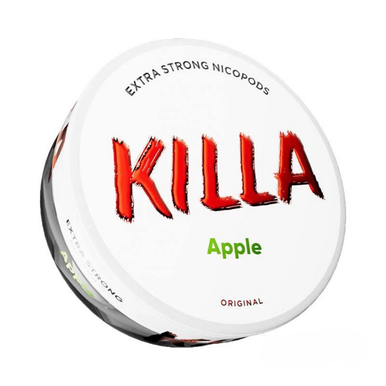
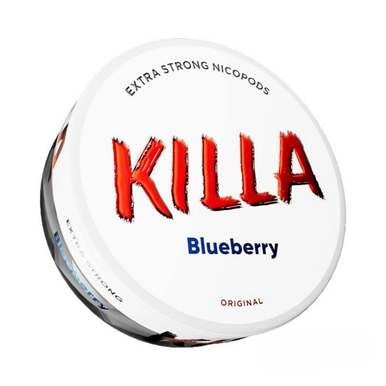
The nearest neighbours to a tropical punch inside the brand are its other fruit cans. Killa Apple at £33.50 is orchard rather than tropical — crisper, more acidic, considerably less sweet as a family. Killa Blueberry at the same price is a darker fruit with skin character behind it. Killa Banana Ice is the closest thing in the brand's range to a tropical note, since banana belongs to that family, though the declared cooling element in its name makes it a different construction from this one.
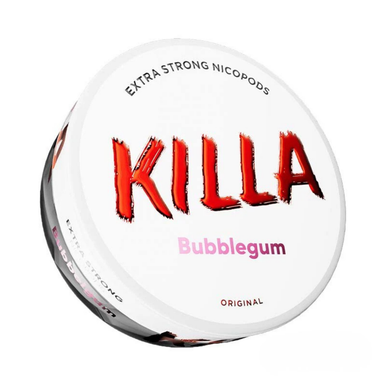
Further out, Killa Bubblegum is the brand's most confectionery-leaning name on our shelves, sweet without any pretence of being fruit. Killa Cola is its cola note, which brings a spiced, slightly bitter edge that no fruit can in the range has. And Killa Cappuccino sits alone as the only coffee-family can we hold from this brand, at the opposite end of every axis described earlier.
Each of those carries its own declared figure on its own listing. We are not going to restate another product's label from this page.
Storage, and the habit that quietly ruins a can
The lid goes back on. That is the whole of the main instruction, and the reason it needs saying is that the failure it prevents is gradual rather than obvious. A can left open overnight does not look wrong in the morning; it simply has less flavour left in it, and it will keep losing more.
Heat is the other agent. A dashboard in July, a sunlit windowsill, a bag left next to a radiator — none of those destroys a can on the first afternoon, but the cycle of warming and cooling pulls moisture out over a week or two, and moisture is where a flavour lives in this format. A drawer or a cupboard away from any heat source is sufficient. The requirement is a steady, shaded place, not a cold one.
Keeping cans in a fridge is a practice some people follow in warm weather. We hold no manufacturer guidance on whether it is intended here, so it is reported as something people do and not as advice from us. Any storage instruction printed on the can itself takes priority over every sentence on this page.
A can that has already dried out will not come back. The pouches feel stiffer and the flavour is shorter, and there is nothing to be done except store the next one more carefully. On dates, cans carry markings from the manufacturer and those are the reference; our record holds no date information at listing level, so we cannot say how long a given can has left.
Finally, and most importantly as a storage matter: keep cans out of reach of children and away from anyone the product is not meant for. That applies to the lid chamber too. A can with used pouches sitting in the lid is the one you least want left within reach, so empty it into a bin rather than letting it accumulate.
What there is to choose on this listing
Almost nothing, which is worth saying directly. A single declared figure of 16.5mg. A single price of £33.50. One variant, no size selector, no strength selector.
The consequence is that the ordinary adjustment is closed off. On a listing with several variants you can hold the flavour steady and move between figures. Here, changing the figure means changing the product, which means the strength bands rather than this page. We are not going to suggest a direction along those bands in either sense.
The pack count is the third hole in our record. We hold no value for how many cans £33.50 covers, and none for how many pouches are inside a can. That is material, because a figure of that size on this site sometimes buys one can and sometimes buys several. Without the count, the per-can and per-pouch comparisons people usually want cannot be done from this page, and we are not going to reconstruct them from a neighbouring listing. The product listing and the basket at checkout are where the quantity becomes visible.
Ordering, delivery and the age check
The price stands at £33.50. Ordering runs the usual way: add to basket, check the basket, complete the checkout. Delivery methods, costs and expected timescales are shown at checkout, because they vary by order and by address and any number printed here would be wrong for somebody.
This is an age-restricted product. Sales are to adults aged 18 or over. Checks may be applied when an order is placed, and ID may be requested on delivery before a parcel is handed over. A courier declining to release a parcel where age cannot be established is the process working correctly. Purchases made on behalf of anyone under 18 are not something we will knowingly supply.
On availability: our record shows the listing as in stock at the time of writing, but a description prepared in advance is not a live feed. The listing itself is authoritative, and on a single-variant product there is no alternative size to fall back on if it goes out.
Where this page sits on the site
A product page reached from a search engine arrives without any context around it, so it is worth stating what surrounds this one.
Three shelves hold this can. The brand shelf gathers the rest of the range under the same maker's name. The Strong band gathers everything filed by declared figure into the same bucket, 132 listings deep. And the tropical flavour shelf gathers 58 listings sharing that family term, which is a large enough grouping to browse properly rather than skim.
Sitting above all of those is the full catalogue, which is the sensible starting point when you do not yet know which axis you want. Brand shelves elsewhere on the site work identically, so once the structure is clear the whole catalogue opens up from any single product page.
Questions we get about this can
Which fruits are in a "tropical punch"?
We hold one classification term for this can, tropical, and no component list. The convention behind the word punch is a mixture of fruits rather than one, and tropical constructions commonly draw on mango, pineapple, passion fruit and guava — but naming those here as the contents of this can would be a guess dressed as a fact. The can and its label are the place that answer comes from, and we would rather say we do not hold it than invent a fruit list.
Is there a cooling element in this can?
Nothing in the name says so and our classification holds no mint or ice term for it, which together point to a fruit construction without a declared cool note. That is reasoning from an absence rather than a stated fact. Cans that do carry cooling generally announce it in the name with a word like ice or freeze, and this one does not. If the presence or absence of that element is decisive for you, check the can.
Is this sweeter than the other Killa fruit cans?
We cannot rank them. Tropical fruits sit high on sweetness as a family and a punch construction usually sits higher still, so a reasonable expectation is that it is towards the sweeter end, but we hold no comparative note and we do not write our own. The other listings in the range carry their own descriptions built from their own data, and comparing the two pages is as close to an answer as this catalogue can honestly get you.
How many pouches does a can hold?
Not a figure we hold. The field is blank for this listing and we will not estimate it from the price or from a similar can. Portion counts in this format are usually printed on the label, and that printed number is reliable in a way that anything we inferred would not be. If the count is part of what you are weighing up, check the listing or the can before ordering rather than working from an assumption.
Does £33.50 cover one can?
We do not know. There is no pack count in our record, so the price alone does not settle whether it covers one can or a sleeve of them. On this site, figures in that region do both depending on the product. That is a genuine gap rather than a dodge. The basket at checkout shows exactly what quantity is being bought, and it is the right place to confirm before paying.
What does the 16.5mg figure tell me?
It is the strength the manufacturer declares for this product, printed on the label and reproduced on the listing. That is the full extent of it. We do not interpret the figure, we do not convert it into an expectation, and we do not compare it with figures from other makers, since different companies reach their declared numbers by different routes and the numbers are not a shared measure between brands.
Is that a strong one?
Our catalogue puts it in the upper of three bands, which describes our filing rather than the product and certainly rather than any person. Bands make a catalogue of this size browsable and do nothing else. We cannot advise which strength suits anyone. A shop that attempted that would be well past the limit of what a shop can responsibly say, and the question belongs with someone qualified.
What does "Exclusive" mean?
It is the line name the manufacturer uses, and we hold no statement from the company about what it designates. It could mark a flavour series, a packaging run or nothing at all. Inventing a meaning for it because it appears on a can would be exactly the kind of thing this page is written to avoid. It is on the label, which is why it is in our title, and the reasoning behind it is the manufacturer's to explain.
What is the second compartment in the lid for?
Finished pouches. Most cans in this format have a shallow chamber built into the lid, separated from the fresh pouches below, and its purpose is to hold used ones until you reach a bin. Empty it into a household bin, not into plumbing. It is a minor piece of design that does a disproportionate amount of work, because without it a used pouch away from home has nowhere sensible to go.
How should the can be kept?
Lid closed, somewhere cool and shaded, out of reach of children. Warmth and an open lid are the two things that dry a can out and between them they account for most cans that go flat early. Any instruction printed on the can takes precedence over this page. We hold no shelf-life or date data at listing level, so the marking on the can is the only date reference available.
Can you tell me where it is produced?
No. We hold no origin or manufacturing information for this listing and we are not going to infer any from the brand name, the line name or the look of the packaging. Anything you read elsewhere assigning an origin to this can on the strength of its naming is reading in something that is not there. The can and the manufacturer are the only sources worth trusting for that.
Is a "punch" the same as a "mix" or a "medley"?
As far as our catalogue is concerned they are all naming conventions rather than defined terms, and none of them has a fixed meaning that manufacturers have agreed between themselves. Punch borrows from drinks, mix states the obvious and medley borrows from cookery, but all three signal roughly the same thing: more than one fruit, with none of them singled out. What differs between two blended cans is the actual construction, and that is not something a name on a lid settles in either direction.
Why does the tropical shelf have so many listings on it?
Because tropical is a family term rather than a single fruit, so it gathers mango, pineapple, passion fruit, coconut and every blend built from them into one place. That is why 58 listings sit under it. A broad shelf is useful for browsing and blunt for searching: if you know the specific fruit you want, a narrower flavour shelf gets you there faster, and if you only know the general direction, the wide one is the right entry point.
Is it available now?
Our record says available at the time of writing, but this page is prepared ahead of time and is not a live stock feed. The listing reflects the current position and overrides this paragraph wherever the two disagree. Availability moves around in this category, and a single-variant listing has no second size to drop back to when it goes.
Compliance notice for this product
Sold only to adults aged 18 or over who already use nicotine. We do not sell to anyone under 18 and we will not knowingly supply a purchase made for someone under 18. Age checks may be applied at the point of order, and ID may be requested on delivery before a parcel is released.
Nicotine is an addictive substance.
This is not a licensed stop-smoking medicine and it makes no medicinal claim whatsoever. It is not intended for non-smokers, for anyone who does not already use nicotine, for under-18s, or for anyone pregnant or breastfeeding. Nothing written here is medical advice, and nothing here is a suggestion that anyone take up nicotine or select any particular declared figure. Questions about your own use belong with a qualified healthcare professional and not with a retailer.
Keep out of reach of children and away from animals.
The short version
Killa Exclusive Tropical Punch is a one-variant listing at £33.50 carrying a declared figure of 16.5mg, classified under a single flavour term, tropical, and filed on the Strong band of this catalogue. We do not hold a component list for the flavour, a portion count, a pack count or a format designation, and each of those gaps has been stated where it arose rather than papered over. The brand and line names are the manufacturer's own and have been left as such. The can holds the rest.
More from Killa

More strong pouches

More tropical pouches
Where this sits
Killa Exclusive Tropical Punch Nicotine Pouches appears in these categories. Browse them, or jump to something close.
You might also like