Killa · 16.5mg
Read the full guide
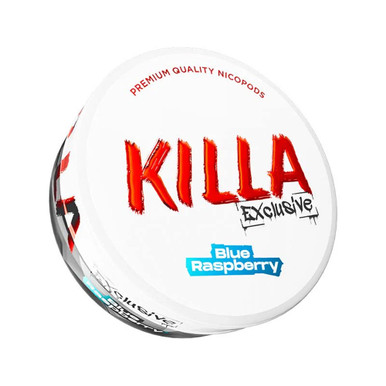
Killa Exclusive Blue Raspberry Nicotine Pouches
£33.50
✔ In stock — ready to ship
100% tobacco-free
Free over £20
Same-day dispatch
Secure checkout
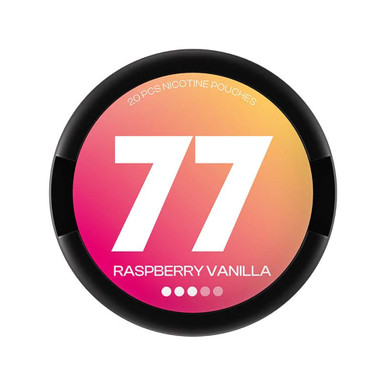
This listing covers Killa Exclusive Blue Raspberry Nicotine Pouches. The catalogue entry behind it is short, and here it is in full: the brand is Killa, the product name is Exclusive Blue Raspberry, the price is £33.50, one declared strength of 16.5mg is attached to it, the flavour field carries a single tag reading berry, the availability flag reads in stock at the time of writing, and there is one photograph on file. The cans-per-pack field is empty.
Those seven items are the entirety of our data. Everything that follows is built from one of four things: a description of the physical object, which is common to the format; a description of the flavour as a taste; a comparison against other cans we actually sell, with their actual listed prices; or a plain statement that a particular detail is not something we hold. Nothing on this page is invented, and where a reasonable question has no answer in our record, the answer given is that there is no answer in our record.
The full guide to Killa Exclusive Blue Raspberry Nicotine Pouches
4,909 words on how it eats, who it suits, how to serve it and what to put beside it.
Blue raspberry, in a tin, at £33.50
Before going further: this is an age-restricted nicotine product, sold to adults who already use nicotine and to nobody else. The legal wording sits in its own section near the bottom, and it should be read rather than scrolled past.
What blue raspberry tastes of, and what the flavour tag actually says
Start with a discrepancy, because it is the first thing a careful reader will notice. The product is named Blue Raspberry. The flavour tag in our record is simply berry. Those are not the same level of detail, and we would rather point that out than let the shelf tag pass as a full description.
The tag is a category, not a flavour note. It is the label that files this can with the 76 products on our berry shelf, a group broad enough to contain blackcurrant, strawberry, blueberry, mixed forest fruits and everything adjacent to them. It tells you the family. It does not tell you the specific profile, and it does not contradict the product name so much as sit several steps above it in generality. When we describe the taste below, we are describing what the product name says, not what the tag says, because the name is the more precise of the two.
Now the taste itself, which requires acknowledging something most adults already know: blue raspberry is not a fruit. There is no blue raspberry growing anywhere. It is a confectionery convention — a flavour that was invented for sweets and frozen drinks and has been reproduced in that invented form ever since. That matters for the description, because it means the flavour is not trying to taste like a raspberry and should not be judged against one.
As a profile, it runs sweeter and rounder than an actual raspberry and much less seedy or tannic. The front of it is a bright, slightly sherbet-edged sweetness with a sharp acidic lift underneath — the sourness you feel along the sides of the tongue rather than at the tip. Beneath the sweetness there is a faint floral, almost boiled-sweet note that is the most characteristic part of the whole thing and the part that makes it identifiable as blue raspberry rather than as generic red berry. The finish is where the acidity reasserts itself, leaving a tart trace after the sugar has gone.
There is no cooling element recorded for this can. No ice, no mint, no menthol note is in the name or the tag, so the flavour arrives warm rather than cold, which distinguishes it sharply from a number of the berry cans further along our shelves. If you want the same family with a chill on it, that is a different can and the section further down says which ones.
The aroma from a tin newly opened is a concentrated version of the same thing — sweet, sharp, unmistakably confectionery — and it is strongest in the first days after opening. It flattens as the can ages, which is normal and not a fault. A tin three weeks into its life will smell quieter than it did on the first day.
The object itself: tin, pouches, lid, waste
The format here is the standard one across most of our range, and describing it properly once is more useful than referring to it vaguely throughout.
The container is a shallow disc-shaped tin, a little smaller across than a drinks coaster and about as deep as three or four stacked coins. It weighs very little. In a pocket it disappears; in the small watch pocket of a pair of jeans it fits without a bulge; in a bag it takes up no space worth mentioning. The lid pushes on and releases with a short twist and a bit of thumb pressure, and it holds firm when it is properly seated.
Built into that lid on cans of this type is a secondary compartment with its own inner cover, commonly called the catch lid. It is a shallow recess intended to hold used pouches until a bin presents itself. It is one of the few genuinely practical pieces of design in the category, and it comes with one maintenance obligation: it needs emptying. A lid holding four days' worth of used pouches will smell considerably worse than a lid that gets tipped into a bin regularly, and no amount of sealing prevents that. Ordinary household waste is the right destination. Pouches should not be flushed, and they should not be left loose where a child or an animal could get to them.
The pouches are small white rectangles with rounded ends, soft to the touch and closer in feel to a folded pad of fabric than to anything firm. They sit arranged in a ring in the base of the tin. In use, one is placed under the upper lip and left alone — there is nothing to hold, nothing to adjust and nothing that needs attention once it is in place. It is not visible from outside.
How long a single pouch stays in is a question with no universal answer. What people report across pouches of this general kind spans a few minutes at one end to around half an hour or somewhat beyond at the other, with the flavour heaviest at the start and thinning steadily. We describe that range because people ask, not as guidance. How long anyone keeps one in is their own business and not something a shop should be directing.
Heat, air and moisture: keeping a can worth opening
This is the section worth reading twice, because storage is the one variable entirely within a buyer's control that reliably changes the experience of a tin — and because more complaints about a disappointing can trace back to how it was kept than to anything about how it was made.
Take the pouches themselves first. Across the category they arrive at different moisture levels, and the difference is immediately obvious in the hand. Some are noticeably damp to the touch and sit softly; others are drier, firmer, and closer in feel to a small dry cushion. Neither is a defect and neither is better. They are different manufacturing choices, they feel different when placed, and the flavour of a drier pouch generally arrives a little more gradually than the flavour of a damp one, which tends to be more immediate and to fade faster. Knowing which sort you have bought is useful mainly so that a can behaving differently from your last one does not read as a fault.
What storage does is push any pouch in one direction: towards dry. Time does it slowly. Heat does it quickly.
Heat is the main enemy of a can. A tin left on a windowsill in direct sun, on a car dashboard, on top of a radiator, or in a coat pocket next to a heater will dry out faster than one kept in a drawer, and the first casualty is always flavour. The sharp acidic top of a blue raspberry profile is exactly the sort of volatile bright note that heat strips out first, leaving something flatter and sweeter behind. The texture stiffens after that. A summer afternoon in a parked car is enough to make a real difference to a tin, and the change does not reverse when it cools down again.
Air is the second factor, and it is almost entirely a question of whether the lid is properly shut. These tins seal well when the lid is pushed fully home and poorly when it is balanced on top. A can rattling around a bag half-closed for a week will have lost noticeably more aroma than one that was closed each time. If there is a single storage habit worth acquiring, it is pressing the lid down until it seats rather than assuming it has. It takes no time and it is the difference between a can that lasts and one that goes quiet early.
Cold is neutral to mildly helpful. Some regular buyers keep tins in a refrigerator. It does no harm and we are not going to tell anyone to do it or not do it. If you do, let the tin come back to room temperature before opening it so that condensation does not settle inside the lid, and bear in mind that a fridge is a poor place for something that must stay out of the reach of children. On balance, a cool dark cupboard achieves most of the same thing with none of the complications.
A few practical points that follow from all of the above. An unopened tin kept as a spare should live somewhere cool and stable rather than somewhere convenient but warm — a drawer indoors beats a glovebox. A tin that has gone dry is not dangerous and is not spoiled in any meaningful sense; it is simply quieter than it was, and adding water to it is not a remedy anyone should attempt. And the tin itself is the authority on any manufacturer storage instruction, date marking or batch code, none of which we reproduce in our catalogue.
Finally, the obvious one. Wherever you keep them, keep them out of reach of children and animals, and keep the catch lid emptied rather than letting it accumulate.
16.5mg, the word Exclusive, and the word Killa
One declared strength is attached to this listing: 16.5mg. There is one variant, one price, and nothing behind a dropdown.
The figure is a printed specification. The manufacturer declares a nicotine content per pouch on the packaging, we copy that declaration into our catalogue unchanged, and it appears here so that two cans can be told apart on paper. That is the only honest function it serves in a retail listing. It is a number of the same species as a printed capacity on a battery or a printed percentage on a bottle: a manufacturer's statement, reproduced.
It is not a recommendation and it is not a rating. We cannot advise which strength suits anyone. We do not know who is reading, we have no way to find out, and a shop that hands out that sort of guidance is offering something it has no standing to offer. A higher printed figure is not a superior product, not a more advanced one, and not a target. It is a different number on a different tin, and the only person equipped to judge is the adult nicotine user holding it.
Two pieces of naming on this page deserve the same treatment. The first is Exclusive, which sits in the middle of the product name. It is part of the name the manufacturer gave the line and nothing more. It is not our claim about availability, it does not mean the can is restricted or scarce, and it carries no implication about quality. It is a word in a product name, in the same way that Gold Edition is a word in the Pablo version of this flavour at £19.95.
The second is Killa. The brand name is aggressive by design, and it remains a brand name. It describes no effect, sets no challenge, and is not an invitation to treat a tin as a measure of anything. Nothing here is something to work up to or prove. We stock the product under the name printed on the lid because that is the name it has, and we write the description without playing along with the tone of it.
One further oddity worth flagging on the Killa range generally: several of the brand's web addresses on this site include the words extra strong, carried over from the way the products entered the catalogue, while the strength category we genuinely file them under is the Strong shelf and its 132 products rather than the Extra Strong shelf. Where the manufacturer's naming and our own filing disagree, we would rather show the disagreement.
The same declared figure, elsewhere on our shelves
The most useful comparison this page can offer is a horizontal one: what else sits in roughly the same specification band, what it tastes of, and what it costs. Specification held constant, the variables are flavour and price — and those are the two things a shop can honestly help with.
Within our own Killa listings the specification is held constant by default. All six of the siblings our record connects to this can carry the identical 16.5mg declaration and the identical £33.50 price. Moving between them changes flavour and nothing else, which makes the brand page a flavour menu rather than a ladder.
| Can | Listed price | Flavour direction |
|---|---|---|
| This listing, Killa Exclusive Blue Raspberry | £33.50 | Sweet-sour confectionery berry, no chill |
| Elf Bar Blueberry Raspberry | £29.90 | Two real-fruit berries, rounder and jammier |
| Pablo Gold Edition Blue Raspberry | £19.95 | The same invented flavour, different house style |
| Denssi Blueberry Freeze | £39.90 | Blueberry with a cold note laid over it |
| Velo Icy Berries | £4.19 | Mixed berry, chilled, lowest listed price here |
| Iceberg Raspberry | £39.90, out of stock | Straight raspberry rather than the invented version |
Reading across that table, the closest match on flavour is the Pablo take on blue raspberry, which is the same invented profile interpreted by a different manufacturer at a different listed price. If the flavour is what brought you here and the price is the sticking point, that is the first place to look. Bear in mind that we hold no cans-per-pack figure for this listing, so a straight price-against-price reading may be comparing two different kinds of unit — a point the buying section below returns to.
The next closest is the Elf Bar berry pairing at £29.90, which reaches for actual fruit rather than confectionery and lands somewhere rounder and less sharp. After that the family branches by temperature. The Denssi blueberry can at £39.90 and the Velo mixed-berry can at £4.19 both carry a cold element that this listing does not, and the 77 arctic berry mini at £39.90 does the same in a smaller pouch format. If you have tried this can and found it too warm and sweet, those are the direction to move in; if the warmth is the part you like, they are the direction to avoid.
Further out again, Cuba Ninja Strawberry at £39.90 and Clew Blueberry at £39.90 are single-fruit berry cans without the sherbet edge, Nordic Spirit Max Foresty Berry at £4.49 is the lowest-priced berry can in this comparison by a wide margin. The nearest thing we list to a plain raspberry, as opposed to the invented blue version, is the Iceberg raspberry can at £39.90 — and that one needs a plain caveat attached to it, because our catalogue currently shows it as out of stock. It is in this comparison as a reference point, not as something you can order today. Outside the berry family altogether, Edge Mint at £14.95 is the obvious contrast — cold, unsweet, and about as far from a confectionery berry as this category goes.
Everything named above is on the berry shelf except the mint, and the shelf holds 76 products in total, so the ones listed here are a sample rather than the field.
Where this falls in the Killa line-up
We carry 31 products under the Killa name. The six that our record ties directly to this can are worth a sentence each, described by taste rather than by any notion of who should buy them.
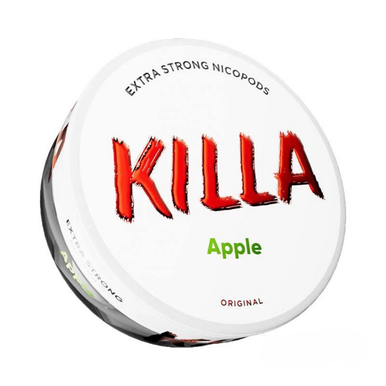
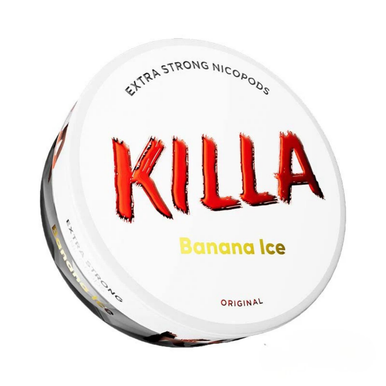
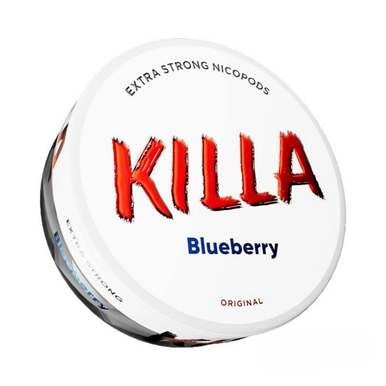
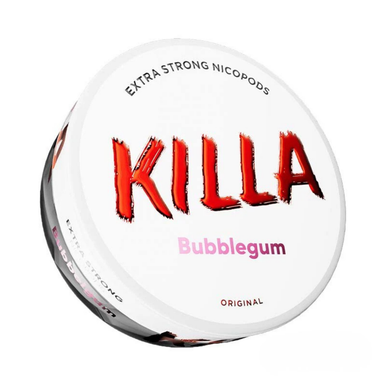
Killa Blueberry is the nearest relative inside the brand — the same berry family, but darker and jammier, with the sourness dialled well back and none of the sherbet quality of a blue raspberry. Killa Apple keeps the tartness but swaps the berry for a crisp green-apple sharpness over a cleaner sweetness. Killa Bubblegum pushes hard in the confectionery direction and drops the acidity entirely, which makes it the sweetest thing on the brand's shelf and the least like real fruit. Killa Banana Ice is the one carrying a cooling note in its name, soft and creamy at the front with a cold finish. Killa Cola leaves fruit behind for a spiced, faintly medicinal soft-drink profile. Killa Cappuccino is the outlier of the set, roasted and milky with a real bitter edge, and it tends to divide people immediately.
Buyers who keep more than one tin on the go usually pick from opposite corners of that list rather than from adjacent ones. A sweet berry and a cold mint is the most common pairing across the category generally; a sweet berry and a coffee is the more unusual one. What makes a second can useful is contrast, and the brand page is the easiest way to see the contrast available.
Keeping a second tin alongside this one
Plenty of people who buy a sweet-sour berry can do not buy only that. The reasoning is straightforward and has nothing to do with strength: a single flavour kept in constant rotation stops registering. Palates adapt to a repeated taste, the sharp top note of a confectionery berry is exactly the kind of thing that adapts fastest, and the usual remedy is simply to have something unlike it within reach.
The most common second tin across this category is a cold one, because temperature is the largest available contrast. Edge Mint at £14.95 is the least expensive route to that on our shelves and has no sweetness in it at all, which is precisely the point. The Velo icy berry can at £4.19 does something subtler — it keeps the berry family but puts a chill over it, so the change is in the finish rather than in the whole flavour.
A second approach is to stay warm and sweet but change the fruit entirely. Cuba Ninja Strawberry at £39.90 is a single, rounder, more recognisable fruit with far less acidity, and it reads as a different thing in the mouth even though it is nominally the same family. The Clew blueberry at £39.90 goes darker and jammier in the same way.
The third approach is to abandon fruit completely for a rotation. Within this brand, the cappuccino can is about as far from a blue raspberry as the shelf goes — roasted, milky and genuinely bitter rather than sweet and sharp. Whether that appeals is entirely personal; what it certainly provides is contrast. Outside the brand, the 77 arctic berry mini at £39.90 changes the pouch size as well as the flavour, which some people find is a bigger change than the taste itself.
Choosing between what is on offer here
On this listing specifically there is very little to weigh up. One strength, one variant, one price of £33.50, one flavour. The only decision is whether you want this profile at this price.
If you are comparing declared figures more broadly, the site sorts by them. The Medium Strength shelf gathers the lower declarations, the Strong category holds the 132 products this can is filed with, and the highest shelf holds the rest. Those exist as filters. They sort the catalogue rather than ranking it, and no one should read them as a route to travel in any particular direction.
On pack size, our record simply will not support the question. The cans-per-pack field is blank, so we cannot give a per-tin figure and we are not going to assume one to fill the gap.
Ordering, delivery and the age check
Ordering is the same process as anywhere else on the site: the listing carries the price and the basket control, checkout collects an address and payment, dispatch follows once the order clears. The stock flag reflects the position at the time of writing rather than a guarantee about next month, and availability across this category moves with import timing rather than with anything we control.
The age check is not a formality. This is an 18+ product. Age is verified when the order is placed, and couriers may ask for identification at the door. Where age cannot be established the delivery can be refused and the parcel comes back to us. That is worth planning around: if you will not be in, think about whether whoever is in can satisfy that check, because an age-restricted parcel cannot simply be left in a porch or handed to a neighbour in every case.
On the price question raised earlier — £33.50 with no quantity recorded — the sensible course is to check the listing photograph and the listing page before ordering, or to ask us, rather than inferring a quantity from the size of the number. We would rather answer a question first than process a return afterwards.
How to get elsewhere from here
This page sits at the crossing point of three shelves. By declared figure it belongs to the Strong shelf. By manufacturer it belongs to Killa's 31 listings. By taste it belongs to the 76-product berry shelf. Those three are the natural exits from this description and between them they cover far more ground than any single page can.
Wider still, everything we stock is the unfiltered catalogue, and the two other large brand collections are worth knowing if you are comparing across manufacturers rather than within one: the Pablo range and the Cuba range both carry broad flavour line-ups of their own. The Medium shelf and the Extra Strong filter complete the strength navigation, offered as tools rather than as suggestions.
Questions people ask about this one
Why does the flavour tag say berry when the can says blue raspberry?
Because the tag is a shelf category and the name is the specific profile. The tag exists to file the product with the 76 other berry-family cans in the navigation, and a category that broad necessarily loses detail. It is not a correction of the product name and it is not a contradiction of it; it is simply a coarser label. Where the two differ in precision, take the product name as the description of the taste and the tag as the filing.
Is blue raspberry a real fruit?
No. It is a confectionery flavour that was invented for sweets and frozen drinks, and it has been reproduced in that invented form ever since. It is sweeter, rounder and more acidic than an actual raspberry, with a faint boiled-sweet floral note that real fruit does not have. That is not a criticism of it — it is simply the honest way to describe what the flavour is imitating, which is other sweets rather than a berry.
Does this one have a cooling or ice element?
Not according to anything in our record. Neither the product name nor the flavour tag mentions ice, mint or menthol, so the profile arrives warm and sweet rather than cold. Several berry cans on our shelves do carry a chill — the Denssi and Velo berry listings above are examples — and those are the place to look if a cold finish is what you are after. What is on the tin itself is the final authority.
How many cans does £33.50 get me?
We do not hold that figure. The cans-per-pack field on this product is empty in our catalogue, so any number we gave you would be a guess dressed up as data. Prices across our shelves clearly cover more than one kind of unit, from a few pounds to the high thirties, which makes guessing from the price alone unreliable. Check the product image and the listing page, or contact us before ordering if quantity is the deciding factor.
What does Exclusive mean in the product name?
It is part of the name the manufacturer gave this line, and nothing else. It is not a statement from us that the can is scarce, restricted, limited or unavailable elsewhere, and it implies nothing about quality. Several brands use similar words in their line names — Gold Edition and VB Edition both appear elsewhere on our shelves — and in every case the word is naming rather than describing.
My last tin dried out. Did I get a bad batch?
Almost certainly not. Pouches dry out over time, and heat accelerates it sharply. A tin that spent a week on a sunny windowsill, in a car or near a radiator will be noticeably drier and quieter in flavour than the same tin kept in a drawer, and the change is not reversible. A dry can is not spoiled in any meaningful way, it simply tastes flatter. Cool, dark, dry storage and a properly closed lid are the whole of the prevention.
Should I keep these in the fridge?
Some people do and it does no harm, but it is a preference rather than a recommendation, and we are not going to issue instructions on it. If you refrigerate a tin, let it warm back to room temperature before opening it so condensation does not form inside the lid. A cool, dark cupboard gets you most of the same benefit with fewer complications, and it is a better place than a fridge for something that has to stay out of reach of children.
Is 16.5mg a lot?
That question has no answer we are able to give, and we would be overstepping badly if we tried. The figure is a manufacturer's declaration printed on the packaging and reproduced by us so that cans can be compared on a specification sheet. Whether any given number is appropriate for a particular adult is not something a shop can assess, and we cannot advise which strength suits anyone. The strength shelves in the navigation show the range; they do not rank it.
Do you know how long one pouch lasts?
Not as a fixed figure, because it genuinely varies from person to person. Reported use across pouches of this type tends to fall between a few minutes and around half an hour or a little more, with flavour strongest early and thinning from there. That is a description of what people report rather than an instruction about what anyone should do, and we are not going to turn it into one.
Can I use these anywhere?
That is not a question we can answer for you. Whether a nicotine product is permitted on any given premises is set by the operator, the employer, the venue or the carrier, and those rules vary from place to place and change without anyone informing a retailer. We are not a party to them and we do not hold them. Ask whoever runs the place you are in, and treat the absence of a stated rule as an absence of information rather than as permission.
Is there anything on the tin that this page has missed?
Yes — quite a lot. Pouch count, pouch weight, date and batch markings, the manufacturer's own storage wording and any warnings required on the packaging are all printed on the can and none of them sit in our catalogue. We hold seven fields for this product and this page has worked through all seven. Anything beyond them appearing in a retail description was invented somewhere, and the printed tin is the better source.
Do you show ratings or customer feedback?
No. There is no ratings system on this site, we publish no testimonials, and we do not flag anything as popular or recommended. Inventing the impression of a crowd would be dishonest, and it would be a thin substitute for what we can actually give you: a price, a declared figure, a flavour record, a stock position, and a clear account of the fields that are blank.
Legal and compliance information
Read this section before placing an order.
- Adults aged 18 or over only. This product is sold exclusively to adults who are 18 or over and who already use nicotine. Age is verified at the point of order.
- Nicotine is an addictive substance. This product contains nicotine, declared at 16.5mg.
- This is not a licensed stop-smoking medicine. It carries no medicinal authorisation, and it is not intended for non-smokers, for anyone who does not already use nicotine, for under-18s, or for anyone who is pregnant or breastfeeding.
- Proof of age may be requested on delivery. Couriers may ask for identification before releasing a parcel and may decline to complete the delivery if age cannot be confirmed.
- Keep out of the reach of children and animals. Used pouches go in a bin.
To finish
The record on this can, in full: Killa Exclusive Blue Raspberry Nicotine Pouches, £33.50, a single declared strength of 16.5mg, one flavour tag reading berry against a product name reading blue raspberry, in stock as written, one image, and no quantity figure. The flavour is a confectionery invention rather than a fruit, the tag is broader than the name, the word Exclusive is naming, and the brand name is a brand name.
If that profile is one you already know and want in this format, the listing above is where to go. If you are weighing it against something else, the berry shelf, the brand page and the strength filters will show you more than a description can. And if what you actually want to know is which declared figure is right for you, that remains the one question on this page we are not able to answer, and we are not going to pretend we can.
More from Killa
More strong pouches
More berry pouches
Where this sits
Killa Exclusive Blue Raspberry Nicotine Pouches appears in these categories. Browse them, or jump to something close.
You might also like