
Home / Extra Strong / Iceberg Energy Nicotine Pouches
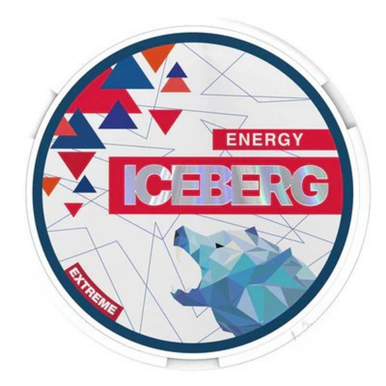
Iceberg · 20mg–50mg · 10-can pack
Read the full guide
Iceberg Energy Nicotine Pouches
£39.90
✔ In stock — ready to ship
100% tobacco-free
Free over £20
Same-day dispatch
Secure checkout
This listing is Iceberg Energy Nicotine Pouches. Our product record holds a short, specific set of facts for it, and they are worth setting out before anything else is said. It is sold as a pack of ten cans at £39.90. Two declared strengths are recorded against it, 20mg and 50mg, and the price is the same £39.90 for either one. The single flavour word on the record is energy. One product image is held. And the stock field says out of stock at the time of writing, which is the first thing a reader planning to buy today needs to know rather than the last.
That is the whole record. Everything below is written from those fields or from things that are true of the format in general, and where the record is silent this page says so instead of filling the gap. It is an approach that produces a duller product description than the alternative, and we would rather have the dull one.
The full guide to Iceberg Energy Nicotine Pouches
5,150 words on how it eats, who it suits, how to serve it and what to put beside it.
The can this page is about
Before going further: this is an adult nicotine product. It is sold only to people aged 18 or over who already use nicotine, and the full compliance wording sits in its own section near the bottom of the page. Nothing written here is intended to persuade anybody to consume anything.
In the hand it is the familiar round tin — a shallow plastic cylinder with a press-fit lid, roughly the footprint of a small jar lid and a centimetre or so deep. The lid carries the brand mark and the flavour word. Ten of them arrive together as a box rather than as a pocket item, which changes the practical questions a bit compared with buying one can at a time, and the storage section further down deals with that. Ten cans at £39.90 works out at £3.99 a can. That division is ours, offered purely so this listing can be set beside the single-can products on the site without anybody having to do the arithmetic. The figure that appears at checkout is £39.90.
We do not hold a pouch count per can for this product, nor a format designation — slim, regular or otherwise. Those fields are not in our data for this listing and the printed can is the place they get answered.
A word on the lid, and what it is not
The flavour recorded against this can is energy. That word does a specific job in this category: it names a flavour direction, in the same way that cola or cherry names one. It is a taste description. It is not a statement about what a pouch does, and we make no claim of that kind anywhere on this page. If you came to this listing expecting the name to promise something beyond a taste, it does not, and no honest product page on this site will tell you otherwise.
It is worth saying plainly because the word is unusually loaded. Plenty of things in a supermarket use it as a category rather than a flavour. Here it is neither a category nor a promise; it is the word a manufacturer has printed on a lid to signal which of its flavours this is, and it appears on our record for exactly that reason. We reproduce it and stop there.
What the word signals on a flavour shelf, as a matter of taste vocabulary, is a sweet soft-drink direction with a citrus edge to it rather than a mint one or a berry one. Beyond that general placement we do not hold a tasting note from Iceberg for this can and are not going to compose one and present it as fact. There is a real difference between describing where a flavour word sits among other flavour words, which is useful, and inventing the specific character of a product we have only a one-word record for, which is not. The next section stays firmly on the first side of that line.
The record does at least agree with itself here, which is not always the case. The product is called Energy and the flavour tag on the record is energy. Some listings on this site carry a name that says one thing and a flavour tag that says something narrower, and where that happens we point it out. Here the two match, so there is nothing to flag.
Cool, sweet, sharp, bitter: where a soft-drink flavour lands
Adjectives on their own tell you very little about a flavour. Saying a can is "refreshing" or "bold" moves nobody closer to knowing what it tastes like. What does help is placing a flavour relative to the other flavours on the same shelf, on axes that actually separate one from another. Four of them cover most of the ground: how cool it is, how sweet, how sharp and how bitter. What follows is taste and aroma only. No claim of any other kind is being made in this section and none should be read into it.
| Axis | Where a soft-drink flavour direction generally sits | What that means against other cans on our shelves |
|---|---|---|
| Cool | Low by default, unless a maker adds a cooling note and says so | The far side of the shelf from the mint family, which is built around cooling as its main event |
| Sweet | High, and the leading characteristic | Comparable with a cola or a cherry can; well above a tea or coffee reading |
| Sharp | Moderate, usually citrus-shaped | Less acidic than a lemon or lime can, more so than a melon or banana one |
| Bitter | Very low | Almost the opposite construction to a coffee or dark-tea can, where bitterness is the point |
The sweet axis, which does the heavy lifting
Soft-drink flavour directions are sweet-led. That is what puts them in the same part of the shelf as cola, cream soda and the fruit-squash readings rather than anywhere near the herbal or roasted end. The sweetness in a dry pouch behaves differently from sweetness in a drink, though, because there is no liquid carrying it and no carbonation cutting it. It arrives flatter and it sits still. People coming to a sweet-led pouch from a sweet-led drink often describe the pouch version as more confected and less lively, and that is a description of physics rather than a criticism of anybody's recipe.
Among the cans we stock, Iceberg Energy Mango at £39.90 is the closest structural relative — the same flavour word with a fruit attached to it — and it is a useful reference even if you never buy it, because it shows what happens when a maker gives a sweet soft-drink direction something specific to lean on. It is worth noting that it too is currently marked out of stock.
The sharp axis, and what shape the acidity takes
Sharpness in this direction tends to read as citrus rather than as sour-fruit. There is a difference: a citrus sharpness sits at the top of the flavour and brightens it, while a sour-fruit sharpness sits underneath and puckers. The first is closer to a slice of lemon in a glass, the second closer to a boiled sour sweet. Most soft-drink flavour directions use the first.
If you want to taste the other construction for comparison, Iceberg Cherry Apricot Gum at the same £39.90 pairs two stone fruits, and stone fruit carries its tartness underneath the sweetness rather than above it, which is a genuinely different sensation rather than the same one at a different volume. That listing is also showing out of stock at present.
The cool axis, and why it is usually the deciding one
Cooling is the single axis that most often decides whether somebody gets on with a can, more than sweetness and far more than bitterness. A flavour direction like this one does not depend on cooling, which means a maker can add a lot, a little or none at all and still be entitled to the name on the lid. Our record carries no cooling designation for this listing, so we cannot tell you where Iceberg has set it. That is a real gap and we are not going to paper over it with a guess.
The practical consequence is that if a cooling character is what you specifically want, a can that names it is the safer read. Pablo Exclusive Banana Ice at £3.85 puts the word in the product name, which tells you where that one stands before you open it.
Aroma, on opening the lid
Aroma and taste do not always line up in this format. With a roasted or herbal can they usually do. With a sweet confected direction the smell tends to run ahead of the taste — the lid comes off, the room gets a burst of something sugary and bright, and then the pouch itself delivers something more restrained than the aroma advertised. That mismatch surprises people the first time and stops registering after a week.
Flavour in a dry pouch is also at its most defined early and thins from there. Which part of it thins first varies by construction: in sweet-led directions the sharp top note usually goes before the sweetness does, so the taste tends to get rounder and flatter rather than simply quieter. We hold no timing data for this product and will not manufacture any. How long a pouch stays interesting is individual, and when somebody takes one out is their own business.
The pouch, handled as an object
A nicotine pouch is a small, soft, sealed pouch placed in the mouth and left there. It is not chewed and it is not swallowed. That is true of everything on this site rather than of this flavour in particular, but it is the thing people ask about most at a counter, so it belongs on the page.
It goes at the front of the mouth, tucked between the lip and the jaw, and the lip is what holds it in place. Nothing else fixes it. You can shift it from one side to the other or from top to bottom, and people do, usually without thinking about it after the first few days. If it is uncomfortable wherever it is put, the answer is simply to take it out; there is no reason to persevere with an object in your mouth that does not sit right.
Duration varies so widely between people that publishing an average would be publishing a fiction. Some take one out inside five minutes, some leave one in for the better part of an hour, and the reason usually given for taking it out is that the taste has gone. We do not set a time, we do not suggest one, and the usage guidance Iceberg prints on the can is the guidance that counts.
The lid has a shallow catch compartment moulded into the top, separate from the chamber where the unused pouches sit. Used pouches go in there. It fills faster than people expect — three or four and it is full, after which the lid stops seating flat and the whole can starts to feel wrong in a pocket. Empty it earlier than you think you need to. Used pouches are general waste and belong in a bin: not a sink, not a drain, not out of a car window. The tin itself is plastic and goes in with household recycling as far as your local authority accepts that grade, which is a council-by-council question we cannot answer for your address.
Two mechanical details that come up repeatedly. The pouches sit flat in a ring around the base of the tin, so the first one is slightly awkward to lift out and every one after that is trivial; tipping an open can upside down empties the ring onto the floor, a lesson most people learn exactly once. And the pouches do not stick to each other or to the tin, so there is no knack to separating them and no call for digging about inside with a fingernail.
Speech is the other standing question. A pouch under the top lip shows as a slight fullness to anybody looking for it and alters the shape of one or two consonants for the first minute, until you stop noticing. That is a description of a physical object sitting in a mouth and nothing more. We are not going to build anything on top of it about where a person should or should not be using one.
Two figures on the label: 20mg and 50mg
The declared strengths on this listing are 20mg and 50mg, and both carry the same £39.90 price. The milligram figure is the nicotine content Iceberg declares for a single pouch. We reproduce it exactly as it is given to us. We do not measure it and we do not adjust it, and if this page and the printed can ever disagreed, the can would be the one that is right.
As numbers they order themselves in the obvious way — 50 is a larger number than 20 — and that ordering is the entire comparison available to us within this product. It compares two label declarations against each other. It does not describe what either one will seem like to any particular person, and it is emphatically not a recommendation about which one anybody should buy. We hold no information about you, and a shop that pretended otherwise would be overstepping badly.
The gap between the two figures on this listing is unusually wide. Plenty of products on this site step through four figures in fives; this one offers two, at opposite ends of what our shelves carry. It is worth being clear about what that does and does not mean. It means the record has two entries. It does not mean one of them is the proper version and the other a lesser one, and a higher declared figure is not a better can. Those two sentences are the whole of our position on strength, and we repeat them on every page because people expect a shop to nudge and we are not going to.
For context on where those figures sit across the site rather than within this product: our Extra Strong shelf runs to ninety-eight listings, which makes it one of the larger groupings we keep, while the Strong shelf and the Medium Strength shelf collect the listings whose declared figures fall below that band. Those shelves are sorted by the number on the label and by nothing else.
What people keep alongside this one, and why
Very few people who buy pouches regularly keep only one flavour in the house. The common pattern is two or three cans in rotation, chosen so that they are not variations on each other, because a second can that tastes like a slightly different version of the first is not variety — it is just a spare. This section is about how the shelves here divide up, so that a second or third choice can be made deliberately.
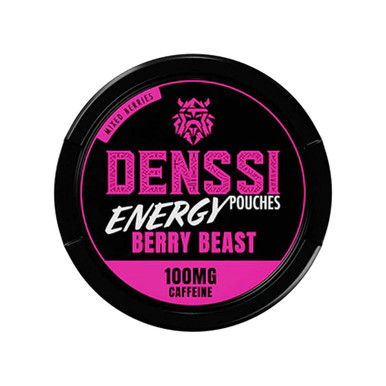
The most direct neighbours are the other listings that use the same flavour word. The energy flavour shelf collects ten of them, which makes it one of the shorter flavour groupings on the site and short enough to read end to end in a couple of minutes. Within it, Killa Energy sits at £33.50 and Denssi Berry Beast Energy Pouches at £39.90, the latter naming a berry reading of the same flavour word rather than a plain one, which is the kind of distinction worth noticing before ordering two cans that turn out to be near-twins.
The second way people build a rotation is by picking a different flavour family entirely, so that the two cans have nothing to do with each other. Cuba Black Apple Juice at £39.90 is an orchard-fruit reading with more acidity in it than a soft-drink direction carries, which makes it a contrast rather than a variation. Iceberg Bubble Gum at the same £39.90 goes the other way, into the confectionery corner, and Rush Boost Mint at £19.99 goes further again into the mint family, which is the one part of the shelf that shares nothing at all with this. The last two both currently show as out of stock, so the practical field is narrower than the list looks.
A third pattern is the odd can — the one bought for novelty and kept because it turns out to be the thing you reach for when the usual flavour has gone stale on you. Maggie Original Jamaican Cherry Tonic Wine at £39.90 is the clearest example we stock of a flavour that belongs to no established family, and Siberia Mini at £39.50 is the opposite kind of outlier, a small-format can from a range built on a completely different idea of what a pouch should be.
Price is the fourth axis people actually shop on, and it is the one most easily misread here. This listing is a ten-can pack at £39.90. Some listings on the site sit at three or four pounds because they are a single can. Comparing two headline prices without first checking what each one contains is the single commonest way to misread a shelf on this site, and the fix is to open the product page and look at the pack arrangement before comparing anything at all. The Pablo range is where that mismatch shows up most, since those listings are priced per can, while the Cuba brand page collects listings priced the way this one is.
One honest note to close this section. Pairing is a matter of taste and habit and nothing else. We are describing how customers tend to organise a shelf, not prescribing a combination, and there is no arrangement of cans that is better than any other arrangement of cans.
Iceberg on our shelves
The Iceberg shelf on this site runs to forty listings, which puts it among the wider brand ranges we keep. This can is one entry in it.
The siblings our record names sit at the same £39.90 as this can and spread across most of the flavour map. Iceberg Berries and Iceberg Black Currant cover the berry ground, Iceberg Apple Lemon Pineapple takes a three-fruit route with real acidity in it, Iceberg Black Mint goes to the mint family, and Iceberg Arasaka and Iceberg Black are named in a way that tells you nothing about the flavour at all, which is a house habit worth knowing about before ordering one blind.
One thing has to be said plainly about that list: every one of those six siblings is showing out of stock on our record at the time of writing, as is this can. That is a shelf-wide position rather than a comment on any individual listing, and it means the brand shelf may be thinner in practice than its forty entries suggest. Iceberg's forty listings are all reachable from the brand shelf, which remains the honest route to the rest of the range, stock permitting.
The other way to place this can is by the strength band it falls into rather than by its brand. With a 50mg figure declared on one of its two variants, it belongs with the ninety-eight extra strong listings we group together, where it sits alongside cans from a dozen other makers that have nothing else in common with it. Brand shelves and strength shelves cut the catalogue in two different directions, and which one is more useful depends entirely on whether you are shopping by maker or by label figure.
Keeping a can in usable condition
Storage is not complicated but it does reward a little thought, particularly with a ten-can box where nine of the cans are going to sit somewhere for a while before anybody opens them.
The two things that change a can are heat and air. An unopened can is sealed and will keep in a cupboard, a drawer or a box for a long time without attention. Once the seal is broken, the contents begin a slow, entirely normal drift — dry pouches dry further and moist ones lose moisture — and the flavour follows. Keeping the lid properly seated between uses slows that down more than anything else you can do, and a lid does not seat properly when the catch compartment is full, which is the practical reason for emptying it regularly rather than tidiness.
Heat is the faster problem. A car on a warm day, a windowsill, a radiator shelf, a coat pocket left on a heater — these will do more to a can in an afternoon than a fortnight in a cool cupboard will. Cool and dark is the whole instruction. A fridge is not necessary and brings its own complication, because a cold can taken into a warm room collects condensation inside, and moisture arriving from outside is not doing a dry pouch any favours.
With a ten-can pack, the sensible arrangement is to leave the box intact somewhere cool and take out one can at a time rather than distributing them around bags, cars and desk drawers. Nine cans stored properly and one carried is a better outcome than ten cans stored indifferently. And whatever else you do with the box, keep it out of reach of children and away from anybody it is not for. That is not a storage tip, it is the condition of having the product in a house at all.
Choosing between what this listing offers
There are two decisions available on this page and neither is complicated. The first is 20mg or 50mg. Both are £39.90, so price does not separate them, and as set out above we are not going to steer that choice — the numbers are label declarations and the ordering between them is arithmetic, not advice.
The second is not really a choice at all, because the listing comes one way: ten cans at £39.90. There is no single-can option recorded for this product. If a single can is what you want, that means looking at a different listing rather than a different option on this one, and everything we stock can be filtered by the shelves rather than scrolled.
The practical trade-off with a ten-can pack is straightforward and worth stating. Buying ten of one flavour commits you to that flavour for as long as it takes to work through them. People who already know a can suits them tend to find that unproblematic. People trying a flavour direction for the first time sometimes prefer to meet it in a single-can listing from another brand first and come back. Both approaches are reasonable and we have no stake in which one anybody picks.
Buying it, and what happens at the door
The stock field on this listing currently reads out of stock, so the honest answer to "can I order this today" is no, not from this page. Stock fields move, and this one may read differently by the time you see it, but we would rather lead with the awkward fact than bury it below a paragraph of description. If you came here for this specific can and it is still showing as unavailable, the brand and flavour shelves linked throughout this page are where the nearest available alternatives live.
When it is orderable, the process is the ordinary one. The price is £39.90 for the ten-can pack in either declared strength. Delivery is by courier to a UK address, and the timescales shown at checkout are the ones that apply rather than anything quoted in a product description.
Age verification is not a formality here. This product is sold to adults aged 18 or over only. We may run an age check at the point of order, and the courier may ask for photographic identification at the door before handing anything over. A delivery can be refused on that basis. Nobody enjoys being asked for ID and the alternative is a shop that does not ask, which is not a shop this one intends to be.
Finding your way around from here
Three routes lead away from this page and each answers a different question. If the brand is what brought you, the Iceberg shelf is the one to take. If the flavour word is what brought you, the energy grouping collects the ten listings that share it. If the label figure is what you are sorting by, the strength shelves collect listings across every brand we carry at the corresponding declared figures.
If none of those is quite the question, the full shop index lists everything and can be narrowed from there. It is a large index and browsing it cold is a slow way to shop; starting from a shelf and widening out is usually faster than starting wide and narrowing down.
A word on how the strength shelves relate to each other, since people sometimes expect them to overlap. They do not. A listing appears on exactly one of them, determined by its declared figure, so a product with variants spanning a wide range will be filed by the band our data assigns it rather than appearing on two shelves at once. That is why the medium band and the extra strong grouping never show the same listing twice, and why sorting by strength is a different exercise from sorting by brand. If you want to see one maker's whole spread of declared figures in one view, Cuba's own shelf is a good example of a brand page that does exactly that, gathering a range of declarations under a single maker rather than splitting them across bands.
Questions we are actually asked
Does the name mean this pouch does something?
No. Energy is the flavour word printed on the lid and recorded on our product data, and it names a taste direction in the same way cola or cherry does. It is not a description of an effect and we make no claim of that kind about this or any other listing. If you want to know precisely what taste the manufacturer intends by the word, the can is the authority, because our record holds the single word and nothing more detailed.
How many pouches are in a can?
We do not hold that figure for this listing. The field is not in our data, and rather than publish an assumed number based on what other cans usually contain we would rather tell you it is missing. The printed can states it. What our record does hold is the pack arrangement — ten cans for £39.90 — which is the number that matters at checkout.
Why are the 20mg and the 50mg the same price?
Because that is what the record says. Both variants are £39.90 and no premium is attached to either figure. It is worth noting only because people sometimes assume a higher declared number costs more, and on this listing it does not. Price is not a guide to strength here and strength is not a guide to price.
Is the 50mg the better can?
No, and we would not answer that question differently for any product on the site. A larger declared figure is a larger number on a label, not a better product, and which figure suits a person is not something a shop can know or should guess at. We publish both declarations because both exist on the record, and the choice between them is yours to make without a nudge from us.
Is there any cooling in this one?
Our record does not say. Some flavour directions carry a cooling character and some do not, and where a manufacturer has built one in they usually name it in the product title. This product name does not name one, which is suggestive but not conclusive, so the correct answer is that we do not hold that information and the can is where it is stated.
Can I buy a single can rather than ten?
Not on this listing. The only pack arrangement recorded for this product is the ten-can pack at £39.90. Other listings on the site are sold as single cans and are priced accordingly — the difference between a three-pound listing and a thirty-nine-pound one is almost always the pack arrangement rather than anything else — so checking what a price covers before comparing is worth the extra click.
When will it be back in stock?
We do not know and will not invent a date. Our record carries a stock flag, not a restock schedule, so the only honest answer is that the listing currently shows as unavailable and we cannot tell you when that changes. Checking the brand shelf periodically is more reliable than waiting on an estimate we would be making up.
How long does a pouch last?
There is no figure we can honestly give. It varies by person and by can, and the range people report is wide enough that any average would be misleading rather than useful. Most people take one out when the taste has faded. We do not set a duration, we do not suggest one, and the guidance printed on the can by the manufacturer is what should be followed.
What do I do with a used pouch?
It goes in the catch compartment in the lid, and from there into a general waste bin. Not down a sink, not down a drain, not out of a window. The catch compartment holds three or four before the lid stops closing flat, so emptying it into a bin sooner rather than later keeps the can working as it should.
Do you know where these are made?
No. Our record holds the brand name, the price, the declared strengths, the flavour word, the pack arrangement and the stock flag. Country of origin is not among those fields, and we do not publish facts of that kind unless we hold them. Packaging is where that is usually declared.
Will the courier ask for identification?
They may, and you should expect it. This is an age-restricted product, sold to adults aged 18 or over, and both the order process and the delivery may involve a check. If identification is requested at the door and cannot be produced, the delivery will not be completed. It is worth having something to hand rather than being caught out.
Legal and compliance
This product is for adults aged 18 or over who already use nicotine. It is not sold to anybody under 18 and nothing on this page is addressed to anybody who does not already use nicotine.
Nicotine is an addictive substance.
This product is not a licensed stop-smoking medicine and makes no medicinal claim of any kind. It is not intended for non-smokers, non-nicotine-users, under-18s, or anyone who is pregnant or breastfeeding. Nothing on this page should be read as medical advice, and anyone with a question about their own circumstances should put it to a qualified professional rather than to a retailer.
Proof of age may be requested when the order is placed and photographic identification may be requested by the courier on delivery. Orders that cannot be verified will not be completed. Keep this product out of the reach of children and away from anyone it is not intended for.
In short
Iceberg Energy is a ten-can pack at £39.90, declared at either 20mg or 50mg for the same money, carrying a single flavour word on the record and currently marked out of stock. The name describes a taste and nothing else. The mg figures are label declarations and nothing else. Where our record is silent — pouch count, format, cooling, origin, restock date — this page says so rather than filling the space, and the can in your hand is the authority on all of it.
More from Iceberg

More extra strong pouches
More energy pouches
Where this sits
Iceberg Energy Nicotine Pouches appears in these categories. Browse them, or jump to something close.
You might also like