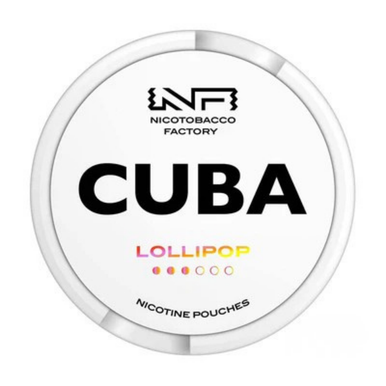
Cuba · 16mg
Read the full guide
Cuba White Lollipop Nicotine Pouches
£39.90
✔ In stock — ready to ship
100% tobacco-free
Free over £20
Same-day dispatch
Secure checkout
This page covers Cuba White Lollipop Nicotine Pouches. The price is £39.90, the declared strength is 16mg, and the listing is in stock as we write. Those are the facts our data holds, and everything below is either a description of the object, a comparison with other cans on our shelves, or a statement that we do not know something.
Start with the name, because it is the part that most needs clearing up. Lollipop is a flavour name. It is not a format. This product is a nicotine pouch in a round tin, exactly like every other pouch listing on this site. There is no stick, nothing to unwrap, and nothing resembling a confectionery item in the can. The word describes the taste the manufacturer has aimed at, in the same way that "cola" on another can describes a taste rather than meaning there is a drink inside. We are being blunt about this at the top of the page because a flavour name that borrows from confectionery can mislead someone skimming, and this is an adult nicotine product sold only to people aged 18 or over who already use nicotine. It is not a sweet, it is not sold as one, and nothing on this page is addressed to anybody under 18.
The full guide to Cuba White Lollipop Nicotine Pouches
4,968 words on how it eats, who it suits, how to serve it and what to put beside it.
Cuba White Lollipop: what is actually on this listing
A second gap worth stating early: our catalogue files most cans under a flavour category — mint, mango, tropical and so on — and this listing is not filed under any of them. The flavour field in our data for this product is empty, because "Lollipop" does not map onto the groupings we sort the shop by. The practical consequence is that browsing flavour shelves will not surface this can. You reach it by brand or by declared strength, and we set out both routes further down.
White is one of several range names Cuba uses across its listings with us. No documentation reaches us explaining what the maker intends by any of them, so we will neither explain the names nor imply a difference between the ranges that we cannot evidence.
What a confectionery-sweet flavour means as a taste
A flavour named after a boiled sweet is making a particular kind of promise, and it is a narrower one than it first appears. What it signals is a sugary, high-sweetness register — the flavour shape of hard confectionery rather than of fresh fruit. The difference matters. Fresh-fruit profiles carry acidity, a bit of astringency and often a green or skin-like edge; confectionery profiles strip most of that out and leave a rounded, simple, unmistakably sweet impression with a single clear fruit direction sitting on top of it.
Which fruit direction, in this case, we cannot tell you. Our data records no flavour category for this listing and we have no manufacturer statement naming one, so anything we wrote here would be a guess. Confectionery-named pouches across the category variously lean red-fruit, citrus, tropical or mixed, and the can itself is the only place that will settle it. We would rather leave an obvious hole in this page than fill it with something a customer could open a tin and disprove.
What we can describe with more confidence is how this sort of profile behaves. High-sweetness flavours tend to arrive strongly and fade in a fairly steep line, so the first few minutes are considerably more intense than the last few. They also tire the palate faster than plainer flavours do — a very sweet can used repeatedly through a day stops registering, which is a well-known and entirely mundane effect and is the main practical reason people keep a second, plainer can alongside a sweet one. There is no cooling element signalled in the name, so unlike a mint or an iced can this one should not read as cold.
There is one more distinction worth drawing, because people use the words loosely and then end up with a can they did not want. "Sweet" and "sharp" are not opposites on a pouch, and a can can be both. Sweetness is the sugar-like weight of a flavour; sharpness is the acidic tang cutting across it. A confectionery-named can is usually high on the first and low on the second, which is precisely what makes it read as simple — there is less competing with the sweetness, so the sweetness is what you notice. A fruit-named can from the same shelf will often be sweet too, but with enough acidity in it that the sweetness is not the whole story. If you have previously found sweet cans cloying, that lack of an acid edge is the thing to be wary of here; if you have found fruit cans thin or sour, it is the opposite. Neither observation is a recommendation, and we are not ranking the two.
That is taste and aroma, and that is the boundary of this section. We are not going to tell you what the pouch does or what you might notice beyond the flavour, because a retailer cannot honestly write that down.
The object: tin, pouch, lid and bin
The format is the standard one and there is nothing unusual about this can within it.
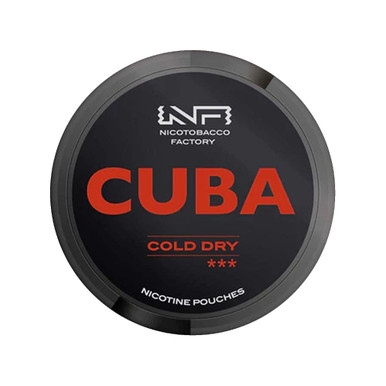
The tin is a shallow round cylinder with a lid that lifts clear and presses back on. Brand, range and flavour are printed on the face, and the declared strength figure is readable without opening anything — useful the moment you keep more than one can in a drawer. Inside, the pouches lie flat in a ring around the base.
We do not publish a pouch count. Our product data does not carry one for this listing and we will not print a number we cannot stand behind, so the can itself is where you read it. The same applies to net weight, to pouch dimensions and to the portion size, which we also do not hold — whether this is a regular or a slim shape is a question the printed tin answers and this page does not.
The top section of a tin like this is normally a catch lid: a separate compartment, reached by turning or lifting the top, for pouches you have finished with. It is a bin and nothing more sophisticated, and its value is entirely practical — it means you are not carrying a used pouch in a tissue while you look for somewhere to put it. Used pouches go in a bin, whether that is the catch lid or general waste. Not down a sink, not down a drain, not down a toilet, not on the ground, and never anywhere a child or an animal could reach.
In use, a pouch sits between the lip and the gum, normally the upper lip and normally towards one side. It should lie flat and stay put; one that keeps moving has usually been placed too far forward. Nothing needs chewing, adjusting or moving about. On duration, we issue no recommended time and will not invent one. The pattern across the category is that people go by the taste rather than a clock, taking a pouch out once the flavour has thinned, which lands most people somewhere between twenty and forty minutes with wide variation either way. Any guidance printed on the can by the manufacturer takes precedence over that observation.
16mg, and what a label figure is good for
This listing declares 16mg and carries no other option. A milligram figure on a pouch tin is a label number: the manufacturer's declared strength, printed in a standard place, useful because it lets you set two cans beside each other and say which declares higher. That is the job it does.
It is not a forecast of taste, of how long a pouch stays interesting, or of intensity in use. Portion size, how dry the material is, the flavour riding on top and individual habit all sit between the printed figure and the experience, which is why two cans showing the same number can read quite differently. The figure is a comparison tool between labels, not a measurement of anything a customer experiences directly.
For filing purposes 16mg puts this can on our Strong shelf, alongside 131 other listings. Above it we run an extra strong category and below it a medium-strength category. Those three groups exist so the catalogue can be sorted by declared figure and for no other purpose whatsoever. They describe where a number falls. They do not suggest where anyone should shop, and we are not going to turn a filing system into advice.
We will not tell you which strength to buy. We will not call any figure a reasonable starting point, and we will not describe a number as suitable for a person, a situation or a condition. Those are deliberate refusals.
This can's place on the Cuba shelf
Cuba is among the larger brands we carry, with 47 listings on the Cuba brand page, spread over several named ranges. The great majority sit at £39.90, which means price does almost no work in choosing between them and the decision comes down to flavour and to the declared figure printed on each individual listing.
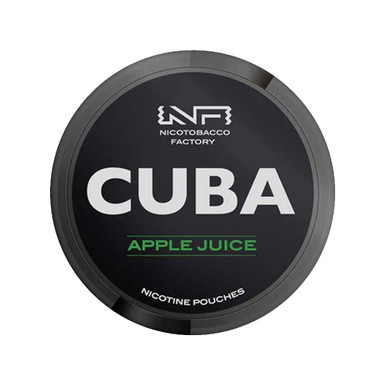
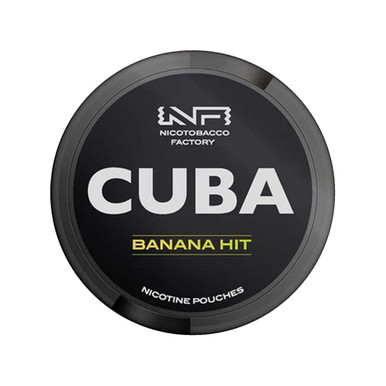
Within that shelf, this can belongs to the sweet end. The nearest neighbours by flavour shape are the brand's sweeter fruit listings: Cuba Black Cherry at £39.90 sits in the dark, sugary fruit register that a confectionery profile most often borrows from, and Cuba Black Blueberry, also £39.90, does something similar with a slightly rounder berry note. Cuba Black Apple Juice at the same price is the lighter, juicier option on that side of the shelf. Cuba Black Banana Hit, again £39.90, is the softest and creamiest of the brand's fruit cans and the one furthest from a hard-sweet profile while still being sweet.
The far end of the same shelf is where the brand keeps its cold and its unusual listings. Cuba Black Cold Dry at £39.90 is the plainest, coldest thing Cuba lists with us, and Cuba Black Cola at the same price occupies the spiced soft-drink register that belongs to no fruit family. Cuba Ninja Coconut, also £39.90, comes from a different named range again and goes in the soft, creamy direction. Between those, the brand covers most of the ground a pouch shelf can cover, at one flat price.
A habit worth keeping when the prices are identical across a brand: read the declared strength on each page rather than assuming it holds across the range. It does not necessarily, and the figure is printed on every listing precisely so nobody has to assume.
There is a second consequence of a flat brand price that is worth stating because it changes how people shop. When every can costs the same, there is no cheap way to sample a brand — the trial can and the staple can cost identically, so an unfamiliar flavour carries the same £39.90 risk as a familiar one. That is one of the reasons we have spent so much of this page on describing the flavour shape rather than praising it, and one of the reasons the pairing section below is organised by how far a can sits from this one rather than by which can is best. If you want to explore the brand cheaply, you cannot; if you want to explore it carefully, reading across several listings first is the only method available, and the brand shelf is laid out to make that reading quick.
Where a pouch can is easy to have with you, and where the rules still apply
The format has some straightforward practical properties, and those properties are the honest reason people who travel or work away from home tend to keep pouches rather than something bulkier. It is worth being precise about what those properties are — and about their limits, which get discussed far less often than they should.
What the object actually requires
Very little. There is no device, no battery, no charging cable, no liquid, no refill, no cleaning and no spare parts. The whole kit is a tin that fits in a pocket. Nothing is heated, nothing is emitted, there is nothing to exhale and there is no ash or residue beyond the used pouch itself, which needs a bin. Nothing about using one is audible. For anyone whose reason for preferring this format is that it packs small and needs no power, those are the facts behind that preference, stated without any claim attached.
Offices and workplaces
Employers set their own rules about what may be used on their premises, and those rules vary enormously between organisations and are frequently not written down anywhere obvious. We cannot tell you what your workplace permits. What we can tell you is that the sensible order of operations is to find out first rather than assume, that a policy covering one category of product does not automatically cover another, and that an HR or facilities policy is the document that settles it rather than anything a shop writes on a website. Sites with their own safety rules — construction, industrial, food handling, laboratories, healthcare settings — are stricter again, and often for reasons specific to the site that have nothing to do with the product category. Ask.
Trains, coaches and flights
Rail operators, coach operators and airlines each publish their own conditions of carriage, and they are not consistent with one another. Some address nicotine products in general terms, some address particular categories, and some are silent on the question entirely, which is not the same as permission. Airlines additionally have rules about what may be carried and where, which are a separate matter from what may be used on board. For long-haul travel the practical point is simply this: read the operator's published conditions before you travel rather than after, and treat silence as a reason to ask rather than as a yes. We do not hold or track any operator's policies and we are not going to characterise them.
Venues with their own restrictions
Plenty of premises restrict what may be used indoors, and a good many of those restrictions are written as a general policy covering a whole class of products rather than as a product-specific rule. Whether such a policy extends to pouches is a question for the venue and not for us — the wording varies, the enforcement varies, and a retailer guessing on a product page would be doing nobody a favour. The honest position is that we cannot advise you on where this product may be used, in any setting whatsoever, and that the operator of the premises is the only authority on their own rules.
Carrying a can day to day
A few unglamorous mechanics, since this is the part of the angle that has actual answers. A tin carried loose in a trouser pocket takes more abuse than one in a bag, and the failure mode is always the same: the lid works loose and the contents end up in the pocket. A tin in a jacket pocket or an inner bag pocket fares better. If you carry one in a rucksack, the side pocket is a worse place than the main compartment, because that is where the sun and the pressure are.
The other day-to-day consideration is that the catch lid fills. It holds a modest number of used pouches and then it does not, and the moment it is full the format stops being self-contained until you can empty it into a bin. People who spend long stretches away from a bin tend to notice this before anything else about the format. Emptying the catch lid when you empty your pockets is the habit that avoids it, and it takes a couple of seconds.
The limits worth naming
Three of them. First, you still need somewhere to put a used pouch; the catch lid buys you time but not indefinitely, and a used pouch left on a surface is a problem for whoever finds it. Second, a tin in a bag or a pocket is still a nicotine product and still has to be kept where children and animals cannot reach it, including when you are away from home — a bag on the floor of a train carriage is not that place. Third, heat travels with you: a tin left in a hot car, a sunlit window seat or a bag in direct sun will not be in the condition you left it in.
What this section deliberately does not do is suggest a setting in which you should use this product, or present the format as a way around anybody's rules. Those are decisions and obligations that belong to you and to whoever owns the premises. We are describing the object and pointing at the people who make the rules.
Pairing a sweet can: what people keep beside it
A high-sweetness can is the clearest case in the whole category for not being the only tin in the house. Sweetness fatigues faster than anything else on a pouch shelf, and the usual remedy people reach for is a differently shaped flavour rather than a different strength. Here is how we would map the options, with the reason stated in each case rather than left implied.
The plain counterpoint. The most effective partner to a sweet can is a plain one, because it resets the palate rather than competing with it. Edge Mint at £14.95 is the cheapest straightforward mint in this comparison set, which makes it an easy second tin to justify. the Klint Avalanche Mint tin at £36.90 is the cold-forward version of the same idea and costs considerably more, so the choice between them is essentially how much cooling you want and how much you are prepared to spend on a second can.
Sweet but differently shaped. If you want to stay in sweet territory without repeating yourself, the move is a fruit can with some acidity in it, because acidity is what a confectionery profile most lacks. Clew Blueberry at £39.90 and Denssi Blueberry Freeze at the same price both sit at exactly this listing's price, which keeps the comparison honest — same money, different flavour shape, and the Denssi adds a cold element the Clew does not signal. Elf Bar Blueberry Raspberry at £29.90 covers similar ground for less.
The sharp reset. For the biggest available contrast with a sugary can, go citrus. Fumi Fiery Lime at £27.90 is the most acid-led listing in this set and is about as far from a boiled-sweet register as it is possible to get while still being a fruit. the Killa Apple can at £33.50 is a gentler version of the same instinct, orchard fruit rather than citrus.
Something smaller to carry. 77 Ghost Mini Mango at £39.90 comes from a line that names itself as mini, which is the most reliable portion-size signal we have across the catalogue, and it brings a tropical direction into the rotation. the Nordic Spirit Max Foresty Berry listing at £4.49 is the lowest price in this set by a wide margin — as ever, open the page and read what that money buys before treating the gap as a saving, because our listings include both single cans and multi-can packs.
If none of those is the right direction, the broader shelves are quicker than reading listings one at a time: the Pablo brand page is a different brand starting point, and our complete product listing holds everything we stock in one place.
Keeping the tin in decent condition
Four things spoil a can, and all four are avoidable.
- An open lid. The most common cause of a flat second half of a tin. Press the lid down properly rather than resting it on top, and close it immediately rather than when you remember.
- Heat. Gloveboxes in summer, dashboards, windowsills in direct sun, shelves above radiators and bags left in hot cars all draw moisture out of a tin even with the lid on. A drawer or cupboard at ordinary room temperature is all that is needed.
- Damp. A bathroom shelf is a poor home for an open can. Dry the outside of a tin before opening it if it has got wet, and take pouches with dry fingers rather than wet ones.
- Decanting. Moving pouches into another container loses you the sealed lid, the catch lid and every printed detail on the tin, including the strength figure, any date marking and the manufacturer's own guidance. The can is the correct container for its own contents.
On refrigeration we make no claim in either direction, because we hold no information on it and a storage instruction invented by a retailer is worthless. Whatever the manufacturer has printed on the can is the authoritative version, including any date marking, and it is worth reading when you open a new tin.
The one storage rule that is not a preference: cans are kept where children and animals cannot reach them, closed, at all times. That covers full tins, part-used tins, empty tins and the used pouches sitting in the catch lid.
What is there to choose on this page
Very little, and it is more useful to say so than to dress it up. One variant is listed: 16mg at £39.90. There is no alternative strength, no pack-size option and no portion choice on this listing. The question in front of you is whether you want this flavour at this price.
A different declared figure means a different listing rather than a different option here, which is what the medium shelf, the Strong category and the extra strong shelf are for. We will tell you those shelves exist and where this can sits among them. We will not point you along them.
Placing the order, and the doorstep check
Stock shows as available as we write this, so the sequence is unremarkable: the tin goes into a basket at £39.90, you check out, and it leaves as a parcel. Availability moves, and the listing rather than this paragraph is the live record of it.
We do not print delivery costs, timescales or courier names on product pages. Those live in the site's delivery information, which is the only place they can be kept current; repeated across hundreds of listings they would be wrong on most of them within weeks.
Age verification. This is a nicotine product sold to over-18s only. Age checks apply at the point of sale and ID may be requested on delivery. A courier can decline to hand over a parcel to anyone who cannot show they are 18 or over, and the order will not complete if that check is not satisfied. Where a neighbour or a housemate signs for your parcels, the same check applies to them. Sales to under-18s do not happen here, and neither do sales to an adult who is ordering for one.
Routes back to this listing
Because this can carries no flavour category, there are two ways to find it rather than three. By declared strength it appears on the Strong shelf with 131 other listings. By brand it appears on the Cuba page with 46 others. Those two filters are the reliable routes.
If you have not decided whether you are shopping by brand or by strength, the full shop listing is the honest place to start and the category filters narrow it faster than scrolling will. Where a specific can matters to you, bookmarking its page directly is worth doing — particularly this one, since no flavour shelf leads to it.
Questions we get about this can
Is this a sweet or a lollipop?
No. It is a nicotine pouch in a tin, and Lollipop is the name of the flavour. There is no stick, no wrapper and no confectionery item involved. It is an adult nicotine product sold only to people aged 18 or over who already use nicotine, and it should be stored and treated accordingly — closed, and out of reach of children and animals.
Which fruit is it?
We do not know and will not guess. Our product data records no flavour category for this listing and we hold no manufacturer statement naming a fruit, so the printed can is the only place that answers it. Confectionery-named pouches across the category lean in several different directions, which is exactly why guessing would be unhelpful.
Why does it not appear on any flavour shelf?
Our flavour categories are a fixed set and "Lollipop" does not fall into any of them, so the field is left empty rather than filled in misleadingly. Browsing by flavour will not surface this can. Use the brand shelf or the strength shelf instead, or bookmark the page.
How many pouches does the tin hold?
We do not hold that figure and are not going to print one. It is on the can. We are aware this is among the first things customers want to know before spending £39.90, and we would rather leave the gap visible than publish a number that could be counted and contradicted.
Is it a cold or a cooling flavour?
Nothing in the name signals a cooling element, so it should not read as cold in the way a mint or an iced can does. If a cooling sensation is what you want, cans named for cold, ice or mint are where to look. We have not tasted and ranked these cans as a shop and do not publish tasting scores.
Can I use it at work or on a flight?
We cannot tell you. Employers, rail and coach operators, airlines and individual venues each set their own rules, those rules vary, and silence in a policy is not permission. Check with the employer or operator before you travel or start a shift. It is their decision and their document, not ours.
How long is a pouch meant to stay in?
No recommended time is published by us, and we are not prepared to make one up. The pattern we see across the category is that people let the taste decide and take a pouch out once it has thinned, which for most falls between roughly twenty and forty minutes, with plenty of people outside that on both sides. Where the can carries manufacturer guidance, that is the instruction to follow and not this paragraph.
Will you tell me what is in it?
Contents and ingredient information is not something this shop prints on a listing, and we are not going to summarise one from memory — that is precisely how inaccurate information ends up circulating. The manufacturer's own statement is printed on the can, and whatever the brand publishes itself is the other place to read it properly.
Which strength should I choose?
Not a question we will answer. We print the declared figure on every listing and sort the catalogue by it, which is the appropriate extent of a retailer's involvement. Recommending strengths is not something we do, and describing a figure as suitable for a given person or circumstance is not something we will do either.
Is this for people who do not already use nicotine?
No. This is an adult nicotine product for people aged 18 or over who already use nicotine, and it is not intended for anybody else. Nothing on this page is addressed to people who do not already use nicotine, and nothing here should be read as an invitation to start.
Is the White version the same as the Black one with this name?
They are separate listings with separate pages, and the only differences we can speak to are the ones our data holds: the range name, the price and the declared strength shown on each page. Read the strength figure on both rather than assuming they match, because that is the field most likely to differ. We hold no manufacturer documentation explaining what distinguishes the ranges from one another and will not characterise it.
Will it dry out before I finish the tin?
That depends almost entirely on how it is kept rather than on the can. An open lid and a warm place are what flatten a tin; a closed lid in a drawer at room temperature is what does not. We do not publish how dry or moist this product is to begin with, so we cannot tell you how much moisture it has to lose. Any date marking the manufacturer prints on the can is the authoritative guide to how long it keeps.
Do you publish reviews or ratings for it?
Not on this page. We do not carry customer ratings, testimonials or popularity claims on product listings, and we are not going to characterise how well a can sells. What we publish is the price, the declared strength, the stock position and an honest description, and that is the whole of it.
Compliance information
Read this before ordering.
- 18+ only. Sold exclusively to adults aged 18 or over. We do not sell to under-18s, and we do not sell to an adult purchasing on behalf of an under-18.
- For adults who already use nicotine. This product is intended only for people who already use nicotine, and nothing on this page is directed at anybody else.
- Nicotine is an addictive substance. That statement applies to this product and is made plainly.
- Not a licensed medicine. This is not a licensed stop-smoking medicine, and it is not intended for non-smokers, for people who do not use nicotine, for under-18s, or for anyone pregnant or breastfeeding.
- ID may be requested on delivery. Couriers may ask for proof of age, and a parcel will not be released if that check cannot be satisfied.
- Not a confectionery product. The flavour name refers to a taste. The product is a nicotine pouch and must be kept closed and out of reach of children and animals at all times, including part-used tins, empty tins and used pouches.
- No medical advice is offered here. Nothing on this page is medical, dosage or health guidance. Questions about nicotine and your own circumstances belong with a healthcare professional.
Closing note
Cuba White Lollipop is a nicotine pouch can at £39.90, declared at 16mg, in stock as we write, named for a sugary confectionery flavour whose specific fruit direction we do not hold and will not guess at. It arrives in the same round tin as every other pouch on the site, with the same lid, the same used-pouch compartment and nothing to charge or clean.
The gaps on this page are real and stated: no pouch count, no portion size, no flavour category, no account of what the range names mean, and no view on where you may use it. Where you want to widen the search, the Cuba shelf and the Strong category are the two places this listing lives, and both hold a great deal more than this one can.
More from Cuba
More strong pouches
More cuba pouches
Where this sits
Cuba White Lollipop Nicotine Pouches appears in these categories. Browse them, or jump to something close.
You might also like