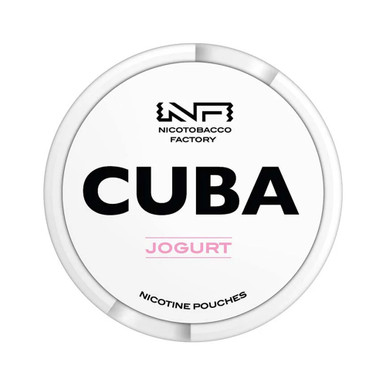
Cuba · 16mg
Read the full guide
Cuba White Jogurt Nicotine Pouches
£39.90
✔ In stock — ready to ship
100% tobacco-free
Free over £20
Same-day dispatch
Secure checkout
This listing is Cuba White Jogurt Nicotine Pouches, priced at £39.90, declared at 16mg, and in stock at the time of writing. Those four items — name, price, strength, availability — are the load-bearing facts, and the rest of this page is description, comparison against other cans on our shelves, and a set of honest admissions about things we do not know.
There is one gap worth flagging immediately, because it is unusual. Our catalogue files most cans under a flavour category — mint, mango, tropical, berry and so on — and this one is not filed under any of them. The flavour field in our product data for this listing is empty. That is not a mistake we are hiding; it is a straightforward consequence of "Jogurt" not mapping onto the flavour groupings we use to sort the shop. So this page is going to describe the taste the name points at, and it is also going to tell you plainly that you will not find this can by browsing a flavour shelf, because it is not on one. You find it by brand or by declared strength.
The full guide to Cuba White Jogurt Nicotine Pouches
5,065 words on how it eats, who it suits, how to serve it and what to put beside it.
Cuba White Jogurt: the facts we hold on this can
Cuba runs several named ranges with us and White is one of them. We hold no documentation on what the manufacturer means by that word, so we are not going to explain it, invent a house style for it, or tell you what it signals about the pouches inside. What we do hold is the price, the strength figure, the stock position and the other forty-six Cuba listings we carry, and those are the things this page will actually use.
One note before the description proper: what follows concerns an adult nicotine product, available only to people aged 18 or over who already use nicotine. The section setting out the rules in full sits near the foot of the page.
What a yoghurt flavour tastes like on a pouch
Dairy and dessert flavours are a small and slightly odd corner of the pouch category, and the name on this can puts it squarely in that corner. It is worth setting expectations carefully, because a yoghurt flavour is not what most people mean when they say fruit, and it is not sweet in the way a boiled-sweet flavour is sweet.
The characteristic notes in a yoghurt profile are creaminess and a mild sourness sitting together. Creaminess here means a rounded, soft, slightly thick impression rather than the sharp edges you get from citrus or berry. The sourness is the tang — the faint acidity that makes yoghurt taste like yoghurt rather than like cream — and on a pouch it usually shows up as a lift at the front of the taste that stops the whole thing reading as flat sweetness. Most yoghurt-named products in this category also carry a light fruit element underneath, because pure dairy is a difficult thing to make recognisable, though we do not hold a statement from the manufacturer about what fruit if any is involved here and so we are not going to name one.
What this means in practice is that the can reads soft. It is not a cold flavour: there is no mint, no menthol and nothing in the name suggesting a cooling element, so if you are used to cans that arrive cold, this one will not. It is not a sharp flavour either. Against the two dominant registers in the category — cold mint and bright fruit — a yoghurt can sits somewhere else entirely, and people tend to have a strong reaction to it in one direction or the other. It is one of the least neutral flavours on a pouch shelf.
It is worth understanding how dessert names behave across this category generally, because they set expectations that the product then has to meet. A can named for a fruit is usually making a fairly narrow promise: the fruit, sweetened, sometimes chilled. A can named for a dessert or a dairy product is making a broader and vaguer one, because it is naming a texture as much as a taste, and texture is exactly the thing a pouch cannot deliver. What a yoghurt-named pouch can do is reproduce the flavour signature — the cream note and the tang — and what it cannot do is be thick or cold or smooth in the mouth. People who read the name as a promise of richness are usually the ones who come away disappointed, and people who read it as a description of a flavour shape are usually the ones who get on with it. That is not a defect in any particular can; it is a limit of the format, and it applies to every dessert-named pouch on every shelf we stock.
The arc over the life of a pouch tends to follow the usual pattern: most present at the start, recognisable through the middle, thinning towards the end. Creamy profiles often thin more noticeably than mint ones because there is less of a persistent single note to hold on, and the tang is usually the last thing to go. Some people find the late stage of a dairy-flavoured pouch the least appealing part of it for that reason, since what remains once the cream note has faded is mostly the sourness on its own. Whether that reads as pleasant or as a signal to take it out is entirely individual, and we have no view to offer on it.
That is a description of taste and aroma, and it is where this section stops. We are not going to tell you how the pouch feels, what it does, or what you might notice from using it, because those are not things a shop can honestly write down.
Arriving at this can from a different one: what actually changes
Almost everyone reading a page like this already uses pouches and already has a can they are used to. The useful question is not why you should buy this one — we are not going to argue that — but what is genuinely different if you do. Some of that has a factual answer and some of it does not, and it is worth separating the two.
| What people ask | What we can tell you |
|---|---|
| Is the can a different shape or size? | No. It is the standard round pouch tin with a lift-off lid, the same object you already handle. |
| Is there anything to learn or set up? | No. There is no device, no charging, no refilling and no parts. The whole procedure is open, take, use, bin. |
| Will the pouch feel different in the mouth? | Possibly, depending on portion size and how dry the material is. We do not publish either figure for this can. |
| Will the flavour be a big change? | If you are coming from a mint or a bright fruit can, yes — a dairy profile is a genuine change of direction, not a variation. |
| Is the declared strength the same as my current can? | This one declares 16mg. Read the figure on your current listing rather than assuming it carries across brands or ranges. |
| Is £39.90 the same kind of price as what I pay now? | Not necessarily. Our listings include single cans and multi-can packs, so check what each page actually contains. |
| Which is better? | Not a question we answer. Taste is not rankable and we have not run a panel. |
Two rows in that table deserve expanding. The first is the price row, because it causes more confusion than anything else on this site. Nordic Spirit Max Foresty Berry is listed at £4.49 and the Edge Mint can at £14.95, and those numbers look like they belong to a different shop from the £39.90 on this page. They do not — they belong to listings that contain different things. The band between them is filled in by Fumi Fiery Lime at £27.90, Elf Bar Blueberry Raspberry at £29.90, the Killa Apple listing at £33.50 and Klint Avalanche Mint at £36.90. Before treating any of those gaps as a saving, open the listing and read what the money buys.
The second is the flavour row. Moving from a cold mint to a creamy dairy flavour is the largest jump available in this category, and people who make it without expecting it are often disappointed for reasons that have nothing to do with the can being any good. If you want to reduce that risk, the sensible approach is to have a second, more familiar can in the house at the same time rather than betting a whole £39.90 on an unfamiliar direction. Cans like Clew Blueberry at £39.90 or Denssi Blueberry Freeze at the same price occupy much more conventional territory and make reasonable company for something unusual.
What we are not doing in this section is telling you that this can is better than the one you have, or that there is a reason to move. There is no claim being made here at all. These are mechanics, prices and flavour directions, and all three are things we can state without inventing anything.
The pouch, the lid and the used-pouch compartment
The physical format is the same across almost the whole category and this can is no exception, but the detail is worth having written down somewhere.
The tin is a shallow cylinder with a lid that lifts clear and presses back on. Brand, range and flavour are printed on the face of the lid, with the declared strength figure readable without opening anything — a small thing that becomes a useful thing the moment you keep more than one can in a drawer. Inside, the pouches sit flat in a ring around the base.
A pouch count is not something we hold for this listing. Our data has no such field, and a number invented on a product page is a number a customer can count and disprove. The printed can carries it. The same goes for the net weight and for the dimensions of an individual pouch.
A small practical note on the ring layout, since it is the part of the object people interact with most and nobody ever writes it down. Pouches sit flat and slightly overlapping around the base, and the sensible way to take one is from the edge of the ring rather than digging at the middle, which keeps the rest of them lying flat. Dry fingers matter here more than people expect: wet or damp fingers put moisture into the tin, and a tin that is repeatedly opened with wet hands ages faster than one that is not. It is a trivial habit and it costs nothing, which is the only reason it is worth a sentence. The other half of the same habit is closing the can straight away rather than after you have finished whatever else you are doing.
The upper section of a tin of this type is normally a catch lid — a separate compartment for used pouches, reached by turning or lifting the top. It is a bin, not a feature, and its only job is to save you carrying a used pouch around in a tissue when there is nowhere obvious to put it. A used pouch belongs in a bin, in the catch lid or the general waste; never down a sink, a drain or a toilet, never on the ground, and never anywhere a child or an animal could get at it.
In use, a pouch goes between the lip and the gum, usually the upper lip and usually towards one side. It should sit flat and stay put. There is nothing to chew, nothing to move around and nothing to adjust once it is placed. We do not publish a portion size for this can, so whether it is a regular or a slim shape is something the printed can will tell you and we will not. On how long people keep one in: we issue no recommended time and are not going to invent one. What we observe across the category is that people work to the taste rather than to a clock and take a pouch out when the flavour has thinned, which for most people lands somewhere between twenty and forty minutes with a great deal of variation. Manufacturer guidance printed on the can takes precedence over any of that.
Reading 16mg for what it is
This listing declares 16mg and carries no other strength option. A declared milligram figure is a label number. It is the manufacturer's stated strength, printed in a standard place, and its usefulness is that it lets you line two cans up and say which declares higher. That is the whole of its function on this page.
It is not a prediction of taste, duration or intensity. Pouch size, how dry the material is, the flavour on top and how long an individual keeps one in all sit between the number on the lid and the experience of using it, which is why two cans printed with the same figure can read quite differently from each other. Anyone treating the number as a precise instrument is over-reading it.
For sorting purposes, 16mg puts this can on our Strong shelf, which holds 132 listings. That shelf sits between the medium-strength category below it and the extra strong category above. Those three groupings exist so that the catalogue can be sorted by declared figure and for no other reason. They are a filing system, not a recommendation, and we do not attach any suggestion to any of them.
We will not tell you which strength to buy, we will not describe a figure as a sensible place to begin, and we will not say that any number suits any person, situation or condition. Those are refusals on principle rather than oversights. A shop that starts advising on strength has stopped being a shop.
Dry pouches, damp pouches, heat, and keeping this can worth opening
Storage is where most complaints about a can actually originate, and it is worth going through properly rather than in a single bullet. A pouch tin is a small sealed environment, and the things that spoil it are moisture leaving, heat getting in, and time passing.
Dry and moist are two different products
Pouches across the category come in a range from quite dry to noticeably moist, and the difference is a manufacturing decision rather than a condition. A dry pouch feels light and powdery through the fleece; a moist one feels heavier and softer in the fingers. Both are normal and neither is a fault. We do not publish which end of that range this can sits on, because our data does not record it, and it is not a thing you can read off a listing anywhere reliably — the can in your hand is the answer.
The reason it matters for storage is that a moist pouch has more to lose. A tin that has been left open, or left somewhere warm, will lose moisture, and a moist product that dries out changes character more obviously than a product that was dry to begin with. If you open a can and find the pouches stiffer or lighter than you expected, the storage history of the tin is the first thing to suspect.
Heat is the main enemy
Heat does more damage to a can than anything else people do to them. The standard offenders are all the same: a glovebox in summer, a dashboard, a windowsill in direct sun, a shelf above a radiator, a bag left in a hot car. Warmth drives moisture out of the tin even with the lid on, and sunlight adds its own problems. There is nothing exotic required here — a drawer or a cupboard at ordinary room temperature is entirely adequate and is what most people already do without thinking about it.
The lid is not optional
The single most common way a can goes flat is being left open on a worktop. The lid should be pressed down properly rather than balanced on top. This is worth saying plainly because it is the one storage behaviour that reliably ruins the second half of a can, and it costs nothing to avoid.
Damp places are as bad as hot ones
A bathroom shelf is a poor home for an open tin. Water on the outside of a can is a nuisance; water inside one is the end of it. If a can does get wet, dry the outside before opening it.
Do not decant
People occasionally move pouches into a smaller container to carry them. It is a bad trade. You lose the sealed lid, you lose the catch lid, and you lose every piece of printed information on the tin — the brand, the flavour, the declared strength figure, the manufacturer's guidance and any date marking. A can with its own lid on is the correct container for its own contents.
Refrigeration, dates and what we will not claim
Some people keep pouch tins in a fridge and are confident it preserves them. We hold no data on that and we are not going to make a claim about it in either direction, because a storage instruction invented by a retailer is worth nothing. If the can carries a manufacturer's storage instruction or a date marking, that is the authoritative source and this website is not. Check it when you open a can, and follow it.
One storage rule is not a matter of preference at all: cans go somewhere children and animals cannot reach them. That applies to full cans, part-used cans, empty cans and the used pouches in the catch lid. Closed, out of reach, no exceptions.
How this can sits among the Cuba listings
Cuba is one of the larger brands we carry, with 47 listings on the Cuba brand page, spread across several named ranges. Nearly all of them share the £39.90 price, which has an interesting effect: because the money does not vary, choosing between them is entirely a question of flavour and of the declared figure on each individual page.
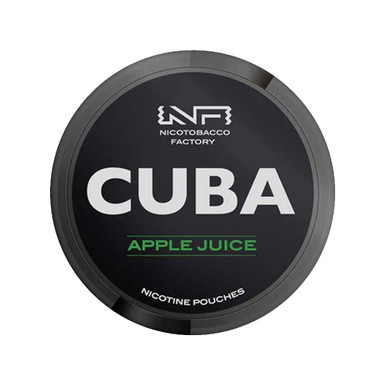
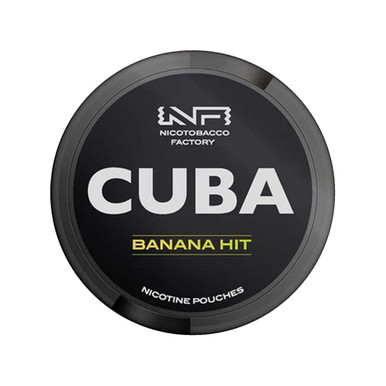
Against the rest of the brand, this can is one of the unusual ones. The bulk of Cuba's shelf is fruit. Cuba Black Cherry and Cuba Black Blueberry, both £39.90, cover the dark sweet fruit end. Cuba Black Apple Juice at the same price is lighter and more orchard-like. The closest relative this can has anywhere on the brand shelf is Cuba Black Banana Hit, also £39.90, because banana is the one fruit flavour that shares the soft, creamy, rounded quality a yoghurt profile depends on — if you want something adjacent rather than identical, that is the one to read next. Cuba Ninja Coconut at £39.90 is the other candidate on the same logic, since coconut is another soft and creamy direction rather than a sharp one.
At the far end from this can sit the brand's cold and savoury listings. Cuba Black Cold Dry at £39.90 is about as distant from a creamy dessert flavour as the brand gets, and the Cuba Black Cola can, again £39.90, occupies the spiced soft-drink register that belongs to no fruit family at all. Knowing where the two extremes are makes the middle of the shelf easier to read.
One habit worth adopting when you browse a brand shelf where every price is identical: read the declared strength figure on each listing individually rather than assuming it is a brand-wide constant. It is not. Ranges within a brand can carry different figures, and a customer who reads one page and generalises from it will eventually be wrong. The figure is printed on every listing we run, in the same place, for exactly this reason. It takes a few seconds to check and it is the only number on the page that varies independently of the flavour.
What to keep in the drawer alongside it
An unusual flavour is a poor choice as the only can in the house, for the simple reason that there is nowhere to go when you have had enough of it. A creamy, tangy profile is more tiring over a day than a plain mint is, because there is more happening in it. Most people who keep a can like this keep something plainer beside it.
For the plain option, Edge Mint at £14.95 is the cheapest straightforward mint in this comparison set and does the job of resetting the palate without much ceremony. the Klint Avalanche Mint tin at £36.90 is the cold-forward version of the same idea at a higher price.
For a fruit counterpoint rather than a mint one, the Clew Blueberry can at £39.90 and Denssi Blueberry Freeze at £39.90 sit at the same price as this listing, which makes them easy to compare — same money, different direction. Elf Bar Blueberry Raspberry at £29.90 covers similar ground more cheaply, and the Fumi Fiery Lime listing at £27.90 goes sharp and citrus, which is the most complete contrast to a creamy can available at a middling price.
Two more for the sake of coverage: the 77 Ghost Mini Mango can at £39.90 brings a tropical direction in a line that names itself as mini, and Killa Apple at £33.50 is the orchard-fruit option in this set. If none of that narrows it down, the Pablo brand shelf is a different starting point entirely, and the full catalogue listing holds everything we stock in one place.
What there is to decide on this page
Less than on most listings. There is one variant here — 16mg at £39.90 — and no second strength, no pack-size option and no portion choice. The decision in front of you is whether you want this flavour at this price, and that is genuinely all of it.
If a different declared figure is what you are after, that means a different listing rather than a different option on this one. The medium, strong and extra strong shelves are how you find those. We are telling you the shelves exist and where this one sits. We are not pointing you up or down them.
Buying it, and the check at the door
This listing is in stock at the time of writing, so the process is the straightforward one: add the can at £39.90, check out, and it goes out as a parcel. Stock positions change, and the listing itself is the live source rather than this paragraph.
What a delivery costs and how long it takes are not things we print on a product page. Both belong to the site's delivery information, which is the single place either can be kept current; copied across several hundred listings, a shipping window is wrong on most of them inside a month and nobody notices until a customer is annoyed.
Age verification. This is a nicotine product, sold to over-18s only. Age checks apply when you order, and ID may be requested on delivery. A courier can refuse to hand a parcel over to anyone who cannot show they are 18 or over, and the order will not be completed if that check is not satisfied. If someone else will be taking the parcel in at your address, they need to be able to pass the same check. We do not sell to under-18s, and we do not sell to adults ordering on behalf of an under-18.
Getting back to this listing
Because this can is not filed under a flavour category, there are only two natural routes to it. By declared strength it sits on the Strong shelf with 131 other listings. By brand it sits on the Cuba shelf alongside 46 others. Those are the two filters that will surface it.
If you do not know yet whether you are shopping by brand or by strength, the complete listing is the honest starting point, and the category filters narrow things faster than scrolling. It is worth bookmarking this page directly if it is the can you want, precisely because the flavour shelves will not lead you here.
Questions people ask about this one
Why is this can not on a flavour shelf?
Because our flavour categories are a fixed set — mint, mango, tropical, berry and the rest — and a yoghurt flavour does not map onto any of them. Rather than file it somewhere misleading, our data leaves the flavour field empty for this listing. The practical consequence is that browsing by flavour will not find it, and you need the brand shelf or the strength shelf instead.
What does Jogurt actually taste of?
A creamy, mildly tangy profile — the soft roundedness of dairy with a light sour lift over the top. It is not cold, there is no mint or menthol element in the name, and it is not a sharp flavour. Most people find it either much better or much worse than they expected, because it sits well away from the two familiar registers of cold mint and bright fruit.
What is the pouch count?
We do not hold that number in our product data and we will not print one we cannot stand behind. The can itself carries the count. We know this is one of the first things customers want to know and we would rather leave an obvious gap than fill it with a guess that turns out to be wrong.
Is it a dry pouch or a moist one?
We do not publish that for this listing. Both types are normal across the category and neither is a defect. The can in your hand is the only reliable answer, and how it has been stored will affect what you find when you open it.
Is this the same as the Black range version?
They are separate listings with separate pages. The only differences we can speak to are the ones our data holds — the range name, the price and the declared strength on each page — so read the strength figure on both rather than assuming they match. We have no manufacturer documentation explaining what distinguishes the ranges and will not characterise it.
How long should the pouch stay in?
We do not issue a time. Across the category people go by the taste and take a pouch out once the flavour has thinned, which typically falls somewhere in the twenty-to-forty-minute region with a lot of individual variation. If the printed can carries manufacturer guidance on this, follow that rather than anything on a retail website.
Can you list the contents?
We do not publish ingredient or contents information on product pages, and we are not going to paraphrase one here. The printed can carries the manufacturer's own statement, and that is the correct place to read it.
Which strength is right for me?
We will not answer that. We print the declared figure on every listing and sort the catalogue by it so you can see where each can falls, and that is the extent of what a retailer should do. We do not recommend strengths and we do not describe any figure as suitable for any person or situation.
Does keeping it in the fridge help?
We have no information either way and so make no claim. What we can say is that heat, sunlight, damp and an open lid are the four things that reliably degrade a can, and avoiding those four covers most of it. Any storage instruction printed by the manufacturer overrides everything in this paragraph.
Could someone who does not use nicotine try this?
No. It is an adult nicotine product for people aged 18 or over who already use nicotine, and it is not intended for anyone else. We will not present it as suitable for anybody who does not already use nicotine.
Does the flavour vary between cans?
Batch-to-batch variation exists across the whole category and we do not publish anything about it for this or any other listing, because we do not measure it and would only be repeating anecdote. What we can say is that a difference people attribute to a batch is very often a difference in storage instead — a tin that has spent a fortnight somewhere warm will not taste like one that has not. If a can seems off, where it has been kept is the first thing worth checking.
Where is this made?
Our product data does not record a country of origin for this listing, so we are not going to state one. Manufacturing information of that sort belongs to the manufacturer, and the printed can and any material the brand publishes are the places it can be read accurately. We would rather leave the question open on this page than answer it from an assumption.
Can I buy a single can rather than this listing?
What this listing contains is what it contains, at £39.90, and there is no alternative pack option on this page. Other listings in the shop are priced very differently — the range in the comparison set above runs from £4.49 to £39.90 — and the difference generally reflects what is in each one rather than a discount. Open the listing and read it.
The rules attached to this product
This section is the one to read properly before ordering.
- Over-18s only. This product is sold exclusively to adults aged 18 or over. We do not sell to under-18s, and we do not sell to an adult buying for an under-18.
- For existing nicotine users. It is intended only for adults who already use nicotine. Nothing on this page is an invitation to anyone else to begin.
- Nicotine is an addictive substance. Stated plainly, because it is true of this product.
- Not a licensed medicine. This is not a licensed stop-smoking medicine. It is not intended for non-smokers, for people who do not use nicotine, for under-18s, or for anyone who is pregnant or breastfeeding.
- ID may be requested on delivery. Couriers may ask for proof of age at the door, and a parcel will not be released if that check cannot be satisfied.
- Store out of reach of children and animals. This covers full cans, part-used cans, empty cans and used pouches in the catch lid.
- No medical advice is given here. Nothing on this page is medical, dosage or health guidance of any kind. Questions about nicotine and your own circumstances belong with a healthcare professional rather than a retailer.
To finish
Cuba White Jogurt is a nicotine pouch can at £39.90, declared at 16mg, in stock as we write, and named for a creamy, mildly tangy dessert flavour that sits a long way from the cold mints and bright fruits that make up most of a pouch shelf. It arrives in the same round tin as everything else, with the same lid and the same used-pouch compartment, and there is nothing to charge, clean or assemble.
We have printed the facts we hold and admitted the ones we do not: no pouch count, no portion size, no moisture level, no account of what the range names mean. If an unusual flavour is not what you are after today, the wider Cuba range and the Strong category are the two shelves this can belongs to, and both are considerably larger than this single listing.
More from Cuba
More strong pouches

More cuba pouches
Where this sits
Cuba White Jogurt Nicotine Pouches appears in these categories. Browse them, or jump to something close.
You might also like