Cuba · 16mg
Read the full guide
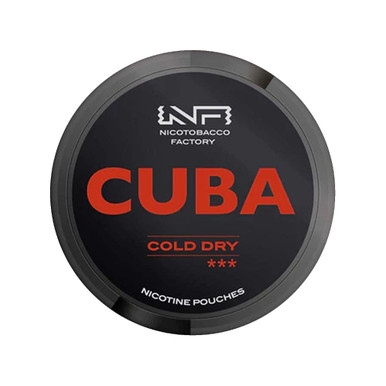
Cuba White Cold Dry Nicotine Pouches
£39.90
✔ In stock — ready to ship
100% tobacco-free
Free over £20
Same-day dispatch
Secure checkout
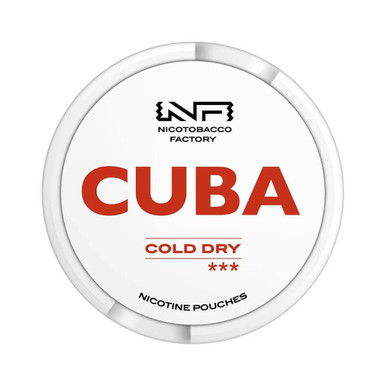
Cuba White Cold Dry Nicotine Pouches is listed here at £39.90 with one declared strength, 16mg, and a single variant at that figure. Availability shows as in stock as this is written. That is our whole product record for this can, and there is one further thing in it worth flagging immediately, because it shapes most of this page: our flavour field for this listing is empty. There is no flavour classification recorded against Cold Dry at all.
Plenty of shops would quietly paper over that. We would rather be direct about it, because the alternative is reading a product name as though it were a specification and then writing several hundred words on top of the assumption. Cold Dry is the name the manufacturer put on the lid. It is not a data field, it is not a measurement, and this page is not going to treat it as one.
The full guide to Cuba White Cold Dry Nicotine Pouches
4,902 words on how it eats, who it suits, how to serve it and what to put beside it.
The record behind this listing
What that leaves is still a lot: the object, the format, the figure on the can, the shelves it sits on, the prices around it, and a frank account of which questions we can answer and which we cannot. Those are the things a shop is actually in a position to tell you, and they make up the rest of this page. Adult product, 18 and over, compliance wording in its own section further down.
Using the pouch, step by step
Taking the format from the top, since it is identical across every can on this site and worth stating once properly.
The pouch is a small sealed unit. It goes in the mouth, tucked between the lip and the gum line, and it stays there. Nothing is chewed, nothing is swallowed, nothing is lit and nothing is drawn in. That is an account of what the object does, offered without any claim attached to it in either direction.
The sequence people settle into is a short one. Lift the lid. Take a single pouch between finger and thumb. Replace the lid before you do anything else, because a can left open on a surface is the beginning of every complaint about a can. Place the pouch at the front of the mouth, most commonly under the upper lip, and let the lip hold it. It will not wander on its own.
Shifting it about is normal. If it presses awkwardly on one side, move it across. If it presses awkwardly everywhere, the reasonable response is to take it out, and nobody should be talking you through persevering with something uncomfortable. That is a matter of comfort, not of technique.
Taking one out and getting rid of it is the step people are worst at. The used pouch goes into the catch compartment under the lid if there is no bin within reach, and then from the compartment into a bin at the first opportunity. It does not go down a sink, into a drain, into a hedge or out of a window. The compartment is a staging post and not a destination, and letting it fill means the lid stops seating flat.
On duration, we publish nothing and we advise nothing. What people report ranges from a handful of minutes to the better part of an hour, and the common trigger for stopping is simply that the taste has run out. Whatever the manufacturer prints on the can about use is the instruction that matters; we are a shop and not the author of that instruction.
16mg, treated as the label figure it is
The 16mg against this listing is the nicotine content the manufacturer declares for a pouch, transcribed by us from their labelling without adjustment. We have not tested it, we do not round it, and if the can in your hand ever shows something different from our page, the can is authoritative and we want to be told so we can correct ourselves.
As a number it does one honest job: it orders cans whose figures were declared the same way. Inside a single manufacturer's line that ordering holds up. Between manufacturers it does not, because companies declare against different pouch formats and by different conventions, so two cans printing the same figure are not thereby the same as each other. We publish each company's number beside each company's product and we decline to convert between them, since converting honestly would require technical detail we do not possess.
Our strength shelves exist to make that figure navigable rather than to rank anything. This listing is filed on the Strong shelf, 132 listings deep at present. We also maintain a Medium Strength band and an Extra Strong band, and each listing falls into exactly one of the three according to its declared number. Those bands are drawers, not rungs, and nothing about being filed in one is a suggestion that anyone should be in it.
What we will not say is that 16mg suits you, or is appropriate for you, or is a reasonable place for you to be. We know nothing about you, we are not qualified to advise anyone about strength, and a shop that offered that advice would be making it up. The figure is published so that people who already know what they are looking for can find it.
The name on the lid, and the field we left empty
Back to the flavour question, since it is the one that brings most people to this page.
Our flavour classification for Cold Dry is blank. It is not blank because the can has no taste; it is blank because nothing in our product data assigns this listing to a flavour family, and we build these pages only from what the data holds. The consequence is visible on the shelves: this can appears on the Cuba brand shelf and on the Strong strength shelf, and on no flavour shelf at all. If you came here from a flavour page, you came from somewhere else and then found your way across.
So what can be said about the name? Only what the words are. "Cold" is the vocabulary the trade generally uses for a cooling character on the tongue, and "dry" is generally used for a taste that does not present as obviously sweet. That is what those two words tend to mean when they appear on a can anywhere on this shelf — it is a note about usage of language, not a statement about this particular product's contents, its build or anything measurable about it.
We are specifically not going to tell you that this pouch is dry in any physical sense. We do not hold a moisture figure, a format designation or a specification of any kind for it, and turning an adjective in a product name into an engineering claim is exactly the sort of invention this page exists to avoid. The name is a name. If the manufacturer prints a description on the packaging, that description is theirs and it is the one to read.
It is worth pausing on why this matters beyond pedantry. A shop page that confidently describes a taste it has no record of is not being helpful; it is generating something that sounds like information and functions like a guess. Someone reads it, orders on the strength of it, and discovers the description bore no relation to the can. That is a worse outcome for everyone than an honest blank, and it is why this section ends without a tasting note instead of ending with a paragraph of invented adjectives.
If you have already used this can, you are in a far better position than this page is. If you have not, the sensible expectation to set is that you will be finding out rather than confirming — and if that is not how you like to buy, the cans further down this page with classified flavours are the ones where we can actually tell you something.
Cool, sweet, sharp, bitter: a grid for talking about cans
Since the flavour field is empty, the more useful thing to give you is the framework people actually use when they compare pouches, so that you can apply it yourself once the can is in front of you. Four axes cover most of what anyone says about a pouch taste.
The cool axis
Cool is the sensation axis rather than a taste in the strict sense — the impression of coldness that mint-family and iced-named cans produce. It runs from entirely absent, as in most plain fruit cans, to dominant, where the coolness is the first and last thing anyone notices. Most cans on our shelves sit somewhere along it rather than at either extreme, and the name on a lid is usually the best available clue as to where.
The sweet axis
Sweetness is the axis people underestimate, because it varies far more between pouches than between, say, two soft drinks. At one end are cans where sweetness leads and everything else follows behind it. At the other are cans where sweetness is almost absent and the flavour reads as bare. Where a can sits on this axis is usually what determines whether someone can use it all day or finds it wearing after two.
The sharp axis
Sharpness is the bright, acidic edge that citrus and some berries carry — the quality that makes a taste feel like it has corners. A sharp can registers at the front of the mouth; a can with no sharpness at all tends to read as round or soft. Sharpness and sweetness frequently move together in fruit-named cans, which is why a sweet berry can and a sharp berry can are genuinely different propositions rather than variations on one.
The bitter axis
Bitterness is the least discussed and the most decisive. It is what stops a sweet flavour from collapsing into syrup, and it is the reason coffee and dark-flavoured cans taste like themselves. Small amounts read as depth. Larger amounts read as bitterness proper, and people tend to have firm opinions in one direction or the other.
Why the grid is worth having anyway
A framework you cannot apply to the product in front of you might seem like an odd thing to spend four headings on, so here is the case for it. Pouch flavour names are marketing shorthand and they are not consistent between manufacturers. Two cans both called some version of cool mint can land in genuinely different places on the sweet axis. A can named after a berry can carry more sharpness than a can named after a citrus fruit. The names sort the shelves; they do not describe the experience with any precision.
The four axes are useful because they are the terms people reach for when they try to explain to somebody else why they did or did not get on with a can. "Too sweet" is an axis statement. "Not cold enough" is an axis statement. "It had no edge to it" is a sharpness complaint. Once you have the vocabulary, your own notes on a can become transferable — you can look at a shelf of unfamiliar names and ask a useful question about each one, rather than working entirely from the picture on the lid.
Where this can sits on the grid
We cannot place it for you, and this is the honest limit of the section. With no flavour classification in our record, any coordinates we gave you would be fabricated from a product name, which is precisely the move we have refused twice already on this page. The grid is given so that you have the vocabulary; the placing is something you do with the can open in front of you, and if you have already tried it, you will know where it goes better than we do.
Building a shelf around this can
The pairing question is where we can actually be useful, and it is the thing most repeat customers are really asking. Almost nobody buys one can over and over. People buy two or three, keep them together, and reach for whichever one they fancy, because a taste you have had continuously for a fortnight stops registering the way it did at the start. Here is how to build that small group around this can, using nothing but flavour, brand and price.
Pair by contrast, not by similarity
The mistake is buying a second can that is close to the first. Two cans that sit near each other on the grid above will blur together within a week and you will have spent money on one experience. The point of a second can is that it should be recognisably somewhere else. Given a cooling-named can, the useful contrasts are sweet fruit and sharp fruit — the two places a cooling can is not.
For the sweet fruit direction, Clew Blueberry at £39.90 keeps a single berry plain and unadorned, and the 77 Ghost Mini mango can, also £39.90, goes to the tropical end of the same idea. For the sharp direction, Fumi Fiery Lime at £27.90 is the citrus option and the cheapest of the three. Any one of those beside this can gives you two cans that will not be mistaken for one another.
Pair inside the cooling family instead
Some people do not want contrast and would rather have two cooling cans that differ in register. That is a legitimate way to buy and there are three obvious candidates. Klint Avalanche Mint comes in at £36.90, just under this listing. Edge Mint is £14.95, by a distance the cheapest mint can on our shelves and the easy way to have a cooling second can without doubling your spend. Denssi Blueberry Freeze at £39.90 splits the difference by running a cold note across a berry rather than presenting as a mint.
Pair on price rather than taste
Worth saying plainly: £39.90 is at the upper end of what we charge, and buying two cans at that figure is a real outlay. If the second can is meant as variety rather than as a staple, buying it cheaply is sensible. Below this listing there is Killa's apple can at £33.50, Elf Bar's blueberry and raspberry can at £29.90, and at the very bottom of the range the Nordic Spirit forest berry can at £4.49, which is the least expensive way we have of putting a second flavour in a drawer. Those are different products from different manufacturers with their own declared figures, not cheaper editions of this one.
How many cans is a sensible group
Two or three, in our observation of how people actually reorder, and there is a reason it stops at three. A group of two gives you an alternative but not much rotation, so one can tends to become the default and the other becomes the thing you reach for when the default gets tiring. A group of three gives genuine rotation and generally means none of the three wears out. Past three, cans start sitting in a drawer long enough that the flavour in them fades before they are finished, which is money spent on something you then enjoy less.
The other argument for keeping the group small is that it keeps the comparison honest. If you have three cans on the go you can say something useful about how they differ. With six open at once, most people lose track of which impression belonged to which can, and the whole point of buying variety was to notice the variety.
Pair within the brand
The tidiest option is a second Cuba, because every Cuba listing we hold is £39.90 and the choice becomes purely a flavour choice with no price to weigh. Cuba Ninja Coconut is the furthest flavour distance available inside the brand from a cooling-named can. Within the Black line, the Black cherry can and the Black blueberry can cover dark stone fruit and soft berry respectively, and Cuba Black Apple Juice takes the orchard end.
How the Cuba lines are filed here
The Cuba range on our shelves runs to 47 listings, which puts it among the largest single-brand groups we carry. It divides into named lines — White, Black and Ninja among them — and this can belongs to the White line. Every Cuba listing we hold sits at £39.90.
The obvious neighbour is Cuba Black Cold Dry, which is the same name under the other line at the same price, and it is the page to look at if you want the parallel. What separates the White line from the Black line is not recorded in our data and we are not going to characterise it, because a confident paragraph on a distinction we cannot verify is worth nothing to you. Both pages carry what we actually hold and you can compare the two records directly.
Further out in the Black line, Cuba Black Banana Hit is the most distinctive flavour name in the group and the biggest jump from where this listing sits. We list it, like the rest, at £39.90.
One more worth knowing about, because it is the only listing in the Black group with a classified flavour that most people can picture without trying it: the Black line's cola can, again at £39.90. Cola is a flavour idea nearly everyone has a reference point for, which makes it a reasonable anchor if you are trying to build a mental map of the brand's range and do not want to start with something you would have to guess at.
What we will not do is rank the lines, describe one as an upgrade on another, or suggest an order to work through them in. They are groupings under a manufacturer's own naming, they all cost the same here, and where they differ is a question for the cans rather than for us.
Keeping a can in good order
Three things go wrong with pouch cans and all three are avoidable.
The first is a lid left half-on. It is the commonest of all and it happens on a kitchen worktop overnight. Press the lid down properly every single time, including the time you are in a hurry. The second is heat. Cars in summer, windowsills, radiator shelves and the cupboard above a cooker are all bad places for a can, and a drawer, a bag pocket or a bedside table are all fine ones. We do not suggest a refrigerator; there is nothing to be gained and the condensation on taking a cold tin into a warm room is a nuisance. The third is a catch compartment left to fill, which stops the lid seating and then causes the first problem all over again.
Keep the can where children and animals cannot get at it. A closed drawer or a high shelf, not a coffee table or a bag left open on the floor. This is the one piece of storage advice on the page that is not about preserving the contents, and it is the one that matters most.
A fourth thing, less a failure than a habit worth forming: keep cans of different strengths apart, or at least keep them where the lids are visible. The strength figure is printed on the top face precisely because the top face is the only surface anyone looks at when reaching into a drawer. Stack cans on their sides in a bag and that printing does you no good at all. People who keep two or three different figures in the house tend to end up with a small ritual of checking the lid before opening, and it is a sensible one.
We do not publish a shelf life for this listing because we do not hold one. Any date printed by the manufacturer on the packaging is the date to go by. A can open for a long stretch will generally have less flavour in it than a newly opened one, which is a remark about how flavour behaves over time and not a statement about anything else.
What there is to choose on this page
Almost nothing, which makes this short. There is one variant — 16mg at £39.90 — so there is no strength selector and no pack-size selector. The decision is whether you want the can.
Our record does not carry a can count for this listing. We therefore cannot tell you whether £39.90 covers a single tin or more than one, and we are not going to infer it from the price, because inference presented as fact is how bad product pages get written. The contents shown at checkout and the packaging that arrives are the dependable answers. If either contradicts what we have published, we will correct the record.
If you want to browse by figure instead of by product, the Extra Strong listings are filed separately from this can's band, and the full shop is there if you would rather scan the lot than filter first.
Checkout, courier and age checks
An age-restricted product is handled differently at both ends of the transaction and it is worth knowing what to expect before you start.
At checkout, age verification applies before the order can be completed. At the door, the courier may ask to see identification, and if there is nobody aged 18 or over present to produce it, the parcel will not be handed over and will go back. The practical advice is to send it to an address where an adult will actually be in, with something photographic within reach, and to expect to be asked rather than to be surprised by it.
In between those two points it is an ordinary order: the can goes into the basket at £39.90, you complete the address and verification steps, and it is picked from stock and dispatched. We display live availability on the listing, and while this one is showing in stock as this page is written, the listing is the current answer and this sentence is not.
Multiple-can orders are usually about postage rather than flavour, which is worth bearing in mind if a second can was already on your mind from the pairing section above.
The shelves this can appears on
Two routes lead back to this page and there is no third, because of the empty flavour field. By declared figure, it is filed among the 132 listings in the Strong band. By manufacturer, it sits inside the 47-strong Cuba group. That is it. If you find yourself hunting for this can on a flavour page, you will not find it there, and now you know why rather than assuming the site is broken.
For a wider sweep, the full catalogue view lists everything we carry in one place, and the Pablo range is the other large brand group worth a look if you are comparing across manufacturers rather than within one.
Questions people put to us about this can
What does Cold Dry actually taste of?
We do not hold a flavour classification for this listing, so we genuinely cannot tell you. The flavour field in our record is empty and we will not fill it by reading the product name as though it were a description. What the words on the lid generally mean elsewhere on the shelf is covered further up this page, clearly marked as a note about language rather than about this can. The packaging is where the manufacturer's own description, if there is one, will be.
Does "Dry" mean it contains less moisture?
We do not hold a moisture specification, a format designation or any physical measurement for this product, so we cannot confirm or deny that. "Dry" is a word in a product name chosen by the manufacturer. Converting it into a specification would mean inventing one, and we are not going to do that on a page people use to make a buying decision. If that detail matters to you, ask the manufacturer directly.
Why is this can not on any flavour shelf?
Because our product record assigns it no flavour, and our flavour shelves are built from that field. It is not an oversight in how the page is built and it is not a statement that the can is flavourless — it simply means the classification is absent from the data we have. The can appears on its strength shelf and its brand shelf and nowhere else, which is the honest result of a missing field.
How many pouches come in the can?
Not something we hold, so not something we will print. Counts vary across this market, and borrowing a figure from a similar-looking product would be inventing a specification. Where the manufacturer states a count it will be on the can. If what is printed there disagrees with anything on our site, tell us and the record gets corrected rather than defended.
Is 16mg a lot?
That is a comparative question and we can only answer half of it. It is a larger declared figure than the cans we file under Medium and a smaller one than some we file under Extra Strong, within our own catalogue. Across brands the comparison stops meaning much, because declarations are made against different formats by different conventions. What we will not do is tell you whether it is a lot for you, which is not a question a shop can answer.
Is it the same product as the Black version?
They are two separate listings under two line names from the same brand at the same £39.90. Our record does not describe what distinguishes the lines, so we will not invent a distinction. The Black line's page carries its own record and comparing the two directly is more useful than anything we could summarise here.
What is in it?
We do not publish an ingredient list for this or any can and we will not reconstruct one from inference. The packaging carries whatever the manufacturer declares and that declaration is authoritative. If you need certainty about a specific substance before buying, read the can's own statement or contact the manufacturer rather than relying on a retailer's page.
Can I take a can on an aeroplane?
Airline rules and the rules of the country you are travelling to are set by other people and change, so we cannot answer it for your trip. The carrier's own conditions of carriage and the destination's customs guidance are the sources, and we would rather point you to them than give you an answer that might be wrong at the airport. It is not a question a shop page can settle on your behalf.
Do I have to sign for it?
Identification may be requested on delivery, and someone aged 18 or over needs to be present to provide it. If nobody is there who can, the parcel goes back rather than being left. Sending it to an address with an adult in during the day, with photographic identification to hand, is the simplest way to avoid a wasted delivery attempt.
Is there a cheaper way to try this kind of can?
If what you mean is a cooling-named can at a lower price, yes — the Edge mint can at £14.95 is the least expensive we hold in that family and Klint's mint can is £36.90. Neither is a cheaper version of this product; they are separate listings from separate manufacturers with their own declared figures and their own tastes.
Are all the pouches in one can identical?
Within a single can, yes — every pouch is the same size and the same declared figure as every other, so the first one tells you what the remainder will be like. What we cannot speak to is variation between one can and another, or between production runs, because we do not test stock and hold no data on it. If a can seems markedly unlike a previous one, that is worth raising with us and with the manufacturer rather than something we can explain from here.
Does the catch compartment hold much?
It is a shallow chamber under the lid rather than a meaningful storage space, so the honest answer is not very much. It is designed to take a used pouch or two until a bin appears, not to be a substitute for one. Letting it fill is the main cause of a lid that will not seat flat, and a lid that will not seat flat is the main cause of every other complaint about a can. Empty it sooner than feels necessary.
Will you restock it if it sells out?
We cannot promise a restock date for any individual listing, because that depends on supply we do not control. The product page is the live answer on availability. If this one goes out while you are waiting, the rest of the Cuba shelf shows what is available from the same manufacturer at the same price.
Required notices
Nicotine is an addictive substance.
Sold only to adults aged 18 or over who are already nicotine users. Nothing written on this page is addressed to anyone else, and we will not sell this product to anyone under 18.
This is not a licensed stop-smoking medicine, and no medicinal claim is made for it anywhere on this page. It is not intended for non-smokers, for anyone who does not already use nicotine, for under-18s, or for anyone pregnant or breastfeeding.
Age verification is applied at purchase and identification may be requested when the parcel is delivered. Store the can out of reach of children and animals.
A closing note
Cuba White Cold Dry, as we hold it: £39.90, 16mg declared, one variant, no flavour classification in our record, filed on its strength shelf and nowhere else but the brand page. This has been a page with more gaps in it than most, and we have marked every one rather than filling them. If the can in your hand tells you something our record does not, the can is the better source — and we would rather hear about it than have you assume we knew.
More from Cuba
More strong pouches
More cuba pouches
Where this sits
Cuba White Cold Dry Nicotine Pouches appears in these categories. Browse them, or jump to something close.
You might also like