Home / Medium Strength / 77 VB Edition Arctic Mint Nicotine Pouches
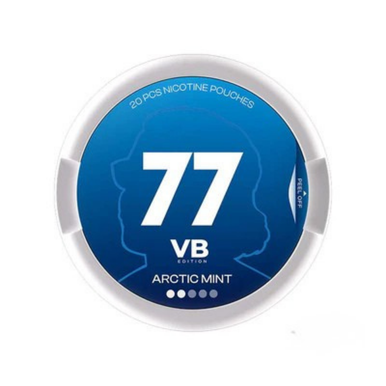
77 · 5.2mg–10.4mg · 10-can pack
Read the full guide
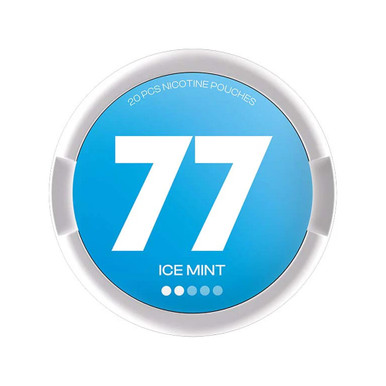
77 VB Edition Arctic Mint Nicotine Pouches
£39.90
✔ In stock — ready to ship
100% tobacco-free
Free over £20
Same-day dispatch
Secure checkout
77 VB Edition Arctic Mint Nicotine Pouches come as a 10-can pack at £39.90, offered in two strengths — 5.2mg and 10.4mg — for the same money. The listing was showing out of stock when this description was written, so treat the live availability marker on the listing as the authority and this sentence as history.
Three facts in that paragraph do most of the work. It is a bulk pack rather than a single tin, which is the most misread thing about our pricing. It offers a strength choice, which most 77 listings do not. And both figures cost the same, so nothing about the money nudges you toward either.
The full guide to 77 VB Edition Arctic Mint Nicotine Pouches
5,050 words on how it eats, who it suits, how to serve it and what to put beside it.
The Arctic Mint listing at a glance
The flavour categorisation is simple here: mint and nothing else. It sits on our Mint shelf, which at one hundred and forty-eight listings is comfortably the largest flavour family we run, and it carries no second flavour placement. It also appears on the 77 brand page with the other twenty-eight cans we stock from them, and both of its strengths sit inside the Medium Strength band of one hundred and thirty-five listings.
On the name: Arctic is a cooling descriptor and signals that the cold is meant to be the headline rather than a garnish. VB Edition is a sub-line name used by the manufacturer, and we do not hold an explanation of what the letters stand for. We could invent something plausible in a sentence; it would be worthless to you and we are not going to. The manufacturer is the only source that can answer that properly. We also publish no composition or technical detail for anything we sell — the packaging carries the maker's own information and that is where it belongs.
Mint at the arctic end: taste and aroma
Mint covers an enormous range in this catalogue, from soft herbal spearmints to cans built almost entirely around cold. This one is firmly at the cold end, and the naming tells you so before you open it.
The aroma out of the tin is sharp and clean, with very little sweetness in it. There is a faint sugary note underneath, but the dominant impression is bracing rather than confectionery. It smells closer to a strong mouthwash than to a mint humbug, which is the useful comparison for anyone deciding whether this is their kind of can.
In the mouth the cooling arrives almost immediately and it is intense. The first twenty seconds are essentially all cold — a spreading, slightly numbing chill that reaches beyond the pouch itself. This is what arctic is supposed to mean and this can delivers it without hedging. Anyone whose reference point is a gentle spearmint will find the opening a considerable step up.
Behind the cold there is a mint flavour proper, and it is worth separating the two because people routinely conflate them. The cooling is a sensation. The mint is a taste, and here it reads clean and slightly sharp, more peppermint in character than spearmint — less herbal, less rounded, less sweet. There is no fruit and no dessert element anywhere in it.
The curve over a pouch is flatter than a fruit can's. The cold steps down from its opening intensity within a couple of minutes and then holds as a steady background for a long stretch, which is the defining property of cans built this way. The mint taste quietens sooner than the cooling does, so the back half of a pouch is predominantly a cool sensation with a thin mint note behind it. That persistence is why people tend to keep these in longer than they keep a fruit pouch in.
Breath afterwards is cool and clean and fades gradually. An open tin left lidless will make a drawer smell sharply of mint, considerably more assertively than a fruit can would.
Arriving here from a different brand's tin
A great many people reading a page like this already use pouches and are considering moving across from something else — another brand, another sub-line, another format. That move throws up a specific set of practical questions, and most of them have answers that nobody states plainly. So here they are, with nothing claimed about any product in either direction. This is a description of how the catalogue works, not an argument for anything.
The number on the front does not travel
This is the single biggest source of confusion when moving between brands, and it catches experienced users as often as anyone.
The milligram figure on a can is a content figure printed by the manufacturer. The difficulty is that makers do not all state it the same way — some express it per pouch, some per gram — and there is no industry standard forcing them to agree. The consequence is that the same printed number on two different brands' tins is not a guaranteed like-for-like, and a figure you have got used to on one brand does not reliably map onto another.
So if you are coming to this listing from a different maker's can, the honest position is that we cannot convert one to the other for you. No conversion table exists that we would stand behind, and publishing one would be inventing precision we do not have. What we can do is print each product's own figure exactly as its own packaging states it, which is what every listing on this site does.
Cooling words mean different things to different makers
Arctic, ice, freeze, frost, cool, extra cool — every brand uses these and none of them uses them identically. One company's arctic is another's ice. There is no scale, no certification and no agreed vocabulary, and the words are chosen by marketing departments rather than measured.
What the words do reliably tell you is direction: a can with one of those words has an intentional cooling element and a can without one probably does not. What they cannot tell you is how a specific can compares to a specific can from a different maker. On our shelves you can see the problem directly — Klint Arctic Mint at £36.90 and XQS Arctic Freeze at £39.90 both use that vocabulary, as does this listing, and all three are doing their own thing with it.
Pouch size and format are not standard either
The physical pouch differs between brands and between sub-lines within a brand. Slim is the common modern format, but mini formats are widespread, and the difference in how a pouch sits under the lip is immediately noticeable if you are used to one and pick up the other. Within the 77 range itself there is a reduced-pouch sub-line — 77 Ghost Original Mini and the Ghost Mini Mango tin — running alongside standard-format cans, which is a useful illustration that format varies inside a single brand, never mind across brands.
Pouch counts per can vary alongside format, generally in the opposite direction: smaller pouches, more of them. That is why a count remembered from a previous brand is a poor guide to what is in a new one.
Pack size is where the real money confusion lives
If one thing on this page saves somebody an unpleasant surprise, let it be this. Listings in this shop are not all selling the same quantity. Some are a single tin. Some, including this one, are ten cans.
That explains almost the whole price spread in our catalogue. Velo Bright Spearmint at £4.19 and Nordic Spirit Frosty Berry at £4.49 are not cheaper products than this £39.90 listing in any meaningful sense — they are a different quantity. Comparing a single-tin price against a ten-pack price and concluding that one brand is dear is the most common misreading of the shop, and the fix is simply to check what quantity each listing is selling before comparing anything.
Tins themselves differ
Not every brand's can is built the same way. The two-chamber design with a catch compartment in the lid is common but not universal, and anyone moving from a tin without one to a tin with one usually regards it as the single most welcome difference. Lid actions differ too — some pop, some twist, some need a fingernail the first time.
None of that is a quality judgement, and we are not making one. It is simply the sort of thing that is invisible from a product photograph and immediately obvious the first time you hold one.
What actually carries across
Short list: your own habits. How you seat a pouch, which side you favour, how long you tend to leave one in, whether you like cold or sweetness — all of that comes with you and does not need relearning. What does not carry across is any number, any descriptor and any assumption about quantity, all of which need reading fresh on each listing. That is the whole of the honest advice available, and anything more specific would be a shop pretending to knowledge it does not have.
The tin, examined properly
Since this listing is ten containers as much as it is ten portions of flavour, the container deserves attention. And this particular listing has one feature that most do not, which is worth starting with.
Telling 5.2mg from 10.4mg once they are out of the box
Here is a small practical problem unique to listings that offer two strengths: if you buy both, or buy one and later buy the other, you end up with visually similar cans of the same flavour from the same sub-line sitting in the same drawer. The strength is printed on the can, but it is printed small, and on a shelf or in a bag it is not something you register at a glance.
People solve this in dull, effective ways. A marker pen dot on the lid. Keeping the two in different places rather than the same drawer. Not buying both at once in the first place. It sounds trivial and it is, right up until you are reaching into a bag without looking. If you do order both figures, deciding on some way of telling them apart before you open either is five seconds well spent.
The rim, the lid and opening it
A 77 can is rigid plastic, squat, a little wider than a bottle cap, with a textured band around the lid for grip. A new tin is tight and often needs a thumbnail under the lip the first time. After a handful of openings it eases into a comfortable one-handed push, and by the time a can is nearly empty the lid is distinctly looser than it began.
That loosening is normal rather than a fault, but it has one practical consequence: a nearly empty tin is the one most likely to work itself open in a bag. If you are carrying the last few pouches of a can around, check that the lid is properly seated rather than assuming, because a can that has sat half-open in a warm bag for an afternoon will have gone quieter than it should be.
The catch compartment, and its limits
The lid is not a flat cap. It has its own shallow floor, forming a compartment for used pouches, which are kept separate from the fresh ones until you reach a bin. It is the most genuinely useful piece of design on the object.
Its capacity is three to four. At five the lid resists closing and will not sit flush, which is both irritating and bad for the pouches below. It is a carrying solution for the gap between finishing a pouch and finding a bin, not a storage solution, and it should be emptied as a matter of routine — the used ones sit directly above the fresh ones, and on a mint can a stale lid clashes with the clean cold of a new pouch in a way you notice immediately.
For long stretches without a bin, the workaround people settle on is carrying a second, empty tin. An emptied can is rigid, sealed and pocket-sized, costs nothing, and removes the four-pouch ceiling entirely.
The count per can, which we do not publish
The obvious question about any tin is how many pouches are in it, and our record for this listing does not carry that number. We hold the pack size, the two strengths and the price, and those we state. A per-can count we do not hold, and we will not put an estimate on a page where people would reasonably treat it as a fact and budget against it.
It is printed on the can by the manufacturer, which is the source worth reading. As noted above, it is genuinely worth reading rather than assuming, since counts vary by brand and by format.
Ten cans as a physical package
A ten-pack arrives as a sleeved column roughly the height and heft of a tall mug, noticeably heavier than it looks. It is not a pocket object and is not intended to be. It sits in a cupboard or a drawer and releases one tin at a time into circulation, which is both the tidiest arrangement and the one that keeps the unopened cans in the best condition.
Two figures on one listing
This listing prints 5.2mg and 10.4mg, both at £39.90 for ten cans. Because both figures come from the same maker for the same product, they are directly comparable with each other in a way that numbers across different brands are not — one is roughly double the other as printed, and that relationship is internally consistent because it is one company using one convention.
What that comparability does not extend to is the rest of the shop. As set out above, conventions differ between makers, so neither of these figures maps cleanly onto a number on someone else's tin. Within this listing, the comparison is straightforward; across listings, it is not.
Our strength bands exist to make the catalogue browsable and nothing more. Both of these figures fall inside the medium band, which is why this appears once on the medium-strength shelf rather than twice. Above it sit the Strong shelf and the Extra Strong shelf. Those are filing categories, not a progression, and nothing about their existence suggests anyone should move between them.
We do not advise on which figure anyone should pick. That depends on things about the individual that a shop has no access to, and a retailer offering an opinion on it is overstepping. Both numbers are the manufacturer's, both are published as printed, and the choice stays with the person making it.
Where this sits among one hundred and forty-eight mints
The mint shelf is the busiest in the shop, so placing this can within it is the most practically useful comparison available.
At the same cold end, the Klint Arctic Mint tin at £36.90 and the XQS Arctic Freeze can at £39.90 are the obvious peers, both built around cooling as the headline feature. White Fox Double Mint at £34.90 approaches high intensity from a slightly different direction, doubling up on the mint itself rather than leaning purely on the chill.
Further down the intensity range, SYX Cool Mint at £29.90 is a moderate, less punishing cold, and the spearmints are milder again in character as well as intensity — Edge Spearmint at £14.95 and Velo Bright Spearmint at £4.19 are both softer, rounder and more herbal than this can, and neither is trying to be arctic. If the opening twenty seconds of an arctic can is more than you want, that is the part of the shelf to look at.
Outside pure mint, several cans put a cooling element over something else, which is a genuinely different proposition rather than a variation. Nordic Spirit Frosty Berry at £4.49 and Pablo Silver Edition Blueberry Peach Ice at £39.90 both do fruit under cold, and UBBS Cola Ice at £19.95 does the same with a soft-drink flavour. And for a complete change of register, Fumi Dark Spice at £27.90 is about as far from a clean arctic mint as this catalogue goes.
Its position in the 77 range
Across the twenty-nine 77 listings we stock, the brand covers mints, fruits, colas, teas, a small dessert group and two sub-lines. This can is the pure-mint entry from the VB Edition sub-line and one of the few 77 listings we carry that offers any strength choice at all.
The nearest structural comparison inside the brand is 77 Apple Mint, which uses a cooling element as one half of a two-part flavour rather than as the whole of it. 77 Cola Ice does the same with a soft-drink flavour underneath. Against both of those, this listing is the one where the cold has nothing to share the can with.
At the other end of the range, 77 Forest Fruits and 77 Cola Vanilla have no cooling element whatsoever and are the brand's warm, sweet options. Every 77 listing we carry is priced at £39.90, so within this brand the decision is never financial — it is entirely about flavour, format and, on the few listings that offer it, the strength figure.
What people keep alongside a cold mint
Ten cans of an intense mint is a lot of one sensation, and most people buying at that volume keep something else in rotation. The usual pattern with a cold can is the reverse of the usual pattern with a sweet one: instead of reaching for contrast in temperature, people reach for contrast in flavour, because the cold itself is what they want most of the time.
The common companions are therefore sweet rather than warm. the Frosty Berry tin keeps some cold while adding fruit, which makes it a small step rather than a jump. the UBBS Cola Ice can does the same trick with cola. For a proper change, the Fumi Dark Spice tin has neither cold nor sweetness and is about as different as anything on our shelves.
For a milder mint on the days when arctic is not what you want, the Edge Spearmint tin at £14.95 is the inexpensive option and the SYX Cool Mint can sits in the middle ground. If you would rather browse widely, the Cuba brand shelf and the Pablo listings are the two longest flavour ranges we stock and both run well beyond mint.
Keeping cans in condition
These are dry pouches, not the moist chilled sort, so no refrigeration is needed and none is recommended. A cupboard, drawer or bag pocket is entirely sufficient. The three things that matter are a properly closed lid, no sustained heat, and working through a pack in order.
Heat affects a mint can slightly differently from a fruit can, and it is worth knowing which way. The cooling component is the more robust part; the mint taste is the more volatile. A tin that has spent weeks in a hot car therefore tends to keep most of its chill while losing the mint flavour sitting behind it, ending up cold but strangely blank. That is a less obvious degradation than on a fruit can, which is exactly why it catches people out.
Refrigeration adds nothing and brings a condensation risk: a cold tin opened in a warm room collects moisture on dry pouches, bringing the flavour forward and shortening it. If cans have been chilled for any reason, let one reach room temperature before opening it.
With ten cans the useful habit is unexciting. Keep the unopened ones somewhere stable rather than distributing them around bags and cars, finish an open tin before starting the next, and treat the date printed on the manufacturer's packaging as the limit rather than anything written here.
Deciding between the two strengths
The decision on this listing is unusually clean, because only one variable moves. Both options are the same flavour, the same ten-can configuration and the same £39.90. Nothing about the price or the format tilts the choice either way.
That is worth pointing out because on listings where strengths carry different prices, people sometimes end up choosing on cost without quite admitting it to themselves. Here that cannot happen. The two figures are the manufacturer's own, published as printed, and which one you take is a decision we will not comment on. We do not know you, and a shop that starts advising on that point has stopped selling and started doing something it is not qualified to do.
On availability: this listing was out of stock at the time of writing, and we cannot tell you when it will return. Supply is not in our control, and a made-up restock date would be worse than an honest gap. The wider mint shelf has one hundred and forty-seven other listings on it, and the 77 catalogue is the place to look if it is the brand specifically that you want.
Ordering, delivery and the age check
Ordering here works as it does throughout the shop. Add it to the basket, combine it with anything else we sell, and it travels as one parcel. There is no restriction on mixing brands, strengths, flavour families or pack sizes, and no surcharge for doing so.
Sales are to over-18s only. Age verification is built into the checkout, and the courier may ask to see identification when the parcel is handed over. Somebody aged eighteen or over must be present to receive it; if nobody can show ID, the parcel is not left. This applies without exception to every nicotine product on this site, and no one here can waive it on request.
Delivery charges, dispatch cut-offs and current timings sit on the checkout and delivery pages rather than in product descriptions. That is intentional — a shipping promise written into a description months ago goes out of date silently, and a stale promise is worse than a pointer to the live figures.
For anyone ordering from outside Great Britain or travelling with a pack: the rules on these products differ substantially between countries and a number of them prohibit these products outright. Customs quantity limits also matter more with ten cans than with one. We hold no country-by-country information and cannot advise on any particular destination, so that checking is genuinely yours to do before you order or travel.
Ways back to this page
Three routes lead here. The 77 brand listing holds all twenty-nine of our products from the brand in one place. The Medium Strength band gathers every can we file at this level regardless of maker. The mint shelf is the flavour route, and with one hundred and forty-eight listings on it, it is a long browse rather than a quick one.
If you would rather see everything at once, the full catalogue listing does that. The bands above this one are Strong and Extra Strong. And one small note on the address of this page: it carries an older spelling of the word arctic, which we have left in place because changing an address breaks saved links. It is the same product.
Questions we are asked about this tin
How cold is arctic, exactly?
Intense, but we cannot give you a number, because no measured scale for this exists and the word is chosen by each manufacturer rather than certified by anyone. What we can say is that the first twenty seconds are dominated by cooling that reaches beyond the pouch, and that it settles into a strong steady background after that. Compared with a spearmint can it is a considerable step up. Compared with another brand's arctic can, we genuinely cannot tell you.
Does £39.90 buy one can or ten?
Ten. This is a multi-can pack, which is the detail that makes the price make sense, and missing it is the most common misreading of our catalogue. A ten-pack is a supply rather than a trial, so it suits people who already know that intense mint cans are what they want. For finding that out, the cheaper single tins on our mint shelf are the far more sensible outlay.
What does VB Edition stand for?
We do not know and will not guess. It is the manufacturer's own sub-line name, printed on the packaging, and we reproduce it because it is part of what the product is called. An invented explanation would be easy to write and of no use to anybody. If it matters, the manufacturer is the only source that can answer it.
Is there any sweetness in it?
Very little. There is a faint sugary note underneath, but the can is built around cold and a clean, sharp, peppermint-leaning taste rather than around sweetness. It is one of the drier mints on our shelves in that respect. Anyone who prefers a rounder, softer, sweeter mint would be better served by a spearmint listing than by this one.
Can I compare its strength to the brand I currently use?
Not reliably, and we will not pretend otherwise. Manufacturers state the milligram figure using their own conventions, some per pouch and some per gram, with no standard forcing agreement. That means a number you are used to on one brand does not translate cleanly onto another. We publish each product's figure exactly as its own packaging states it, and that is as far as we can honestly take it.
How do I tell the two strengths apart once they are open?
The figure is printed on the can, but it is small and easy to miss at a glance, which becomes a nuisance if you keep both in the same drawer. There is no clever answer here — people use a pen mark on the lid, or store the two separately, or simply avoid having both open at once. Deciding on a method before you open either is worth the few seconds it takes.
How many pouches are in a can?
We do not hold that figure and will not estimate it. What we publish is the pack size, the two strengths and the price, all of which we actually have. The count per can is printed by the manufacturer on the can itself, and it is worth reading rather than carrying over an assumption from a different product, since counts vary by brand and by pouch format.
Is it in stock?
It was not at the time this was written. Stock does move and the indicator on the listing is the live one, so trust that rather than this paragraph. We cannot offer a restock date, because supply is not ours to control and an invented date helps nobody. The rest of the mint shelf and the wider 77 range are the places to look in the meantime.
How long does a pouch last?
Longer in perceived terms than a fruit pouch, because the cooling persists after the mint taste has quietened, so there is still something noticeable at the half-hour mark. Habits vary widely — twenty to forty minutes covers most, and plenty go beyond it. We are not going to publish a figure as if it were guidance. Nothing unpleasant happens as time passes; the pouch just gets quieter.
Do you publish ingredients?
No. We do not publish composition, ingredient or technical information for any product on this site. The manufacturer's own information arrives printed on the packaging and that is the right place to read it. Anything beyond what the can carries is a question for the manufacturer rather than a retailer paraphrasing at second hand.
Is the ten-pack a mixed selection?
No. It is ten identical cans of the same flavour at whichever of the two figures you select. There is no variety option on this listing. If you want more than one flavour, that is a matter of ordering more than one listing, which combines freely in a single basket at no extra cost.
Is a mint can better value than a fruit can at the same price?
Not in any way we can measure for you. Every 77 listing we stock is £39.90, so within this brand the price tells you nothing about flavour, intensity or quantity — those are identical across the range. Across other brands, price differences are mostly pack size rather than anything else. Value in the sense of whether you will enjoy a can is not something a shop can calculate on your behalf, and we are not going to try.
Why does the tin loosen as it empties?
Repeated opening and closing eases the fit between lid and rim, which is normal wear on a plastic container rather than a defect. A new tin is stiff, a half-used one opens comfortably one-handed, and a nearly empty one is loose enough that it can be nudged open by pressure in a bag. The practical response is simply to check the lid is properly clicked down on older tins, or to move the last few pouches into a fresher can.
Will the courier ask for ID?
They may, and it is safest to assume so. Age verification happens at checkout and identification may additionally be requested at the door. Someone aged eighteen or over needs to be there to take the parcel, and the delivery will not be completed if nobody can show ID. This is standard across every nicotine product we sell.
Legal and compliance
This product contains nicotine. Nicotine is an addictive substance.
Sale is limited to adults aged 18 or over who already use nicotine products. We do not sell to under-18s in any circumstances. Age verification forms part of our checkout, and the courier may request identification at the point of delivery.
This is not a licensed stop-smoking medicine and is not intended for non-smokers, for anyone who does not already use nicotine, for under-18s, or for anyone pregnant or breastfeeding. No part of this page is a health, medical or therapeutic claim and none of it should be read as one. Questions about nicotine and your own circumstances belong with a healthcare professional, not with a retailer.
Last word
77 VB Edition Arctic Mint is a ten-can pack at £39.90, available in 5.2mg and 10.4mg at identical prices, out of stock at the time of writing. It is a pure mint can built around a serious cooling element, dry rather than sweet, peppermint-leaning in taste, with the cold outlasting the flavour over the length of a pouch.
If you are arriving from another brand, the practical summary is this: read the figure on this listing rather than translating one you already know, check the pack size before comparing prices, and expect the cooling words to mean whatever this maker intends by them rather than whatever the last one did. If arctic-level cold is not what you are after, the mint shelf has a hundred and forty-seven other options on it, many of them a great deal gentler.
More from 77
More medium strength pouches
More mint pouches
Where this sits
77 VB Edition Arctic Mint Nicotine Pouches appears in these categories. Browse them, or jump to something close.
You might also like