
Home / Medium Strength / Pablo Silver Edition Kiwi Nicotine Pouches

Pablo · 10mg · 10-can pack
Read the full guide
Pablo Silver Edition Kiwi Nicotine Pouches
£39.90
✔ In stock — ready to ship
100% tobacco-free
Free over £20
Same-day dispatch
Secure checkout
This listing is a ten-can pack of Pablo Silver Edition Kiwi Nicotine Pouches at £39.90. One flavour, one declared strength of 10mg, ten cans, no other configuration to pick from. Our record attributes it to Pablo, carries one product photograph, and files it on three shelves: the Medium Strength band, the Pablo shelf, and our Tropical shelf. Worked out per can, the price is £3.99.
Kiwi is not a common flavour in this category. Most fruit cans on our shelves head for berry, citrus, apple, peach or the big tropical fruits, and kiwi sits slightly apart from all of those. If you have been through a fair number of fruit cans and found them starting to blur into one sweet impression, that unusualness is probably the most honest reason to look at this one.
The full guide to Pablo Silver Edition Kiwi Nicotine Pouches
5,270 words on how it eats, who it suits, how to serve it and what to put beside it.
Pablo Silver Edition Kiwi at a glance
Before anything else, the name. "Silver Edition" is the manufacturer's label for a group of their flavours and nothing more. It is not a quality mark, it does not place this can above or below any other Pablo line, and we have no information that would let us rank the sub-ranges even if we wanted to. Where you see that phrase on this page, read it as a way of identifying which can you are looking at.
Kiwi as a flavour, and the word "Tropical" on the shelf label
Start with the shelf tag, because it is the first thing that will confuse a careful shopper. Our record gives this product exactly one flavour tag: tropical. Kiwi is not what most people picture when they read that word. Mango, pineapple, passion fruit, guava — those are tropical in the everyday sense. Kiwi is a green, tart, faintly floral fruit that most people file mentally somewhere near gooseberry.
The tag is a shelving decision, not a description of the taste. Our catalogue needs every fruit can to live on a shelf, and the shelves we run are broad families rather than precise categories. Kiwi has landed on our Tropical shelf, which holds 58 products, because that is the closest family we have. It does not mean the can tastes of mango. If you arrived here by filtering for tropical and were expecting something in the pineapple-and-passion-fruit direction, the tag has slightly misled you and Nordic Spirit Tropical Mix at £4.49 is a more literal answer to that search, currently listed in stock.
So what does it actually taste of? Kiwi, done reasonably faithfully. The profile is green rather than golden — the note of the fruit's flesh rather than of a tropical cordial. There is a clear tartness running through it, more prominent than in most fruit cans we carry, and a slight floral lift sitting on top of that. Underneath there is a sweetness, but it is restrained by the standards of this category, and it does not dominate the way a berry or bubblegum profile does.
The aroma on opening is green and a little sharp, with a faint vegetal edge that reads as fresh-cut fruit. It is not perfumed and it is not confectionery. Some people describe a very slight seediness or grassiness in the background — the kind of note you get from the pale centre of the fruit rather than from the bright green flesh around it. That element is subtle and not everyone picks it up.
There is no cooling element declared in the name and none obvious in the profile. This is a fruit can, plain. If you wanted the same broad direction with a cold layer over it, the cans further down this page that carry "Ice" in their names are where to look, and that is a real difference in the eating rather than a marketing distinction.
Using one: the small mechanics
The format has almost no learning curve, but there are a handful of practical points that a page like this should cover properly rather than assume.
The pouch is a small dry sachet. It goes under the upper lip and stays there. There is no device involved, nothing to charge, nothing to light, nothing to refill, nothing to clean. The can is the only object you are carrying beyond the pouches themselves.
Placement is personal but the common pattern is off to one side rather than dead centre, because the middle of the lip is where a pouch is most noticeable to the tongue and most likely to be disturbed by talking. Expect a small amount of settling in the first thirty seconds or so. That is the pouch finding its position, not a sign of a wrong fit, and leaving it alone is usually more effective than adjusting it.
How long a portion lasts is a matter of how you read the flavour rather than a fixed span. With a tart profile like this one, the acidity and the green top note lead, and both soften before the sweetness does, so the character of the taste changes noticeably across a portion. Most people we hear from take one out somewhere between twenty minutes and an hour, going by taste rather than by clock, and plenty run shorter or longer than that. We are not going to put a recommended time on this page. How long anyone keeps a pouch in is not something a shop is placed to decide.
Disposal is simple and non-negotiable: used pouches go in a bin. Not a sink, not a drain, not out of a window. Cans of this general design usually include a compartment in the lid meant to hold used pouches until a bin is available, which is the tidy answer when you are out and about. Our catalogue record does not describe the physical construction of this particular can, so we cannot confirm that detail for this product specifically — treat it as a general note on the format.
On drinks and food: hot drinks shorten a pouch's flavour life noticeably, and with a tart fruit the first thing to go is usually the acidity, leaving a rounder and slightly duller version of the same taste. Cold drinks have much less effect. Some people take a pouch out to eat; others do not. None of this requires management.
Last, the obvious and often unsaid one: the format is quiet and does not announce itself. That is a description of the object. It is not a suggestion about where to use one. Venues, employers and transport operators set their own rules, they vary, and it is on the user to know the ones that apply rather than on a product page to guess.
A 10mg declaration and what it is good for
This product declares a single strength: 10mg. There is one variant on the listing, priced at £39.90 for the ten cans, so there is no strength decision to make within this page.
The figure is the manufacturer's declaration, reproduced by us because reporting accurately what is printed on a product is the baseline responsibility of a retailer. We have not measured it. And it does not function as a cross-brand scale — the same number on a can from a different maker is not a promise of a comparable experience, because pouch construction, portion size, fabric, moisture and flavour load all differ between houses and none of those things appear on a strength label. The number is a filter for our catalogue. It is not a conversion rate between brands.
In our filing, 10mg puts this can in the Medium Strength band, which contains 135 products. Above it we keep a Strong band and an Extra Strong band. Those are our own dividing lines, drawn so that a catalogue of this size can be browsed in a coherent order. They are not a standard and they are not a sequence anyone is meant to move along.
We cannot tell you which strength suits you. We do not have the information that question requires and it is not a retailer's judgement to make. A bigger number on a can is not a better product, not a mark of experience, and not an achievement. It is a different item with a different declaration, offered to adults who already know what they are buying.
Building a rotation around this can
Ten cans of one flavour is a lot of one flavour, and the single most common thing experienced buyers do is keep something else on the side. The reason is straightforward: a taste you meet constantly stops registering. Rotation is not a gimmick, it is how you keep a can you like from becoming wallpaper. Here is how we would think about pairing this particular one, with a reason attached to each suggestion rather than a list of names.
Pair it with the other green fruit. Kiwi and apple share a family resemblance — both green, both tart, both with a slightly floral lift — but they are distinct enough that swapping between them keeps each one legible. Fumi Green Apple at £27.90 is the cleanest version of that idea we stock and is currently available. Cuba Black Apple Juice at £39.90 takes apple in a rounder, juicier direction and is also in stock, making it the sweeter counterpart rather than the sharper one.
Pair it with the same two fruits in one can. If the pairing idea appeals but you would rather not carry two cans, SYX Apple Kiwi at £29.90 puts apple and kiwi together in a single product. It is in stock at the time of writing and is the most directly relevant comparison to this page in the whole catalogue — the same fruit, from a different maker, blended rather than solo.
Pair it with something soft and sweet. Kiwi is on the tart side, so the most effective contrast is a rounded, low-acid fruit. Peach is the obvious candidate. Velo Peach Ice at £4.19 is the cheap way in and adds a cool layer; XQS Fizzy Peach at £39.90 is the ten-can-scale version of peach with a carbonated-sweet character; Silver Edition Blueberry Peach Ice at £39.90 keeps you inside the same Pablo sub-range and the same pack format while moving to berry and stone fruit. All three are listed in stock.
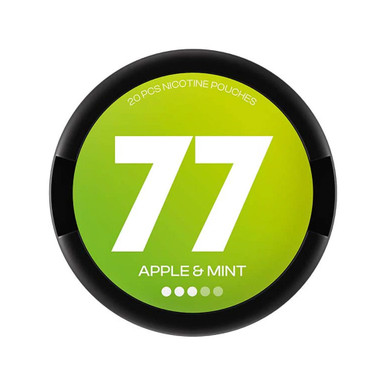
Pair it with a mint, if you have none. The most complete reset from a fruit can is not another fruit can. 77 Apple Mint at £39.90 is the halfway house — green apple over mint, which shares the green character of this can while changing everything else — and is currently available. Klint Apple Mint at £36.90 is the same idea from another maker, but it is out of stock at present, so that page is for reference rather than for ordering today.
Pair it with something frankly odd. Every rotation benefits from one can that has nothing in common with the others. Pouch Nurdz Nurdz Peach Blue Razz at £19.99 is our example on this page — a confectionery-styled sweet-shop profile that sits nowhere near a tart green fruit. It is currently unavailable, which is worth knowing before you click, but it illustrates the point: the can you keep for contrast does not need to be one you would use every day.
How many to run at once. Two is manageable and productive. Three is the point at which cans start ageing in parallel and all going quiet together. If you have bought ten cans of this, the sensible shape of a rotation is this plus one contrasting can, and nothing else open at the same time.
Where the taste sits: cool, sweet, sharp, bitter
The section above is about what to put next to it. This one is about placing the can itself precisely, using the four axes we find most useful when comparing anything on our shelves. Read it as a map reference rather than as praise.
On the cool axis it is close to the floor. There is no declared cooling element and none that announces itself in use. The freshness you get comes from the acidity of the fruit rather than from anything cold, and those two are easy to confuse until you have had them side by side. If a can without a chill sounds flat to you, that is a genuine reason to look elsewhere — and most of the "Ice" cans linked on this page will give you the cold layer this one does not have.
On the sweet axis it sits below the middle. There is sweetness, clearly, but it is the supporting structure rather than the headline. Compared with the berry and confectionery cans in our range it reads as restrained. Compared with a plain mint it reads as sweet. Where you place it depends entirely on what you have been using, which is why an axis is more useful than an adjective.
On the sharp axis it is high, and this is the defining feature. The tartness is the loudest thing in the profile and the reason people either return to this can or leave it alone after one. It is a clean, fruit-derived acidity rather than a citrus bite — less aggressive than a lemon note, more sustained than an apple one. If you have found fruit cans generally too sugary and too soft, this axis is where this can differs from them.
On the bitter axis it is low, with a small green edge. Not bitterness proper, but a faint vegetal dryness that comes with an honest kiwi note and gives the finish a slight grip. It is the reason the profile does not read as simply "sour sweet". People who like kiwi as a fruit usually recognise it immediately; people who do not, generally identify this as the element they dislike.
The composite. A tart, green, moderately sweet fruit with no cold layer and a faint dry finish. It is one of the more distinctive profiles we carry, and distinctive cuts both ways — it is less likely to bore you and more likely to be wrong for you. Which is the strongest argument this page can make for trying one can of something comparable before committing to ten of these. SYX Apple Kiwi is the closest single point of comparison we stock.
This can within the Pablo listings we hold
We carry 56 Pablo products, and all 56 Pablo products sit on one brand page if you want to see the shape of the range at once. This can belongs to the Silver Edition group, which on our shelves shows a consistent pattern: ten-can packs at £39.90 carrying a 10mg declaration, spread across both fruit and mint flavour directions.
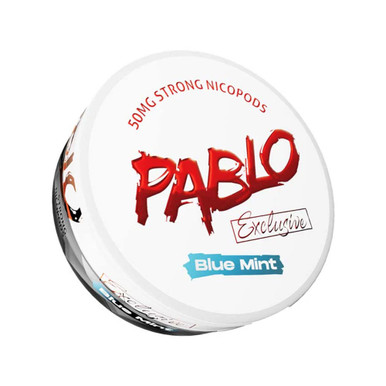
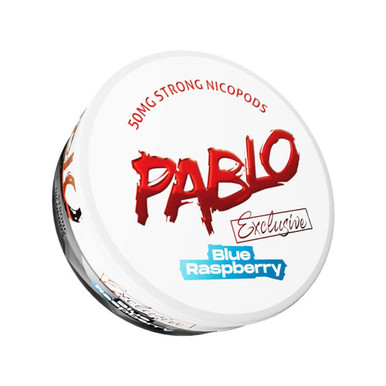
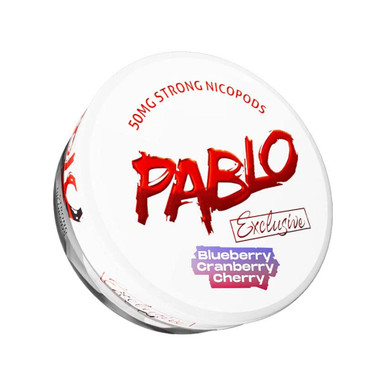
Next to Silver Edition we stock the Pablo Exclusive cans, listed individually at £3.85. That price difference is a pack-size difference rather than a statement about the products, and it makes the Exclusive listings the natural place to go if you want to meet a Pablo flavour without buying a box. Within them, Pablo Exclusive Banana Ice is the other single-fruit entry with a cool finish; Pablo Exclusive Blue Raspberry and Pablo Exclusive Blueberry Cranberry Cherry are the berry routes, the second of those stacking three fruits into one can; Pablo Exclusive Blueberry Peach Ice is the berry-and-stone-fruit combination; Pablo Exclusive Bubblegum is the outright confectionery end; and Pablo Exclusive Blue Mint is the crossover into mint. Every one of those six was listed as available when this page was written, and all six carry the same £3.85 price.
We are not going to tell you that one Pablo line is better than another, because we have no basis for saying it. The sub-range names are the manufacturer's vocabulary. What differs in ways you can actually act on is the flavour, the pack size and the price, and those are all on the listings.
Looking after a ten-can pack
Nine of these ten cans will spend weeks unopened somewhere in your house, so where they sit is a real decision rather than an afterthought.
Closing the lid on the can in use is the single most effective habit and costs nothing. Air is what dulls a flavour, and on a tart fruit profile the acidity and the green top note are the first casualties, which leaves a flatter and disproportionately sweeter version of the same can. A can left open through an evening is noticeably duller the following day.
Heat does the same job more slowly but more thoroughly. A can on a sunny windowsill, above a radiator, or left in a parked car through a warm afternoon will change faster than the same can in a drawer. The remedy is not elaborate: a cupboard or drawer, away from direct sun and away from the cooker, covers it completely.
Refrigerating the unopened cans is a habit some multi-can buyers keep and others do not, on the reasoning that cool and dark is cool and dark. We make no claim about whether it helps. What we would say is that consistency matters more than the choice — pick one place and leave them there, rather than moving cans repeatedly between a cold fridge and a warm room.
Pouch cans across the market vary in how dry or moist they are built, and moister builds are the less forgiving of warmth and open lids. Our record does not state which build this can uses, so we will not tell you. If a can seems to have gone quiet earlier than you expected, look at where it has been sitting before you conclude anything about the product.
Two final points. Open one can at a time — several part-used cans ageing together is the common failure mode with multi-can packs. And keep the pack stored as the age-restricted product it is: out of sight, out of reach of children, and not in a shared drawer that anyone in the house might open.
One strength, one pack: making the call
This listing offers no configuration choices. One strength at 10mg, one pack of ten cans, one price of £39.90. So the question is not which version to buy but whether to buy at all, and that turns almost entirely on how confident you are about the flavour.
Kiwi is a more distinctive profile than most of what sits around it. That makes the ten-can pack a good buy for someone who already knows they get on with tart green fruit, and a risky one for someone testing the idea. If you are in the second group, the cheapest useful test is a single can of something adjacent — SYX Apple Kiwi at £29.90 for the closest match, or Fumi Green Apple at £27.90 for the same green-and-tart character without the kiwi itself.
On the arithmetic: £3.99 a can is close to what a number of our single-can products cost, so the pack is not a steep discount. What it buys you is not having to reorder for a while. Judge it on that, not on an imagined saving, and do not compare £39.90 against a £3.85 single-can listing as though it were a price difference — it is a pack difference.
Reading the prices in the links above
The products linked from this page run from £3.85 to £39.90, and that spread looks dramatic until you notice what is behind most of it. Very little of it is a difference in what a can costs. It is a difference in how many cans are in the listing.
Three clusters show up. At the bottom, under a fiver, sit the single-can listings: the six Pablo Exclusive flavours at £3.85 each, the £4.49 Nordic Spirit blend and the £4.19 Velo listing, all currently available. At the top sits £39.90, which is where this pack and several others on this page land: the Blueberry Peach Ice can from the same sub-range, the fizzy peach listing, the Cuba apple can and the apple-over-mint can from 77, all four in stock. In between there is a middle band: £27.90, £29.90, and two listings we have already flagged as unavailable today, the £19.99 Nurdz can and the £36.90 Klint listing.
Here is the limit on all of that, and it matters. Our record carries a can count for this listing — ten — and does not carry one at this level for the others. So while the clusters are suggestive, we are not going to convert anybody else's price into a per-can figure from this page, because we would be dividing by a number we do not hold. Each listing's own page is where its pack size is stated.
The practical upshot is a small discipline: compare listings, not headline prices. A £39.90 listing and a £3.85 listing are not forty pounds and four pounds of the same thing, and treating them as though they were is the easiest mistake to make in a catalogue that mixes single cans and boxes on the same shelf.
Payment, dispatch and age checks
The purchase itself is unremarkable: add the pack from this listing, check out, and the £39.90 covers all ten cans.
This is an age-restricted product sold only to adults aged 18 or over. Age verification runs at checkout, and photo ID may be requested by the courier at the door. Assume the check will happen rather than hoping it will not — a delivery can be refused if the person receiving it cannot complete it, and that applies to every order of this kind we send rather than to a random selection of them. If the parcel is going somewhere you will not be, make sure whoever will be there can satisfy it.
On availability: this pack was listed in stock when this description was written. Stock across the catalogue changes constantly, and the badge on the live listing is the only authoritative statement about it. Where this page links to products that were unavailable at the time of writing, it says so at the link.
Three shelves, one can: stacking the filters
This listing is filed in three places, which is one more than most pages on the site manage — the medium band by printed figure, the maker's page by brand, and the tropical family by flavour tag. Each of those answers a different question, and the useful move is to treat them as questions that stack rather than as three separate doors into the same room.
Stacking narrows things quickly. The strength band holds 135 products and the brand page holds 56, and the overlap between the two is far smaller than either figure, since only the Pablo cans declaring within that band appear on both. The tropical shelf holds 58. Ask all three at once and the answer is a short list with this can on it. Ask any one of them on its own and you are working through dozens of pages.
Which one to lead with depends on what is actually fixed for you. If the maker is the fixed thing, the brand page for Pablo is the place to start and the other two are refinements on it. If the printed figure is what you are holding constant, the medium band leads. If it is flavour direction, the tropical family page leads, with the caveat this page has already made at length about what that particular tag does and does not tell you.
The one thing no shelf can do is show you a gap. A filter returns what we hold. It does not tell you what we do not hold, and it cannot distinguish a flavour nobody makes from one we have simply never listed. Kiwi is thin on the ground in this catalogue, and a tropical shelf full of mango will not announce that fact. When the filters run out, the whole catalogue in one list is the blunt instrument, stock badges and all.
Onward from here
If the flavour is not for you, the shelves will move you along faster than reading more. The fifty-eight cans on the tropical shelf hold the wider fruit family this one is filed under, including the more literally tropical profiles. The 135 cans in that band are the view to use if you are sorting by the printed figure rather than by taste.
By brand, the Pablo shelf is the natural next step, and the Cuba brand page is the neighbouring maker our Pablo shoppers most often look at afterwards. The other strength views, Strong and Extra Strong, are browsing aids rather than a progression to work through. And if filters are getting in the way, the full shop listing puts everything we currently list on one page.
Things people ask before buying
Why is kiwi filed as tropical?
Because our flavour shelves are broad families and tropical is the closest one we run. It is a filing decision rather than a claim about the taste. Kiwi is green and tart rather than golden and sweet, and it does not belong with mango and passion fruit in any strict sense. If a genuinely tropical blend is what you were after, the shelf has 58 products and several better candidates, one of them linked above.
How many pouches are in each can?
Our record does not carry that number for this product, so we are not going to publish one. What we hold is that the pack contains ten cans. The per-can count is printed on the manufacturer's label, and that is the source to trust. We would rather name the gap in our data than fill it with a plausible-looking figure.
Does it have a cooling element?
Nothing in the name suggests one and nothing in the profile presents as one. The freshness in this can comes from the fruit's acidity, which is a different sensation from a cold layer even though the two are easy to confuse. If you want the chill, the cans on this page with "Ice" in the title are where it lives.
Is there a stronger or weaker version of this?
Not on our listing, which declares 10mg and nothing else. Whether the manufacturer produces Kiwi at other figures for other markets is outside what our catalogue records, so we cannot tell you. If we stocked a second strength it would appear here as another variant or as a separate product page.
Does "Silver Edition" mean anything about quality?
No. It is the manufacturer's name for a group of flavours, in the same spirit as any product family name. We hold no information indicating that it denotes a specification, a grade, or a position above or below any other Pablo line. Use it to identify the can you want; judge the can on its flavour, pack size and price.
Are the pouches dry or moist?
Not recorded in our data, so we cannot say. It is a real difference — drier pouches feel lighter and release more gradually, moister ones feel softer and start faster — and it affects how forgiving a can is of poor storage. The can's own labelling and the manufacturer's material are where to check if this is decisive for you.
How long does a pouch last?
We will describe rather than prescribe. The tart top note fades first and the sweeter base holds longer, so the taste changes shape as you go. People commonly report somewhere between twenty minutes and an hour, going by flavour rather than by clock, with a lot of variation. There is no target here and no figure we are going to recommend.
What do I do with the used pouch?
Put it in a bin. Cans of this general design usually have a lid compartment for holding spent pouches until you reach one, which is how most people deal with it away from home. Our listing data does not describe this can's construction, so that is a general note about the format rather than a confirmed feature of this product.
Can I buy one can instead of ten?
Not from this listing — the only option here is the ten-can pack at £39.90. Single cans exist elsewhere in our catalogue at a range of prices, and the ones linked on this page in the same flavour territory are the sensible place to start if you want to test the direction before committing.
Why link to products that are out of stock?
Because they are genuine products we carry and stock returns. On this page, Klint Apple Mint and Pouch Nurdz Nurdz Peach Blue Razz were both unavailable at the time of writing, and we have said so at each mention rather than letting you discover it on arrival. The live listing always carries the current position.
Will the courier ask for ID?
They may, and you should expect it. Age verification runs at checkout and photo ID can be requested at the door. If the check cannot be completed the delivery can be refused. This is standard for age-restricted goods and is not applied selectively.
Do the other cans linked here come in ten-can packs as well?
Some clearly do not — the £3.85 listings are single cans — and for most of the rest our record does not carry a can count at the level this page works from. So we can tell you the price and whether it is orderable, and we cannot tell you the pack size without sending you to that listing's own page. That is why this page compares listings rather than dividing prices into per-can figures for products other than this one.
Can I filter by strength and flavour at the same time?
Yes, and it is the fastest way through a catalogue this size. Each shelf is a single question, and asking two or three of them together cuts the result down sharply — the medium band, the Pablo page and the tropical shelf between them land on a short list with this can on it. Leading with whichever fact is fixed for you, rather than always leading with flavour, saves the most time.
Does the tropical shelf hold every kiwi can you stock?
We would not promise that. A product appears on a flavour shelf because it carries that tag in our record, not because a fruit is named somewhere in its title, so a kiwi can filed under a different family would not show up in that view. If kiwi specifically is what you are after, searching the catalogue by name will catch listings the shelf misses.
Why does this page keep saying what you do not know?
Because the alternative is inventing it. We publish the record we hold — name, brand, price, declared figure, pack count, flavour tag, stock — and where a field is empty we would rather say so than write something that sounds authoritative and came from nowhere. A guess printed on a shop page gets repeated, and repeated guesses are how wrong figures end up everywhere.
Which of your fruit cans is the best one?
We will not answer that, because it is not answerable. Our fruit cans differ by maker, flavour construction, pack size and price, and which of them suits a particular person is not something a shop can know. What we can do is describe each one accurately enough that you can make the choice yourself, which is what the sections above are for.
Legal and safety notices
- This product is for adults aged 18 or over who already use nicotine. We do not sell to under-18s.
- Nicotine is an addictive substance.
- It is not a licensed stop-smoking medicine, and it is not intended for non-smokers, anyone who does not already use nicotine, under-18s, or anyone who is pregnant or breastfeeding.
- Age verification applies at checkout and photo ID may be requested on delivery.
- Store the pack out of the reach of children.
Closing note
Ten cans at £39.90, declared at 10mg, tagged tropical for shelving reasons and tasting of green, tart kiwi with a faint dry finish and no cold layer. The sub-range name carries no grade, the strength figure is label information we are in no position to advise on, and the unusual flavour is both the reason to try it and the reason to try one can of something similar first if you are not sure. The links above will take you to those, and to the wider shelves if this is not the can.
More from Pablo
More medium strength pouches
More tropical pouches
Where this sits
Pablo Silver Edition Kiwi Nicotine Pouches appears in these categories. Browse them, or jump to something close.
You might also like