Killa · 16.5mg
Read the full guide
Killa Exclusive Cold Dry Nicotine Pouches
£33.50
✔ In stock — ready to ship
100% tobacco-free
Free over £20
Same-day dispatch
Secure checkout
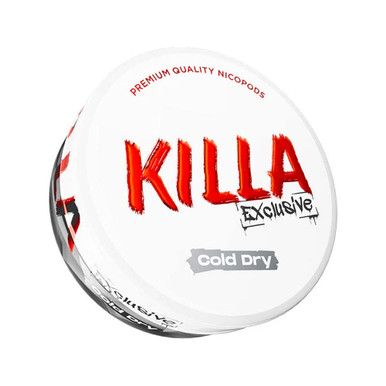
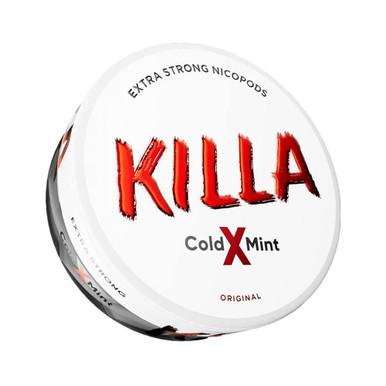
This page covers Killa Exclusive Cold Dry Nicotine Pouches. Here is everything our catalogue holds: the brand is Killa, the product name is Exclusive Cold Dry, the price is £33.50, one declared strength of 16.5mg is attached, availability is showing as in stock at the time of writing, and there is one photograph on file. There is no cans-per-pack figure.
And there is one more thing, which needs stating at the top rather than buried further down, because it shapes everything else on this page. The flavour field for this product is empty. Not vague, not broad, not approximate — empty. Our record carries no flavour tag for this can at all, which is unusual on our shelves and is the reason this listing appears on only two category pages rather than the three or four most products manage.
The full guide to Killa Exclusive Cold Dry Nicotine Pouches
5,371 words on how it eats, who it suits, how to serve it and what to put beside it.
A listing with a blank in the middle of it
Most product descriptions would quietly write around a gap like that. We would rather point straight at it, because a description that fills an empty field with a confident guess is worse than useless — it is a fabrication that reads like data. What follows is built from things we can stand behind: the physical object, which is common to the format and genuinely describable; an honest account of what the product name does and does not tell you; how flavours in this format are constructed in general, which is background rather than a claim about this specific tin; the other cans we actually stock and what they actually cost; and the blanks, named as blanks.
The usual note before going further: this is an age-restricted nicotine product for adults who already use nicotine. Full compliance wording has its own section near the foot of the page.
Cold Dry: what the name tells you, and what our record does not
With no flavour tag to work from, the product name is the only thing on this listing pointing at what is in the tin. It is worth taking that name apart carefully, and being equally careful about the limits of what taking it apart proves.
Two words: cold and dry. Neither of them names a fruit, a spice, a drink or anything else you could point to in a shop. They are not flavour names in the way that cherry or bubblegum are flavour names. They describe a character.
Across this category generally, those two words are used in fairly consistent ways. Cold conventionally signals a cooling character rather than a specific taste — the sensation people associate with menthol or a strong mint, used as a descriptor of the impression a pouch leaves rather than of an ingredient. Dry conventionally refers to the build of the pouch itself: a drier, firmer pouch as opposed to a damper, softer one, which is a manufacturing choice and something you notice in the hand before anything else. Used together, the pair generally points towards something unsweet and cooling in a firm pouch.
But that is how the words are used across the trade, and it is not a fact we hold about this specific product. Our record contains no flavour tag, so we cannot confirm what this tin tastes of, we cannot tell you whether the cooling character is mild or emphatic, and we cannot tell you whether there is any sweetness in it. We are not going to describe a taste we have no record of. The printed tin is the authority on what is in it, and if the flavour specifically is what decides your order, that is a question worth asking us before you buy rather than an inference worth drawing from two words and a convention.
The empty field has one further consequence that is easy to miss when browsing. Because there is no flavour tag, this can is filed on only two shelves: the Strong category, alongside 131 other products, and the Killa brand page with its 31 listings. It does not appear on any flavour shelf. If you have been browsing the site by taste and never encountered this can, that is the reason — it is not hidden, it simply has no taste-based address in the navigation.
The tin, the pouch and the lid
The format is the same across almost everything we carry, and since the flavour is the part of this listing we cannot describe, the physical object deserves a proper account.
The tin is a shallow cylinder, slightly narrower across than a drinks coaster and about as deep as a short stack of coins. It is light enough to forget about. It sits flat in a coat pocket, fits the small watch pocket of a pair of jeans, and takes up no meaningful room in a bag. The lid pushes on and comes off with a twist and modest thumb pressure. When it is fully seated it holds firmly; when it is resting on top it does not, and the difference matters more than it sounds.
Inside the lid of most cans in this category sits a secondary compartment with its own inner cover — the catch lid. It is a shallow recess meant to hold used pouches until a bin turns up, and it is one of the genuinely thoughtful pieces of design in the category. It also creates one small duty: emptying it. A lid left holding several days of used pouches smells distinctly worse than one that gets tipped out, and that smell does not stay confined to the lid. Household waste is the destination. Not a drain, and not anywhere loose where a child or an animal could get at them.
The pouches are small white rectangles with rounded ends, set in a ring in the base of the tin. Handling one tells you immediately which sort of build you have bought — a damp, soft pouch feels quite different from a dry, firm one, and given this product's name that difference is worth paying attention to when you open the first tin. Placed under the upper lip, a pouch stays where it is put. Nothing to hold, nothing to adjust, nothing visible from outside.
On how long people keep one in: reported use across pouches of this general kind runs from a few minutes at one end to around half an hour or a little beyond at the other, and the variation between individuals is wide. We repeat that because people ask for a rough sense of what they are buying, not as guidance. It is not our place to tell anyone how long to do anything.
How a recognisable note gets built into a dry pouch
This section is background rather than a description of this particular can, and it is worth saying so plainly at the start, since the flavour field on this listing is blank. What follows is about how the format behaves in general — useful context for reading any listing on the site, and particularly useful here, where the word dry is sitting in the product name.
Start with the constraint the format imposes. A pouch is a small, dry, soft object that sits still under a lip and does nothing dramatic. Whatever flavour it carries has to survive being loaded into that object, sitting in a sealed tin for an indefinite period, and then emerging gradually rather than all at once. That set of conditions rules out a great deal. Delicate, fresh, high-volatility notes do not do well — the things that make a freshly cut fruit taste the way it does are largely the things that disappear soonest. What survives is the robust end of the flavour spectrum.
That is why the category looks the way it does. The flavours that appear again and again across every brand's range are mint and menthol-type cooling characters, cola and other soft-drink profiles, bold single fruits like blackcurrant and cherry, confectionery flavours like bubblegum, and coffee. These are not arbitrary choices. They are the profiles that hold up.
Cooling characters are the most durable of the lot, which is one reason nearly every brand leads with them and why Edge Mint at £14.95 and Klint Avalanche Mint at £36.90 both sit on our shelves as straightforward cold cans without much else going on. A cooling impression is not really a taste so much as a sensation, and sensations survive the format far better than aromatics do. That durability is also why cooling notes get layered on top of fruit so often — Denssi Blueberry Freeze at £39.90 is a berry with a cold finish stacked over it, and the cold half will still be recognisable in a tin long after the berry half has thinned out.
Fruit is the harder case, and how it is handled is the main thing separating one brand's range from another's. A fruit note in this format is generally built towards the confectionery version of the fruit rather than the fresh one, because the confectionery version is made of sturdier stuff. Pablo Gold Edition Blue Raspberry at £19.95 is the clearest illustration on our shelves: blue raspberry is not a fruit at all, it is an invented sweet-shop flavour, and inventing it that way is precisely what makes it reproducible. Clew Blueberry at £39.90 and Elf Bar Blueberry Raspberry at £29.90 take real fruits but build them in the same direction — rounder, jammier, sweeter and less acidic than the actual berry.
Tropical fruits are harder still, because their characteristic notes are among the most volatile there are. 77 Ghost Mini Mango at £39.90 and Cuba Ninja Coconut at £39.90 are both attempts at that problem, and both work by leaning on the sweet, heavy, low end of the fruit rather than chasing the bright top of it. Citrus is the same story from a different angle: Fumi Fiery Lime at £27.90 pairs the fruit with something sharper, because a lime note on its own would thin out quickly.
Coffee is the outlier and by some distance the hardest thing to do in this format. Roasted notes are complex, they include real bitterness, and bitterness in a small object sitting under a lip is a very different proposition from bitterness in a hot drink. That is why coffee cans divide people so sharply and why there are relatively few of them on any brand's shelf.
Now bring the word dry back into it, because the moisture level of a pouch changes how all of the above behaves. A damper pouch generally gives its flavour up sooner and runs out of it sooner. A drier one tends to be more gradual at both ends — slower to arrive, slower to fade. Neither is better; they are different builds suited to different preferences, and the difference is immediately obvious in the hand before anything happens at all. If the name on this tin is describing the build, that is the kind of behaviour it points at — though, to be clear a second time, our record does not confirm it and the can itself is the place to check.
Reading 16.5mg, and three words that are only names
One declared strength sits on this listing: 16.5mg. One variant, one price of £33.50, nothing behind a selector.
The figure is printed specification and nothing more. A manufacturer declares a nicotine content per pouch on the packaging; we copy that declaration into our catalogue unaltered; it appears here so two products can be told apart on paper. That is the entirety of its honest function on a retail page. It is the same class of information as a capacity printed on a battery or a percentage printed on a bottle.
It is not advice and it is not a rating. We cannot advise which strength suits anyone. We have no knowledge of who is reading, no means of acquiring it, and no standing to issue that sort of guidance regardless. A larger printed number does not mark out a better product, a more advanced one, or a target anyone should be moving towards. It marks a different declared figure. The only person equipped to weigh that is the adult nicotine user holding the tin.
Three pieces of naming attached to this listing deserve flat treatment, because all three are names rather than descriptions.
Exclusive comes from the line name the manufacturer chose. It is not a claim by us that the can is scarce, restricted or unavailable elsewhere, and it says nothing about quality. Similar words turn up in other brands' line names across this site, which is the giveaway.
Killa is a deliberately blunt brand name, and a brand name is all it is. It describes no effect, sets no challenge and issues no dare. There is nothing here to prove, nothing to work up to, and nothing that should be read as a test. We stock the product under the name printed on the lid because that is what it is called, and we write the copy without adopting the tone.
Extra strong appears in the web addresses of several Killa listings on this site, carried over from the way those products arrived in the catalogue. That too is manufacturer naming. Note that the strength shelf we genuinely file this brand on is the Strong shelf and not the Extra Strong shelf. Where manufacturer naming and our own filing disagree, we would rather show the disagreement than resolve it silently in whichever direction reads better.
How people actually buy these, and how often
Buying rhythm is the practical question behind most orders, and on this listing it has an extra wrinkle, so it is worth working through properly.
The wrinkle is the blank quantity field. Pouches are sold across the trade in two obvious shapes — a single tin, and a multi-can roll, which is simply a sleeve of identical tins packaged together. Which of those a price refers to changes how you should read that price entirely, and our record does not say which applies here. The cans-per-pack field is empty. We are not going to fill it with an assumption.
What we can honestly offer is the surrounding landscape. This listing is £33.50. On the same shelves, Nordic Spirit Max Foresty Berry lists at £4.49, the Edge mint can at £14.95, the Pablo blue raspberry at £19.95, Fumi Fiery Lime at £27.90 and Clew Blueberry at £39.90. A spread that wide across a single category is a strong hint that more than one kind of unit is being priced, which is exactly why guessing from a price is a poor idea. Check the listing photograph, read the listing page, or ask us before ordering if quantity is what decides it.
There is a second wrinkle on this particular can, and it follows from the blank flavour field. Ordinarily the advice on a first purchase is obvious: buy small, find out whether you like it, then commit. Here you are buying something whose taste our record cannot describe to you, which makes the case for starting with the smallest quantity available stronger than usual rather than weaker. A larger commitment to an unread flavour is a larger gamble, and it is a gamble the shop cannot reduce for you because the shop does not hold the information either.
With those two caveats on the table, the general shape of buying rhythm is worth laying out, because most regular buyers arrive at roughly the same arrangement after getting it wrong once or twice.
Buying one tin at a time keeps commitment low. Money is not tied up, flavours can be changed freely, and a purchase that turns out to be wrong costs the price of one tin. What it costs instead is frequency — more orders, more delivery windows, more occasions when something does not arrive on schedule and you find yourself without.
Buying in volume inverts both sides. Fewer orders and fewer gaps, but a larger sum committed and, more importantly, committed to a single item. People who buy this way generally do it for something they already know well, and they usually arrived at that knowledge by buying singles first. Committing in volume to something you have not yet tasted is the specific mistake this section is warning about.
The arrangement most regular buyers settle into is a middle one. A known default bought in whatever the larger unit turns out to be; one or two other tins alongside it as variety, bought singly; and — the genuinely useful part — reordering when the last tin is opened rather than when it is nearly finished. Ordering at the moment you break the seal on the final tin rather than at the moment you take the last pouch out of it converts a scramble into a non-event, and it costs nothing but remembering to do it once.
The spare is the related discipline. One unopened tin kept somewhere separate is not hoarding; it is insurance against the ordinary ways home delivery fails — a courier delay, a missed doorstep, a bank holiday absorbing two working days. A spare turns any of those into a mild annoyance. Keep it somewhere cool and stable rather than somewhere warm and convenient, for the reasons the storage section sets out, and rotate it into use occasionally rather than leaving the same tin in a glovebox for half a year.
One final point on budgeting. Because unit sizes across this category plainly differ, comparing tin price against tin price between brands tells you very little. Either compare like with like, once you know what the units are, or do not treat price as a comparison at all.
Where this can sits among the Killa listings
We carry 31 products under the Killa name, and the six that our record connects directly to this one share its specification exactly: the same declared 16.5mg and the same £33.50 price, every one of them. The variable across that group is flavour alone, which makes the brand page a menu rather than a ladder, and means moving between them is a sideways step in every case.
That structure is the most useful thing to know when this particular can is the one you are looking at, because it means the six siblings are the readable options. Their flavours are described on their listings; this one's is not in our record.
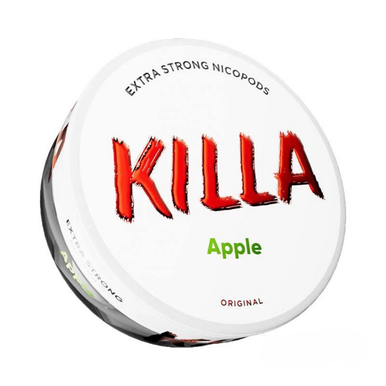
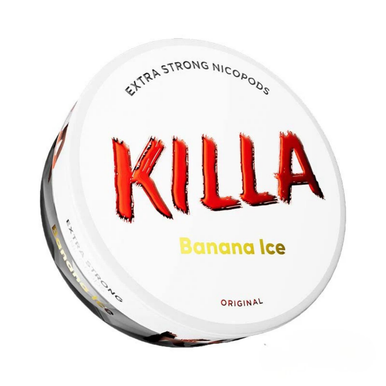
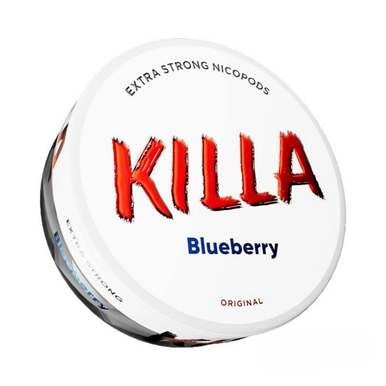
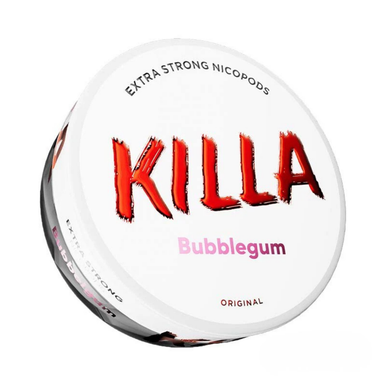
Killa Cola is a spiced, faintly medicinal soft-drink profile with a citrus lift at the front and a rounder warmth behind it. Killa Bubblegum is the sweetest thing on the brand's shelf and the furthest from real fruit, with no sourness to it at all. Killa Apple brings acidity back with a crisp green-apple sharpness over a cleaner sweetness. Killa Blueberry is darker and jammier, the most straightforwardly fruity of the six. Killa Banana Ice is the only one in the group naming a cooling element, soft and creamy at the front with a cold close — which makes it the nearest readable comparison for anyone drawn to this listing by the word cold. And Killa Cappuccino is the outlier, roasted and milky with real bitterness, the sort of can people either take to immediately or not at all.
To see the brand set against the whole catalogue rather than on its own, the full shop listing is the wider view.
Comparable cans elsewhere on our shelves
Since the flavour of this can cannot be compared from our data, the useful comparison is on price, format and general character.
| Can | Listed price | Character |
|---|---|---|
| This listing, Killa Exclusive Cold Dry | £33.50 | No flavour tag in our record |
| Edge Mint | £14.95 | Cold, unsweet, single note |
| Klint Avalanche Mint | £36.90 | Cold, unsweet, more emphatic |
| Denssi Blueberry Freeze | £39.90 | Fruit with a cold layer over it |
| Cuba Ninja Coconut | £39.90 | Sweet, heavy, tropical |
| Nordic Spirit Max Foresty Berry | £4.49 | Mixed berry, lowest price listed here |
If the word cold in the product name is what brought you to this page, the two plainly cold cans in that table are the readable versions of the same idea. The Edge can at £14.95 is the least expensive route to a straightforwardly cold, unsweet pouch on our shelves, and the Klint can at £36.90 is the more emphatic one. Both have flavour records; this listing does not. That is not a recommendation between them, it is a statement about which listings can tell you what is in the tin.
If you want cold combined with something rather than cold on its own, the Denssi blueberry at £39.90 stacks a cooling finish over a fruit. And if you are simply comparing prices across the category, the Nordic Spirit berry can at £4.49 and 77 Ghost Mini Mango at £39.90 mark out roughly the two ends of what we list, with the caveat about unit sizes applying to both.
Keeping a can in the condition it arrived in
Two things degrade a tin: heat and air. Neither is complicated and both are within your control.
Heat dries pouches out and thins whatever flavour they carry. A can on a sunny windowsill, a car dashboard, a shelf above a radiator or a pocket held against a heater will go flat faster than the same can in a drawer, and the change does not reverse when things cool down. Given that this product's name may well be describing an already-dry build, a tin of it is arguably less forgiving of heat than a damper one would be, not more.
Air is a matter of the lid. These tins seal well when the lid is pressed fully home and badly when it is left sitting on top. A can carried half-closed in a bag for a week loses noticeably more of its character than one that was properly shut each time. It is the single cheapest storage habit available and the one most often skipped.
Cool, dark and dry covers the rest. A cupboard or a drawer is enough. Refrigeration does no harm and some people prefer it, though we are not going to tell anyone either way; if you do it, let a tin reach room temperature before opening so condensation does not collect inside the lid, and bear in mind that a fridge is a poor place for something that must stay out of reach of children. Keep unopened tins somewhere children and animals cannot get to them, empty the catch lid regularly rather than letting it fill, and treat the printed tin as the authority on date markings, batch codes and the manufacturer's own storage wording, none of which we hold.
What there is to decide on this listing
Within the listing itself, almost nothing. One declared strength, one variant, one price of £33.50. The only real decision is whether you want a can whose flavour our record does not describe, at that price — which is a genuine question rather than a rhetorical one, and one some people will reasonably answer no to.
For comparing declared figures more widely, the site sorts by them. The Medium Strength shelf collects the lower declarations, the Strong shelf holds the 132 products including this one, and the highest filter holds the rest. They are sorting tools. They do not rank anything and they are not a route to be travelled along in any particular direction.
On pack size, the field is blank and we will not invent one, so there is no per-tin comparison to offer.
Ordering, delivery and proof of age
Ordering runs the same way as anywhere on the site: the listing carries the price and the basket control, checkout takes an address and payment, dispatch follows once payment clears. The stock flag reports the position at the time of writing, not a guarantee for later. Availability across this category follows import and supply timing rather than anything we control.
The age check is not a formality. This is an 18+ product. Age is verified at the point of order and couriers may ask for identification before releasing a parcel. Where age cannot be established a delivery can be refused, and the parcel comes back to us. Plan for it: if you will not be at the address, think about whether whoever is there can satisfy the check, because an age-restricted parcel cannot always be left in a porch or passed to a neighbour.
Given the blank flavour field on this listing, one more practical suggestion. If what is in the tin is the thing that decides whether you want it, ask us before ordering rather than after it arrives. We would far rather answer a question in advance than handle a return.
Getting somewhere else from here
This page sits at only two junctions in the navigation, which is fewer than most and is a direct consequence of the empty flavour field. By declared figure it is filed on the Strong shelf with 131 others. By manufacturer it sits among Killa's 31 listings. There is no flavour shelf for it to appear on.
Beyond those two, the wider navigation still applies. Everything we stock is the unfiltered catalogue. The Pablo range and the Cuba range are the other two large brand collections, both worth browsing if you are comparing across manufacturers. The Medium shelf and the Extra Strong filter complete the strength navigation, offered as tools rather than as a direction of travel.
The questions this listing raises most
What flavour is this?
We do not know, and that is the honest answer rather than an evasion. The flavour field in our record for this product is empty — there is no tag at all. The product name gives you two words, cold and dry, which describe a character rather than naming a taste. We are not going to invent a flavour to fill the gap. The printed tin is the authority, and if the answer matters to your order, ask us before you buy.
Does Cold Dry mean mint?
We cannot confirm that. Across the category the word cold is generally used for a cooling character, which is often but not always associated with mint or menthol-type profiles. That is a convention in how the trade labels things, not a fact we hold about this specific tin. Our flavour field is blank. If you need to know whether this is a mint, the can will tell you and we cannot.
What does Dry mean on a nicotine pouch?
Conventionally it refers to the build of the pouch rather than to a taste. Pouches across the category arrive at different moisture levels — some damp and soft, some firmer and drier — and that is a manufacturing choice you notice the moment you pick one up. A drier build generally gives up its flavour more gradually at both ends. Whether that is what this name refers to is not something our record confirms.
Why does this can not appear on any flavour shelf?
Because the navigation files products by their flavour tags, and this product has none. With an empty flavour field there is no taste-based shelf for it to belong to, so it appears only on the strength category and the brand page. It is not hidden or restricted; it simply has no flavour address in the site's structure. That is a data gap on our side rather than anything about the product.
How many tins do I get for £33.50?
We do not hold that figure. The cans-per-pack field on this product is empty, so any number we gave you would be an assumption dressed up as information. Prices across our shelves run from a few pounds to the high thirties, which strongly suggests more than one kind of unit is being priced and makes inference from price unreliable. Check the listing photograph, or ask us before ordering if quantity is the deciding factor.
Should I buy a lot of this one to start with?
That is your decision and not ours to make, but there is one factual point worth having. Our record cannot tell you what this tastes of, which makes a first purchase here less informed than a first purchase of a can with a flavour description attached. A larger commitment to something unread is a larger gamble, and it is not a gamble we can reduce for you, because we do not hold the information either.
Is 16.5mg a high figure?
Not a question we are able to answer. The number is a manufacturer's declaration printed on the packaging and reproduced by us so that products can be compared on a specification sheet. Whether a particular figure is appropriate for a particular adult is not a judgement a shop can make, and we cannot advise which strength suits anyone. The strength shelves in the navigation show the spread across the catalogue; they sort it rather than ranking it.
What does Exclusive mean in the name?
It is part of the line name the manufacturer chose, and nothing beyond that. It is not a statement from us that the can is limited, restricted or unavailable elsewhere, and it implies nothing about quality. Other brands on this site use similar words in their own line names, which is the plainest indication that the word is naming rather than describing anything.
How long does one pouch last?
There is no single answer, because it varies substantially between people. What is generally reported across pouches of this type runs from a few minutes to around half an hour or a bit more, with flavour heaviest early and thinning after that. We give the range because people ask for a rough idea, not as an instruction, and how long anyone keeps a pouch in is entirely a matter for them.
Am I allowed to use these indoors at work?
That is not ours to answer. Rules on nicotine products in workplaces, licensed premises, transport networks, sports grounds and public buildings are set by the employer, the operator or the carrier. They vary from place to place, they change without anyone informing a retailer, and we are not a party to them. Ask whoever runs the premises. The absence of a stated rule is not the same thing as permission.
What is on the tin that is not on this page?
Quite a lot, and on this listing more than usual. Pouch count, pouch weight, date and batch markings, the manufacturer's own storage wording, any required warnings — and, importantly here, whatever the packaging says about what is actually in it. We hold six fields for this product, one of which is empty. Anything beyond that appearing in a retail description was invented somewhere along the line.
Do you have reviews to tell me what it is like?
No. We run no ratings system, publish no testimonials, and label nothing as popular or recommended. On a listing with a blank flavour field that is genuinely frustrating, and we would rather say so than manufacture the impression of a crowd to paper over it. What we can give you is the price, the declared figure, the stock position, the format, and a clear account of what is missing.
Legal and compliance information
Please read this before placing an order.
- Adults aged 18 or over only. This product is sold only to adults who are 18 or over and who already use nicotine. Age is verified at the point of order.
- Nicotine is an addictive substance. This product contains nicotine at a declared strength of 16.5mg.
- This is not a licensed stop-smoking medicine. It carries no medicinal authorisation, and it is not intended for non-smokers, for anyone who does not already use nicotine, for under-18s, or for anyone who is pregnant or breastfeeding.
- Proof of age may be requested on delivery. Couriers may ask for identification before releasing a parcel and may decline to complete a delivery where age cannot be confirmed.
- Keep out of the reach of children and animals. Used pouches go in a bin.
To close
The record in full: Killa Exclusive Cold Dry Nicotine Pouches, £33.50, one declared strength of 16.5mg, in stock as written, one image on file, no quantity figure, and an empty flavour field. That last item is the defining fact about this listing and the reason this page has spent as long on what it cannot tell you as on what it can.
The two words in the product name describe a character rather than naming a taste, the conventional trade usage of those words points in a direction we are not able to confirm, the word Exclusive is naming, and the brand name is a brand name. If you already know this can and want it, the listing above is where to go. If you are trying to find out what is in it before you commit, the tin and a question to us will get you further than this description can, and we would rather say that plainly than write a paragraph of confident flavour notes we have no basis for.
More from Killa
More strong pouches
More killa pouches
Where this sits
Killa Exclusive Cold Dry Nicotine Pouches appears in these categories. Browse them, or jump to something close.
You might also like