Killa · 16.5mg
Read the full guide
Killa Spearmint Nicotine Pouches
£33.50
✔ In stock — ready to ship
100% tobacco-free
Free over £20
Same-day dispatch
Secure checkout
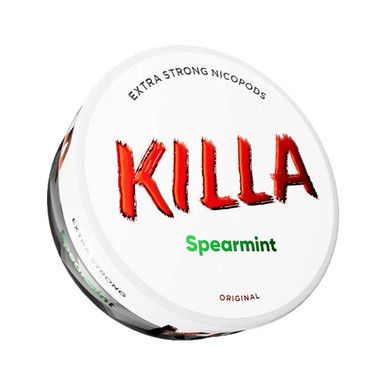
This listing is Killa Spearmint Nicotine Pouches. The brand field reads Killa, the product name reads Spearmint, and the price we show is £33.50. A single strength is declared against it — 16.5mg — and since there is only the one, it forms both ends of the range we hold for this product. The stock field marks it in stock at the time of writing. One product image is attached, not a gallery. The flavour tag applied in our catalogue is mint. That is the entire contents of our record.
There is one field we cannot fill and it is a consequential one. Cans per pack is empty. We do not know, from our own data, whether £33.50 buys a single tin or a multi-can roll, and we are not going to reason our way to an answer by comparing the figure against what other suppliers charge. That would produce a number with the shape of a fact and none of the substance. If quantity affects your decision, the packaging and the basket page are where it is settled.
The full guide to Killa Spearmint Nicotine Pouches
5,024 words on how it eats, who it suits, how to serve it and what to put beside it.
The record we hold against Killa Spearmint
Everything below is assembled from those recorded fields, from comparison with other listings on the same shelves, or from a plain statement that we do not know. We do not print ingredient lists. We do not explain what a pouch does once it is in place. We make no statement about anyone's wellbeing, favourable or otherwise, because that is not a thing a shop should be doing on a product page. Where a fair question would need an invented answer, the answer here is that the information is not ours to give.
This is an adult nicotine product, listed on the basis that the reader is 18 or over and already uses nicotine. The required wording has its own section at the foot of the page.
A note on how this product is named, before anything else
The brand word on the lid is Killa, and the address of this page contains the phrase extra strong. Both come from the manufacturer. Neither is an assessment we have made, and it is worth spending a paragraph on that rather than letting the naming do unearned work.
A brand name is a trademark: a word registered and printed, chosen for how it looks on a shelf. A range phrase like the one in this URL is how a manufacturer separates one product line from another within its own catalogue. We reproduce both because reproducing them is how a page becomes findable by the person looking for it. We are not endorsing either, we have not verified either against anything, and we are not implying that a can named boldly is a better purchase than a can named quietly.
It follows — and we would rather be blunt than tactful here — that none of this naming describes a level to reach. There is no ladder built into our catalogue. A product name is not a grade, a pouch is not a test and a figure on a lid is not a score to beat. We have no opinion on what anybody should be using, we are not competent to form one, and we would keep it to ourselves if we were.
Our own filing shows the tension openly. The listing name carries that range phrase, but our shelf placement puts this can on the Strong grouping, which holds 132 products, rather than on the shelf named after the phrase. Two labelling systems, one the manufacturer's and one ours, and they disagree. We are not going to pick a winner. Showing both and saying so is the accurate thing to do.
What you are handling: the tin, the pouch, the routine
Set the naming aside and the object is straightforward: a small round tin containing a ring of soft rectangular pouches, with a two-part lid.
Format and placement
Pouches are manufactured in several formats, and the practical difference between a standard-size pouch and a slim or mini one is how much you are aware of it. A pouch is placed between the gum and the upper lip, generally off to one side, and left in position. A bigger pouch occupies more of that space and is likelier to register as a change in the line of the lip; a smaller one registers less. Our record does not state a format size for this product and we are not going to assert one. The can states it, and the first pouch you take out will tell you more than any description here could.
Placement is a small personal knack rather than a technique with a correct answer. Some people seat a pouch flat along the gum line, some push it further back, some alternate sides through the day. We are not in a position to teach a method and we will not imply that one exists.
Duration
The honest range here is wide. Some people remove a pouch after ten minutes; others leave one for the better part of an hour. Flavour usually drives the decision, because flavouring releases most strongly at the start and thins out from there, so the point at which a pouch stops being worth keeping arrives at different times for different people. We publish no recommended duration. Advising how long to keep a nicotine product in the mouth is dosage guidance however gently it is phrased, and that is not something a shop can responsibly offer.
The catch well, and getting rid of a used pouch
The upper section of the lid is hollow. That compartment is a catch well: somewhere for a used pouch to sit when there is no bin nearby. It is short-term holding, not a storage solution. Left loaded for days it will make opening the can unpleasant, and more practically it occupies the space the lid needs to close properly.
Empty it at the next bin you walk past. A used pouch goes into general waste, wrapped if you would rather. Not into a sink, not into a drain, not onto the ground, not into food waste. Keep both used pouches and the tin itself away from children and animals — a small tin of soft objects is precisely what a dog will chew through, and this is a nicotine product.
Spearmint on the nose and on the tongue
Spearmint has a distinct character within the mint family and it is worth separating from its more familiar relative rather than treating all mint as one thing.
Peppermint, broadly, reads as cold and piercing — a sharp, almost medicinal clarity that arrives at the front and cuts. Spearmint reads rounder. It is softer at the edges, noticeably sweeter, and carries a green, herbal, almost leafy quality that peppermint largely lacks. Where peppermint tastes like cold air, spearmint tastes more like a leaf. It is the mint of garden borders and of the flavour most people associate with chewing gum rather than with a strong confection. Neither is better; they are different, and people usually have a firm preference in one direction.
On opening a can, the aroma tends to be the clearest impression available before anything else happens. A spearmint flavouring typically presents a bright green top note with a sweeter body underneath it, and less of the sharp, cold-air lift that a peppermint or a menthol-named product leads with. How pronounced any of that is in this particular can, we cannot tell you. We have not tasted it. We have no tasting panel, and inventing one's findings would be the cheapest and least defensible thing we could put on this page.
One general observation about flavoured products of this kind, offered as a category note rather than a description of this can: sweetness generally arrives first and fades fastest, while the herbal and cooling elements of a mint tend to persist longer. That is why a mint-flavoured product often reads as sweet at the start and dry later. Whether this listing behaves that way is a question the can answers and we cannot.
The catalogue tag says mint, which covers a great deal of ground
Our system tags this product as mint, and that tag is accurate but extremely broad. The mint shelf holds 148 products, the largest flavour grouping we maintain, and inside it sit spearmint, peppermint, menthol, iced and frozen variants, and every mint-plus-fruit combination a supplier has filed under the same heading. There is no spearmint-only shelf. So the tag will get you to the right neighbourhood and no closer, and from there you are reading product names.
That matters if you specifically want spearmint rather than mint in general, because the two are not interchangeable in taste. A can named for cold or ice is very unlikely to be the softer, greener profile described above — the Denssi cold mint listing at £39.90, Clew's cool mint can at the same £39.90 and the Cuba Ninja ice-cool listing all sit under the same tag while being named for something quite different.
Keeping a tin in usable condition
This is the section that tends to matter most after the purchase rather than before it, and with a mint flavour it arguably matters more than with a fruit one, for a reason given below.
Air is the main variable
The biggest influence on how a can holds up is how much air has reached it. Flavourings are volatile — which is exactly why a freshly opened tin has a smell at all — and what you can smell is what is escaping. A lid left resting on top rather than pressed home lets that continue between uses, and the pouches themselves stiffen as they lose moisture to the air. Neither change reverses. Press the lid down until it seats. If the tin is going into a bag alongside keys, check it has actually closed, because a knock can lift a lid that was only balanced on the rim.
Mint flavourings are, as a class, among the more volatile ones, which is why a poorly closed mint tin tends to go flat faster than a poorly closed fruit tin. That is a general property of the flavour family rather than a claim about this product, but it is the practical reason to be fussier about the lid here than you might be elsewhere.
Firm pouches and soft pouches are not the same as fresh and stale
Pouches are made at different moisture levels by design. A drier build feels firmer between the fingers and takes longer to settle in place; a moister build feels softer and yields sooner. Neither is a fault and neither is better. A tin that feels different from your last one may simply be a different specification, or a different production run of the same specification. Our record carries no moisture figure for this product, so we cannot tell you in advance where on that range it sits.
What is worth knowing is how to read the tin in front of you. Uniform firmness across the ring, from a freshly opened and properly sealed can, most likely reflects how the product was made. Pouches that are hard, brittle at the corners or visibly lighter than their neighbours, from a can that has been open for weeks in a warm room, have more likely dried out. The two states are not always easy to tell apart and we are not going to pretend otherwise.
Heat, sun and the places cans go to die
Heat degrades flavouring and direct sunlight compounds it. The recurring offenders are a car dashboard in summer, a windowsill that catches the afternoon, the shelf above a radiator, and a coat pocket pressed against a heater in a hallway. A drawer, a cupboard, a bedside table or a zipped bag pocket are all better. None of this shows up over an afternoon. It accumulates across weeks, and the way you notice it is as a tin that tastes noticeably flatter than the identical one you finished last month.
Cold storage, and why we will not tell you what to do
Some people keep tins in a fridge; plenty do not. We have no instruction either way. Storage guidance belongs to the manufacturer and is printed on the packaging, and it is not ours to invent a version of. The only thing we will add is a general point that applies to most flavoured goods: consistency tends to beat cycling. A tin that lives in one environment usually holds its condition better than one shuttled repeatedly between a cold fridge and a warm room, whichever environment you pick.
Pockets, bags and travelling with a tin
Most of the damage a tin takes happens in transit rather than at home, and the reasons are mundane. A trouser pocket is warm, which is the heat problem in miniature and applied continuously. A bag with keys and a wallet in it is where lids get knocked loose. A coat left over a radiator in a hallway cooks whatever is in the pockets for hours at a time, and a tin left in a car is subject to a temperature range no cupboard would ever produce.
None of that requires elaborate management. A zipped internal pocket rather than a loose one, a check that the lid has seated before the tin goes anywhere, and taking it out of a coat that is going near a heat source will cover most of it. If you carry a tin daily, it is also worth accepting that a daily-carry tin will not hold condition as well as one that lives in a drawer, and planning around that rather than being surprised by it — which for most people means finishing a carried tin faster and keeping the spare at home until it is needed.
Aircraft and long journeys raise a separate question about what may be carried and where, and that is not a question we can answer. Rules belong to the carrier, the operator and the destination, they change, and they are not ours to summarise. Check with whoever is running the journey rather than relying on a product page.
Rotation, dates and the everyday things
If you keep more than one tin, open the oldest first. It is obvious, almost nobody does it, and it is why a drawer eventually yields a flat can from the back that gets blamed on the brand rather than on the drawer. Store tins upright where you have the space, which keeps pouches sitting in their ring instead of bunching to one side and makes the tin tidier to open. On dates, check the packaging — if a best-before marking exists it is printed there. Our record holds no date information at all, so we can neither confirm one exists nor estimate a shelf life for you.
What the milligram figure does and does not tell you
The declared figure on this product is 16.5mg. This section is about how much weight that number can carry, because in this part of the catalogue it is routinely asked to carry far too much.
What it is
It is a per-pouch figure declared by the manufacturer and reproduced by us from the supplier record. It is label information. It is the number to quote when you are setting one listing against another, because it is the only number both listings will give you. That is the honest extent of its usefulness.
What it is not
It is not a rating anyone has independently verified, and we certainly have not. It is not necessarily declared on the same basis by every manufacturer, which means two tins printed with the same figure are not guaranteed to be describing precisely the same measurement. It is not a description of how anything will feel, because that is not a property that lives in a number. And it is not a tier, a level, a grade or a rank.
On that last point we will be direct, because the naming in this part of the catalogue invites the opposite reading. A larger figure is a larger figure. It is not an upgrade, not a sign of anything about the person buying it, not a milestone and not a destination. Nobody should be working towards a number, and nothing on this site is arranged to suggest they should. If a page anywhere frames strength as a challenge or a progression, it is selling you a story rather than describing a product.
The question we cannot answer
We cannot advise which strength suits anyone. That is the actual position rather than a disclaimer tacked onto a recommendation. Suitability is a question about a specific person, we know nothing whatsoever about anyone reading this, we do not ask, and we would not act on the answer if we did. Any shop that tells you which number to pick is guessing with your money and your judgement.
What our shelves do instead
What we can show you is our own sorting, which is a coarse filter and nothing more. This can is filed as Strong. We also maintain a shelf for products filed as Extra Strong and one for those filed as Medium Strength. Those groupings exist so you can browse a band of declared numbers rather than reading every listing individually. They are navigation. The order they appear in a menu implies no progression and recommends no movement between them.
This can's place among the Killa listings we stock
We carry 31 products under this brand, and the brand shelf collects them in one place. This is the spearmint entry, at the £33.50 that most of the range shares.
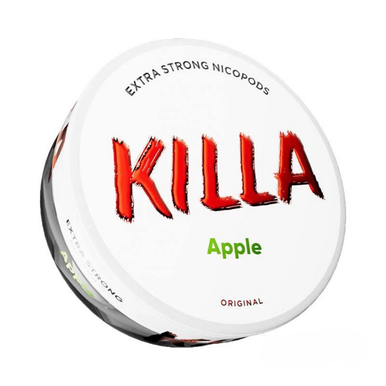
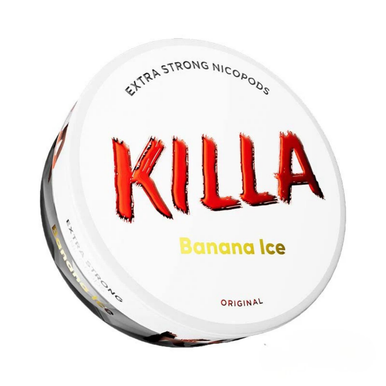
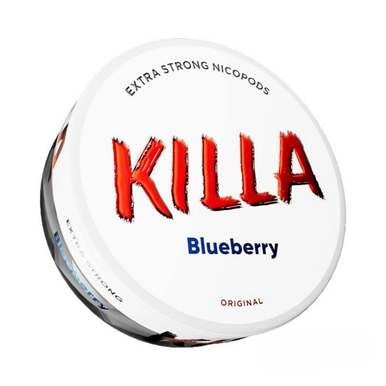
The set spreads across flavour families rather than across strengths. The apple can at £33.50 is the orchard-fruit entry and the blueberry listing covers berry. Killa Banana Ice combines a soft fruit flavouring with a cold note, which makes it the closest thing in this group to a half-step towards mint. Away from fruit, the cappuccino listing is the coffee-leaning one, the cola can is the soft-drink one, and the bubblegum flavour is the confectionery entry. Every one of those is £33.50.
Because the price is flat across the range, price cannot help you choose within it. Flavour name is the only differentiator our data provides here, and a flavour name is a name rather than a specification. That is an unsatisfying answer to "which of these is best" and it is the one our records actually support.
Cans people keep in rotation alongside a mint
A single flavour tends to fade into the background faster than two do, and people who use one steadily often keep a second tin of something unlike it. We have no data on that and claim nothing from it; it is a pattern rather than a finding. If you want a second can, the useful question is whether you are looking for a different mint or a break from mint entirely.
Staying within mint, the options differ mainly by how cold the naming suggests they lean. Klint's avalanche mint at £36.90 and the Elf Bar cool storm listing at £29.90 are both named towards the cold end. Edge Mint at £14.95 is the least expensive mint on our shelves and the Nordic Spirit frosty mint at £4.49 is cheaper still on a listing basis, though the quantity caveat below applies to both. Fumi's fiery mint at £27.90 is named for something other than cold, which makes it the odd one out in that group.
For a break from mint, fruit is the usual direction. Pablo's Gold Edition blueberry and peach ice at £19.95 keeps a cold note while moving to fruit, and the 77 VB Edition Mini arctic berry can at £39.90 does something similar in a smaller format. Those are the two in this group that make the transition gently rather than abruptly.
The caveat, stated once and applying to every price above: our records do not consistently carry cans-per-pack, and ours is blank for this product. A £4.49 listing and a £39.90 listing are almost certainly not describing the same quantity of goods, and reading that gap as a value judgement would be plainly wrong. A price comparison is only a comparison when you can see the quantity on both sides.
What there is to choose from on this listing
Very little, and the useful thing is to say so rather than to invent options.
One variant exists: 16.5mg at £33.50. There is no second strength under this flavour, no alternative pack size, no bundle. The decisions this page supports are whether to buy it and how many. If you were hoping to move between strengths while keeping the same flavour, this listing does not offer that and scrolling will not produce it.
Comparing across listings instead, the method is short and the same every time. Read the declared figure and treat it as label information. Check for a stated quantity, because a price without one is not comparable. Treat a flavour name as a name. Then decide for yourself, which is the step we cannot take on your behalf.
Placing an order and proving your age
The transaction itself is ordinary. The tin goes in the basket at £33.50, you check out, the order is dispatched. Our record marks the product in stock as this page is written; stock is live, and any listing can change between reading a page and placing an order. That is normal for any shop.
Age verification is the part that is not ordinary, and it belongs in plain sight. This is an 18+ product sold to adults who already use nicotine. Checks apply at the point of ordering, and ID may be requested on delivery. If whoever answers the door cannot produce it, the courier is entitled to take the parcel away. A check that cannot fail is not a check, so this one can.
The practical follow-ons: keep ID to hand when a delivery is due, and do not arrange for a parcel to be left in a porch, with a neighbour or in a safe place, because nobody is verified in any of those scenarios. And do not order for anyone under 18. That reads like boilerplate and is not.
Reading £33.50 honestly
Price is the one field we hold reliable figures for across the whole catalogue, so it is the only comparison we can make with confidence — and even then it carries a caveat large enough to swallow most of its usefulness.
At £33.50 this tin sits in the upper-middle of our range. Above it are several listings at £39.90, which is the most common price at the top end of what we stock. Below it are listings at £36.90, £29.90, £27.90, £19.95, £14.95 and, at the bottom of the scale as printed, £4.49. Set out like that it looks like a straightforward ladder of value, and it is not one, for a reason we have already stated and will state again because it is the single most common way a shopper gets misled on a page like this.
Cans-per-pack is not consistently recorded in our data and it is entirely absent for this product. A listing at £4.49 and a listing at £39.90 are, in all probability, not describing the same quantity of goods at all. Treating the gap between them as a measure of value would be reading a number that does not mean what it appears to mean. The only sound way to use price is to compare two listings where you can see the quantity on both sides; where you cannot, the price is simply the amount charged and tells you nothing about what you are getting for it.
The same applies within a brand. Almost every listing we carry from this manufacturer is £33.50, which looks like consistency and may only be consistency of listing rather than of contents. We are not in a position to confirm either way.
How people reach this page
Three shelves carry this can. The strength grouping holds 132 products, the brand grouping holds 31, and the flavour grouping — much the largest of the three — holds 148. Which route is most useful depends on whether you shop by declared figure, by a brand you already recognise, or by flavour word.
Sitting above all of them is the whole catalogue on a single page, from which the brand and flavour shelves branch. Other brand shelves behave the same way: the Cuba brand listing and everything we carry from Pablo are two of the bigger ones and are worth opening if either name means something to you. There is no correct path through the site and we have no reason to steer you down one.
Straight answers, including where the answer is that we do not know
How many pouches does the tin contain?
Our record does not carry a pouch count for this product and we will not state one. The figure is printed on the packaging. Publishing a guessed number risks it being wrong for the version of the can that actually reaches you, and estimating from price or from other brands' conventions would be guesswork dressed as data. This is simply a field our supplier information does not populate.
Is £33.50 for one tin?
We cannot say, because the cans-per-pack field is empty for this listing. It is an unsatisfying answer to a fair and fairly important question, and we would rather give it than fabricate a better-sounding one. The basket page and the packaging will both settle it. Until then, read £33.50 as the amount charged, not as a per-tin rate.
What is the difference between spearmint and peppermint?
As tastes: spearmint reads rounder, sweeter and greener, with a herbal, leafy quality; peppermint reads colder, sharper and more piercing. As aromas, spearmint leads with a green top note while peppermint leads with a cold one. Which you prefer is a genuine matter of taste with no correct answer. This listing is the spearmint one; our mint shelf carries a great many of both kinds.
Why does the flavour tag just say mint?
Because mint is the tag our catalogue applies and there is no spearmint-specific shelf within it. The tag is broader than the product name rather than contradicting it. The consequence when browsing is that the mint shelf returns 148 products spanning every mint style we stock, so you will need to read product names to find the profile you want.
Which strength is right for me?
We cannot tell you and will not approach it from any direction. Suitability is a question about you, and we know nothing about you. This listing declares one figure, 16.5mg, with no alternative offered. If you want to see how the catalogue sorts by declared number, the strength shelves do exactly that and nothing beyond it.
Should I move up from a lower figure?
That is not a question we will answer, and the framing is one we would gently reject. There is no route through our catalogue that anyone is meant to travel, and product naming is a manufacturer's marketing decision rather than a sequence. We are not going to suggest that anybody move in any direction, up or down, because doing so would be advice about nicotine use and that is outside what a shop can offer.
How long is a pouch meant to stay in?
Habits run from a few minutes to close to an hour and we publish no recommended figure, because a recommendation about duration is a form of dosage guidance. The one thing worth knowing is that flavour comes through fastest at the beginning and tails away, which is a large part of why people's habits differ so much on this.
My last tin felt drier than this one. Is something wrong?
Not necessarily. Moisture level is a design choice that varies between products and between production runs, so a difference in feel is often just a difference in build. It can also be storage — a tin left open, warm or in sunlight loses moisture and aroma. Our record does not state a moisture specification, so we cannot tell you which explanation applies to your tin.
Does mint go flat faster than fruit?
As a general property of flavour families, mint flavourings tend to be more volatile than fruit ones, which is why a badly sealed mint tin often loses its aroma sooner. That is a category observation rather than a measured statement about this product, and we have not tested it. The practical takeaway is simply to be particular about pressing the lid home.
What is the compartment in the lid for?
It is a catch well for used pouches — somewhere to put one when no bin is within reach. It is temporary holding rather than storage. Emptying it regularly matters for two reasons: a loaded well stops the lid seating, which lets air at the remaining pouches, and a tin left full for days becomes unpleasant to open.
Is there a date on the can?
Look at the packaging. If a best-before or use-by marking exists, that is where it will be. Our record holds no date information for this product whatsoever, which means we cannot confirm one is printed and cannot estimate a shelf life. Pointing you at the right place is more useful than producing a number we would be making up.
Is it available now?
Our record marks it in stock at the time of writing and there is one product image on the listing. Stock is live, so the basket page rather than this paragraph is the authority. If it has sold out since this was written, the site will tell you when you try to add it.
The legal and compliance wording for this product
This product is for adults aged 18 or over who already use nicotine. It is not sold to anyone else and it is not directed at anyone else.
Nicotine is an addictive substance.
This product is not a licensed stop-smoking medicine. It is not intended for non-smokers, for people who do not already use nicotine, for anyone under 18, or for anyone who is pregnant or breastfeeding. Nothing on this page constitutes medical advice, and we do not offer guidance on suitability for any person or any condition.
ID may be requested on delivery. Age verification applies to this order, and a parcel may be refused or returned if proof of age cannot be provided.
Keep out of reach of children and animals.
Last word
Killa Spearmint is a single-flavour tin at £33.50, with one declared figure of 16.5mg, tagged mint on a shelf of 148, marked in stock, one image on the listing, and no cans-per-pack figure in our record — which remains the gap most likely to matter when you are deciding. Those are the facts. Everything else on this page has been the tin itself, how to keep one in decent condition, what the number on the lid can honestly be used for, and a straightforward account of where our knowledge runs out.
More from Killa
More strong pouches
More mint pouches
Where this sits
Killa Spearmint Nicotine Pouches appears in these categories. Browse them, or jump to something close.
You might also like