Killa · 16.5mg
Read the full guide
Killa Exclusive Liquorice Nicotine Pouches
£33.50
✔ In stock — ready to ship
100% tobacco-free
Free over £20
Same-day dispatch
Secure checkout
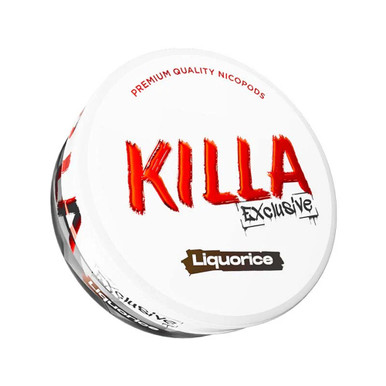
Killa Exclusive Liquorice Nicotine Pouches is listed at £33.50 with one declared strength, 16.5mg, in a single variant. Availability showed as in stock when this page was written, and there is one product image attached to the listing.
Now the awkward part, dealt with at the top rather than buried. Our flavour field for this listing reads "mint". The product name reads "Liquorice". Those are not the same thing, and we are not going to quietly pick one. The tag is our own filing; the name is the manufacturer's. We have left both exactly as they stand, because editing a record to make a page read more smoothly is how shops end up publishing things that are not true.
The full guide to Killa Exclusive Liquorice Nicotine Pouches
5,093 words on how it eats, who it suits, how to serve it and what to put beside it.
Killa Exclusive Liquorice: the record, and where it disagrees with itself
What might explain it? Our flavour tags are one word wide, and a one-word tag cannot describe a compound flavour — a can that is liquorice with a cooling element would have to be filed as one or the other, and mint is the tag the listing received. That is a plausible reading. It is not a fact, we have not verified it, and we are not asserting it. It is equally possible the tag is simply a filing error that nobody has corrected. We do not know, and saying so is more use to you than a confident guess.
The practical consequence is straightforward. This page describes both possibilities honestly, and the packaging in your hand settles which one you have. If the distinction matters to your purchase — and for a flavour as divisive as liquorice it reasonably might — ask us before ordering rather than after, and we will look at what the supplier actually states instead of reading our own tag back to you.
Two more preliminaries. This is an adult nicotine product for people aged 18 or over who already use nicotine, with the full wording in its own section below. And the words on the lid are the manufacturer's: Killa is a trade name carrying no meaning we endorse or extend, and Exclusive is that manufacturer's label for one group inside its own catalogue rather than a claim about scarcity.
The tasting note: cool, sweet, sharp, bitter
Most flavours in this category can be placed reasonably well on four axes — how cool, how sweet, how sharp, how bitter. Doing it properly takes longer than calling something "refreshing" and is considerably more useful, particularly here, where the name on the lid points at the one flavour in the whole category that regularly registers on the bitter axis at all.
Bitter
This is the axis that makes liquorice liquorice. Almost nothing else on our shelves has a genuine bitter component — fruit cans are sweet and acidic, mint cans are cool and sweet, coffee cans have a roasted edge that reads as bitter but is really something else. A liquorice flavour carries a dark, slightly medicinal bitterness underneath everything else, and it is not an off-note or a flaw; it is the structural element the rest of the flavour is built around. It is also exactly why the flavour divides people so cleanly. Nobody is neutral on liquorice, and that has nothing to do with quality.
Sweet
Liquorice is sweet as well as bitter, and the two run simultaneously rather than in sequence. The sweetness is dark rather than bright — closer to molasses or treacle than to sugar or fruit — and it gives the flavour its weight. There is usually an aniseed direction in it too, that slightly perfumed, warming quality that people either read as part of the sweetness or as a separate note entirely, depending on how sensitive they are to it. On the sweet axis this style of can sits mid-to-high, but the character of that sweetness is so different from a fruit can's that a straight comparison is not very informative.
Cool
Here is where our tag becomes relevant rather than merely puzzling. If the can carries a mint element — which is what our record implies — then the cool axis is in play and the flavour reads as liquorice with a chill laid over or under it, which is a combination with a long history in confectionery and a genuinely distinctive result: the cold sharpens the bitter edge and makes the whole thing read as cleaner and less heavy. If the can is liquorice alone, the cool axis is close to zero and the flavour is warmer, rounder and more syrupy. Those are two noticeably different cans. We cannot tell you which one this is, and the label can.
Sharp
Low, on any reading. Sharpness in this category comes from acidity, and acidity is a citrus and berry characteristic rather than a liquorice one. There is no mouth-watering attack here, no tartness, nothing that makes you wince at the front. If anything, the flavour is the opposite of sharp — it arrives slowly, fills out in the middle and leaves gradually. People coming to it from a lemon or lime can often describe it as the slowest thing they have tried, which is a fair description of the shape rather than the intensity.
Where the four meet
Put together: low sharpness, substantial and dark sweetness, real bitterness underneath, and a cool element that is either present or absent depending on what the can actually is. That combination makes it the least fruit-like and least conventionally refreshing flavour on the Killa shelf, and probably the most distinctive. It is a flavour with a strong point of view. People who like it tend to keep it in permanent rotation; people who do not tend to know within a minute.
What a tasting note can and cannot do
It is worth being honest about the limits of everything written above. A tasting note is one person's attempt to put a subjective experience into shared vocabulary, and taste varies between people to a degree that is easy to underestimate. Sensitivity to bitterness in particular differs enormously — the same can will read as pleasantly dark to one person and as harsh to another, and neither of them is wrong. On a flavour this polarising, that variation matters more than it does on, say, a plain mint.
What a tasting note can do is tell you the shape of a flavour: where the weight sits, whether it arrives fast or slow, what it is built around. That much is reasonably stable between people even when the verdict is not. Use the description above to work out whether this is the kind of thing you like rather than whether you will like this particular can, and treat the second question as one only a tin can answer.
The aroma
Lifting the lid gives something dark, sweet and faintly medicinal — recognisably liquorice, with an aniseed lift at the top of it. It is a heavier smell than a mint can's and much less bright than a citrus can's, and it does not travel far; it sits in and just above the tin. If a cooling element is present you get a thin cold edge on top of the sweetness, which is usually the clearest signal available before you use one.
If it is the mint our tag says it is
Because the record is ambiguous, it is worth describing the other possibility properly rather than treating it as a footnote. A can filed under mint and named liquorice, read as a mint, would be at the dark end of the mint shelf: not a bright peppermint and not a green herbal reading, but a cool flavour carrying weight and sweetness underneath it, with the cold acting as the top layer over something heavier. That is an uncommon shape for a mint and it would not be confused with any of the plain mints we stock.
Either way — a liquorice with a chill, or a dark mint with liquorice character — the practical outcome is similar: this is the can on the Killa shelf that does not resemble the others. Whichever description turns out to fit, it will not be mistaken for the apple or the bubblegum.
The pouch and the format
The pouch sits under the upper lip, off to one side, laid flat rather than folded. It stays where it is put. It is not chewed, not swallowed, and comes out whole. The usual pattern is a small adjustment in the first minute followed by forgetting about it entirely.
Pouch bodies differ across the market — slim, regular, and shorter mini formats — and our record does not state which this can uses. We are not going to guess at it; the packaging states the format and is the authority. Body size affects how noticeable a pouch feels more than most other variables, which is why an unfamiliar can sometimes feels strange before its flavour has registered at all.
Time in is personal habit plus whatever the manufacturer prints on its own packaging. Accounts across the category range from roughly twenty minutes to an hour, and flavour in most cans fades before the pouch comes out. A liquorice flavour is on the more persistent side of that, because dark and bitter notes hold on longer than bright ones do, but we are not attaching a duration to it — a shop printing a recommended time on a nicotine product has moved from describing to advising, which is not our job.
Cans of this type usually have a shallow compartment built into the lid for used pouches. Our record does not confirm whether this one does, so check the lid. Where it exists it is a stopgap for when no bin is nearby, it holds very little, and it wants emptying daily rather than weekly. Spent pouches otherwise go in general waste — not a sink, not a toilet, not a food caddy, and never left where a child or an animal could reach them. Empty tins are plastic and go into household plastics recycling as far as your local authority accepts that grade, which varies by council and is not something we can check for a postcode.
16.5mg, and what a number on a lid is
The declared figure here is 16.5mg — the manufacturer's statement of the nicotine content of a pouch, in milligrams, printed on the packaging as label information. It is a fact about the pouch. It is not a fact about the person holding the can, and it is not a grade.
This listing sits in the Strong band, a shelf of 132 products. We also run a Medium band and an Extra Strong band. Those three exist so a catalogue of 385 listings can be filtered into something a person can read, and they are our filing rather than the manufacturer's. They do not form a progression. A can in a higher band is not better, not more advanced, and not a place anyone should be aiming for; nothing on this site is an invitation to move along that axis.
We cannot tell you which declared figure is right for you. We hold nothing about any individual customer that would make an answer meaningful, and a retailer steering people between nicotine strengths would be doing something it has no standing to do. The number is on the can. Anything concerning nicotine and your own circumstances belongs with a pharmacist or a doctor.
One labelling point worth keeping in mind across the whole site: manufacturers do not all declare the same way, some stating a figure per pouch and some per gram of pouch content. Two cans can print the same number and not mean the same quantity. Compare within a brand with reasonable confidence, across brands with less, and treat the tin in front of you as the authority on itself.
Pairing across the range
This is the section that matters most for a can like this one, because a strongly characterised flavour is the kind people rotate rather than use exclusively. Pairing is simply the habit of keeping more than one can on the go, and for a divisive flavour it is close to universal.
Why people pair at all
Two reasons, and neither is exotic. The first is that any flavour used continuously stops registering — the palate adapts, and a can that was vivid in week one is background by week three. Alternating slows that considerably. The second is that different flavours suit different moments for reasons of taste alone: a heavy, dark flavour is a different proposition after a meal than first thing, and having an alternative to hand means you are choosing rather than settling. Nothing here is a suggestion to buy or use more of anything; it is a description of what people who already buy these actually do.
Pairing by contrast
The commonest approach with a liquorice can is to pair it with something as unlike it as possible, precisely so that neither ever begins to blur into the other. The natural partners are the bright, acidic and cold cans — anything built on sharpness or cooling rather than on dark sweetness. Klint Avalanche Mint at £36.90 is the starkest of those on our shelves: cold, unsweetened and completely without weight, which is about as far from this can as it is possible to get while staying in the category. Denssi Cold Mint at £39.90 is a similar direction with slightly more body.
Pairing by adjacency
The opposite approach is to pair with something that shares one characteristic and changes the rest. If it is the darkness and weight you like here, the nearest thing on our shelves is the Killa Cappuccino can at £33.50 — roasted, milky and carrying its own bitter edge underneath. It is not remotely the same flavour, but it occupies a similar structural position: heavy, slow, and built around something other than sweetness or acid. People who rotate this liquorice can with that one report that neither gets tiring, which makes sense given how differently the two arrive at a similar weight.
Pairing by cooling
If what you value is the cold element our flavour tag implies, the pairing options widen considerably, since cooling is the most common characteristic on our shelves. Clew Cool Mint at £39.90 gives you the broad central reading of mint with a confectionery sweetness, and Cuba Ninja Ice Cool at the same £39.90 keeps the cold while framing it differently. Fumi Fiery Mint at £27.90 is the interesting one, because it adds a peppery warmth against the cool rather than more cool — and warmth against a dark sweet flavour is a combination that works in confectionery generally.
Pairing by format rather than flavour
A less obvious pairing logic: keep a second can that differs physically rather than in taste. The 77 VB Edition Mini Arctic Berry can at £39.90 uses a mini-format body, which is a different object under the lip regardless of what it tastes of. Some people keep a mini alongside a regular can for situations where a smaller pouch suits them better, which is a practical preference about the object rather than anything about strength or effect.
Pairing across a week rather than a day
Most people who rotate do it by occasion within a day, but there is a slower version worth mentioning: keeping one can as the everyday one and a second as the occasional one, opened only when the first has stopped registering. That works better with a strongly characterised flavour than with a neutral one, because a distinctive can stays distinctive when it has been away for a fortnight, whereas two similar cans blur into a single impression whatever order you use them in. If you are pairing this liquorice can with anything, pairing it with something that shares none of its characteristics is what makes the rotation actually do something.
There is a storage consequence to that pattern, which is that the occasional can spends long periods closed and forgotten. Those are exactly the cans that get left in a bag or a coat and turn up dry three months later. If you keep a second can in slow rotation, keep it in the same place as the first rather than wherever it happened to end up.
The practicalities of carrying two
Two tins is twice the opportunity to leave a lid ajar, so the habit worth forming is checking both when you put them away rather than only the one you just used. Strongly aromatic cans do not contaminate each other while closed, but an open liquorice tin sitting in a bag will make its presence felt. Keep the one you are not using shut, and keep both out of reach of children and animals — a tin in a coat pocket on the back of a chair is more accessible than people think.
The Killa shelf around this can
We list 31 products under the Killa brand, and every can named here is £33.50, the same as this one. A flat price across a shelf means nothing about cost is signalling anything about the product, so moving around inside the range is purely a flavour decision.
The fruit group is the furthest from this can in character. Killa Apple at £33.50 is crisp and orchard-sweet with no weight to it at all, and the Killa Blueberry can at the same price is darker and jammier — the closest of the fruit cans to this one in body, though it gets there through sweetness rather than bitterness. Killa Banana Ice, also £33.50, sets a soft creamy fruit over a cold base and is the one that most obviously combines two registers, which makes it an easier comparison for a can like this than a plain fruit would be.
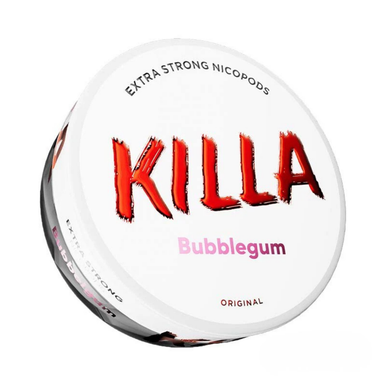
At the confectionery end, Killa Bubblegum at £33.50 is the sweetest and simplest thing on the shelf and the most complete contrast available within the brand, while Killa Cola at the same figure is worth a closer look from anyone who likes this can — a cola flavour carries its own faint spice and a syrupy darkness, and of the fruit-adjacent cans it is the one that shares most with a liquorice profile.
Within this same series sit two mints, a lemonade and an orange, all at £33.50 with 16.5mg declared. This can is the odd one out in that group by a considerable distance, whichever way its flavour tag is eventually read.
Cans further afield
Beyond the brand shelf, a few listings are worth knowing about for variety. Prices are as we list them and the reason attached to each is flavour or price, never a suggestion that anyone should be buying more.
Edge Mint at £14.95 and Nordic Spirit Max Frosty Mint at £4.49 are the plainer, lower-priced mint listings we carry. Those figures are not comparable with £33.50 without knowing the formats behind them, and our record does not hold a can count for this listing, so we are not going to present it as a value comparison. Elf Bar Cool Storm at £29.90 runs a fruit sweetness through a cold base, and Pablo Gold Edition Blueberry Peach Ice at £19.95 is stone fruit and berry over a chill — both of them bright, both about as far from a dark sweet flavour as the fruit shelf goes.
Writing about a flavour that divides people
Product copy usually works by finding something to enthuse about. That is difficult and slightly dishonest with liquorice, because the thing that defines it is the thing a large proportion of people actively dislike, and no amount of writing changes that. So this page does not try. If you already know you like this style of flavour, the description above tells you what shape this one is. If you know you do not, nothing here is intended to talk you round, and we would rather you bought the apple.
The same goes for the ambiguity in our record. A tidier page would have picked liquorice or mint, written confidently about the one it picked, and hoped nobody noticed. That version would read better and would be worse. We publish what our record actually contains, including the parts that contradict each other, because the alternative is a page that sounds authoritative about something it has made up.
It is also why this page carries no persuasion of any kind. We are describing a can to people who already buy these products and know what they want from one. Whether it is worth £33.50 to you is a judgement you are better placed to make than we are, and the only thing we can usefully add is an accurate description and an honest account of what we do not know.
Storage, and keeping a can worth opening
Storage is short here because the whole of it genuinely is short. Keep the can cool, dark and dry, and press the lid fully home every time. These tins close by friction rather than by thread, so a lid can sit on the rim looking shut while leaving a gap all the way round, and almost every dried-out can traces back to exactly that.
Avoid heat above everything: a car in summer, a windowsill, the shelf over a radiator, the top of a fridge. Heat tires a flavour permanently and nothing brings it back. Avoid humidity swings too, which rules out bathroom cabinets. Do not add water to a can that feels dry — it clumps the contents and finishes off what was merely disappointing. Unopened stock keeps well in a fridge if you buy in quantity, in a sealed container, clearly separated from food and out of reach of children, and a chilled can should come up to room temperature before opening so condensation does not form inside the lid. A freezer is worse than useless for the same reason. Our record holds no shelf life or production date, so the only date that exists is the one printed on the tin.
One variant, one price
There is a single variant on this listing — 16.5mg at £33.50 — so there is no strength selection and no second price. What remains to decide is whether the flavour appeals, which for liquorice is a more decisive question than usual, and how many you want. Our cans-per-pack field is empty, we will not infer a number from the price, and the product page and packaging are where that is settled.
Ordering, ID and delivery
The listing showed as available when this was written, and the live product page is the accurate source at any moment.
Age verification runs at checkout on every nicotine listing here without exception. It is a legal requirement, orders can be held or cancelled where it cannot be completed, and the courier may request photographic ID on delivery. With nobody present who can produce it, the parcel is not left.
Delivery charges, options and timescales sit in the site's own delivery pages, which is the right place for information that changes. Nothing on a product description should be read as a promise about a delivery date.
Where this can is filed
Three shelves carry this listing. The Killa range collects all 31 of the brand's products. The Strong band gathers 132 listings that share a filing rather than a figure. The mint shelf holds 148 products and is where this listing sits because of the tag discussed at the top of this page — which is worth remembering if you find it there and wonder why.
For wider browsing, the whole catalogue shows everything we stock. People who navigate by brand often go from here to the Cuba shelf or the Pablo shelf, both larger ranges with their own spread. People who navigate by declared figure use the bands, which remain a filter and not a ladder.
Questions, answered honestly
Is this liquorice or mint?
The name says liquorice and our flavour tag says mint, and we have not reconciled them because we cannot do so honestly. It may be a compound flavour that our one-word tag could not capture, or it may be a filing error. The packaging is definitive and we are not. If it matters before you order, ask us and we will check what the supplier states rather than repeat our own tag back to you.
Does it taste salty?
We cannot tell you, because we hold no detail beyond the flavour tag and the product name. Liquorice confectionery exists in both sweet and salted styles and they taste substantially different from one another, so it is a fair question. Nothing in our record distinguishes them for this can. The packaging is where that will be described, if it is described anywhere.
Is liquorice an unusual flavour for a pouch?
It is uncommon on our shelves, yes. Most of our catalogue is mint, fruit or a combination of the two, and dark or bitter-leaning flavours are a small minority — this can and the cappuccino one are close to the whole of that group in the Killa range. That is a statement about how our shelves are stocked, not a claim about the wider market, which we do not have data on.
How many cans is £33.50?
Unknown to us. The cans-per-pack field is empty in our record and we are not going to work backwards from the price, because that is precisely how plausible-sounding errors get published. The format is on the product page and the packaging. Ask before ordering if the answer matters to you.
Is 16.5mg high?
Higher than some figures on our shelves and lower than others, which is the whole of an honest answer. Describing it as high or as moderate would be an opinion dressed as a measurement and it would drift into telling you what to buy. The number is printed on the tin, the listing is filed under Strong, and the only useful comparison is with whatever you already buy.
Why is the brand called that?
It is the manufacturer's trade name. We did not choose it, we read nothing into it, and we print it because a shop that renamed products would be harder to use. It describes nothing about the contents and claims nothing about the product, and stocking a brand is not an endorsement of its naming.
What is a good can to keep alongside it?
That depends entirely on why you want a second one. For maximum contrast, something cold and unsweetened. For something that shares this can's weight while tasting nothing like it, the cappuccino can on the same brand shelf. For a smaller physical pouch rather than a different flavour, a mini-format can. All three are described in the pairing section above with prices, and none of it is a recommendation to buy more than you intended.
Where is it made?
We do not publish that. Origin, manufacturer and importer details are not in our record for this listing and we will not reconstruct them from the brand name. They are printed on the packaging alongside the required warnings, which is where they belong and where they are reliable.
Will the flavour fade as fast as a fruit can?
Generally not. Dark, heavy flavours tend to persist longer than bright acidic ones, which fade quickly, so a liquorice profile usually holds its character further into the time a pouch is in. That is a description of how flavours behave rather than a specification for this can, individual experience varies, and we are not going to put minutes on it.
Why is a liquorice can on the mint shelf?
Because that is the flavour tag it carries in our system, and our shelves are built from those tags automatically. We have explained the disagreement at the top of this page rather than moving the listing to make the site look tidier. Where a tag and a product name conflict, the honest thing is to say so and let the packaging decide.
I have never liked liquorice sweets. Will this be different?
Probably not in the way you are hoping, and we would rather say so than take the sale. The characteristic that defines liquorice as a flavour is the same characteristic in a pouch as in a sweet, and if that is the part you dislike, a different format does not remove it. There is an outside chance that a cooling element — if this can has one, which our record leaves unclear — makes it read differently to you. That is a thin basis for a purchase and we are not going to dress it up as a strong one.
Does the aniseed note mean it tastes like a specific sweet?
We are not going to name a confectionery product as a comparison, because that would be an assertion about a formulation we have no information on. What we can say is that the aniseed direction is a normal component of how liquorice flavours are constructed, and that people vary a great deal in how strongly they perceive it. Some read it as inseparable from the liquorice itself; others notice it as a distinct perfumed note sitting on top.
Can you tell me if this is the same recipe as it was last year?
No. We hold no historical data on formulations, no production dates and no batch information for this listing, so we could not answer that even in principle. If a can seems different from one you bought before, keep the tin, note the batch code and contact us — we can raise it as a supply question, which is the only form in which we can do anything useful with it.
The notices that have to be here
This is sold only to adults aged 18 or over who already use nicotine. Age confirmation happens at checkout, orders may be verified before dispatch, and photographic ID may be requested by the courier at the door; where no adult is present to show it, the parcel goes back rather than being left.
Nicotine is an addictive substance. That sentence sits in the body of the page, in ordinary type, because that is where it belongs.
This product is not a licensed stop-smoking medicine and nothing here presents it as one. It is not intended for non-smokers, for anyone who does not already use nicotine, for under-18s, or for anyone pregnant or breastfeeding. We make no health, medical or safety claim about it in any direction at all. For anything about nicotine and your own circumstances, ask a pharmacist or a doctor rather than a shop.
To close
Killa Exclusive Liquorice is a single-variant listing at £33.50 with a declared 16.5mg, priced in line with the rest of a 31-listing brand shelf, filed in a 132-product strength band and appearing on a 148-product mint shelf because of a flavour tag that does not match its own name. That disagreement is stated on this page rather than smoothed over, along with every other blank in our record — can count, pouch count, format, moisture, origin, dates. The tin and the manufacturer's printing on it settle all of them, and they outrank everything written above.
More from Killa
More strong pouches
More mint pouches
Where this sits
Killa Exclusive Liquorice Nicotine Pouches appears in these categories. Browse them, or jump to something close.
You might also like