Killa · 16.5mg
Read the full guide
Killa Exclusive Green Mint Nicotine Pouches
£33.50
✔ In stock — ready to ship
100% tobacco-free
Free over £20
Same-day dispatch
Secure checkout
Here is the whole of what our record holds on Killa Exclusive Green Mint Nicotine Pouches. The price is £33.50. There is one declared strength, 16.5mg, and one variant at that figure, so the price and the number never come apart. The flavour is filed under the single word mint. Stock showed as available when this description was written. One product image is attached. That is the list, and it is short.
Short records are common in this trade and we prefer to show the edges of ours rather than paper over them. Several things a customer might reasonably want to know — how many cans £33.50 buys, how many pouches sit in a can, whether the pouches are slim or regular, how moist they are, where the product was made and when — are simply not fields we hold for this listing. Each time one of those comes up below, the answer is that we do not have it and the packaging does.
The full guide to Killa Exclusive Green Mint Nicotine Pouches
5,063 words on how it eats, who it suits, how to serve it and what to put beside it.
The Green Mint listing, fact by fact
Two preliminaries. First, this is an adult nicotine product, sold only to people aged 18 or over who already use nicotine; the full statement has its own section lower down. Second, the words on the lid are the manufacturer's. Killa is a registered trade name and carries no meaning we are endorsing — it is not a description of the contents and not a claim about anything. Exclusive is that manufacturer's label for one group within its own catalogue, not a statement that the can is scarce or restricted.
Green mint as a taste, green mint as a smell
Our flavour field says mint and stops there. The manufacturer's name adds the word green, and that word is doing real work, because mint is not one flavour but a family, and cans built from different members of that family taste materially different from one another. What follows describes how a green mint reads, in taste and aroma terms alone.
The green reading is the leaf rather than the sweet. It is rounder at the front than a peppermint-led can, softer in its arrival, and it carries a herbal quality — something closer to a mint leaf crushed between two fingers than to a mint imperial. Cooling is present but it is not the leading edge of the flavour; it comes through underneath and behind the mint rather than arriving first as a sheet.
Sweetness is moderate and slightly grassy in character. There is no fruit, no citrus, no sharp edge. The mid-palate is where most of the flavour lives, which is unusual — a lot of cans in this category are all front. The finish is longer and gentler than a cold-led mint, and what lingers is the leafy note rather than the chill.
People who describe this style of can usually reach for words like soft, green, herbal or garden. People who dislike it usually say it is too mild or not cold enough. Both descriptions point at the same characteristic from opposite directions, which is a good sign that the characteristic is real.
It is also a flavour that behaves differently depending on what preceded it. Straight after something sweet, a green mint can read almost savoury for the first half-minute; on its own it reads simply as soft and herbal. That is ordinary palate behaviour rather than anything unusual about the can, but it explains why the same product gets described in fairly different terms by different people, and why a first impression formed after a strong coffee is not a reliable one.
What the aroma does
Opening the lid gives you something greener and less sugary than a peppermint can. It is quiet — a soft herbal note with a little cool behind it, the kind of smell that stays inside the tin rather than reaching across a desk. Set beside a citrus can, which fills the room the moment the lid moves, this one barely registers at a metre.
Set against the Double Mint can in the same series
Killa also lists a Double Mint at the same £33.50 with the same 16.5mg on the lid, and it is genuinely a different flavour rather than a relabelling. That can leads with a broad cold and sets a leafier note behind it — two readings of mint stacked. This can does close to the opposite: the leaf is in front, the cold sits behind it, and there is less sugar in the mix. Side by side the double reads colder and more confectionery; this one reads greener and more restrained. Same price, same declared figure, entirely different experience of the flavour. There is no better and no worse in that comparison, and we are not going to pretend there is.
The can as an object
A pouch can is a small piece of industrial design that people handle several times a day, so it is worth taking seriously rather than skipping past on the way to the flavour notes. Our record does not carry dimensions or a material specification for this can, but the format is standardised enough across the category that the general description below holds, and where it might not, the tin in your hand settles it.
The lid, and the way it closes
It is a round plastic tin, low and flat, with a lid that lifts clear and presses back down onto a rim. The closure is friction, not a screw thread, which means it is fast to open one-handed and also means it is entirely possible to leave it not quite shut. A lid that is resting on the rim looks closed. A lid that is pressed home gives a small, definite feel as it seats. Learning the difference is the single most useful habit attached to owning one of these, because almost every complaint about dried-out contents traces back to a lid that was never actually closed.
The compartment in the lid
Most cans of this type have a shallow chamber built into the lid, separated from the pouches below, intended as somewhere to put a used pouch when there is no bin within reach. Our record does not confirm whether this particular can includes one, so look at the lid rather than take our word for it. Where the compartment exists, treat it as a short-term convenience. It holds very little, it needs emptying at the end of the day rather than at the end of the week, and a can that has been used as a long-term store for spent pouches is not pleasant to open.
How many pouches, and why there is no number here
We do not publish a pouch count for this listing because we do not hold one. Cans across the category commonly carry somewhere in the region of twenty pouches, but "commonly" is not a fact about this can, and printing a number we have not verified would be worse than printing nothing. The count is on the packaging. If you need it before you order rather than after, ask us and we will check what the supplier states rather than guess.
The same applies to the can count behind the £33.50. Our field for cans per pack is empty. A price is not a format, and working backwards from money to quantity is exactly the kind of reasoning that produces confident errors, so we are not doing it.
What is printed on it, and where
A can of this kind carries more text than its size suggests, and it is distributed around the object in a fairly predictable way. The lid takes the brand and the flavour name, because the lid is what you see when the tin is in a drawer. The declared figure usually appears on the lid as well, though manufacturers place it differently — some print it large, some tuck it into a corner, some put it on the side wall instead. The base and the side carry the small print: the legally required warning, the manufacturer and importer details, the batch or lot code, and any date marking.
Two of those are worth finding before you need them. The batch or lot code is what we will ask for if you ever contact us about a can that seems wrong, and it is much easier to read off a tin you still have than to reconstruct afterwards. The date marking is the only shelf-life information that exists for this product, since our record carries none at all. Neither is hard to find; both are easy to throw away with an empty tin.
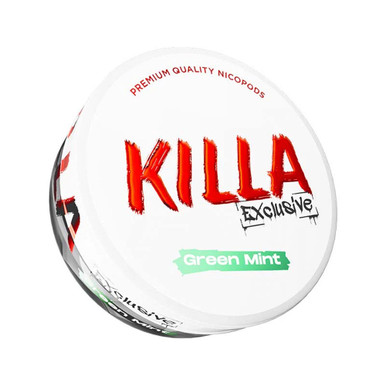
Our record holds one image of this product. An image shows the lid, and a lid is not a specification — it will not tell you the pouch format, the count, the moisture or the dimensions. Treat the picture as identification rather than information, and read the tin for anything that matters.
Pocket, bag, drawer
The format's chief practical virtue is that it disappears. A tin of this shape fits a coat pocket, a jeans pocket at a push, the inside pocket of a bag, a desk drawer, a car door bin. It does not rattle much, it does not leak, and it survives being carried around. The lid, though, is the weak point of all that convenience: a tin carried loose in a bag alongside keys can have its lid worked partly open by nothing more than movement, and then you have an open can in a bag for a day. A pocket where it sits flat is better than a bag where it tumbles.
What happens to a can that gets sat on
Plastic tins of this kind are more robust than they look but they are not armoured. A can in a back pocket under body weight can distort enough that the lid no longer seats properly, and a can that no longer seats properly is a can that will dry out. If a tin has taken a serious crush, the sensible move is to transfer what is left to a can that still closes rather than to persevere with one that does not. Empty tins are worth keeping for precisely this reason, and they are also useful for a dozen small household purposes once they have been washed out.
The pouch in use
The pouch goes under the upper lip and off to one side, laid flat rather than folded. It stays put by itself. It is not chewed, it is not swallowed, and it comes out whole at the end. Most people move it once in the first minute and then leave it entirely alone.
Physical size varies across the market — slim bodies, regular bodies, shorter mini formats — and our record does not state which this can uses, so the label is the reference. Size affects how noticeable a pouch is far more than any other single factor, which is why people who move between brands sometimes find a can feels unfamiliar before they have registered anything about the flavour.
Time in is personal habit plus whatever the manufacturer prints on the packaging. Descriptions across the category range from twenty minutes to an hour or so. Flavour, in this can as in most, fades well before that point. We are not going to state a duration, because a shop attaching a recommended time to a nicotine product has crossed from describing into advising, and that is not our role.
Disposal is general waste. Not the sink, not the toilet, not the food caddy, and not left on a worktop or a car seat where a child or an animal might find it. Empty tins go into household plastics recycling to the extent your council accepts that grade, which varies by authority and is not something we can look up for a postcode.
Moving between cans without unpleasant surprises
Most people who buy pouches regularly do not buy one product forever. They move — a new flavour, a different brand, a can that happened to be in stock. Our shelves make that easy and our shelves also make it easy to misread what you are getting, because the things that change between two listings are not always the things a product tile shows. This section is about what actually moves when you move.
What changes: the format
The most consequential difference between two listings is often the one nobody looks at. One listing is a single tin; another is a multi-can box. One uses slim pouches; another uses a regular body that sits differently. One is a mini format with a noticeably shorter pouch. None of that appears in a price, and our record does not carry a format field for this listing at all. Before treating two cans as equivalent, confirm on their own pages and packaging that they are the same kind of object.
What changes: how the figure is printed
Manufacturers do not declare in a single agreed way. Some state a figure per pouch; some state a figure per gram of pouch content. Those are different quantities, and once the unit drops out of the conversation — which happens constantly — two cans that look like they carry the same number may not. This is a labelling convention rather than anything about the product itself. The practical response is to compare figures within one brand with reasonable confidence, to compare across brands with less, and to treat the printing on the tin as the only statement that applies to that tin.
What changes: the price and what it covers
On our shelves the same flavour family spans a very wide range of listing prices, and nearly all of that spread is format rather than quality. A £4.49 listing and a £39.90 listing are not two grades of the same thing; they are almost certainly two different quantities. We cannot translate one into the other for you here because the can counts are not in our record, and an invented conversion is worse than none.
What changes: the flavour vocabulary
Brands use flavour words differently. One brand's "cool mint" is another's "ice mint" is another's "frosty mint", and the names are marketing rather than a shared standard. Our own single-word flavour tags are blunter still: this can, the Double Mint can and a liquorice can in the same series are all filed under mint, which tells you something about the limits of a one-word tag and nothing about how those three taste. Read the description, not the tag.
What changes: how a can behaves over an evening
Two cans with identical numbers on them can still feel like different purchases because of things no listing records. A moister pouch gives its flavour up quickly and fades; a drier one is slower and more even. A slim body is less present under the lip than a regular one. A can with a stiff lid gets closed properly every time; a can with a loose lid gets left ajar and dries out. None of that is written down anywhere on our site, ours included, and none of it shows in a photograph. It is the kind of thing a person learns from a can rather than from a page, and it is a good reason to buy one of something unfamiliar before buying several.
What does not change
Two things stay constant no matter which can you pick up. The first is that the packaging outranks anything written on a website, ours included — declared figure, warnings, format and instructions are all printed on the tin and the tin is the authority. The second is that the age restriction applies identically to every nicotine listing we sell, with no exceptions for small formats, low figures or anything else.
16.5mg as printed information
The figure on this can is 16.5mg — the manufacturer's declaration of the nicotine content of a pouch, in milligrams, printed on the packaging. It describes what is in the pouch. It does not describe the person holding the can.
We file this listing on the Strong shelf, which currently holds 132 products. That band, along with the Medium band beneath it and the Extra Strong band above, exists so that 385 listings can be filtered into something a person can actually read. Bands are our filing, not the manufacturer's, and not a ranking. A can in a higher band is not a better can, not a more advanced can, and not somewhere anybody needs to be heading. There is no ladder here and nothing to climb.
We cannot tell you which declared figure suits you. We hold nothing about any individual customer that would make such an answer meaningful, and a shop steering people between nicotine strengths is a shop doing something it should not. The figure is printed on the can, the band is printed on this page, and anything concerning nicotine and your own circumstances belongs with a pharmacist or a doctor rather than with us.
The Killa shelf around this can
There are 31 listings on the Killa brand shelf, and the ones named here all carry the same £33.50 as this can. A flat price across a shelf means there is nothing to calculate when you move within it — only flavour is in play.
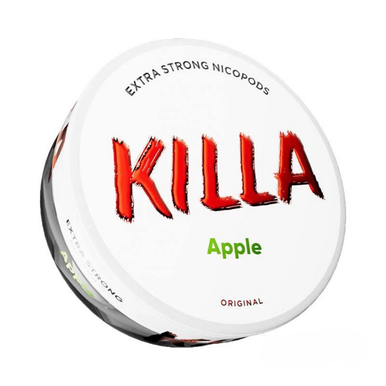
The fruit group runs from the Killa Apple can at £33.50, crisp and orchard-sweet with none of the herbal character this can has, through Killa Blueberry at the same price, which is the darkest and jammiest of them, to Killa Banana Ice, also £33.50, where a soft creamy fruit sits over a cold base. That last one is the least abrupt move from a mint can because the cold element carries across.
At the sweet end sits Killa Bubblegum at £33.50, unapologetically confectionery, and the Killa Cola can at the same figure, syrupy with a faint spice and a little acidity behind it. The genuine outlier on the shelf is Killa Cappuccino, £33.50 again — roasted, milky and slightly bitter underneath, the only can in this group that tastes of a drink rather than a sweet, and the furthest thing on the shelf from a green mint.
Within this series specifically there is the Double Mint can already described, plus a lemonade and an orange on the citrus side and a liquorice can whose flavour tag in our system reads mint. All of them are £33.50 with 16.5mg on the lid.
Other cans worth keeping open
Keeping a second can on the go is common, mostly because one flavour used continuously stops being noticeable. Everything below is stocked here, and the reason given for each is its flavour or its price — never a suggestion that anyone ought to be buying more of anything.
Within mint, the Clew Cool Mint can at £39.90 is the broad central reading with a confectionery sweetness, considerably colder at the front than this one. Denssi Cold Mint, also £39.90, pushes further into the cold and further from the sugar. Klint Avalanche Mint at £36.90 is the austere version — very little sweetness, a lot of chill. Against a green mint, all three read as the opposite approach to the same family.
Fumi Fiery Mint at £27.90 is the interesting contrast, because instead of adding cold it adds warmth: a peppery edge running against the mint. The Edge Mint can at £14.95 and Nordic Spirit Max Frosty Mint at £4.49 are the plainer, lower-priced listings in the same flavour territory, though as noted above those prices almost certainly reflect a different format rather than a different grade, and our record does not let us confirm the comparison.
Stepping outside mint entirely, Cuba Ninja Ice Cool at £39.90 holds onto the cold while changing everything around it, Elf Bar Cool Storm at £29.90 runs a fruit sweetness through a cold base, and Pablo Gold Edition Blueberry Peach Ice at £19.95 is stone fruit and berry with a chill underneath. For a change of physical format as well as flavour, the 77 VB Edition Mini Arctic Berry can at £39.90 uses a mini body, which is a different object in the mouth before it is a different taste.
Storage, briefly
Storage gets a short section here rather than a long one, because the whole of it fits in a paragraph or two and padding it out would not make it truer.
Keep the can cool, dark and dry, and close the lid fully every time. A cupboard or a drawer is ideal. A car in summer, a windowsill, a shelf above a radiator and a steamy bathroom are all bad in their different ways, and heat is the failure that cannot be undone — a can that has cooked has lost flavour permanently. Do not add water to a can that feels dry; it clumps the contents and ruins what was still usable. Unopened stock keeps happily in a fridge if you buy in quantity, in a sealed container, well away from food and out of reach of children, and let a chilled can warm to room temperature before opening it so condensation does not form inside the lid. Our record carries no shelf life or production date, so the date on the packaging is the only one to go by.
One variant: the shape of the decision
Plenty of listings on this site offer several declared figures at one price and ask the customer to pick. This one does not. There is a single variant, 16.5mg at £33.50, so the page presents no strength choice at all. What is left to decide is whether the flavour appeals and how many you want — and the second of those is complicated only by our missing can count, which is why it is flagged more than once here rather than mentioned quietly.
Checkout, the age check and delivery
Stock showed as available when this was written, and the live product page rather than this description is the accurate version at any given moment.
Age verification runs at checkout on every nicotine listing including this one. It is a legal requirement rather than a preference, orders may be held or cancelled where it cannot be completed, and the courier may ask for photographic ID at the door. If there is no adult present who can produce it, the parcel is not left.
Because this listing carries a single variant, the checkout itself is simple: there is no strength selector to get wrong and no second price to catch anyone out. The only thing worth checking twice before you confirm is quantity, for the reason given repeatedly above — we do not hold the can count, so the number in the basket is a number of listings rather than a number of tins, and only the product page can tell you what one of those actually contains.
Carriage, timescales and delivery terms live in the site's delivery pages, which is the right place for information that changes. Nothing written on a product description should be read as a promise about a delivery date.
Where the site files this
This can appears on three shelves. Its brand shelf collects all 31 Killa listings. Its strength band holds 132 products across a spread of declared figures. The mint shelf is the biggest flavour grouping we run at 148 products, so it is worth combining with a brand or band filter unless you intend to scroll for a long time.
Beyond those, the complete catalogue lists everything we hold. Customers who browse by brand often move from here to the Cuba shelf or the Pablo shelf, both of which are larger ranges with their own flavour spreads. Customers who browse by declared figure use the three bands, which are a filtering convenience and, to say it once more, not a scale anyone is expected to travel along.
Questions, answered straight
What is the difference between this and the Double Mint can?
Flavour, and only flavour. Both are £33.50, both carry 16.5mg, both are filed under mint. This one leads with the leafy, herbal side of mint and keeps the cooling behind it. The Double Mint leads with a broad cold and layers a second, greener mint note underneath. If you want cold first, that is the other can. If you want the leaf first, this is the one. Neither is stronger than the other.
Does green mint mean spearmint?
We are not going to state that, because our record says only "mint" and the manufacturer's name says only "green". Green is the word commonly used for the leafier side of the mint family, and spearmint sits on that side, but asserting a specific botanical identity would be us filling in something we have not been told. The can's own description is the place to look.
How many cans do I get for £33.50?
Our record does not say. The cans-per-pack field for this listing is empty, and we will not reverse-engineer a number from the price. It is stated on the product page and on the packaging. Ask us before ordering if it matters to your decision and we will check the supplier's own statement rather than offer a guess in public.
Is 16.5mg high?
It is higher than some figures on our shelves and lower than others, and that is as far as an honest answer goes. Calling it high or moderate would be an opinion presented as a measurement, and it would edge into telling you what to buy. The figure is printed on the lid, the listing sits in our Strong band, and the only comparison that means anything is with whatever you already use.
Why is the brand named the way it is?
It is a manufacturer's trade name. We did not choose it, we do not read anything into it, and we print it because renaming products would make this shop less useful rather than more. It is not a description of the product, not a claim about what a pouch does, and not something we are endorsing by carrying the brand.
Where is this product made?
We do not publish that. Origin, manufacturer and importer details are not held in our record for this listing and we will not infer them from a brand name. That information is printed on the packaging, which is where it belongs and where it is reliable.
Can I put a used pouch back in the lid compartment for a few hours?
You can, but it is worth knowing what that does. The compartment is unsealed relative to the pouches below, and leaving spent pouches in it for long periods makes the whole tin unpleasant to open and can affect how fresh the remaining contents smell. Empty it daily. If a bin is available, the bin is always the better answer.
The pouches in my can feel drier than the last one. Why?
We cannot tell you, because we hold no batch, date or moisture data for this product. Cans vary, and everything between our shelf and your cupboard — transit temperature, how long the can sat open, where you kept it — affects what you get. If a can seems genuinely faulty rather than merely different, send us the batch details printed on the tin and we will treat it as a supply issue.
Is a listing with one strength worse value than one with four?
No, and the comparison does not really work. A multi-strength listing is one product page carrying several variants; this is one product page carrying one. Value depends on the format and the price, not on how many variants share a page. Since our record does not carry a can count here, we cannot even do the arithmetic for you, which is a limitation of our data rather than a comment on the product.
Should I switch to this from the can I currently buy?
That is not a question for us. We know nothing about you, and any recommendation we made would carry a shop's interest inside it. What we will do is describe the flavour, state the declared figure and the price, and point at what else sits nearby on our shelves so you can compare like with like. The decision is yours and the can's labelling is the reference.
Why is a liquorice can filed under the same flavour tag as this one?
Because our flavour tags are one word wide and a single word cannot carry a compound flavour. The liquorice can in this same series is tagged mint in our system, which sits oddly beside its own name, and we have left the record as it stands rather than quietly editing it. It is a good illustration of why the tag is a filter and not a description. Where a tag and a product name disagree, we say so on the page instead of choosing a winner.
Is the tin recyclable?
It is plastic, so it goes into household plastics recycling to whatever extent your local authority accepts that grade — and that genuinely differs between councils, so we cannot answer it for a postcode. Rinse it first. Used pouches are general waste and should not go in with the recycling. A fair number of people keep one or two empty tins for small items, which is a better outcome than either bin.
Do you know when this will be restocked if it sells out?
Not from this page. Stock status here reflects the moment the description was written, and restock timings depend on supply arrangements we do not publish and cannot promise against. The live product page shows current availability. If something is out, contact us and we will tell you what we actually know rather than what would be convenient to say.
The required notices
This product is sold only to adults aged 18 or over who already use nicotine. Age confirmation is carried out at checkout, orders may be verified before dispatch, and photographic ID may be requested on delivery; where nobody who can show it is present, the parcel goes back rather than being left.
Nicotine is an addictive substance. It is stated here in the body of the page, in the same type as everything else, because that is where it belongs.
This is not a licensed stop-smoking medicine and we do not present it as one anywhere. It is not intended for non-smokers, for people who do not already use nicotine, for under-18s, or for anyone pregnant or breastfeeding. We make no health, medical or safety claim about this product in any direction, and nothing above should be read as one. Questions about nicotine and your own situation belong with a pharmacist or a doctor.
To finish
Killa Exclusive Green Mint is a one-variant listing at £33.50 carrying a declared 16.5mg, filed under mint, offering the leafier and more herbal reading of that family with the cooling sitting behind the flavour rather than in front of it. It belongs to a 31-listing brand shelf priced flat throughout, a 132-product strength band and a 148-product flavour shelf. Where our record holds nothing — can count, pouch count, format, moisture, origin, dates — this page says nothing rather than something invented. The tin and the manufacturer's printing on it are the final word.
More from Killa
More strong pouches
More mint pouches
Where this sits
Killa Exclusive Green Mint Nicotine Pouches appears in these categories. Browse them, or jump to something close.
You might also like