Killa · 16.5mg
Read the full guide
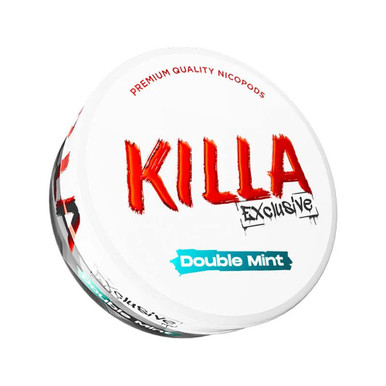
Killa Exclusive Double Mint Nicotine Pouches
£33.50
✔ In stock — ready to ship
100% tobacco-free
Free over £20
Same-day dispatch
Secure checkout
Killa Exclusive Double Mint Nicotine Pouches is listed at £33.50 in one declared strength, 16.5mg. Our record files the flavour as mint, shows the listing as available at the time this page was written, and carries a single product image. There is one variant and one price, so there is no strength decision to make here and no second figure to weigh up. Those are the facts we hold. Everything below is either a description of the format, a comparison with other cans standing on our own shelves, or a plain admission that our record has nothing to say.
Before the rest of it: this is an adult nicotine product. It is sold only to people aged 18 or over who already use nicotine, and the full wording sits in its own section near the bottom of this page. Nothing written here is an encouragement to consume anything, and nothing here is advice.
The full guide to Killa Exclusive Double Mint Nicotine Pouches
5,048 words on how it eats, who it suits, how to serve it and what to put beside it.
Killa Exclusive Double Mint, as our record has it
Two words in the name belong to the manufacturer rather than to us. Killa is a trade name. It is not a description of the product, it is not a statement about what a pouch does, and we print it only because it is the word on the can. Exclusive is the manufacturer's name for this particular series within its own catalogue; it does not mean the can is scarce, limited or held back, and it does not mean anything about supply. Read both as labelling, which is all they are.
Two mints under one lid: the taste and the smell
Our filing for this listing says one word: mint. The name on the can says Double Mint, and that name is the manufacturer's own. What follows is a description of how a flavour with that name reads in this category, written as taste and aroma and nothing else. If the can in your hand reads differently, the can is the authority and this page is not.
A double mint is a compound rather than a single note. Where a can that says only mint tends to pick one reading of the family and stay with it, a double mint sets two of them side by side — the cold, confectionery, peppermint side and the rounder, leafier, garden-mint side — and lets both stay audible. The result is wider across the palate than either would be alone. The cold arrives first and arrives as a broad sheet rather than a point. Behind it, a softer green mintiness fills in the middle of the flavour, and that second layer is the thing the name is pointing at.
Sweetness is present and moderate. It sits underneath, rounding the edges of the cold rather than forming a separate sugary layer on top. There is no fruit in it, no citrus lift, nothing tart. The finish is clean and fades fairly evenly rather than dropping away all at once, and what is left at the end is the cool rather than the mint leaf.
Lifting the lid
The aroma is cold and slightly sugary — the smell of a mint sweet rather than a bruised mint leaf, with a faint sharpness at the top of it that catches in the nose for a second and then settles. Compared with a citrus can, which announces itself the moment the lid moves, this one is quiet. You have to be reasonably close to it. Left open on a desk it will not scent a room.
Against the Green Mint can in the same series
Killa lists a Green Mint alongside this one at the same £33.50 and the same 16.5mg, and the two are genuinely different flavours rather than two names for one recipe. The green reading is the leafier, herbal, garden-mint side taken on its own — softer at the front, sweeter in the middle, less of that flat sheet of cold. This Double Mint can keeps the cold in front and uses the green note as a second layer behind it. Set side by side, this one reads colder and more confectionery; the green one reads rounder and more herbal. Neither is a stronger flavour than the other in any sense that matters, and both carry the same declared figure. The choice between them is a taste preference and nothing more.
16.5mg: a number printed on a lid
The figure on this can is 16.5mg. That is the manufacturer's declaration of the nicotine content of a pouch, expressed in milligrams, and it is printed on the packaging as a piece of label information. It is a number about the contents of the pouch. It is not a number about you, it is not a rating, and it is not a score.
What the figure does not tell you
It does not tell you how the can will suit any particular person, because that is not the kind of thing a milligram figure can describe and not the kind of thing a shop is in a position to know. We hold no information about any individual customer, and we would not use it if we did. We cannot advise you which strength is right for you, and we will not try. If you want a view on nicotine in your own circumstances, ask a pharmacist or a doctor — they are qualified for that conversation and we are not.
It also does not tell you that one can is better than another. A higher declared figure is not an upgrade, it is not a target, it is not an achievement, and it is not something to work towards. The numbers on our shelves run across a wide span because manufacturers make different products, not because they have arranged themselves into a ladder with a top rung. We sort listings into bands purely so the site can be filtered, and a band is a filing decision rather than a ranking.
Where 16.5mg sits among the numbers we stock
This listing is filed on the Strong shelf, which holds 132 products. Above it we keep an Extra Strong band, and below it a Medium band. Those three labels are ours. They exist so that a customer who already knows roughly what figure they buy can narrow 385 listings down to something readable, and they carry no opinion about which band anyone ought to be in.
Within our own catalogue the declared figures spread widely, and 16.5mg is an unusual number to print — most cans land on round figures. That is a manufacturer's labelling choice, nothing more. It does not mean the figure was arrived at more precisely, and it does not mean anything about the pouch beyond what it literally says.
Why the same number on two cans is not always comparable
Brands do not all declare in the same way. Some print a figure per pouch, some print a figure per gram of pouch content, and the two are different quantities that look identical once the unit is dropped in conversation. A can weighing more per pouch and a can weighing less can carry the same printed number and not be the same thing at all. This is a labelling matter rather than a product claim, and the practical upshot is simple: compare figures within a brand with some confidence, compare them across brands with rather less, and treat the number on the can in your hand as the only one that applies to it.
We reproduce declared figures exactly as the manufacturer gives them and we do not convert, round or adjust them. Where our figure and the can disagree, the can wins. Where our record does not carry something — and there are several such gaps on this listing — we say so rather than filling the space.
A flat price across a shelf, and what it signifies
One thing worth pointing out about this listing's neighbours is that the money does not move. This can is £33.50, and so is every other Killa listing named further down this page. A flat price across a brand shelf is common in this category and it is worth understanding for what it is, because it quietly removes a whole category of decision-making.
What it means in practice is that nothing about price is signalling anything about the product. On a shelf where one can costs more than another, a customer reasonably starts wondering what the extra money is buying — a bigger format, a different build, some kind of premium version. On a flat shelf there is nothing to wonder about. Every can costs the same, so the only variable left is which flavour you would rather have, and that is a question only you can answer.
It also means that moving between cans on this shelf costs nothing beyond the price of the can itself. Someone who buys this Double Mint can and then tries the Cappuccino has not spent more or less; they have simply spent the same money on a different flavour. That is a much duller fact than most product copy would make of it, but it is the accurate one, and it is the reason the brand shelf is straightforward to browse.
What a flat price does not mean is that the cans are interchangeable, that the format is identical across them, or that our record holds any more detail about them than it does about this one. Identical pricing is a commercial decision by the manufacturer and the trade, and reading anything else into it would be us inventing significance where there is none.
The pouch, the lip and the bin
The format is the ordinary one for the category. A small soft pouch goes under the upper lip, off to one side, and stays there. It should sit flat rather than bunched; most people give it a moment to settle and then stop noticing where it is. The pouch is not chewed and it is not swallowed. It comes out at the end in one piece.
Pouches come in different physical sizes across the market — slim, regular, mini formats with a shorter body — and our record does not state which of those this can uses. We are not going to guess. The can states its own format on the label, and if that matters to you, that is where to read it.
The first couple of minutes
A new pouch is at its most noticeable in the opening minute or two, both in flavour and as a physical object, and then both settle. That settling is why people fidget with a fresh pouch and then forget it entirely — the position that felt slightly wrong at the start usually stops registering once the pouch has softened against the lip. Adjusting it once is normal. Adjusting it constantly usually means it was seated too far forward or bunched rather than laid flat.
Flavour behaves on its own curve. In a mint can the cold is loudest early and the mint reading behind it becomes more legible as the cold eases off, which is why a double mint often reads as two separate flavours in sequence rather than one blend — the cold first, the leafier note afterwards. That is a description of the flavour over time, nothing more, and it will differ between people because taste does.
How long a pouch stays in is a matter of personal habit and of whatever the manufacturer prints on its own packaging. People in this category describe anything from a short spell of twenty minutes to the better part of an hour, and flavour in almost every can fades well before the pouch is finished. We are not going to put a number on it, because a shop putting a recommended duration on a nicotine product is a shop giving advice it has no business giving. Follow the can.
Cans in this format normally have a shallow second compartment built into the lid, intended to hold used pouches until a bin is available. Our record does not confirm whether this particular can has one, so check the lid. Where it exists it is a convenience and nothing else — it is not a disposal solution, it fills quickly, and it wants emptying regularly or it becomes unpleasant.
Used pouches go in a general waste bin. They do not go down a sink, a toilet or a drain, they do not go in the food caddy, and they are not something to leave on a table where a child or an animal could reach them. The empty tin is plastic and can go into household plastics recycling to whatever extent your local authority accepts that grade, which varies by council and is not a question we can answer for a postcode.
Keeping a can in usable condition
Storage is the part of owning a can that most affects what you actually get out of it, and it is entirely within your control. The failure modes are dull and predictable, which is exactly why they are worth writing down.
Drying out
The commonest complaint about any pouch can is that the contents have gone dry. It happens when a lid has been left off, when a can has sat open for a long time in a warm dry room, or when a can has been part-used and then forgotten for weeks. A dried pouch is stiff, it seats less comfortably, and the flavour is noticeably flatter and shorter than a fresh one from the same can. Nothing is wrong with the can; it has simply lost moisture to the air.
The fix is prevention and it is almost embarrassingly simple: close the lid properly every single time. Cans in this format seal reasonably well when the lid is pressed fully home and not at all when it is balanced on top. Most dry cans are lid cans.
Moisture the other way
Pouches in this category vary from fairly dry to noticeably moist depending on how the manufacturer makes them, and our record says nothing about where this one falls. A moister pouch tends to give its flavour up faster; a drier one tends to be slower and longer. Neither is a fault and neither is better. What you should not do is add water to a can that feels dry to you — it does not restore anything, it makes the contents clump, and it can turn a usable can into a ruined one in a day.
Heat, light and the car
Heat is the other reliable way to spoil a can. A glovebox in summer, a dashboard in direct sun, a windowsill, a shelf above a radiator — all of these will push a can well past anything sensible and will take the edge off the flavour permanently. A cool, dark, dry cupboard is the whole recipe. A drawer is fine. A bathroom shelf is a poor idea because of the humidity swings, and a kitchen worktop next to a hob is a poor idea for the obvious reason.
The fridge question
People do keep unopened cans in a fridge, and for long-term storage of something bought in quantity that is a reasonable thing to do — cool and dark are the two conditions that matter and a fridge supplies both. Two practical points. First, a chilled can taken straight out into a warm room will collect condensation on the inside of the lid, so let it come up to room temperature before opening it. Second, a fridge is a place food lives and a nicotine product needs to be unmistakably separated from anything anyone might mistake for food, and well out of reach of children. A sealed box on a high shelf is the better version of the same idea for most households.
Rotation, and how long a can lasts
Our record carries no shelf life, no best-before date and no production date for this listing, so we will not invent a window. The date printed on the packaging is the only one that counts. The practical habit that costs nothing is to use cans in the order you bought them rather than reaching past three older tins for the newest one, and to keep the open can somewhere you will actually go back to rather than in a coat you wear twice a month.
The rest of the Killa shelf
We carry 31 listings under the Killa brand, and this can sits inside that group at the same £33.50 as the rest of the ones named below. The range is mostly flavour variation at a flat price, which makes moving around inside it straightforward: there is nothing to work out, because the money does not change.
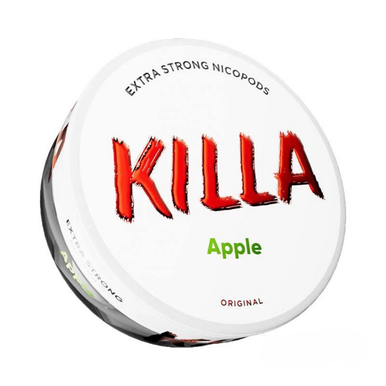
On the fruit side there is Killa Apple at £33.50, a sweeter, orchard-fruit reading with none of the cold this can leads with, and the Killa Blueberry can at the same price, which is darker and jammier and reads as the roundest of the fruit group. Killa Banana Ice, also £33.50, is the one that bridges the two halves of the range — a soft, creamy fruit note with a cold edge laid over it, so it will feel less of a jump from a mint can than a straight fruit would.
The confectionery end holds Killa Bubblegum at £33.50, which is frankly sweet and pink-sweet-shop in character, and the Killa Cappuccino can at the same figure, which is the outlier of the whole brand shelf: roasted, milky, faintly bitter underneath, and the only one here that tastes of a drink rather than a sweet. Killa Cola, £33.50 again, is the syrupy, slightly spiced reading you would expect from the name, with a bit of acidity keeping it from being flat.
Within the series this can belongs to, the closest neighbour is the Green Mint can described earlier, and the two citrus cans in the same series — a lemonade and an orange — are the ones people most often put next to a mint for contrast. All of them sit at the same £33.50.
A point about the brand shelf as a whole: it is 31 listings wide, and the six named above are a selection rather than the whole of it. If you browse the shelf itself you will find flavours not mentioned on this page, and the flavour tags we attach to each one are a single word, which is a blunt instrument. A can filed under mint might be a plain mint, a mint with a fruit note, or a mint sitting behind something else entirely. The tag is a filtering aid, not a tasting note, and this page is more use than the tag for working out what a particular can is doing.
Cans people keep alongside a mint
Most people who buy mint cans regularly keep at least one other can open, because a single flavour used constantly stops registering. Everything below is stocked by us and priced as shown, and the reason for each one is its flavour or its figure, never a suggestion that you ought to be buying more.
Staying inside mint, Clew Cool Mint at £39.90 is the broad central reading with a confectionery sweetness, and Denssi Cold Mint at the same £39.90 leans harder into the cold and further from the sugar. Klint Avalanche Mint at £36.90 is the stark, unsweetened end of the same territory. Fumi Fiery Mint at £27.90 does something different again, setting a warm, peppery edge against the cool instead of piling more cold on top.
For a plainer mint at a much lower listing price, Edge Mint is £14.95 and Nordic Spirit Max Frosty Mint is £4.49. Those two figures are not comparable with £33.50 in any useful way, because our record does not carry a can count for this listing or for those, and a price on its own cannot tell you whether you are looking at one tin or ten. If format matters to your decision, the product pages and the packaging are where that is settled.
Away from mint, Cuba Ninja Ice Cool at £39.90 keeps the cold but changes the frame around it, and Elf Bar Cool Storm at £29.90 is a cold can with a fruit sweetness running through it. If you want a genuine change of direction, Pablo Gold Edition Blueberry Peach Ice at £19.95 is stone fruit and berry over a cold base, and the 77 VB Edition Mini Arctic Berry can at £39.90 is a berry reading in a mini-format body, which is a different object in the mouth as well as a different flavour.
One strength, one price: what there actually is to choose
Some listings on this site carry four declared figures at a single price and the customer has a decision to make. This one does not. There is one variant — 16.5mg at £33.50 — so the only choices attached to this page are whether the flavour is one you want and how many you are buying.
Our record does not state how many cans £33.50 buys. The field is empty, and an empty field is not an invitation to work backwards from the price. We will not print a can count we do not hold, and we would rather this paragraph looked thin than tell you something we have made up. The listing page and the packaging carry the format; if the answer matters before you order, that is where to look, and if it still is not clear, ask us rather than assuming.
Buying it, and the age check
The listing shows as in stock at the time of writing. Stock moves, and the live product page is the version that counts rather than this description.
Age verification applies at checkout. It is not a formality, it is not something we can be talked out of, and orders can be held or cancelled if it cannot be completed. The courier may also ask for photographic ID at the door, and if nobody who can produce it is there to receive the parcel, the parcel does not get left. That is the rule for every nicotine listing on this site, including this one.
One ordering point specific to a listing with no can count in our record: check the format on the product page before you commit, particularly if you are comparing this £33.50 against a £4.49 or a £14.95 elsewhere on the site. Those are not like-for-like figures unless the formats match, and we are not in a position to tell you whether they do. A customer who assumes and is wrong ends up with far more or far less than they wanted, which is an avoidable annoyance for everyone.
Delivery terms, carriage charges and timescales are handled in the site's own delivery pages rather than here, because they change and a product description is the wrong place to pin them down. Nothing on this page should be read as a promise about when a parcel arrives.
Finding this can again
Three shelves hold this listing. The Strong band is its strength filing. The Killa range is its brand shelf, with 31 listings on it. Our mint shelf is its flavour filing, and at 148 products it is the largest flavour grouping we run, which is worth knowing before you open it — filter by brand or by band as well, or you will be scrolling for a while.
Wider than that, the full catalogue lists everything we stock in one place. If you navigate by brand rather than by flavour, the Pablo shelf and the Cuba shelf are two of the larger ones and are often where people go next from a Killa can. If you navigate by declared figure, the Medium band and the Extra Strong band sit either side of the one this can is filed under — as filing, to repeat the point, and not as a scale anyone should be moving along.
Questions we are actually asked
Does Double Mint mean it is twice as strong as a mint can?
No. The name refers to the flavour, not to the figure. It points at a mint built from two readings of mint rather than one, which is a statement about taste. The declared figure on this can is 16.5mg and it would be 16.5mg whatever the flavour on the lid said. Nothing in the word "double" describes the number, and we would not read it that way.
How many pouches are in a can?
We do not know. Our record has no pouch count for this listing, and we are not going to estimate one from other cans or from the price. It is printed on the packaging. If you need the figure before ordering rather than after, ask us and we will look at what the supplier states rather than guess in public.
Is 16.5mg a lot?
Compared with what? It is higher than many figures on our shelves and lower than others, and that is the whole of the honest answer. We will not characterise it as gentle or as severe, because both of those are opinions dressed as facts and both edge towards telling you what to buy. The figure is printed, the band it is filed under is Strong, and the comparison that matters is with whatever you already buy.
Why is the brand called that?
It is the manufacturer's trade name and we did not choose it. We print it because it is what appears on the can and because a shop that renamed products would be less useful than one that did not. Treat it as a label. It is not a description of the contents, not a claim about the product, and not something we are endorsing by stocking the brand.
Is this the same as the Green Mint can?
No, though they share a price, a declared figure and a series name. This one leads with a broad cold and keeps a leafier mint behind it; the green can leads with the herbal, garden-mint side and carries less of the flat cold. Both are filed under mint in our system because our flavour tags are one word wide, which is a limitation of our filing rather than a statement that the two taste alike.
Where is it made?
We do not publish that. Origin, manufacturing and importer details are not in our record for this listing and we will not reconstruct them from a brand name or a flavour. They appear on the packaging where they belong, and the packaging is the authority on them.
My last can felt drier than this one. Has something changed?
We cannot tell you that, because we hold nothing about batches, production dates or moisture levels for this product. Cans do differ, and storage between our warehouse and your cupboard affects the result as much as anything else. If a can arrives in a condition you think is wrong rather than simply different, contact us with the batch details from the tin and we will deal with it as a supply question rather than a taste one.
Can I keep an opened can in the freezer?
We would not. A freezer introduces condensation on every trip in and out, and moisture cycling is the thing most likely to spoil the contents of an opened can. A cool dark cupboard does the job for an open can, and a fridge is a defensible option for sealed stock you are keeping for a long time. Either way, keep it away from food and out of reach of children.
Why is a can with one strength filed under Strong rather than given its own band?
Because bands are broad by design. If every declared figure had its own shelf we would have dozens of shelves with a handful of listings each and the filter would stop being useful. The Strong band gathers a wide spread of figures into one filterable group. The number printed on the tin is always more precise than the band, and it is the one to read.
Does the flavour last the whole time the pouch is in?
Usually not, and that is true of practically every can in the category rather than being a fault in this one. Flavour is loudest early and tails off well before people take a pouch out. In a mint can the cold generally goes first and a quieter mint note stays behind it for a while longer. How long that takes varies between people and we are not going to put minutes on it, because we would be making the number up.
What does the word "Exclusive" mean on the can?
It is the manufacturer's name for this group of products within its own catalogue, in the same way another brand might call a group an Edition or a Series. It does not mean the can is rare, restricted, limited to a run, or held back from anyone. We have no information suggesting a limited production of any kind, so read the word as part of the product name and nothing more.
Will you tell me whether to buy this or something weaker?
No. That is a decision about you and we know nothing about you, so any answer we gave would be a guess with a shop's interest behind it. We will tell you the flavour, the declared figure, the price and what else sits near it on our shelves. Beyond that, the can's own labelling is the reference, and a pharmacist or doctor is the right person for anything about nicotine and your own circumstances.
The legal part, set out plainly
We sell this to adults aged 18 or over who already use nicotine, and to nobody else. Age confirmation is required at checkout, orders can be verified before they leave us, and photographic ID may be requested by the courier on delivery. No adult present to show it means no parcel handed over.
Nicotine is an addictive substance. That sentence belongs in the body of the page in ordinary type, not hidden in a footer.
This product is not a licensed stop-smoking medicine and is not offered as one. It is not intended for non-smokers, for anyone who does not already use nicotine, for under-18s, or for anyone who is pregnant or breastfeeding. We make no health, medical or safety claim about it in any direction whatsoever, and nothing on this page should be read as one. For anything concerning nicotine and your own circumstances, ask a pharmacist or a doctor.
Closing note
Killa Exclusive Double Mint is a single-variant listing at £33.50 with one declared figure of 16.5mg, filed under mint, carrying a compound mint flavour that keeps a broad cold in front and a leafier note behind it. It sits on a 31-listing brand shelf priced flat, inside a 132-product strength band and a 148-product flavour shelf. Where our record is silent — can count, pouch count, format, moisture, origin, dates — this page says so instead of filling the gap. The can and the manufacturer's own printing on it outrank everything written above.
More from Killa
More strong pouches
More mint pouches
Where this sits
Killa Exclusive Double Mint Nicotine Pouches appears in these categories. Browse them, or jump to something close.
You might also like